Owning Your Story With Stacey Robinson
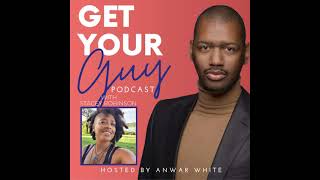
A podcast episode (GetYourGuy) hosted by Anwar White featuring guest Stacey Robinson, a dating coach for vulnerable women. The conversation covers Stacey’s background (nurse-turned-dating-coach), childhood and family dynamics (single mother, absent father, early sexual activity), patterns of dating toxic or unavailable men, self-sabotage and shame, and practical steps for healing (boundaries, accountability, reading resources). The episode aims to help women stop repeating harmful relationship patterns and own their stories.
Chapters
Hey, girl. Welcome to the GetYourGuy coaching podcast. My name is Anwar White, but you can just call me your own personal dating and relationship coach. Each week you'll hear actionable advice, tips, and strategies that you can implement in your own love life. I'm talking about healing your heart, dating effectively, and understanding men so that you can, you guessed it, get your guy. Are you ready to level up your love life? All right, let's go.
I never felt the way I do without anyone but you.
Thank you so much for joining, my loves. I have a very special guest today. Her name is Stacy Robinson and she is a dating coach for vulnerable women who are looking to stop dating toxic and unavailable men. So, Stacy, thank you so much for joining me today. Can you tell the listeners a little bit more about you and what you do specifically?
Thank you so much for having me on. I'm so happy to be here. I'm a dating coach to help women to stop dating toxic and unavailable men. And what that really means is the women that are vulnerable are women that have little boundaries, very trusting, almost to a fault. And that resonates with where I was. And I've had several relationships that were toxic. And so my mission now is to kind of help them to overcome the issues that I had.
Yeah, yeah. That's so important. I would say. So many of the women that I talk to are exactly how you've described those very nurturing types. Like, I have a lot of women that I work with that are teachers, that are nurses, that are social workers, that are even hairdressers, that are helping and always listening to other people and wanting to take their pain away or help them not struggle in some way, shape or form. So I just think that the work that you're doing is so amazing. I think it's helpful for so many women out there. How did you get into dating coaching and all of those things?
Well, I am a nurse and I love helping people. And more specifically, because I've been dealt with all these different types of relationships, coaching just really started to kind of draw on me again. It was just something that's really a calling. It's really painful for me to see a lot of women, especially my age black women, in a lot of loveless relationships, single moms. And they just really need help in making better decisions in the choices of men that we have and this kind of self sabotaging practices that continue to have us attracting these types of men. So my mission has always kind of been to overcome the issues that I'm having And anybody that kind of resonates with me and my message, those are the women that I have that just help them.
That's so funny. Yeah. It's so interesting that you were talking about dating and wellness and I almost think of them as like similar things because, like, dating is emotional wellness and like self wellness. And one of the things that I think is so interesting is when I speak with women and they become my clients, oftentimes we're not just talking about love and dating, we're talking about all aspects of their life. Because how they do one thing is how they do everything well.
Being right.
Exactly. And how they relate to other people and other parties. So I can understand why you're kind of working in between these two different worlds because they're so connected. Now I know that we had recorded a little bit earlier and some things had come up. So did you want to kind of share a little bit about what came up for you?
Yeah. Basically the first time we recorded, I would say I choked. Mommy issues. That had kind of come up to the surface. When I told her that I was going to be recording, her response wasn't exactly what I had wanted. And a lot of the issues that I have that extend into my adulthood have to do with seeking validation.
Yes.
So those are issues that I've been working through. But because her response wasn't validating. Right before we were getting ready to start recording and I was just kind of sharing with you, just hindsight looking back, you didn't say anything. You just kind of let me share. But then it came up again. Right when you started asking me just regular questions about how I'm doing and everything. What I realized was after I had fumbled, you started saying, come on, girl. This, you know, you got this, you know, we're just having a conversation and this is your genius. And you were affirming me.
Yes.
And my mother is critical. You know, even in this moment, it's hard for me to speak against her. I realized how much that impacted me. And so I couldn't receive the affirmations that you were giving me. All I could hear in my head or see was, you know, what she was saying to me. And so that also impacts my choices in men and, you know, had. Had impacted my choices in life and, and just in general and my whole well being, as you were saying. So my brain is all about vulnerability and authenticity and sharing my sort of struggles and how I get through that, you know, because we're human, we're not perfect. So just being able to share that is helping someone else as well. So.
Yeah, and that's why we're talking about it on this podcast. Because if you're going through something, there are millions of people out there that are also going through the exact same thing. And as it shows up and it relates in the dating and the love area and sphere, it's dramatic and traumatic. Right?
Yeah. Yeah.
And so we have to talk about these things. We have to talk about some. Some of our toxic and sometimes narcissistic mothers. This is why I speak with specifically black women. I'm not talking about your mother specifically, but I'm talking about the effect and the experience that you have with an individual that is not really affirming you and how that relates to what you look for in terms of affirmation outside of yourself, your family, and your support circle. So why don't you talk to me a little bit about what that looked like for you when you were growing up. Right. If your mom was not necessarily affirming you and giving you the validation that you need that you just spoke about.
Well, my mom was a single parent. I was pretty much a latchkey kid, you know, in the 80s. My dad, he wasn't around. He's a recovering alcoholic and crack addict. I didn't really have any healthy role models or relationships to look up to. Then later on, when I became around 13, my mother got involved with a man that ended up becoming abusive to me and to her. And she was in that relationship until probably my junior year of college.
What did that teach you about loving someone or being with someone? I came from a single mother household, too. And I'm only asking you this because oftentimes when single mothers are looking for love, they actually come with a lot of desperate energy. And with that desperate energy, they actually don't attract high quality men.
So talk to me about your experience with that.
Well, I didn't even know that she had relationships, but for the most part, it was just always me and her. And then because my dad wasn't around, you know, I started having sex really, really early.
Okay, and you were having sex early because.
Well, it was just kind of the thing to do. I was a late bloomer compared to the friends that I was around, because my first time having sex when I was 13, and one of the girls that was around was 14, and she had twins at that time.
Wow. I had twins at 31, and it was a hot mess for me. Right, So I can only imagine.
Right.
So your environment was also contributing to, like, this something that happens. Okay.
Definitely peer pressure. You know, kind of wanted to be like the other girls. The very first time that I lost my virginity was when I had spent the night over at her house, and she was visiting her older boyfriend. And I was kind of like a third wheel, so they had to have somebody else there with me. And so I kind of went along to get along, and I didn't really know what I was doing, but just felt like that was the thing to do. And then from that point on, it was kind of like any other relationship that I was involved with. It was like, that's what you do. If you want this boy to be your boyfriend, you have sex with them, and you didn't necessarily know if you were their girlfriend. It just was, you know, you kind of felt like, okay, well, we're. We're having sex and we're kissing or whatever, so you are my boyfriend. But then you realize that you're not when they're discarding you and talking about you and talking about the things that you did with them.
And so it sounds like your first time was almost coerced in a way, or you felt some sort of pressure.
I definitely felt pressure. I wasn't coerced by the boy.
Right. But I'm saying not him specifically, but, like, the situation was like, environment was like, this is what we're gonna do. Yeah.
It was kind of like your little prude. So it wasn't virtuous to keep your virginity. And then my mom, when she found out, she was devastated. You know, she likes to say that we grew up together. She was 20 when she had me. I think she kind of knew something was going on. And we were in this very friendly conversation. Our relationship was blurred a little bit like that, you know, friends versus mother.
And daughter, which happens a lot with single mothers because they don't have that partnership, so they become in a surrogate relationship with their children, which isn't healthy either.
Right. But so when I told her, you know, she kind of just asked me, so, were you having sex? And I was like, oh, yeah. And she was like, what? And she started crying. And then she started saying, I wasn't ever going to leave the house again. It just wasn't a good time.
Let's talk a little bit about how your relationships with your parents as well as your relationship with sex. How did that really manifest itself in your 20s and your 30s? What did your dating and love life look like in your 20s and your 30s based on your foundation?
20S and 30s? I'm in college, and I was still Having casual sex. When I was in a relationship, I was completely devoted to whoever I was.
With versus being devoted to yourself, basically.
Because when I wasn't, I would end up being with men who were with other women in other relationships. And I always would say that my responsibility was to myself and the responsibility they had was to whoever they were with. So I would have classified myself as a man stealing ho.
Okay, girl.
It was what it was.
One of the reasons I have you on my podcast is because you had shared that, and I thought that was so amazing for you to share that. I feel like we all have things that we do that sabotage ourselves depending on what issues that we have. And it is so important to be completely honest about who you are, who you were, and how you navigate this world or navigated this world, because that is the only way that you can really heal from it. So I'm so happy that you're sharing this part of your story and your life with the listeners out there, because I want them to feel empowered to be all of themselves and own all of the shit that they've done in their past as well, good, bad, or neutral.
And I've gotten some flack for that.
You're always going to get flack from people who are ashamed of being their authentic and true selves. I've spoken from a gay man.
Yes, I understand. And this is one of the things that I've been working on. Veils that were lifted for me. I just have to be free, you know, I don't want anybody to hold anything over my head. The guilt that I have about things that I've done, I've forgiven myself for that. It's taken me a lot to forgive myself for that. And so me sharing that on my page and the things that I do continue to share, it's almost like how, you know, comedians, they'll say disparaging things about themselves. It just kind of takes the edge off. It's like you can't say nothing about me, right, that I haven't already said to myself.
That's very like 8 mile. Remember when. I don't know if you saw that movie, but basically at the end, Eminem raps and basically is super self disparaging about himself. And so the other guy doesn't have anything to say at all.
I do remember that because he's already.
Told his all his tea and spilled it all over the room, right? Same mentality.
So I'm coming into my own. I'm still growing up and I think it's just real grown lady to just own your shit.
Yeah.
So that way you can see it and then release it. And that's a lot of what I teach women is about accountability. I just teach boundaries. You know, it's all about self and self accountability and looking at the choices that you made.
I'm just being me. Talk to me about why you were doing the things that you were doing. Right. You were called, you called yourself a side ho. I'm not going to call you that. But what was your decision making process when you were doing these things? Things. Understanding everything that was going on? You tell me kind of what was decision making process in terms of those things?
There's a feeling of, I would say empowerment. There was a. Definitely a masculine go getter energy to it. Definitely seeking validation.
Because I had prided myself on being great in bed, you know, so if I lay it down a certain way, then that means he's gonna want me. I put my value, my self worth was. And your body, it sounds like in my body.
Yeah.
And I won't even say my looks as much, but definitely my sex. And I just felt like that that was what you needed to do in order to get someone. There was never an initial, like I wasn't like going after these men that were with other people. It would be, they would come on to me. And so it was flattering that oh, you like me and you already have somebody, so then they hook you and from that point on then it's like, well, I'm gonna do what I need to do in order to keep the person.
Right. So this sounds like a lot like power and control.
Yeah.
We talked a little bit about kind of owning your story and being accountable. What I know about the things that we do is the worst part is really the shame that comes along with it. Right. So can we talk about that a little bit? Like how do we let go of that? What have you found to be really great ways to heal from some of the shame that might happen based on some of the things or relationships or men that we've experienced in our past?
Well, you just gotta be really, really honest with yourself. There's a level of uncomfortability that kind of has to happen in order for you to be ready to forgive yourself. And I just was tired, I was tired of the results. I was getting tired of continuing to be devalued. Just really uncomfortable. And so there's a statistic that it takes an average of seven times before the woman will leave these toxic or abusive relationships. And that's because we Just become so attached to these people. And we're attached because we don't have any kind of self worth or self value or we put all of our energy into this person. And so for me, it just had to be. I was just tired once I became really uncomfortable. Then that's when I started to seek out help from people. And the main people that are there to help you are the ones that were telling you that you shouldn't be in this relationship like your mama or you know, your friends, your best friends, your, you know, people that you're hiding and making excuses for the relationship. So once you are ready to seek out that help, those are the people that you should seek out. And then of course, if you're in any abusive, physically abusive relationship or emotionally abusive. Emotionally, yeah. Domestic Violence Hotline is something to reach out to. I also read lots of books and kind of immerse myself into positive things. A really good book that helped me with red flags was how to Spot a Dangerous man by Sandra L. Brown. Okay, that book right there, there's a workbook and everything that comes into it, but there's like a quiz and everything that can kind of tell you what kind of woman that you are that will be susceptible to these types of men. That was a really good book.
I also feel like women have this instinct as well that they already know that these men are not going to serve them. Yeah, they're not listening to that instinct. Can you talk a little bit more about that? And why would we want to ignore this beautiful divine instinct that men do not have?
Yeah, there was plenty of times where I chose to ignore that. Women definitely have what they call women's intuition. But what happens is we end up talking ourselves out of it. There were plenty of times that you'll feel it in your chest.
More from Anwar

#datingtips #datingadvice #datingadviceforwomen #singleblackfemale #singleblackfemale #blackfeminini








Dating Pitfalls of the Smart and Successful Woman - Get Your Guy Podcast S1 E2

