Relationship Rollercoaster w Ryan Kluttz
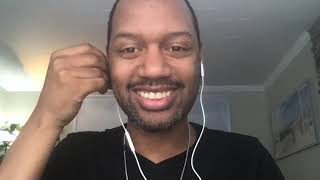
Ryan Kluttz, a women's marriage coach, talks about taking emotional leadership in relationships. He covers why couples fight over communication and listening, shares exercises to clarify what you actually want, and explains how he met his partner as a teenager but married much later.
Questions this video answers
@marriedandmanifesting
marriedandmanifesting.com
Every Thursday at 2:00 pm Pacific
13
23
Chapters
Hello, my loves. Thank you so much for joining me today. And I just want to let you all know that I have a really special guest today. Here's the thing. I get so many messages from my listeners saying, you're always talking about dating. You're always talking about dating. What about us girls that are in the relationships? And ladies, I have an amazing person for you. She is a women's marriage coach and her name is Ryan Klutz. And she is going to spread all of her amazing wisdom that she has around being in a relationship and managing the ups and downs with every relationship that happens. Right. Even the best of the best ones. So, Ryan, thank you so much for joining us today.
Oh, my gosh, thank you for having me. I am so excited to be here.
Yeah, it's amazing. I'm so glad that you're here. So talk to me a little bit about how you became a women's marriage coach.
Yeah, actually, I needed me about five or six years ago, and I just. Yeah, I just wasn't aware of getting individual support for myself because we were just not on the same page. We knew we wanted things to be better, but we couldn't figure it out on our own. Both of us were triggered by the idea of couples counseling because we both watched our parents go through it and have it not work for them. So we just felt like we wanted things to be fixed, we wanted them to be better, but we just really had no clue what to do. And so I started exploring different things, you know, listening to podcasts, starting to just sort of consume some stuff for myself to learn more about me. I started learning about self care and boundaries. And I just felt like it changed everything in the dynamic of our relationship because of the things that I did had a ripple effect because I began to show up differently. And I just felt so strongly that more women should have knowledge of this because I feel like the mainstream thing is to sort of just complain about what's wrong and not actually take action or take take responsibility. So that's what I want to share with everyone is how much power we actually have on our own side of the relationship.
And I love that you mentioned this because I think sometimes a lot of women feel like, okay, I'm in a relationship, I don't want to mess it up, so I'm just gonna go with whatever happens, even if I'm really unhappy, instead of taking an active role in the relationship. I always tell my clients, like, you're actually the leader of your relationship because you get to set the pace you get to set. You are the emotional leadership for how things happen. Right. And so I'm so glad that you are in this world and that you are helping so many women and their relationships and their marriage manage the roller coaster, because there are tons of ups and tons of downs. Right. So talk to me a little bit about, okay, so, you know, you definitely needed this. As someone who was early in her marriage, how did you get more entrenched in this work? Right. As I guess you knew of it, like, what sort of things were you doing? And talk to me a little bit about kind of how you work with women in their marriages.
Well, I think what made me actually start to feel like I could help other women was I was seeing the results that I was getting. And then I was also looking at other couples who were a few years into their marriage and were having different results because of different actions. And I could see very clearly what could be changed, but they couldn't because there were too much in it. You know, you can't see the picture for the frame. And so I just became more vocal about what we do and how we operate. And people started asking me questions about how do we navigate this or what should I say in this situation? And I also, at one point, because I used to do wedding stationery, I was speaking to. I started speaking to brides kind of like, hey, you know, when you get married, these are some things that you're going to come up against, so you might want to be prepared. But what I found was that a lot of times at that stage, when you're wedding planning and all that excitement and all these people are involved in what you have going on, It's a little bit hard for many women to take a step back and look at, this is what I'm going to be going through with a partner once I get married. And so it's the women who are four, five, six, seven years in, they're realizing they're feeling helpless because it's gotten to a point that they don't like, and they're wondering, how did it get? How did we get here? And, you know, what happened? And all these things, they're having these dreams. They're thinking about the dream that they had of their relationship, and it's not working. And where so many people give up, that's where I want them to know that they can take their power back, that they probably didn't even realize that they had. You know, like you were saying, we are the emotional leaders. And by being the emotional leader, you have all this power in just choosing what you want and moving in that direction, and you're part of. Partner just comes with you, and they get that energy from you, and they reciprocate it. And I think that, you know, a lot of times women are waiting for the guy to ask them out or waiting for their boyfriend to propose, because that's traditional.
But the problem that arises from that is that when you get to this difficult place in your relationship, you are waiting for him to do. To do something, you know, putting a. Putting the pressure on him to take. Make that first move of, let's fix this. I'll do this so that we can have this. And I just want that to be completely dropped. Let's just recognize our power, and let's be the ones that take the first step just for ourselves.
Right, Exactly. I love that because I think sometimes women forget that, like, this is probably the first time that guys are doing this too, and they actually don't know. Know what they're doing. So to expect them to lead something that they don't really know what they should be doing, I think is setting us up for disappointment. Right. And so, like, as you were saying, you have to steer your own ship. Right. And you have to set the pace and all of those things. Okay, so I want to talk a little bit about kind of what the major conflicts, right. That you often see in relationships that potentially derail them. What have you seen in kind of working with so many women?
I think a huge one is the communication dynamic, where she feels like she's talking to a wall and he feels like he's being yelled at. And so, because we had that. We had that dynamic where I would go to him with an issue and he would just shut down. And I viewed that as insulting, as, like, you're not willing to participate in this conversation with me. And, you know, why not? But what I came to realize is that he was just thinking, processing. And it wasn't that he wasn't participating. He was participating differently than what my expectations were. And so I started allowing space for that silence. And the shutting down went away. Yeah. And I realized that's another way that I realized how much power that I have because he wasn't able to articulate that for me because I would go into sort of like interrogation attack mode. Why aren't you talking?
Or also. Yeah, let's talk, let's talk, let's talk. Let's talk.
Tell me, tell me, tell me, tell me. We're gonna stay up all night until you tell me. What's going on?
Yeah.
And so, you know, that's a way of taking control too, but that's not the kind of control that you want to be taking. So when I just, I just noticed that if I got quiet too, it left space for him. And we don't have those times where I want to talk and he shuts down. It never happens anymore. And I'm not saying that that's going to be everyone's reality, but that's a huge one. I've talked to so many women recently about, like, I feel like I'm talking to a wall. And if you let the wall have some space, yes, the wall starts talking. And so that's probably. I would say that is the biggest one that I've been seeing, especially recently.
That's so funny, because someone just came into my DMs asking me just about that. My man totally shuts down when something bad happens or something interesting happens. And one of the things that I was trying to explain to her was that, like, men and women socialize differently, especially when they're hurting.
Right?
Like if just let's. Let's go back to junior high. So when something happened, you would go to your girls and you would talk about everything that happened. Or at a slumber party, you guys would be talking until 3 or 4 in the morning. Guys are not the same way. They actually do. They don't speak. Right. So like, when I'm thinking about junior high, something's going on. The guys are going to be playing video games and then like an hour later they'll start talking. Right. Or they'll play basketball or throw the football around and it's going to take some time. And then they'll start talking to your point, about exactly what happened. And men are socialized differently in terms of how to open up. And I always tell women that I think it's really important to understand that you create a safety net for vulnerability. Right. And so I was also telling this woman in the DM who I had never talked to before, I was just saying, like, you know, oftentimes for men and how they're programmed and how they grow up.
Being able to express themselves is not something that naturally happens or that they're taught. And so oftentimes they don't wanna talk about things, but they might just wanna hug. Yeah, they just want maybe some physical contact. Not to talk about it, just a hug. Just to know, hey, I'm here when you're ready. And then let it up to them, just exactly what you did. So I'm so glad that you pointed that out because I think a lot of women freak out, like this person is emotionally unavailable when actually they're going through their em. Just need a little bit more time, which I think speaks to how each of us kind of processes and the pace that each of us has or brings to the relationship. Can you speak a little bit about kind of pace?
Yeah, I think that it's important to touch on pace because as far as, you know, communication or even personal growth, we're always going to be moving at different paces. We are not the same person. And it's kind of funny because when we first got married, we pretty much were the same person. Just, you know, a guy and a girl version.
Yeah.
And as we. We got married at 23, so as we grew up, we found that we had differences. And honestly for me, that was really difficult at first to start finding out how different we were versus, like continuing to find out how similar we were. I mean, I am of the opinion now that having all these differences is what makes it great because we don't agree on everything and we don't want to do all of the same stuff, you know, that that kind of gets boring if it's all the same all the time. So to allow space for different pacing and really just again leaving space for silence or like you said, a hug instead of a word. Because words are not the only form of communication. And I think as women, that's our go to. I mean, I could talk to someone. I end up on the street when I'm outside with my dog talking to someone for an hour, if they also have a dog, like, I could talk, you know, all. But that's not how everyone is. And so I think just recognizing that we are different and celebrating that instead of being annoyed by it is really, really important because it's alleviated a lot of arguments. You know, we never had any, like the kind of arguments where we would yell at each other, but we don't have as many disagreements because we just allow each other to be more. And you think this about this thing and I think the opposite. And that's fine.
Yeah, I love that. I think it's so important that you make such a. You bring up such a really good point about this desire to want to be the same. Right. And I think so many women date and try to get into a relationship with their clone.
Right.
Thinking that that is what is going to create a successful relationship. But it's actually, I was just talking to a client of mine who has Been in a relationship for roughly five months now. It's about being complementary toward each other and understanding the evolution of it. So I'm so glad that you brought that up so that people can. I think listeners out there can start to think about, does a clone really actually set me up for relationship success or not? My answer is probably not, but everyone is different, obviously. Okay, I want to talk a little bit about. Well, let me talk a little bit about pace, because it's really interesting. I have so many clients out there that start to freak out once they get into a relationship because the pace is so different. Right. He's not opening up as quickly as I wanted him to. He hasn't said I love you yet, but I feel like I want to say I love you.
He's not future pacing. He's not talking about taking trips three months from now.
So I want to get your thoughts. I think it's like your thoughts on what you would say to those women who, let's say, are in the fast lane going 80 miles per hour versus the guy in their relationship that's going 60 miles per hour on the highway in the slow lane.
But. Right.
What would you say to them?
Yeah, I mean, my first thing that I would say is relax. You gotta relax. You cannot. You cannot push. You cannot drag him along. And if you're, you know, that give and take, you know, like, if you're going 80 and he's going 60, maybe you both could go 70 for a little while, or maybe you go 80 for a little while and you stop at an exit and you wait for him to get there. You know, so it's just. There's. There's a balance, and it can't always be only how we want it to be. And. And we can't take it personally. That. That I think is huge. When. When a guy is not moving as quickly down the road as we are, we want to take it personally. We want to say, what's wrong with me? That he doesn't want to do this.
He doesn't love me enough.
Yeah. And that's not. That's not usually the case. I mean, sometimes it could be and then you go your separate ways, but really, we're just not, again, leaving space for them to have their own time and their own pace. And, you know, if you're way down the road with someone and you've been. You've had talks about marriage and they're just not ready to commit, there's. There's a different conversation that could end up happening. You Know, maybe it's not the right relationship, but most of the time we go to that assumption of this guy isn't right for me, or this. This relationship isn't right for me because he won't do X or he hasn't done Y.
When really we're trying to force someone else to fulfill a need within us and we have to turn around and fulfill our own needs to be able to get what we want. Because if you're trying to get someone outside of you to give you something that you want, you are giving away your power.
Yeah. And I think it's important for us to also kind of realize that if a relationship is new, like, that first month, it's going to be just filled with a lot of insecurity. And I would say even the first year of marriage, it's just a lot of insecurity around, are we really married? Do you really love me? Are we really doing this? Do you like me? Do I like you? Like, what are we doing? Like, there's all these emotions coming up. So realize, understand, like, what phase you are in the relationship. And, like, if it's early on, there are going to be those moments of just insecurity that are going to make you feel like everything is not going the way it's supposed to or everything is not perfect because of you.
Right? Yeah.
You actually spoke a little bit about this, about kind of trying to. Well, I guess the freeway analogy is really good, because if you're going 80 miles per hour and they're going 60 and you're going behind them and you're like, you know how those people are, like, on your ass on the freeway or in the street, and it, like, gives you anxiety and pressure and all of these, and you end up not really liking that person, even though you don't really know them, and you're like, what the hell is going on? I think it's the same for relationships as well.
Yeah, totally. Because it's that desperate energy that's so unattractive. Yeah. Not hot. Not at all. And so you're so what you end up doing when you think, oh, I need him to, you know, move faster, so I'm gonna drop way more hints. Well, what you're actually doing is the opposite of what you want because, like, by trying to drop all these hints and tell him, you know, I need this from you. I need that from you. I need you to do more of this. I need. I need more from you. You know, I need you to move faster in this relationship. Like, you are pushing him away. And.
It'S the same thing. Like, I liken it to someone who has kids when they're constantly asking, are we there yet? When you're in the car.
Yes.
And you're just like, shut it up. Look around. Are we there yet? Like, that's what we say to our kids. Do you see. Do you see this place that we're trying to get to? Do you see it out the window? No. And so, you know, it's. It's the same kind of thing of, like, the desperate energy of, like, I need this from you, instead of like, hey, I'm good over here, and whenever you come over here is amazing, and I'm just gonna do my own thing. And it sounds weird to say because, you know, especially when there's a. It's a couple, it sounds weird to say, like, I'm gonna do my thing. You do your thing. But it's just sort of more of an energetic piece.
Energetic acceptance.
Yeah, yeah. Acceptance of where you both are. And, you know, maybe there could be times where you can't accept where they are, and that's okay, too. But ask yourself that question of can I accept that we're not moving at the same exact pace, and can I give them time or not?
Yeah.
Yeah.
I love that. I think that we have been programmed to think that, like, in the movies, everyone is just, like, totally in love. And, like, literally in 20 minutes, they're married, and an additional 10 minutes, they have a baby. And so, like, that's how it's supposed to be. Men and women have such different paces, y' all out there. Like, even in dating, right? The first one, two, or three dates, like, some of the women out there are thinking about what the wedding pictures are going to look like together, right? And I will tell you, men are not thinking like that. Like, they're not even evaluating whether they want to be boyfriend and girlfriend with you until at least date six. Right. Six through eight. So realize that different pace is normal, it's to be expected, and whatever idealistic, like, you know, things that you've seen in the movie is not reality. And if it's reality, it's like maybe 4 or 5% of all relationships out there. It's not so much majority at all.
Yeah.
It's so crazy. But I'm so glad that we're having this conversation so that people can kind of level set, like, the reality versus the fantasy. Right.
I wanted to talk a little bit about control for a second because I feel like our natural human need is to have some Sort of semblance of control. So how does that play out in relationships? And how could it potentially hurt relationships?
Oh, my gosh. So I just recently discovered this on a different level than I. Than I had before.
And I found that as much control as I had released, I was still doing some controlling things. And it comes down to making suggestions in the name of helping.
Because really what you're saying is, I know better than you, so do it my way, and it doesn't matter what it is. And I think, you know me, I have sort of. I'm still working on releasing that need to be right about everything. So I no longer start arguments with people because they said something and I think they're wrong. And I. I still sometimes do it with him, and I'm working on it, but I have caught myself a lot of times where he'll do something, and I assume that because I might know a faster way to do it or a less messy way to do it, that I'm the one who's right. But really, again, we're just different. And he's sort of like the. He's. You know, he happens to be more messy than me and less organized than I am. And I used to view that as wrong. And I finally came to a place where I was like, this isn't. He's not wrong. He just has his own way of doing things, and I have my own way of doing things, and that's okay. I think, like, again, we're trying to make ourselves the same. We're trying to fit them into the mold of ourselves, and just letting them be who they are while we're who we are, I think makes the stronger connection, because you're both.
Good on who you are, instead of trying to make the other person do whatever you feel they need to do to give you that security.
Yeah, I think that's totally right. I can remember in my. The first year of my partnership.
I was, like, you know, really into fitness. I was playing basketball three times a week, playing tennis twice a week, and my partner is, like, not athletic at all. And so I was always making those suggestions, like, do you really want to have that lemonade? Or do you really want to have those chips afterward, like, making it about me and what I realized that it was my own insecurity. Right. And I think a lot of women out there, especially if they're smart and successful, have created, you know, have for the longest time, created this reputation within themselves about what life looks like and their brand, and if their partner goes a little bit Outside of those brand guidelines, we can't have that. Right. We have to control what the brand is and what I represent and my reputation. And you will find so much more success when you let that go and realize that it's not your brand anymore. It's the brand of their relationship. It's not. And I tell my clients all the time, it's not a me anymore. It's a me, it's a we, and it's a him. And those weights have so like, they have like much more. All three of them have significant weights. Right. Whereas before, in your single mindset, everything is around me. Right. And so, yeah, I think that's so interesting about how like, we can potentially try to control this other person who is an individual who might be, you know, little bit Messy klutz. Right.
Mr.
Messy Kletz.
It's okay.
Or my partner who likes to have chips after dinner just cause that's okay. And I had to learn how to live with that. It took me literally a year, but I had to like, get over myself and realize, oh, this is him. Right? Or even now, I think the first three or four years of our marriage and partnership, he did his laundry, I did my laundry because we folded differently. Oh my God, it sounds so small and petty. But it's like, it's about like. Actually there was one time I like thought I was like being great partner, folded everything. And he's like. And like folded it after me. And I was like, okay, this is just gonna be a thing. Like, I just gotta live with it, like, whatever. But I think it's important as we talk about control, like, there are gonna be small things, medium sized things and big things that you're not going to be able to change. And you're going to have to be okay with that. Yeah. I'm so glad we're talking about this.
Now.
I don't think that we would be doing our jobs if we didn't talk about listening. Right. And the importance of it. What kind of listening is important? To maintain harmony and connection in a.
Relationship, Active listening is.
Really important where rather than your partner's talking to you and they said something that you were like, oh, I want to respond to that, but I'm going to be quiet until they're done and then I'm going to say what I want to say. That's not really listening. I think we're all guilty of that on some level. But to actually.
You can't really let your mind completely go blank, but to be able to just focus, focus on what they are saying and allow them to finish.
I'm still working on this in myself because I will get excited and. Or I go on tangents. That is something that drives him insane. He'll be talking about something that's important to him and I see a dog walk by and you know, or he'll mention a person who triggers a memory in me and I completely changed the subject. And I used to be like, what's he so upset about? We're talking like, you know, and I realized like, oh, it's because he had something he actually wanted to say. And I wasn't listening at all. I was just like, let me talk about dog that I just saw because you mentioned, you know, treats or something. Like, I just, I go on tangents and. But active listening is allowing them to speak and letting them know that you hear them by, you know, nodding.
And then when they are done, sometimes in sort of repeating back what they said in a summarized way so that they really know that you heard what they said.
What I hear you saying is.
Yes, yes.
And sort of like, you know, if they had a rough day and they're telling you what happened, saying something like, I can imagine how that would be really difficult for you, you know, or I know how hard that is, or I really feel for you on that. Because.
Sometimes it's appropriate to share your own experience to sort of help validate how they're feeling. But sometimes it's not appropriate and they just want to be heard. Yeah. And another thing that couples tend to do to each other is to be like, well, here's what you need to do. You need to do this and you need to do that. And we're oftentimes, I would say more often than not, we just want to be heard and we don't need a solution in the moment.
I think the math is like, when they did a poll, 70% wanted listening. The other 30% wanted a strategy or problem solutions solving. Right?
Yeah, yeah, yeah. A good way to alleviate that though, is if you're wanting your partner to listen is to just start the conversation by saying, hey, I just need an ear. I don't need solutions. I just need an ear right now. Or I'd really like your help with ideas on this. And that way it's very clear what you want from them. Because I think on the side of communication, sometimes we don't articulate what we even want and then we get upset when they don't give it to us.
That's right.
So how are they supposed to know yeah, exactly.
Ladies out there, if you're listening, please, you're gonna have to preface your conversation based on what you want. Right. As Ryan was saying.
If someone is going into problem solving mode and you don't want them to, you get to say, actually, I just wanted you to listen right now.
Right.
You get to dictate exactly what you want in all aspects of the relationship. I think that's so important. And men are going to default to problem solving because that's in their dominant masculine energy. So understand that if you have a dominant masculine energy man, that his first instinct 90% of the time is going to go into, okay, how can we solve this problem? How can we make it better? How can I make her happier? Right. How can I make it so that she's more comfortable? That's in anything that you bring to him. That is going to be the initial reaction. So you're going to have to let him know, we're not doing that right now. We're going to have to do something else.
Yeah, yeah, so true. Just preface what you need right off the bat.
Yeah, definitely. Okay, so let's talk a little bit about those general ups and downs like, that we were talking about before that I think every relationship goes through. So when do you recommend that your clients call it quits? Right? Because I think it's always a little bit tricky to understand.
Should I stay or should I go? I don't know how else to say, girl. Like, are there certain things to look out for?
The question that I ask before I work with someone is, when you look out into your future, what do you see? And if they say, I see just me and the kids without him, you know, doing just fine, well, then there's your answer. Because if it's not what you want and your heart's not in it, there's. There's no reason to force yourself to do that. But if the answer is, you know, I just spoke with someone earlier today, and her response was, I want to be able to celebrate milestones as a family. I want to have true partnership. I want everything to be, you know, us as a unit and feel supported. And he was in her future. And so as she's trying to decide, I pointed that out to her. I was like, you know, I just asked you, what do you want to see in your future? And he's in it. So that's. That's what you want. And it's okay to feel kind of confused about that, but, you know, I just asked you a question, and you gave me an Answer. And so sometimes it's hard for us to do that for ourselves. But it helped her see, oh yeah, this is really what I want. I just, it's because of all these other factors that had me feeling confused, like how I feel right now and how I can't see how things could change, you know, because I think sometimes you get to a point in a relationship where when you're at that place where you're wondering what happened, it's really hard sometimes to see how it can go back to being really good when it's gotten pretty bad. But it is possible as long as, you know, you're honest with yourself about what you want. Just, just allowing yourself to, to want what you want. Because there's sometimes guilt and shame involved in that. Like there may be certain situations in a marriage where everyone around you would tell you it's time for you to go, but you don't want that and you feel bad because of what everyone else might say. Or the opposite. You know, people are telling you for their own personal reasons to stick it out with this person and that's not what you want anymore. And so there's, no matter what the decision is, there's always going to be people on the opposite side telling you, oh, no, no, no, no, do what I think you should do because of my perception and my life experience. And they're not taking your life experience into consideration because they really can't. So it's just asking yourself that question and allowing yourself to be really honest with yourself. Because we are the ones that make ourselves happy and we can't get that from someone else or expect that from someone else.
I think that's such really, really sound and good advice.
Do you have any exercises for my listeners? I guess just general ones that they can either do by themselves or with their partner around how to improve their relationships or marriages.
I think just again, going within and asking yourself, you know, even if, even if ask yourself, what do I want? Isn't always about should I stay or should I go? It's really just about what do I want this relationship to look like? So I would say, you know, as an exercise on your own to just sort of, you know, put your hands over your heart and take a few deep breaths and ask yourself, what do I want? And then a follow up question could be, how do I want to get there? Because it could look different every day. You know, you could ask yourself, how do I want to show up to make this relationship become what I want it to be? And you know, because we always have these, like, lofty ideals and pictures in our head of what it would be like. But then on the day to day, if we're really, again, honest with ourselves, we're not doing the things that will get us there. And so it's about figuring out what you can do on your own, because, you know, we already talked about how you can't force your partner to do anything, or else it comes off with this desperate, you know, unattractive energy. So what can I do on my side of the relationship to take care of myself, to show up here in the best way possible to get us to where we want to be? And you can have that conversation, you know, with your boyfriend, husband. But I would even. Even in doing that, I would have the conversation with yourself first to get sure of yourself.
I love that. Awesome. Okay, well, girl, I asked all of my guests this, but I want to know how you got your guy.
Oh, my gosh.
Tell me everything. Don't skimp on any details.
Okay. All right. Back when we were 13 is where we met. Yeah, this is where it started. I won't. I won't make it too, too long. But we met when we were 13. We knew of each other in eighth grade. Like, we had seen each other, and I remember looking through the ear book and seeing his picture and being like, recognize that guy? And then we had a class together in ninth grade and became friends, and we both played basketball, so. So we saw each other a lot in the afternoons. By 10th grade, I was head over heels for him. I mean, I just couldn't get enough. But I was definitely putting off some desperate energy.
Girl, give me an example. Girl, what were you doing?
Oh, I would just, like, do whatever he asked me to do without expecting anything in return. And I would bring him snacks, and I would, like. I would just essentially follow him around like a little puppy. Oh, my God. Girl. Everyone saw it except for him. Like, people would be like, oh, you, you. Why don't you ask him out? And I would be like, all right. What? No, he's supposed to ask me out, you know. Right. And, like, clearly he hasn't noticed, so. No. And then the next year, a friend of ours felt like we should date. So I said, if you talk to him and he has anything to say about it, let me know. But nothing ever happened with that. He said that every time he asked him about me, he would just start smirking. So I.
And just FYI, guys are the worst winged people. Use your girlfriends. Do not use your guy friends.
That's A really. Yes. That is a really good piece of advice right there. Because this friend, he did not. He did not do it.
He did not come through.
No. So then, you know, the following year, I had kind of gotten over it, and I started dating someone else. And we dated from late high school into early college. And I knew early on that, like, I actually went on a date with him to make my now husband jealous. And I always joke about, like, it took three years, but it worked, you know, Like, I ended up being with this guy for three years. And I found out after I broke up with him that my now husband had a crush on me and felt really weird and uncomfortable about it because I had moved on. But I also was single again, so I just kind of pretended not to know and then hung out with him. We went to school about an hour and a half apart, and a friend and I went to visit him, and we stayed with him and his roommates. And then one night after we had been all hanging out together.
He's so embarrassed by this.
But, girl, tell everything, girl. I don't care about what Mr. Messy Klutz is going to think about this.
So he. We're sitting alone together. All of a sudden, like, all of a sudden, everyone disappeared. And he was like, I think I'm in love with you. And I had had a few drinks, so I was like.
I'm tired, you know.
Great cancer, girl.
I couldn't even. I could not compute. And I.
And so the next morning, my friend and I, we had to go back to school because it was Sunday, and it also happened to be the beginning of daylight savings. So he kind of joked about how he lost an hour to be able to talk to me about, you know, what happened the night before. And so I went back to school, and I told. Talked to my friend about it on the way home. And I was getting ready to go on an exchange program in another state. So I was like, I can't do this right now. It's just terrible timing. And I talked to my roommate about it, and all of us had gone to high school together, so they all knew what our history was. And they were like, are you insane? You guys are clearly meant to be together, and what are you doing saying no to this? And so I was like, oh, well, am I the only one who's not seeing this? And back then, I had terrible cell reception, so I sent him an email. Girl.
I was like, I think maybe we can find a way to make this work. And that following.
Like, that Friday, he came to See me? And he. I was like ridiculously excited. Like, my heart was pounding when I knew he was coming and I was allowing myself to kind of be more excited about it than I had before. And he knocked on the door and I opened it and he grabbed my arm and pulled me out so that the door shut and he kissed me.
Oh, my gosh.
So it was like a movie. That part was really like.
It actually sounds like the entire thing sounds like a movie, girl.
Yeah, it's just like. And I mean, from after that, it was like we knew we were together forever because we had already known each other for so long. So there was no. There was none of this get to know you stuff. We had already done that and we were just on fire. And so it was. It was just really amazing. And then, you know, when I look back on things that we did together before we dated, it's. It's like, oh, of course we ended up together. We just didn't see it at the time. That, that.
What were some of those things?
We used to take turns taking each other out to lunch, which I didn't do with anyone else, not even girlfriends. And then one time he and I went to the mall together and I drove and I pulled into a spot that was expectant mother parking.
Okay.
You know, I'm a 16 year old, obnoxious, you know, I was like, whatever. And he gave me this look like, what are you doing? And I looked at him and I said, what? I expect to be a mother someday.
Girl. You tried it.
I had no idea that I would later be the mother of his kids. You know, like all these, all these little things that led up to it. And yeah, it was. It's. It's a good. It's a good story.
Yeah. Oh, my God, I love it so much, girl. Thank you for sharing. I love that I always do this because I feel like it's really important to have people understand that. Again, taking out the fantasy and understanding reality and how, you know, people would think, okay, you guys met early on, that you guys would just get married immediately. No, you guys needed that three years to, like, get it together.
Oh, yeah, yeah, totally. And I even, like, there was a little while where I had gotten sort of like a hint that he liked me before I broke up before with my current boyfriend. And I was mad. I was so mad at him for telling my roommate because I knew that he knew if he told her, she would tell me. And so that's why he did it. Of course. Yeah. But at the time, like, I was not in the same place that I was in two years prior. And I was like, what? You know, what is he doing? And so there's. It's funny now looking back at all of it, but we totally had those ups and downs and different paces, you know, before we even got together. And so it, I think that, that you're right. It is helpful for people to see because then they, they get a sense of like, oh, it does take time. Or, you know, sometimes we're not on the same page and that's okay.
Often.
Yeah. Yes, often.
So true. So true.
Yeah. Thank you for sharing that. Now for my listeners that are in a relationship or married and they want to learn more about can really, really level up their relationships and their marriage, like, how can they connect with you and like, just completely transform?
Oh, yeah. Well, I'm, I'm on Instagram a lot, marriedandmanifesting. And my website is marriedandmanifesting.com I have a blog on there with lots of articles about things like communication and.
Not being on the same page and that sort of thing developing at different rates. And then I also have a Facebook group and you can just go to marriedandmanifesting group and we talk about all of the things. And I go live every Thursday for a Q and a at 2:00pm Pacific. So, yeah, they can come in, get their questions answered, get support. That's probably.
Becoming my favorite place to be just because the group of women that are in there are just.
So passionate about making sure that they do their best on their side of the relationship to make their marriage amazing. Because it's like a different dynamic we're creating within the group where instead of doing that typical spouse bashing thing that a lot of women do because it's a societal norm, we are talking about what makes our marriage great, how can we make it better and what do we want for our future. And asking all those types of questions and talking about the things that you and I talked about today. And it's really a magical little spot.
I love that. Awesome, awesome, awesome. All right, hit her up. If you need the help, if you need the guidance, she obviously has so much to offer. Ryan, thank you so much for joining me today. This was fun. I'm so glad that we got to chat about all of these things that are going to be so, so critical and important to have a successful and long lasting relationship.
Yes. Thank you so much for having me. I so enjoyed it. Yeah.
Awesome. All right, talk to you later.
Bye Bye.
More from Anwar

#datingtips #datingadvice #datingadviceforwomen #singleblackfemale #singleblackfemale #blackfeminini








Dating Pitfalls of the Smart and Successful Woman - Get Your Guy Podcast S1 E2

