Reparenting yourself w Jia
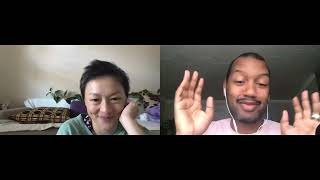
Mindful reparenting coach Gia, who immigrated from China at 11 and experienced childhood abuse and neglect, explains how to reclaim control of your inner child. She identifies five unmet needs that trigger us: Am I loved? Am I seen? Do I belong? Am I worthy? Who am I? The work means noticing what gets activated and meeting that need yourself.
Questions this video answers
She came to the United States when she was 11.
Chapters
Hello, my loves. And thank you so much for joining me today on this special episode that I have with a very special guest of mine. Her name is Gia, and she is a mindful reparenting coach. And this episode, I think, is a really special one because there is so many, so much work that needs to be done in terms of reparenting, and I feel so honored to have Jia here so that we can start talking about this topic. Gia, thank you so much for joining me on this podcast.
Thank you for having me here.
Yeah, I'm so excited. So, like, how did you get into this? This is so, like, interesting and so different. I'm so interested.
I got into it because of my personal story, and I saw the dramatic changes that it had in my life and the relationships around me that I decided that I must spread the message, I must help others.
Because we grew up being told that life is hard. You have to work hard, you have to be satisfied with what you get. And we dream about, you know, like, the things that we want in our life, and we're always told that it's a dream or it's a fantasy, and that is not true. Yeah, it's just within your reach.
I love that. Now, you talked a little bit about your story. Would you mind sharing with us exactly like, what. What sort of things you had to overcome when you had to kind of reparent yourself? Right. And just FYI, people, I think that we all are going to have to do this. This is work that every adult is going to have to do and actually release some of those.
I don't want to say bonds, but I think release some of the.
Sincere. Cut that.
Let's go with your answer, but would you mind just sharing exactly.
What you had to overcome to kind of get to a place where you are now?
Yes, absolutely. So I grew up. I'm a daughter of an immigrant family. I'm the only child. And.
Can I just. I'm sorry to interrupt, but for the people that cannot see her, you are Chinese, which I think matters quite a bit.
Yes, it does. It does. I was born in China, and I came to the United States when I was 11.
I lived through quite a few traumas in my life, including the move and. And my home was violent. There were verbal abuse, physical abuse.
And.
So psychological abuse, emotional neglect, all of these things. So I grew up in the States, and I had no idea who I was like, within myself. I did, but I didn't at the same time. It was just so confusing. So I left home.
After high school. And I moved to New York City, went to school there, stayed there and just explored on my own. And I really, really hold lots of gratitude to that place. Because if it wasn't for New York, I probably wouldn't, A large part of me would probably still not, you know, be not healed or not processed and whatnot.
But then I moved on to Europe and then I got married.
And my marriage broke and I came back to California decades after with a daughter. And by the time I came back, I had nothing left.
And I moved back into my parents house, which is the exact place that I have been running away from, avoiding.
That's what I was just thinking in my head. I was like, and how did that feel to.
Kind of be in a position to have to go back there, knowing the environment, that it was.
Fear.
A lot of resistance, feeling that I have failed. And I did everything I could to avoid coming back to this house, but I had nowhere else to go and I had a child that I need to support. So you know, I was forced to take up more responsibilities. And at that time I was pretty much like a shell. I, I remember coming back to my parents house and going through my old boxes, you know, stuff from high school and things like this. And I saw some old photos of me. I couldn't even recognize the person in the photo because it's just I. There was nothing left in me.
So that started my journey of healing myself. And I had no idea.
What'S involved.
I don't think anyone does.
When people just go in and they're like, okay, I'm just gonna work on me. I'm gonna do me. I'm gonna just heal myself. Like it's not cute, it's not pretty.
It's ugly. Yeah, yeah, it's ugly. It's hard, it takes a lot of discipline. But it's also really, really, really rewarding. If someone says parenting is rewarding, self healing is very, very rewarding because that's when you realize that you actually have so much power in yourself that you are the only person that can do all this work to heal yourself. Everything you're seeking outside, it's just a guidance. But if you don't do the work, none of those things will work. Right?
Yeah. So we talked about it being ugly when it's. How did, how did it, how was it ugly for you?
Well, this is, this is a very important part of my realizations is that.
We, each one of us is responsible for something which is called co creation. We all play a part into the dynamics of Our relationships. It's not, I'm a good person, that person is a bad person. He's a narcissist, I'm an empath. No, there's no such thing. It's empathy, you know, is also narcissistic in their own way. And you know, there's this like codependency and this kind of like being a victim that is part of playing that role. So when I understood that, it changed everything for me. So at the beginning, of course, I was just, you know, reading and listening to podcasts and doing whatever I can and I looked down on my parents, I despised them, I've always despised them because I resented them because of my childhood and, and then I looked down on them, I thought I was better because I was doing the work, you know, and they are not. So I'm like, I know something you don't. I'm better than you, this kind of stuff. But then when I understood the co creation part.
That lifted everything up and I was able to release all the resentment that I have been holding for decades because I was able to see them as human beings, not perpetrators that understand that they are the way they are is because they were parented that way. They had lived through horrible experiences during their childhood that caused them to have certain triggers and reactions and this and that which, you know, and how I, I understood, how I played into the dynamic of our relationship.
I'm just using my parents and me as an example, but you know, I play the victim.
Every time. I always, you know, said bad things like my dad this, my, my mom this, my dad that. But by playing a victim, I was already playing a role that, you know, creates this cause and effect, co creating, co creating this never ending dynamic.
Yeah.
Until you realize that, until I realized that I was able to stop co creating, take responsibility for my own actions.
And you know, once somebody stops playing that role, then the entire, you know, the pathways is going to change.
Yeah, thank you so much for sharing that because I think it's really important for us to understand that why we're talking about this. We're talking about this because the way that you interact with your parents is, is the same energy you're going to bring to your romantic relationships. Right. So in your Chinese household, right. And you were being told probably what to say, what to do, right. How to be perfect and all of this other stuff. I guess the book of Tiger mom is real. Very, very fucking real. It's real, it's very real that you're gonna bring that energy to your Romantic relationships. Right. And if you're used to this approval of your parents and needing that or used to having that, that's also gonna play a part in the way that you're interacting with the men or women that you're dating or, you know, connecting or co creating with. Yes. Yeah.
Such a beautiful word. Co creating.
Yeah, definitely. So let's talk about that a little bit later. But I want to talk about. Because I think there might be some people that are listening that first I think we need to just go back to the basics and really just talk about what does re parenting mean? Exactly.
So.
We have.
Many different parts of ourselves, actually. We have the inner critic. We have, you know, that critical voice that comes in whenever you want to do something that. That's a part of ourselves that is not us. It's, you know, things that we learned while growing up. And we have our inner child.
Which is all the wounds, the pains and the traumas that we experienced during our childhood. And the inner child is created, you know, when as a child, we are forced to be something that we're not. We are imposed upon.
Mold, molded into.
Whether it's parental or societal or cultural.
Yes.
All of these things. Then, you know, that feeling, that unbearableness, the pain of not being able to be who you truly, truly are.
It becomes like this just gaping wound that as you grow, whenever something happens, that can trigger.
That can, you know, trigger that old memory to enter your mind again.
That's what the inner child is. It's. It's every, you know, as an adult, you are.
Can we cut that and start over?
Yeah, no problem.
Okay. Okay.
So I want to. I want to first talk a little bit about reparenting and then we'll get into inner child. Okay? Yeah.
Okay.
So I want to break it back down because I think that there are some individuals that may not know exactly what reparenting means and reparenting yourself specifically means. So what does. What is re parenting?
Re parenting is looking at the way how you embody your energy, the whole. All parts of yourself, how you bringing yourself into an environment, whether if it's, you know, just an environment or whether it's a relationship with someone and you look into it, how you bring yourself into that environment.
How are your being influencing or affecting another.
And, you know, you want to see if you're being present or if you know it's. It's hurting others or you're not happy and all of these things. And if you can be aware and mindful of which part of you is in on the control panel.
Yeah.
You know, operating your adult body, then you are more able to take a step back and respond in a better way.
Yeah. So I know that previously you were talking about this inner voice, and then I guess the little kid that is listening to it, it feels like that inner voice is almost a way in which we can re parent ourselves by kind of.
Changing what that voice looks like. It's interesting because when I talk to my clients, they're the ones that are often saying, yeah, and I'm saying like, this is what I'm thinking. And I'm like, that doesn't sound like I've been talking to you for five months. It doesn't sound like you. So whose voice is that? And oftentimes that inner voice is either my mom or my dad, actually, that I've taken on as myself. Right.
And so I think also re parenting is about taking, as you said, that control panel back and taking control of that voice and talking to ourselves a little bit differently. And it's. I don't think it's. I don't think it's like I'm going to change some of the thoughts that unintentionally come in. It's about being able to step back and understand. Are those really my thoughts?
Yes. Being aware of which part is you and which part is not. And when you're deep into the re parenting work, you are able to recognize this is not me. So I'm going to take a step back, take a breather, and I'm going to respond from my essence, from who I truly am. And that takes practice. And you actually can create a dialogue. You can actually connect and build a relationship and have conversations with those parts of you.
Yeah. So it's interesting because a lot of people out there that are listening, I don't even think that they may not know how to tap into their inner child. Right. I think it's. I think for a lot of us, it's scary. Right. We don't want to go there. It means a lot of shit that I'm going to have to dig through that. I don't want to. I'm successful. I have a great car, a great home. I have a lovely dog on my side. And I don't want to have to go through all of that. It feels like so much. How can we tap into our little. Our inner child, that little girl inside? Hold on.
How can we tap into that inner child, that little girl inside? Right. Are there. I don't want to say easier ways to do it, but Ways in which it may not feel like as intense or as scary.
The best thing to do is when you're starting out.
Learning how to do inner child work. It's best to work with someone who can support you and who can create a safe container for you that you know you, that you feel that you're safe and you're protected because it's like, it's a lot of pain. It's a lot of pain and it's very, very, very scary. And we have more than one inner child. I would say inner children because.
Say more, girl, say more. What is this girl? Now you got me sitting up, girl. Say more, say more.
Well, you can have, you know, the little 6 year old and then the 10 year old and then the teen, you know, like there are just so many and every traumatic experience you have gets split into one part. So there could be many, many, many different parts depending on, you know, how much trauma you have lived through and how much that's left unprocessed. I've had clients that give them, give their inner children names. They have different names. I typically have a lot of clients who have more than one inner children and some of them are even preferred to be called they, to be referred to as they rather than, you know, they have different pronouns. It's just like you're treating it as they are a real person entity.
Yeah, I love that. It's so interesting that you said that this work is so.
Necessary to do in a very safe space and container. So in my program six months, we do not touch anything as it relates to the inner child until month five. Because the connection that I have with my clients needs to be so secure before we even get to that, that work. When I was first working, we would start to do a little bit of that work at the beginning and we were not getting to where we needed to get to. Right. And so I totally agree with you that that needs to happen when there is true safety in the relationship with you and another person talking about those things. That's why I think sometimes people will go to therapy and.
The therapist might want to talk about that stuff pretty immediately. And there's so much more trust that needs to be engendered. Right. So that we could. That the work is actually done in that surface level. So I think you're so right on when it comes to that.
I think, you know, this re parenting and inner child work looks different for women of color or people of color. So can you speak more on that?
Yes, absolutely. As a daughter of an immigrant Family being Chinese, you know, and coming here when I was 11.
I had to abandon what I knew before in order to, to survive here. And I feel like for a lot of immigrants or minority, minorities, we are living a life of survival.
Yeah.
Or at least, you know, that's what our parents have experienced. That's what their parents have experienced. Survival is in the lineage, and that's what they teach onto our children. I was told that. And as long as you can survive.
It'S all good, you know, you don't need anything else.
There's food on the table, you got a roof over your head, there's water to clean your body. You're good.
Yes. Your essential needs are met. Nothing else matters.
And so for us, you know, we are emotional beings. Yes. And we have to process things. And if we don't get the, you know, the, the. If we don't get to process, then everything gets stored up inside in our bodies, becomes, you know, a lot of pain and ptsd, and it manifests out into our outer external environment. So. And with colored and minorities, we also have this thing of like, you know, we have to work really hard, much harder than an average American. Because your skin color is different. I've been told that day one since I got here is that I am never going to be American. My skin color is Chinese, and that's how I will be seen. So don't ever even think about you fitting in, you know, and so for me to fit in, I had to abandon everything I knew before. And so there is culture abandonment, there's betrayal, and there's a lot of. A lot of abuse. There's substance abuse, sexual abuse, physical abuse, emotional abandonment. Even though sometimes these things are not intentional.
Like, I held a lot of anger towards my parents because I was emotionally neglected.
Most of us are because guess what? Both of our parents have to work.
Exactly.
Or we're growing up in a single parent household and that person has to work and they don't have the time to be truly with us. Not just in like actual time, but like emotional time as well. It's much more difficult. It's not impossible. I'm not like, it's very difficult to be emotionally present for your children if you're in a single parent household and you're working and you're doing everything else. And so I think, and that's why I wanted to bring this up because most of us are probably dealing with emotional neglect. And that is such an important thing to be aware of when you are starting to do this reparenting work, because I think a lot of people will be like, I don't need that. I'm good. Like, I'm good. Like, look at me now. I'm good. No, girl, you're probably not good. And if you're already telling me that you're good, I know you're not good. Exactly.
100% right?
No, totally. Totally. So I just think you make such great points when it comes to really understanding all of the things that are surrounded around being someone of color and growing up in a minority household. I know for myself, we moved quite a bit. And so what that meant, similar to you, is that I had to shed different layers of skin every time I moved in different schools and finding new friends. And it's interesting because when that happens.
Even though you have to go out and make new friends, walls also come up too, because in the back of your head, to your point about survival, I can't get too close to these people because I may go. I may go next year. I may go in two years. So I'm not gonna. I'm not gonna be fully close to this person. I'm not gonna truly connect. Right. With an individual in these relationships because I don't know if they're going to be secure. And that's how, you know, growing up in such a household can affect the way that you relate to other people. I think you're so on the money when it comes to that. I know that that was the case for me, and I think sometimes is also the case. And it's interesting, too, because what you'll see also when, like, people of color start to get out on their own is that they'll.
They're so used to moving that they're. They always want to move, even when. If it relates to travel. Right. That travel is also a representation of this habit that they've created to always move and always to be doing something else. I think we see on, like, Instagram and maybe Facebook. Oh, she's always traveling. She's always going somewhere. Yeah. I'm sure going to Bali is really cool. Love it.
But I also want to understand why she's doing that. Right. And if it's coming from a habitual place, it's important. Yeah. And I don't think people really understand that this is what the inner child and the reparenting work is really all about. Right.
Everything that we're doing in our adult life, if we don't do this work and integrate all the different parts of ourselves, we are operating.
Like, by different parts of ourselves. All the time. And this thing about traveling, I can tell you that this, this trauma of me moving to the United States when I was 11.
The move was very sudden. Sudden I was not. I didn't have the opportunity or the space to process. And when I got here, I didn't know anything, anyone. I didn't speak the language. The culture is completely different from what I was used to. So I had to start over. And so I moved a lot. I. I did that to myself. Whenever I would get close to someone.
I just go, I leave. I moved to New York, I moved to Europe, I moved back to the States, you know, and I abandoned friendships because I get too close. I'm like, oh, I need to pull back. And I had no idea I was doing any of this until, you know, I did the parenting where I was like, oh, that's right. My inner child. That part of me is afraid of getting hurt again. So, you know, unconsciously I'm doing all of these things without realizing. Child links.
Same, same. I think there's one point in my life where I had 10 different addresses in 10 years. A mess. Just a hot ass mess.
Yeah. It's interesting, right? The similarities that we have. It doesn't matter if black or Chinese. Like this is why. It's like.
Women of color will have a different experience. And like, that just means that this reparenting work is so much, so important. Right. For you to really kind of know all of yourself. Yeah.
Yes. And one more thing about women of color.
We are all victims of patriarchy, but women of color really are victims of patriarchy.
And how does that affect the inner child? Or how do we kind of, how do we understand that as we grow up? Right. I'm interested to get your thoughts on that because I think sometimes it gets ingrained and we don't even know. And then we just start living our lives as if this is just how like this is. Right. Versus not even having any sort of like thought process around it. What are your experiences or thoughts around that?
We don't think when we're living, we're pretty much on autopilot. So once we reach adulthood, we are on autopilot. We travel to fulfill a void. We look for partners who can reparent ourselves. Right. Who can fill a void. So. And when it comes to patriarchy is, you know, women of color. I mean, from my personal experience.
My dad was the man of the house.
He makes all the rules.
And we have to abide and we can object.
And, you know, we're women and we have to do all the housework. Just this, like the very basic stuff, but it just. It's so insidious, it seeps into everything that if you don't start asking questions.
Then you will continue to live like this. And if you don't start asking questions, you would have no idea. There is a different way of being. There's a different way of living. And this also has to do with decolonization work. So this. And this is an ongoing, ongoing work that because the. The programming is so deep and it's gone on for generations and generations and generations, that it's natural for us to be this way. We don't even ask. We have no idea.
I'm so glad that you brought that up, too, because just to add on top of that, because it is so hard for.
Men of color in the world and society, what they will do is that they will have a smile on their face in the public and then bring all of their resentment and anger back home. And so as children, we have to actually absorb that. Absorb it for ourselves and absorb it for our mothers. And that is really difficult to do. One, because the model is that this is. Because my dad is doing this. This is what love means. So when I see love like that out there when I'm dating, that's going to look familiar to me and I'm going to be attracted to that because that's what I saw at home.
Exactly. You always go for what you're familiar with is because that's what makes you safe. Even if you lived through abuse and your home was not a safe place, you will still seek that out because that is what you're used to. Like me. I mean, I have.
I've had, and I still have not 100% healed, but I have issues with men because of my relationship with my father.
Yes. You know, everyone that's listening to this probably is in the same boat. And the host as well.
Yeah. Yeah. But I'm so glad that you admitted that. Right. Because I think that more of us need to do that. More of us need to acknowledge why we may have interesting relationships with men in general and connecting that to our fathers without this shame or stigma of having daddy issues. Guess what? Everyone has daddy issues and everyone has mommy issues. Okay. Now that that's out of the way.
Yes.
This is the first thing that's very important is you have to be able to be kind and compassionate to yourself.
And the biggest step is to see and accept and understand.
That you have issues and where these issues come from and why they're here. And why you do things the way you do, what. Why you react, the things, you know, the way you react. You have to see it. You really have to see it and understand and accept that is a part of you.
Yeah.
It's not going to go away. You know, all you can do is to manage it better.
Yeah.
That's it.
I love that because I think that's really important. If you're not acknowledging it, you're not even in the game. Right. Yeah.
And I do want to say about patriarchy, I do want to say that men are also victims of patriarchy, especially colored men, because they are taught to, you know, they can't be emotional. They have to be macho. They have to be strong.
Yeah.
And so they have been told to shut out that emotional part of themselves. And that's also very painful.
Yeah.
You had mentioned earlier about triggers and how that I think is a really good, interesting roadmap to our inner child or children.
How many children do you have, girl?
I don't know. I was just thinking about it, girl. I'm like, maybe I've been neglecting a couple of children that I've had that I haven't really been able to really think about.
So I'm literally going to do a thought download of all of the different. But I think this is actually a really good exercise that we all can do, Right. Like to literally, you know, start from 5 and 6 and go every four years. Because you're a different person every four years when you're a child. So, like 6, 10, 14, and 18. And understand what part of yourself really wasn't fulfilled. What needs did you have at that time that you didn't. That you, like, that you had that were not fulfilled or something that you needed that wasn't able to be given to you? Right. And that's. That could be a variety of different things.
So many.
Yeah, yeah. But it's such. It's such a really great way to think about it because I think you hear inner child, and you're like, okay, I think about what I am as a child. Right. And I think most of us think about, like, anywhere from 6 to 8, 6 to 8, 6 to 9. We sometimes ignore the teenage years, which I think are actually so important, because that's when we're a little bit more conscious and, like, that's when the real resentment can start to come up and exude out of our pores.
So much anger in teenagers.
No. So I want to encourage everyone out there to do that exercise. Like I'm going to do. And if you feel like sharing it with me, please send it to anwaratyourguycoaching.com and we'll talk about it.
Yeah. So let's talk about triggers. Do you. What are your thoughts? How are you thinking about them exactly? And how can we use them? And maybe like the way that our bodies react to our triggers to connect with our inner child?
Well, usually we see triggers are all other people, other, you know, circumstances. Like this person triggered me, that person triggered me, or this thing happened today, it really triggered me. But actually there are no triggers on the outside.
That's right.
There are no triggers on the outside. Triggers. It's just, it's an illusion. It's anything that happens on the outside. It's a mirror that reflects that primary wound that you have experienced, and it causes a reaction from, you know, your inner child's unmet needs. And so usually for the inner child.
The typical needs are, who am I? Do you love me? Do you see me? Do I belong? Am I worthy? These five are the typical basic needs that causes all these wounds, you know, like emotional neglect, you know, not being hurt, not being seen. Can't be who they really are throughout childhood and have to create this, like a totally different personality so that they can survive. So every time you feel triggered, you tune in, you tune in with yourself and you ask, ask yourself, what do you need? Right.
Can you repeat those five again? Because I think it's so important for us and I think it's a really great framework to think about something. If I'm being triggered. One of these questions, right. Is actually needs to be answered in a more legitimate way. So could you repeat those five for us again?
Sure thing. Who am I?
Do you love me or am I loved? Am I seen? Do I belong? Am I worthy?
Yeah, I love that. Amazing, amazing. I love it so much. For us coaches, we geek out on this kind of stuff. I know new and different frameworks to think about things. Yes, yes. I love it so much. So good.
Okay. How can we, you know, we've talked a lot about the inner child, but girl, we're grown ass people now, right? So like, how can we integrate in a productive way, right. The inner child with our adult selves?
Ah, this, it's to help us heal, right?
Not just right. This is all about our natural healing.
Healing, yes. This is an ongoing work to integrate the inner child. First you have to recognize the inner child and then to accept the inner child and to be accountable.
Of the inner child. What does that mean being accountable with an inner child means that you have to be accountable of. You take back the responsibilities of changing your life, making changes in your life. Because what we do naturally is that we hold resentment and we think that we are being hurt. So we expect the other person to change the circumstances to change because we feel like we're entitled, but in reality is that the only thing that we can change is ourselves.
And. And the only thing that can make us change is ourselves. So without recognizing and accepting that ugly part, let's say ugly part of ourselves that we've been hiding for so long, when we won't be, you know, we will not do this work. We have to accept that part first.
Yeah. It's so important. Now. Do you have any exercises that we can do that will help us in this work?
I can. A lot of self love. So whenever you feel low, whether, you know, anytime during the day, or you can do this daily, weekly, whatever.
If your inner critic gets in, or you're just being cruel to yourself, because we all know that we can be very cruel to ourselves. You take a breathe. Take a breath and you sit down and you ask yourself, what are the three things that you did today that you're pleased with and how do you plan to celebrate them and make an act to celebrate them?
So when we are, let's say, kind of in our. In our heads. Right. Maybe even spiraling, what you're saying is to really kind of reframe it and to think about some of the things that you said you either accomplished or you're happy about, Right?
Yes.
And then think about ways of celebrating them and then actually celebrate them.
Yes.
Can you give examples of, like, how we can celebrate, like, things that we're proud of? I know it seems like a simple question, but I think sometimes people will be like.
I'm saying this because I know my clients, and I have to force them to celebrate their accomplishments. Everything is, like, on the to do list, and they just check it off and go to the next. Right.
That's the thing. That's what we're taught to do. We are also victims of capitalism.
Yeah.
So.
And just FYI, if you haven't noticed, my girl is in the Bay Area. So. Yes. Capitalism, yes. Decolonization, yes. Patriarchy.
So you are wearing your Bay Area quite well. And I'm sorry, I am very.
Yeah, it's very potent here.
Yes, yes, yes. As someone that was formerly in the Bay Area, I am feeling at home. Thank you.
We. Yeah, we're not very good at taking care of ourselves and celebrating ourselves. And it could be something really, really small. Like, for example.
Last week, I. I had an appointment, and it didn't went very well, right? So it didn't go very well. And immediately I was really focused on that. Like, oh, I didn't do so good. Oh, I suck. And, you know, all these cruel things I can say to myself. And before you know it, you're like, I'm, like, limping around and feeling really hopeless and feeling low about myself. But then, you know, I decided, no, this is bullshit. Excuse my language, but no, tell it.
Like it is, girl.
I'm gonna sit down and I'm gonna think about other things that I did. You know, how about. I am preparing to be on this podcast. I just got invited on, you know, and I just got a new client or I'm offering. I just finished doing my monthly offerings. It could be something really, really small. And then it's like, how do you want to. How do you want to celebrate that, Gia? You know, you can do anything you want. You can go out for a nice walk. Those of you who like to take walks, you can treat yourself to a delicious meal or a dessert, too.
I love candy and ice cream.
Yeah, go for it. Candy and ice cream. I'm a chocolate kind of girl, so, you know, chocolate girl, stay away from me, girl.
Buy yourself something nice. Yes, buy yourself something nice. Take a nice bath. You know, book a trip for yourself. Go away for a day, two days. You are.
Treat yourself.
Treat yourself in any way you want. And, you know, you also want to ask your inner children, like, what can I give you? Indulge yourself. Indulge yourself. It's the most important. We're so good at indulging others, but we have no idea how to indulge ourselves. So the most important thing I want to say to everyone is that you turn all the love that you're pouring out to the outside and to another, you turn all of that love inside self.
I love this so much because I think sometimes we can get stuck and trying to treat ourselves as adults and. And the things that actually will let our souls rise is being able to treat our inner child or children right. Yeah. Yeah. I love that so much. And if you're having issues trying to think about that, think about the things that you love to do between the ages of 8 and 12. And.
I asked this question of so many women and clients of mine, and you have or three things that you already know, right? When I say that what you love to do and find a way to represent that today, right?
Yes. And what have you always wanted to do but you haven't gotten a chance to, for whatever reason? Like, you know, I really want to try this, but I was told that I would never. You know, like, a lot of these things do.
More from Anwar

#datingtips #datingadvice #datingadviceforwomen #singleblackfemale #singleblackfemale #blackfeminini








Dating Pitfalls of the Smart and Successful Woman - Get Your Guy Podcast S1 E2

