Sunny's Relationship Journey
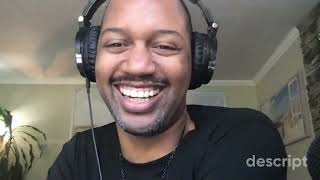
A transcript of a YouTube coaching-podcast episode where coach Anwar White interviews former client Sunny about her journey through the "Get Your Guy" program. Sunny describes recognizing recurring relationship patterns (preemptive breakups, difficulty accessing feminine/emotional expression, performing to earn love), deciding to hire coaching after a consultation call, and concrete shifts from the program: greater emotional honesty, reduced tension (less binge-eating, more bodily awareness), increased ability to state needs, and improved communication that elicited different behavior from her partner. The conversation highlights cultural context (Black upbringing, expectations to 'earn' love), the program's focus on feelings and communication rather than tricks, and tangible outcomes (crying more, asking for what she wants, partner responding).
Chapters
Hello, my loves. And thank you so much for joining me today on the get yout Guy coaching podcast. I have a special guest with me today. It's a former client, and her name is Sunny. And I thought it would be a really good opportunity for us to just talk about what a journey looks like in the get your Guy coaching program. And so I thought Sunny would be a really good guest for us to talk about all of those things. The ups, the downs, the trials, and the tribulations. Because it's not all roses. It is some thorns, too, sometimes. And so, without further ado, Sunny, thank you so much for joining us on this podcast.
Thank you so much for having me. It is a pleasure. I am so excited for this conversation.
I love it. I'm so glad that you're here. So why don't we start by just telling people a little bit about you and just, like, how you heard about me.
Yeah, absolutely. So I am from Indianapolis, Indiana, and I am an editor by day. And so a lot of what I do is behind a computer screen. And in the past, I had an online business. And so Coach Anwar and I were in the same circles, so to speak, online. And so that's how I came across him. And I realized that, like, I needed some additional help with how I was showing up in relationships. And so that's why I reached out to you. Yeah.
Well, awesome. Thank you. I'm so glad that you did.
Yes, absolutely. It was worth every penny.
Let's talk about that. Because, like, you and I both know that nobody's really wanting to ask for help these days. So how did you get over that in yourself, especially as it pertains to dating and relationships?
Sure. Absolutely. Well, I think first and foremost, I realized that I was, like, repeating some patterns. I saw there were some patterns going on in my relationships. And so this is, you know, over time, from when I first started dating, like, as a teenager until now. And so I realized that, like, if I really wanted to have a good relationship and have and show up in a relationship in a way that I could really value and appreciate, that I really needed to get some help and figure out what was going on. So that's exactly why I reach out.
Yeah. So, girl, what were those patterns? Girl, don't act shy. Now you on the podcast, girl, don't try to, like, listen. Give me this vague overview.
Girl, I tried to be vague. It didn't work.
And the people at home or in their cars are like, well, girl, what were the patterns, girl? Cause I might have them myself.
So okay. First things first is I think I realized that I was breaking up with every guy that I dated. I mean, that was something that we haven't talked a whole lot about, but I think that was something that initially I think I felt really proud about. Yeah.
And why was that? Why were you proud of it?
I think I was proud of it because in some ways, there's a sense of pride, there's a sense of optimism, and there's a sense of not, like, becoming someone kind of downtrodden in relationships. And I think I felt very proud because it kind of eliminates that whole, like, stereotype of being, like, the ride or die woman, you know, And I'm not a ride or die, but, you know, that type of thing, like, kind of flies in the face of that stereotype. I never wanted to be that person.
So thank you for sharing that. I think that's so important because there's a lot of women that do the exact same thing. And what I know for sure is that they are protecting their hearts and that they don't want to be heartbroken, and also they don't want to be abandoned. This is an abandonment wound that we are trying to protect more so than anything else. As someone who has a ton of them, I can even personally say that. Right, so have that I'm going to break up with you before you break up with me pattern. What other patterns did you have?
Yes, so that I'm gonna break up with you before you break up with me pattern. I think, too, I struggled with deciding on how I wanted to show up in relationships in terms of, let's put it very simply, masculine and feminine energy. I didn't really know how to kind of, like, number one, what kind of partner I wanted, which kind of would determine a little bit of how I wanted to show up in relationships. But also, I think I struggled with being in touch with my emotions and my feminine side, which made it really hard for me to have good relationships. And so I think that those are definitely some of the larger overall patterns that I continue throughout relationships.
I'm so happy that you talked about this, because you aren't the only black woman who maybe didn't feel comfortable in her feminine and have enough trust with the people around her, as well as within herself, to just sit in that and be okay with that. Right. And so part of the work that we do, and we'll definitely talk about this a little bit later, is just understanding where that comes from. And, like, do you want to do that or not?
More than anything else, and so, you know, you're not alone in that. And there's so many other women that are having the same questions about not just how do I show up or do. Am I in my masculine or am I my feminine? But who the hell am I?
Totally. Yeah. And I think a lot of times who we are is kind of predetermined for us based on, like, our culture and how we're nurtured. Obviously nothing to do with nature, but, like, how we're nurtured and how we're told that we need to show up. And I think a lot of times, especially growing up, I felt the need to kind of prove my worth through being smart, being intelligent.
Yeah.
Through, like, performing and showing people that I was worth this or I was best at this. And so I definitely felt I had to step into that zone as opposed to just kind of being able to take a step back and not have to prove anything. And so that was a really, really big struggle that I. That I had going forward. And also, I think it confused me because I told that, oh, I'm a mature child, or I was, you know, so mature as a child. And hearing that from adults, it's like, well, let me prove. Let me prove to these adults that I'm responsible. Let me prove that I. So I think I really struggled with, like, having a childhood and just being able to be free and just being able to relax and experience childhood the way it's supposed to be. Yeah.
And the other thing is, like, when you're always, like, the good girl, that adulation, that acknowledgement gets really addictive. And, like, it's like, the only way that you get attention. Because nobody's checking for you because they know you're going to be fine.
Exactly. People aren't really checking in with you. They're not, like, seeing how you're doing or how you're adjusting. They think, well, she can take care of herself. So what? You know, who are the people who actually need help?
Yeah, definitely. Okay, so you heard about me and then you. We had a consultation call, so talk to me a little bit about that. Were you nervous? Were you like, oh, I'm going to work with him. Did you not know? Talk to me about your experience with that.
I definitely distinctly remember the conversation.
Why is that going to.
Because I was. Honestly, I think I felt like. I didn't feel like you were judging me. I felt immediately like you were my friend in my head, and you know what I mean? So I didn't. I just felt initially very close with you. In a way that made me feel like I could. I kind of let my guard down a little bit.
Yeah.
And I was worried sometimes, I think with, especially in like the coaching industry, I think people fall very hard on one side of the fence or the other when it comes to an issue or like a particular situation or whatever. And I think your approach, that initial, initial call helped me realize that there are some things that we have to figure out here. And it's okay that we don't have a solution today. It's okay that we don't come to solution at this moment. Because I kind of. I have that quality where it's like, I need to be yes or no. I need to be a black or a white or I need. I need to be a red or a green. And that nuance is important. And I just needed to make sure that I was working through the situation fully before kind of making the next big decision.
That's so interesting that you bring that up because one of the reasons why I work with high achieving women, because it's 100% or nothing, right? But relationships and love is like being okay with being at the 60 and 70, like just like being comfortable there versus sprinting. It's about the marathon. And so sometimes it takes a little bit of deprogramming to get to a place where you can actually just feel comfortable in a relationship and also just feel comfortable being loved in that way. Not loved hard or not at all, but just loved.
Yes, yes. A reasonable daily sunny with clouds type of love. You know, just regular every day. And I think that too was also very difficult for me because I didn't really grow up with the whole fantasy fairy tale. And maybe a lot of other black women can relate. Like, I didn't grow up with that fantasy of some prince is gonna whisk me away. Like, I just didn't have that.
And so we didn't see it in our real life.
We didn't. And we didn't see it in our real lives. Absolutely not. And then also I think people expect black women to earn love. And I think it was really hard for me to kind of experience being in a good relationship without feeling like I had to kind of like it was weirded out. I was weirded out by how normal it was. And so that freaked me out. Cause I'm used to the turbulence.
I'm so glad that you mentioned this because that's what's like. I think it's so interesting when people get into a relationship when they're in the program. And then they're like, they freak out and they want to sabotage it because it is not like anything that they've ever experienced before. And so it's like they're so focused on the familiar chaos that when there's peace, it's so uncomfortable and they don't even want.
It feels like, is this enough? Am I, is it a good thing? Or is it, should I constantly, you know, if I don't have to constantly prove my worth or constantly prove that I'm lovable or constantly prove something about myself, like, and things are just fine and the love is stable and I don't have to worry that I'm going to come home to someone different than I left if that's happening. It was a very uncomfortable experience and I didn't realize that. I didn't realize how uncomfortable it would be, but it was uncomfortable in a good way that I realized.
So we had this consultation and was there anything that resonated with you during that conversation and how were you feeling afterward?
I knew immediately that I wanted to work with you. And I don't remember exactly what was said, but I remember how I felt.
Okay.
And I felt a sense of like, nervousness, but a sense of relief at the same time. I definitely trust your coaching style. I trust your opinion. I trust that. I trusted that you were going to help me realize the blind spots that I had. I'm excelling in my career. I'm excelling in other areas. What's going on with this relationship? What's going on with this relationship stuff? And I definitely felt that you were going to give me the real. You were going to help me really dig in and figure out how I could show up as my best self in the relationship.
Yes, girl. Always. Yes, always.
So one, one of the interesting things that I hear is that a lot of people don't want to book that consultation call because it's like, it feels very real. It's like talking to a stranger. So what would you say to those individuals that maybe have been thinking about it for a couple of weeks or a couple of months and need to just not do it?
I would say I would first of all ask, what are you waiting for? Because I truly, honestly believe that the work that we've done and the last six months was worth its weight in gold and it was worth every single penny. So I'd ask, like, first of all, what are you waiting for? Especially if you are a high achieving black woman or someone who is running at full speed all the time. I would pick up the phone, don't even hesitate. And I don't say that because I'm trying to help. I say that because I think first step is actually like, dedicating yourself and committing yourself to the process. And it is uncomfortable at times, but I think it was totally transformational for me, truly.
Well, thank you. I'm happy about that. We love what we do here. It's all about that transformation.
Yes.
So let's talk about that transformation. Let's talk about working together. So there's been a lot, like I was saying before, trials and tribulations. So I just want to just share with the audience that Sunny actually came into the program in a relationship. And so the getting your guy was not necessarily getting her guy, but it was understanding her guy and also understanding herself in the relationship. So let's talk about working together. And some of the things that we really focused on. What were some of the things that you really found a lot of benefits from?
Absolutely. So the first thing that we worked on was just understanding my feelings, which honestly took quite a long time. It took a very long time, at least I think, to get in touch with my feelings. Our weekly calls, he would say, like, well, how do you feel? And I would always say, I'm good, I'm fine, I'm okay. And one of the very first lessons that he taught me was saying, I'm fine, okay, I'm good, is a moment that's being lost where you can actually be vulnerable with the other person and have that conversation and be vulnerable about how you truly feel. But in order for me to do that, I actually had to know how I felt. So that was the first thing is like, figuring out when someone asks you, how are you doing? To be honest, because sometimes at work it's like, oh, you're just trying to, like, get through the small talk and everything like that. But when you're talking about friendships, relationships, and even at work, having. Being able to say, well, actually, you know, I'm a little tired today. And being able to explain, like, why that is why I'm a little tired because I stayed up last night late or whatever, you know, I've been working hard or something like that, whatever. So that was the first thing that helped me break my pattern of is just like, being authentic with people. And I honestly felt like I couldn't be authentic with people because I think. And again, maybe this is just me, but I think growing up, I grew up in, like, multiple judgments, mental pressure filled environments, and I don't know that we would see them that way. But just, like, realizing now that I'm older, it was really hard to be honest, and. Because there wasn't any room for failure in some sense, so to speak. Failure in quotes, of course. And I think my parents and my family and my extended family did all the best that they could do. But I think it's one of those things that, especially as black people, we struggle with because we're constantly being scrutinized. But anyway, so.
So it sounds like you were becoming more and more emotionally honest. And how did that translate into your relationship?
Girl, it helped me realize why I was having so much conflict, because part of the conflict was, you're not doing what I think is the right thing to do. And I'm upset. I'm mad. You're not or you're not doing the right thing I think you should do. Which. First of all, this is how I feel about everybody, right? I feel like I have the right answers. So this is no shade to my partner, but, like, I feel like I have all the right answers. I feel like I'm the person who knows what's best. And so therefore, if anyone doesn't know what's best and they or they define me, then I feel goddess.
Oh, goddess.
Thank you. Thank you. Yeah, I feel slighted about that. And so I think what I realized, number one, was that I can't argue people down. Part of the issue of. And I've struggled with this not just in romantic relationships, but with just friendships in general, too, of just being emotionally aware, having that emotional eq, to recognize that people much more to feelings than they do thoughts and logic and numbers and things like that. And so I've always struggled with relationships because of that, because my brain is always like, well, what is the right answer? As opposed to, well, how do you feel? And so it's been a. It's been a struggle for me. So that was one of the biggest things that we worked on. And so in relationships, I would always be like, well, this is what you should do. Well, this is the right thing. Not realizing that people want to feel that warmth. They want to feel that comfort. They want to feel heard and understood. And I want that too. I always feel better when I have it. So that's one of the biggest things that I think has just transformed me personally in relating to other people. Anyone, really.
I think sometimes people think of, like, the work as a dating coach is like, now you're gonna text this to the guy, and then he's gonna do whatever you want, and da, da, da, Da, da.
Well, you hear that a lot.
Yeah. And I think it's. I'm so glad that you're sharing that. That this is about who you are and how you relate and connect with other people.
Absolutely.
That's what this work is about, more so than anything.
Absolutely. And I didn't expect that, Glenn. I mean, I knew for some. I knew there was.
What did you expect, girl? What did you expect?
Well, I think. Well, let me rephrase that. I think I just kind of didn't know what to expect. I think I've seen a lot of people talk about, oh, like, women have to be soft and delicate and meek and mild, and that will make a man fall to his knees and do. You know. And then I think that's a very, very simplified. Simplified, but also kind of confusing because it's like, shouldn't love be that the other person loves you for who you are?
That's right.
You know, for who you truly are. And so I'd seen, like, your videos, like, on social media and everything like that, and I just was intrigued because I really felt like you, being a black man, understood the culture that we come from and what struggles Black women especially struggle with. And I felt seen and understood. So I think part of what I expected was that you were gonna be honest with me. I didn't honestly expect the feelings part. I didn't know, because we don't talk about feelings. Black people. We don't talk about feelings. Typically. I'm just obviously generalizing.
If people got a problem in the household, then mom comes and says, okay, time to eat. And that's. That's the forgiveness.
Okay, do you want to go?
And then you eat or you get something, and that's your forgiveness, and that's it.
We move on. We don't talk about it, especially with, like, you know, cultural hierarchy and what's appropriate, what's not appropriate. Like, it's very strong. And so I think our black culture doesn't get enough respect and how codified our culture actually is with the whole of the conversation for another day. Yeah, I think that's. It's just a big. It was a big struggle for me.
And you've been rocking it out now, so I think that's. That's been really good. And I think that. That, you know, it's really hard to take that next step and to do things that are different than what you're used to doing. I remember early on in the program, I would say, okay, that's you're feeling, and that's what you want. Now it's time to communicate that. And you'd be like, but no, I can't.
I don't want.
And then I would get stirner for all. Do it.
Yes, explain. Because you know what? The people who really care about you will hear you, and they can't hear you right away. They'll figure out how to start hearing you. And I think I'd grown up, and again, this is no shade to my family and friends or whatever, but I think I grew up. I grew up in a scenario where you really couldn't be. You could not trust your family and friends, at least me, with your feelings. It was like, oh, you know, don't worry about it. They didn't have the capacity. They didn't have the emotional capacity to handle those emotions. And so being in a relationship with someone who can handle that is a completely different experience. One other world.
One of the things that you also just kind of mentioned, which I think is really important, is this. This notion of acceptance. Right. That people should love other people for being. And I know in our work together, that was sometimes a challenge for you, right? Why is he this way? Why does he do that? Why doesn't he do this? Right. Yeah. So let's talk about that journey for you. How were you able to start accepting more and judging less?
Right. I think that. And I was just having this conversation the other day. I think that how I grew up was very. I grew up in a very judgmental environment. And so people had to act a certain way, they had to dress a certain way, they had to speak a certain way, they had to kind of present a certain way. They had to do everything just right. And if they didn't, then it was behind closed doors. They get talked about like a dog. And I definitely grew up that way. I participated in that because that's how I grew up. And I didn't understand that there was, like, another world out there where people just loved each other and tried to just, like, accept people for who they showed up as. And so it was very, very difficult for me to break out of that. And I've had some personal. Some situations, personally, where I'm not as close with some of my members as I would like to be. Part of that is because it's very difficult for me to be in those scenarios without feeling pulled back into some of that mindset. I'm really trying to work myself out of that so I can be more loving and then in turn, accept more love. Because I always felt like if I was this way, then I would be good enough. If I had all my ducks in a row, then I would be good enough. And therefore, I would be worthy of love. And therefore everything would go perfectly. And when in reality, obviously, that's not the case. I'm not perfect. I'm just a normal person. And I think that made it very difficult for me to accept unconditional love from my partner, from my mom, from my friends. I always felt like.
From yourself.
From myself. I definitely could not love myself. That's definitely true. So, yeah, thank you.
Thank you for sharing that. Okay, so let's talk about some of the changes that you were able to make in the program. What did you notice and what maybe did other people notice?
I think first and foremost, I cried a lot more. That's the most visceral, like, change that I've.
Honey, we made the thug cry.
Listen, I've been crying. Listen, Ms. No Tears was never gonna see me cry. What did Beyonce say? I commit suicide before you see a tear fall down my face? Okay, that was the type of.
Exactly.
That's the type of mindset that I came from, because I would never let anyone see me be vulnerable. First of all, I'm an ugly crier. Okay, so let's start there.
Join the club, girl. Join the club. When you're not used to crying, then it has to come out ugly, right?
It's got to. Cause it has no choice.
Uncontrollable.
It's a waterfall. So that was the first big change, is that I cried more. I cried more at movies. And I realized that's why I don't like to watch movies sometimes, because they make me upset, because I feel more feelings, and I don't like that.
And you allowed yourself to feel.
Yes.
That's beautiful.
Yeah. Yeah.
Even though we don't like to cry.
Yeah. But, you know, sometimes if you cry around people, sometimes they'll be like, stop crying. Cry. Your pet could have died. Your parent could have died. And they'd be like, don't cry. You'll be okay. So pick yourself up. And you see that on tv. Like, you see. You see that all the time. Especially in, like, Real Housewives and, you know, marriage of medicine, where people are in emotional turmoil, and people are like, stop crying. Your face. You can't let them see you cry, you know? And that's something that I think we, as black people, just carry, and it's very heavy, and we don't know how to deal with emotions because we're already dealing with so much externally. But that's Again, another conversation. But the first thing, I would definitely cry all the time or I just might be sad and not maybe any for any particular reason. Maybe I'm hormonal, maybe I'm. Maybe I just had a bad day or something or saw a video on Facebook, but it would make me upset.
And I know people are at home listening, like, well, why would I want that? Why was that good for you?
Oh, my goodness. I think first of all, there's less tension in my body. There's less tension in my body physically. I've been going to get massages lately thanks to the privilege of my job. And the massage therapist was like, how's the tension? How's everything going with the tension? How are you feeling? And I'm like, can you lighten up, please? And then finally, this is after like the third session. He's like, I've had to be as light as well with you. You really, like have a lot of tension in your body, Phys. And I realized I don't like being poked because it hurts me physically and things like that. And so it's helping me release the tension in my body. It's also helping me in the biggest way, in addition to just being more in touch with my emotions is like, for years and years and years I have been a binge eater, like, huge. And this is a eating disorder Disclaimer warning. Like, I've been a huge binge eater for years. And so, I mean, again, because I never really was able to express myself emotionally and be vulnerable with safety, now I'm able to, like, some of my habits have changed. I used to eat out a lot because it was a reward for me after sitting at my desk all day. And now it's like it doesn't even cross my mind to go out to eat. Not that going out to eat in and of itself is bad. So I don't want to say that, but just it's helped me realize, like, what actually do I really want to do? Yeah, I'm not numbing myself through food, through video games, through whatever, whatever else. Like, I'm able to just kind of be like, well, what do I really need? How can I actually decompress? Press truly so that I can calm down. Do I need a hot shower? Do I need to listen to calming sounds? Do I need a sound bath? Do I need to get some exercise? I'm able to. I'm just more connected physically with my mental. My spiritual is very much more connected to my body and it's helped a lot.
That's Amazing. Oh, that's so great. I'm so excited about that. So talk about. Let's talk a little bit more about maybe some of the things that you've learned, right. That maybe, you know, before. But that had been really helpful for you, right? I mean, obviously you've gone through and you've talked already about so many things that you've done and some of the changes that you've had. But were there any sort of concepts that, like, were a game changer for you or that really, like, shifted your worldview or perspective that, like, you didn't know before?
Totally. I mean, I think the biggest thing that I've learned, and this is in relation to being in a relationship with, like, a masculine man or a masculine energy, is that me, if I want to operate in a more relaxed, calming energy, I just have to be. And I just have to know what I want. And once I express what it is that I want, then the masculine energy, they naturally come in and take care of it and make it happen. And that was the biggest thing that's definitely stuck with me over the last several months, is that I don't need to wrestle. I don't need to kind of finagle and make certain things happen or make certain things work. I just have to know what it is that I want. And sometimes I think I was confused about what I wanted because there's a lot of information about there, what you should want. And I really had to kind of get clear about what specifically do I want. And I just have to express it, and that's it.
And we were able to do that quite a bit in this program.
Absolutely.
And I think it was really funny and interesting that, like, once we did that and then your man, like, showed up and did it for you, you were like, hella surprised.
Oh, my God. Number one, I was not only surprised. I. I was freaked out.
Why, girl?
Why? I was freaked out because I was like, now wait a minute, we're supposed to argue about this more. Like, we're supposed to have more tension. I don't know how I feel about this not having tension thing. I don't like it. Yeah. Part of me is, like, enjoyed a little bit of that tension to try to say, well, I'm worthy of this. But I think after just saying this is what I would like, and him just saying okay and him taking care of it, it really made me uncomfortable. Cause it's like, well, then I still have to work through my feelings about that because I still don't know why it Makes me uncomfortable. I'm still working through that, for sure, but I think it makes me feel just. It makes me feel, how high can this go? Like, what's the limit?
No limit. No limit soldiers, girl. No limit soldiers.
It just made me feel like, well, you know, it opens a world of possibilities to me that I just didn't think I had available to me.
Yeah, I think. Okay, so we're sharing a part of this, but this also was about you communicating to differently.
Right.
And use different verbiage and different words and different tones in a way that could be digestible for your partner. Right. So I don't want to skip over that because I think that's a very important part of the work that we have been able to do together so that you could be heard and understood and seen. And so, yes, your guy is doing a lot of different things. I think you guys had an amazing Valentine's Day and other amazing dates and great trips and things like that. But it was also because of the way that you were communicating.
Totally. I expressed I feel X. I feel like this, and I would like you. And, you know, what I want is Y. I was so convinced that I needed to express, well, this is the right way, because you should do this the way that I wanted you to do it because of logic point A or whatever. But that was not. That's. Well, that just opens up an argument, right? Because everyone doesn't think the same way.
Yeah, you give in PowerPoint presentations, girl. Right.
Okay, I'm moving PowerPoint presentations.
More from Anwar

#datingtips #datingadvice #datingadviceforwomen #singleblackfemale #singleblackfemale #blackfeminini








Dating Pitfalls of the Smart and Successful Woman - Get Your Guy Podcast S1 E2

