Fixing the “Controlled Chaos” of Dealership Service with AI | Dave Anderson, Evenflow AI
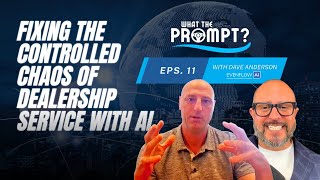
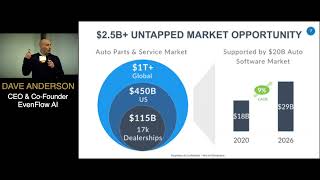
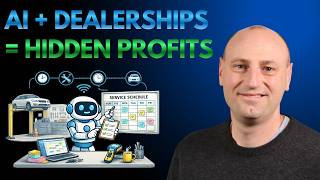
In this interview, host Michael talks with Dave Anderson, PhD and founder of Evenflow AI, about the chronic inefficiencies in automotive service departments and how AI‑driven capacity‑aware scheduling can unlock significant revenue. Anderson explains his cross‑industry background (airlines, hotels, healthcare) and how he applied the principle of selling every seat to automotive service. He describes the core problem: variability in demand versus technician capacity, and the mismatch between what customers schedule and what actually ends up on the repair order. Evenflow’s solution predicts the true labor time for each vehicle, translates it into clock time based on technician proficiency, and balances it against real‑time technician availability, visualized as a perfectly packed Tetris board. He quantifies the opportunity loss, stating dealers typically capture only 70% of their service revenue potential, with at least a 30% loss due to “spoiled tech time.” The platform combines AI prediction, mathematical optimization, and rule‑based logic, emphasizing that AI is a tool, not a silver bullet. Integration challenges with dealer management systems (DMS) and lane tools are highlighted, as is the need to replicate the service manager’s decision‑making algorithm in software. Anderson built a technical team drawn from various industries, focusing on listening to service managers to shape features. He warns against hype, advocating for clear business problems before applying AI. Real deployments began in late 2021, with dealers seeing consistent 20%+ revenue lifts, primarily through better unit production and higher hours per repair order. He discusses resource imbalances between service advisors and technicians, the importance of aligning both capacities, and future extensions such as demand smoothing, PDI workflow optimization, and used‑car recon. The conversation ends with a strong call to action for dealers to address revenue leakage now, providing Anderson’s contact details for pilots.
Chapters
Sam.
Welcome back to what the prompt where we pull back the curtain on real AI playbooks by moving auto retail forward. Before we kick off a quick ask. Hundreds of you are watching, listening, staying through to the end, but many aren't hitting subscribe. If you value raw future of auto retail, hit that. Subscribe, drop a comment and share this one with colleagues in the business. That's the fuel that keeps this movement alive. Today's guest is Dave Anderson, founder of Evenflo AI, the company tackling one of the biggest, biggest headaches in every dealership, service, scheduling capacity and technician load. His platform claims to not just smooth the schedule, but to unlock real revenue. We've been leaking for decades and he's here to show us how. Dave, how's it going? You doing well today?
I'm doing great. Thanks for having me here, Michael.
You know, Dave, you keep popping up on the radar. I just had to, had to reach out to you because you're making headways, you're making life in the service drive easier. Tell me a little bit about yourself so we can connect with our audience.
I'm, by most people's standards, still a baby or new to the industry. I didn't grow up in automotive. I have a PhD in Applied Math. I left academia a number of years ago, took a couple twists and turns and ended up at United Airlines. And then a little over 10 years ago, I left United and started working with partners on building our own businesses that take one of the few things airlines do really well and that's sell every seat on the plane and applying it to different contexts. So we did things with hotels, golf courses, doctor's offices, and surgery centers. And three years ago, I started EAMFLO with the hope to marry those best practices with the unique dynamics in automotive service.
Definitely makes sense and we're glad to have you in auto retail. David Service has always been the back half that keeps the lights on, but the systems are broken. What pain points did you see that made you go that direction for service?
Like, fundamentally, it's a super challenging problem, right? Like, there's a lot of variability. You know, Monday's busier than Tuesday, but not every Monday, right. 9:00am is busier than 11:00am not every 9:00am customers, no show. They walk in, they're late, they're early, right? So all this, like, variability and uncertainty is a challenge. And I think the, the number one challenge that I see coming in is also like what people schedule for isn't what leave on their repair order. So, like, the most simplest example, right? I have 100,000 miles on a Honda Odyssey and I book an oil change. It's extremely unlikely I'm leaving with that oil change. But if you load the shop on the oil change, you're way like mismatching the demand to the capacity there. So that, that like unpredictability is a real sort of challenge that the industry's been trying to face.
That sounds like some really deep building engineering. You call it capacity aware scheduling. Can you break that down for us in plain dealer English? What does that mean in a service drive?
At the most fundamental level, like what we're trying to do is match the flow of the demand, you know, customer vehicles, with the technician production capacity. So think of it as almost like a conveyor belt into the factory of the technician so that the cars show up at the right time that the team can fully service the vehicles there. And so in order to do that, you have to predict the true demand of every car, which is what I talked about, like that 100,000 mile oil change. Well, how much labor time will that actually take? And then translate that into clock time because technicians have different efficiencies and proficiencies, right? So like a two hour flag job could only be like an hour and a half of clock time based on the proficiency. So it's trying to like load that true demand and then balancing it off of the true production capacity of when technicians roll on schedule during the day or roll on off and then across time of day, day of week. And just trying to almost like a, the visualization I think of is like a, a perfectly packed Tetris board where like all the work comes in and there's no like, you know, black space of unused time, right? Or nothing's overloaded and, and you lose.
You know, so let's get real. For dealers listening, how much money is being left on the table when tech hours go unsold or scheduling is bottlenecked?
I sort of conservatively say that the average dealership gets 70% of their revenue potential. And the only pushback I ever get, when I tell a dealer that is like, you're wrong, we only get 60 or we only get 50. So there's significant amount. We've seen it in the data and here anecdotally, like when they get overloaded in the morning, like too much shows up in the drive, all they can do is try to push cars through and unit production goes down so they sell less hours per job or they, you know, the dollars per RO go down like that. That's like we've seen that, you know, statistically in the data and then you've got time where it's like, I call it spoiled tech time. Like the technicians on the clock but there's no work for them to flag. And in like in the airline world that's like you leave the gate with an empty seat. Like you're not selling at 30,000ft in the air. You just lost that opportunity here. So that, right, that in itself is that, you know, I always say it's at least 30% opportunity loss, but yeah, most people say it's, it's more.
If you're listening and thinking this hits your store, smash that like button and share with your fixed op director or GM that. Thank you later. Now for our builder audience, let's go under the hood. What's empowering evenflow? Is it constraint based optimization, reinforcement learning or a hybrid?
I know your podcast anchors on AI and AI is an amazing tool, but it's not the only tool. So the analogy I would use is the wheel is one of the best inventions ever. But we still needed a lever and a pulley, right? So AI is an amazing invention but we need other mathematical frameworks. So we deploy a lot of different things, optimization techniques, just even rule based approaches, other branches of mathematics that like is sort of the right tool for the right purpose there. But if I were going to like simplify it all down like you know, from an optimization standpoint, like Henry Ford pioneered it in automotive, right. Like of how do you maximize output of a factory? Well here in the factory you can control the inputs and so what that's an optimization technique. What was missing from this world is the prediction of the true demand. So I don't know my inputs when I'm loading the shop because I don't know how long your car is going to take or it's who's the next customer that's going to schedule five minutes from now. So I have to predict all that to get my inputs to then optimize the factory. So it's kind of that mix and match of the prediction plus the optimization.
That's amazing. Definitely mind blowing. Integrations are messy. Dms, parts, advisors, techs, what was the hardest nut to crack for your engineers?
So there's kind of two things. One is in our own side and then external. So external from the integrations, like integrations with the dms? Well I won't say that it's without its challenges. It's like it's the second stream integration that like so we integrate with the DMS and Maybe the lane tool is in the DMS and making sure our stuff goes to the lane, lane tool appropriately, that's, that's a hard technical troubleshooting because we lose control in that. So that's something that we're continuously, like, trying to, you know, fill in the gap. What, from our side, in our way. Like the way. One thing that I think about is like, we're trying to automate the algorithm in the service manager's brain. And so if you think about how people make a decision, it's a rule, it's an optimization, it's a prediction. Right. And it's a lot of complex stuff happening. And so all of our, like, algorithm and making sure that we're executing them in real time, that is a technical challenge to do it. Your brain does it like, you know, instantaneously. Like we gotta code it in a way that makes it entirely flexible for each service manager's brain.
So I get it. You know, Dave, my background is variable. Like, I, I, I'm in the sales side. My interactions with service are very limited. While you were talking about that, I was thinking the last time I interacted with my, with my service team, it's generally like this, like, there's the garage drive service lane. I'm usually just walking past it, just like waving and that's about it. Yeah, but, and I've been in auto retail for 20 years. I haven't been blessed, of course, to get on the back end, but there's so much there I didn't even think about. Scheduling optimization, filling in. You know, now I understand every seat on the sales floor needs to generate X. I understand every lift in a garage must generate X. But that's the end result. And you guys are pioneering how to fill that to maximize every dollar. That's amazing. So you built a strong engineering team. Did you pull folks from auto or industries like airlines, logistics, healthcare?
I pulled people that had the right technical experience, but it's not industry context. You know, I, and then I had, from my other, you know, ventures, had a pretty good idea about how to solve this problem at, like, in general, which got me kind of like somewhere between first base and second base. Right. Like, I wasn't on third base rounding home there. But this is what I found and what's it's always been like, true for my experiences though, is like, we just got to talk to the customer. So a lot of the features are like how we, you know, bring things together. It's literally me asking a question, open up my notepad and, and Taking notes of the service managers. You know, too often, I think over the years, they've never been asked, like, what do you want? Or, you know, what's your challenges? So I just, I taught, I asked, I listened, I took notes, and then I distilled and then I got had the technical team to kind of bring it to life.
Before we started on the call, you mentioned you had a deep, a deeper conversation about AI you wanted to have. What was that specifically?
There's so much, you know, hype and legitimate hype, but also, you know, buzz and noise about it. And, you know, I just, and I think the average probably person in the dealership has more concerned about feeling left behind but not knowing exactly what to, you know, use it for. And I think there's not often, like, an honest conversation about, like, well, what's the purpose? What's the business problem that you're solving? Right. And that's, and I kind of go back to the analogy of like the wheel versus the pulley, right? Like, yeah, a wheel won't help me get a bucket of water out of a well that well. Right. So it's like, but then that's going back to like, say, the service directors and service managers of like, well, what, what's your challenges? Or where are the opportunities? And then determining where AI is like, the right solution for, but not being like, you know, restricted to that. And I think too often, like, the conversation is just like, AI this, AI that, and it's, it's the wrong solution, you know, to many problems. You know, I, I, I'll give you another very simple example of like, I don't want AI to tell me whether I should go through a traffic intersection. I want a rule, right? Like, if it's red, I stop. If it's green, I go. I don't, I don't want something predicting that I can make it through. Like, I, I don't need that. Uncertainty rules just. Yeah. You know, and that, that's the, you know, into big picture. I just, I, I think the, the markets will start to normalize with this. But right now it's like, there's too much noise or, you know, of like, look at this shiny thing. But it's like, does that actually generate value? You know, and what problem are you?
Zero.
Right. Like, and in some cases, no value. Yeah. And you can think about it even on your sales side, right? Like, there are things that work really well that you're just doing through, like, rule base. Right. And you don't need, there's no uncertainty about it, right. Like, I know what I, you know, that satisfies. I don't need AI to take over and try to predict what I already can say is yes or no. So I think it's just more conversation has to be about where is the right application of AI, you know, and where does it generate the value.
I'm in agreement 100% and audience, this is why we have these conversations. This is not a shiny thing. There has to be a human in the loop. That's the lever, not the wheel. Dave, you hit it spot on. For my fellow builders tuning in, if you like this peak under the hood, hit subscribe. Every week we bring in founders and actually solving dealership tech gaps. Let's talk results. How long have you all been live in service drive so far?
Our first deployment went live in late 2021. And I'll just say candidly, like, we got our first customer easy. I was like, wow, this is going to be easier than I thought. And then the second one was a lot harder. So it is what it. But, yeah, so a lot of our dealers, like, we're growing, but, you know, we've had dealers on the platform, you know, for a couple years now, so, you know, a good cohort that at least had that long.
Walk us through a dealer who went from chaos to flow using evenflow.
I'll start with, like, the number one quote that we hear right is in the industry, like fixed ops usually says, like, well, we operate in controlled chaos, which I, I always say, like, why, you know, like, like, why is that, like an acceptable situation? And then, you know, our dealerships, you know, our service managers, when we work, partner with them and dial it in. The number one quote we hear is that our days are significantly easier and we just set a performance record. And so they're doing a lot more and the days are easier for them and customers are happier.
I love that controlled chaos. Dave, Us at car dealerships operate on dopamines and high heart rates. If your heart rate isn't high, you're not selling cars or closing. Rosie?
Yeah. Yeah.
Thank you for being the person that helps us calm down.
Yeah. I think maybe the analogy I would say is, like, think of you as a restaurant, right? Like, you want to go into a restaurant that's busy and lots of moving parts, right? Because then if it's busier, like, the food must be good because all the tables are full, Right. But you don't want chaos. You don't want the chef and the wait staff yelling at each other or dishes breaking you know, and everyone's scrambling around. Then you're like, I don't know what's going to happen to my food. Right. So you. I think the dealership's customers want that like, well run operation that's busy, but it should feel almost like a library too at the same time. Right. It's all under control. We got this. Right. Because at the end of the day, it's a huge asset that they're touching your car. Right. It matters a lot to them.
Perfectly said. Now, you've mentioned advisors being overloaded, techs underutilized, and guests frustrated. How does the system rebalance all three?
One of the biggest insights or challenges that I kind of, you know, being new, I didn't fully understand. But then it's kind of obvious once you dig into it is like a mismatch of the advisors and the technicians. And stereotypically you kind of load schedule today off of the service advisors of how much you can check in. Right. And the customer. I think this is a false bias, but a bias that customers only want to come in the morning. And so then you get this like mismatch of like demand to the capacity with the technicians. In my mind, that's kind of analogous back to my doctor's world. It's like, well, let's schedule the doctor's appointments based on how much the front desk person can check in the patient. Right? Yeah, it's completely backwards. Right. Like the doctor's doing the work. We should think about making their productivity maximize so the technicians are doing. Not to say that service advisors don't do the work, they're an important part of it. But most of the time on task is the technician. So we need to really like optimize that productivity. And that's how you bill hours, you know, and make money or, you know, sell parts. Right. Is the technician work. So it's so fundamentally, it's like understanding these are two different resources and then bringing them in together to say this is our true capacity. And it's that like bringing that together that's been missing. It's usually just been the advisors. How many can you check in? I can do one every 15 minutes. Well, that might have loaded the shop like 20 cars too many at a pace that's like, you know, has people sitting around in the morning and then, you know, nothing in the afternoon.
You know, you mentioned mismatching advisors and technicians. Can you explain more on that one?
I'll just take an extreme example, right? Like imagine if you had 20 technicians, right. But you had only One service, the service advisor can only check in, say three cars an hour and they're working eight hours. Well, then they can only take in 24 vehicles. Right? And then you got three technicians. And the technicians can do a lot more work than that. You've got like a resource imbalance issue there. And so usually it's not that extreme, but it can create bottle of like, how much can you take in in the morning? What we do see is like simple examples of like, I have 10 technicians that start at 7:00am and I only have five advisors, so I only take in five cars at 7:00am well, what are the other five technicians going to do? You know, they're going to sit and drink coffee and wait for the next round of cars. Right. So it's like some basic mismatch of resources there that you know, exists, but we're trying to, we try to bring that all together and shine a light on it when there's a mismatch. So the service manager then can maybe change things around with staffing to get.
It in balance revenue, revenue wise, what's the average lift? Are we talking 10%, 20% or more?
Like I said, when we, you know, the service manager leans in and works with us to configure it based on their algorithm, it's not us saying like, michael, this is the way you got to do it. We're extracting their algorithm and when they like lean in with us, we like consistently can get over 20% revenue improvement from it. Now, most of that is more from a unit production perspective. So we, we've shown that even without changing the number of ROs, it's just that we're balancing out the flow of the workload, you know, in a way that the team can just pull through more. You know, it's higher hours per R RO dollars per RO and you're getting that 20% lift there.
Have y' all thought about moving this into like PDI or areas when cars are coming off the truck to help that PDI manager manage that workflow from when it, when the vehicle hits the ground, checking it in, putting keys on, etc.
Yeah, yeah. So we, we're starting to touch other use cases in like just like partially. Right, like so subletted an example where things, you know, and how do we manage that? How do we, as you said, how do we balance in the internal workload for the PDIs and then a little bit more of a bigger gravitational pull is all the recon work with used cars and how you get that done? So all of it is again, it's, it's some ways it's same, you know, optimization problem. Like you only have so many resources that you can time on task of the vehicle and you've got all these different, you know, sources of demand and they have variable in demand, you know, of the importance.
Yeah.
So how do you balance that out in an optimal way to ultimately drive like, you know, bottom line profit for the dealership, you know, should you.
Right.
Because it's a trade off. Right. Like I do these five PDIs. Well, you know, is that a consequence of taking maybe, you know, two customer pay ROs. You know, so what's, what's the better, you know, balancing act there? But we're getting pulled more and more in this and I think if you were to, you know, talk to me a year from now, I would have like a much more expansive answer about that. We're thinking about it.
Yeah. I was just thinking about at work right now, there's tons of automobiles just waiting to be checked in. Service has always been reactive. Do you see a future where AI makes it proactive, predicting demand, flagging bottlenecks before they happen?
I feel like you must have been listening in on my internal calls because this is, this is definitely where we're going and we've got like building blocks to it. And where, where I'm ultimately putting it is I think a super exciting agentic AI use case and I would call it demand smoothing. So it's, you know, what I would say is a lot of these things that are pulling in like open recalls or even your traditional digital marketing on like fixed side. Right. Like you're generating demand, but it's, it's just like it's peanut butter demand. Right. Like, and it's not tied to the shop loading, you know, where do you want it? Right. And so if the day after Thanksgiving the shop is slammed because that people have day off, like, I don't need to drive the man to that day. But on that next Tuesday where everyone's back at work and no one's thinking about servicing their car, I should be driving demand to that day. And so it's just being really intelligent about where you try to pull that in based on the shop loading current state. And that's dynamic. Right. Because like I said back in the beginning, Monday's busier than every. Busier than Tuesday, but not every Monday. Right. So you got to know like, you know, this point in time, where are you sitting from a demand perspective, Dealers.
If you're listening right now and you Know your shop is leaking dollars. Click the like and share this with your service director today. This is the exactly the conversations they don't want to hear, they need to hear. AI is everywhere. You and me talked about this. It feels like a lot of shiny bolt ons. Why is now the time to fix the foundation and fix ops?
Well, I, I, you know, this narrative I think is well understood in the industry. Right. Like with the compression, always the compression of margins on the, you know, the sales side. Right. And the variability of that that, you know, you know, one dealer owner said it really well to me. He's like, I sell two things, cars and technician time and technician times my product that I can get high margins on. So, and there just hasn't been enough, I think focus to solve the challenge there. So this is such a critical, you know, profit driver that, you know, there's just big opportunity. Yeah, I'm excited to help the dealers with it.
So, so the big question, is this about dealers protecting margins as EVs change service revenue or is this about survival period?
I just, I probably just put it more simplistic or more like general of like they have an investment in resources. Right. How do you get the most out of it? So, and you know, to off there is a, you know, belief that the industry is too short on technicians. Right. And so yeah, and probably that's true. Right. But the question back is like, are you getting the most out of this team that you have today? And going back to what we said of the 70% revenue potential, I think before you hire that next technician, maybe think about like all the people that already on staff. Am I getting everything I can out of them? And, and that can be, that can evolve over time of like, well EVs, you know, become, you know, what does that look from a service standpoint? But like still fundamentally they're always going to have like a team on staff. They have an invested in base. How do you maximize that, you know, revenue potential from that investment and resource?
Yes. When you were speaking earlier, first thing that did go through my mind was a shortage of technicians. You're right. I'm on the front, you know, in the front end. I really don't notice it too much. Really. What I notice is when I see toolboxes and tow trucks. That's a bad thing, of course, but it's part of the business. So keep on what you're doing. This is fire. I think I feel down the road you guys are gonna just make sense to so many folks because yes, margin compression is what we always have our eyes on. But what I hear, mostly what I love about y', all, is customer experience. Them, it, it's. It feels like you're freeing up a service advisor's time to develop a relationship with a service customer.
Yeah.
I personally believe AI It. That is the human in the loop part. Part of, you know, bigger picture. We get to be authentic.
Yeah.
I mean, shoot, AI helps me.
Even.
AI even helps us do this, for instance. You know, it's. It's freeing up time. I didn't have to create this big old long script. You said it's like I'm reading your mind. Guess what? I didn't. But my LLM did. And there you go. Right? So thank you for breaking this down for both dealer operators and. And the builders in the audience. For everyone watching. If you got value from this conversation, smash that subscribe button. It's free, and it tells the algorithm that these dealer first conversations matter. Drop a comment below. What's the number one bottleneck in your service drive right now? That's where the real conversation begins. And if you're a dealer or vendor looking to pilot AI solutions like evenflow, join our automotive intelligence pilot program. David, how. How does anybody reach you? I want that phone to blow up. How do they find you?
They can email me or call me directly. My email is. Is Dave A Evenflow AI and my phone number is 312-241-8536. And happy to connect. I'd be excited to talk to you.
Definitely. And I'm gonna have the Evenflo contact information. Dave's LinkedIn in the description, so please look for that. David, huge thanks for coming on. What? The prompt, Final prompt. If a GM or service director is listening right now, why should they take your call this week instead of kicking the can down the road?
They're. They're every day, they're losing, you know, the revenue leakage. Right. So if I wait another week, I lose another week's worth of money. It's like you've just left the gate with empty seats on the plane. One more week. Like, why. Why wait? You should just fill these up.
Thank you. David. This was what, the prompt? Remember, the future of auto retail isn't about survival. It's about designing for what's next. We'll see you in the next episode.
It.
More from David
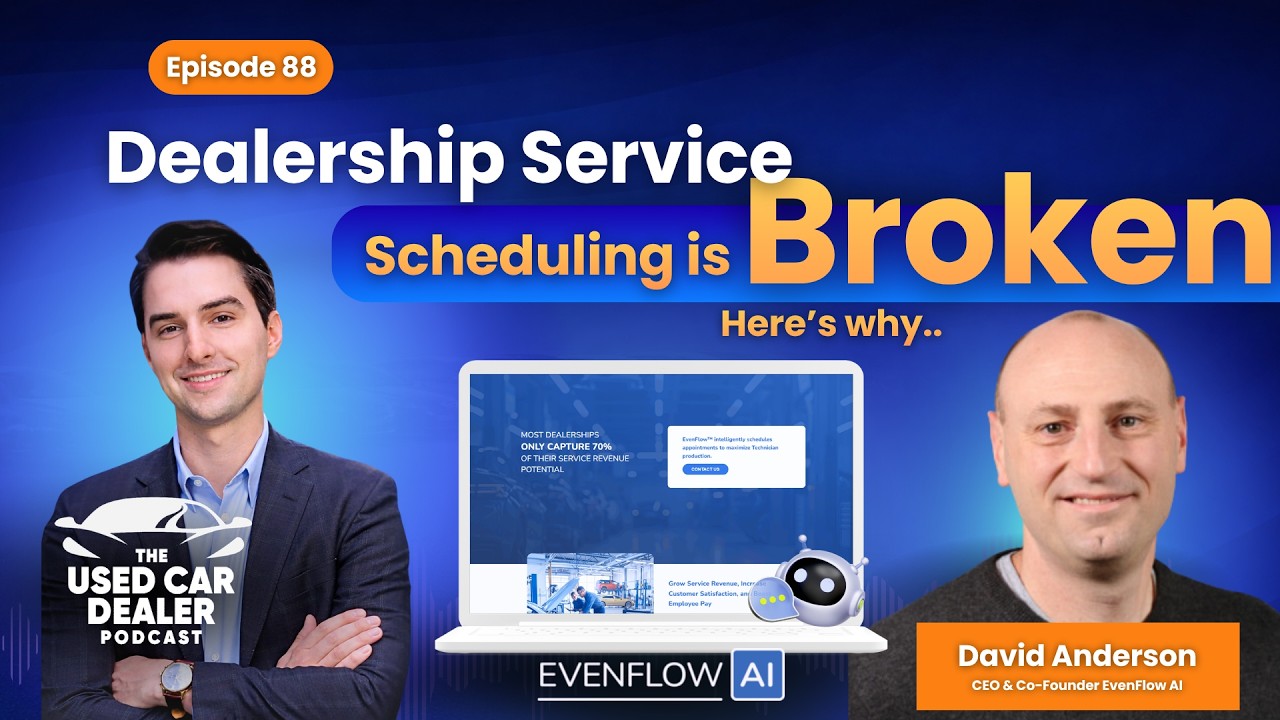
UCDP #88 – Smarter Shop Loading: Fixed Ops Capacity, Recalls & Recon w/ Dave Anderson of EvenFlow AI

Tully Williams and Dave Anderson of Evenflow AI with Sarah Vantine at Ted Ings' Fixed Ops Roundtable
Evenflow AI with Dave Anderson, Sarah Vantine & Ted Ings on the Fixed Ops Roundtable Rock Revolution