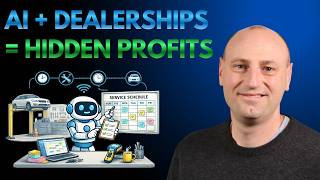
In this Fixed Ops Roundtable episode, host Sarah Vantine and Ted Eames interview David Anderson of Evenflo AI, with Tully Williams joining the discussion. Anderson explains how Evenflo’s intelligent scheduling platform, originally built for industries such as airlines, hotels, medical centers, and even cancer‑drug production, is being adapted to automotive dealership service departments. The core idea is to shift from counting cars to forecasting the total repair‑order (RO) hours needed for each appointment, allowing shops to sell and allocate technician capacity in hours rather than vehicle slots. The platform predicts RO duration based on factors like mileage bands, vehicle type, and service type, then maps those predictions onto technician schedules, taking into account skill sets (e.g., EV, hybrid, diesel, express). This enables dynamic “conveyor‑belt” loading of work, better handling of recalls (pushing low‑margin recall jobs to off‑peak times to increase profitability), and more accurate promise times that improve CSI scores. Dealers reported service revenue lifts of 20‑40% after adopting Evenflo, with some achieving record‑high growth in the first month. Throughout the conversation, the participants emphasize the excitement of applying capacity‑optimization concepts from airlines to the shop floor, the impact on technician satisfaction, and the potential for increased repeat and referral business.
Chapters
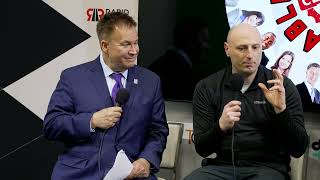
Welcome back to the FixedOps Roundtable. I'm Sarah Vantine here with Ted Eames. Today we have David Anderson of Evenflo AI and the one and only Tully Williams.
Ted, what a segment this is going to be. Maybe the best part of the show. Dave Anderson from Evenflo AI, welcome. And Tully Williams, welcome to the FixedOps Roundtable.
Thank you. Thanks for the invite.
Yeah, appreciate it.
Dave, great to meet you in person.
Yeah.
Your, your new platform, Evenflo, is about to reshape our industry. And Sarah and I have some questions for you. And I know Tully is excited to learn more as well. And Tully, maybe you might have a question or two.
Absolutely.
I'm ready.
But let's hear about what's going on and we're going to quiz the hell out of him.
All right. So, David, you've proven successful in many other verticals. Okay. Not just automotive. Tell us a little bit about this intelligent scheduling method and how you're about to apply it and how you're applying it now. To dealership service departments.
Okay, yeah, sure. So, um, well, first of all, the other industry experiences I've, uh, done, uh, golf courses, hotels, uh, doctor's offices, surgery centers. Also, I didn't tell you this the other time, but cancer drug, uh, production. So it has many different applications, and I'm trying to take those insights and marry it with automotive retail here with Evenflo AI.
I think the part that probably intrigued me the most, uh, we work for a major, uh, airline carrier, okay? And, uh, and help them because I know the airlines are really good at filling those seats. I don't see too many empty seats on— yeah, and you helped, helped them with their process there as well.
Yeah, exactly. And at the end of the day, all it's about is, um, capacity optimization. And, you know, that's fundamental for the dealership's fixed operations, right? How many hours can the technician, you know, flag, you know, and make sure that it's as efficient as possible?
Can you believe that he's saying that out loud like that? That is just incredible. You know, a lot of times we don't look at appointments as hours, and it's great that you figured out a way to help us fill our shop up because back in the day it's like, okay, I'll take 20 appointments and that 20 appointments normally will sometimes fill the shop up.
Yeah.
And I love that you were saying that, hey, It might be 4 ROs or it might be 30 ROs to fill up the shop at the capacity that we have.
Exactly.
And I think that that is something that we've never seen yet come out in the fix-off. So it's really exciting that you're helping us load our capacity because in fix-offs, what do we sell? We sell hours. We sell the capacity of our technicians. So this is super, super exciting.
Yeah, exactly.
Yep.
And, you know, at the end of the day, you know what? We're trying to take is, uh, one of the biggest challenges you have is what an appointment is doesn't equal the repair order. So if you traditionally try to count cars and then, and you know, the law of averages where you say like, I'll take 60, maybe on a 3-month period you got it dialed in, but there's so much variability day to day that like you're going to be off.
But what happens is the techs go home at 2 o'clock.
Yeah, yeah, exactly.
Or the techs are working late because we have to get something out and they get in trouble at home, right? So the thing about you predicting that because now we're not going by, you know, 60 ROs a day. I'd rather go by, are we selling our capacity of, let's say it's 500 hours a day.
Exactly.
And then we fill that up there, right? And that helps our BDC make sure that we have capacity today where, you know, if you're doing it that way, we might have 20 oil changes that pay half an hour.
Yeah, yeah, yeah.
And they're all under 10,000 miles. There's nothing to upsell on that car. So now we're at 12 o'clock. Where's everybody? Well, we did all the jobs.
Yeah, exactly.
And I think that you're going to come out with that prediction. Based off of mileage bands is really going to be a way that we can load the shop up and ultimately help us create better repeat referral business. So it's all about—
yeah, yeah, you hit upon it. I think the byproduct is just also a better customer experience. So when you give a promise time of like an hour or 2 hours, the shop is much better positioned to actually deliver upon that.
100%. You know, I think that when you look at, especially on the quick lane, I think is where this will benefit the most. Is that, you know, that is where we really need to have same-day appointments or next-day appointments. And I think that with that model, we can really get a lot more cars in and of course make our technicians rich and happy every day. Yeah, 100%.
Yeah.
David, walk us through— you touched on the CSI component, but walk us through a little bit more on the technology side. So with this intelligent scheduling, how has this radically improved the experience for customers and dealerships?
So from some of the logic there, like what I would say, the building blocks of it, first of all, like as I was telling Toly, like we're not counting cars, we're looking at each appointment and then we have the prediction to say what do we think the RO will be. But the other component of it is we can transfer, translate that back into clock time based on teams, the technicians' proficiency or efficiency. So just because we think it's going to flag 3 hours, Maybe it's only 2.5 hours on the clock, but that's really what you got to make sure that you're loading in shop against. And then it's, it's pegged against the technician schedule. So how they roll on or off the, the clock through the week and through the day. But what's most important about it, and this is what I learned along the way, being an outsider in, is like I think of it as almost an analogy of a conveyor belt of the work coming in at the perfect pace. But the, the big secret sauce of it is like how many conveyor belts you have. You might only have 2 technicians who can do EV work. You might have only 1 who's certified for this hybrid recall work. You have 1 diesel tech or you got Express Main. So customizing it to sort of how the service manager wants to load the shop or operationalize it, that's like the key part.
You know what's interesting you say that is that when the worst thing you can ever have is you have 40 appointments and there are 2/10 recall.
Yeah, yeah, yeah, you're right.
You know, you know, and then you need like 1,000 appointments that day, right? And so that will be really exciting to see how that works, especially with some of these recalls that are— people are just going to come in for the recall.
Yeah.
And I think that's going to help us a lot.
Yeah.
And actually, you know, one of the things that I always call about the recalls, it's like business optimization. So where do you want that recall? So, and you know, some OEMs, they have recalls that pay poorly. So they're like one-line RO nuisances, right? They show up in prime CP, you know, time periods. Well, maybe you push them to off-peak periods and then that one-line RO turns into $100 of CP.
I like that you predict that piece because our goal is to have that inspection.
Yeah. Right.
And then I also think if you look at, is that customer a repeat and referral customer or is that customer a one-time, the first time in? Because those will be a bigger RO or maybe a more challenged RO versus a normal customer with a restricted maintenance like that. It's great that you're going to that depth because that's what it really needs. Because if you didn't do that depth, then people are not going to believe it, are they?
No, no.
I actually wouldn't solve the problem, unfortunately. I wish the problem was easier, but it's not. Unfortunately not. That's great.
And Dave, finally, if I can, to bring it home, I know you're working with a lot of retailers today. What kind of revenue increases are they seeing working with your platform so far, Evenflo?
Yeah, so we got a lot of case studies of 20% improvement, 30%, even 40% improvement. We've got dealers who've, first month in, they set their all-time high service growth, and then we just keep going from there.
So, all right.
Yeah.
It's gonna be an exciting year for Evenflo and for automotive dealerships.
I hope so. I really hope so. Yeah, yeah, yeah.
Tully, exciting stuff.
It's, it's, it's really incredible that we haven't thought about this earlier, right? And I, I love the analogy of airplane seats because, you know, I feel like the shop is the same way. Can't sell yesterday's hours and you can't sell yesterday's airplane seats. So it's great that you have that experience and you're bringing that to the automotive space for us. Yeah, super exciting, super exciting.
Very cool, very cool.
Sarah, as Tully says, it's all about the hours. All right, all right, driving that repeat and referral business. Dave Anderson, Congratulations, and I know we're going to hear a lot more about you and Evenflo as we go through the year. So great stuff to get started.
Yeah, yeah, thank you, thank you.
Tully, thank you for joining us.
Absolutely, super, super exciting.
All right, Dave Anderson from Evenflo with Tully Williams from the Newell Company with Sarah Ventein. We're here today at the Fixed Ops Roundtable.