UCDP #88 – Smarter Shop Loading: Fixed Ops Capacity, Recalls & Recon w/ Dave Anderson of EvenFlow AI
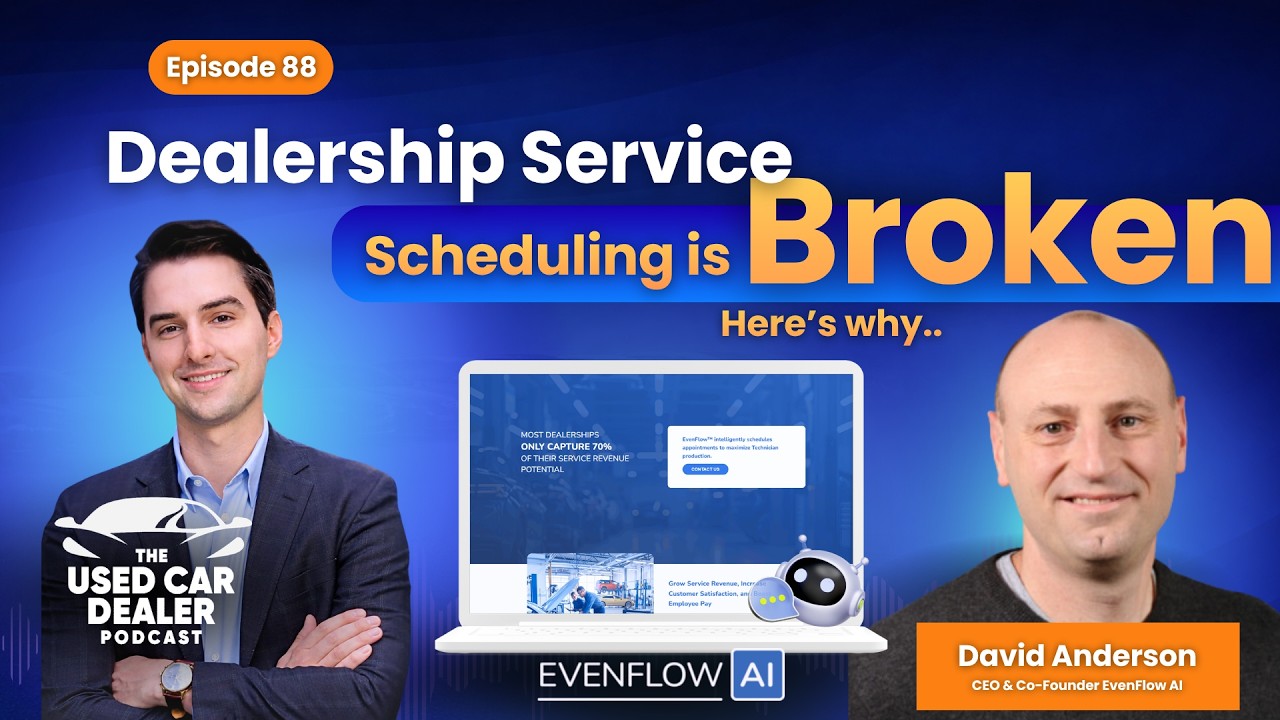
Dave Anderson of EvenFlow AI explains how dealerships can borrow scheduling tactics from airlines and hospitals to run more efficient service shops. His AI predicts how long repairs take, letting shops load work better and get 20-30% more production from existing staff. The company also manages recalls with a four-part framework covering customer readiness, operations, business optimization, and alerts.
Chapters
Recall company, they're great partners in what we're trying to do here. So I look at it as sort of four facets with recalls, and just from an operational standpoint, I think of it as like customer readiness. And what that means is, does a customer know that they have a recall when they're scheduling appointments? So they're not showing up in the drive and caught off guard of like, "Hey, I just had an oil change, and now you're telling me I got these." You know, 3 other things I need to do. So you got to make all booking channels, like, you know, uh, make sure it checks and discloses the recall. And then another part of writing this is communication. So it's, um, some of them there's like policies or procedures, right? Like, hey Zach, this is an inspection first, and if this fails, then this is what's going to happen. So you should disclose that ahead of time. No surprises.
Zach here. And today we're joined by Dave Anderson, founder and CEO of Evenflo AI. Dave brings a PhD in theoretical and applied mechanics, executive experience applying capacity optimization at United Airlines, and additional work in healthcare scheduling experience he is now using to help dealerships better match service demand with technician capacity. We'll explore what that means for service profitability, employee productivity, customer retention, and getting used vehicles frontline ready. So Dave, really appreciate you coming on the podcast today.
Yeah, thanks, Zach. Excited to be here.
So Dave, before entering automotive, you worked on complex capacity and optimization problems at United Airlines and in healthcare. What did those industries teach you about managing fixed capacity and unpredictable demand that dealerships have historically missed?
So first of all, you know, I would say that I kind of stumbled upon this area and not that, you know, like in a purposeful way, but what I, you know, what I learned is that like this is a pretty common problem that is unsolved for most contexts. So like a hair salon has this problem, right? Like some fixed capacity, variable demand. golf courses, movie theaters, right? Like, you know, airlines, obviously, with my background. So it's pretty ubiquitous out there. And, but it's not really well understood. And so one of the things that coming in with automotive and comparing it to healthcare, people often ask me like, where's the parallels or whatever? I'd say the best parallel I'd say is that Automotive wants to run like a surgery center, but too often it's like an emergency room. And what I mean by that, you know, emergency room is like, it's, you know, it's almost like an oxymoron. You'd say like, oh, it's an emergency, it should be fast. But the average or the median care time is like almost 3 hours, which doesn't seem so fast for an emergency, right? And The fundamental challenge with emergencies is that they're 100% walk-ins. Like, no one schedules an appointment to go to the emergency room. So you have all this, like, unpredictability of demand showing up, and then you have huge variability, right? Like, if I go in for a broken arm, or you go in for strep throat, or someone has, like, a stroke, like, the resources needed And the skills is huge variability across that and variability, and that causes this problem, right? And then from a surgery center, it's almost the opposite in the way everyone has an appointment. So like you can't just walk up and say, hey, can you, you know, do surgery on my ACL? Like you gotta plan that out in advance. And then there's no— and it's a known procedure, right? Like there's no notion of upsell like a Hey doctor, while I'm here, you might as well take out my appendix, right? Like you're there for one reason only. And so in that way they can plan, you know, it's a pretty— having scheduled surgery centers, it's a pretty complex, you know, collection of resources that you have to bring to bear, but you know exactly what it is. And so you can pre-plan on it and they run super efficient. Then you take that in the context of like automotive. One of the challenges there for sure is that like, all right, I have a vehicle diagnostic or a concern, right? Well, you don't know if that's gonna be like 0.5 flag hours or like 10 flag hours, right? You're going off of really impartial information here versus like a surgery center, like, um, You know it's an ACL, you know it's an appendix, you know, like there's no like doubt about it. But like automotive, the challenge is you don't know it. So you have to try to— what we're trying to bring to bear is like do our best to predict what's the likely demand for that. So then we're planning, you know, with that prediction. So it's more like a surgery center, right? Like if you just— Mm-hmm. Plan main shop as like a 1-hour diag and I scheduled 10 1-hour diag, you might have just taken in 30 hours of flag time. So we should plan that as, you know, 30 hours of flag time, right? If that's what the, you know, it's likely. So that's the real challenge with automotive is you're trying to, uh, predict what it's going to be so that then you can run it like a surgery center, which then is like very efficient. But the big thing about the surgery center that's different than what's traditionally, you know, in automotive is that, um, you know, the schedulers are appointment calendar fills and they just jam things in the morning. So it would be like a surgery center saying like, all patients show up at 8 AM and then we'll get to you eventually, right? Like, it doesn't work that way, right? You got an 8 AM surgery, I got a noon, right? Someone else has got a 3, and because they're staging it out. And that's where you get the most effective sort of, you know, care. And in automotive, that hasn't been part of the mindset, but that's where it's got to be in order for you to— like, the team to be set up for success and to fully service the vehicles and give the customers the best experience. So I know it was a long-winded way, but it's kind of like that. It's, it's, it's kind of like the challenge is it's too often like emergency room, but you got to run it like a surgery center. But you need some extra tools and know-how to get it to be like a surgery Totally.
And that emergency center surgery, or surgery, you know, center is very compelling. But let me take a step back. So correct me if I'm wrong, Evenflo's origin story began with you waiting 3 hours for an oil change. What did you see that day? What was the customer experience problem? Kind of give us a little more about the foundation of Evenflo.
Yeah, yeah. And I'll, uh, like someone asked me about this and I, I just prefaced it of, uh, I wasn't upset one bit because I was like, you know, uh, I'm an entrepreneur, so if someone gives me free coffee and free Wi-Fi, I'm usually pretty happy. So I was just kind of chilling out, you know, in the waiting room. But, you know, at the end of it, um, you know, we were, we were working on a healthcare company and we thought we were pretty close to exiting and, you know, we're kicking around ideas of what next. And, um, it just kind of struck me like, well, all I did was an oil change rotate. And I, I'm not a mechanic, I don't know what, like, how long that takes, but doesn't seem like it should be 3 hours. Like, uh, and, um, so it just seemed very inefficient. I saw a lot of people in the waiting room, you know, they're kind of like me, you know, of, uh, uh, didn't seem like they had that complicated of an issue. But we were all just kind of stacked up there and it just felt like there probably was a better way here, but it was pretty naive approach. So then we studied it literally for 2, 3 years, kind of on the side of us just trying to learn. And actually, I was very skeptical. I was like, oh, this is such a big space. I'm sure someone's already got this figured out. So it's like, so we'll just keep researching until we get this knockout condition to say like, oh, it's— You know, there's no opportunity. And we kept clearing tollgates until eventually I was like, oh shoot, I guess we got a company, you know, maybe we should do it.
And how do you get to raise from Steve Greenfield, OnRoad Ventures, and FM Capital? How'd that come into play?
I was, I was just really fortunate. I think, um, I, uh, you know, when, when Early on, I didn't know anyone in the industry, and I just got hooked up with a couple of generous people who opened up their networks. Ron Frye among one of them, and he introduced me to Steve, and then I think by then Chase as well. So both those firms, and I think when I first met them, I didn't even have a product. I might have had a clickable Figma or something. something like that. But, uh, um, and, uh, but I, I just, I think what we were talking about piqued their interest and we just stayed in touch. And then, you know, as we progressed, I think, um, uh, you know, they got really excited about— because there's so much about, um, you know, there's these AI scheduling agents and different, you know, tools out there, and they're, they're really like a labor efficiency play, you know, uh, engagement. And so there's No knock against that. There's real value to it. But no one was really touching upon like revenue optimization, right? Like in fixed ops, it's about technicians flagging hours and then parts follow on from that, right? And so it's you know you know that it's really about maximizing the revenue. And so no one was tackling the problem that way. I think I just piqued their interest and I continue to kind of pique. you know, dealer's interest with that, you know, focusing on that pain point.
So shifting gears, NADA, they estimate an annual shortfall of roughly 37,000 trained dealership technicians. How much additional output can Better Flow unlock before a store truly needs more headcount and How do you prevent efficiency from becoming technician burnout or an unfair distribution of work and pay?
Yeah, so that's a great question. So first of all, what I would say, and I get— and I caveat is like everything depends on each individual service center. So, you know, these are, you know, blanket market conversations, but like in NADA's own data, the way I analyze it, and then coupled with like, uh, about 150 dealers that I've looked at their data in detail, like the average dealership is maybe got at least 25 to 30% more production, um, that they could get out of their technicians with the current staffing. And so, um, here's a little bit of my United Airlines background where like we were always like on the verge of bankruptcy or out of money. So always the question was like, Right. Hey, I'm gonna make you do more with less. So that's kind of like burned into me. So like with that kind of experience, I look at it and say, well, before you go out and hire a brand new technician, you know, why don't you see what you can get, you know, maximize what you already have, right? And I think most dealers that, you know, we work with, you know, there's always been the case where they've had like, At least a 20%, like, opportunity for, you know, getting more with what they have right now. Now, regarding the, you know, technician burnout, like, it actually— it's almost like the opposite. It's like, in order to slow down, you can do more and speed up. So if you think about, like, where the burnout happens more often, it's due to the logjams, right? So if you're a technician, say you're an express, and someone comes back and says, hey, by the way, the promised time of this car is in 15 minutes and you need to get it done, right? Like if you gotta do it 'cause there's a logjam, then you're less like, you're, and I've witnessed it, they're doing the fastest inspection possible, right? And they're banging it out and they're like, geez, you know, like I'm done. And then like the next one comes up and then, you know, maybe at 3 o'clock in the afternoon they're dead, right? So that's a tough way of managing your day versus what we're trying to do is almost think of it as like create a conveyor belt of work in at the pace that, you know, you can do your work. So it's almost like you complete a job, there's nothing backed up, and then there's no downtime. The next one comes in. So it's just an easier way of like going through your schedule, right? You think of your own day, you know, if I ask you to do 8 things in an hour or 12 things in 2 hours, you'd probably say I'll do 12 things in 2 hours. That's— that seems a little bit better, right? And so that's the same thing. Um, now, uh, I get it, like, you know, some, some technicians might say like, well, I only want to flag a certain amount of hours, you know, or, um, Or I'll take whatever I can get. Now, what we have the ability to do is really not only sort of the overall shop loading, but like kind of get it down to the individual level, almost like pre-dispatch or factor that in. So like if you're a go-getter hustler and you're just like, if I can flag 80 hours in a week, like give it to me. And I might be like, listen, I'm kind of just happy with 40, you know, like, and I do my 40 good and there's a place for me. We can factor that in and how we load the shop with that in mind. So it really just kind of, that gets into no 2 service centers are the same. And not a single service center is the same every 6 months. They're like this living being that changes all the time. So.
This podcast is brought to you by AutoManager, a complete dealership software platform. From inventory management and CRM to websites and marketing tools, AutoManager helps dealers run their business more efficiently and close more deals. To learn more, visit automanager.com. Now back to the show.
And I wanted to move on to like used car reconditioning and changing service specs. So Cox Automotive, they reported 47 days of used vehicle supply in June of 2026, while average listing prices were 6% higher year over year. When inventory is expensive and everyday frontline matters, how should dealers connect service capacity decisions to reconditioning speed, inventory turn, and of course front-end margin?
Yeah, so I think that this is like, this is the holy grail, you know, and I'm getting into pieces of it, but we haven't quite fully solve the problem. But if you think about it, it's just like, uh, you got a fixed resource, you know, and how do you maximize that time, you know, for— and, and used car could be, you know, if you've got your own used car, you know, technicians, all right, that's a one pool of resource. But if you're, if you're running it where like, you know, we're the main shop techs, but we also are supposed to do recon as well, right? Like now there are competing objectives here, right? And then you factor in CP versus warranty. So ultimately what it should be is like you're trying to maximize the value of revenue for each unit of time there. And so factoring in like when should recon be pulled up or when should this, you know, warranty job or CP be pulled up and how do we balance that? I think it's a pretty dynamic problem, but that's how you got to think about it. But it's also like The way I look at it is not all recon is created equal, right? And it's also— that's another— this is one of the weirdest things about the— and it's fascinating to me as an outsider of like, with the optimization of recon, because like, in most places— oh, I can— it's hard to think of other contexts. But like, what you have on your shelf to sell is a deliberate choice. Mm-hmm. Like, you know, you're, you're stocking things, right? You know, used cars is random, right? I don't know who's going to trade in what car. You can look at historical patterns, but like, you know, if you're a Honda dealer, you might all of a sudden get 6 Civics in a row, right? And no Odysseys. And you're like, how did that happen, right? But so it's this random, you know, input on what you're stocking. But when I look at that, a part of the problem is like, uh, we can't create it all the same, right? Like, so if you, if you get 6 Civics in a row, that 6th Civic, maybe you don't need to recon that one so fast, right? Because you already got 5 on the lot. Um, but the next Odyssey that comes in, man, you better bump that up in the line because that'll probably move fast, you know? Um, or if you, if you're Honda and you got a Mercedes, like, it's a beautiful car, but you're like, I'm probably just gonna have to wholesale this anyways, right? Like, because, uh, So it, it's trying to be smart about how you prioritize that inventory, how fast it will move, and then balance it off of the other competing, you know, time of the technicians, you know, of this warranty job or CP job. And, and that, that's the holy grail of how I would look at it. So right now we kind of do it crudely, trying to bring it all together. It's like some math is better than no math. Right. But it's not, it's not like sophisticated optimized like what we do on CP warranty. Like, we're pretty robust. Like how we pull in recon right now, it's just, I call it some math, you know.
So one of our portfolio companies plays in the recall space, The Recall Company. They were formerly known as AutoApp. How does Evenflo kind of work in the recall landscape, or how does it touch, you know, the recalls as far as service appointments?
Yeah, yeah, yeah. No, and recall company, they're, they're great partners in, in what we're trying to, uh, do here. So I look at it as sort of 4 facets with recalls. Um, and just from an operational standpoint, I think of it as like customer readiness. And what that means is, uh, does a customer know that they have a recall when they're scheduling appointments? So they're not showing up in the drive and caught off guard of like, hey, I just had an oil change and now you're telling me I got these you know, 3 other things I need to do. So you got to make all booking channels like, you know, uh, make sure it checks and discloses the recall. And then another part of writing this is communication. So it's, um, some of them there's like policies or procedures, right? Like, hey Zach, this is an inspection first, and if this fails, then this is what's going to happen. So you should disclose that ahead of time. No surprises, right? Or, um, this recall is like a software patch that's, you know, no big deal. This one you're gonna have to like out. You should. We recommend you drop off your car because it's going to take six hours to complete, right? Like again, no no surprises in the drive here. So that step one is customer readiness. Step two is operational readiness. So not only is it technician capacity, but it do you have the parts on hand, right? Do you need you know lead time to order the parts, or are you on a daily allocation and you can only do five a day? And this is the sixth request. So better move you to the next day, right? So, and then other communications to the parts managers to make sure that they check that things are on stock, in stock, right? So that operational readiness is critical so that like the customer could be ready, but then you're ready to pull it through, you know, in the drive there. And then third is business optimization, I call it, which is kind of like along the lines of what we were talking with recon as well because You know, not all recalls pay, you know, equal, right? Um, and so some are less attractive. And, and if, if that's what you're scheduling it for, then you kind of push it to, you know, what I always recommend, push it to like off-peak periods, um, where, uh, you have softer demand and like free up, you know, the kind of creating that better flow in the peak periods. Think of like in the morning. And then, uh, you kind of turn some of those nuisance ROs into, uh, uh, you know, uh, opportunities for CP, you know, and, uh, um, a cross-sell there. And this one I, I learned from, um, healthcare because, you know, we used to talk to doctors. I could say this now because I'm outside of healthcare, but they'd be like, I don't want these Medicare patients. Like, ah, these Medicare patients, they don't pay anything. Give me Blue Cross Blue Shield. So, you know, he'd say, he's like, ah, yeah, I get that. But, you know, you, you, doctor, you can never fill up that 2:30 slot. Like, why don't we just push them there? Like, and, and they're probably retired, so they, they probably have flexibility and time. And he's like, yeah, okay, we'll do that. So it, you know, it's like that business optimization of like, you know, matching that fixed capacity to the, the value of that time, right? Of what you can generate from that.
Yeah.
And then the 4th piece is really like more of like, you know, the recall alerts of being proactive, of pulling, you know, notifying customers that they have the recall and pulling them in to schedule it with all the customer readiness, you know, operational readiness and business optimization. And there though, it's like we're still learning, but I think a big part of it is First of all, I would say, you know, it's not quote marketing, but from a marketer, like, it's a perfect thing. It's like, hey, Zach, this is, this is for your safety and it's free. Like, there's no better like messages you could tell someone, you know, with it other than like win $1 million. But you know, it's like, it's, it's for your safety and it's free. But then there's things in the message that you can make it like feel safe and secure to the customer, right? Like, here's the NHTSA campaign, here's a link to NHTSA. So we're for real, right? Like you can go read, you know, make it easy for them to research the importance of it, right? Like, so all that is like key of pulling customers in to do it, but it's gotta be within that like, you know, operational customer readiness mindset, so.
Totally. And our friends at Automotive Ventures, they recently highlighted advanced scheduling capabilities and they mentioned open recall capacity management, employee assignment algorithms, dynamic maintenance pricing, along with possible applications beyond service scheduling. Which capability is most underappreciated today in your opinion, and where must dealers draw the line so optimization never undermines transparency or customer trust?
Yeah, I think so. I'll answer the last. Question first. Uh, this comes up a lot. Uh, so the optimization, it still has got to be done with choice, right? Um, and one of the things, it's, uh, it's almost counterintuitive to people, but, um, we, uh, we usually when we come in, like beforehand, a dealership might have like 15% like same-day, next-day appointments. That means like I'm, I'm sitting here on like a Tuesday morning, I'm trying to get in Tuesday or Wednesday, right? We generally track to like 50%. So we significantly improve it. And it's kind of counterintuitive because you say, Dave, you're putting in all these controls. What, you know, I would think it would push it out. But it's— there's no bias in how our settings is. It's just truly available. And so it puts choice back into the customer. So all the flexibility is we're trying to achieve something operationally. you know, for the dealership, but it puts choice in there. So like, do you want to come in Tuesday afternoon or Wednesday morning, right? Do you want to loan a car or do you want to wait, right? All these things. Do you want to come in at— in the afternoon and save $20, or would you rather come in in the morning, you know, and pay, you know, the sort of the full price? But you put the choice in the customer's hand. And so in all industries I've worked in, As long as you let the customer choose, you know, they generally won't be, they're not gonna be upset, right? They made the choice. You gave 'em A or B, it was their choice. You know, there's no constraints there. So in that way, it's critical to like deploy the optimization in like where the consumers have lots of choice from there. I'd say, you know, the thing that's most underappreciated still today of, um, it's just the course, you know, shop loading capability of understanding it. Because so many, you know, that people have grown up in the industry of like, I'm just filling calendar slots and not even on, you know, thinking from the production capacity perspective, right? Like, um, if I got 100 hours of production capacity, how do I maximize that by fill things up? And that means maybe I don't take in 23 cars at 8 AM, right? Like, I stage them across the day there.
Totally.
But the thing about that too is, uh, that always increases customer experience because now what you have is like, you can, you know, the advisors can actually stand behind their like, uh, promise times, right? And set the expectations. So like, it, you know, Zach, we can get you in and out in an hour. Like, I'm confident. Or like, hey, this is going to take 2 hours, right? You know, before it's like, well, we think we can get you in maybe an hour, hour and a half, but we'll let you know. And it turns out to be 3 hours. Now you're just waiting for someone to stew and be upset, right? So it's that, you know, no surprises, right? And that's what we help the team be able to do.
And Evenflo's site, they list integrations across a range of DMS dealer tech platforms for independent used car dealer or smaller group operating with a mixed technology technology stack. What data is truly required to get started, and what should management expect during the first 30, 60, 90 days with Evenflo?
Yeah, so from an integration standpoint, you know, so I'm still trying to get my feet wet on like understanding all the independent different software systems out there. Like, really, like, what we— the most important thing is making sure that we're pushing in so that they can see it within their point of sale, right? So that they know that, um, you know, uh, Dave is coming in at 8 AM with this vehicle, right? So it's, it's integrated in their system, you know, for that, that they can, um, pull it through once that customer shows up. That, that's the most important aspect of it. Um, You know, from how the change goes, like, it depends on the nature of the dynamic of the shop, right? And so, you know, faster turning, you know, brands like Honda, Toyotas, right? Like where generally, like, you know, what comes in a day comes out at the end of the day, right? Versus something like CDJR has got maybe it could have like a 3-week backlog, 4-week backlog of like repairs, right? So it depends on that context. But like, if you're in that, you know, the Honda, Toyota, really by like week 2, you should be seeing something, feeling something different, you know, already. If it's a CDJR type store, you got a bigger backlog depending on your nature. Like, it could take like 3 weeks, 4 weeks before, you know, you start feeling something materially different. But That's why I always ask, like, you know, besides normal shop owner, like, what's at least one key business objective you wanna achieve, like, immediately? And then we really try to, like, go all in on making sure that they see some benefit earlier on of solving that particular pain point, and then we can build from there. The one thing I would always say is a watch out though is you can't, You can't just tinker with it. Like, it can't— it's not like the, uh, the volume control on your TV and just always change it. I got up to 17, let me turn it down to 14, let me turn it to, you know, 13, let me turn it to 21. Like, you gotta— you have to let some things kind of like, um, set for a little bit, or else like you just get like chaos of all the settings, you know, moving around there. And I think, um, it's a— I get it, it's a little leap of faith. And I always tell everyone like, um, At some point I'm gonna mess you up. If I knew what that would, I wouldn't mess you up, like, but I'll probably mess you up and then call me and then we'll recalibrate it and we'll get it right. But that's part of the onboarding process. So.
Well put. And the last 2 questions, this is a rapid-fire round, or sorry, 3 questions. So I'm gonna ask you 3 rapid-fire questions, uh, before we close out the podcast today. And Dave, really enjoyed everything so far. So number 1, what is the one fixed operation KPI every dealer principal or GM should review daily?
I would say flag hours versus production capacity because everything else, like service gross, follows from there. But like, that's your leading indicator. Are you actually like you know, producing from your, you know, your revenue-producing capacity. So you could flag 100. What did you do? You only flagged 82. That's a problem, right? I'd ask a question then.
Number 2, what is one dealership habit or management problem that no amount of AI can fix?
I would say almost All of them. So here's the thing that— and this is a bigger question about AI, but like, like, AI is amazing, but it's not going to solve a problem that it doesn't know, right? Like, it can execute a— you can train it on a workflow, you can train it on a decision, like how to do it at scale. But like, so for instance, like even the recon example, you couldn't just spin up AI and somehow magically figure out how to optimize recon, but you could come up with like a framework or the math behind it. And you can then get AI to execute it at hyperscale, you know, 24/7. So to me, that's the biggest thing that I would tell everyone with AI is like, you can't outsource the solution to your problems through AI. Like, you still need to own your your solution, and then AI is a tool to execute against it. So that's where I just say like all the business intelligence expertise of running your operation, you can't let go of that. And then, you know, that gets fed into AI, not the other way around, if that makes sense though.
Definitely. And lastly, what's your favorite AI use case in your personal life? So outside of business, your own company's tech, Anything like interesting for the audience?
Um, so I still use this. I— this still kind of bleeds into, uh, you know, my personal life, but, uh, I mean my business life, but, uh, because it's so hard to separate out my— because as you know, as an entrepreneur, founder mode. Yeah, like where is the line, right? Like, uh, so, um, there's like strategic questions that I have, and so, uh, I might start a chat with, say, like Claude and, and like having a conversation, but then I start asking like my wife, or I'll ask an investor, or ask an employee. I'm like, hey, pick up on this thread and then go ask, you know, ChatGPT or your own like conversation with Claude and just start going at it. Um, and then I like then getting all the, uh, threads back because I don't know what prompts or questions other people will ask, or they see a problem a little bit different, or they feed, you know, the LLM some different pieces of information. So then if— but if I can get 5 conversations to come back, then it's really interesting to see with me what, what is kind of a truism, like what always comes back no matter what, right? And then where do these things deviate? And if they deviate, what made it deviate? But that like is, uh, incredibly informative. I just started doing this and it was like it was like, wow, like, this is— and not— doesn't necessarily even mean that you get like, I saw even a new insight, but it like really crystallized like, hey, this thing is true. Like, I can put, you know, I know that's rock solid true. And this one, maybe that's squishy, I gotta learn more about, you know.
Very well put, Dave. And loved having you on the podcast. For anyone wondering how to contact you, get ahold of Even Flow, how should they go about that?
They can go to the website. Um, it's evenflow.ai, or you can always email me. Uh, it's my name, Dave A, uh, as in Anderson, but davea@evenflow.ai. Um, and, uh, yeah, drop us a line. Love to, love to connect.
Awesome. Well, thanks for being on the podcast.
Yeah, thanks for having me.
More from David

Tully Williams and Dave Anderson of Evenflow AI with Sarah Vantine at Ted Ings' Fixed Ops Roundtable
Evenflow AI with Dave Anderson, Sarah Vantine & Ted Ings on the Fixed Ops Roundtable Rock Revolution
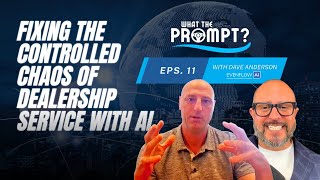
Fixing the “Controlled Chaos” of Dealership Service with AI | Dave Anderson, Evenflow AI