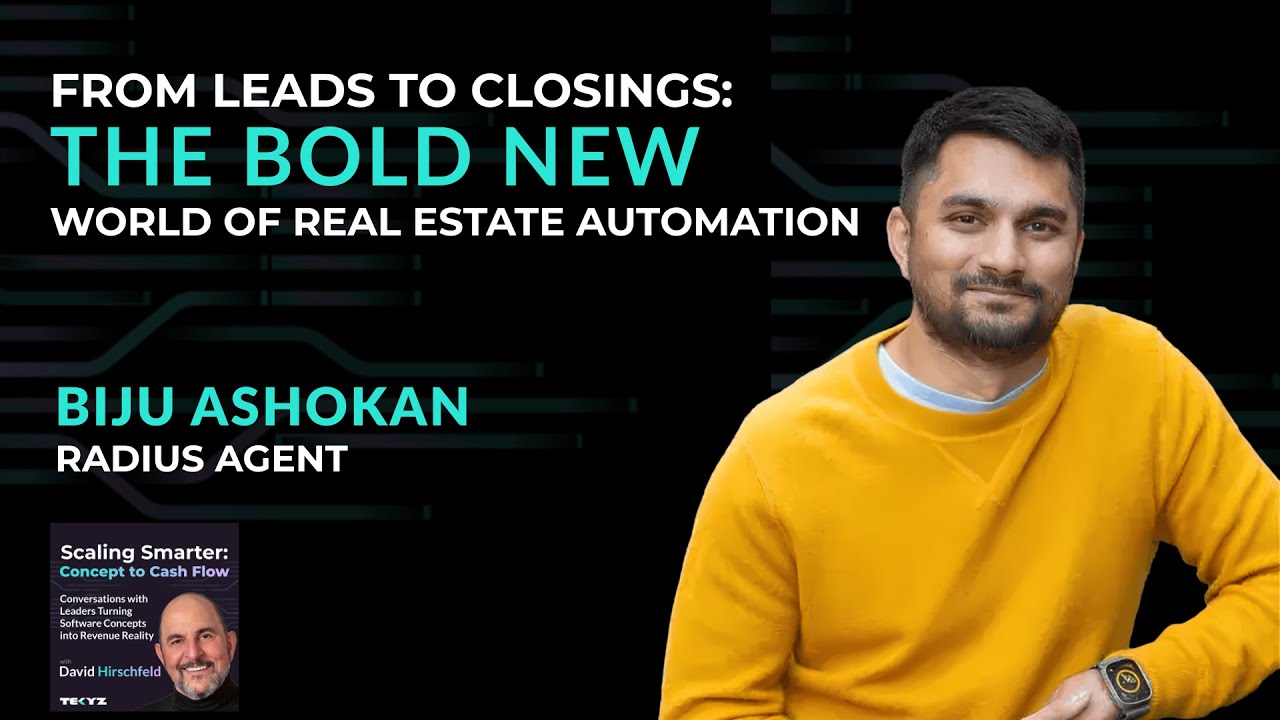
In this episode of Scaling Smarter, host David Hirschfeld interviews Bijou Akhishan, CEO and founder of Radius Agent, a prop‑tech company that builds an AI‑driven platform to automate the entire real‑estate brokerage workflow. Akhishan recounts his background in computer science and early real‑estate ventures, leading to the creation of Radius Agent eight years ago. The core product is a unified platform that covers lead generation, nurturing, client management, documentation, and closing, with an AI layer that automates repetitive tasks. A flagship feature, the AI assistant “Mel,” can prospect, schedule showings, and communicate with contacts across email, text, and in‑app chat, dramatically increasing agent productivity and reducing brokerage staffing costs. Akhishan outlines the company’s growth bets for the next 12‑24 months: re‑imagining the CRM with AI that takes notes, sends emails, and runs campaigns autonomously; continuous innovation to make traditional real‑estate software obsolete. He discusses market trends, noting that consumers are increasingly expecting AI assistants over static listing sites, and that agents who adopt AI will close many more transactions, while those who don’t risk obsolescence. The conversation also touches on broader industry challenges, such as a three‑year slump in home sales, and generational shifts in housing preferences, with millennials and Gen Z favoring flexibility and experiences over home ownership. Akhishan shares his contact details (biju@radiusagent.com, Instagram, LinkedIn) and recommends Alex Ferguson’s autobiography for its lessons on teamwork and discipline. The interview concludes with reflections on the evolving real‑estate landscape and the pivotal role of AI.
Chapters
Scaling Smarter wants to welcome Bijou Akhishan. He is CEO and founder of Radius Agent, which is a prop tech company, specifically real estate automation. And they have this mail AI that just changes the game for real estate agents and brokerages. Welcome to the show, Bijou.
Thanks, David. Thanks for having me.
So give us your genesis story for Radius Agent.
Yeah, I've been in real estate since I graduated. This is back in '08 when I graduated from Carnegie Mellon in computer science and information systems. Since then, I've been fascinated by real estate and the lack of tech in it. And then that's kind of what got me into the industry. And real estate has this weird, strange thing about sucking you in and just keeping you there. Because you tend to know a lot more about real estate once you get into it. So with all that information, you keep coming up with newer and newer ideas. So fast forward, this is my second startup in real estate. The first startup was called MetroPlots. We specialized in selling international properties and we got an exit and started Radius about 8, 9 years ago. The whole idea of Radius was to bring in tech to real estate brokerages and making real estate brokerages more efficient by giving the right tools to real estate agents And having their customers go through a really good experience working with these agents.
Give me some examples of how— of the benefits that some of your brokerages and agents have gotten from Realvolve.
Yes, the way we look at it, a real estate brokerage and a real estate agent, they have this workflow that a brokerage needs to support an agent on. And this workflow starts from lead gen to lead nurture to client management and client communication. to offer and contracts and the whole documentation process all the way to close. So this is like a really large workflow. And traditionally there's been like tech in all these different parts of the funnel and it's like varied tech. We are trying to build this one unified platform with a layer of AI on top of it where we can get agents to do the entire flow and brokerages to manage the entire flow. through our software. So one example would be, like, one of the AI features that we recently built is Mel can do prospecting for your agents. So let's say you have a team of 20 agents in your brokerage called David Real Estate, and we basically give you an assistant, an AI assistant that helps nurture leads on your agents' behalves, right? So all you need to do is load in a bunch of their contacts database and give Mel a goal. Say, hey, you need to like schedule a meeting, you need to schedule a property showing or whatever. And Mel would go after each of these contacts in parallel through email, through text, through in-app chat messages, and try and get that goal achieved on behalf of the agents. So we— Our agents would just get a bunch of meetings lined up in their calendar. from a database that Mel has worked on, right? So that's one of the features that saves a lot of time and just gets them a lot of meetings. So that, that's one way of increasing productivity. Another example of where we kind of decrease expenses and make the brokerage work more efficiently is all the documentation and auditing and all those processes that typically brokerages support agents on. They usually end up hiring a bunch of people doing all this traditionally. We've replaced that with technology where we keep automating a whole bunch of things. So we don't need a lot of people to support our agents because our tech takes care of this at scale.
So that's huge for people who have done this work just brute force in the past. Yeah. Looking in the next 12 to 24 months, what's your biggest bet for growth? New features, markets, partnerships?
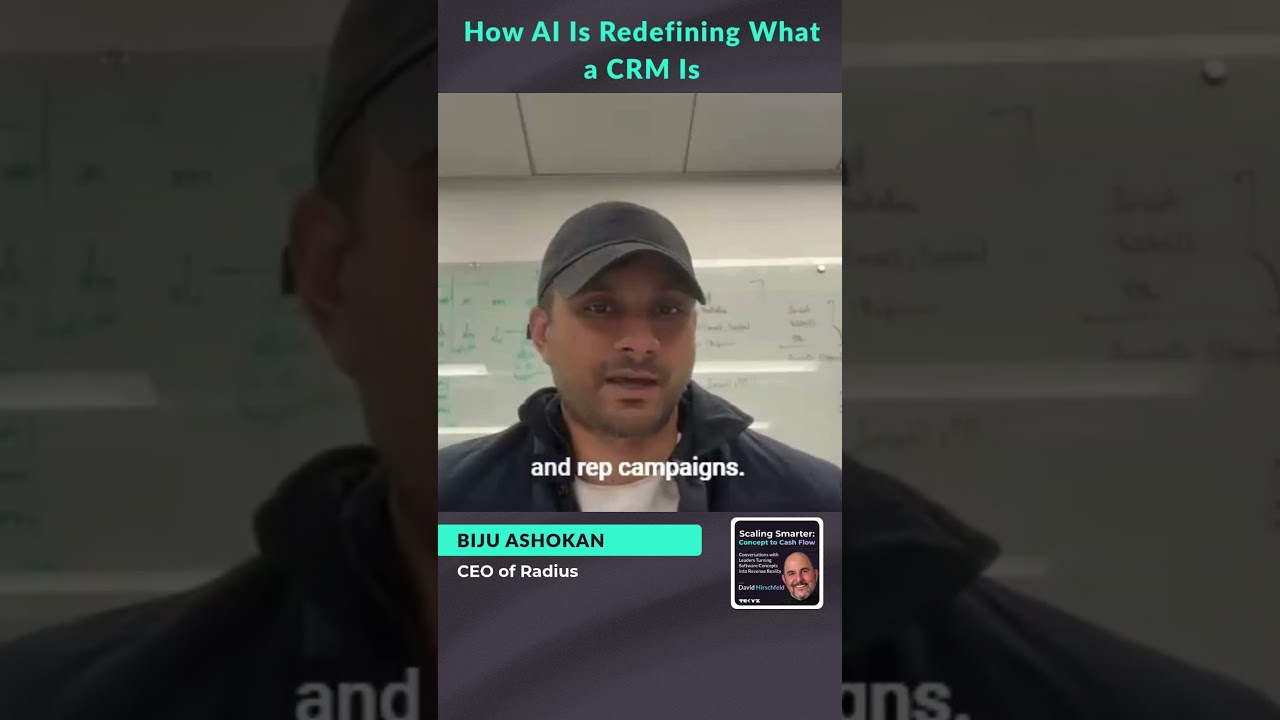
Yeah, so I mean, it's twofold. We keep being creative and innovative about what we are going to launch because there's like a big paradigm shift happening in technology right now. Everything that we are used to when we say technology, like for example, a CRM, right? Like everyone uses a CRM, but the way we perceive a CRM is changing because traditionally CRM is only as good as the amount of work you put into it, right? So you need to add your contacts, you need to set up email campaigns and drip campaigns, you need to add notes and reminders to it, and then it'll give you benefits, right? Like, oh, it's just a way of organizing your data. Now, if you were to build a CRM today, that's not how we would build it because there's an AI layer, an assistant who will take care of everything for you in managing the CRM, right? Like, it'll listen in on calls and take notes for you. It'll automatically send an email. You don't need to set up an email campaign. It'll do all the work for managing a CRM. So that's happening in every single part of the workflow where traditional softwares are getting kind of outdated because of AI. So that's, we're gonna constantly innovate on that front and make existing softwares in real estate outdated and bring in a new layer of— a new layer and a new way of thinking where we can cut corners and make it super easy for agents to just use technology by just interfacing with AI.
So that kind of dovetails into my next question. The real estate industry is moving fast on data-driven marketing, digital listings, and automation. Which market trends do you think will matter most, and how is Radius Agent positioning itself to stay ahead?
Yeah, so I think the trend that is growing or catching up is us consumers, we are getting used to interfacing with AI, right? I mean, even a year ago, if you had a question, you would Google it. Now you would ask an AI, right? Like anything, like, our mentality has changed completely. And then it's never gonna stop. You're gonna keep asking AI more and more things and it's gonna get smarter and smarter. So the idea of like going to a website and searching for a property like Zillow, right? That might get outdated, right? Like you might just go ask Gemini or ChatGPT or whatever to like say, hey, recommend homes for me. And it starts recommending homes for you. So why do you need to go to a website, right? Or you probably don't have to ever log into your Gmail because there's an AI assistant summarizing everything for you. few years. Like, there's like so many things that are going to get outdated, and that's what we are capitalizing on. And we're saying for real estate and real estate agents and consumers, we're going to give you an assistant that'll take care of all your needs instead of you having to log in to find information or store information.
How does AI and automation, do you think, affect agents directly, just in general?
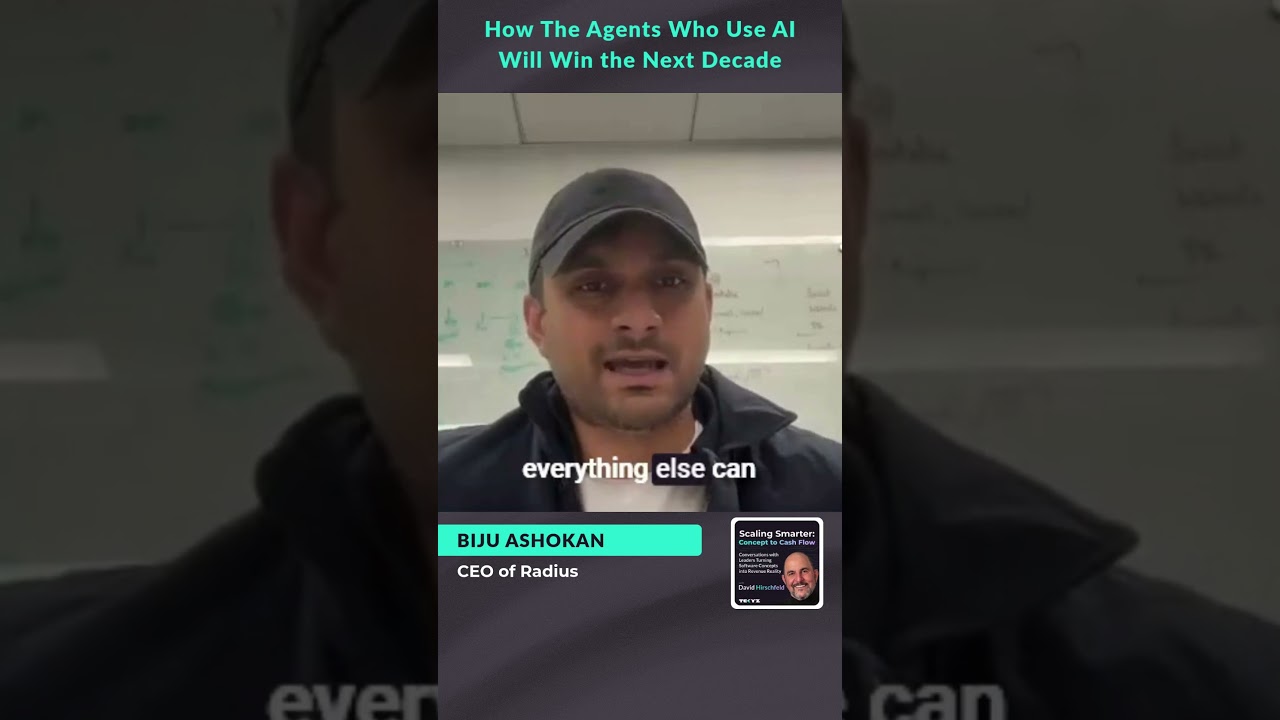
Yeah. So the ones that are smart and leaning heavily on AI to become more productive are going to be really, really successful over the next 5, 10 years, right? They just— agents who typically sell 10 to 15 homes a year, I wouldn't be surprised in 2 or 3 years they sell like 50 to 60 homes a year, right? Because they're just like using all these AI assistants to kind of take care of the repetitive things that they do. And just focus on the ones that they cannot be replaced with, which is client interfacing and meeting clients and showing homes. Like, those things cannot be replaced, but everything else can be optimized using AI. So if they can save all that time and have AI assistants work for them and everything, and they just do these client meetings and do the things that they're really good at, they're going to be really productive. So agents and brokerages, the ones that lean in heavily on AI would definitely benefit in the next 5 years. But on the other hand, the ones that don't are probably going to struggle, which means the number of transactions in our country would be the same every year. Like it could be plus or minus half a million, 1 million, but the number is going to be always between 4 to 6 million, right? So that is a constant, but agents are getting more and more productive. The number of agents will have to reduce over time. So a lot of agents would leave the industry and go to some other industry. But I think the agents that stay and focus on using AI will survive.
What are the biggest challenges that you're— that you've faced over the last couple of years and you expect to face going forward?
Yeah, I mean, like we started the call with before, The market is definitely the biggest challenge.
The market as in home sales?
Home sales, the public markets. That's— it's been pretty bad for the last 3 years. So I'm hoping that it cannot go on forever. Like it has to— what goes down must come up. So it'll definitely come up next year or the year after. But we kind of use this time to like be lean and like build technology that can make even brokerages, our clients, lean. So that's what we are focused on.
Now, millennials and Gen Z, I've heard statistics showing that they're less inclined to buy a home now than they were 10 years ago because affordability is just out of sight. And so they're starting to think, this is not where my money should go. I'll just rent.
Yeah.
And spend my money on investing or traveling or nomading.
Yeah, I'm a good example of like, I would just keep renting because I like the idea of like traveling to new cities. And that's not because of affordability. It's just like a lifestyle choice, I think, more than affordability.
I think that both of those things play a heavy factor there.
Yeah. And what this would lead to is logically, if you think about it, there's obviously cities where properties are really expensive and there's cities where properties are really cheap. So there's going to be a big normalization that's going to happen where the city prices will probably come down only a little bit, but it's not going to crash. But everywhere else where the property is really affordable, people would start moving there. So it kind of mixes, right? Your willingness to travel and being a nomad and your affordability kind of matches in different parts of the city, which I think overall is good for the country because we don't want a few cities doing well and the other cities not doing well. So we want every city to kind of have population come in. So I think that's going to happen. And what that'll do is also make companies move to different cities, which means opportunities will move to different cities too. We might see like a dip right now, but I think it'll normalize in the next 2 or 3 years and markets pick up.
Well, here's a question that nobody seems to be able to answer for me. And home sales are down, prices are high, interest rates are high, and yet prices in big cities where the prices are high keep going up. Yeah, I mean, just San Francisco, Los Angeles, Phoenix, They're either stable or going up.
Yep. I mean, I live in San Francisco and I can explain why it's going up in San Francisco. People are coming back, right? Like more and more people are moving to San Francisco even though even the rentals are expensive and everything is expensive, right? And the reason for that is the opportunity that you get in San Francisco is incomparable, right? But just living in San Francisco, working in a company in San Francisco, the learning that you would get from it is way higher than any other city, right? Like the experience, the people, even if I go to a coffee shop, the conversations that I have is like very, very educational, right? Everyone's curious. Like there's like that energy and that I'm guessing happens in all the major cities like New York. San Diego, everywhere where there's development happening. I think people value learnings and they're curious more, and that's why they're moving to these cities. Traditionally, I think the previous generation, they valued saving and investing and buying a house, and there's that trajectory that they had. Now I think more people are just curious. They want to learn and they want to become better because there's this pressure internally of If I don't learn, then I'm going to be outdated. So I have to be in a place where I can maximize my learning. Is it expensive? Am I going to save anything? No, but I'm going to learn, which is going to help me in the future, which is where I think all the youngsters are moving to these main cities. It's a good trade-off, I think, because I follow that too, because I think when I go back to smaller cities or meet people in smaller cities, like their mindset is extremely different, right? Like, but we're in San Francisco, I can just see everyone else, like there's like a stark difference, which I think is good for the generation.
Well, I definitely love living in San Diego because it's just the open-minded kind of discussion and availability of people who are really smart and intellectual.
Yeah, exactly.
But I do own my house. So I— but it would be very hard for me if I were starting out today to basically find a path in. Yeah. Because of how much you have to save and how much you're going to be paying in a mortgage.
Exactly. There's also other instruments that are doing well now. Like if you're back in early 2000s, I think buying a house would have been like the most sensible thing to do.
Yeah.
Now it's probably the second or third most sensible thing to do because there are a few other things that you can do that's even higher risk but can give you better returns. So the risk-taking kind of mentality has gone up in general with people. So they like investing in those things. And then houses become like a, when you hit your 30, 35 and you have a family, that's when you want to buy a house type of thing, right? Everyone wanted this dream, had this dream of buying a house. Now it's that dream only starts happening when you like done everything else, right?
Right. So if my, uh, uh, if somebody in the real estate industry wanted to get a hold of you, what's the best way to do that?
I mean, I'm on social media, uh, Instagram and LinkedIn. Uh, my email address is biju@radiusagent.com.
And that's spelled B-I-J-U. For the people that are listening and not watching on YouTube, biju@radiusagent.com, just exactly how it sounds.
Yes. Yeah, I'm usually very quick at responding. I'm like a zero inbox person. So if anyone sends me an email, I'll respond.
Okay. And do you have a favorite book suggestion?
I read a lot of management books in sports. One of my favorite books is the autobiography of Alex Ferguson, the man.
Why sports and why in sports?
I think it's mainly because teamwork plays a big role in sports and having a good team always is the number one factor to success in sports. It's never individuals. It's about discipline and like So there's usually army and sports, like where like you have this focus on teamwork and discipline. And if you listen to all the successful coaches, their podcasts and what they write in books, they always, you find those 2 in common. And it's always inspiring to read that. No matter, even if I read 20 books and all of them say the same thing, it's still inspiring, you know.
Yeah, and I really couldn't agree to that more. And teamwork and discipline, those are maybe the 2 most important things for success. Yes, luck plays into there too. So, you know, if you're in the right place at the right time, that never hurts. But that's not— you cannot depend on that.
Yeah, you cannot.
Right.
You just can try.
If you have the other 2, you'll find some path to success.
Yep. And it might help you get that luck.
Oh, for sure. Yeah, because it's always, you know, you make your luck. Right.
Yep. Yep.
Well, Bijou, as always, thank you for coming onto the show. I will have all those details in the show notes for our listeners if you didn't get it while listening. And maybe I'd love to hear how you progress over the next year or 2 because AI is changing everything and you're in an industry that needs to change. So I'm very curious that your trajectory as this starts to really take off.
Absolutely. And thank you. Thank you for having me.