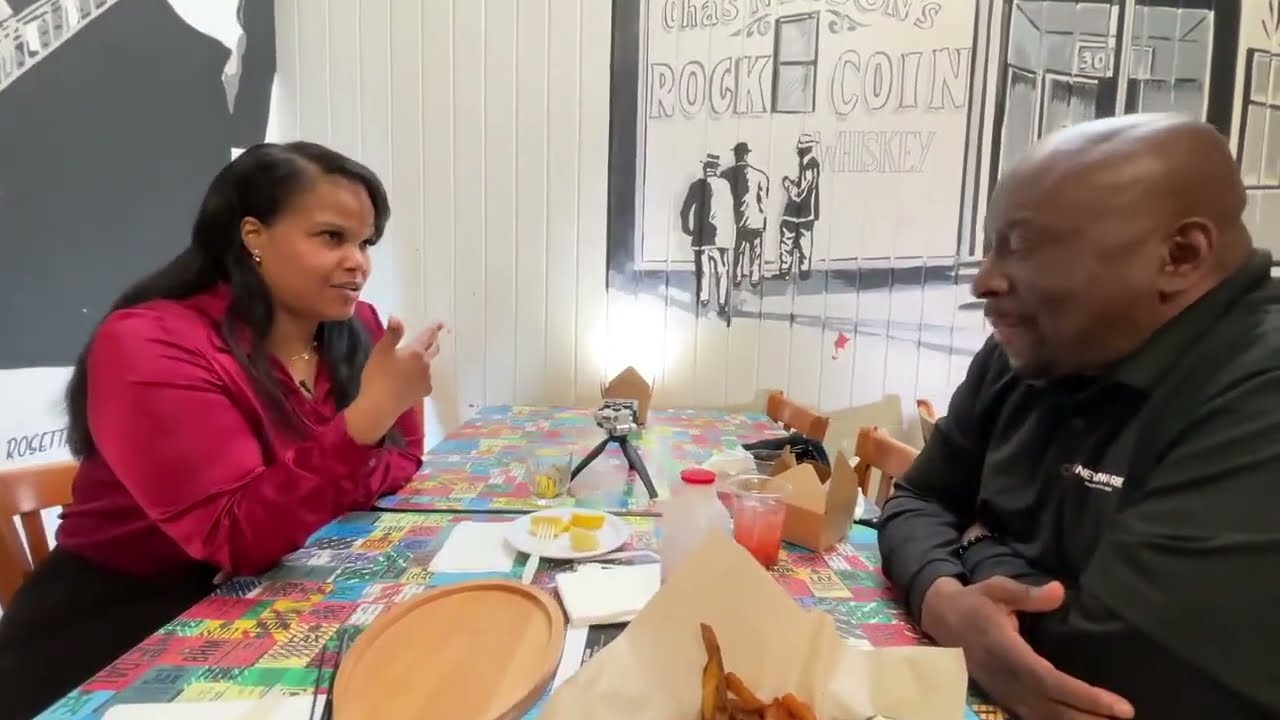
Two people discuss how emotional intelligence shapes how we talk to each other. They cover recognizing your own triggers, understanding that others won't react like you would, and accepting people as they are instead of trying to change them.
Chapters
I apply that to members of all different backgrounds, you know, and then understanding them and really understanding who I'm talking to even before they even open their mouth, you know.
Mm-hmm.
Um, it's— communication is such an art. So if you can, if you can understand and embrace kind of emotional intelligence and then not be emotional when someone is communicating to you in a way that you may not initially necessarily favor, But you're understanding that it's really not against you. It's really just kind of how they, how they are, how they communicate.
So how do you like— how about you though? Like somewhere you don't want to go, right? What kind of process do you take to interpret it? You know, like, I mean, because I understand, you know, we have to be— with emotional intelligence, there's 2 parts, right? So it's managing our own emotions and then being able to skillfully respond to emotions of others.
What insecurities are they tapping into within Tamara that's making me want to be angry, you know? Um, so kind of just understanding my own emotions, you know, and, um, allowing people to be themselves, you know, and not wanting to change them so that I feel better about the way that they're communicating.
On point with that one.
Yeah.
Would you agree that a lot of people miss that nugget right there?
Absolutely. Yeah, 100%. I mean, I think that that's one of the major, one of the major problems in the world. I mean, it's miscommunication.
Like what you said, that, um, we're not allowing people to be themselves. I think that was key because, you know, we talk about Projection bias when it comes to emotional intelligence. And I always ease people into it by saying, you know, the only reason why you ever really get bothered or angry with someone is because they done something that you wouldn't do.
Uh-huh.
They said something and you probably wouldn't have said it like that. So it might rub you the wrong way. They've done something in a way that doesn't align with how you would do it. So you usually get a little irritated, right? And so it's called projection bias because you, you're biased about how you feel about how this should be handled, and you're projecting onto them. And when they reject it, it's a problem. That's when you take it personal because they just shot it back to you like, nah, that ain't— son, nah, son, that ain't me.
Uh-huh.
And then you can't understand it because you missed the part that you just said. We have to allow people to be who they are, whether we agree Like it or not, and then we got to make the adjustments of you know how much we're going to engage now that we know whatever this thing is. Yeah, but the the EI part of it is that not getting mad at the people that you don't fool with no more because you're online. But most people take it personal and think there's something wrong about it, but it's just not a it's not a good vibe, and that's okay. So we need to Either minimize our contact, right? Right. Calculate our contact or not at all, because the more we engage, since we're not on the same vibe, eventually we will see something different depending on where you are at with this, right? That's how I think so many people fall out of, you know, friendships and relationships so fast, because we don't want to accept people for who they are. That was a legend within itself right there.