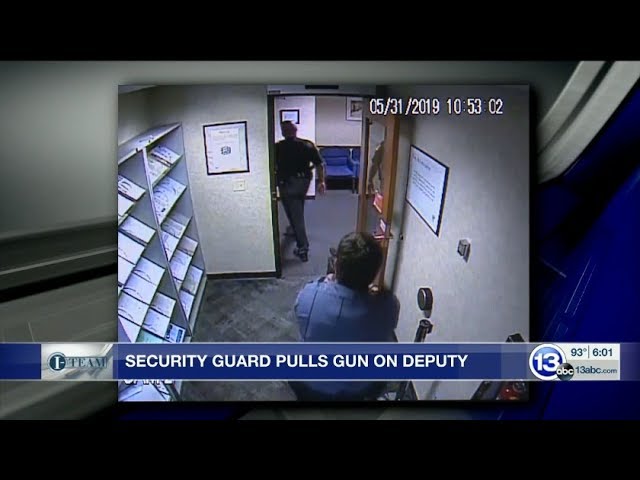
DB Bedford breaks down a viral incident where a security guard drew a gun on a uniformed police officer in an IRS building. The officer stayed calm, left, and called backup. Bedford uses it to show how emotional intelligence separates the officer's low reactivity from the guard's poor judgment that ended in charges.
Chapters
Peace, fam. DB Bedford here, your emotional intelligence consultant. Look, so I just pulled up to the house and, uh, my cousin has sent me a video a couple days ago and she was like, DB, you gotta check this out. And when I opened it up, I seen something that just blew my mind away, but it was an excellent, excellent display of emotional intelligence. And I know there's a lot of criticism around this particular act, but a lot of things positive came out of this as well as some negative moves. And it was about, uh, this security guard who pulled his firearm out on an armed, uh, uniformed cop. Can you believe that? A security guard. Pulled out his firearm on a uniformed cop that was armed. Uh, the scenario plays out. The uniformed cop goes into the IRS office to ask some questions about a letter that he got. The security guard, which I would imagine they're, they're, uh, if you're in the IRS building, which is a federal building, there's probably some type of notice about, uh, no firearms in the building. I'm sure. So the security guard, but I don't— I would imagine that uniformed law enforcement would be exempt. Now if you come in there off duty, I can see maybe, right? Because if you're off duty, you're probably carrying concealed. You know, they might ask you to secure. I've been places before and I've seen that happen where law enforcement, like in amusement parks and things of that nature, they just ask you to, you know, Put your firearm away. But if you're in uniform and people can visibly tell that you're a law enforcement, it's not usually necessary. And so this security guard is going to ask the cop to put his firearm away, and he respectfully declined. He said, man, I can't do that. And so he must have got this answer to his question. I mean, there's no audio, or he must just decide that I'll just come back later. As he's leaving out of the office, the security guard follows him with his weapon drawn as if he's going to try to take this guy into custody. And so I want you to think about this for a second, because number one, anytime somebody pulls a gun on you, it instantly becomes a life or death situation. Now, um, with my, my professional and personal background, when When I'm looking at the security guard, even though he has his weapon drawn, right, he's not really pointing it at him, but he does have it drawn, right? And, and, um, depending on your level of training, your level of courage, your level of insight, uh, you may— your— or in your reactivity level, right? Because your reactivity is the measurement of how you respond to incidents, right? So one is kind of like You know, calm under pressure all the time. 5 might be the extreme. So this officer had definitely had a low level of reactivity because he did not— never reach for his firearm and draw back on him. He understood in this situation. I want to say a couple of things happened. Number one, when it comes to emotional intelligence, right, there's 4 domains: self-awareness, managing reactions, Situational awareness and managing relationships. I want to say that he used— he managed his reactions because I'm sure he felt a certain kind of way. The fact that somebody would come out and even draw their weapon and I'm in uniform, right, and you're just a security guard. I'm sure there's something like this going on in his mind. I'm sure he felt like clapping back at him, right? But he didn't. He managed his reactions and he, and he used situational awareness. He realized that he's in a government building. He's in a place where other employees—if he does something aggressive back towards this guy—he increases the chances of a conflict or a shootout happening, and somebody can get killed, and it could traumatize everybody else that was there to witness. So I want to commend this officer for walking away. He took every opportunity to walk away, and he got away from it. And he went and called for backup, and then the situation got de-escalated. And I want to say the security guard ended up with charges. I'm not sure what they are, but he definitely caught charges, and now he has to face, um, jurisdiction, you know, uh, he has to face, uh, you know, some justice, right? He has to go through the laws of justice on this particular situation. And so the security guard lacked emotional intelligence. He did not use situational awareness. He did not manage his reactions, and he did not use any self-awareness. Nothing about him clearly reminded him in terms of the ranking order, right? Like rank and file. Like a armed law enforcement officer definitely carries more rank than a civilian security officer. Just because you have a firearm, you're probably still a civilian. Sure he wasn't a peace officer. There was just so much wrong with that situation. So because this guy overreacted, right, he, um, because he lacked situational awareness— talking about the security guard— and manages his relationship, manages his reactions, uh, his reactivity was more on the up, on the other end, somewhere between 4 and 5. Like, he overreacted, caught him a case, cost him a job, made him go viral. And my friends, this is my point when it comes to emotional intelligence. Emotions are the number one driver on how you deliver information, how you receive information, what kind of actions you take in the moment, which is why you need to get up every single day and look at the world through the lens of emotional intelligence. No, you might not be a security guard and you may not make that type of decision, but But if you are not emotionally prepared to manage your situations, you may make a poor judgment similar to the one that this guy made. So I want you guys to keep your head up, you know, keep your eyes on the prize, your head on a swivel, and get out here every day and get your EI on. I'm DB Bedford, your emotional intelligence consultant. I'll catch you guys on the next one. Peace.