SoCivil Podcast Ep 1
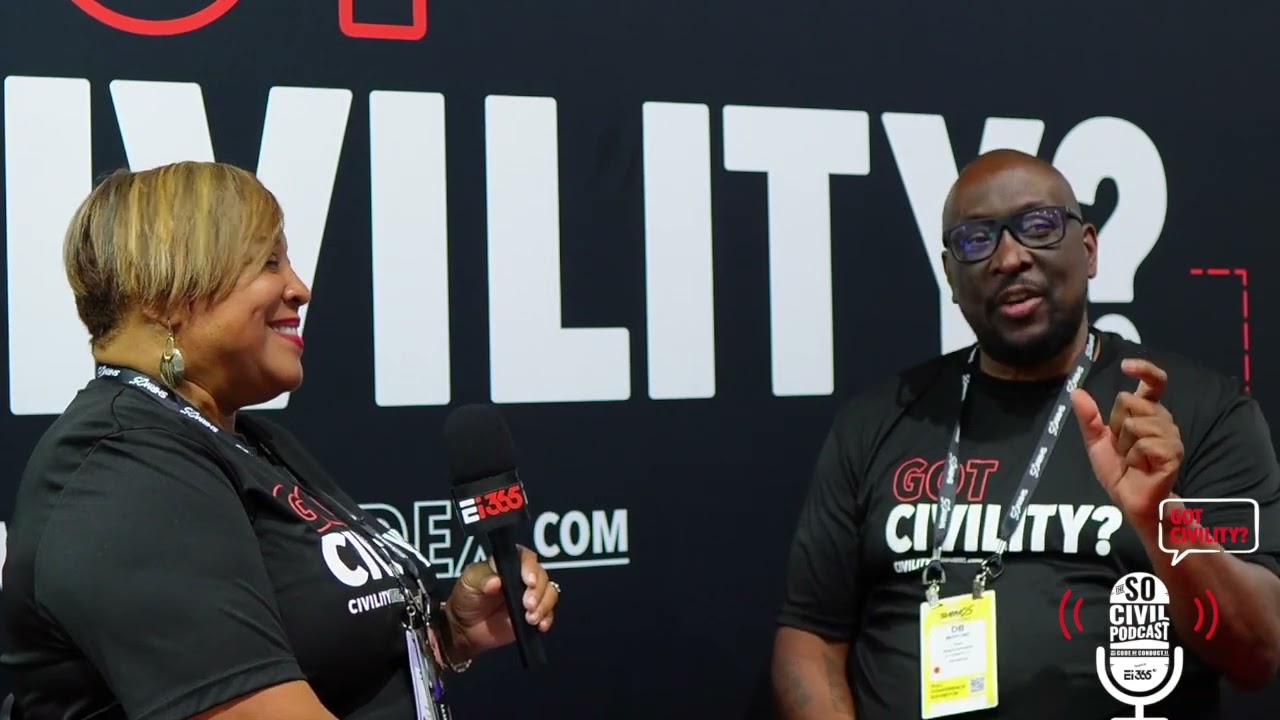
In the inaugural So Civil Podcast, host Cheryl Park interviews DB Bedford to unveil the Civility System, a framework built on the EI Code of Conduct’s eleven self‑operating principles. They explain how the system delivers half‑day, experience‑driven workshops complemented by micro‑lesson touchpoints and a 21‑item Civility Index assessment that maps an organization’s emotional climate from “clear skies” to “Category 5” storms. The conversation covers practical tools such as the purposeful pause and neutralizing behaviors, the importance of aligning personal and professional development, and the business cost of incivility (e.g., an average 37‑minute productivity loss per incident). They discuss how beliefs, values, and life experiences act as an “internal software” influencing communication, and they use water and river metaphors to illustrate how the system fills gaps between policies and real‑world interactions. The episode ends with clear calls to action: take the Civility Index at civilityindex.com, receive a climate report, and schedule a follow‑up call.
Chapters
Welcome to the So Civil Podcast. I'm Cheryl Park, Sales Advisor for EI365. I'm here today with DB Bedford. We're going to be talking about the system and all the things that you can leverage to get your team from one place to another. So let's take it away.
Thank you for having me on the So Civil Podcast.
You're welcome.
What's going on?
So let's, let's start from the beginning and talk a little bit about where did this idea come from and how was the system— how did the system come to fruition?
Yeah, so the Civility System was birthed out of our original principles, what we call the EI Code of Conduct, which is 11 self-operating principles. When I say self-operating principles, it should be understood that we govern ourselves by a lot of things.
Sure.
And when we work in companies and organizations, technically there's policies and procedures that are supposed to Right? Keep everybody on the same page.
Right.
But a lot of people don't take in or understand the value of having what we like to call self-operating principles. The best way to practice emotional intelligence is to have a, a focus, be intentional about practicing skills and strategies that will manage your behavior. So the Civility System was built on finding out ways to make it easily digestible and to meet you where you are at. You can experience the training in a way that you can actually use in your personal and professional life.
Perfect. So let's, let's dive a little deeper into those 3 components. Meet you where you're at, digestible, right? Can you talk a little bit about that? Is this a full day? Is it over time? What does that look like?
Yeah, okay, thank you. So We do, we specialize in half-day training experiences. Let's just be real, people are not fans of long-day sessions, multiple-day sessions. They will be there because they're voluntold to be there, but I have found after about that 4-hour, 6 maybe, people just tapped out.
Right.
So we like to, we like the half-day as a sweet spot, you know, 2 to 4 hours. To deliver. The meet you where you're at is you automatically get enrolled in the Civility System, which is kind of a 5-touchpoint system that comes to your phone or to your email that delivers these principles to you in what we like to call micro lessons.
Right.
Short, 2 to 10-minute experiences around these powerful principles you can apply every single day. And after that's done, then we give an assessment so you can understand where your communication style is at, How do you process information? Do you process it emotionally? Do you process it logically? Do you have a balance of both? And what you can do with that information moving forward.
Excellent. Okay, so now we know more or less what it is, where it came from. I'm curious about how does an organization team, how does the leadership team know it's time to reach out for more support and help? What does that look like? What does it sound like?
Yeah. Usually it's a no-brainer. You know, we're here at the SHRM conference and we're asking this question to everyone, right? People are coming to our booth and they're going, they're going, oh, what's this? What you guys got going on? And so my response to them is going, we're out to see, is workplace incivility a real thing? And almost instantly you see the like, like, of course, like, Duh!
Right.
And it's like, that tells us that people are experiencing these negative behaviors, right? Such as people on their team being rude and disrespectful, overreacting without thinking, gossiping, being judgmental, these subtle and overt behaviors.
Right.
So usually people already self-assess without anything, right? But when they want to get some more clarity We have the Civility Index.
Okay.
Very simple. We call this a 21 behavior-based observation assessment that asks them, listen, within the 90 days, have you seen any of these behaviors? And they're yes or no.
Right.
So usually what they do is when they take that, they get what we call your emotional climate of your work environment. That can range from clear skies, Well, y'all just got it all figured out. The vibe is good. Happy feelings in the air, right?
Right.
All the way up to what we call Category 5, where it's wild in your workplace streets, right? People not being respectful. Then there's some in between, some partly cloudy, some wind advisory, you know, some thunderstorms. And all of these is a reflection of how many, how often you see these behaviors. So sometimes they self-collect, they don't need any other validation, they're looking for help. Sometimes they're not sure, need to put a framing around it, and they use the Civility Index to do so.
Excellent. Great tool to use. From your experience, what do you see once, once an organization, a team goes through the process? What does it look like on the other side? Let's give the people some hope.
Yeah, yeah. So what'll happen is that they'll get their results, and then we usually— they will decide to say, you know what, can you come do that signature half-day experience that you bring in, right? So we wake the energy up in the culture. These, these workshops are engaging, right? They're experience-driven. They're a good vibe. So it gives people like, okay, this is worth doing. And what we love about what we do, even though companies bring us in for professional development, we really touch in on personal development. Because there's just no way to have professional development if you're not personally developed.
Right, right.
Developed, right?
Inside out.
Inside out. And so that is like, to us, really the secret sauce. And so what organizations experience is, number one, afterwards they're like, you know what? I get to call these behaviors out. I get to help myself. Like, I didn't even know that's what that was, but now I know where to reach for it. There's tools that we are— so say for example, we talked about the purposeful pause earlier, or we talk about the communication styles where we identify the variations of how people see the world. Do they see the world through a nurturing, caring, people-driven world? Do they see it from a task-driven? Do they see it from an analytical space? Do they see it from a spontaneous space, right? But when everybody understands The basket of beliefs and characters that's important to them, and we all respect it, we flow better. Because I like to remind people, we all care about something, but we all don't care about the same thing.
So true.
And that's okay.
Yeah, so true. So I'm super excited about not only the system, this podcast, all the things. Um, I'll ask you, even though I already know the answer, what's the best way for An organization, a team, or a leader to be in touch with us? What does that look like? A lot of times people want to know what does it look like to begin the work.
Yeah, most definitely. The easiest way to make sure that we don't waste your time, but most importantly you don't waste our time, right? We want you to be ready. So civilityindex.com, easy way to start. You could do it whenever you feel like it. It takes 2 to 5 minutes based on our data. Answer those questions, get your emotional climate, book the call if you feel like this has— this would be valuable on your team.
Absolutely. I think the key is that just our support system in terms of helping you. And let me mention celebrating you if you have clear skies.
Yes.
And how do you maintain that? So I'll, I'll make that a question.
Yeah.
Let's say I take the Civility Index and I have clear skies, things are looking good. We're not experiencing a lot of incivility in the workplace. What does that look like? Do I just say, oh no, I don't need anything?
Right.
Right?
Number one, we want to acknowledge that you are— you know how they talk about the 1%? You are in a very small percentage of agencies that can stand up, organizations or companies that can stand up and say, you know what, for the most part, we are very civil. Like I said in the beginning, most people are saying they could think of a handful of people that make their environment uncivil. If you can say it with your chest and be like, we got clear skies, we want to reward you, we want to celebrate you. So we want to give you some things. And if you want to help others be like that, we want to invite you to the So Civil Podcast. We'll talk about those strategies. You know, uh, there I have spoken to folks who have said, oh no, we, we seem to be pretty civil, we have clear skies. So I asked, oh, what's the secret? Give me one thing.
Right.
And so just recently while we were here, it was shared with me. She said, well, on our team, our superior makes everybody feel like leaders. No matter where you are, everybody is viewed as a leader, which we all feel good about that. Someone else said, well, we do little things like we check on each other. Everybody good? I'm on my way. I'll be there in a little bit. Anybody got your coffee already? Anybody need X, Y, and Z? people have a caring eye. Birthdays and special events, we are all in tune with that. They said that those are things that make the environment feeling connected. They say humans' greatest need and desire is to feel connected.
Yes.
And we overlook that.
Yeah.
And we think when we get in the workplace, you're supposed to leave that feeling at home.
Right.
So people with disconnection It's because folks don't respect that. They think it's not real or whatever, and they, they permeate through it with bad behavior, you know, with, with poor attitudes and negative energy.
So one word I want to bring up, because that was a fantastic, um, kind of outline of everything, I want to bring up a word that I love, which is neutralizing. Let's not forget the word neutralize. Yeah, can you talk Talk to me a little bit about how does the system, how does the work that they do help neutralize?
I love that word. So inside of our civility system, we talk about the behaviors, we talk about the cost of not addressing the behaviors, and how our principles neutralize behavior. The reason why we use the word neutralize is because we can't promise to eradicate your bad behavior in an organization. Because humans are resilient, and we don't want you to be like, well, you said it was going to stop. We said, you know what, we want to give you the tools, the skill, the strategy to basically neutralize it, pause it in the moment, right, so you can re-enter right into a conversation. So for example, if someone on my team or in my engagement says something that's off If I understand the purposeful pause, which is a strategy to help me manage the way I was about to react to you, because you got me twisted.
Right.
The purposeful pause allows me to slow down for a second so I can reenter into the conversation to get the results that I'm looking for. I want to be able to practice situational awareness where I'm going to be, um, Observing, right? Is this a conversation should I engage in now, later, or not at all?
Yeah.
We like to say don't bite the hook, right?
Right.
You know what I'm saying? So we we give out these strategies so that you can be intentional about it. So that because if you neutralize, what's the importance of neutralizing it? The more you neutralize it, the less it escalates, right? Neutralize it. Something's happening. Ba ba ba ba ba. Slow down. Then you can guide it back to. a space where we can get the outcomes we're looking for. If you don't neutralize it, it grows, grows, grows, grows, grows, gets bigger, bigger, bigger, bigger, and now you got a big old mess that you're trying to clean up.
I love the word neutralize. I think it's so important when it comes to emotions and behavior. Um, those— you answered all my questions. Anything else you want to add?
Yeah, I just want to say that, you know, the So Civil Podcast is designed to curate this type of vibe. where we just want to talk about, and not just what we can do about it, but we want people to learn more about these behaviors because people, again, incivility is those subtle, overt, stealth mode emotions that we, that we know exist, but we don't really know how to address them. It makes us uncomfortable. It changes the vibe. And so we want to get leaders, We want to get team members, we want to get companies, organizations to talk about, like we said, what does it feel like when you're in a civil environment?
Right.
What does it feel like when you're in uncivil environments or interactions? And how can we learn more from each other about the best way to approach it? We have a lot of topics out here that we're talking about, but I don't understand why this is not the main topic.
Right.
Holding yourself to a standard of behavior, right?
Right.
We are trying to set a new standard with the EI Code of Conduct, right? You see what's happening in our world of politics. You see what's happening when people get divisive real quick.
Right.
Even if we're divided, doesn't mean I gotta be rude.
Right.
Disrespectful. I don't need to go for the jugular.
Right.
I don't need to take you out.
Exactly, yes.
Right? It's like because you're rooting for a different team.
Right.
But somehow along the way, we've lost sight of that. So not to really give up the— just all of our goodies, but there's the internal software principle 7, where I believe we're all running off 3 apps: your beliefs, your values, and your life experiences. And every interaction, you're showing up with that. And a lot of times people are operating off old beliefs, Outdated values and past life experiences. But nobody wants to talk about that.
Right, right.
Nobody wants to talk about that. Every— in this conversation we're having, I have a set of beliefs, values, and past life experiences.
Sure.
And we will get along as long as you don't buck up against them.
Right.
And vice versa.
Exactly.
So you may be going, okay, what does that mean? This is how easy Energy can shift. So say we're in a work environment or any type of engagement. Let's take something very common. Say if I use profanity, but you grew up where profanity was not okay, right? Maybe it bucks up against your spiritual beliefs. Maybe you don't think it's, it's human. It's a human characteristic anybody could say.
Personalize it.
On the other end, I grew up in an environment where that's how we express ourselves.
Exactly.
Right? We talk smack all the time using profanity.
Right.
So I have no ill will and intent behind it.
Right.
But if you don't understand that and I'm just cussing, cussing, cussing, overemphasizing, you're overhearing this conversation but you already kind of decide you don't like me.
Right.
And when you go debrief about it, you're like, oh, well, how was the interview?
Uh, right.
It wasn't because it wasn't good information, but I kept, I kept piercing at your Belief because I kept using profanity, right? And I didn't know that because I'm just being me, right? You might not even realize, you know what I'm saying, what it is. And but understanding your internal software, right, helps you get to it and fix it, right, without escalating the conflict.
Understood, understood. so interesting because I always say I grew up as the shyest girl in the room. So I did a lot of observing as I was coming through my process of developing. And so to your point, people can be really quiet and still be observing behaviors. And all of a sudden it's like, I didn't really like this piece, but they're not speaking up. They don't have an experience of where speaking up was valued. Right. And so to your point about Life experience is really important. Yeah, belief, all of the things. I personally think updating your internal software system, that's, that's my favorite.
Yeah, most definitely, because you being quiet, I might start making assumptions.
Correct.
I might start judging too quickly.
Correct.
I might start thinking, you know, um, I've just seen this movie clip where a guy— and I can't think of the movie— uh, it was a speaker here at the conference and he was talking about, um, judging too quickly. And he was talking about that there was a, uh, he was in a— just the scene is there, they're in an environment where they're, they're throwing darts, right? And, uh, he was talking about a story where people used to, I guess, pick on him, pick at him, bully him, make fun of him. And he said, what I realized when I looked back, he said, I realized that people are not curious, right?
Right.
He says, and what I mean by that, they just assumed What I wasn't, who I might have been, but they never asked me. Then he threw a dart, and it hit right up. Boom!
Yeah.
People was like, "Whoa!" He said, "They never asked me did I know how to play darts." Boom!
Right.
Because had they asked me, they would have found out that I used to play darts with my dad every Sunday from this time to this time. Yada yada yada yada. And so I, I parlay that to say one of the things that practicing emotional intelligence, we learn to choose curiosity over conflict.
Yes.
So in a work environment, in a professional relationship, in any relationship, before I go to conflict, I want to go to curiosity. Because most of the time people don't even realize what they were doing.
Exactly.
Right? But if you go all in, so someone Takes too long at a light. Ah, you start laying on the horn.
Right.
Were you curious about— are they having trouble breathing?
Right.
Are they mourning the loss? Are they daydreaming about their parent who just passed? All things could be happening.
Right.
But you just think, go ahead, jerk!
Hurry up, go! Right.
So there's so many ways To be able to slow it down and recalibrate so you can get the best outcome in all situations. Practicing emotional intelligence, studying the code of conduct, and using our civility system to do so.
Yeah, I think that is so key. I also want to add in, like, really, why should an organization care? So there are a couple of key factors that are kind of sprinkled in. I know one of the ones you really like to talk about is the fact that when someone's being uncivil in the workplace, it can be 37 minutes before they come back to get back to work.
Yeah, yeah, yeah, yeah, most definitely. So when you're talking about the cost of not addressing some of these behaviors, some leaders don't think it's even important or relevant. You think that you're here to, you're here to do a job, you signed up for this, get it done, we're grown, all these things you tell yourself.
Yes.
But how we reverence each other, how we feel about each other, it does matter.
Right.
And if you have these one or two people or a group of individuals are quick to jump to negativity, are dismissive of others, are downplaying situations, Or rude, disrespectful, things of that nature. I'm walking up, we're both walking in together, right? We've been working together 8 hours all day yesterday. We walking up the same time this morning. You go through the door before me and don't hold it.
Right.
Now you might think that's not a thing, but that person's like, wow, man, just let the door close. And then we got an assignment to get to later on, right? I'm gonna be looking at you like, you, you could have held that door open for me earlier, right?
Right.
If I experience negativity, it might cause me to be unfocused or not productive for an average of 37 minutes, which means that I might have to go to scrolling and take my mind off of it. I might need to go talk to somebody in another office just to be like, you know what Cheryl did? And if I'm over here talking to this person about what you did, I'm not working. They're not working, right? And if somebody comes confront you about it, now both of y'all not working, and there goes productivity. And we want to— I want to go back to something I said earlier. It's subtle, it's overt, so you might not be able to measure it if you don't put a spotlight on it.
Just kind of in closing, you know, one of the things I really like is that, you know, most organizations, if not all, have HR policies, standard operating procedure, all of those things. I love where the system comes in kind of like water. One of my favorite quotes is, be like water, and kind of fills in the gaps so that before you get to policy, before you get to process of going through process to separate, or maybe they separate, there are some areas that you can help. And it is professional and personal.
Yeah.
So that's, that's one of the things I see it as— water filling in those gaps in a really positive way.
Yeah, most definitely. We like to say, to add to what you're saying, You know, I heard a saying before I love that says we want to flow with the river, not fight with the rocks.
That's right. Don't fight with the rocks. So thank you. Thank you. Thank you. I appreciate talking with you. Uh, if you need— if you— civilindex.com, go there. 21 questions, takes 2 to 3 minutes. You know, when you get to the end of it, you will understand the environment that you're currently in. And there'll be an opportunity to book a call.
Absolutely.
Yes.
Thank you for your time.
All right. Thank you.
All right.
All right.
Peace.
More from DB






I was literally kicked off a Southwest flight before for being disrespectful.



