Workplace War Stories Ep 01
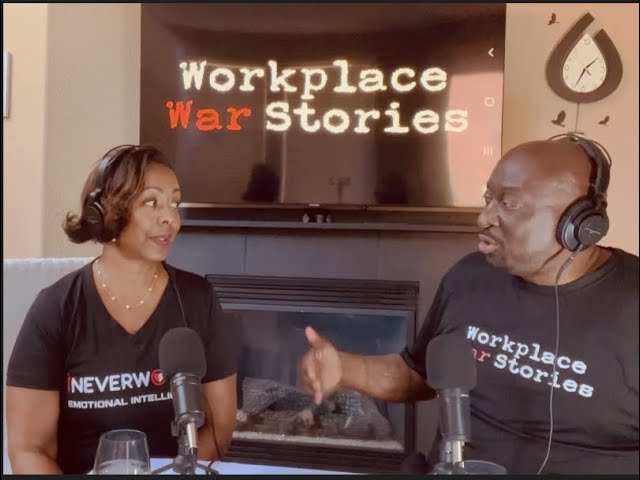
DB Bedford and Terry Jones discuss how emotional intelligence helps navigate workplace conflicts. They share stories about compliance enforcement and clashes with leadership, exploring how beliefs fuel arguments and why mental preparation, consistency, and understanding your manager's perspective matter more than seniority.
Chapters
You are now listening to Workplace War Stories on the I Never Worry Podcast, the number one place to unpack that emotional baggage you've been carrying around for far too long. Here's your opportunity to process those challenging situations at work through emotionally intelligent conversations with the EI Guy, DB Bedford, and his co-host, Terry Jones.
All right, welcome to Workplace War Stories. This is, uh, essentially our first, you know, episode of the podcast. My name is DB Bedford, better known as the EI Guy, and I'm Terry Jones, better known as, uh, the one who keeps it popping, keeps us all straight up in here.
That's what it is.
You know what I'm saying? So, you know, Workplace War Stories is an idea that I came up with being someone who works, you know, doing emotional intelligence for, uh, major corporations, and someone who had like a 20-year career working. Somebody always had a story about some things. And then I was thinking about how, you know, being the EI guy, you know, people will come to me quite often just to kind of unpack, right, their experiences in life. And a lot of times Those experiences are related to things that happen in the workplace. So I started thinking, I was like, man, like, where is there a place where folks can kind of unpack the stuff that's happening with them on a regular basis? And I was like, Workplace War Stories Podcast. It just came to me while I was driving. And so then, uh, I brought it to you, and you're someone who has an extensive, uh, background in working. And when I knew when you lit up when I said it, I knew it was on because you don't just be giving in to all my ideas.
You're right, and you have many. But with this, it made more sense, you know, for both of us, you being the EI guy and me with my work experience. But now I'm a finance person.
Okay.
You know, I'm red, you know, numbers tell you 1 1 2. You can't debate that. Terry, that's wrong. I was like, well, look, everybody has their opinion. We think it's wrong. Leadership thinks it's right. Right? So who's wrong or right? It's not that. What we can do is we can agree to disagree. Then I take my marching orders and I'm going to implement it to the best of my ability of that person. I had to learn that because I would get bent out of shape. I thought something was right. And for some reason, I knew it was right if it was right or not.
Because that's your belief.
Right.
Well, we talk about the battle of beliefs. Like, you have a belief that if you are in the conversation, goddamn it, I'm right.
It's right.
It's right.
It's right.
Right.
Yeah.
And the— if you want to, you know, emotional maturity, if you will, you have understood over time that you're not always right.
Exactly.
Right. Um, might be a hard pill to swallow, right? But it's not always right, and there's other perspectives. You know, because sometimes it's not even about right or wrong, it's just about multiple perspectives, right? And then who is the decision maker in this particular situation? So if I'm not the final decision maker, then I have to accept the perspective of the person making the decision. It's like our children, right? They may not agree—
Exactly.
With how we say, well, you know, you know, rinse out this bowl every time, right, and put it up. And a child might go, but it's only one bowl, or why? Or I could do it later, right? But you don't get the final say-so on this, right? Like when you get your own, we have to say, when you get your own stuff. Then you get the final say-so. But until then. And so he or she could decide, okay, I don't agree with it, I don't like it, but I'm gonna do it. And I feel like the inner child in us shows up to work And you see folks with these temper tantrums, right? Because they can't get their way. And they have not done the work that we have done to understand that it's actually a thing. Actually, when someone disagrees with me, it bucks up against a belief that I have, right? And there's a feeling that I get if you don't agree with me, right?
Right.
Now everybody's going to be different. Some people, like you say, choose violence, right? Some people get sad. Some people, um, shut down, feel neglected. There are other things that associate with make you— and that's what you— we talk about, you know, we're talking about like how you show up to work, right? So when we talk about like workplace war stories, it's really like preparing for the battle, right? The battle of beliefs, right? The The fight for your decisions, the fight for your peace, the fight, you know, all of the things that, um, are going to come up throughout the day so that you stay in a, um, a good energetic space to process. Because this is what it all boils down to. Can you process the, the variety of things that may or may not happen in a workplace? And when Like you said, when you load up for the morning, what are you even thinking, right? Are you coming to work like you still love what you're doing, or are you coming looking for the thing that's wrong? Are you— are you— who are you thinking about when you go to work? Are you thinking about the problem employee? Like, there's a lot of things that go into people's mind that they may not even be conscious of when they jump in the car.
Mm-hmm.
So no wonder why by the time you get to work, feel a certain kind of way because subconsciously you already downloaded how you think the day is going to be, right?
And that's why I think it's so important that you prepare yourself mentally before you go into work, you know. Well, the better way to say it, we all work for somebody. We don't sign our own check. So let's go in there and do the best that we can. We have a job description. I'm going to do my job, and I'm not going to get into You know, my coworker that's sitting next to me, she always on the phone and ain't nobody telling her nothing because she on the phone. But let me pick up the phone, somebody got— so I dare somebody come tell me today when I get ready to make my call that, you know, you got to get— let all that go. You know, you can only control yourself.
How? How do I do it? Right? Like, what is the thing that's keeping me from doing it? Because logically, because, you know, we talk when When we talk about emotional intelligence, we talk about, you know, don't let your emotions overpower your intelligence. We understand that the higher the emotion, lower the logic. So logically, what you're telling me makes sense. But what if I'm in that emotional space? How do you help me? You know, how would we help someone like, uh, could we say prepare? So how do we help them recalibrate that? Like, what is the— what is the—
what are the triggers?
Yeah, well, like, what would you like if it's you?
Well, see, I can tell you how I did it.
Okay, I do it, and everybody is different.
But I used to get ready. I had a particular boss that I was not getting along with, a VP. He was the vice president.
Why wasn't y'all getting along?
He had— he just had his— he was totally different from the guy before, right? The guy before, you know, Terry, do what you want, take care of it. He trusted me.
Okay.
Earned my, my, um, he knew that I would get my job done. This guy ain't know me from Adam. So he comes in and he wants to do things his way, which I didn't particularly care for his way. And no particular— I just didn't. It was different from what we were doing. I thought he should do things the way I want. Okay. So I, um—
So were you showing up every day? With that?
With an attitude. I showed up every day already mad because I know he was going to say something that was for me that was stupid. Now this is a VP. This man ran— this is a— I'm, uh, you know, one of the top 100 companies of the— you know, I'm like, and he's stupid. He ain't doing things the way I want it. But then someone said to me, Why don't you just go to work and do your job? My boyfriend at the time, I was mad at him for telling me that.
So how did you receive that? So when he says, just go to work and do your job, was the first thing you thought about like, I am doing my damn job? Did you used to kind of think that way?
Yeah, I did. I was like, I'm doing my job. He— I'm doing a good job. It's the stupid man that's not. And, you know, forgive me for saying, which is one of my, one of my close his friends and now, believe it or not, the guy. But I'm like, what? Why would you say that to me? You know, he's like, because you already are in battle. Just do your job. Why are you worried about the way he wants it done if that's your job? And I was like, what? So I'm driving down the street one day and I'm getting to Wilder and I had to stop. And this is my way. I had to pray. I had to get into myself and just really think about, you know, I don't want to go up in here and go off, right? I won't go off, but that's how I felt. But then I stopped and I was like, you know, guide me because I just don't understand why all these people don't get that I'm right. And I turned my radio on, I listened to, um, this station, Talk TV. I can't remember what it is. And the whole thing was about people going to work and just doing their job. And when that—
Your prayer was answered.
And that's what I said. I said, maybe I'm not doing my job. Maybe I'm trying to do— I had to receive that. And it was real hard at first. And then I went, I prayed, got out the car. I'm just going to do whatever he asked. I ain't got no attitude. I'm just going to— I know what I need to get done. Ran some reports, gave it to him because he had been asking for these reports every morning. I was like, those reports ain't telling you nothing. Why are you wasting my time? I went in, got those reports out, and put it on his desk. And when I was walking out, he was coming in and he said, good morning. I said, good morning. And he said, um, you needed something? I said, no, I just put your reports on your desk. And he said, oh, thank you. Looked at the reports. Next morning, I did the same thing. And then it came to basically, they were very important. He showed me the trends that he was looking for in the reports and what it would do. And if you look at it a certain way, this is what it was telling you. And I was like blown away because it made all the sense in the world once I—
Yeah.
But I was fighting him because it wasn't done that way before.
Yeah.
And so for me, I have to pray that, you know, I almost humbled myself that I didn't know everything. And I went to work and did my job. You know, that was my boss. He signs my check. And I mean, there's a respectful way to disagree, but I never gave him a chance to tell me why he was running the reports. He just wanted the reports. And then, you know, one day he said, prior to this, you know, I ask you for these every morning, like, why can't you just have the reports ready? And I was like, because they're stupid, you don't need the reports. But he really did, and he was using them for something that made a whole lot of sense. And then I started running reports and looking at them beforehand, and then I started analyzing the reports for him, the numbers, the way that he was looking at them before he could come in. He didn't have to do it, I had done it already and put, you know— Told him what it was doing. And we became a great team because I learned so much from him. But if I would have kept fighting, because what I was thinking is, I got to find another— I'm going to move. I'm going to move to a different position. That was my way.
And even though he hadn't done anything to you, right?
But I thought he had done a whole lot. I'm just being honest. I thought he had done something to me.
So He ain't done nothing to you. He just, he just happy to be the VP. I know, but that's, that is exactly how it goes a lot of times. And so that is kind of why it's super important to try to— it's hard, it's human nature, but it's so important to try to stop determining what's right and what's wrong, or what's good or what you consider to be bad, because it's subjective, right? It's your experience. It really is. And because every time you do that, so if you determine, so you, you like, this is stupid, you think this is not the right way to do it, so therefore you start to engage with him from like your lower self, right? From the negativity, from the everything. He can't win. Right. He couldn't bust a grape if he was standing on it. And you, you know what I'm saying, in your world, because, you know, you had already determined that he was out of pocket even though he hadn't done anything. But I want— I think it's really something that's very key, that at the end of the day, you were able to get in rhythm, in alignment with it. And it was because you did one particular thing. You had an opportunity to understand. why he was asking you for what he was asking. And once you understood and then it made sense to you, then you freely was able to move forward. And I think that's just— to me, that's the key. There's a couple of takeaways, but number one is that we can't— we cannot just be showing up in any space already determining like what it is.
Exactly.
Right? And we have to— because I know like At work, for me, like, I had a guy tell me before— I had a guy literally tell me before where I worked at, he was basically violating a policy. And the policy was they had to wear these safety belts, these utility belts, right, around their waist to carry their equipment. And I seen the guy on 2 or 3 different occasions Not wearing a belt. In fact, he had the belt over his shoulder, wearing it like a like a person would wear a purse, right? This is how he's carrying it now. He he's a he was a little overweight, right? So it might not have been comfortable for him. I get that. But when I asked him about putting his belt on, when he seen me coming, and I asked him, but he's like, "Oh, it's good, DB." I'm gonna put it on. But then I would walk away, he wouldn't put it on. And then I would see him again, he would have it on. So the next time I seen him, I didn't say anything to him. I just had him called to my office so I can have a one-on-one, because I really want to find out what is it about this belt that you're not wearing. Now I really wanted him to tell me— my thought was he's going to tell me the belt too small or it's not comfortable, whatever. So then I would work on getting you one that's more comfortable. But he chose— he did not like the fact that I was even checking him about this belt. Nobody else said anything. This is in his mind. He's like, ain't nobody else said nothing. Why are you saying something? So right then and there, I already know, well, it's not even about whether this is the actual thing to do or not. It's because I said something. And so then I said, well, my job is to make sure that everybody is in compliance. Basically, I'm the the compliance and standards supervisor. And, uh, so he said in the policy, he says, where in the policy does it say that you have to wear a belt around your waist? And I said, bro, it's a belt.
Like, where you gonna wear the belt?
It's implied that you wear it around the waist. And so he said, "But it don't say it in policy." I said, "Well, then I'm telling you to wear the belt." And the man said to me, "And who are you?" Yeah, that's why I got belt.
Good to be the VP.
I said, "Man, I am your supervisor's supervisor. I'm not only just a supervisor; I'm yours. I am." The manager, bro. Like, you know what I mean? But the fact that— the point is, the fact that he even had that conversation with me in that tone, the audacity to even come there. But it has a lot to do about how we be feeling, you know? It's so— and that is the thing was important. Now, I could have took it offensively, but I didn't, you know? I used to try to play because people used to come at me sideways a lot. And a lot of— I let a lot of stuff go, and there's some stuff I came straight head-on, but I tried to have understanding that I know a lot of people were jealous of me because I, I, I got promoted over a lot of people fast. So that— I knew that was always raining, uh, ringing. I was somebody— now, on my behalf, I could have done better when I first got promoted because I definitely was like, I ain't these other cats. Like, I—
Yes, I'm sure.
Yeah, I was like, you know, because they used to punk All the other supervisors, like, you know, where I work was wild. Like, uh, a person to come to work at like 7:15, they got to be to work at 7, they show up at 7:15, 7:20 with Starbucks and McDonald's in their hands and look at you like, who, what? You know what I'm saying? And, and, and previous supervisor wasn't giving no nothing.
Right.
And then when I became in the seat, I'm like, no, like, at putting everybody on notice, right? First I put everybody on notice, we're not doing that no more. Somebody always show it up, and then you give them the, the, the, the corrective action or the warning, and now DB tripping, right?
Because see, this is— the old Terry would have been like, what makes him think that he could come in here and start putting this stuff out there? And that's what we— that's what you just said, you know, they challenge you. And we gotta— that's what we need to break down. Why do we have to challenge? And there's some things you need to challenge, but a policy? You're a supervisor, you just laying down.
You're supposed to be. So, but the code— and here's the thing though, and my environment was so cold, the union, and I ain't mad, they was gangster. They got away with a lot of stuff for a long time. And they had, and I don't know if this is universal, but they used to throw this terminology out there If they— so if something was, even if it was policy, if they were allowed to do it for a reasonable period of time, they called it, uh, past practice.
Oh yeah.
Right? So I haven't worked many places, I don't know if it's you, but so they would get management in a bind by saying it's past, which it makes sense, right? So if I'm allowing you to come every day not just me, because there's shifts, there's 15, 20 supervisors. So if the management team is not consistent, then how does the employee know, right, what is the appropriate way to do things? Is really what it boils down to. And all it would do is just, um, really keep them from being disciplined, right?
Right.
So it would— so it became my task to make sure that everybody understood what we're supposed to be doing and get some consistency in there before we held people accountable. But holding you accountable was not to punish you. It was to hold you to the standard that you agreed upon when you got hired, right? And I don't understand for the life of me— this might be a whole section by itself. It is.
I know what you're getting ready to say.
Yeah. How do you go from being super juiced from getting the call the day they hired you? Like, when they come— when they called you, when you got that letter in the mail, when they called you You were excited, right?
Right.
I mean, you told people you loved, and if you did it in a social media era, you posted on Facebook and was like, God is good, ain't he? And you did all of this, and then in a very short period of time, can't nobody tell you shit. Like, what— like, what happens? How do we allow ourselves to get to the point Well, we, you know, you hear the terms disgruntled, low morale, toxic environments. How does that even happen? How do we even put ourselves in those positions? How do we even let an environment curate like this? And the first thing people are going to say, just like you and I have said, we're going to blame it on somebody else, right? And not do yourself like that. Like, don't do yourself like that to the point where you put your happiness your peace, your inspiration in somebody else's hands.
But I think what happens, and you're absolutely right, but what I think what happens, like, you're right, but no, you're, you're absolutely right. I think, you know, episode 2, from journey, from start, you know, we're happy to exit. You know, when you— I did a lot of exit interviews with individuals. And you should hear the stuff that people talk about. And you say, you know, you're excited about the job because it's like going on the first date. You showing your best stuff, and he's showing his. So everybody's doing, you know, they're painting this picture that's not really happening. You know, they're painting a picture that's not really—
So you're not really happy about your job?
No, no, you're happy. I'm saying you're painting a picture of who you are. To the employer to make them make you an offer. And the employer is painting a picture about how great this environment and this job is to make you get there. And when you get there, it's not that.
Okay.
I'm telling you, that's what it is.
Oh yeah. Yeah.
That's what it is. So then you get in there. I never forget my 30-year company. I just thought about this for the first time. I'm a African American woman in finance. Not a lot of us. So I get the job, I go to the interview, I'm going to my car, a brother come by, hey sister, sister, sister, hey, hey, hey, hey, let me talk to you a minute. And he was like, you interviewed?
Yeah.
He said, I work there. He said, cool, but let me tell you something, this place is wicked. So I had to take, is he real?
Right.
Or is he just mad because something's going on? So I get the job offer and fast forward, he was— everything he said was absolutely right. And even when I got there, he was like, look, you can survive it. This is what I'm telling you, what you have to do. So he was all Right. You know, he was all right. And so we paint this picture. So when you get there, you got to know, just like when you're on a date, he ain't all what he said he gonna be, and you ain't all what you say. You know, you got to take the weave off, the lashes off, and all that, and then they're gonna see that. So how do you deal with that? You know, you look at the core of the individual. And so when we go to work, We got to start looking at why we go to work. That's the core. We have bills to pay. And, you know, and some people work for different things. Some people are feeding the hungry and stuff like that. But if it's just like, I need a job, you know, and what does— we all do. I mean, people have bills. So you got to— you want to take care of your family.
You have to earn a living.
Earn a living, you know, and, you know, you got to know that and know that You took a job that said, I have to do this, follow these policies. We signed sexual harassment policies. We signed, you know, whatever you signed with the policies, that's what you do. And we got to understand that. So when we do, when we go there, that's why it's, you know, you say, I was all excited and then I— because a lot of things change. It's almost like, you know, management change. I start going out with you and then here's somebody else.
Right.
That it changes. So that changes the dynamic. Leadership changes the dynamic. Supervisor change changes the dynamic.
I agree.
And so we have to, we have to understand that's part of work. When you accept a job, right, everything is not going to stay the same. You got to accept that sometimes you're gonna have a not so nice person, as we call them assholes, that's going to manage you. How are you going to deal with that? But we don't think about that. We're just excited about the job and we're gonna get it.
How much you gonna make and your days off and all the perks, all the benefits.
All the perks. But we don't think about, okay, what happens when the management change and what happens when one person is being treated better than the other person because they're getting some kind of treat—
They've been around for a while.
They're around and they know somebody and they know management. What about— we don't think about that and we don't think about how we're gonna handle that.
Yeah, no, I agree.
And then you have those people like you talk about that come to work and is happy every day and just do their job and they don't want— they don't get involved 'Cause see, they've figured it out. They're there to do the job.
They're clear. Well, they choose purpose over pettiness.
Right.
That's it.
I love that.
Purpose over pettiness. They're not getting involved. Yeah, they already decided. And I remember, so they give you this 2-week orientation where I worked at. And so I had a— this supervisor was wild. She was super wild. She was so wild that her nickname has something to do with being wild, right? And she would walk around, you know, my work environment where we were broken down into different units, if you will. And so she would take me around to each unit and introduce me to the people that were working. And I promise you, every unit we left, she would chop they ass up after left. Like, so she'd come in like, oh, this is Terry, and this is, this is person, this is whatever. And then we'll talk, and then they, you know, she might go and mess around And then other people might introduce themselves or whatever. And then when I leave, we leave and walk to the next space, she would tell me—
Everything wrong with that person.
Everything wrong with you, or the only way you hope you better not get working with them or whatever. And so trying to download how she think I should be programmed to work here. But I never— again, my reason for coming to the job superseded anything that was happening because of my opportunity that, that, that I didn't believe that I even deserved at the time, right? So I was so thankful and grateful for— like, it was nothing you could tell me about this based on where I come from. So I would take it as entertainment, if you will, when people would share stuff with me like that, but I didn't get sucked into it. And that— one of the reasons why I promoted faster than most people, because they were still stuck focusing on— I remember the first time I applied for a supervisor position, you were supposed to have been a tenured employee. Uh, they called you a tenure 2, which would— well, I don't know, maybe say, just say 2 years at the time. So right at the 2-year mark, I applied. But culturally or environment-wise, you didn't really become a supervisor like 7 years, 5— like, they wanted you to— everything was all about how long you've been here, right? They based everything on how long you've been here. And I'm like, but the papers say 2 years. And so I applied and I got it.
And one of the things I used to always say, not just— time is not a competency.
Oh yeah, you need to— that need to be a—
And everybody knew that when I was— I— because I was— when I moved to HR and they was like, well, he been here 30— time is not a competency.
That is the number one thing. No, but that is the number. That is a, uh, that you need to write that down.
Oh, I have that. Every— everybody knew where I came from this. Don't tell her.
Time is not— that might be the subject of a show. Time is not a competency. That don't make you nothing, right? That just means you've been here long. That's all that means.
I had a guy tell me once, I've been here way longer than you, and you know, I've been here— but I said, and I'm your boss's boss's boss. Time is not a competency.
And they—
that—
now you— now you use a jackass for saying that.
I'm sorry, go ahead.
No, you— you That's, that's facts. That's a good— man, that's a good point because I think that's a pain point.
That's a big—
For a lot of people, if you see somebody get an assignment or a promotion or some type of favor and this person's been here 2 years and you've been here 20, you're gonna feel a certain kind of way. I've heard tons of people, uh, even outside of my job from the training that I do, you know, when people would vent, like, uh, would tell me What they're going through. And seniority is a conversation a lot. When you say that time is not a competency, right? Time is also not a gateway to entitlement, right? Because I remember I got tons of stories, but I would think about one where it was a graveyard shift and not the one I told you before. This is another graveyard shift story where an employee was coming to her graveyard shift. And she would bring a cot to sleep on.
Shut up.
She brought a whole— like she's going to a slumber party.
She was gonna have a good time, have her little coffee, got her little cot, got her pillow and her blanket.
She came to work to go to sleep.
Probably had her silk headscarf.
But when it— and when that— oh, see, but when that pattern Got disrupted, because that's what happened. Instead of accepting the fact that it was a good run, exactly, it became problematic, and a new Workplace War Story was developed.
You are now listening to Workplace War Stories on the I Never Worry Podcast, the number one place to unpack that emotional baggage you've been carrying around for Far too long. Here's your opportunity to process those challenging situations at work through emotionally intelligent conversations with the EI Guy, DB Bedford, and his co-host, Terry Jones.
More from DB






I was literally kicked off a Southwest flight before for being disrespectful.



