Discover the Secret Pillars of Holistic Health with Deanna Minich
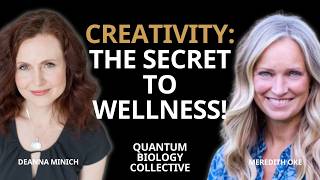
In this QVC podcast episode, host Meredith Oak interviews Dr. Deanna Minich, a PhD scientist and health advisor, to explore her framework of four holistic health pillars—color, creativity, diversity, and rhythm—and to examine creativity as a central pillar of wellbeing. Deanna defines creativity as a vital, flow‑based force that supports cellular growth, neuronal plasticity, heart‑rate variability, and metabolic flexibility. She outlines seven archetypal creative expressions—food, feeling, thinking, movement, speaking/writing, visual, and connection—offering a questionnaire to help listeners identify their dominant creative style. The conversation weaves personal narrative, describing how Deanna’s own reproductive health issues (endometriosis, blocked fallopian tube) improved after she engaged in expressive painting, using color and shape to communicate with her body. Throughout, they discuss the quantum‑biology view of the body as an energetic highway where flow, rhythm, and light influence health, and they emphasize integrating creativity into daily life to transform drudgery into joyful, fluid experiences. Practical resources are shared, including Deanna’s creativity quiz, online courses, and links to her website and the QVC community. The episode blends scientific insight, personal testimony, and actionable guidance to position creativity as a measurable, health‑enhancing practice.
Chapters
Welcome to the QVC podcast where we explore new paradigms in health and science that have a meaningful impact on our day to day lives. I'm your host, Meredith Oak, a curious coach and mom. I started a journey to overcome chronic fatigue and found myself in a whole new quantum universe. I believe new research shouldn't stay locked away in an ivory tower. And that wisdom can be found in many places and understood by all of us. To keep in touch with this podcast, the QVC free community, our episode guide, and all the show notes, please visit qvcpod.com qbcpod.com let's get together to create the future we want to live in. So when we embrace our identities as quantum biologic beings, there are so many things to think about. It's like really an exciting new way to consider the world and to consider ourselves, right? It's like our light matters, our the sound matters, the frequency of emotion that we experience and that we surround ourselves by matter. Have we healed past traumas? How do we deal with current traumas? But there's other things that are like, I think, really fun that also really affect our health if we think, if we're thinking about it from an energetic perspective. And one of those things is creativity. So my guest today is Deanna Minick. She has a PhD, she's published over 50 papers, she's written many books, she's currently the science advisor at a really well respected supplement company. And she has a theory on the four pillars of health. And one of those four pillars is creativity. Because if we're not expressing creativity in our lives in some way, that is creating a blockage, right? And as we know, if our bodies are quantum highways, we need things to be flowing, we need the channels to be open, we need the signals to, to be free and clear. Deanna is one of those people where there are so many different things. I mean, she, she could have talked for two hours just on Melatonin. Like she's very deeply researched in a lot of areas. But her take on creativity, I, is what I wanted to get into because.
I just, you know, it's something that.
Can get overlooked as we get busy. And I think it's also something that's not well understood. There's so many different ways to be creative and Deanna gets into all of them that are unique to a lot of us. And I really think that part of this journey, part of the, this journey of, you know, understanding our true selves is to know ourselves really well and to create a life that's not healthy just in terms of our environment and what we eat, but also in terms of what we spend our time doing and if it's feeding us. And so to understand what our creative alignments are and to make sure that we have space in our lives to do them, I think is a really important and fundamental piece of our well being and as to have the experience that we want to have on this planet. So I had a really delightful time talking to Deanna. She's a super, super lovely person and I'll probably have her back to talk about other things. As I said, she's, she's got a lot to cover. But we did do a deep dive into creativity and it was really fun. I think it's going to bring some really nice insights to you and I'd love to hear sort of what, what you think and what your, what your creativity, your creative mode is in terms of all the different types of them that she talks about. And of course, don't forget to visit Bon Charge and check out their infrared light sauna blanket, which is just really such a nice thing to have if you live in the part of the world that is in deep winter right now. There's been so much snow where I live, more than I've remembered in the, in recent years. And it's been really fun. We built a snowman the other day. We've been skiing. It's great, I don't know, walk, go for quite as long outside as I do when the weather's a little warmer. So it's always good to top up that infrared exposure with a sauna or a sauna blanket or some kind of red light therapy device that gives you those extra IFR frequencies that we all need. All right, everyone, enjoy my talk with Deanna. Deanna Minick, welcome to the QVC podcast. I am delighted to be having this conversation with you.
Well, I'm excited to have the conversation with you. It's not often that I get asked questions about creativity, so I am looking forward to having that deep dive with you.
Yeah, I'm really excited about it as well because it's not necessarily something that we connect to health, this idea of creativity. And yet for you, it's one of the key pillars to health. So you have sort of four key pillars if you want to just tell us what they are and then we'll talk about. When I saw creativity in there, I thought, oh my goodness. Because I was thinking of you as a, as someone who could talk about nutrition or melatonin. There's so many roads to go down with you, dm.
Yeah, no, it's true.
But this creativity piece, just so compelling to me because it's in the context of health.
Yeah, yeah. So. And I did arrive at these four pillars because I was looking for common threads throughout everything. I was talking about exactly what you just said. What do I talk about within nutrition? What am I talking about when I talk lifestyle, even physical activity, even down to a dietary supplement. And I realized that there were four things that I came back to time and time again. So they are color. And we'll get into the weeds on color, because color is vast. It's everything from the colors in your environment, the colors you wear, the colors you eat, the colors you see, the colors you feel. So it's much broader than just phytochemicals and food and eating the rainbow. The second one is creativity, which we're going to talk about more. And I even have a personal story about creativity in my own health journey. The third is diversity or variety. Right. So just shaking things up and getting a diverse blend of life experiences, even physical activities, how we think, travel, how we eat, all of that is enrichment from everything from our microbiome to our brain, neuronal plasticity. So diversity is key. It's one of the elements of nature. And then the fourth one is rhythm. And that applies to all the many different kinds of rhythms that we're enmeshed with. So, so that could be circadian rhythm, lunar rhythm, seasonal rhythm, menstrual rhythm, life rhythm, like season of life. And so I'm not really making any of these up. They all really do come from nature. If you look at nature's principles and kind of following the lead on what nature presents to us, a lot of these principles are embodied in what we see, feel, hear, and experience. Experience. So I just apply those principles to everyday life.
I love this. And it's, it's a much. It's a very different way of organizing our minds around the concept of health. These pillars. Right. It's not like we're used to, you know, food, diet, mindset, exercise or something like that. But these are much higher level. And I mean higher in terms of altitude, not necessarily like superiority, you know, like a higher altitude view of all of life and how we connect with it.
Yeah. And I think the reason why I like that is because it allows for some plasticity or flexibility in their interpretation. Because I think often on social media people will post, these are the top 10 things that you have to do for health. And it gets very specific very quickly, which is okay. Because some people actually like that, like drink water as soon as you wake up, tend to your gut by doing X, Y and Z. And all of those are great strategies for sure. It's just that I like to bring in a bit of interpretation and personalization in that health journey. Because we are more than our physical bodies. We're physical, emotional, mental, spiritual, subtle. We have many different layers and we might feel drawn to certain things at certain times. And all of that is really valid in many ways. Right. So it's really honoring nature on the outside, within the natural rhythm of our own path. So where people are, I mean, that's how I work with people. And that's also a lot of how my teaching is structured as well, is through those four principles.
And do you find that if people are encouraged to connect to their intuition and to follow that kind of inner impulse to try something or do something, that they naturally sync up with some of these cycles as opposed to following a more regimented, top down instruction manual, so to speak?
Well, I think that there are many paths to healing and for some of us it's very structured. It needs to be information rich. And some people like the play by play, step by step path. Some people like a more organic, feeling oriented path where it feels more intuitive or they get more sensations as it relates to following, doing a certain thing. Right. We just have different kinds of people in different approaches. And some people are a hybrid where they like the information meshed with the inspiration or more of the intuition and they kind of braid those things together and say, okay, I need a little information here. But then I'm going to sieve that through my own filter of intuition to kind of figure out how it nets out for me. So I don't think that there's any one right path in that way. There are many paths up that road of healing. And sometimes we might feel like we need more structure, other times we feel like we are inundated and we need to bring in the creative aspect of our being to allow us to flow moment by moment. And I've seen that with people too. You know, the more they know, the more I think they can flow. And so as people are starting out on their health journey, they might actually need to get familiar with a lot of the information first so that it's kind of like training wheels. You know, I think of when I was first learning to ride a bike. You know, first you get the bike, then you have the training wheels, then somebody's helping you, right? Then eventually you've got the wheels off, and then you can kind of flow and. And move in your own rhythm and where you want to go. So I feel like you. You know, that that's kind of our journey through life. Sometimes we need mentors and guides and books and courses and a supplement, you know, all different kinds of things. But I do think it's important to get the basics down, to get the F fund, I would call them, like the fundamentals or the foundational aspects of life in order to build upon and kind of tweak from there. And these four principles are what I consider to be foundational. Right. Yeah.
I think that makes a lot of sense. I've certainly noticed for myself and with coaching clients. I don't do health coaching. I do more, like, business and life coaching. But there's a period where I'm. Yes. I'm just, like, downloading and, like, more information, more and more. And then it's like, okay, I'm full, and I need to express it in some way. I need to either start living it or. Or sharing it with other people, or it needs to, like, move through me in some way in. To really become a part of my life. And is this, like, where that creativity principle comes in? Like the idea of. Of making something and contributing what we've made to the world?
Yes. So creativity, the way I define it, is a sense of flow, a sense of. I. I would say it's. It's the. A vital force within us that is leading to cellular growth. Right. So even down to our physical being, we're very creative. We're shaping ourselves every day, actually. We're combing our hair, we are getting dressed. We are in a creative process of discovery about ourselves and who we are. Right. In fact, if you even look at healing, if you look at the roots of medicine, we used to call medicine the healing arts because it truly is an art to look at. How do we shape our path of whether it's physical, emotional, mental, spiritual health. Right. Do we want to use Reiki? Do we want to use diet? Do we want to use Tai chi?
Right.
It's kind of an art. There's a patchwork, a whole palette of different offerings. The other way that I see creativity coming forth is in allowing yourself to be a bit empty, to kind of the seeking and to be in the place of receiving. To me, creativity is a very receptive yin process. And for. For some of us, that comes in the form of meditation. It comes in the form of silence. Maybe you are taking a quiet walk through nature, and we're not engaged in the mind. To me, creativity is more of the heart. It allows us to be in the feeling space and the sensing space, which I think and feel that in our society and where we're at now, that that is not as valued. It's often seen, and I even saw this going through school, that the intellect is really like the highest point and that anything under the intellect or if you talk about feelings, it's. It's almost as though there's a diminishing of that, or that it's not valued to the same degree as a degree or even as a knowledge in some way. But if you look at some of the traditional systems of medicine, like even the traditional Chinese medicine infrastructure and philosophy, and I just know a little bit about this because my husband is an acupuncturist. He's an East Asian medical practitioner. And they believe that the heart is where our consciousness is kept. So the heart is kind of like a central feature of our beingness. It's not the brain. It's truly the heart. So to me, creativity brings in the heart space. It brings in how we feel, how we sense and how we intuit and leaves us in this open space of possibilities. And that's what I feel that people are shortchanging themselves on. You know, let's just imagine somebody gets sick, right? There's a lot of panic, there's a lot of stress to figure things out. And perhaps this is whether it's chronic illness or a symptom or just even something that's stressing us out, it requires that we go within. And I think so many people are going on the outside. They're looking, they're seeking, and there's a place to do that. But then there's also a place, just like you described, where we take what we have sought and then we bring that inside and we digest it and we sit with it. And I feel like there's a little bit too little of that place of just, like, sitting with something. You know, some of the best entrepreneurs, they just allow themselves the time to be bored, the time to be not doing things. Because we know that in the steamy shower, like if we just were in a hot shower and just not doing and just reflecting, sometimes the best ideas come forward in those moments of, like, not doing anything or what we would consider not doing anything. So that's what. When I talk about the pillar of priest, I think that's what that acknowledges. It acknowledges the flow, the aspect of potential that can come through us and actually be even more magnificent than the aspect of information overload and just getting that next book on your shelf or taking the next program. So I think the happy marriage of both of those. Those things.
Yeah, it's. It's so true. I just. This past fall was in one of those periods where I had read some piece of wisdom. It was about like, you know, letting. Letting things go that are, you know, where it's time to. For that project to wrap up or to let something go and then not filling that space up immediately with the next thing. And I was sitting with this empty space and I was. I was quite anxious, actually. So I called. I called my friend Kelly and she's like, oh, you're like in the messy part. I'm like, oh, right. But it's just what you're saying. And I was trying to rush to this next thing and it.
It wouldn't.
It just didn't feel right because I wasn't giving that space that you're talking about, that creativity, that creative, open space.
Well, I love what your friend Kelly said about messy, because creativity is very chaotic. It can be, you know, think of love. You fall in love with somebody, it is this process of total sensing. It's messy. It's. It. It doesn't feel logical. You might fall in love with somebody that. From a head perspective and kind of thinking through it, it's like, why would I be in love with this person? But there's this feeling side.
Right.
And just to share with your. Your viewers just a little bit about my personal journey with creativity. So I do think that there's a science and a symbolism or even a spirituality to our bodies. And Louise Hay and Bruce Lipton and others talked about that. That's nothing really brand new or even creative. It's just out there. Right. Well, for many years, what I experienced in my own body was a lot of health issues related to my reproductive tract. So I had endometriosis from a very young age. I had a blocked fallopian tube. I had all kinds of issues with my monthly cycle. Lots of pain, lots of just overall mood issues. It's just I wasn't comfortable being a woman in this body that I had. Right. Just so much. And I would say I also had some gut issues. Right. So if we just look at that as a body system, the reproductive system is the system of creativity in our bodies. Like if we just look at it as a whole. Right. Ovaries, uterus, kind of like that whole system of creating. So I didn't even put it all together. I kind of went at it from a diet perspective. And I started doing all kinds of therapies. I was being creative about whether it was chiropractic massage. I even had my abdominal massage to release a lot of the adhesions that I felt in my low belly. I was doing supplements, lots of different supplements. I mean, I was doing it all. And I. I didn't really have a significant, I would say, impact. You know, I was helping to reduce some of the symptoms, but not resolving the root cause. And I could tell that. So one thing I noticed was that towards my late 20s, I would start to. Just as a way of coping, I would start to paint with bright colors whenever I got stressed. So that happened at the end of my PhD. It was kind of in crunch time. I started painting on large canvases. I never had a painting class or anything like that where it was like a structured thing. It was like, I was messy. I was chaotic.
I was just gonna ask. So this was just. You felt like, I want to paint. So you went to the store and bought all the stuff and started messing around. I love that. All right.
Yeah. And it wasn't small. I went to the store. And you're right. I mean, I just. It was on a weekend. I went to the art store and I didn't. Didn't buy, like, a little notebook with paper to paint. I bought a big roll of paper, and I just rolled it out. I was on the ground. My hair was in a ponytail. I had sweatpants on. And, you know, there was this release of perfection, and I just kind of let go on this paper. Right. That was like my first. I was about 28 or 29 when I did that. So fast forward, I kind of, I would say, came into art and painting and colors whenever I felt kind of stressed. And then I met my future husband, the acupuncturist, and we were together, and he started to realize that whenever I was painting, it was almost like I was painting certain colors. And he made a comment to me one time, which was, I was putting my ovaries and uterus all over the house. Like a lot of. And lots of pink and orange and gold colors. And he was like, what is happening? You're putting your. In your uterus all over the house.
Giant uterus canvases. I love it.
I didn't want a good husband. I didn't see it like that at all. It was kind of.
You had. Oh, really? Who were like, oh, is that what it was? Is that what you see?
Right. Well, he knew a bit about my physiology and what I was going through. And I think he pieced it together in his mind of being a practitioner and kind of like, what's happening to her? She's got, like, these swirls, and it's always the same shape. And he. He was always kind of. He was very supportive. He wasn't laughing at me, but it was kind of this feeling of like, oh, she's at it again. She's painting her same colors.
Yeah.
Finally, when he said that, it was like I had a light bulb that turned on. It was like, oh, my gosh. Maybe my body is speaking to me through these colors, because I did not like pink, orange, or any of the colors I was painting. I would never wear them. You would never catch me wearing pink. Never. I. I couldn't stand the color pink. So once he said that, I intentionally decided to start creating the phases of my uterus. So I painted menstruation, I painted conception, I painted menopause, I painted kind of the dance. I mean, I have all kinds of paintings, and they're not outright where and obvious where you would think that that was what I was painting, unless you were kind of tuned into it. It was kind of Georgia o' Keeffe style, where it's like, oh, are these female body parts?
Right.
You know, yeah, like that. And I decided to show my paintings in a small neighborhood art gallery just for fun. You know, I had a friend that was an artist here, and so showed the paintings, had friends come to the gallery, and, you know, long story short, basically my symptoms cleared up, like, completely, to the point that I gynecologist. I went for my annual scan because, you know, I had some issues that were getting serious, like they were being monitored. But if they tended to get worse, which the outcome of these things typically was, that was the case. If they would get worse, then it would have to have surgery. So I. I can't say that it was the art that led to a complete resolution of my symptoms. This. I mean, my fallopian tube was unblocked. It was previously, like, almost like this balloon inside my gut. Like a, you know, kind of this oblong balloon where it was blocked and it was filled with fluid. And then all of a sudden, it was like my fallopian tube was unblocked. My gynecologist. These are her exact words. She said, my uterus looked beautiful. Which I was like, what? She's like. She's like, this. This never happens. And I said, you're going to laugh if I tell you what just happened over the course of this year. But I started painting and I actually had, I told her I had this exhibit and she goes, well, whatever you're doing, just keep doing it. You know, she, she couldn't really explain it, but I, I go through the pains of mentioning this whole story with people because again, I can't say that being outwardly creative with something like art is going to heal you. But I think that it was really important for me that there was a lot of stuckness and stagnation in my body. And until I was creative, outwardly creative with getting something out or at least letting my body speak through color and through shapes. Because it wasn't just the color, the color was there, but the shapes were like, they were consistent shapes. And I was drawn to circles and spirals, I have to say. So I just, I just tell this to people because it may inspire them to do something creative that could unlock or at least help them with the stress response, which I think really happened in my case. It felt like I was undoing a valve of pressure from within.
Yes. That's such an amazing story. And yeah, the, there's the creativity, the colors, the cycles, the shapes. All of, all of the different pillars were involved there. And yeah, and like one of the aspects of creativity is like, there's no wrong way to do it. So when you talk about that expression, it's like we have so many rules for ourselves and structure, which is important and helpful and necessary. But I hear what you're saying. To have some aspect or outlet in life where there are no rules, it's just like, what is my body? Like what wants to happen here?
Yes, that I think that's really key. I feel like one of my issues, this professional perfectionism, you know, just always going through life as a people pleasing perfectionist. And art was the one place that I can get messy and I didn't really care what other people thought about what I was making. You know, my professional life, in my science life, I cared about getting good scores on tests and in school, performing well, getting my degrees. But in my art space, I didn't care. Like I was like, I don't care if you like my work or not. It's just I'm putting it up on the wall and I, it doesn't matter. But it felt like it needed to be seen. So there was that element of witnessing what I have made. And I actually had gone to a therapist at some point in my journey and she was an art. Well, I don't know how to. I think she was more like a Jungian Therapist. And she had asked me to bring in some of my paintings. And she. This was really creative of her because I had not thought about this, but she said, why don't you bring in about six to eight of your paintings? And I said, okay, I'll do that. So I brought in these large paintings. We set them up inside her therapy room. And then we did an exercise where she had me go around to each of the paintings to have a dialogue with them. Because she said that these paintings were part of me. Right. And this is a part of. Of me coming out to be realized in this way. And so that's why all creative endeavors could be seen that way. Whether we are sewing, knitting. I have a friend who likes to. To just knit and stitch. And it's like every. I'm just amazed at, like, how she just makes all of this beautiful stuff so quickly. And that's like a meditative therapy. And it's her. She chose the colors, she chose the pattern, and then she gifts it to people, which is beautiful. There are other people who feel called to do music and to put together beautiful sounds. I mean, gosh, there are so many different expressions of creativity. And just like you said, there's really no one path. There are lots of splintered offshoots. And this is where you can just let your curiosity take you.
Right. And that's the beauty of it. It doesn't. It's like, I'm just doing this because I'm curious. I'm just doing this because I feel like it. There's really no other reason. There doesn't need to be.
Yeah.
You said something a few minutes ago about something like creativity affecting ourselves. Could you dive into that a little more?
Yeah. If we want to look at the physical expression of creativity, there are many layers of that. So there are books written about this, actually. So creativity, if we look at it as a vital force of life, it's that which animates us. Some people would even say it's very spiritual to be connected to our creativity because it's opening the space for source God, you know, just basically just to come through us to enable whatever kind of expression. Right. So when we think of physical creativity, at least in the scientific literature, there are three main things that I think of. I think of neuronal plasticity, or the ability of the brain to be a bit more plastic. And we know that being a bit more creative with thinking helps to create better neuronal connections and synapse differentiation and connection. Then there's heart rate variability. So the more we have these beat to beat variations in our heart beats. And so we want that kind of variability. But if we become less resilient in that way, then we start to have low heart rate variability, which is not a great marker for health. We want high heart rate variability, and the way that we do that is to help our responses to stress. So if we make our heart a bit more flexible and flowing through, managing our stress response with creativity, that could be beneficial. The other point that I think of is what is referred to in the literature is metabolic flexibility, the ability to switch between different energy sources for fuel. And that has to do with our mitochondrial flexibility, the ability to just take in different fuel sources and accommodate. And sometimes as we become locked into certain patterns, we become much more rigid. So to me, we can bring in a bit of creativity to allow for better cellular health. We can also think about just our overall aging process. I think that for people who are more creative, and we see this in the science, right, it's so much about our connections, our community. People who dance, people who listen to music actually and meditate can do better in terms of their health outcomes. So I would say that creativity is part of. I mean, it could even be applied to problem solving. You know, I have a friend who is a financial strategist. You know, he's kind of a heady guy, and we had a whole conversation about creativity once. And he said, deanna, you probably think I'm not that creative because I'm in finances and I'm all around numbers and I always have to do all this troubleshooting and strategizing. But actually, you. You bring in creativity to the thought process as well. You know, how we think about something, how we think about repairing something, how we think about solving an issue can be a very creative process. So it's not that the brain is separated into two hemispheres of, like the thinking brain, and then the creative brain, that whole construct has been debunked. It's really about the connections between the hemispheres, the connections between the cells. And if we were to look at thinking and applying the creative process to our thoughts, I feel like that is such a great integration of the two, because it's not a matter again of being one or the other. It's how do we take them both in a way that can amplify their respective effects. So you have synergy. One plus one is three rather than one plus one is two. It's like you actually have an amplification because you can see the benefit of both sides. So, yeah, I think that the creativity, I want to also mention this, that it brings in fun and joy. And I feel like a lot of people just are deficient in fun. They don't even know what that is anymore, you know, so it allows us to laugh, to have humor. And so when we're creative, we're open to outcome. We're not feeling rigid and confined and feeling stressed. And when I think of the ancient chakra system, so the seven chakras that we hear about in Ayurvedic medicine or even in yoga, you know, many times I think about the root chakra of our being, which is very structured, its anchoring, its safety and survival. And then you have the sacral chakra, which is all about flowing and emotions. And really, I think the essence of life is how we manage both of those things. How do we have structure and at the same time flow? Right? Because if you have a stiff skeleton and you don't exercise and you don't flow, you actually create rigidity and greater chance of fracture. You can be too structured, and that can be to one's detriment. Then you can have too much flow where, you know, you see this sometimes in yoga where people are doing lots of flowing movements but not a lot of strength training to fortify the structure. And this can be problematic where you can get a lot of laxity in the spine and you can get hypermobility. And, you know, so. So one or the other is. Is not the best case scenario. It's really the convergence of both in that kind of yin and yang way of bringing those two domains together. So that's. That's kind of how I envision it.
Wow, it's so. There's so much depth to this idea of creativity, the way that you explain it. And it's almost. It's like creativity is like building healthier mitochondria in a way.
Yes. Yes, it is. That's a really good way to think about it, you know? And what creates flow? Like, if we just substitute the word flow for creativity for a second, what creates flow in the body? Like, literally? Well, we know hydration does. We know omega 3 fatty acids do, because they are in cell membranes. And that fluidity of the membrane allows things to go in and out with fluidity. Right? We want good, healthy cell membranes to get toxins out, to get nutrients in. So think of it in that way of, like, what creates fluidity in the body? Because fluidity and flow in my world are synonymous with creativity. When the cell can actually flow and flux, it can be much more creative in its outcome. Meredith, I think the other thing that might be useful to your. Your viewers is to review the different kinds of creatives, because somebody listening might feel like, oh, my gosh, where do I even start? What kind of creative am I? Like, she's talking about art, but I. I don't feel drawn to art. And what does that even involve? But, you know, I've actually created a course on creativity to help people navigate seven different types of creatives, and that's just seven. There are many, but maybe we can go through them and maybe.
Yeah, let's do it.
Okay.
So.
And I align them with the operating system that I always come back to, which is the chakra system. So if we start with the first one, the first creative that I think about is a food creative. And a food creative is somebody who really gets into their bodies, into their health, into their nourishment. I mean, you just go and look at Instagram and you can see all the people making recipes and smoothies. And these are the food creatives, where a plate is like their palate. It is their. Well, you could even say it's their canvas. They are creating this. This beauty through food and anything that relates to their physical bodies. By the way, people can be multiple of these creatives. I have a questionnaire to kind of help people figure out which one is their dominant or their kind of their leading creative. Or we're basically. You can kind of move through each of these and you can kind of see where you feel drawn. The second one is called the Feeling Creative. And I would say that's more or less where my art was taking me. It was connected to the feeling Creative. It was like when I was feeling something, I needed to create something that my emotions had to go somewhere. And being that I wasn't getting them out, talking them out, working them out, I need to. Needed somehow to create them out. So the feeling Creative is connected to their emotions and needs an outlet, and then their emotions can be expressed in any number of ways. I mean, even Facebook was created from emotion, from anger. We can create all kinds of things from all kinds of functions, Right? It doesn't. You know, there's no judgment on emotions. Jealousy can create, envy can create.
Right.
So how do we take that creative impetus of emotions and move it into something that can be useful potentially for people? Right? That's true.
I'm just thinking of myself. I've had. I've had great creative output of the result of being pushed a little further than I want it to Be right. It's like, oh, really? Well, I'll show you.
Right, exactly. Right. Okay.
I love it.
All right, that's the feeling creative. And then the third one is describing my friend, the thinking creative. Now this is a person who doesn't feel so comfortable perhaps in their feelingness and kind of being in that well of feeling. So then they bring it up to thinking. However, thinking can also create creativity and kind of that whole portal of like being creative with how you think. And sometimes people do that even through their dreaming process, right? So they go to sleep and then like their thoughts don't turn off. And then by the morning, voila, they have their solution. They were kind of putting those synapses together as they were dreaming. So but that can happen whether they're taking a walk, they're working out, they're in the shower. So thoughts are creative. That's, this is the thinking creative. And some people feel more comfortable there. Then you have the movement creative. This would be the dancer, the person, the person who expresses through the bodies. I have a niece, she's 11, just about to turn 11 actually. And she is definitely the movement creative. She, she loves gymnastics, she loves dance, she loves swimming, she loves anything that moves her body in all directions. And that's how she expresses herself. She is in plays with movement and drama and you know, there's always a lot of movement with her. And for some people, that's their art, that's their.
Oh, that's so interesting. I have a 10 year old daughter who is just like that.
She does gymnastics.
She is never not moving. Like even at the dinner, family dinner, she'll have her chair like in some kind of position, like balancing on one corner. And I'm like, would you put your chair on the floor? Just 10 minutes, not moving and she can't do it.
She's kinesthetic. That's how she relates. She relates to her senses through her body and through that environment. I think. Yeah, that's just how some people are wired. Right?
Fascinating.
Okay, so then you have this speaking creative. This might be you because you have a podcast. Usually people who are speaking creatives use their voice. So that could be somebody who does podcasting. It could also be somebody who writes. Right? They're using their voice in the written word. But the, the essence for this creative is the word, whether it is written, vocalized. There's a meme, you know, whatever it is, it's about words and typically spoken, but it can also be written. You look at poets, novelists, authors, bloggers. These are Speaking creatives, the written word creative.
Interesting. It's interesting too, because, like social media has been coming up because I noticed that, and this is just me making this up, but I noticed there's like Instagram people and Twitter people, and the Twitter people are word people. And the Instagram people tend to be visual people or the food, like you were talking about food as your palette. And they gravitate more towards one of those areas of expression than the other.
That's a really good way to see it. Actually. This is probably why I don't play on Twitter or X, because it's like I'm just not drawn to, like, just words and like a very defined amount of words.
That's funny because that's the only one. I like that.
See, that's. That's so interesting.
That's really funny.
Well, and then the next one is exactly what you just pinpointed, which I call them the visual creatives. So they're the ones where. So I have some friends like this, I have one friend in particular where they will send me a photograph of something that they took, like in nature that was very inspiring. So very visual. These people are visual. They need visuals. Seeing is believing. See, I mean, if you think about it, I mean, art is a form of that visual creative as well. And then it's coupled with the feeling creative to inspire that kind of visual manifestation. Right. But some people are drawn to photography, to AI art and creating there. And it's like the hyper reality of all things visual. It might even be clothing, you know, interior design, you know, how do things look is what they are focused on. So anything visual would be where their creativity is. An architect, an architect could be somebody who is a visual creative connected to a thinking creative because they are using the best of structure to create. I mean, that's a great hybrid profession in many ways. It's like, how do you be functional, have a structure, but yet have the creative experience of being in that building?
Right.
And then the last one is what I call the. The connection creative. So this was. This is a little bit more amorphous and organic, but this is somebody who is inspired by awe or through something in their lives that is inspirational. So a feeling creative, I would say, is more about the base emotions, whether it's love, fear, anger, again, jealousy, envy, you know, any kind of those emotions. When we talk about the connection creative, there's something about awe, magnificence, divinity. You start to see the interconnection of life. Like there's something big around that that gets Somebody very inspired. Maybe it's travel and connecting to many different people and kind of feeling like sometimes people have this connection, creative feeling when they're at a concert. So they're in the audience and they just feel like this, the music, they feel like the sense of people and then they get all these ideas because of their connection to the whole of that experience. So it's a little bit of a fusion of some of the different aspects, but it can garner a lot of creativity and awe and purpose are huge inspiring forces to realizing our mission and also being creative. So.
Oh, I love that one. We have a lot of those who listen to this podcast, a lot of those connecting creatives, people seeking out like a, almost like a cosmic understanding of things versus just a third three dimensional.
Understanding definitely that that would be in alignment with that kind of creative. It could also be somebody who devotes their life to a mission of, you know, they see. So I'll give you an example. I was listening to a podcast with Sadhguru and Sadhguru is all about this Save Soil initiative, right? Kind of through, through the planet. And so it could be somebody like that where they are so focused on the connection like the planet. They don't see the, they see the micro and the macro connected. So if they can work on the macro in these big initiatives and they're part of a group, they're part of a mission to. In a. Or a cause. Maybe it's a mother who, who has a child with a certain health condition and that inspires her to champion that cause forward. You know, that's, that's truly like, it's beyond the self and into like the greater collective of like what is the potential for creativity and what could I do to effect change? So that one is like a really big, you know, in terms of like the expansiveness. One of these is not better than the other. It's simply where we feel drawn at that time of life. Like we could run through many of these in a day. We could be a food creative in the morning, be a feeling creative at night before we go to bed. We could be a thinking creative while we're sleeping, movement creative in the afternoon when we're like going to a yoga class. So we can bring out a lot of these different creatives throughout the day and allow each of them as archetypes to really live through us. Or we just start with one and really get that connection going and relate well like wherever we feel drawn. If it for you, it's you know, like the speaking creative, like Going deeper with that. You know, what does that look like? Maybe trying out different other types of word creativity. You know, being on substack and then writing a blog or, you know, there could be other things that could take you even deeper into the creativity of words.
Right? Yeah. That's really inspiring to think about. And it's. I. I love what you're saying and the way that you talked about, like, the fluidity of it as well, because it's trying to think of, like, how to articulate this. So we talk a lot about circadian rhythm on this podcast, because I felt like light was like a very, you know, was not understood, and I. I felt that mission to help people. Let's think about light in the same way we think about food in terms of, is it nourishing? Is it good for us? And so what I noticed is that as I started to understand all of the beautiful things that are happening to my body when I'm out in sunlight, like, going for a walk with the dog became much more meaningful because I was like, oh, all of, you know, there's.
All of this.
All of this cellular. I'm communicating with the universe. I'm communicating with the light. And when you talked about that going through the day or connecting to your type of creativity, I feel like you are helping us to imbue meaning into things that we, you know, we'd probably be doing anyway. Right. But I'm like, I'm not just figuring out what's for dinner. I'm being a food creator. You know, I'm. I'm expressing creativity. And that is. That is a really profound gift, Deanna, that you're laying out for us.
Well, I think it's about injecting consciousness into everything. And if we saw life as art rather than as duty, I think it takes on a different feeling. Right. It's kind of like, oh, I get to be creative, and let's try that one out for dinner, and let's see how creative I can get. Can I try a new food this week? Can I try a new recipe? So it kind of starts to take us into its own creative path, right? It's releasing the kind of the shackles of maybe our thoughts about something, and it's giving us some more resilient and fluid ways to look at a situation which can take the stress out. Because think of how. How many people find making dinner is drudgery. It's like another thing that they have to do. Right? I'm.
I've gotten over it in recent years, but for a Long time. Yes. Hands up.
Yeah. Well, yeah. And we could say perhaps the question for everybody listening is, what is something that you don't have a lot of feeling for? You feel like it is drudgery. How could you see it with eyes of creativity? Like, how could it be creative for you? How can you juice it? How can you make that experience really juicy where it's giving you something in return? It's giving you a life force that you didn't have from doing it? And that was just because of the constraints of your thought process.
Yes. I mean, as you. As you moved through your description of creativity and like the different types of creative. Yeah. I felt like this deep sense of relief and like an opening and like all those things that feel like, oh, I have to do this and I have to do that. It's like, oh, those are potential creative outlets.
Yeah, absolutely.
So good. And you reminded me, too, of a friend who I've had on the podcast called Mawash Syed. And she recovered from cancer. She's an interior designer, and she wrote a book about the power of beauty to heal. And so she did, you know, she did chemotherapy and food and all kinds of other things, but she really. That was, I guess, the pro. The overlap of many different types of creativity in that. And that's where. And that is now she's on a mission to share that. And she speaks at hospitals and. And taught, you know, and talks about the power of having a visually beautiful space as a.
As a.
As a part of healing well.
And that even goes into. By the way, that's just. It's beautiful to think about beauty. And I. If you look at even there are studies showing that our physical environment primes our mind and our mental space. So if we live amongst clutter, it's almost like we. We have a harder time. We may not see it in our conscious mind as an issue, but subconsciously it's just like it's more to have to deal with. Then if we layer on top of that and bring in beauty, it's almost like mentally it's opening up to just that greater sensing and affinity to the space that we're in. This is why having certain colors in one's environment are so important. I really like what you said about that. That is something I did not mention yet. It is really important for creativity. Right. So we think about. Even though I said about my art, you know, not all of it is beautiful or that people may not find it beautiful, but for me, there's something raw and beautiful about it. For myself, and my own process us. Right. So I really like the fact that she is bringing that message to the world. That's really incredible, actually. I. I love that because even clothing.
Right.
Clothing. Or just the things that we do for our environment or for our bodies to feel more beautiful. Right. And actually this brings me into kind of a philosophical way of looking at it, because I feel that there's so much seeking of beauty on the outside these days, whether it is all of the modifications that people are making surgically or just through different modalities, which there's no judgment around that, but looking for, like, what if we created an inner beauty? Would we have so much in kind of feeling like we were having that sense of worth and validation from within? Would we be looking so much on the outside for certain things? So that's just something to. To think about.
Right? Right. Yes.
And that.
That the way we feel inside is going to express on our faces. I was just. My husband and I. He saw a piece of research recently where it was. It had to do with, like, the, like, if someone has a relaxed expression on their face, the. The interaction that they will have with other people is completely different than if it's like even just like tensed up or, you know, and it's. And I thought about it and it was like. Right. Like, you do have to feel that. A sense of inner peace and a sense of acceptance in order to have your face and your body and your energy be communicating that and people feel it and it changes your experience.
Yeah, yeah, it definitely reflects back. And for some people, you know, what is beautiful sometimes is smile. You know, just being met with a. A warm smile that is genuine and not forced, you know, that. That makes somebody beautiful. In my mind and in my perception of them, it's not like all the external stuff. It's like, what about their energy? What are they radiating out to me in this. In this interaction that I have with them? So, yeah, it's amazing how our bodies are so much of that indicator our posture. I mean, there's the whole science of posturology, you know, that can already tell us about our openness to certain things. Right. Are we kind of hunched over? Are we open and out? Or, you know, just all of those many different signals that we're constantly taking in, like you saw in that study. Yeah, it's. It's profound. And I feel like it's. It's beautiful that we get to continue to learn about ourselves in all these many ways. We live our lives in bodies that we spend a lifetime trying to understand.
It's so true. I feel like every day I've had, I'm like, whoa, who knew that? And it. It just keeps unfolding. If, you know, if we.
If we seek it out, it's such a great messenger in that way. And. And if we pay attention to a lot of the signs and symptoms that we have and start to look at them in a very full, complete whole way and say, what is this teaching me? What am I learning with this symptom? How is my body speaking? You know, back to even my own experience with my reproductive tract. How is my body speaking? How does it want to be heard? How do we acknowledge it? The body is so smart, it's so intelligent, it's so creative. And it's constantly giving us feedback signals on how to course correct down.
Right.
Yeah. It's just up to us.
And we're continuously learning. Learning the language.
Yes.
To. To be able to hear the messages.
Absolutely.
Yeah. I just, you know, to wrap up. I. I think the way that. That you, you know, have framed this, I feel like it's just a really beautiful shift from thinking about, okay, what do I need to eat and how long do I need to do this? And what. You know, like, we've been very trained, and as we talked about earlier, like, there's definitely a place for that, especially if we're trying to develop a new habit or a new way of doing something. I think we do need to focus on that. But what I'm hearing from you is, is that almost every moment of that we're awake and asleep is. Is a creative opportunity.
Yes, it's a creative moment. Absolutely.
I don't know. I have no question. I'm just processing your beautiful work.
Amazing. You know, I think you really consolidated the. The message that every moment is creative. And to really see it in that way and to experience it as something flowing, fluid, and gives us potential and possibility.
Right. And it's. Yeah. Like a way of managing energy. And if we don't have. In the same way, if we never exercised or we never talk to another person, it would. That would have detrimental effects. The creative energy flow.
Yeah. Is.
Needs to be part of our. Like, that's just how we are meant to exist in order to. If we want to be fully healthy, that needs to be part of our lives. And it might already be there.
We're just not recognizing it.
Or maybe we need to cultivate it. Who knows?
Well, I like your word. Cultivate it. It's. To me, it's like a spiritual practice. It's like eating is a spiritual practice. Feeling is a spiritual practice. Thinking can be a spiritual practice. So. And when people say to me, when I give talks and I talk about my creative journey, people will come up to me and say, oh, I'm not creative. I said, well, you're standing here and you've got cells that are growing and creating right there in your own body. You're very creative. So I think we need to reclaim our creative selves, not dismiss or hold it at arm's length and say things like, I'm not creative. I'm not an artist. I'm not good at art. I hear this a lot. If we see creativity as something that is expansive in its definition and really connects to flow and fluidity of life and the life force, then I would say that we are all. The origin of us is creative. How did we come to be? You're an act of creativity. Oh, there we are. Beings.
I love it so much. Deanna, thank you for being here. And, you know, I hope we can do this again sometime because I. I would love to do an hour on every one of the pillars. I think, you know your body of work and where the way that you are presenting it and bringing it to the world is just so healing and so beautiful. I really appreciate this. And people can find you@deannaminnik.com. is that where the quiz, the creativity quiz?
Oh, yeah, yeah, yeah. That's all there. It's under programs. There's a bar for programs. And you'll see some of the courses that I have there. One of them is the creativity course.
Okay.
Yeah.
And I'll put that link in the show notes, but if you're listening in the car and you're never going to find them, it's. Deanna, is D E a n N a M I N N I C-H dot com.
Is that correct, actually, M I.
Or is it FoodAndSpirit dot com?
Well, you can go to FoodInSpirit dot com but the Deanna Minick site has all of it. So it'S-E-A-N N A M I N I C H.com and you'll see all of my Facebook and everything is okay.
Oh, one end. Sorry. Okay.
Yeah. Well, and. And you'll see there are a lot of different.
And also if you just Google D Adam Minick, it all comes up. You're very optimized. I appreciate that. It's easy to find you. Google knows where you are.
Super great talking with you, Meredith.
This has been the quantum biology collective podcast to find a practitioner who practices from this point of view, visit our directory@quantumbiologycollective.org if you are a practitioner, definitely take a look at the Applied Quantum Biology certification, a six week study of the science of the new human health paradigm and its practical application with your patients and clients. We also love to be future graduates of the program on this very podcast. Until next time, the QVC.
More from Deanna




Gut Health, Stress & Sleep: The Truth About Supplements and Real Detox with Dr. Deanna Minich




"99% of Melatonin Is Made From Petrochemicals" Dr. Deanna Minich & Lara Pizzorno Interview (Part 2)



🎙️ FMP Essentials Show: Balancing Menopause Naturally with Phytochemicals | Dr. Deanna Minich