How to Unlock Your Creativity & Heal by Awakening Your Inner Artist | Dr. Deanna Minich, PhD
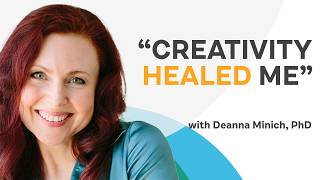
Dr. Deanna Minich discusses how creative expression heals trauma and supports mental health alongside sleep, nutrition, and ritual. She draws from her own experience with reproductive challenges and a friend's cancer diagnosis to show how art becomes a tool for self-discovery and spiritual meaning.
Chapters
We each have a personalized path to our creative DNA. You know, just like we talk about personalization of food, personalization of lifestyle, sleep, habits, activity, our creative expression needs to be personalized. So there are no limits to it. In fact, I would almost say that we need to be creative about what it means to be creative.
Well, hello everyone. Welcome. It's time to talk about mental health and improve our mental fitness and be together on this very wonderful journey. We've got an exciting episode and we're going to be talking all about creativity and understanding more of that and getting more of that, thinking about really important aspects that often get neglected in mental health like spirituality. And we're going to talk a whole lot about the mechanisms of polyphenols and plant based nutrients and geek out and some nutritional science. We have a very special guest and that is what we're going to bring to you is really all of some or many important components of mental fitness that need to get talked about more. Right. How do we connect ourselves? How do we connect to our food so quickly? We have, and not too quickly because Deanna Minick, Ph.D. has a big bio because she has an education that spans Both a conventional PhD really thinking about nutrition in a medical way, as well as great credentials in functional medicine. She is a nutrition scientist, an international lecturer, an educator and an author. Author. She has over 25 years of experience in academia and the food and dietary supplement industries. She's currently the chief Science officer at Symphony Natural Health. She has been active as a functional medicine clinician and in clinical trials in her own practice, which is called Food and Spirit. She's the author of six books on wellness topics, four book chapters and 50 scientific publications. And through her talks, her workshops and her groups and in person retreats, she helps people transform their lives practically and artfully through nutrition and lifestyle. You can learn more about her at her website, DeanNamin.com also we're going to have lots of links to her work and her books in our show. Notes. Dr. Deanna Minick, welcome to the podcast.
Well, hello Dr. Ramsey. Good to be here with you. Good to meet again after. We were just talking about how long it's been, probably about two or three years since we were in person. So it's nice to be here having this conversation.
Well, I was really excited to bring you on the podcast and I keep coming back to a moment where I was sitting next to you and one of the reasons I wanted to have you on is that one of the things I ask people to pay attention to both My clinical practice and also really as a result of this podcast, as we all seek to improve our mental fitness, is how we feel around people and what that means. And I remember sitting with you at a conference in San Diego. We were both presenting and I had a real sense both of calm and ease. I was talking with my team about it today, but also had this feeling of real, like a creative, I'm going to call it sensuality. It was like a sense of wanting to, like, do yoga with everybody in the room, or maybe we were going to had this feeling of like, wow, can we all, like, paint together? And it was really inspiring. And there was something that I hadn't seen in a lot of people. So really, along with all of the wonderful credentials and knowledge that you have about rainbows and polyphenols and the types of things we're going to talk about, I wanted to start with this notion about how you're really grounded in creativity. And gratitude is a sense I get from you, and I'm wondering some of how you achieve this.
It's been a lifelong journey. I don't think I've always been grounded and I haven't always wanted to realize my creativity. In fact, that was part of my health issue. I had had as I teenager and into my 20s, a lot of issues with my reproductive system, meaning endometriosis, meaning a blocked fallopian tube on the left side. I was always struggling month after month. And if I just think about my mental health on a monthly basis, it was in the tank. You know, if I think of all the things I could have done and how I could have felt better going back to my younger self. So I wrestled with my physical creative expression through my reproductive system. And I would say that through painting, through art, that really opened up a gateway of exploration into what my body was trying to speak, what was it trying to tell me? And sometimes we can't always get that in words. It has to come through in images, in color. And so I had squashed my creative expression for many, many years. And once I started to open that up and to become more grounded, I mean, I think I was always kind of grounded because I was always kind of a nerd and sciency. And I always wanted to know how things worked. And it was very logical in my approach, which is part of probably why I had squelched my creative expression, because I kind of saw that as squishy. Like, that wasn't really straightforward in medical and scientific. That was squishy. That was chaotic. That was. I don't know, like a loose cannon. What do you expect from all of that creative, I don't know, life force, you know. So in my late 20s, I started to explore a lot of my creative expression. More out of desperation, more out of depression and anxiety. Finishing my PhD. It was a high stress time of life. And I started to paint and I just started to paint like these wild, vivid images. And I would put them up all over my room and apartment and people would ask about them because they were unusual looking paintings. They were shapes. They weren't like I was painting like a boat or water or something tangible. I was painting my emotions, essentially. So when you ask how did I get here? It's been a journey. You know, I'm 53 and I look back at who I was, decade, decade by decade, and I was very different. You know, there's a common thread of who we all are and kind of like why we're born and what we're doing, what is our life's mission. But then there's kind of like this unfolding and I feel like the creative expression, the painting, the color really helped me to unearth what was inside and wanting to come out in balance with that sense of being very grounded.
Now you're talking about something that I think a lot of us listening, a lot of people listening myself also struggle with is the idea of something that's abstract or expressing something through a color color or channeling something into like a. You know, your sounds like your paintings are very abstract and colorful and that, that has, you know, direct, that has meaning or I think a lot of us struggle with that. Like we want something, I guess, more like concrete. Are we going to like paint a flower and it really looks like the flower and that's what we think about as creative expression or if we're struggling, are we struggling with like a sense of control over our creative self in a way? Like, do we need to like let go? Or how do you help people when they're kind of stuck?
I love that you actually asked that because I think for much of my life, and if I look at other people, there is that sense of control, like you mentioned, locus of control, but then also this sense of perfectionism, not wanting to do anything wrong, you know, living in a very moralistic, I would say, mental space. You know, I grew up Catholic, so perhaps it's just by default that I was always entrenched in discipline rigor. I went to Catholic school, I wore a uniform. I was always fitting into a box. And my father was a policeman. So I had rules upon rules upon rules. And so it was like, you don't want to do anything wrong. So I think what creativity allowed me to do in this whole thing with painting was if I look at how I would do it, I would put my hair into a ponytail. I would be wearing, you know, sweatpants, T shirt, old, ripped up T shirt. I'd be on the floor. I'd get really messy. I'd have paint all over the place. And so what I think that creativity, at least in the artistic, visual art format did for me was it enabled me to get beyond the box of perfectionism. And then I, you know, I would look at some of these paintings, and my partner, who then soon became my husband thereafter, he actually did see images in those paintings. Even though I saw them as abstract, he saw them as, you know, there was a certain thing that was emerging and needing to come out, which was essentially, I had certain shapes. Certain shapes, like my ovaries, my uterus would constantly appear.
So why would he sort of interpret the paintings? Would he kind of see these things and kind of see a reproductive system in the paintings in a way?
Well, he knew about my health issues. So let's just, you know, give that as a background in context. So I met mark in my 30s, and, you know, he knew about my reproductive stuff and what was going on there. And then when he would see me painting, and by the way, I would have to put these paintings all over our house. So poor Mark was seeing these paintings over and over again. These big pink and orange spirals. And, you know, they were large. Like, I couldn't paint anything small. They were always massive canvases. Like, it's almost like that canvas engulfed me. It was like I just had to get it out. It just needed to be seen. So it was actually Mark that said, deanna, I think you're painting your ovaries in your uterus and you're putting it all over our house.
And once he said that from your partner, like, kind of, how did that sit with you? Or what?
Oh, I was ecstatic. I was like, oh, my gosh. I did not even see. See this. I did not even see it. And Mark is a musician. He's an acupuncturist by day, musician by night, but just more for. For fun. And I noticed that I would always be drawn to paint when I was stressed and when he was playing music in the house, like, and the kind of music that he plays is kind of like, no words, it's just instrumental. So I think it was unlocking something in my brain. So I think it's really healthy for people to have this. In fact, it's so funny, Drew, because some people, when they hear of this story, I don't always tell this story. So you're kind of going deep quickly. But when people hear that story, then they're like, deanna, so how big was the canvas? You know, because they have reproductive issues, they have women's health issues. So then they're thinking, well, maybe I can help to resolve some of my own issues. And what I would say is, like, we each have a personalized path to our creative DNA. You know, just like we talk about personalization of food, personalization of lifestyle, sleep habits, activity. Our creative expression needs to be personalized. Like, Even now, at 53, I'm not painting. Like, I don't feel the need to paint anymore. I kind of went through this stage of my life where it all had to come out. Then it resolved itself, and then I didn't need to paint. Then I kind of moved on to other forms of creative expression. So I really do feel. And if for people who need to nerd out on it a bit, there's really good data on creativity. I mean, if you think of medicine, medicine used to be called the healing arts. The healing arts. And I feel that within medicine, I'm not a medical doctor, but what I have seen within different pods of medicine is this aspect of silo. Siloing the body, fragmenting the body, not having this sense of cohesion and not really broaching topics like creativity, sensuality, expression, our voice, you know, all of these different aspects. And I mean, even for, like, a gynecologist who is innately tied to the reproductive system of the body, I mean, how often are gynecologists talking with their patients about, okay, when was the last time you were creative? And so many people have limiting beliefs around their creative expression. And they would say to me, you know, oh, Deanna, I'm not an artist. It's like, we are all artists. We share a universal archetype of being an artist. Because right now, as you and I are talking, ourselves are growing, dividing, proliferating. We are physical artists in our bodies. We're constantly sculpting our behaviors, and that's changing who we are, our phenotype. So I think it's really a limiting belief that people do not have this creative ability.
I wonder if everyone listening there was when Dana was speaking about the constriction of creativity, whether it hit you. In a way, I got almost like a Little emotional, because I think it happens to so many of us. Like, some. Whether it's someone, like, scolded you or told you that, like, your voice was bad, or whether someone looked at your painting. I've had so many patients with these specific traumas of, like, there's one person, right, who told them this thing about their creative self or just criticized it, and it made it shrink. And I wonder if more people have that type of trauma around there, like honoring and accessing their creative process. Are there. There kind of specific things that come to mind for you that we should consider some of them sort of, to help us?
Well, first, I would say if there is conscientiousness about judgment or acceptance of one's creative expression, I would say, first and foremost, to do it on your own. Do it in private. So that might be journaling on your own. It might be making art like I did on your own. It might be singing in the shower. It might be in places where you feel safe and you don't feel that sense of being judged.
It's just for you, is sort of a.
It's just for you. It's just like, let it out, ooze it out in some way that feels right for you. Maybe you're just doing something at home. You start quilting, you start doing, like, mosaic making, which is always really fun. Scrapbooking, you know, creativity. If we think of just all the many kinds, it could even be making a meal. You know, that's actually one of the fun ones that I talk with a lot of people about is because people have been so heady about what they eat, because everywhere you turn, it's like, okay, you've got to follow this diet, these nutrients. Are you hydrated enough? Did you get enough magnesium? So there are all of these. I would call this analysis paralysis. So if you're talking about mental fitness, I feel like this is very paralyzing. It's paralyzing to the. To the creative spirit. And so one of the ways to circumvent that, or at least lessen it, is by injecting a little bit of creativity in how you make your meal. And in fact, Drew, I talk about seven creatives, just to toss this out there real quick. Seven. Food, creative flowing, creative thinking, creative moving, creative speaking, creative, visual creative. And the last one I call a connecting creative, which is somebody who gets inspired by awe. You know, you go and you travel up to the top of a mountain, and you're just like. And then you get these insights, right? So creativity, I would say, can come in all of these different ways down to preparing food and making your plate your canvas.
The connective creativity really strikes me. I hadn't expressed that way something I really, I don't know, I get a little like spring in my step when I think about like connecting people like professionally or friends or you know, if I consult with someone and I think like, oh, there's really like this like I know I know just the right person for you to talk to. It so exciting for me in a very creative way. But I love you naming the different types of creativity that helps create. Maybe different ways that people can tap into it where so often I hear, you know, I can't sing or I don't draw. Do you encourage people to explore each of those or maybe honor more of like creativity in a movement space? Or how do people maybe if they want to have more creativity in their day to day somebody's like health and mental fitness plan, which I highly encourage. If your food kind of mental fitness leads you to be like obsessing about macronutrients and how much protein you ate and what fats you, you know, a little obsessiveness around that's interesting. But mo much more than that I would hope for you for awful mental fitness is that you have incredible creativity around your food. You're inspired by it. You walk into your kitchen and you're like, whoa, like here we go. It's going to be a wild ride.
Well yeah. So where do they start? I would say wherever they feel drawn. You know for some people they're just, you know, I think of my niece, my 10 year old niece is all into gymnastics, swimming and anything that involves a bodily motion. She is what I call a movement creative. She likes dance, she likes expressive body arts. She's not a. And whenever I sit down and draw with her, she's. She will say, oh Auntie D, I can't draw like that. Or you know, I could tell she gets feeling a little bit deflated. Like the visual arts, she respects them but it's just not something she feels drawn to or that she feels like she feels competent in. So she kind of shies away from it. So she goes where she feels drawn. She feels drawn to dance and all of those things. Whenever she comes and visits me, we go to this trampoline kind of studio where she just jumps. I mean she just loves being in her body. So you know, I would say, you know, with every person you're going to have something that you're more drawn to than others. And so that might be acting and drama. It could be food preparation. It could be putting together a social media post. It doesn't have to be so sophisticated. Doesn't even have to take a lot of time. It could even be something like how you live your day could be creative. How you drive to work could be creative, how you think about something. I have a friend who's very successful, very logical. He's in the world of finance. And so he and I were talking about being creative, and he said, well, you probably don't know this about me, but I'm incredibly creative, and it's how I'm strategic about. You know, in his line of work, he had to basically create algorithms or predict different financial trends. And so he almost had to think out of the box about that. You know, about numbers, like, how to.
Tell the future with numbers. I mean, that sounds like in its core creative challenge.
Yeah, well, you know, people can be thinking creatives, like, okay, so when we. Let's just say that we have a problem and we go to bed, we sleep. Dreaming is creative. And many people wake up in the middle of the night or they wake up in the morning and they have an answer to that problem that they went to bed with. So somehow our mind can create the pathways, the neuronal pathways to get us to where we need to be. And that's a very creative process. So thinking can be creative. I think many times people define creativity as something that you draw or paint or, you know, you're acting, you're singing. And this is more of, like, you know, a certain kind of art. But then there's an art of living. There's an everyday art of how we live our lives, how we relate to people, how we sleep. I mean, even I have worked with a person, a woman, and she had mentioned to me that she didn't think she was creative. And she was always saying how she admired my creativity, wanted to be more like that, et cetera. And I said to her, I said, but you have such a great skill for interior design. Every time I see your background, even on Zoom, you've got your room constructed with, like, lilies and orchids, and, you know, your blinds are perfect and, you know, the colors. And she was like, oh, yeah. You know, I actually really enjoy that. So sometimes it's not even something that we might be thinking of as creative. It's almost like a creative blind spot. So whatever we feel drawn to, whatever gives us that feeling of passion or moves us into that desire, I would say that's where we need to focus. Because to me, that puts our brain and heart into coherence. So as you know, being a psychiatrist, I mean, the heart and the brain connect, and they do that many times through waves and different waves, you know, ekg, eeg. So measuring the electrical impulses and what you see from some of these studies is that when somebody is in the zone of feeling passionate about something or losing themselves to something, it's like these. These waves are very synchronous and connected. And we all know what it's like to feel when we're in the zone. Athletes know it.
Right. It gets code called so many things. You know, meditative state, flow state, creative state.
Absolutely. So there are no limits to it. In fact, I would almost say that we need to be creative about what it means to be creative.
Well, I like your expand our notion of it. There's been, you know, in some ways, there's such a theme around diversity in mental fitness. You know, there's a diversity of plants and fibers or a diversity in your creative pursuit. But I do feel often it's a really a missing element when I see people who are struggling. When we think about, you know, the horrible things that depression takes away from individuals or mental struggles or health struggles as your. We kind of ran roughshod over at DNA. But you're very generous to be open with personal struggles with your reproductive health, especially early on, especially coming from a, you know, a Catholic background and a somewhat, you know, conservative, it sounds like household. I can just imagine that, I don't know, carries with it. Transcending it must be very gratifying.
It is, you know, well, now it is now that it feels like it's over. But when you're in the throes of any health issue is your listeners know, sometimes it doesn't feel like that. So one of the ways I also feel like looking at health in a creative way is to get symbolic. So in my mind, there is kind of the literal approach of you go to a medical doctor and you figure out, okay, let's just say go back to the endometriosis for, as an example, oh, this is an inflammatory condition. And so you've got this. This issue. You may have some gut dysbiosis. You might have some issues here with, you know, any number of things from a physical or physiological perspective. But then you can also look at that with symbolic eyes. There's. I've had so many great teachers, and one of the teachers that I've had is just through books, and I've also attended some of her seminars is a woman by the name of Carolyn Mase. Carolyn Mace, my s. S. She is a PhD. She's a medical intuitive. And so she would often see that through her intuitive way of assessing people. She would see that we take on certain aspects physically of things that are more emotional, mental, or even symbolic. You know, what is our body trying to say to us? Louise Hay wrote a great book many decades ago, you Can Heal youl Life. And in the back of the book she talks about all the different body parts, all of their symbolic meaning. And sometimes we need to get out of our head in the way of trying to rationalize and deduce. I say this even though I am very prone to doing it and it's good to do it. I feel that it can be best balanced by having a creative, less defined, less, you know, less kind of. Your word was controlling, which I think is, you know, it's just nice to have that balance. Some people would call that yin and yang. Some people, like Joseph Campbell, they would look at that as balancing the masculine and the feminine nature of our being, whatever we want to call it. But it's the logical, analytical, combined with the creative, symbolic. More of the dreamy state.
Yeah. Well, I really thank you. I love what you're sharing because I think it's where so many people struggle to have a sense of complete health and that if you want to be quote, unquote, evidence based or have the latest science, right, but you're in that kind of primary care model, going to the doctor once a year, once every 18 months, there's not kind of an engagement. There's not an engagement or asking about things like your creative self, your spiritual self, the food that you eat, the ways that you engage in relationships, all of which we know, you know, play massive roles in your health. But then as people are looking for other pathways or things to integrate, you know, there are so many concerns, false idols, you know, ways that people kind of struggle to have symbolism or intuitiveness, be within their health plan in a. In a. I'm going to say it like a healthy and productive way. And I'm wondering if, as people want to maybe incorporate more of this into their health, whether it's a sense of intuitiveness. You know, there's a lot of talk in the psychedelic movement, right, about the kind of intuitive healer and self healing and the inner healer, or whether it's wanting to increase your creativity a little bit more. Can you share a little bit on maybe some lessons you've learned on how do you not get Pulled into sometimes the feelings we all have when we think maybe others have an answer or kind of maybe a better way to put it. How do we find the balance between having mentors and teachers and not having.
False idols like gurus, or where we're, you know, just kind of listening to people blindly and just following, you know, I think we might go through that for a bit. You know, I call it the Shiny Object Syndrome. Sos, which is really sos, you know, a call for help where people. And I see this over and over again. And I was even like this before, too, in my younger days, right? It's kind of like. It's kind of like you have this fear of missing out. And the latest. I mean, we see this Drew with supplements as an example, or the latest dietary approach, or the latest gadget, the latest device, the latest biohacking technique, whatever it is. It's like, oh, that's it. It's creatine. That's what I've been missing. Or, no, oh, my gosh, it's collagen. And I need this kind of collagen. That's what I've been missing. It's the shiny object. And what happens is we lose our mental focus and concentration, and it becomes distraction. And sometimes that can be the case with exploring so many different modalities. It's like a menu. You could have guided imagery. You can have reiki. You can have tai chi, qigong, acupuncture, massage, bodywork. You know, I don't discount any of those methods, but sometimes people are searching, searching, searching. And sometimes those different modalities are connected to practitioners or teachers or people who call themselves healers of various types. And sometimes we need a little bit of that direction. I don't discount that. I do think that sometimes we get on our path and it's like, okay, now I see that that is not speaking to me anymore. Now I'm going to do this. But, you know, it's. One of the other common questions I get is, Deanna, what book should I be reading? You know, and people go through this kind of book mill where not to discount books. You and I both, both written books, and books can be very instrumental. But it's almost like, you know, people feel like they're. They're missing out if they didn't read a book or, you know, whenever I write books, I actually stop reading books.
I'm so glad to hear you say that. I feel so guilty because I'm sitting and I have a lot of books and colleagues, books that have come out recently and. And for me, I've got a book coming out in a few months and the last year working with it and kind of going through the editorial process and yeah, you're kind of alone with something. I really wanted to pick up on what you just said and just to kind of put a pin in it for everyone. This notion that I love the word use unfolding. There's a natural unfolding in our lives. There's a true developmental process. There are some hard years, hard decades, times remote things don't make sense. But I love what you said earlier and I also like this noting the difference between an unfolding of our wellness or fitness practice that if you live next to a hot springs, you might do hot springs every day for a while. It's like shiny new object and that can be really fun. Or I got my new sauna finished. Every night it was sauna night. Every night was sauna night. It's like, wow, not as many saunas now a few months later. Still a lot more though than obviously I used to to have that. Some of that can be good and really helpful as we evolve and need new things in our lives. But we want to be mindful and cautious if we are going from place to place in an attribute to avoidance. If we're, if we're seeking and searching and each thing doesn't quite help us, which certainly sometimes happens. I don't mean to disparage that experience, but to pay attention to that. And I think one of your wonderful suggestions is maybe don't think so linearly and begin to seek a self process of creativity. Don't look for so many books. Look for your journal.
Yeah, exactly. Because I went through a period of my life where I was reading, reading, reading. I mean, being in school until I was 29, I mean, you're just reading copious amounts of material, like all the time. And so if it's not in print, it's like it doesn't exist. And then I would say that into my 40s is when I stopped reading so much of other people's work and tried to tune in a bit more on what. What is my take on this. However, without having had the experience of knowing what it's like to sleuth for information and to understand certain things, it's not as easy to get to that intuitive place sometimes. And that's why many people, you know, when they look at the work that I've been doing, they say, oh, Deanna, I can understand what you're saying about spirituality because you have A scientific approach to it. Right. So I was a scientist first and foremost, and that was my training. And then that enabled me, I think, to have that groundedness to then go on into other aspects because I realized that science wasn't able to give me everything I needed. It's great for pattern recognition, it's great for discerning and studying certain things. But I'm a seeker of truth, and truth doesn't always come within a placebo. Controlled, double blind study is what I first came to. And then I started, you know, I was looking at my yoga training, I was looking at. I was very drawn to side by side with all my science classes in college. I was taking world religions, I was taking English Literature. In fact, I minored in English lit. So I was going to my class on Walt Whitman and Emily Dickinson. At the same time, I was jumping over to A and P, anatomy and physiology, going to a botany class. Right. I mean, I was the true. I. I loved all of it and I could see the connections among all of it. But being pigeonholed just into the academic scientific realm and codifying everything within the box of a study after a while just felt very limiting because I felt like certain things don't all emerge in a study or you can't really wrap your arms around the complexity of people in a study. I just had a student. I do teach for a university, and I just had a student. We were having a conversation in one of our webinars about the nutrition studies. Can you really trust any of them? Because did we look at genotypes? Did we look at those people, their lives? No, we take one little variable. I mean, you know this very well because your angle is nutrition, right? So you can see the limitations of science. At the same time, you can see what it can provide. To me, science is the little brother and spirituality is the big sister. Like, they kind of need each other. They're like siblings. In fact, I think that science can benefit. How can you not become spiritual when you are researching something? You know, when you look at the brain and you look at this magnificent organ of. It looks like sculpture, you know, it's greasy. It. It looks so labyrinthian, and it's got all of those gorgeous neurons connecting like stars in the sky. Like, how can you not get really creative and spiritual when you start researching? So I feel like just inherently being in research led me to spirituality and then being a spiritual person, bringing that into science so that science is not so hard edged and definitive, but it is soft and yielding and it's whole So I really feel like both of those things do belong together, but I haven't always synced them up. But I would say now, from here on out, I mean I am just the science and spirituality person. And perhaps if you feel like it, we can talk a little bit more about spirituality. And what does that really mean?
I'd love to talk more about that. And I think everyone listening, there's that sense for it. If you have a sense of like a, of sense, spiritual stillness, a creative engagement, a connectedness with self, with other, with spirit. You know, there's the way that your, your need for science, something drastically goes wrong, a cancer, you know, you need. It's one of those great marvels of the new technology of modern science. It's great, but mostly you're not seeking, searching, suffering in the same way. It's a wonderful way that you put it. I'd love to talk about spirituality because it's really been missing from the conversation in some ways and in other ways it's always been part of mental health. We don't maybe ask about it as much as we should. That's certainly something I've learned from my patients over the years. Just like food and creativity. Don't get asked about a spirituality doesn't get talked about, whether that's coming from a set of cultural values or a formalized religious set of values. And it's such a huge part of how people feel, how we deal with trauma and struggle. You came from a very, it sounds like conservative, I'm guessing, religious background and then got into science and now are very interested in spirituality. Can you share a little of what, what you learned, what shifted and maybe also share again like creativity, like what, what do we do to get deeper into this world?
Well, first let's define spirituality because I do think it's not synonymous with religion. Spirituality and even how it's defined in functional medicine is a sense of meaning and purpose. And then I go further and I say spirituality is anything that gives us a sense of feeling connected. Like feeling connected to another person, feeling connected to your space, feeling connected to nature, feeling connected to other people at a concert, feeling connected. You're outside and you're hiking in the woods, you feel connected to the trees, you feel connected to the air. Have you ever had just those moments of like where you just feel so present, it's like every cell is connecting on in and you really feel that. And it's almost like this again, an awe inspiring moment. And maybe it's just fleeting, but you have a sense of the wholeness. And you have a sense that you are connected to everything else. Like you and that tree are one. You and the ant are one. You and the cat are one. You know, it's like what many ancient traditions would look at as oneness, wholeness, unity. So that's, I think, is important to define because there are different ways that people. And sometimes people get really turned off by that word. You know, what does that really mean? And it conjures up a lot of different notions as to what that implies, but at a very basic level, it can be plugged into people's lives in whatever personalized way that that takes form.
Okay, it sounds like you've transitioned. Sorry to interrupt. Transitioning from. No offense to Catholicism, but maybe a system where some forms of connectedness or feeling this or embrace. There's a lot of guilt associated with that, or we call it effusivity or creativity. And you've kind of come from that background. It sounds like a lot of people struggle with that maybe aspect. It blocks their connection. Can you talk a little bit about the. Maybe how you recover? I'm going to call it the trauma of that, where a set of religious ideals, let's say, shuts down things. Sensuality and creativity and how you kind of some. Some of how you've healed to embrace more of that.
Yeah, that. That is a good question. Because Catholicism has rules, it has regulations, it has doctrine, it has dogma. So if you're not following those things, then you better go to confession and tell your sins and tell what you did wrong. And so there was a sense of that. Although I think for some people, their experience with different religions and especially Catholicism, you know, some people call themselves a recovering Catholic. I've never called myself that, actually. In fact, I look at my growing up as a Catholic, not as negative at all. I wanted to be a nun at the age of seven. And I've heard this somewhere. I don't know if it's true, but I heard that whatever you wanted to be when you were seven was your true calling. And when I was seven, my nuns, you were talking about idols. And, you know, my nuns at school were my idols. They weren't harsh with me. I loved learning. I loved school. I wanted to be a nun, and I wanted to be a nun journalist. I wanted to write all the time.
What appealed to you about being a nun? What were you seeing in them?
There was a certain sweetness about the nuns that I had in school. Some of them wore the traditional habit and the clothing, and then others were more Secular. And so they were just everyday clothing. Some of them were really funny. And what I ended up doing in high school, my Saturday job was to go and wash dishes at the convent at the high school that I went to, which is called Queen of Peace. So I went and I would go and wash dishes for $5, and I'd see all these nuns and they're all laughing together. And, you know, I kind of felt like it was this secret society of women that were, like, having a good time. And, you know, I. I don't know. I really like the nuns. I had such great experience. Some of them, some of the ones that I had in grammar school were very creative. They taught my art classes. Sister Jean, Sister Germaine, I can remember. And so I had great experiences. And even in the church that I grew up in, one of them, you know how we have altar boys in Catholicism where only the boys get to dress up as, you know, they get to go up there with the priest. Well, in my church, we had light bearers. So the girls were also involved in the entire Mass. So, I don't know, I think I just had a different Catholic experience because my parents did not have such a great experience growing up.
I wonder if it's important to honor that a lot of people have different experiences. There is a maybe stereotypical rule driven, mean nun experience that many people have had. I really love that you remind us there's so much more than that happening. If I. If I just think about my own life, actually, one of the former nun Helen was just a kind of incredibly deep and spiritual person, and I just love the way that she has built community where I'm from in rural Indiana, and the way that she inspires helping people and feeding people and growing food. I mean, it's just, you know. But, yeah, for a while she was a nun and she speaks like you do of just loving it. I wonder if there's something about how the nuns, and maybe this is totally naive to say, but freed themselves from some aspect of men in the patriarchy and within these confined rules and, you know, very patriarchal rules. But there's a. There's a way. There's a certain type of, like, creativity and femininity can really live.
Yes, I like that. I really like that. Yeah. Because every time I would experience them at the convent again, it was like they were in their bubble. They. They got to teach, they got to talk with each other all day. I mean, all of their basic needs were met and, I don't know, it was just kind of comforting. They could read. They were, they were very well educated. And so there was something attractive about that for me. So I like what you're saying there, that maybe they had excluded themselves from a lot of the polarizing aspects of society. And you know, we know that nurses, I'm sorry, not nurses, but nuns are commonly studied as well, like looking at breast cancer. Right. Because they, they haven't had children.
Well, they also have a regular discipline set of diet, I suspect even movement practices. I don't know a lot about nuns and the way to really be a great nun, but I suspect keeping your, the temple of your body very healthy is part of that. I also wonder if there's something about a type of creativity where ritual and costume and being together in communal, it's like a little bit lost for many people or there's something about like this experience that you had that maybe is wrapped up in, you know, or, or has been damaged because of trauma. You know, it doesn't take many mean nuns to offset what creative, wonderful, loving, more, let's say truly Christian centric type of experience, you know, based in loving, kindness, forgiveness, empathy, creating connection and creativity. And so I, I wonder if there are places you see people recapturing that in the modern world as people are trying to have more of a spiritual life. I heard recently of the Modern Elder Academy, or I learned of Lisa Miller's work at Columbia, where, you know, there's more sense and more. I would say, I'm going to call it legitimate conversation, but more integration, it seems happening. Are there places or organizations where, I don't know, you see people kind of capturing some of that ritual that you loved while still honoring the creative and the safe.
Are there places where that's done? You know, I would say that, you know, when I think of Buddhism, I think of, you know, there are Buddhist nuns, there are these different congregations of people where they do sequester themselves and sometimes they integrate into society. Some people go on retreats. You know, after a while of seeing people one on one, I just wasn't nourished by that anymore. I felt like I wanted to be in community. And I feel like one of the aspects of spiritual traditions is that aspect of community. So whether it's all the nuns coming together or people go on a retreat, I mean, even for myself, I try to go on a retreat or some retreat, like experience experience once a year, even if it's a weekend thing, just like, I got to get away. And this is very common in Catholicism where you do some kind of retreat or during Lent. 40 days of giving up something where there's that solitude, the silence, the going within. And I like the word that you're using, which is about ritual. I feel like we've lost a sense of ritual in our daily lives. Now. It's a regimen. It's a routine.
Tell us about the difference between those two words. What's the difference between a ritual and a regimen?
Well, I'll tell you how I see it. I don't know how it's defined out there, but a routine is to me, it feels structural. It feels like these are the things that you need to move through through the course of the day. You have to wake up, you've got to eat breakfast, take the kids to school, go to work, have lunch. You know, you kind of have, like, your. Your day marked by certain physical activities. Ritual to me is injecting spirituality, meaning or a sense of presence or connectedness into those aspects. So it's almost like a stained glass. Like, now I'm going to put something over that routine where it becomes more meaningful. Like, I can have breakfast and move it from routine to ritual. I can have, you know, and usually breakfast is, like, my favorite time. I love slow mornings. The. The quality of my morning determines the quality of my whole day. So I can sit there with Mark. We have breakfast, we have music playing. There's a certain rhythm in a certain ritual that we have. I burn a little bit of white sage, like just something aromatic to kind of set the tone.
It sounds wild. If anybody's listening. Haven't done that in a while. I'm a pretty, like, conventionally trained psychiatrist. It's really strange for me to have a psychedelic medicine journey room in my clinic. Not straight new, but I've got sage over there. And I have to tell you, I come in here some mornings, Deanna, and I'll just walk through and I'll burn sage, and I'll really try to feel like my intention around this place. I really try to, you know, kind of have a notion of kind of clearing out energy and getting things moving and letting all of the, you know, this mental health couch here behind me. And, you know, people share really, really hard things, you know, and to let those live in here and move around, but then leave. And anyway, I just encourage anyone, if you haven't done that for a while, try. And it's hard maybe not to have, like, a doubting spot or to be in that mindset, but just really sort of open yourself a little. Because I find the aromatics, the scents, yes, they really kind of transport me like I was harvesting some chamomile right before I came over here. And because we've got it before we run out of time, I've got to ask you about polyphenols, carotenoids, rainbows, and all the amazing phytonutrient science, you know, but, you know, I just had this plant and I had this, you know, sense of just really being pulled inward into my physiology by the scent of the chamomile, by the so aromatics. Great way to kind of tap into something.
They are. And also from a science perspective, we know that the sense of smell is related to cognition. If you think of it. I mean, our olfactory sense, our nose right there is snug right there with the brain, the pituitary gland. I mean, it's all very interconnected. So anytime we're engaging with smell, that that is changing brain, I would say function and also touch. If we think of all of our senses, you know, touching, you know, this is why I like having animals. Like I have a cat, I'm really into cats, so like petting her in the morning, you know, the smell, the hearing, so, you know, having music playing.
Well, the pets are huge in the sensory. What I love what you're describing and it kind of helps with this mental fitness kind of. You know, it's funny, I used to call it morning routine, but I'm going to change my language kind of from now on. Inspired by you, Deanna, that the morning ritual that if we're going to think about fitness, you know, mental fitness as a way of being active in building mental health, that mental health isn't something we're born with or mental illness isn't something that just like happens to us, that we have more control via mental fitness, just like with physical fitness and our physical health. And I like the notion that for so many of us, and I'm going to even put myself in this category a little bit, everyone just to is we're struggling with ritual. We're starting with this sense of, you know, inspiring ourselves through the senses, of having it not be a habit. Now I'm listening to five minutes of classical music to increase my bdnf, like get up and shake and dance and like, you know, listen to something that makes your yourself rock out a little bit. And that, that that ritualistic, more impassioned notion is missing for a lot of people. And I think it's where kind of, you know, a lot of the wellness can be a little hollow and not really deliver on the full need and hope that people have to really feel. Feel more. Can we talk about polyphenols? I really. I know we're. We. I just, I. And so. Well, you know, I mean, look, I'm holding your dissertation from your PhD here in my hand because I got curious because we think about you. I think about you as like the rain rainbow, creative, wonderful food lady, woman. But your dissertations on the essential fatty acid metabolism.
It is. But my master's thesis was on carotenoids. So that's kind of where I got introduced to phytonutrients. So Carotenoids are the 700 different plant pigments. So they tend to be red, orange, yellow, green. So beta carotene is a phytonutrient for everybody.
Just to take it one step back, what are we talking about?
Yeah, so a phytonutrient is a plant compound and it's not a vitamin, it's not a mineral, it's not a protein, carbohydrate or fat. It is seen as non caloric and it has other types of health effects in the body. Like for example, it might work at the level of the gut in order to help with the gut brain connection. It might be an antioxidant. When I was going to grad school in the 90s, I knew a lot of these phytonutrients as antioxidants and we didn't understand much about them other than their antioxidant potential. But now we know that they reduce inflammation, they're endocrine modulating, so they change hormones. They're chronobiotics or they help our bodies to synchronize with circadian rhythm. I mean, they do a lot of other things that. And they're so small and there are thousands in the foods that we're eating. It's sometimes hard to keep track of.
Oh, but it's so wonderful, it's so wonderful to expand this idea that they're more than antioxidants. I say this a lot. All of you listening, please. This is such an important point because you're just thinking about these things. Oh, it's antioxidants. It doesn't really explain the few by the true biological complexity of it. And also it's not really what they do. You make much more powerful antioxidants and you eat many more powerful antioxidants. What's cool is a lot of these are fat soluble. Like I think a lot of the carotenoids. Right, are fat soluble, certainly giving Rise to vitamin A. But that notion that they can kind of go from our fork through our gut and eventually end up in really interesting areas of fat like our brain.
Yeah, absolutely. Lutein, I mean, even the back of the eye is really dense with a lot of lutein, which is the yellowish carotenoid. And it also protects us from a lot of the artificial blue light at night. So if people are eating a plant rich diet, rich in lutein, then we.
Can scroll our phones all we want late into the night. Dr. Diana Minick is here. Thank you everybody, this has been great. Now you can doom scroll, eat your yellow. I'm teasing. Is it true though, if we eat more yellow vegetables that contain lutein or these things like yellow squash, do I get more of it in the back of my eye? Like I can really over time improve my ability to tolerate blue light? Because look, let's face it, all of us are spending way too much time on screens.
Yeah, short answer is yes. Your body is really intelligent. So it has a location, locational aspect for a lot of these phytonutrients. So certain ones concentrate in certain parts of the body. I remember my mom, when I was growing up, she got really into health and so she ate a lot of carrots, she drank a lot of carrot juice.
My uncle did this. They turned orange.
He turned orange, right. So they lodge in the skin, they lodge in the eye. Relevant to psychiatry. I mean, they lodge in the brain. And in fact, blood levels of lutein sync up really well with brain levels and also cognitive ability. If we think of the polyphenols, the polyphenols are another category separate from carotenoids. And it's the largest category of phytonutrients.
So how many are we talking?
We're talking about 8 to 10,000 different kinds. So things that would be called flavonoids. Some things are not flavonoids. They're called phenolic acids. But that doesn't even count all of the different metabolites that happen by way of the gut microbiome munching on these things, which can create what's called secondary metabolites. So you might have quercetin. Quercetin comes in, it's not very well absorbed, so it kind of hangs out in the gut, hangs out in the colon, and then the gut microorganisms start chewing it up and then you start getting all these different metabolites. So we're not talking about those, we're just talking about straight on polyphenols in nature. And Many of them are found in blue purple foods. And those are connected into brain health. And when I think mechanistically, some of these flavonoids even have an anti anxiety effect. So they weakly bind to the GABA alpha receptors. For some of your listeners, they might be familiar with you talking about this stuff, but it's pretty neat because they can modulate our mood.
Yeah, it's really neat. I mean it's. I think that the blue. This is. I like this part because it sounds like science fiction. It sounds like the type of, of on the edge of, I don't know, supplement science or integrative health. But no, it was like paper in nature, like top journal about. I think it was blackberries, what they used anthocyanins, the blue pigment molecules from blackberries. And it kind of tracks the mechanism being very clearly like these things work very clearly by affecting the microbiome period. I was like, it's not that you absorb it right up into the brain. It's Deanna is talking about the metabolites. And I love this app. I hope people hear a hopefulness in this because sometimes it sounds overwhelming, right? Thousands of molecules on top of all the vitamins and nutrients we already needed to try and find. And then there, you know, so many of them and then they get chewed up and form hundreds of other molecules. And there's a way that that can be overwhelming and there's also a way that that can be like awe inspiring, miraculous and filled with opportunity for us. And I hope you all are hearing the latter. The opportunity and the hopefulness in it that by being creative with our food, by tapping into a deeper spiritual sense with ourselves and really what that means, the way that Dr. Meenik describes it, right. Of us tapping into a sense of connection and purpose and then thinking about, you know, our foods and nutrients in these ways. The extension of polyphenols and phytonutrients. Now I want to hear a little bit about carotenoids and there's so much to talk about, but you knowing a lot about them. Can you both tell us what happens when one of your favorite, let's say carotenoids or polyphenols goes into the body and then tell us the food that we should be eating more of because it's so rare that we're with somebody, everyone that can connect an actual mechanism to a food recommendation. And I trust them. But Dr. D, she can do that because that's exactly what she knows about.
Well, we'll make it really easy. Let's stick with beta carotene. You eat a carrot and. Well, one little thing to a little tip for everybody. You can actually make more phytochemicals in your plant food just by how you prepare your food. So if you take a carrot and you shred it with a shredder, that carrot is still living matter, and it perceives that mechanical action as stress and polyphenols start to increase when. In the carrot, when you are shredding it, and even more than if you were just to dice a carrot. So we. I just want to bring up, like, the. The mode of preparation, because some of these things, like, we cook the heck out of our foods, we're overcooking our foods, and then we're left with very little of these polyphenols and other actives.
It's a great point. We can't go past this idea. There's been a study circulating around how we can't put bananas in our smoothies anymore because of the polyphenol esterase that takes away all the flavonoid benefits. And I've been smashing my bananas on the counter and letting them sit for 20 to 30 minutes ever since the study was published. In part, I know that's a little bit in part because I just think I like having bananas in my peanut butter chocolate smoothie, and I still think I'm getting some flavanols. Can you sort of help us with that myth? Is that am I doing enough, or should we not worry about it? Or should we never put bananas in our smoothie? Sorry to go on this tangent. I just think everybody listening.
I think it's over the top. I. We get polyphenols in so many foods. We get them in berries, spices, cocoa, you know, And I think for that short period of time that it's all interacting. I just don't see that as something to worry about. I'd rather people just have the smoothie. In fact, if we were to just zoom out a little bit more from that, what I want people to do is actually eat colorful foods and just track the rainbow. And what's really interesting is that most people fall short of blue, purple, and black foods. So things like you were saying, Drew, like the blackberries, like blueberries, like figs, eggplant, raisins, grapes.
Black rice is the one that I added in recently. And black rice, I'm gonna say the purple sweet potatoes.
Yes, yes. Varieties. A purple carrot would be great. A purple cauliflower. I live in the Pacific Northwest, and I realized later when I Would lecture that not everybody knew what purple brussels sprouts were, but they exist.
Sounds like you're from one of these, like, magical, wildly exotic lands of food. You know, the place where there are purple brussels sprouts, but they exist.
They're beautiful. So I would say rather than get too fixated on certain things, it's like, just aim for color, make it doable. And most people get red. Most people get orange foods, even yellow and green, but most people do not get blue purple. There was a survey done many years ago, so it needs to be updated, but it was, like, back in 2009, and they found out of all of the colors, 88% of people did not get their daily serving of blue purple. And I think it's because we just don't have a lot of that in nature. So we've got to follow purple when it appears. Purple is precious. Purple is brain food. And these anthocyanins, you know, incredible work out of tufts University with Dr. James Joseph and other researchers looking at blueberries and how these compounds in blueberries help with learning and memory. There are other studies looking at blueberries in mood. There are studies looking at Concord grape juice and helping to promote things like cognition. So I would say that, you know, the science is out. I mean, I. We could have done a whole podcast just on blueberries and the science of blue, purple food, and brain health, because there's enough. In fact, out of all of the colors, there's so much that tracks to blue, purple in the brain.
That's a really, really great, just top wreck. Because I want to get us back to beta carotene. We were shredding a carrot when I pulled us onto a tangent to essentially sum that up. Keep putting bananas in your smoothie. That's not the problem. The problem is we're not eating enough of a diverse, colorful set of plants. We're particularly missing some colors like purple and black. Think back, everybody. Just think about it. When was the last time you had something purple on your plate? If it was today, please feel massive high five coming through this podcast channel. If it wasn't, please feel massive high five coming through this podcast channel, encouraging you to get some in the next couple of days. Because we're really about thinking, where are these actionable steps? Where are these things? So take us back to. We're shredding this carrot. Yeah.
Okay, so back to beta carotene. Well, by the way, polyphenols and carotenoids are very different in how they work in foods. But if we're just thinking about carotenoids. Many times they need fat and they need cooking. So we take a carrot, we shred it, it needs in order to liberate those carotenoids from the matrix of the carrot, it needs a little bit of cooking. And then to absorb that beta carotene, to get it into the body needs a little bit of fat. And that's what my PhD dissertation was on, was looking at the absorption of fats into the body. So the absorption of fat and fat soluble vitamins, they go hand in hand. So you need a little bit of butter, you need a little bit of ghee, olive oil, avocado oil, whatever your choice of fat is with certain foods in order to maximize carotenoids. And then they end up in fatty places of the body like the skin, like the brain, like the breast, like the, the back of the eye has more of the water soluble carotenoids. But for the most part, I mean even the ovary has beta carotene and like 13 to 14 different carotenoids embedded into the ovary. So they're all over the body, all.
Of the most powerful parts of the body.
They are, they're very colorful for the body. And that's why sometimes our skin color starts to change when we eat a lot of these carotenoid rich foods.
There's also a little, I've heard there's a little SPF that if you eat, I think it's lycopene, you kind of increase the, you know, not a lot, but by a few SPF points, you increase your skin's ability to tolerate the skin. Have you heard that? Is that true?
Yes, yes. I was just going to mention actually that they're like an internal sunscreen. Of course, it's always skin dependent. Right. Do you have very, very sensitive skin and how much are you eating in the way of caroten? I actually do take a supplement of, I personally do. It's not something I recommend for everybody, but I do think that these carotenoids are pretty important for many different body systems and especially like in the spring, moving into the summer to help with UV light exposure and you know, having these photo phytonutrients as I like to call them, because they're very protective against a lot of that oxidative damage. So they have to get in through fat. So just to your mechanism, they need fat. Whereas the polyphenols are just the opposite. Polyphenols can be destroyed with water, with heat, with light. They're a little Bit more sensitive than the carotenoids, which are a little bit more hardy and resilient. So we lose polyphenols in cooking. Many times if we overcook things or, you know, we cook it in water and then we drain the water, we lose. And you'll see many times that the purple color will come out in the water.
Comes right out. Like if you boil purple sweet potatoes though, you know, all of the special molecules come out. If you bake them, you, you get all the yummy special.
You do get them, you'll get some changes to the compounds because they also break down in heat. But one of the ways to maximize polyphenols is to bring in spices. So bringing in, in fact, if you add spices before you cook food, you are preserving and helping to prevent a lot of the damage that can occur in that cooking process. So spices and herbs, I mean, they're so important and rotating them, right? Like having a diverse blend of spices. So every morning, like go through the rainbow of spices, paprika, turmeric, ginger, dill, basil, rosemary, I mean, even down to lavender if you want, like the purplish, right?
I mean, lavender is special because lavender has linalool. Linalool is the same phytonutrient that's in basil and pesto and linalool in aromatherapy. I've seen a couple of like, you know, small trials, fascinating trials. If you do linalool aromatherapy of better sleep, less anxiety, that linalool is a very calming molecule. So there is this way that we've co evolved with these plant molecules. And it's very cool to think about the ways that they impact our health and particularly the ways that we can use them to impact, call it affective state, that if you're involved in the creation of a colorful meal, if you do it with the thoughtfulness and the mindful information, get some fat in there so you absorb the carotenoids. This all kind of helps inform more of a lifestyle where we're getting a mindset of mental fitness. We're getting a mindset around how to get involved in our creativity and spirituality. Dr. Deanna Minick, it's such a treat to speak with you. I feel like we did deliver there. Thank you everybody. Staying all the way through the end to talk at least a little bit about how things like carotenoids and polyphenols work in our body. As you said, we could spend a whole episode on anthocyanins, but I hope again the deliverable for you. Everyone listening or Some real clear, actionable steps. You know, when you're in the grocery store, you better see and look for the purple stuff. And you know, you want to tag either one of us on Instagram. We're again very thrilled to show this great and simple lesson. More black foods, more blue foods, more purple foods, more yellow and. And orange foods. And then I, I really appreciate, Deanna, you're. You're sharing so much and so generously with us about your own health journey, your own spiritual journey, and just the inspiration you really have modeled of living in a state of connection and living in a state of real radiance and glow. It's an absolute treat to know you and to be on this journey with you. I'm wondering, as we think about going into the next few days, if there's something on your mind or something that you're intuiting, maybe that we need, as we think about enhancing our mental fitness, really taking care of our mental health.
Well, I would like to leave everybody with fitness extending into many different domains of our lives, including spiritual fitness. So I know that mental fitness is kind of your, you know what, you're tethering so many of these different aspects to which is important. And I see it as like parallel tracks. You have the physical fitness, you have the emotional fitness, you have the mental fitness, you have the spiritual fitness. And how do you interlock all of them together? So an example of that, what we talked about was ritual. Ritual is taking the physical and overlaying the spiritual, right? So how do we do more of those things? Because they're actually more impactful and they bring us more into our wholeness when we are able to interlock those different aspects and create fitness or that centeredness, that presence throughout all of them. I don't want to make that sound like a lot of work, but that's what I intuit that I was wanting to mention about the fitness aspect that some of us, you know, myself included, we're focused on the gym, we're focused on the physical. Your platform is focused on the mental. But I really feel like, you know, a spiritual fitness. Are we. What. What would happen if we had a major life event? How would that change our belief system? How would that change our connection with people and nature around us? How would it change our sense of meaning and purpose? You know, I have some friends who, they get diagnoses, right? They get a diagnosis of cancer. I have a close friend who had a diagnosis recently of stage four breast cancer. Her whole life changed. No more day to day like sense of spiritual fitness went up. Right? Because it's like, okay, we need to get really clear on meaning and purpose and why am I here? Like crystal clarity. So I just want to mention that because I feel like we may have to move that muscle at some point.
No, it's a really. It's a really important. I don't want to categorize it, but in some ways the most important muscle because I think oftentimes again spirituality is pulled into this notion of religion dogma of, you know, guilt, rules, things not to do, ways that you're. And. And that's. Or at least that's often to people's experience of it. And thinking about spirituality as a sense of belonging, purpose and connection. As you mentioned in Healing the Modern Brain, actually I talk a lot about purpose. There was a sense of should I pull out spirituality into its own chapter? And it felt for me that really trying to weave spirituality throughout each of these and we'll see what you think whether we kind of got there. But to really think about people finding it through purpose and people also finding it through pleasure and a sense of pleasure that. That leading them things that they enjoy and then trying to really kind of build towards that on again, this foundation of more rainbows, getting things like our sleep right. Getting things like our self awareness more in check that we lead to a place where our sense of purpose, connection, belonging gets. It's much easier to spend time in that realm. As you notice, we don't sometimes it happens. It's always going to happen if we get a big diagnosis. Certainly it's happened to me in periods where I've had a massive life shift. Those are times when you know many more spiritual thoughts for sure. But I feel some of your challenge around or maybe not a challenge. The DNA minic weekend spiritual challenge. That's not exactly what you're saying. So it's not like that. But you're asking us to think about ritual in our own lives and you're asking us to think about rituals in our own lives that with some ease allow us to feel a sense of purpose, belonging or connection. And it's a really. It is a wonderful intuitive moment. Thank you, Deanna. That really resonates with me and some of what I've been experiencing recently and just moments where I felt that. And I expect lots of people listening. I hope everyone listening. You spend a moment and think about that. I hope over the coming days you take some of this wisdom. I hope it helps you wherever you are in your journey, working on your mental health and your mental fitness. I hope ritual can be a part of that. Dr. Daniel Minick, thank you so much for sharing your time, your wisdom, and your expertise with us. Thank you for the depth of this conversation, everyone. Thank you for your time and attention. Please share this episode if it resonated with you. We're up on all the platforms, hopefully where people are listening to podcasts and most importantly to me is again, that you take this and it helps you in your journey in some small way. Please feel my encouragement in that. Not as a burden, but as something light and wonderful and encouraging. And as I said, something that reaches out through whatever this platform is and helps you in your path. I'll see you soon. Dr. Minick, thank you so much.
Thank you.
More from Deanna




Gut Health, Stress & Sleep: The Truth About Supplements and Real Detox with Dr. Deanna Minich




"99% of Melatonin Is Made From Petrochemicals" Dr. Deanna Minich & Lara Pizzorno Interview (Part 2)



🎙️ FMP Essentials Show: Balancing Menopause Naturally with Phytochemicals | Dr. Deanna Minich