Science & Spirituality Talks with Patrick Hanaway, MD
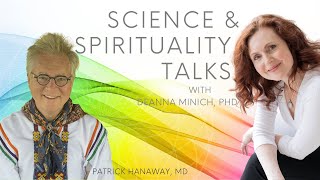
Interview episode in which host Deanna interviews Dr. Patrick Hanaway, a board-certified family physician and integrative medicine leader, about his medical career, training in functional and integrative medicine (including roles at Genova Diagnostics and the Institute for Functional Medicine), his spiritual and shamanic training with indigenous traditions (marakame initiation), views on the relationship between spirit and disease, diagnostic and therapeutic approaches (functional medicine, Ayurveda, acupuncture, five-element theory), and his personal stage‑4 cancer journey and integrative treatment choices (radiation, chemotherapy combined with ketogenic/fasting strategies, acupuncture, traditional healing). The conversation emphasizes integration of scientific curiosity and spiritual/indigenous practices, healing as reconnection, and paying knowledge forward through teaching and retreats.
Chapters
Hello, everyone. Welcome to another episode of Science and Spirituality Talks. Today our guest is Dr. Patrick Hanaway. Dr. Hanaway is a board certified family physician. He has served on the executive committee for the American Board of Integrative Medicine. He was also the past president of the American Board of Integrative Holistic Medicine. And for more than 25 years, he has worked within his own clinical practice called Family to Family, and that is in Asheville, North Carolina. You might also know Dr. Hanaway from his days at Genova Diagnostics, where he served as Chief Medical officer as well as the chief medical education officer for the Institute for Functional Medicine, where he has been an integral educator in the gastrointestinal Advanced Practice Module. We just call that the GIAPM. And then in 2014, he worked with Dr. Mark Hyman to deliver, develop the collaboration between IFM and the Cleveland Clinic. So he was very essential in creating that relationship and helping people to understand the translation of functional medicine into clinical practice. So welcome, Patrick. Great to have you here.
Thank you, Deanna. I'm so looking forward to this conversation.
Well, I'm all ears for this. And where we start typically is when with science, we start with medicine. And being that you're a physician, I'm sure that at some point in your life journey you had the realization that you wanted to go into this. And so I'm wondering if you could take us back into how did you get into medicine and how did you choose to become a physician?
I've often wondered how much of it was, was my own idea and how much of it was just kind of reading the field of my father as a lawyer and my mother as a nurse. But at five years old, I asked for a microscope for Christmas because I wanted, you know, I was interested in being a doctor. I'd had my tonsils out. I'd been to the doctor a lot with ear infections, but I said that's what I wanted to do. And, you know, lo and behold, I was able to do that. So it was from a very early age. And, you know, there have been some revelations to me about what, what that meant to me and how I've learned to be able to really move from a place of caring and compassion along the, along the route. And I certainly had some question marks when I was in medical school. Is this what I really want to be doing? I thought that I was going to learn about healing and wellness and prevention in medical school, and I wasn't. I learned other forms of healing at that point in time around using guided imagery and acupuncture. And even learned some chiropractic and hands on skills which I still use, which were very practical. But one of my teachers, early on, my second year, beginning of my second year, I'm like, I don't know if I want to do this. And I'm taking pathology class and the teacher started off by saying, we're gonna take a pathologic view of disease. There are many different cultural views. You know, you can look at it from acupuncture, you can look at it from Ayurveda, you can look at it from Greek medicine, you can look at it from natural medicine. All different approaches. We're going to take this approach. That teacher was Jeff Gordon, who ended up leading the gut microbiome project for nih. You know, very well regarded, but he actually helped me see, like, okay, this medical view is one view, it's not the only view. And I have been interested in continuing to find different views towards healing, you know, through the course of my years of learning and practice.
Do you think that he was the one that spurred you into having more of a consolidated interest in GI health? Is that how you made that transition?
No, that's a great question. And I only learned like that of him working in the Gap Michael Brown project. In retrospect, after it was going, probably the thing that tipped me over was interesting in this conversation was I was doing some work. I was doing a meditation retreat and then going to help start a clinic at a Tibetan refugee center in Sikkim. And I was in Bodenath, outside of Kathmandu with one of my teachers and was in a puja, as they say, a ceremony for the medicine Buddha. And it was there and it was very blissful and it was beautiful. And they break for lunch. It's like it's all day long going into the night. And they break for lunch. And I'm sitting there eating my rice and dal and there's some little salsa with it, chilies and tomatoes. And he comes over to me and he says, you're not eating that, are you? And I'm like, well, yeah, it's okay. Like, everyone else is eating. He's like, he's like, that's from. They wash that with the water from the gutters, you know, like, don't eat any more of that. And I got. Ended up developing a parasitosis with. I lost 30 pounds. I was wearing my wife's jeans. I was super sick and came back to the United States and I was super sick and the Tibetan medicine didn't help. And. And then I Learned about a diagnostic laboratory in Asheville, North Carolina, called Genova, or called Great Smokies Diagnostic Lab, which was the precursor. And I sent my stool away. This is 1991. Sent my stool away. They've been doing it for a couple years. Sent my stool away. Got six different parasites. This is what you should treat it with. Treated it with those things, and it went away. I'm like, oh, that's interesting. And is it just by chance or is there really no chance that I ended up moving to Asheville, North Carolina, five years later for my wife to finish her residency and befriended the doctors at the lab there and became involved? That then morphed into Genova Diagnostics. So that was kind of the route that I got there, which I feel is sort of great spiritual irony.
All paths lead to exactly where we need to be, right? Wow. Well, just to back it up a little bit, I'm kind of curious here because it sounds like when you were going through medical school, you already had somewhat of a spiritual bent. And so if I go back to you when you were five, were you already precocious or were you already inquiring as to, like, meaning of life and kind of seeing life in a more philosophical way? Or were you just drawn to that microscope and maybe helping people? But I'm just kind of curious about you when you were younger and whether or not you also had a very developed spiritual sense.
You know, I'm not sure. It's like. The first response is like, no, I was just a normal kid. But then I think about it and it's like, well, I went to. I went to Catholic school for 12 years. You know, for the first five years, I probably went to mass every day because I thought it was the thing to do. And then in high school, you know, as we're learning comparative religions and I'm, you know, debating and talking about Hinduism and Buddhism with this priest who was very open, I decided to write a paper on life after life. Life after life was Ramen Moody. And I did a comparative analysis between Moody's Life After Life and the Egyptian Book of the Dead and the Tibetan Book of the Dead. Dead. I'm like 16 years old, you know, and I write a 30 page paper on that. You know, it's like, that's probably not normal.
Wow. Do you still have that paper that would be interesting to dig up and. And look at again?
I. I found it at my mother's house. Yeah, I mean, it was. It was probably a lot of. It was, you know, just restating things that that he quotes from these books from Evans Vents, a very old archaic book about the Tibetan Book of the Dead. And I didn't probably understand a lot, but I understood that there was something after death that happened and that and it just made sense. And it's like, okay, well, here's a modern researcher looking at this, and here are these old texts that are saying the same thing. And that's been my interest. It's my interest in medicine and healing. It's like, well, we have one way of looking at it like a facet of a diamond. But many other cultures over time have also been looking at the same kinds of things with their own degrees of success and benefit to their people. And so I'm going to jump to. At the end of med school, I was spending time. I'd learned acupuncture, electroacupuncture. I learned pulse taking. And I was interested in deepening that pulse taking. And so I went to a place called the Pine Street Clinic in San Anselmo in California. And they had pressure sensory electrodes that you could use to take pulses and see the Waveforms, which in 1987 was pretty. Pretty cutting edge. And I began to visualize and feel the pulses. And I thought, that's interesting. And then I guess it was four years later I got to work with an Ayurvedic doctor, and he was taking pulses. And it was a different way of taking the pulses. And I thought, like, oh, if I take the pulses in this way and taking the pulses in that way, then I can translate between the two different systems. But I learned something really unique that was a great lesson for my life, and that is that when I'm considering taking the pulses from a Chinese perspective and I'm listening and feeling, and then I take the pulses from an Ayurvedic perspective, the pulses change because I'm influencing the field. And of course, I'm influenced in the field. Like, you kind of look at it, it's like, well, duh, that makes perfect sense. But, you know, thinking of it from a. From a linear perspective, from a Western logical perspective, oh, no, there's just one waveform. And we don't think about what influence we have in that waveform. But, you know, when you think about it from a broader perspective, it's like, well, of course the observer is going to influence the field. And we know that from quantum field, but we know that from our lives if just paying attention and being in the world. So, you know, there's lots of layers to the conversation.
There are so Many layers, my neurons are firing. Let's start with this one, because you, you have said a few times now that there are many views into medicine and into healing. And you likened it to a diamond or, you know, if we think of this prism, do you think that there is a starting place of where disease begins? So, for example, is it in the subtle energy? Is it in the physical matter space? Can it be everywhere simultaneously? Do you think that there's some kind of progression that happens through these different views of medicine? So I'm just trying to get a sense of, like, is there a sequence in your mind as to how the different views come together? So does physical medicine? Is that kind of the end product? But then preceding that, do we see other changes in meridians or even through the subtle energy body? Do you have any notion about that? I know that Joel Evans was talking about his take on subtle energy versus physical manifestations of disease. And I'm curious about your philosophy because you've had so many different exposures to all these different healing traditions.
I'm going to go first to the diamond reference and then come back to the question. When I look at the diamond reference of the facets, you know, I think of that as the individual, the person, and there are many different facets to them. And I can, and I've done this with, working with a group of healers, seeing the same person. And there are things that I can see that others see. There are things that I can see that some others can't see. There are things that others can see that I can't see. And chances are, if I can't see them in this patient that we're working with together, I probably can't see them in myself either. So these facets of the diamond are the individual. And the many different ways in which we see, feel, hear, listen, that's the first thing. The next thing is just to come to the sequence and the flow, if you will. But I'd like to, from my perspective and the teachings I've been given, it's not energy. Energy is like a Western physical construct that is separate. It's spirit. Spirit is alive. Everything is alive. Everything is alive. My iPhone is alive, you know, my microphone is alive. I'm alive, you know, the trees behind me are alive. And so where I feel imbalance begins is in that disconnection from the aliveness of the world, from connection to spirit, and that it then manifests itself through in different ways. The story I gave you about the parasites in the medicine Buddha puja, you know, is that like infectious disease. Sure, I could say that. But it was also like an awakening of I am in a beautiful place of connection and the world is still alive. It's not under some magical, everything's going to be okay because I'm in a good spot. It rather am I listening and connecting to the world as it is. And so in that sense, to me, you know, as Diane Conley says, all sickness is homesickness. You know, it's. It's about connecting back to our home, to our heart, to our hearth, to our connection to that place of balance. But let's. Let's recognize that balance is not a static place. It's. It's imbalance, rebalance, imbalance, rebalance. That's who we are as human beings, and that's how we learn. And so those things will. Those imbalances will then manifest themselves through mental, emotional states. They'll manifest themselves through physical states. Had experiences with many people where I'm working with them from a functional medicine perspective and physically helping them to be able to come into balance. But there's still something else there that needs to be brought into balance. And, and you know, that may be my work, it may not be my work. There are some patients for whom whatever I've offered has helped in that way. There are others where I've, you know, kind of fixed the gut or whatever, but not helped on the deeper. The deeper aspect of healing. Healing to become whole. And so that's what. What led me to. Well, I can't even say what. What it led me to, but where I was given an opportunity to do a vision quest when I was in my early 40s. And through that process, I was given an opportunity. I was given a choice. And I was, you know, five days in a dark cave without food or water. And. And there were some objects I were presented in front of me and I had to choose one. And one of them was a. What's called a movie, a wand with feathers on it that's used in the healing of the Vidatica people. And that's. I couldn't even tell you what the other two objects were. I just. That, like, that object was there for your eyes accommodate over time, you can see in the dark. And. And that's the only thing because I knew I had to pick it up and I knew I didn't want to because I knew what that meant in terms of. Of a level of. Of commitment and change in my life. I just. I don't know how I knew that, but I knew that and that Began the journey of becoming initiated as a marakame or as a traditional healer, of years of fasting and pilgrimage and journeys and offerings to then make that to be initiated by the Vedatica or Huicho people in the Sierra Madres as a traditional healer. And so that's been my life, you know, so I began that. And it wasn't of coincidence to me that I began that journey when I began being the chief medical officer at Genova. So those two things have run in parallel for the past 24 years of my life.
Yeah, I like how you have maintained that foundation of science and medicine while also bringing in this overlay of being a healer in the true sense, in this, this other framework, and then also hybridizing a bit of that into functional medicine and the other things that you do. So you really do demonstrate a beautiful blend of both, from what I can see. What about, you know, I have a number of questions. They're going to sound more perhaps expansive in scope, but I'm curious because, you know, if I think of your life, I mean, you just hit the ground running with all of this in so many ways. Like if we just think of your path, being raised Catholic, having this inclination, being interested in integrative medicine practices, actually doing them yourself and being trained, what do you think sets the imprint for somebody to come into a life and to take on a certain aspect, a certain position, a certain profession, a certain goal or initiative? Being that you were reading books like, you know, life After Life, and you were very curious about death, what is your take on the preconception into a new life? Like, how does a soul or, you know, how would you explain all of that? Like, why did you feel that inclination in a certain way when that really wasn't part of your family matrix? So what I'm getting at here is more like the beginning of life, the meaning of one's life and more or less your after death conception. So you can see it as the whole, if you want, and maybe explain what your framework for thinking along those lines would be.
Well, I don't want to put the nurture side cast aside because I do feel like my mother being a nurse and teaching nursing and, you know, so I'm a doctor, my sister's a nurse, my brother's a doctor, my younger sister is the only one not in health care in the family. But, you know, so there was an influence there for sure. But the way I see it is it's really, it's karmic and that we come in to this life knowing you Know, we've got a purpose of what we're, what we're trying to do. A friend of mine of singer, songwriter David Wilcox has this analogy. He says it's like, it's like you go to, you know, like come. Being born is like going into Walmart and you, and you get your grocery cart and they greet you at the, at the door and you come in and then you start going up and down the aisles, sort of like putting things into the shopping cart, being distracted, wowed by whatever on sale, you know, and you, and you kind of get through to the end, at the checkout, at the end of life, and you're, and you're there. It's like, wait a minute, what did I come here for? You know, and that, we don't want that, right? We want to have some consciousness through the process of it. So I'm going to tell a funny story and that is I had been connected to Tibetan Buddhism in a curious way, but I dove right in. It just made perfect sense to me when I was in my residency training right after medical school and I was involved with it and so I had written away. There was a place where you could get your Tibetan horoscope. So I wrote, you know, it was a back of some maybe Snow lion newspaper at the time through Shambhala, and I wrote, get your Tibetan horoscope, send a check for $35 to India. You know, and about six weeks later I got back this blue aerogram. I don't know if you remember that. Those fold up pieces of paper, it's like a single piece of paper. It's folded up in there and it's got writing all over it, including on the front around my name. And, and I open it up and it says, so I was born in 1960 and we know that Tibet was kind of taken over by the Chinese in 1959. And it says you were a very devout nun in your last life. And as an indication of this, you have a birthmark that is light brown on your left hip. And I have about the size of a quarter and I have a birthmark about the size of a quarter on my left hip. And I'm like, how?
Like that's very specific.
Nobody knows that. You know, it's like. And I'm like, okay, I better pay attention. And, and interestingly in that, in that horoscope, it also said you, you will become a farmer in the southeast of your country. And I'm like, well, that doesn't make any sense, right? But I live on an old Farm in North Carolina. You know, it's like. And it wasn't until years later I'm like, oh, yeah, it said that, you know, so, so there's, there's some imprinting that's there, there's some karmic imprinting that goes on. And, you know, I've taken a Bodhisattva vow to be of benefit to people, you know, through this life and continue on to do that. And that's what my work is. You know, there's many different ways of casting that and there are many challenges that arise in one's life, but it's like, oh, this is what I'm doing. It's to be of value, to be of purpose. And when I went to medical school, I didn't feel, feel like I thought like, oh, the doctors. My primary care doctor when I was in high school was an orthopedic surgeon because I was breaking bones because I was playing football. And I thought that's what I wanted to be, you know. But then I, when I got to medical school and orthopedic surgery, it's like, it's carpentry, you know, and it's moved from rough carpentry to finished carpentry. And they do great benefit for people who need that. But that's not about here healing, that's about fixing. And I knew that. And I like, how do I come deeper into understanding what healing is? Because inside, in that 5 year old boy, in that 16 year old writing about life after death, life after life, you know, like there was a knowing in there and there continues to be a knowing. And so as I'm involved with working with Vidatica people and working with other indigenous elders, like the original instructions of how to be able to move in the world are something that human beings have dealt with. They've dealt with more difficult conditions and circumstances than we face right now over time. You know, one can go back actually 800,000 years ago, you know, sort of at the beginning of Homo sapiens, there was a point where there were 1200 human beings in the world. It's like, okay, well that's, that's pretty close to extinction, right? And somehow something changed and they were able to continue to go forward. Now, I think some of that has to do with the presence of fire. And Ilarian Makurlev, the Aleutian elder, talks about, it's the people of the fire who will help us through. You know, fire is about connection. Fire is about, you know, the ways in which we gather and circle and relate to each other. And open our hearts and learn from each other, you know, and so I continue to learn and say, well, I'm facing some difficult tasks, as you know. You know, like, I faced a difficult task with stage four cancer. It's like, wow, that's okay. That's. That's like in your face, you know. You know, I've said to people, like, if it was stage one or two, you know, I probably wouldn't have gotten the message clearly, you know, But I got the message. And that message was, ask for help, work with others, be a team, you know. And one of the things, you know, that I sort of alluded to earlier is that I recognized that part of my wanting to be a doctor was so I would feel good about myself. I was like, that's, you know, it's a true statement. It's not very honorable, but it's like, I recognize that wound, and it's like, oh, okay, well, how about if I recognize that and move to help people, but not from that place? So I feel good about myself, but because I want to help people, like, that's a different motivation. So there's aspects of, you know, we're all going to have challenges and do we. We can, you know, greet them or meet them with fear, fear of our own inadequacy, fear of what others are going to think, fear of nature, fear of the unknown. Or we can engage it and say, okay, well, this requires courage, you know, and that. Courage, right, that French word, the heart, that courage, you know, is saying, I'm going to step into this. I'm going to, you know, as Brene Brown, let's say, I'm going to lean into this because this is where the opportunity for learned wisdom comes from. Learned and earned wisdom. I have the opportunity to do it in a better way and to be able to develop some wisdom so I can be of benefit to my people, to the generations to come. So that was a long answer to your simple question. But I do think that there is a. Back to your question. I do think there's a progression. That progression is about spirit and imbalance and. And that is the human way. Like that we're choosing animals. So it's not like it's not going to happen. It's going to happen to all of us in some way, shape or form. It's how we meet that, and the degree to which we don't meet it or karmically, even genetically, may have more difficulties or challenges. Put in our way, it will manifest itself in. In mental and emotional forms. It Will manifest itself in physical forms.
Yes. I'd like to go into your cancer a little bit, if you feel comfortable talking about it. Sure, sure. So your journey with that, you know, being a physician for many years and then having the stage four cancer that you had, what was your first approach? How did you kind of contextualize everything, knowing what you already knew about integrative medicine? Did you start going then for acupuncture? You go into the science? Did you go and seek more allopathic care? Just unpack for us a little bit about your initial take into that journey with cancer, and how did you approach it spiritually? Did you see it like a spiritual lesson? Did you? I was listening to what you said about, you know, it was a call for you to ask for help. So I don't know if you're seeing that as part of the spiritual underpinning of that whole journey, but maybe you can just talk with us a little bit about how you did it for yourself.
Sure. So when you say initial, you know, it's sort of like, let's kind of go to the progression. So not lost on me that this happened in November of 2018. And at the time, I had two Native elders from Canada, a Dakota elder, Wambity Wakita, and his partner, Pahan Pate Sanghwi, who's Matisse and Dine. And they were here. They were teaching. And one night, I'm sitting, and I'm like, oh, that's hard, you know, in my left neck. That's hard. And that's not. And it's not tender. That's not a good sign. And it was a Wednesday. It was a Thursday. And I, like. I didn't feel like I could tell anyone because I didn't want to become the source of. Of attention of everybody not even knowing what it was. So I called my friend, the ENT doctor the next day. I said, can you get me in on Monday? I have a hard lump that's gonna need biopsy. And he's like, sure. So the weekend goes by. We put him on the plane on Sunday afternoon. Sunday night, I sit down with Lisa, my wife, or we're in bed. I said, I got something to tell you. You know, I say, you know, put your hands right here. And she does. And I said, do you notice anything? And she's like, well, it's kind of hard right there. I'm like, well, I said, I found that a couple days ago. She says, oh, you should. You should actually go see somebody. You should go see Ted. I'm like, yeah, we're going tomorrow morning. And two days after that, they later got the results. I guess special special favors were incurred. And it said, it's a squamous cell carcinoma of unknown origin. And the next day had a PET scan. So literally, you know, from the time I went to see him, it was about 48 hours to getting a diagnosis of having multiple lymph nodes on both sides and a small cancer on the underneath the epiglottis. But because there were lymph nodes on both sides, it spread at stage 4 HPV negative, which is not a good sign that cancer in a non smoker, non drinker, non hpv, not a good sign, like triple negative. And so it's like, okay. And I thought about my dear friend Lee Lipsenthal. I don't know if you ever knew Lee, but Lee was also, you know, president of the American Board of Interest Integrative Holistic Medicine. We were very close and with Mimi Guarneri. And Lee got esophageal cancer, stage four. And Lee moved to a place of accepting it, accepting whatever happened right away, almost to the point of, you know, he went to see some doctors and did some things, but it was like he didn't seem to fight. And he and I argued about that. We fought about that. I'm like, you don't seem to care, to want to live. This is your path out. And I could never understand that. We came to love and appreciate each other through that journey, but he died, and I could never understand that until that day. And I'm like, oh, I can accept what happens here. And so the next day was my sons were going to be home for Thanksgiving. So we shared the news on Thanksgiving. And my eldest son said, you know, I said, and, you know, I am going to accept whatever happens. And the eldest son said, well, you say that like you don't care if you want to live or not. I said, well, yeah, I want to live, but I'm just accepting. He said, well, I will help you if you want to live, but if you're just gonna sit here with a whatever happens, then I'm not gonna help you. It was kind of like, whoa, now. And then the next day, I called Wambidi and Pahan and talked to them and asked them for their help and support and prayers. But during this time, I was fasting to go on pilgrimage. I was preparing myself to go for a two week journey. And I talked to the doctors and they said, well, we're gonna have to get things ready for radiation Therapy and chemotherapy and dosing and timing and, you know, and it's gonna be a couple weeks before we're ready. So if you want to go to Mexico, go for it. So I did, and again, not lost on me. So I saw my traditional shamanic healer, the leader of our pilgrimage, and he worked with me. And in the desert I had this awareness of like, I have to ask for help. There's, there's so much help in the world and many, many, many levels, but I have to ask for help. It's not just going to show up unless I ask for it, unless I pray. And I did. And I found layers of help. And when I say that, what I mean is the number of people who, who would help in many different ways, but feeling the natural world there to help me, feeling when I would do my prayers, feeling literally like multitudes, generations of help there to help me. And so that was the underpinning of. It totally is. But so I'm in that journey and I'm at one point in time, we were driving and I'm with a friend of mine who's a pretty well known Jungian analyst who is a part of our pilgrimage group. And he'd been talking and we'd been talking about, what do you think about chemotherapy and radiation therapy? And I tell him this dream of I'm going down through this dark cave canyon and it's, it's nighttime and I'm not sure which way to go. And I know I have to get through the end of the canyon, but there is this one eyed hag who is, who is shooting, who is like bigger, you know, she's like 60ft tall and she has a catapult where she's shooting balls of fire at my head. And some of them are hitting me, but I'm able to get through the canyon. And Barry turns to me, says, sounds a lot like radiation therapy to me. And it was like, okay, you know, it's like there's an indication. And you know, I didn't want to do sort of the allopathic approach, but the more I looked at it and talked to, you know, thought leaders at Hopkins and Cleveland Clinic and MD Anderson and Stanford, and they all said the same thing. And so I'm like, okay, well I'm gonna do that, but I'm gonna, I'm gonna do it using a keto approach, not actually knowing at that time, but learning later of the data on a ketosis, a ketogenic approach expands greatly expands the therapeutic window in head and neck cancers, in radiation Sensitive cancers. So I did that sort of almost unknowingly, but it felt like the right thing to do. And it wasn't because every cancer, you know, it runs on glucose. It's not every cancer. Some do, some don't. Now, as I went through that process, I talked to my friend John Weeks, who had had a tonsillar cancer, and. And he talked about getting a feeding tube. And so I didn't want to do that, but I recognized. So I got the feed. Like, all of a sudden I'm down that path. And then I talked to someone who works with Valter Longo, and I knew about his work on fasting before chemo. And I was getting chemo every week. And so I'm going to fast for 48 hours the day before and the day of every chemistry chemo treatment. And the doctors are like, you can't do that. You're gonna lose weight. And in through the whole process of it, I lost two pounds, two pounds. And a friend who just went through it and he lost 28 pounds. He started at 175, he went down to 147, you know, so that's a lot of weight loss. So I just felt held through the whole process. Had acupuncture, had traditional healing, worked with frequency specific microcurrents. You know, it was like the right thing showed up and many other ideas showed up that weren't the right thing. So there we have it. I'm gonna step away and put the umbrella up. It will take me 20 seconds, And we may hear a little pitter pat of rain along the way. But the point was, the point was, Deanna, that there were so many facets that came together that had to do with the spiritual aspect, that had to do with the emotional being present aspect, that had to do with the physical aspect of what was going on. And they wove together in a beautiful harmony as we hear the rain.
Are you getting poured on? I just want you.
No, no, it's.
You are completely engulfed by the umbrella.
Okay, I'm completely covered. So it was. It was many different aspects. And it. And to me, that that's actually what my life is. But it's all those aspects. It's around spirit and connection and everything is alive. But what's also alive is the radiation therapy and the chemotherapy and taking them as gifts to be able to help and praying with them and using them. You know, there's nothing that is separate. Wholeness means wholeness and includes everything. And so I'm getting the opportunity to live that and Learn that and experience that.
You really put all of that into motion, it seems right. And did have that holistic approach. And as you mentioned, there were some things that weren't well suited, so you wouldn't have known that unless you actually tried them and just realized they weren't as serving. So it's not that just going through the smorgasbord of everything, but being selective and choosing and having a bit of knowledge and having that health team, how important that is.
Absolutely, yeah. How does not smorgasbord. It's not, it's not random. And that's key.
Not random.
You know, it requires discernment. Like we, you know, our heart leads, but our mind has to make decisions and choices. And if it's informed by our heart, it's informed by our listening to the world. It helps us. Ian McGilchrist talks about the master and his emissary. The way in which we comprehend the world through our heart and our connection and through our right brain. And we apprehend and use it as a form of manipulating and working with it. Both are aspects of, of being human.
Do you feel like you're pretty balanced in your head and your heart?
No, no. I got a long way to go. I got issues.
Say more so, you know, I was.
Much more now than I was in younger days for sure. But, you know, there's still a lot of learning.
Do you feel like you're an intuitive person?
So intuitive is a really interesting word for me because I, I, I feel like there's a knowing that happens, but I'm in. Intuitive almost has a magical sense to it. And I don't think it's magical. I, I spoke, You know, I spoke at a conference last year in Mexico. And it's like, you know, there's, there's nothing magic about what's happening. It's just when you pay attention, that's the way the world works. It's just sometimes it just works in ways that we could never imagine.
So.
Things arise in my mind that even new ideas or considerations, you know, and I flow with it. Or another one that I particularly like is like, have you ever been in a, in a clinical setting where someone comes in and they say, wow, I had hair loss and this is the best thing ever. You gotta try it. And then the next person says, I. He comes, they come in, I have hair loss, and I've tried everything and I'm considering this thing. What do you think about it? You know, I'm like, okay, like, the universe just gave this to me. For me to give to this person. And I. I knew nothing about it. I'm just sort of a conduit in between. So is that intuition or is that listening?
So let's go with that for a second as you related it to awareness, because we haven't really talked about science, we talked about medicine, we talked about spiritual inclinations and healing traditions. So I'm wondering, is what you're describing a bit of a scientific method of observation or how do you see a role for science in what you're describing in the everyday of paying attention?
Well, it is. It's about curiosity, you know, and being able to ask questions. Like, to me, science is. I love Alessio Fasano as a great example of that. And his, you know, his story of like, working on a vaccine and, you know, giving the vaccine for cholera and it failing and people getting sick, human trials, people getting sick. And, you know, he became curious about it. He didn't give up, and he had that openness of inquiry. And to me, you know, curiosity, wonder and awe, like, these are the ways in which we can build an opportunity. You know, the awe is more the spiritual side, but the. But the curiosity and wonder lead to exploration, lead to discernment. So there's awareness and then there's practice of how we do it, how we embody it. And so listening to that as a clinician is vitally important. So we play a role as priest or priestess, as shaman, but we also play play a role of helping to cure, helping to fix, helping to alleviate symptoms and suffering. They both have value to them. And the tragedy of modern medicine is it's lost the spiritual aspect of what's going on. But there are many, many tools. And when we listen and we look at them, we can say, well, gosh, there's. There's great opportunities here. So, like, within functional medicine, we're taking an approach that is really looking at the root cause. But we use an array of tools, diagnostically and therapeutically to be curious and to figure out how do I understand this person and how to be able to help them, you know, so as Ayurveda would say, you know, someone comes in with a physical problem, you've got to meet them with physical treatments, you know, and so if they've got physical, mental, emotional and spiritual problems going on, you've got to meet them with treatments and focuses on the physical, on the mental, emotional, and on the spiritual. And that may progress over time, but, you know, and I find that that true, like working with someone who has a whole Array of imbalances. If I just try to meet them, they came to see me as a doctor. If I try to meet them at the spiritual level first, they're never going to come back. But if I meet them at the physical level and I help them to start to feel better physically, we're going to deepen a relationship, and we're going to be able to explore other aspects. And it may take months, it may take years, you know, if they're interested in that journey. But, you know, that's part of what I have available to help serve my people.
Have you found that many patients did go deeper into those layers with you, into more of the spiritual aspects, or do you think that they stayed on that physical realm in order to resolve physical symptoms? It's both.
I mean, some just want to work on a physical level. Some, you know, the patients who have continued in my practice have this point in time are those who are interested in that deeper level of healing. So it's the full gamut of working with them as a functional medicine practitioner, working with them around their emotions and awareness and developing practices around that, and then working with them in the spiritual domain. I do work as a traditional shamanic healer, called a marakame by the Vedadaka people, which is working with people around the fire and then working with people in retreats. And that has everything to do with listening to the world. You know, like, listening right now, the world, like, it's raining. It wasn't even forecast to rain at this time, you know, but here we are, and it's raining. So there's a beautiful message, a beautiful message of cleansing and purification and growth that's present right with us as we have this conversation.
You know, one of the things that I've observed in indigenous peoples and in practices is a connection back to the elements. And I feel like that's such a wonderful foundation and basis for so many of these different healing traditions. Earth, air, water, fire. Do you feel like that is something that you tap into as well when you talk about balancing?
Absolutely. You know, for reasons I've never really understood. When I was in medical school, and I realized at the end of my first year that it was about halfway through my first year that I wasn't going to be the best in my class, that there were people who were much smarter than me. And that was. That was initially difficult because I had done very well through high school and college and being in medical school and be like, oh, I. I'm actually not at the top of my class. I don't have the waters pouring off of the. Yeah, this is a big. A big dump. But so I said, well, all I got to do is pass. So if that's my focus, I'm interested in learning other aspects of healing. And so I started studying acupuncture with an old Chinese master while I was in med school. And his focus was on the five element theory because that's the underpinning from their perspective. Now, the eighth principle is. Mao developed that with the French, using a dialectic, materialistic approach to look at those agonistic aspects of hot, cold, light, dark, inside, outside, internal, external, and yin and yang. And it's important, it's useful. But the aspect of interrelationship between, as you're looking at it, between fire, earth, metal, water, wood, the interrelationships of the Shen cycle and the Ko cycle, and for times I can't even count how long, but back to when I was in my teens, I would constantly be like, making a little star on my hand. Like I would almost like a little ocd. And it's like. So I know that, like, I have that sense of that interconnection now. Within Tibetan Buddhism, you know, they look at different layers of what's called the dharmakaya, sambhogakaya and Nirmanakaya, different levels of realization. The Dharmakaya is at the physical level, and the Sambhogakaya is at the mental, emotional level. And the Nirmanakaya, the highest level of Dzogchen training is at the spiritual level. And there are mandalas for each of those. And those mandalas are. Are four sides, four directions, four elements, and then one in the center. Five elements. It's just a different constellation of the five elements. In Ayurveda, they talk about vata, pittacapha, and so you've got vata, which is the wind energy, pitta, which is the fire energy, Kapha, which is the earth, water energy. But then you have a pull between self and the gods. Again, five different aspects. So, you know, and. And sometimes I'll say this to people and they don't get it. I'll say, like, gosh, it's sort of interesting. I wonder why five? Why. Why do we as human think that five is an important number? But anyways, within, within the Viddarka tradition, it's the same, you know, they. They look at that. Those aspects of the north, south, east, west and the center, where we are held and through fire is in the center. And in the dharmakaya aspect of realization, fires in the center. So yes, of course it's Important because it's a way in which the world expresses itself. We all have different aspects of this going on, and there are ways to be able to consider that. And to me, you can hear the like, I love this because it's like, oh, it's not about measuring the pulses and finding the commonality. It's about listening to the stories of the elders and finding that the original instructions that the indigenous people talk about are the same things that the Tibetans talk about, the same things that the Bahavagad Gita in Arjuna and Krishna are talking about. Right. So it's like, well, this is the way we are as human beings and we tell stories and we understand the world and connect to and relate to the world through that process.
I like that a lot. Do you feel like there is a certain one of those five that you feel more drawn to in times when you need more healing? Like, is it fire? Is it water? Do you feel like you just feel a certain draw or not so much? You feel kind of in balance with all of that?
There's different aspects at different points in time. I would say in the cancer journey, the aspect of connecting to water actually really helped me. You've heard me talk about heart rate variability and being able to actually just get outside and play in the little creek that runs through our property. That was like one of the biggest healing aspects. And it also had to do with grief. It had to do with remembering and flowing with life. So at that point in time, water was particularly important for me. Earth has been sort of from a diagnostic standpoint of five elements medicine, where my. My Achilles heel is. It's like where my strength and weaknesses is. Is in that relationship, you know, so there's different aspects over time and. And right now it feels like it's emerging into an aspect of fire of like, wanting to share this view of propagating of. Of like, how do I. How do I take. Take what I've been learning and share it with others and inspire them not to be like me, but inspire them to find the fire within themselves, to be able to bring forth their meaning and purpose, you know, so that. That's where I'm at right now.
Is that what you see as this next half of your life? Do you see yourself more in mentorship with individuals? And is it going to be different than what you're doing now?
Yeah, I love the thing, the way that you say the next half, because I don't think I'll live to 130, but, you know, let's say The. The third act of my life, which really began with cancer and. And also began with, you know, the Zen saying that says we all have two lives to live. The second one begins when we realize we only have one. And that happened. And, yeah, to me, it's about paying forward. You know, like, I'm not seeing new patients now, but I have friends who, you know, say, will you help my friend? Will you help my mom? Will you help so and so. And I'm like, I'll get on the phone and talk to you. I'll share with you what I know and just ask you at the end to make an offering, a donation, you know, to a charity of whatever amount you feel is of value. And. And it just feels really, really good. It's paid forward. It's mentorship. It's. It's wanting to be able to help others, to be able to rise because they'll be able to do it better than I can. You know, that's the beauty of it. It's like we can see farther because we stand on the shoulders of jihad. And, you know, I mean, I wouldn't be here if it wasn't for Jeff Bland and Sid Baker and Leo and David Jones and David Perlmutter. You know, those people helped me to stand on their shoulders. And I feel really blessed. And, you know, someone was asking me recently in an interview about teaching, and what I realized is that, like, teaching is one of the favorite things that I do because, like, the word, the Latin word docere, from which doctor comes from, means to teach, you know, and being able to do that, in a way. And what I like to do is I like to study something to the point where I can get to the simplicity on the other side of complexity, and then talk about it and a way where it just makes sense. As my youngest son says, it's just common sense. And if you look at the original instructions, if you will, from the indigenous people, it's just common sense. And that's what we have the opportunity to be able to do of seeing the world as alive, being in relationship with it and asking for its help and offering our thanks and gratitude for all of the food and water and air and life and medicines and enjoyment and beauty that it gives us.
Yes. When you put it that way, I mean, there is just so much here for us to extract and experience. And I love what you said about paying it forward. Patrick, I have one last question for you. You mentioned curiosity, wonder and awe. And when I think about those words, another one that comes to my mind is creativity. And when I think to where we started the conversation with you talking about healing, you went into medicine for healing. And often we hear the phrase healing arts, not private practice, but healing arts. Where does creativity fit in the picture for you personally? When it comes to healing.
It's about expression. So creativity doesn't come from my mind, it comes from my listening. So there's awareness, developing awareness and listening. There's developing, developing practices to deepen. And then there's embodiment. And then in that embodiment, you know, is the expression, and that is the expression of creativity in the world, you know. And I have dear friends who are artists in different ways as musicians and, you know, physical art and as well as drama and performance. But, you know, it's like, it's that aspect of expression, of being able to bring forward and embody that connectivity, that relationship with the world, you know, so that's where I see creativity arising. And I do that in, in various ways. I, you know, probably the, the creative act that I like the most is actually music. You know, I love to be able to, you know, curate music and create dance, you know, and DJ at dances and, and it's like, it's like if I could do anything with the rest of my life, I'd like to be a dj, you know, and, and I was a DJ in, you know, when I was in med school. And it's just an aspect of, it's a creative expression for me. And it's, and like, in that it's, it's wonderful because it's like, it's like working with a group of people and seeing what moves them, listening to what moves them, and then following that thread and being able to help that continue to rise and fall and surf in a way that, you know, and then, and then bring it to a close in a way where people are just like, they feel filled in their lives. So that's an aspect of creativity for me. But again, it comes back to that expression of embodiment.
Wow. And being a dj, what I'm envisioning you doing is it's almost like holding a sacred container for that expression. Different kind of container. We can hold all kinds of containers. So that's a really neat way. Now, I'm not going to forget that with you, DJ Patrick Ph.
Actually, my middle name is James, so I was pj the dj.
There you go. Wow. One of the lesser known facts about Patrick Hanaway. That's great. Thank you for bringing us into that. It's nice to see the depth of Everybody. And also their humanity, their sense of play and, you know, going with it and being in the moment. So thank you so much for having this conversation. It's been really a delight. Just so great to tap into your wisdom, into your heart. And I'm wondering, would you like to say any final words, anything that you feel like you didn't say? And also just to leave us with, if you would like people to get in touch with you, if there's a way that they can do that, sure.
You know, what I found interesting is we didn't actually necessarily go through your questions that you had sent me. So I think there's more conversation to have at other points in time, and I look forward to that and being able to ask you some questions as well. In terms of, you know, I've touched on the things, but there's a couple things that I want to emphasize. One is, and I'll. I think you saw one version of a little video I put together with my son and through what's called you'd Healing Roots, which is the work that Lisa, my wife, Lisa Lichtig, my wife and I are doing, you know, that is around that spiritual transformation of both leading retreats and doing healing work and helping individuals with counseling. More in the. In the realm of. We haven't even found the right words to be able to say. You know, it's called shamanic. But most people think that shamanic means something about, like, taking psychedelics and has nothing to do with that. It has to do with being able to be in relationship to the living world and allowing oneself to listen and hear and be in relationship and offer thanks. And it's actually not complicated at all. But it begins with gratitude. It begins with that openness of gratitude and recognizing that, contrary to the Western view, abundance means having enough. Not more than enough, but having enough to be able to be in our lives and be of benefit to each other. That's what our role is as human beings. It's not to become rich and famous and make a lot of money for myself and kind of protect it. Rather, it's about being able to be in relationship with our fellow human beings as well as the other animals and plants, and be of benefit. That's, to me, why we're here. That's why I'm here and having the opportunity to be able to do that. And I've had great opportunities in my life through my, you know, medical practice and my work and through functional medicine and being able to bring those ideas forward. And so now I'm recognizing and becoming more aware of the essence of our spiritual nature and that listening to the world and allowing for that expression to occur is really where I'm interested in being able to be a benefit for the rest of my life. So YourHealingRoots.org we're going to be we're just starting a weekly blog called Weekly Wonder, you know, and focusing on the wonder that we have. And I'll also send you a little video that I put together that really is about curiosity, wonder and awe and how as humans we remember and then we forget and how do we help each other in community to remember again, to move back towards balance and healing and becoming more whole.
Well said. I will put the website in the show notes for people to go to and then they can reach out. And I look forward to more on the horizon for you and Lisa and all of your many offerings and mentorship and holding space for people who would like to be within that sacred container. So thank you so much, Patrick, for taking the time for this conversation.
Thank you so much.
More from Deanna




Gut Health, Stress & Sleep: The Truth About Supplements and Real Detox with Dr. Deanna Minich




"99% of Melatonin Is Made From Petrochemicals" Dr. Deanna Minich & Lara Pizzorno Interview (Part 2)



🎙️ FMP Essentials Show: Balancing Menopause Naturally with Phytochemicals | Dr. Deanna Minich