Science & Spirituality Talks with Terry Wahls, MD
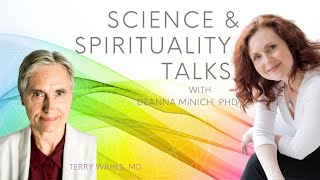
This content was created by extraordinary-journal. This content was uploaded by extraordinary-journal. This is a YouTube interview titled "Science & Spirituality Talks with Terry Wahls, MD" (created 2025-06-14) featuring interviewer Deanna and guest Dr. Terry Wahls. The conversation is an in-depth functional-medicine interview covering Dr. Wahls's background (fine arts to medicine), her illness and recovery (the Wahls Protocol), ongoing clinical and basic-science research (MS, microbiome, behavior change), and practical approaches to patient care. It also explores spirituality and religion (religious trauma, spiritual homes), creativity and nature (gardening, art), diet and ethical food choices, near-death experience, consciousness, AI and technology, longevity and purpose, and the role of meaning in health. The tone is a personal, reflective interview blending science, clinical practice, and personal narrative.
Chapters
Hello, everybody. I am here with Dr. Terry Wahls, one of my friends and colleagues in the functional medicine space. And I'm so excited to have this conversation about science as well as spirituality. So uncovering the deeper depths and personal connection to Dr. Terry Wahls.
So.
Hi, Terry.
Hey, thanks for having me, Deanna.
Yeah, you were definitely on my list as my initial top 10 and really wanted to hear from you. And, you know, I think what we'll start with this conversation is your connection to science and medicine, just to kind of get us acquainted, because I've interviewed you for many other things and you've shared so much of your personal journey around medicine, your. Your connection to your personal health online, and I think people know you in that way. But kind of, what is your take on just science as your relationship to it? You know, do you see it as a method? Do you see it as a philosophy? What is science to you?
Science is how I understand the world. You know, my original training is as a fine artist. I have a BFA in painting, and I decided I didn't want to starve. I was not going to go get my master's in fine arts. I was going to go be a vet. And along the way I ended up in medical school. And then I got into medicine. I was like, damn, I really should have gone to veterinary school, because that was more of my temperament. But I'm not redoing basic science another year, so we're just going to learn how to make this work. And of course, that turned out to be really very, very good because it would have been harder to figure out how to recover myself had I been a veterinarian. And in basic science. It was really a painful chore for the fine artist to do the biochemistry, the physiology, like, oh, my God, this is, this is hard. Then I, you know, got into clinics, loved clinics, and then it, you know, I'm really enjoying reading the randomized double blind clinical trials. And then of course, when I become ill and the latest, best treatments are not stopping my decline, then I get back into reading the basic science. And, you know, I'm not a neurologist, I'm not a PhD. So this is really hard. This is really hard work for me to teach myself how to read this basic science. Well, and of course, all that hard work probably really boosted my nerve growth factors. And I, you know, gradually have a deeper and deeper understanding. And I'm really appreciating biochemistry, I'm really appreciating cellular physiology. I am really appreciating science now. Much later in my life than I did during medical school or during residency. So I was sort of a late bloomer to like, oh, my God, science is so cool and so exciting.
It is. And now you're carrying out your own clinical trials. You have been for some years. Right. You're really entrenched in science.
I'm really entrenched in science, and now I have partners in the basic science world. So we've been doing clinical trials in people doing, you know, health behavior changes, which, of course, is actually a really hard thing to do to get people to change their health behaviors and keep them changed. And now I brought in some basic scientists, and we are doing the basic science experiments, understanding the changes in the microbiome, understanding the changes in microbial metabolites, so we can understand the mechanisms by which changing people's health behaviors, changing people's nutrition, leads to, you know, better outcomes. But what are the mechanisms that drive that? So now I'm back into the basic science.
Really interesting to be looking at human behavior in that way, because there could be so many different scientific underpinnings like neurotransmitters, hormones, but it can also be things like one's spirituality and framework for living, their sense of value and perspectives.
Absolutely. If you're going to keep their behaviors changing, that is really, you have to affect the inner life. And that means we need to help them understand their inner life. And that might be through a emotional lens, a spiritual lens, a religious lens, but it needs to be the lens that matters to that person.
Yes, absolutely. And it's almost like we heard at the IFM annual conference, it's not what's the matter with you, it's what matters most to you.
Yes. I thought that was a really lovely, lovely way of framing the difference that I think people, you know, Chloe, will understand very quickly.
Yeah. So let's go back to something that you said, because you said it quickly, and I don't know if everybody caught what you said, that initially you set out to be a fine artist. That initially. That sounds like it was your first love.
Yes. You know, as a little girl, I was always drawing, drawing, drawing, drawing. My grandfather gave me a book on how to draw horses, so that was really cool. I love drawing horses. And then I would do illustrations of the plants that I found. And I was a naturalist. I was very good at identifying plants, wildflowers, edible foods, and all the trees that were native to Iowa. And, you know, a great way to hone your observations is to draw them.
Absolutely. You really get to know Them well, then. Right, because you're in their microsphere, you're.
Having to analyze all the angles, the positive shapes, the negative shapes. So. And then I decided I was going to go get my arts degree. And then along the way of, like, I'm not going to get a master's in fine arts, so I have to think about how I'm going to support myself.
So you mentioned that when you fell ill that you looked to science for some of the answers and you started to get a little bit more into neuroscience, neurochemistry. Did you actually amp up some of your creative endeavors, whether it was subconscious or conscious, in the way of, like.
Well, allowing, you know, at the time? No, because, remember, I'm progressively more and more fatigued. And so I was not intentionally going back to drawing or sketching. Although it is interesting to know that Jackie had put me in touch with the a creative writing group. And so I had. I guess that's true. I had started creative writing, and I'd written a book. My first book was Letters to My Children. Because at that point when I started that, I was clearly going downhill, and I wasn't sure how much longer I was going to be mentally clear. And so I wanted to write advice for them throughout their life. And so I wrote that and then began writing Up From My Chair was like, well, I am getting better. So then. Then we started writing the story of my life and my decline, what I'd learned with having kids. And I started talking about my recovery.
So creativity did it. It was definitely part of your journey.
Certainly part of my journey, you know, and it's super interesting. So I really loved up from the Chair. We pitched it to Penguin, who said, we won't buy it as a memoir, but we would buy it if it'll resubmit it to us as a nonfiction. And so that's how the Walls Protocol ended up being born.
Oh, my goodness. I don't think I ever knew that backstory in that way of how it originated from your healing journey and involving your children in some way.
Right. There's this super interesting sequence, and I'd sort of forgotten about Lotus to my children. And my daughter said, no, no, mom, that was your first book. And like, oh, yeah, that was the first book, and I need to go back and resurrect that.
So I've actually been to your home. I have seen some of your drawings and paintings. What are some of the things that you like to capture? Or at least when you were painting and engaged in it, what were some of the Things. You mentioned horses. You mentioned plants.
So when I was really young, it was a very natural world. I loved drawing my horses. I love drawing the plants, and I love drawing the edible plants that I was out trying to find and then finding them super fun. Then in college, I started doing portraits, and I did interiors, and I did nude figures. So I had a lot of nude figures, which I had up on the wall. And then when my little boy with his friends were staring at the nudes, I'm like, I guess maybe those should come back down.
That's great. That's great. And so let me ask you a question that I haven't asked anybody so far, but I'm thinking because you are outright very connected to the fine arts and an artist yourself, which I don't think many people realize that about you. Do you see creativity as a way to connect with one's spirituality or at least for you, do you feel like it's a way that you tap into something that you couldn't tap into otherwise?
Well, I think creativity certainly is immensely satisfying. And you can be creative in the fine arts, visually making music, writing, and you can be creative in your approach in science. So there are many ways for us to tap into seeing the world through new, fresh eyes.
Yeah. And actually scientifically, that has health benefit, too. So it's kind of a twofer, you know, it gives this new perspective. Yeah. So let's get into the deeper dive of your spiritual views because, you know, I feel like we have all of these functional medicine educators, and so much of our education and our framework is connected to how we see the world.
So I'm going to digress just a little bit. So I grew up with my. In my family life as a young child, there was a lot of conflict over religion. My father was a more fundamentalist evangelical Christian. My mother was a more liberal United Church of Christ Christian. And so in parts of my father's family, you know, I had this very evangelical view. And so that was difficult growing up to have that. That conflict. And I. And I still see that conflict in the world, that there's. There can be a lot of conflict between various religious points of view, that people feel their unique religious experience is the one true religious experience, and every other religious experience is incorrect. And so I rebelled against that. I really found that extremely distasteful as a child, as a young adult, and I still find that distasteful. And that's probably why as a child and part as a young adult, I was much more comfortable being out in nature. Celebrating life. What I was discovering in nature, my plants, the animals, little frogs, you know, salamanders that I'm gathering, finding. And so that natural world was my religious experience. That natural world felt safe, and it felt like that was okay in my father's deeply more evangelical religious world and my mother's more liberal United Church of Christ Christian world. And then I went to, again, as a young adult, I'm in Kathmandu, Nepal, and I'm in a culture where some of my clinic staff are Hindu and some are Buddhists. And they love talking about religion. They love talking about their religious points of view. And so they're explaining Hinduism to me, they're explaining Buddhism to me, and they're wanting me to explain Christianity. And so I ended up having, you know, these really very interesting conversations with them. And I met someone, an expat who was a Unitarian Universalist, who was then explaining Unitarian Universalism. And then that worked well for me. And I thought, okay, you know, that's a religious home that I'm comfortable with. It fits in with my spiritual life. It fits in with my personal values, that there are many different ways for us to experience peace and receive a nurturing religious message, whether it's the Hindu, Taoism, Buddhism, Shintoism, Christianity, Judaism. And so I think, for me, it's important to understand do people have a religious home or not? And how I can relate to that home for them, and to encourage them to think about their spiritual home, particularly if there's conflict over religion in their. Either their immediate family or their extended family.
So I'm curious, how do you help them define religion versus spirituality? Don't you think that sometimes people mix those up and they see that religion is the spirituality, or do you see it as distinctly different?
I listen to my patient, so I ask them, do they have a religious home or not? And have they had religious trauma in conflict in their upbringing? And of course, many people have had religious trauma, and that's been very painful for them to have to work through. And then I'll ask them. And I acknowledge that I had a lot of religious trauma and in my family life as a young child, as a young adult, and that I found healing and comfort as a way of relating to everyone in my family, regardless of where they chose their religious home, by connecting to how we felt about nature and the miracle of nature and. And the miracle, you know, very simple things of our garden, our horses, the fertility of our cows, paying attention to nurturing the soil and paying attention to that, the beauty of life, the beauty of how we pay attention to the ebb and flow of life somehow was okay in every one of the religious homes. And by focusing on that, that message was safe. And that message was safe. In my father's religious experience, that message was safe. In my mom's religious experience, that message was safe. You know, I have one brother who fell away from religious home entirely because he was so traumatized. I have another brother who, you know, went down the same path as my father. He has, you know, these, you know, deeply held religious views. But he and I can share our love of nature and our love of, of being connected to that beauty of what we see, you know, some elements of the tree farm that we have now.
Yeah, and you really do connect with nature. When I was with you and spent the day with you, being out in your garden, the way that you approach the plants, the fruits, the vegetables, it's.
Like a spiritual experience, you know, and I'm so excited. I'm a grandmother now. We have a little guy who's now 14 months old, and we are reimagining the garden experience through his eyes in making a nature playscape that will evolve with him as he grows up. So this summer we've made two teepees. I had my cheese trimmed, we kept eight foot long poles, lashed them together. So we have two teepees. I've planted at the base of the poles, vining crops. So we have peas, beans and cucumbers that are just beginning to climb up, and nasturtiums. I'm hoping the nasturtiums will climb. I don't know for sure that they will. And then around the outer side, we have herbs that have a lovely scent, so lavender, rosemary, thyme, sage, savory. And lots and lots of thyme. Because it's my understanding, of course, I could be wrong, but I think the thyme and the sage will reduce the flies and insects around the tepee. And, you know, fortunately, Eli is loving being in the teepees. He's loving just hanging out in our lawn where then we have a row of thornless blackberries that we put in the summer while Chloe was pregnant. So this is their second year and they're blooming. So I'm hopeful that we're going to have blackberries this fall and then we have a row of black raspberries. And he won't be able to help us too much picking this year, but he'll certainly be helping us pick next year, I'm sure.
That sounds lovely. What great diversity you have in the garden too.
Correct. We have the asparagus has come in now. He loves asparagus.
That's great. That's a good thing. That's a good thing for a child to like asparagus.
He loves asparagus. He's eating kale. So we've got that. I've been giving him liver so far. He spits it out each time we give it to him. And I say, don't worry, we'll stay with it. I'm sure we'll have him loving liver by the time before long he must.
Have that Wahls gene in there somewhere, the liver and high sulfur veggie genes.
He'll be on top of that. But he is doing a marvelous job of really enjoying being outside, enjoying the opportunities to play in our garden and play with his food. It's just so much fun having him.
Yeah. And it's a form of creativity too, playing with your food. You know, just really being tactile with food. Right. And so many kids are taught do this. No, not that, have manners. But you know, sometimes we just need to play and get into our food and really experience it on multiple levels.
We want him to play with it and experiment. Yeah. And you know, he really loves yogurt. He loves hummus. It's really messy to eat. So his parents are like, they'd rather give him things that are not quite as messy. We're like doing all at grandma's house, you know, we're fine letting him eat the hummus and the yogurt Nepali style with his hands and getting it all over his face. And that's totally fine. We're good with that.
That's the best. Well, I just want to take you back into what you said very brilliantly about your patients, that you ask your patients how they define religion, their religious safety, their religious home, that sort of thing. Going from that point when we in functional medicine talk about mental, emotional, spiritual, spiritual health in the middle of that matrix. I'm just kind of curious how you see spirituality as part of health and. Or disease. Well, yes, I mean, asking patients. But I'm just curious, like what role does it play? Does it. If we don't have spirituality, is that going to be an X against our.
Health if we don't have either clear grounding in a religious home or a spiritual home? I think people are going to struggle with hitting goals, with doing things that are challenging, with, you know, deciding that I want to change some aspect of my life, whether it is a financial habit, a exercise habit, nutrition habit, sleep. I find that people who have a Grounding in spiritual or religious life are much more successful with being able to make goals and make forward progress, because otherwise, biologically, I am wired to seek pleasure, comfort, inactivity. And you're not going to hit any goals seeking pleasure, comfort, inactivity. It's just not going to happen. You have to be willing to do things that will be uncomfortable, will require work, and may cause some discomfort in that journey. People who have a religious home and a spiritual home seem to be far more successful at delayed gratification and being able to therefore realize, okay, so the easiest thing to do would be to sit here doing nothing. But that doesn't serve me very well. So I'm going to do this more challenging task.
Beautifully said, beautifully said. And many times one of the reasons for people to get well is for others being there for their family. So it's taking themselves out and kind of like looking at their higher, kind of like, how could they be of service? And in other ways, I mean, what do you see? Some, some other people do need to focus on themselves.
What, what I like to ask people is, that's sort of a sequence of questions I like to ask is if there, if your home was beginning to have smoke billowing out of the windows, is there somewhere, something that you care so much about that you would rush in to go save, even barefoot over broken glass? And the answers I hear are the spouse, the children, the grandchildren, occasionally a parent, occasionally a dog, occasionally a cat. It's never the fish, but, you know, and if there's no one, then I send them to talk therapy because they really have a bleak life. But if there's someone or something that you know, they care about, they're going to go save. Then my next question is, if your health improved a little bit, what would you like to do with that person or your dog or your cat? Again, that you can't do yet, but if your health improved a little bit, what would you like to be doing? And so now we have the action that they'd like to resume, now we have some goals, and now it becomes much. They'll be much more successful. And what I've observed though, is so with that sequence, we've identified goals and a reason the people still who are most successful are those who have, I've noticed, who have a religious home and, or a spiritual home, or both. And so that has led me to ask, do you have a religious home? Have you had religious trauma that we have to help you work through? And if there is religious trauma, I'm going to Encourage talk therapy to work through that and encourage them to find either another religious home that feels safer or a spiritual home that will feel safer so we can nurture that part of of their lives.
Nice. So let me turn it back to you and get more personal because I know we're talking about your patients, but I want to talk about Terry too. So for you, what has meaning? What has meaning and purpose that would drive you to run back into the house? What is it that you wake up every day longing to do? And where you feel like I'm on a mission?
Well, you know, clearly I went back to the house for my spouse, my children and my grandchildren. No question. What is my mission now? Of course, helping my grandson to grow up and thrive, helping my kids to thrive. But I also, you know, had this crazy idea that patients with Ms. Should all be told that diet matters, that exercise matters, that sleep matters, and that yes, we may have these great FDA approved drugs, but just as important is addressing the environmental factors and modifier by all factors. And when I first started with this message back in 2009, you know, I was banned, I was condemned, and the neurology community really, really hated my message. It's been a few years now. In 2025, I've been nominated for really wonderful awards in the Ms. Community multiple times now. I've never gotten them and I, and I probably won't because they usually give these awards to the drug developers. But the fact that my work is being recognized, I think we will eventually it will become the standard of care that diet and lifestyle are just as important as disease modifying treatments for people with Ms. And since I plan to be thriving to 120, I fully expect to see that and I expect that we'll see that in the next 10 years. And my plan is to still be doing the research, still having postdocs in my lab. We'll see.
Well, I mean, based on what you've already done, being a trailblazer, I'm sure it's unrelenting. It will continue. What you just said right there about living to 120, it makes me think about right now those longevity and aging movement and this self determinism as it relates to looking at technology and all of the different things that we can interact with in order to better ourselves. Right. I'm just curious how you see spirituality and people's, whether it's a religious home framework or spiritual home framework. How is that connected to this sense of long living? What do you see a connection between these two in any way?
You Know, if. If you don't have purposes beyond yourself, I don't see people being very successful in longevity. And again, people can do that either through their religious home or their spiritual home or the two together. But without that connection, we're then just trapped into comfort, inactivity, and pleasure. And that's, you know, a less meaningful life. That is, if you look at positive psychology, you know, the pleasant life. That it's important to teach our patients how to have a pleasant life. Absolutely. But they are so much more satisfied if we teach them how to have a meaningful life.
Yes, I like that. And do you think that we can bring together, then, science to work more closely with spirituality? If we have on the sense of spirituality, the sense of mission and meaning, and then we have the technology and the biomarkers to help on the science side, it would seem like these two things could go very well together.
You know, I really like the Dalai Lama. I lived in Nepal and we had many Tibetan refugees. And so I would go over to their homes and we'd listen to the Dalai Lama, and they would do it in English, so I could understand as well. So I really appreciated that. And he was very comfortable embracing science, embracing meditation and investigation of meditation and the changes that could be measured as people go into these deep meditative states. Absolutely. They are mutually supportive. And I find it sad when I see some religious homes being deeply skeptical and resentful of science. I find it much more satisfying for the religious homes that are comfortable in embracing science and what we can learn, using science to more deeply understand the biology of life, the human experience, the. How our brain works, how our cells work.
Yeah, yeah. It seems like it could be a good partnership. What about AI? I know that at the conference you and I were just at, there was some discussion about artificial intelligence vis a vis spirituality. Do you think that AI will stand in the way of our spiritual transcendence, or do you feel like it could actually cultivate it because we have more space?
I don't know. You know, I think we have an overwhelming amount of information that comes to us every day. And so one of the ways that using AI can be helpful is to condense the information, the huge amounts of data into more easily summarized information. I think that may be very, very helpful. I do worry that the artificial intelligence that is being used to drive algorithms in our social media, that is creating further radicalization in further divisions in societies as opposed to bringing us together. So there's potential benefit and potential harm. But I suppose that's true for all of Our technology breakthroughs. When we first learned to read and write, there was 200 years of religious wars in Europe. As society has to figure out what to do with this new technology. Mm.
It may take some time. We're kind of in that transition period right now with something so new, we.
Don'T quite know how it's going to play out.
So since you're into the nervous system, into the brain, into neurochemistry, I'm kind of curious how you define consciousness, because it's another one of those hot topics in quantum physics, quantum biology. There's talk about, you know, just consciousness. Like, what is consciousness? Is that spirituality, or is it something else?
I don't know. And I realize I need to find some nonfiction books on quantum biology, because I would like to learn more and understand this more thoroughly. Some of the things that I've noted, as I've been reading Immunology, for example, in neuroimmunology, that at every layer, we seem to understand it. And then we get to another whole, deeper level, deeper level, more and more complex at each. At each level. And I expect that that will go on forever. I think that will just get further and further. As the complexity of life continues to evolve, and the complexity of cellular physiology continues to evolve, the complexity of our ecosystems continue to evolve, and perhaps the complexities of our brains evolve. Now, having said that, I'm also going to make the observation that many of my colleagues have noted that when we are spending more and more time on our phone and relying on AI we are devolving our brains and our ability to understand language, our ability to understand numbers. And there may be some evidence that our children, if we're letting them get accessed into these smartphones, computers, too early, that we're harming their cognitive development as well. So I don't know where this is going to go. I think we have to be very cautious.
Yeah, it's true, right? Just like looking at when plastic entered into the environment, I don't think we thought about endocrine disruption, but now we look back and think, oh, my goodness, we should have never introduced plastic because it was having these compounded effects. Well, it could be the same with technology on our brains. Like, yes, it's creating ease and facilitating communication, but what is it doing longer term? Is it actually impairing or impeding our brains?
So I think the answer would seem to be high risk of impeding our brain.
Well, to bring it into a more positive and optimistic way, perhaps. I'm just wondering what keeps us in tune so we're surrounded with technology. We're surrounded with certain aspects of science.
Well, for me, being in tune is being outside, getting outside, being in my garden. And now my routine. As I get up, I'll do a brief meditation, I'll do my workout, whether it's strength training or jogging and sauna. But I also make sure I'm out in my garden for some part of the day or that I'm going biking through the woods some part of the day. And that time in nature, for me is very calming to the nervous system, is calming to me, and taking time to really notice, you know, some part of nature. I mentioned too that I was out picking cherries, so. And, you know, it's really quite lovely. So I'm picking my cherries and. And then I'll go over, inspect my garden. What's coming up, what's not coming up, pull some weeds. But taking the time to notice life as it's evolving for me is very, very soothing, and I think it's super interesting. And I'm very excited that our grandson also really loves just being outside, sitting in his teepees, sitting by the herbs, playing in the mud. I'm like, yep, this is good. You know, mud is good. And so being outside in nature, away from technology is a way to help reset our nervous system and to help stay connected to that more spiritual side.
Yeah. And that's so inspiring. And I've been hearing that from other people who I've been doing this interview with is how spiritual and connecting nature is. Since you're very in tune with food and herbs and fruits and your garden, I have an eating question for you. So I happen to know that you were vegetarian for many years. Did that sync up with your spiritual and or religious framework of life, or where did that come from?
Yeah, so Grapevine Farm, you know, I had cats and dogs, and we had chickens and ducks and turkeys, and we would harvest them and eat them. And then, you know, I get too old enough. Mom thought I should help with the butchering, which, you know, farm kid, gotta do that. And so I did that. And then I said, you know what? You know, these are sort of my friends. And so I decided I didn't want to eat meat anymore because I didn't want to be eating. My friends and my parents were like, you're. You're working your health. You need meat. It's really important. Which just had me dig in even more vigorously. And then when, years later, I would eventually go back to reading Loren Cardain and just then read his Papers and sound like, okay, I. I think he might be correct here. And I went back to eating meat. But by then, both my parents had died. So I've had many conversations with both my mom and my dad saying, well, it turns out you guys were right. My. My version of my vegetarian diet for me really was probably not good for my health. And so. But that was tied into not wanting to eat my friends.
So it wasn't like a right or a wrong thing, an ethical thing. It was more like just your connection to the animals.
My connection to the animals, you know? Yeah, yeah.
And do you think that people, from what you see with your patients, do people often bring spirituality or their spiritual framework into their eating and their food choices in that way?
You know, certainly my patients who are committed vegetarian or vegans may also be doing this based on their spiritual beliefs or their religious beliefs that they do not want to be eating another life form. I. And I'm not going to argue with them over that. I'll just let them know that, okay, if that's spiritually important to you, then we will work with you on that. It really depends on the individual.
Yeah. Yeah, that makes sense. Right? It's back to personalization and letting the patient lead and working with what they feel is important and what they value.
If you let the patients lead, they'll be much more successful with implementing the changes that the two of you agree on. If you don't let the patient lead, they try to say, this is what you have to do, man. That's just not going to work. They may say, yeah, in the office. Then they'll go home and say, like, hell, no, I'm not doing that.
Right. Which we don't want either, you know.
And it was my professor, Bill Bean, who taught me. So, you know, at the end of every one of your medical encounters, if you'll ask, what did you learn and what are you going to do? You'll be far more successful. And that taught me over time that I was not a very good teacher and I had to speak far more plainly to my folks with more metaphors and that I needed to ask them earlier in the visit what they could do because it was not very fun to find out just as they were about to leave, that they were not going to do the plan that I had just imposed.
Yeah, no, that's. It sounds like you have fine tooth questions that you bring in in order to, like, drive them to some kind of behavior or awareness.
Correct. And it also, if you let them drive, you know, the domain that you're going to work on. And if they want a big plan or a small next step, you'll be far more successful.
Yeah. Because it's within their locus of control and it's where their energy level, what.
They'Re ready to do.
Yeah.
And you'll be.
I love that you're studying this topic, by the way. I think it's so important because most people know what they have to do. They just can't seem to get there. So it's good to study how they're behaving. So I have a completely different question for you. And this is just, you know, I kind of do these interviews very organically. I'm just kind of feeling into it. So you see how comfortable you feel with this question. But, you know, over the past years, I became really fascinated with near death experiences, meaning I would listen to people who were clinically pronounced dead, brain dead, heart dead, and then came back and actually started to live and talked about their experience. And I feel like there's so much about living we can learn from people who have had a dying experience. So I guess my question for you is it's not about near death experiences. I'm just kind of framing it up. But I'm just curious, what do you think happens when we die?
Well, I have had a near death experience, so we're going to talk about that. When I had my second child, my daughter, I had a placenta abrupt, so I had severe preeclampsia. I had spent the week feeling worse, worse, worse, worse, worse, worse. And then I started feeling blood running down my legs. And so they called my OB doc in and he said, you know, Terry, you're hemogene. We're going to take you to do a stat C section. And then a code was called and everyone left in. My OB doc was still there and one nurse was still there. I said, terry, you're dying. We got, we got to go now, we have to do this under local. And so we went and did the C section under local. And I'm hallucinating, I'm seeing aliens. And the thought I have is like, oh my God, I'm going to die. My son's going to be an orphan. No. And of course, obviously I did not die and my daughter survived. She was in the U for a while. It took me 36 hours to begin to wake up and know who I was. But that was. It took a long time to sort of integrate what had happened. And there really wasn't anyone that I could talk to about what it Feels like to realize that you think you're going to die.
Did you actually see. You mentioned aliens. Did you see a tunnel? Did you see light?
I'm a Star Trek fan and so I saw Cardassians. I was being surrounded by Cardassians.
Interesting. Interesting. Wow.
So.
Wow.
Yeah, yeah, it was. That was a very intense experience. My daughter and I talk about that we were baptized by fire together when she was born.
And that probably changed your perspective on life after that. You know, just having that close to death experience and also involving your daughter just feels like that could shape and sculpt your worldview very strongly thereafter.
It took a long time to figure out how to go forward.
So do you have a set view on what happens when we die? Are you afraid of death or, you know, what is kind of your general view on death versus I know you want to live to 120.
120. And then when I get there, we'll reevaluate. Maybe it's going to be 150. Who knows? I think we don't know what happens when we die. I think life is recycled forever in that the energy continues. Is there reincarnation? I don't know. Are. I don't know. It's sort of mysterious. Time will tell, but I think their life is recycled. I think, you know, my vegetarian and vegans who don't, and I think back myself, I didn't want to eat my friends, but everything is being recycled. All of life is being recycled. Our. The bacteria will recycle my body. All of the molecules in my body are continually being recycled. Life is this cyclic fashion. Does my consciousness live on? Does it not? I don't know.
Yeah. And you don't have any fear or apprehension about that, letting go of your physical form in that way that you live on in some way through life, maybe through nature, which you see as the embodiment of spirituality.
And spirituality, it will continue. Life will recycle. My ideas will continue. So I'm not troubled by it. Of course. I feel like I have another, you know, 60 years. So I've got, you know, plenty of time. I'm joking. I'm just middle aged because I'm 69, but, you know, I'm only middle aged, so I see plenty of vitality. What I worry about are the people who quit living, who aren't engaged in life, aren't engaged in contributing, aren't engaged in moving forward. Those are the folks who've died. I joke about the people at work who retired years ago, quit working, you know, And I worry about the people who have quit living. They're still going through the motions, but they aren't fully engaged and living in contributing, in making a difference.
Wow, that is profound. And that is definitely something that I'm thinking about based on family and people I know that are moving on into their 80s. And it is something we need to think about. I know personally, I want to die in harness. I want to die doing something that I really love and believe in. And it sounds like you are very committed to living out your days and in their full form.
You know, my dad was determined. He wanted to keep farming until he died, and he managed to do that. My grandfather was on his 85th birthday bailing hay, putting, you know, tossing bales up over his head to me up in the haymow. And I, you know, that's how I view this. You know, people at work ask me, like, when am I going to retire? Like, why would I retire? I love what I'm doing. So you want to keep being fully engaged in living now? It may be that, yes, I may decide that grandmothering is the more important job, and I'll quit doing my research and I'll be more devoted to grandmother. So we'll see. But I want to stay fully engaged in living and contributing to 120. If I'm still doing great, then maybe it'll be 250. We'll see. And that's what I want for my patients. That's what I want for you, Deanna. That's what I want for my spouse, my kids, and now my grandson.
Beautiful. I think you just put a whole bow on this conversation with how you wrapped all of that up. So I want to thank you, Terri. This has been delightful. It's really a window into who you are as a person and the personal depth that you have. Did you want to leave us with any other closing thoughts or anything that you feel like you wanted to say and. Or do you feel like.
Well, the cherries were delicious today.
I'm waiting for those pawpaws.
Yes, you'll have to come back in September. Those will be delicious, too.
I look forward to it. Thank you so much. And to continued cherries and fruits and again, the juiciness of life. There's something so beautiful about it.
Cheer here.
More from Deanna




Gut Health, Stress & Sleep: The Truth About Supplements and Real Detox with Dr. Deanna Minich




"99% of Melatonin Is Made From Petrochemicals" Dr. Deanna Minich & Lara Pizzorno Interview (Part 2)



🎙️ FMP Essentials Show: Balancing Menopause Naturally with Phytochemicals | Dr. Deanna Minich