Science & Spirituality Talks with Wendy Warner, MD
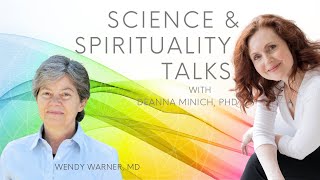
Dr. Wendy Warner, an OB/GYN, left conventional medicine to practice functional and integrative care. She trained in Reiki, shamanic mesa work, and qigong, and now incorporates energy assessment into patient intake alongside acupuncturists and nutritionists.
Chapters
Yeah.
Hello, everyone. Welcome back. Today we have a conversation on science and spirituality, and our treasured guest is Dr. Wendy Warner. Hi, Wendy.
Hi, how are you?
For those of you who don't know Dr. Warner, Wendy is a functional medicine gynecologist. And what makes her also very unique, in addition to being a gynecologist, is her interest in herbs. And I would say, just from what I know about you, Wendy, a bit of your interest in nature, nature philosophy, and I would even say energetics and spirituality.
Yes.
So I'm hoping to have a deep dive to get to know you better in that way and to showcase that because you're one of the core educators for the Institute for Functional Medicine. And, you know, I just don't know how often it is that we get to see the up close and personal of what a person believes and what they feel about life. So that's where we'll go in this conversation.
Okay. And, you know, it's interesting. I'm really glad that you started this whole podcast because I think you said it before, the very center of the functional medicine matrix is all about spirituality. And we sort of make reference to it, but we don't really spend a lot of time there as educators truly talking about it. And I think it's interesting because I think that functional medicine has this history of being seen from outsiders as all about biochemistry and like, really geeky brain stuff, which, granted, you have to be really geeky and know you, you know, know your biochemistry. But they, the outsiders in particular and the newbies, they don't really think too much about the center of the matrix. And if you don't start there, you're gonna not make very much progress.
So let me ask you, do you start there with patients? Do you actually go right to the nucleus of the matrix or how do you navigate that?
Well, I do have to play it by ear. Depending on the person, you kind of have to read the room, as they say, because some people, if you were to jump right in, right there and talk to them about their spirituality and energy work that give you a funny look and think you're crazy. But I do often end up talking about the energy body. And I, in fact, just today I have a patient that I take care of and they're doing all the right stuff and their symptoms get better and then they come back and they get better and then they come back and they're doing all the right things. And I said to this individual, okay, we're playing whack the molecule, so we need to figure out why it's not sticking. And this is the way I describe it. I go, okay, we've got these physical bodies. This is the densest part of us. But then there's this great energy field all around us that is part of us. And every single physical thing that we're trying to fix starts as a problem in the energy field. And if you don't actually fix the energy field at some point, then you're going to end up playing whack a mole because you'll fix something biomechanical and it'll pop up someplace else because the energy is still off. Yeah.
And what you're saying is so logical. So that's why it's almost like, well, why don't we start with energy? If that's true, that everything starts in the energy field and everybody has a framework for how they live life and a spiritual premise. Right. So it's kind of like, it's interesting that in medicine we don't start there. We go to the end product, which is the physical body.
Well, on my intake form for new patients, there is a question that says, do you have a spiritual practice? If so, please describe. And it is one of two questions that gets skipped the most. The other question is about sexual abuse or about abuse, but many people just skip right over it. They don't even write anything down.
What do you think that they think of when they see that word, a spiritual practice? Do they register that as prayer? Like for the people that do populate it? What do they write in? Is it meditation?
Prayer? I've seen everything from the name of a religion to spiritual, not religious, to very detailed. Some patients give me very detailed, nature oriented, you know, like this whole. Yeah, yeah.
So then you know where to go, because you can see that from the intake form.
And I can talk to those people about it right away.
Yeah. Is that where you feel most comfortable as a physician is when people are more open about those things? Do you feel like, oh, good, that's my sweet spot, I can get into that, or do you feel like, no, I'm in. I'm in balance. You know, I kind of see the physical and I see the emotional.
The. I try to meet people where they are and, you know, once you establish a rapport, you can usually at some point get to that part of the conversation. Yeah, it may be a couple visits in, you know, I may not get to talk about that right away. It's like, you don't necessarily start right off talking to somebody about abuse because they'll get defensive.
Yeah.
But down the road, as you establish a rapport, they'll be willing to talk to you about it.
Totally makes sense because it's something very personal to us, our spirituality. So we have to have that sense of trust, safety, and know that whatever we say, you know, won't be criticized and all of that. But let's dive into you. You know, it's good to see your window into patience in that way, because it says something about who you are. So let's first talk about science. Let's get the groundedness of your medical journey. How did you decide? Out of five children?
Five, right? Six. Oh, six.
But you're number five.
Are you number five?
That's right. Okay, so out of six kids, and I know that I think you said a few decided to go a professional route, but you were the one that went to become a physician.
So how did that happen?
What was your relationship to your body, to medicine, to science? Just like, your whole way of thinking about those things kind of talk us through that.
Okay. So my father was a veterinarian, and I worked for him after school and weekends and summers from the time I was, like, I don't know, 13 or 14. And for quite a few years, I was going to be a veterinarian. I thought it was great. I loved working with animals, and I was going to follow.
I should see that, by the way. You would be great.
It was awesome. And then it hit me. I love the animals. I can't stand the clients. They make me crazy. Because people are frankly. And I am a dog mom, so I have to admit, I'm a little crazy, too. People are actually much more reasonable about their own health than they are about their pets. And I remember saying to my father, I love these animals, but how do you do this with the clients? And he said. He kind of rolled his eyes. And he goes, yeah, there are days when it's hard. And so I said, okay, I'm not going to do this. And that was right about the time that all the college catalogs were showing up, you know, because back in those days, they actually mailed you these catalogs, and you could sit there late at night and looking at all the different courses that you could take. And I decided, okay, this is great. And I went in and said to my mom one day, I've decided instead of going to vet school, I'm going to get a degree in philosophy. And she just. Without even saying a word, she just went, okay, and what do you do with a degree in philosophy? I went, oh, because I just Thought the courses looked cool. And I went, oh, I guess I'd have to go to grad school. She goes, okay. And then what do you do with a graduate degree in philosophy? And I went, I guess I teach. And she goes, is that what you want to do? And I went, no, no, not really. So she goes, you might want to rethink that plan. So then I got thinking about it and I realized I wanted to be of service and help heal, if not pets, maybe people. And it's really kind of corny, but I had a. I knew going into medicine that I wanted to be a gynecologist because I had an unfortunate incident with my mom's gynecologist. I was 15 and having a problem. She took me to him. He was an older white haired guy. Now granted, this is the seventies and so times were different, but he literally patted me on the head and had the entire conversation with my mother. Didn't actually talk to me. I was so angry because, like, I'm sorry, I'm 15, it's my body, talk to me. I was so irritated. And so as I got thinking, well, if I were going to be a physician, what would I do? And I said, I don't want any woman to have to be treated that way, so I'm gonna go do that. And as I was getting into med school, I remember my parents saying, what happens if you get there and you hate gynecology? And I said, oh, well, then I am in deep trouble because I can't imagine being any other kind of doctor. Now, one of my older sisters, the one who's just older than me, was also going to be a vet, changed her mind, went to nursing school, and by the time I was in med school, she was already working in the delivery room at the school where I was a student. So it was great fun. We actually got a chance to work together. We didn't tell anybody initially that we were sisters. It was great fun. Now during all this time, I was like super science geeky because I kind of had to be to get through med school. Prior to that, I had gone to this really looking back, it was a lovely little girls prep school for high school where like we read books, we wrote papers, there were no stupid, you know, yes, no Q, and you know, those kind of stupid tests like I did in med school. It was like, give me an essay, I will explain myself, I'll do fine. And we read great literature and it was a classic, like a liberal arts kind of education. So that when I was in college, I Mean, yeah. I had to take all the calculus and biology.
Organic chemistry.
Organic chemistry. I loved organic chemistry. Oh, my. I know. I loved it. And everybody. I loved it. I loved it. It made sense to me. Calculus did not. Physics did not. The only part of physics that made sense was fluid flow and lenses, because I kept going. It's like eyes. It's like blood vessels. I can do this. Anyway, for my electives, to sort of make up for the fact that I was studying organic chemistry, I was taking all of these cool classes in philosophy and Asian studies and Asian literature. I mean, I ended up with a minor in Asian lit in Japanese lit.
Oh, how interesting. I didn't know that.
Yeah. Now, here's the funnier thing. My major was actually zoology, and the only reason it's zoology instead of biology is because I didn't want to have to take botany.
You don't want to take botany? I know.
I tell my herbal friends that, and they go, wait, you purposely avoided botany in college? I said, yeah. So I was totally unemployable at the end of college because I had a major in zoology and a minor in Asian lit.
But you would be attractive for med school because they liked differentiated majors, right? They didn't like only the science Y majors back then.
They didn't really care. Yeah, they really didn't care. As long as you had good enough grades. I probably wouldn't be able to get in med school right now. Most people my age look back and go, I probably wouldn't even make it because they expect all this other stuff.
Yeah.
Yeah.
So how was it in med school?
What?
I mean, was it competitive? I mean, you were a woman, and, I mean, I don't know if it was different because you were a woman in gynecology, but I remember you relaying some of the bitterness and how the women within that discipline were not always kind.
So med school was horrifying because I was so used to being at the top of the class. Used to be in the top of the class, and suddenly I'm with a couple hundred people that were all at the top of the class, and they were good at taking tests, and I was not good at taking these kind of tests, and I was not at the top of the class. And I wanted. I'm a very. As you know, I'm a very practical person. I mean, I don't mind sitting through a lecture, but I wanted to, like, start learning how to take care of people. And back in those days, my first year and a half was straight. It was like grad school, it was just classes. Well, I mean, I got to go and, you know, dissect my cadaver, and that was fun. But other than that, it was straight lectures, and I just hated it. It was like, I don't. I didn't want to go to grad school. I wanted to go to med school. The minute they let me put on the little short white coat, get a stethoscope, and actually listen to patients, chests and lungs and talk to them, then I enjoyed myself. But I hated the first year and a half. There was. Depending on the rotation, there was a. There was hazing because I was a woman. When I did my urology rotation, I was the only woman with a bunch of guys that I think must have been jocks in school because they kind of just acted like the old boys club. And they purposefully sent me in for the first time to put a catheter. First time I've ever put a catheter in a patient. It was an older man, older black guy who was uncircumcised. And these residents did it on purpose to embarrass me, give me a hard time. The patient was lovely. He was so helpful, but it was. Yeah, it was tough. And then in my residency program, I actually loved residency was Okay. I mean, it was hard work, but I loved the work. But, yeah, not. Not all the residents were nice to each other.
Yeah. So strange in the field of healing and not to have that camaraderie. Do you think things are different now based on conversations that you have with younger generations going through med school? Do you think that that's changed?
I think that. Well, I think it's awkward for medical educators as well as students these days because they don't want to put people through the kind of long hours that we had to do, and especially in residency, like, they don't. They're not allowed to do the kind of long hours we did. But that also changes what you can learn, because you need. Especially in ob, you need to be with your patient for a long period of time to experience a person from the minute she comes in the door until the baby's born. So it's tough. In OB gyn, there is a much larger percentage of women trainees than male trainees. It's well over 50% female at this point. In fact, most men don't want to go into OB because they're afraid they won't be able to get a job because they know that out there in the world, patients want to see women.
Yeah. Yeah. And now they have that option. Right. It's not like they're in short supply anymore, like when you were a teenager.
Yeah.
So I'm kind of curious, like, I'm getting this intuitive feeling about you a little bit more just knowing you now. And I'm wondering if having these experiences as a woman during the time where you were in your teens, 20s, and maybe now even in your 30s, how did it shape your connection to femininity or to women or to. I mean, yeah, you were in gynecology, and that's where you were headed. But I'm sure you had some philosophy or even a spiritual aspect that connected a bit deeper into whether we want to call it the Divine Feminine or whatever name we want to give to it. But kind of give me the parallel track underneath all of that med school thinking.
Here's what I always say. I got to med school as this really interesting, well rounded person, and med school burned it down like a crucible to my essence. And it was enough that I could, like, get through med school, but then I had to build back up all that other interesting part of me because during that time, I didn't get a chance to read for fun or go to the theater or do as much music as I wanted or any of that stuff. And you will love this. When I was a student, I don't remember if I was a third or a fourth year, I was working at the va, and it was wee hours of the morning, we were admitting this individual that I. We couldn't figure out what was going on with him. And I was talking with my intern and we were trying to decide what orders to write for. And I had this, I don't know, spark of intuition. And I went, let's order this. And he looked at me and he goes, why? I want Arno, but I just think we should. And he goes, man, if you can't tell me why, we will get grilled on rounds tomorrow morning. So, no, we're not gonna order it. I went, okay. So we didn't order it, whatever it was. And a couple of days go by, we still don't know what's wrong with this guy. I'm on call again with the same resident, the same intern. And he goes, okay, remember the other night when you suggested that we don't know what's going on, so let's go ahead and order it. It was the piece of data that we needed. But I had been trained in med school. You do not ever use your intuition. You always have to have a reason, and you do not get close to your patients, keep your emotions out of it, and keep a distance, because you have to stay objective. To some extent, they're right. I mean, it's like, I don't like taking care of my family because I can't really be as objective as I should be. Some of that kind of makes sense. But if you don't get a little bit connected to your patients, how in the world are they ever? Like, how is that healing ever gonna happen? So that I had to learn on my own. And it was funny, because I'd been in practice a while, you know, five, eight, seven years. My personal life was falling apart, and I had had this epiphany in the wee hours of the morning in the delivery room that the life of an obstetrician was a really good way to screw up my stress hormones. And it had to do with the fact that there were a couple guys older than me, a couple of my colleagues that appeared to be healthy and take good care of themselves, but they were getting sick anyway. The slender runner who brought healthy food to the delivery room got hypertension anyway. And the very athletic Long, one of these guys who rides a bike for, like, you know, 300 miles on a weekend, he got an autoimmune condition and became an insomniac. And so we were gossiping about these guys, literally gossiping with the nursing staff. And all of a sudden, I went, oh, guys, I figured it out. They said what? I said, it's all about stress. And they went, what are you talking about? And I went, hello, it's three in the morning. We're all awake. Our body thinks there's a problem. And all of these emergencies in the delivery room, which is. That was the fun part of my job. I am the first person to admit I was an adrenaline junkie. Like, if a baby comes out easy, you don't need me. You know, I was there for the hard ones. So that's when I realized, okay, well, I don't really want to get sick like my colleagues. So I started looking for things that I could do to kind of settle the adrenals down and sort of get out of my head so much. So I started doing yoga, started doing meditation, started doing heart math, brought candles into my consultation room. All my. All my partners thought I was totally, like, off the deep end.
And by the way, this is before functional medicine ever entered the picture, right?
Yeah. I'm in a conventional OB GYN practice. My business partners just thought, okay, Wendy's losing it. I got trained in Reiki and It turns out there were a couple of nurses in the recovery room that were Reiki trained also. And so I somehow it came up in conversation and I would say when I brought my patients in after surgery, I'd go, can you do a little Reiki on her while you're working with her? And if they did, those patients did not require as much pain medication and they got home faster.
Wow.
So it was fun. And then that sort of got me through because you have to also remember, this was right about the time that obstetrics was changing and I was getting really unhappy because when I first started practice, we got to do fun stuff. I got to do breech vaginal deliveries, vaginal twins, Florida forceps. Leave people alone, let them just labor. You don't have to, you know, induce them all the time, that kind of thing. And in the late 90s, early 2000s, that was really shifting. And my business partners were pushing me to do more of the medicalized OB that is popular now.
Well, so you're talking about C sections or what?
Very high C section rate. They were upset with me if I wasn't inducing people. They were upset with me if I. If they came in in the morning and, you know, I hadn't started Pitocin yet to hurry things along. And so I was unhappy and they were unhappy. And that's basically when I left conventional OB and started an integrative functional medicine practice.
How did you find functional medicine? Well, what was your entry point?
Honestly, it was Patrick Hanaway. Here's how. I had already started doing what I would call integrative medicine. I wouldn't call it functional. I was learning about herbs. I was learning about energy work. That was sort of my entry into the non conventional world. I was learning about supplements. And there was an organization that doesn't exist anymore called the American Holistic Medical Association. Found them in the 90s. It was my people. It was great because it was basically just all of us that were doing this. We were all isolated. We would get together for a week, teach each other. It reminded me that, like, maybe I'm not crazy after all. It was great. And then some people from the American Holistic Medical association decided that if we were going to have integrative medicine be a true specialty, it needed a certification. So they started a board that had a. That wrote the first certification exam. And there were individuals that taught for that certifying body to kind of like prep people and let them get ready for the test. I became a teacher for that organization, and Patrick was working with them. As well. So when he taught, it was. He was teaching, what a surprise. A functional medicine to gastrointestinal disorders. He's the first person that taught me the 5R.
Give me a sense of that year.
Like, just so I'm chronologically 2002, maybe.
Okay, okay. Early 2000. That's when functional medicine, you know, we started having annual conferences, and those were happening even in the late 90s. So.
Okay. Yeah.
So when did you actually.
So when I actually started doing functional medicine, I don't know, a couple years later, I went, you know, I should probably. Oh. And there was another guy that taught with us, Alan Warshowski. He was an OB gyn. He had a very strong background in functional medicine also. And so he would teach functional approach to, like, shrinking fibroids. And so between Alan and Patrick, I'm going, this sounds like a cool way of thinking. And this is not exactly, like, what I do. So I finally. I don't know when, way long time ago did afmcp, back when it was in person. And, like, everybody, it, like, totally changed my mind and changed my life. And I went, oh, this is gonna be so awesome. But I was never really on the certification track. I just wanted to, like, do a little bit learn. I'm like, I didn't really feel like I needed to do the certification. And then sort of moving along, I was doing more and more functional medicine, and the next thing I know, I get invited to teach for ifm, and then I had to get certified.
That is an amazing journey. I didn't know that about Patrick Hannaway. And by the way, I'll be interviewing Patrick for this as well, so. And you two have. I would say, you know, nature is definitely a bedrock for him, and I feel like it is for you, too, Especially connecting to plants, ultimately connecting into herbs. You know, I was just kind of curious because I was piecing together the dots. If I think about your undergrad, where you were studying Asian literature, did you never kind of round that out and go back to that in the way of looking at acupuncture or tcm, ways of thinking, energetics of the body. Or was that just kind of like you were just in the smorgasbord of all these other things?
Well, I was, okay. I looked up and realized I can't do everything. I can't be a gynecologist, an herbalist. And I mean, like, all these other things I wanted to do. I wanted to learn acupuncture. I wanted to learn osteopathic manipulation. I wanted to learn all this stuff. And I finally went, can't do this. So I opened up my first integrative practice, Medicine and Balance was the name of the practice. And it was me and a bunch of other practitioners, all coming from a different point of view, all with different skills. And so I worked with acupuncturists for like 20 years. Okay. And as I always say, I became sort of bilingual, meaning was around them enough. And we were under the same roof, so it was great. I could like stop people in the hall. And the acupuncturist used to laugh at me because I'd go, okay, I'm seeing somebody. She's got this, this and this. And you're going to tell me they're all on the same meridian because from a Western medicine standpoint, they're not connected, but you're going to tell me they're on the same meridian. She went, uh huh. So I started learning. And then when I did my herbal training with David Winston, he teaches us Chinese medicine and he teaches us tongue diagnosis and he teaches us pulses, which I'm not very good at. I'm good at tongue diagnosis, I'm not good at pulses. And he, you know, and he teaches five element theory because there he also teaches herbs from an energetic standpoint. And there's basically herbs fit into the five element system as well. Right. And then of course, one of the practitioners that worked with me in my brick and mortar office, Medicine and Balance, was a shaman. And she and I had an interesting story because she's a lawyer by her first profession and she still maintains her license. She closed her practice. I met her when she was on staff at Planned Parenthood because I was on the board of directors. And at the time I was learning non, non conventional stuff, but was still in a conventional OB practice and she was learning her shamanic practices, but like, not talking about it, but at a. We sort of. The more we talked to each other, the more we realized there's something hiding behind you. And so we kind of came out to each other.
Interesting.
Then I left the board and she left Planned Parenthood and a couple years went by and the next time I saw her was at a networking event for holistic practitioners. And she was, you know, out as a full time shaman and was renting an office in a town not far away. And I said, hey, I just started a new practice. You want to come work with me? So she saw patients in my office for years. And I had the opportunity to do a lengthy training with her, like 18 months. I mean, I would never call myself a shamanic practitioner, but I'm what's referred to as a mesa carrier. So we went through the process of gathering the kuyas and learning the energetics from a. In the. In the Kara tradition from Peru. Nice.
So under. So within medicine and balance, you had the acupuncturist, you had the shaman, you.
Had yourself and then maybe a nutritionist, two different energy workers, a massage therapist.
Oh, my goodness.
My then husband was coaching heartmath practice for people. There were. Oh, and there were. And a local family doc who's an awesome osteopathic manipulation practitioner. He came and just did omt.
Nice.
It was an awesome practice.
Yeah.
And then Covid happened.
Ah, so you did that up to Covid. I didn't realize it was that recent. Okay. Yeah. So I would say switching gears just a little bit in terms of your spirituality. You know, often these two paths kind of get intertwined, but I feel like we kind of covered off into your science, your medical background, and then it starts to blur into. Now you're getting into other things. They feel spiritual. I would say kind of walk me through what your spirituality is, how you define it for yourself, and how did it come into being based on that transition within your profession, even, or just even personally, what was happening for you?
Well, pretty much always. It's been very nature based on. I mean, even as a little kid, I was always out in nature. Always. I mean, part of it, my family, there was a lot of this and it was noisy and I needed to get away every now and then, but I always felt most at home out in nature. Always. And God, I mean, I was raised in a Presbyterian church. Not that my parents were very religious, but I think they just felt obligated to give us some kind of a background. By the time I came along, since I'm toward the end of the kids, it wasn't as big a deal. Like, my dad would go to church just because he sang in the choir. And it I found out I caught him leaving. He would show up, the choir loft was back behind us, and he would come and he would sing the anthem and then he'd leave. He wouldn't even stay for the sermon. And that's when I went. Well, I guess I don't have to stay. And then during the time that I was like, doing the whole heavy science and med school and stuff, I just didn't even really think about any of that. So then when I was coming back and trying to make myself whole again, I started realizing that I Needed to look into energy, work, and be back in nature. And I guess I don't know what the right word would be animistic, if you needed a term for how I look at spirituality. I mean, basically everything is energy. The rocks. In my training with my shaman, we had to go listen to rocks. We had to sit and be with them. And you'd sit with a tree and listen to the tree, and you start learning that really and truly, this is all the same. I am just a different manifestation of the energy of this rock or the computer thing. That's kind of hard, but it's still energy, you know?
Good point. You know, how do we find energy with the computer in that way? Especially with A.I.
Yeah. And so, you know, I guess the easiest thing to say is that my spirituality is just that. I know that everything's connected. And I've had the opportunity over the years to. Have you ever done transformational breathwork based on Stanislaus Graves, his work? So I've had the opportunity to do transformational breathwork a number of times. And the first few times I did it, this is what the American Board of Integrative Holistic Medicine board of directors used to do. Every time we got together for board retreats, we would do cool stuff like this. Now, the first few times I did transformational breathwork, we'd get done. Everybody would be telling their stories. Everybody else was talking about these great visions and things. And I felt like Charlie Brown and would have to say, I got a rock, because I had a lot of blocked energy. It took me a long way, long time to get it moved. And then one time we were in Hawaii at this lovely private retreat center on Molokai in this great yurt, and we were doing breathwork. And if you've ever seen the TED talk that Jill Bolte Taylor did, you know how she talks about having this experience when her right brain came on board about being big? That is exactly what happened to me. I just suddenly was big. And I don't necessarily see things clearly. Energetically. I see things, colors, and I feel stuff. But, you know, some of my friends, they literally see stuff when they do. I mean, I do it when I. I can see things when I do shamanic journeying. But in this instance, it just. I saw colors. I felt this amazing sense of connection and love, and I felt really big. And the. The music changes to let you know it's time to come back. And I remember thinking, first of all, I didn't want to come back because this is awesome. And second of all, I'm not going to fit in my body anymore. And it took the facilitator time to talk me into coming back because it was nice there.
So was that one of those turning points for you where you expanded on out, and it was almost like you opened something up and then you weren't going back to what what was.
And it was a very concrete experience of something that I sort of understood intellectually and emotionally, but this was very concrete. And it. You know how you just have memories that they never really fade and they still feel exactly the same way, this memory. And that was years ago. That was more than 10 years ago. And it feels like it was yesterday. Mm.
It does feel profound for you, and it's good that you stuck with it, because maybe it wasn't blocked energy that you had, but it was like the right moment, the right modality, the tribe that was there with you, the community. So it felt like everything aligned. What about. I'm going to ask you about. So one of the things I see with you on Instagram doing and what you like to talk about is, you know, like, when you're doing a reel and I'm looking at the books behind you, like, what's on Wendy's bookcase, what's on her shelf. I see books on astrology. I see things. Sometimes you'll talk about the moon. So I just want to riff a little bit more on what you said about nature and how that infiltrates your everyday, because I see you talking about it, I see you reading it if it's on your shelf. And in some way it feels like it informs you. So what are your thoughts on that?
This was probably. This all got started in a really more serious way, probably when I first started working with my shaman, because, of course, traditional shamanic cultures, because they are so closely observant of nature, they are very conscious of what's going on with the moon and what's going on with the seasons. And, you know, to a certain extent, as an herbalist, you have to pay attention to that as well. So, yes, I keep track of where the things are in the moon cycle because it changes how I feel. And if I'm really paying attention, I know, for instance, if it's a full moon, I may not get a great night's sleep. And that's okay because it's an energetic thing. You know, I used to fuss about it, the plants. I mean, if I'm going to be. If I could do herbal medicine the way I'd really love to, I mean, I can't because it takes time. And as a physician, my time is too expensive, so I can't do it the way most herbalists do. But I'm actually trained to make. Meet with a client, find out everything I need to know about them, make a complex herbal formula, ideally go find the plants, pick them under the right circumstances, meaning the right part of the moon cycle, etc. Etc. And then of course, I would make the medicine and then make a tincture. Of course I can't do all of that, but that would be ideal because that way you're capturing the energetics that will help this person heal. Now, I do believe that I can still impact even through the computer, although it's harder impact my patient's ability to heal based on how I interact with their energy. And that's also why, quite frankly, there's are times when I just know that this person should not be working with me. And I have told people that. Yeah.
So that's more of an intuitive hit or just kind of like you feel the energy and it's like, I'm not the best fit for you at this time.
Yes. Yeah. Because if. If our energy doesn't match, then even if they do all the right things, even if they do everything, I suggest if the energy doesn't match, it may not really work.
You know, I feel like that's such an important piece of the therapeutic encounter that just gets overlooked that so many people aren't willing to say, like, we may not be a good match and this is why, or there's just not that same alignment that we need for your healing, so you need to find somebody else. I feel like that's very honest of you and very authentic. It's just good to come clean and just be clear about those things.
Yeah. And especially coming from the medical profession, that would almost potentially be seen as, I'm not good enough or I didn't do the right thing to be able to admit defeat, which is not something you're ever supposed to do from my standpoint, you know, the way I was trained, whereas I just think it's being honest. Yeah.
Just not a good fit. Just like anything. Right. Why couldn't we see that in a therapeutic encounter? You know, just to back up a bit, like, I have this vision of you, like, helping with births, and I'm just wondering when you said that you had no time within med school to even get spiritual or, you know, everything was just like, so tight and compressed and kind of stressful. It felt like, but here you were, like, helping women to Birth, like, that feels so sacred. And I'm just wondering, like, how. I mean, I know that because of the practicality of it all, but I'm just wondering, didn't that ever, like, spark something in you? Like, wow, this is really mystical, magical?
Like, yes. That was probably one of the things that kept me going during some of the harder part of my training and those early years. I got to shepherd the mysteries. You know, I got to be with people when they were dying. I got to. I remember. I will always remember the first time I saw a dead body. I had to come pronounce somebody dead, which is kind of a weird thing, because everybody in the room already knew. They just needed a doctor to come and say, you know, yes, and sign the paperwork. But the first time I was actually with someone, when they actively passed. I mean, that's a mystery just as much as birth. And when I was early on in my practice, it was when birthing underwater was, like, cool and new and popular. So my hospital, at my request, got a tub for birthing. And some of my colleagues thought this was, like, crazy. Some of them thought it was fun. It's an interesting thing if you. If the baby stays underwater for, you know, like, you don't bring them up into the air right away. They just look at you. They're still underwater, so they don't feel like they have to take a breath. It's the same watery experience that they've had for nine months. They just open their eyes and look at you. It's really awesome. It's really awesome. And then, of course, you bring them out of water and they start squawking. But it was. It was really amazing. And it was amazing to me to watch women giving birth and how powerful they could be. And even my. My first business partner, lovely man, he said to me one time, have you ever noticed that sometimes these women who had been, like, kind of quiet and smart and mousy, he says, it's like they just become mama bear in the delivery room. And I go, huh? Totally. And I think it's a shame, because I think that now it's harder and harder for women to get to experience that because we just kind of put everybody on a conveyor belt and expect them to do, you know, all the same stuff. So that's part of what really upset me as things were changing in my obstetric practice, because I got to be there in the early days when we got to watch this stuff. And it was fascinating because I had already decided I didn't want children And I didn't want to be doing this. I just wanted to be there when other women were. This is how I could serve them. And I am not a baby person, which totally surprised my patients because, like, the kid would come out and I was perfectly happy to hand it over and they would come back for their six week checkup and go, you want to hold the baby? I'll go, no, I'm good.
Do you think on that note, of not having children and making that decision consciously, do you think that in that day and age, like, let's just back it up, like 20 years or so, I mean, that was not the norm. Were you criticized or was there scrutiny about that? I mean, even from your family, or was there just an acceptance that, you know, you were a professional, you just, you didn't have the time to raise children a certain way?
Okay. So I got married for the first time very young. I was 20 years old when I got married, and I changed my. I took his name because I just. We both assumed he was in grad school and I was starting my senior year in college. That's how young I was. And we made the assumption that, oh, somewhere down the line we would probably have kids. And that's why I changed my name, because it would just be more convenient. And fortunately, as we went through our training, we ended up with the same feeling that, yeah, no, having kids would not be appropriate. So that when we got divorced, it was fine. There weren't any kids. During all of this time, though, his parents really, really wanted grandchildren. And they kept asking me about it and I kept going, I'm in training, would you leave me alone? And the day I finished medical school, my then father in law said, great, you're done with med school, you're going to get pregnant now. And I said, I have to do residency. It's going to get worse. My mom expected me to have children, was surprised that I didn't want to have children, but my older siblings were already having kids, and so she was already getting to be a grandma, so she was okay. And she did. She and my dad both kind of said, you sure about this? And I went, yeah, I'm really not supposed to do this. And they, they shut up about it. They were okay with it. I, interestingly, one time, early 2000s, I had my astrological chart read for the first time. And I think this gentleman was not only really good at that, but I think he was also very intuitive. And he's looking at my natal chart and without even. He just looked up and he said, you don't have kids, do you? I said, no. He said, good, you don't have time. I said, okay. And then he proceeded to explain, like, all of these things. And he said, your energy is going to be used elsewhere. He said, you've got big things you're going to be doing, and it's probably good because it just would have been difficult for you. You don't have time.
And you're still good with it in terms of, like, feeling really comfortable with who you are and this time of life. And do you feel like things have unfolded like he was saying, I. I.
Would not have been a very good mom. I don't think I am the coolant because I am the only one of my siblings who doesn't have children. And so when my nieces and nephews were coming along, I did not parent them. Everybody else was parenting everybody's children and I just talked to them like they were normal people. So I got to be the cool aunt. That was fun.
Yeah. That is a good position to be in. I'm the same.
Yeah.
That's neat. I like what you said too, about it's not just birth that has that sacredness and children, but it's also the process of making the transition out of living. So it's neat that you were able to witness all of that within. I mean, medicine is like an incubator of the sacred. It's such a beautiful experience to see all of that.
And. And that is what I really loved about the specialty that I chose. Because if you think about it, an OB GYN gets to do everything. We get to have relationships, long term relationships in the office with our patients. We get to be there when women are giving birth and all of that. And like, we get to deal with these teensy little babies. You know, they're great as long as they don't have to come home with me. And then we also get to do surgery. And I was a really good surgeon. I really was. I enjoyed it. Now, this was in the days before laparoscopy and before robotics. When that came along, I mean, I got to actually, like, get my hands in there.
Yeah.
And that was. I'm a very tactile, physical person. And so that was great. And so when laparoscopy and robot, well, robotics didn't come along until I was already in practice. But I hated laparoscopy. It's too much like a video game.
Yeah.
Which I never did. I wanted to get my hands on stuff.
Yeah. I'm getting that sense of, you Just even in your education and in your training, what you were drawn towards.
Right.
You're kinesthetic, like, you're really very somatic in that way.
Yeah.
So in closing, I mean, I feel like that gives me such a great sense of you and hopefully for the viewer as well. So I'm wondering, like, Wendy, in this day right now, like, here we are, 20, 25, like, what would you say that you're doing in order to. Or being or what. What. How are you bringing spirituality into the everyday? So do you have a spiritual practice? Like just bringing it down to the nuts and bolts? Like, what do you do on the day to day?
So I get in nature every single day. I don't care what the weather's doing.
And outside your home or do you go to a park, do.
Well, whatever I can manage. Whatever I can manage. But I have to be outside with, you know, off of concrete, with fresh air. I don't care if it's cold, I don't care if it's hot. I don't care what's going on. I have to get outside because if I don't, I'm not very happy. I grow things. That is my creativity. Because, you know, those of us who choose not to have children, we have to have another way to create, right? Yeah. So my creativity is either food or plants. So my, my garden, my gardening practice is on some level spiritual because, you know, I'm watching things grow and change and I'm getting to care for them. And they, you know, I talk to my plants. I mean, every good gardener talks to their plants. But I sit and have spiritual conversations with my plants. If you sit long enough, they will. You can get some messages sometimes. It's kind of interesting because I'm currently renting a house and the little garden space that the former tenants set up, a few things came up because they were perennials and I only know a little bit about the family that used to live here. And they put mint in the ground, which, if, you know, mint, it just takes over. Yeah. So I sat and had a conversation with the mint because I was going to need to pull a bunch of it out. And I wanted to apologize. So I had a conversation and said, listen, tell me about the intention of the person who put this in here, because I'm sorry, but I'm going to have to pull some of you because you're taking up too much space. And I got this really interesting sense of the mint, knew that it was there because it was going to grow fast and take up space and make it look green. And I went, okay, fine. Now I do not as often as I used to, but I fairly regularly do shamanic journeying for myself, not so much for other people. These days I will, I do qigong. I used to do a lot of seated meditation, but that getting antsy these days and it's harder for me to sit. So I'll start with qigong. And at the end of qigong, I will then be calm enough that I can do some seated meditation as well. I journal, I pull cards. You know that I've got like a zillion different kinds of cards.
I was gonna let you say that I got.
Oh, okay. I've got my new cards. They happen to be sitting here.
What are they?
They're the Wind Walker.
Oh, the ones that you sent.
Oh, yeah, yeah. How are you liking them? The woman who designed these is a shamanic practitioner who's a friend of my shamanic practitioner friend. They are amazing. They're gorgeous. They just showed up yesterday. That's why they're sitting on my desk. Neat.
I want to get them.
And I pull cards most days to get a feel for like what's the energy going to be like today. And then once or twice a year I'll do a vision board. And I do vision boards differently than most people. Most people, when I talk to them about their vision boards, they will have like a meditation. They get it in their head what they're looking for and then they look for pictures to depict that. Yeah, or they'll draw. I don't do it that way. I sit down, sort of get settled, don't necessarily have any intention in mind, and I just start flipping through magazines and I pull out pictures that get my attention. And I may not even know why they're getting my attention at all. And I'll just do that until I have a big enough pile of pictures in front of me and then I sit down and sort of look at what got my attention. Because that basically my, my non rational brain spoke to me through that.
Right.
So that I can then put it on the poster board or the big piece of paper. And that is my non rational brain reminding me of what was important to me in the moment and what I need to think about over the next six months or 12 months or however I it's going to be till I do another one.
I love that. That's actually a really neat approach. It's kind of like the card deck. Right. So picking a card for something and not forcing whatever it is, just asking the Question and then it shows up. Nice. So you do a lot of different things. So I guess the last thing would be bringing these two things together like science and spirituality. I mean obviously you do that in your everyday because you kind of have like the spiritual things that you do for yourself personally. You kind of thread it into your therapeutic encounters with patients. But what do you see for like just to kind of like go from the micro of Wendy into the macro of all, like, what do you see happening with science and spirituality in terms of like if you could use your intuition and kind of like feel out like, where are we going with this? Like, or you know, are we moving in a good place? Are they kind of coming together? Are they very separate? Like, what's your take?
I don't know if you've noticed this, but what I've noticed is that as people age they get more interested in their spiritual journey. So I don't know a lot of 30 somethings that really want to go there at the very beginning of a conversation. They're much more practical and you know, maybe more techy. And so it's only when you get to kind of like you've done the householder part of your life, you know, you've raised your children, you've done all of that day to day stuff. Some of those people may be a little interested in spirituality or like they had it when they were younger and they're trying to not lose it. But I think most people in our culture, you don't really start going back there until you're a little bit older and you're a little more settled. The whole AI and tech, I'm not sure which way it could go. Great. And it could totally flop because it could theoretically help us explore a part of us that, that we don't normally access. But you know, it depends on how you teach your AI because if you haven't taught the AI about spirituality, it's not going to be able to help you. So that's my only issue with AI is it's only going to be as helpful as we create it to be.
Yeah. However we train it, how do we train it?
And you know, I'm not an artist like you, so I don't know how people feel about AI generated art. It's good and it's bad. I mean, I am sort of a writer. I have journaled since I was a teenager. And if it's creative writing, if it's, if it's science writing, sure, I'll use AI. That's not a problem. It's faster. But if it's creative typewriting, I don't know that I want AI doing it. I think I want it coming from me.
Yeah. Well, back to your point about energetics. Your energetics would be laced into those words and how you strung them together versus AI, which is not your energetic. You can approve of something, but it's not really you.
Right.
And I think people kind of feel that.
Yeah. And if. Who knows? I mean, AI is changing so much that maybe in a few years it will be able to somehow take on that kind of energetic feeling as well. I don't know. I don't want people to get lazy and not use their own creativity.
Yeah.
And that's still. And using AI to some extent kind of feels a little lazy.
Yeah. It can be. It's not putting in the full on work of like writing a song. It's just like generating a song quickly. Right.
Like we're.
It's almost like that emotional connection which precedes the creative expression. Right. So there's no real emotion that is front loading this. It's just automatic.
Right. I mean, it's nice to set up a backbone to just give you something to work with.
Mm.
But I don't think you. I don't think we should ever expect it to give us a finished deal, a finished product.
Right.
Right.
Yeah. Okay. Sounds good to me.
All right.
Wendy, this has been a great conversation. I mean, I have so many more questions, but I want to kind of cap it at this. Is there anything final that you want to leave us with? Any mantra or kind of like the Wendy statement of all?
Well, I mean, the wisdom of.
Wendy, I will say this.
If you are a functional medicine practitioner and you're watching this, don't forget about the center of the matrix and make it more important. Don't have it be an oh, yeah. By the way. And if you're just an individual who's on a healing journey, remember that you've got to get to the emotions and the energetic implications of whatever your current physical status is.
I'm so glad you left us with that. That's so important. Right. The subtle body. Not just the physical body, the emotion body, but everything that's preceding those biochemical reactions. And I hope that we can create more practicality on how people can do that, because I feel like people get it, but they just don't know how to get into that space. Like, is it homeopathy? Is it Reiki? Like, how do they navigate that? Because you can't metricize it as easily as a lab value for estradiol, as an example.
Yeah. And we need to talk about it and normalize it, because right now, if you start talking energy work on any labor level, people think you're a little kooky. So I think more of us need to talk about it and have it just be a normal part of health care. Kind of like, you know, I wasn't taught to ask people about how they eat.
Yeah.
And now it's normal because we've normalized it.
Right. Well, and I think about all of the women pioneers in that area, like Candace Pert, Barbara Brennan, Carolyn Mace, you know, just really setting that tone and in a very concrete way, like Barbara Brennan, I think she worked with. She was a physicist or, you know, she was a scientist of some kind who was talking about energy. And I kind of feel like the more you get into science, the more you realize, like, oh, we have to push through a lot of that because there's more preceding all of that.
My understanding is that most scientists, especially if you do quantum physics, you. You become spiritual because there is. You get to a certain point where you realize there is no other explanation.
Yeah, absolutely.
Wow.
Well, we can continue to go through this rabbit hole. So interesting. And it's great to have this conversation with you. Good to get to know you a bit better. So interesting. Many different elements came out that I wasn't aware of. So thanks for sharing a bit about you and your take on science and spirit.
Well, thanks for this opportunity. It's been fun.
You bet.
More from Deanna




Gut Health, Stress & Sleep: The Truth About Supplements and Real Detox with Dr. Deanna Minich




"99% of Melatonin Is Made From Petrochemicals" Dr. Deanna Minich & Lara Pizzorno Interview (Part 2)



🎙️ FMP Essentials Show: Balancing Menopause Naturally with Phytochemicals | Dr. Deanna Minich