The Synergee Podcast: Melatonin, Mitochondria & the Maternal Line with Dr. Deanna Minich
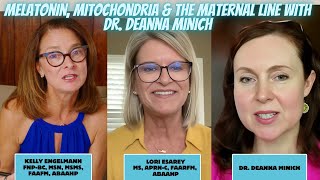
In this episode of the Synergee Podcast, hosts Laurie and Kelly introduce their new Reset to Resilience (R2R) wellness app before welcoming Dr. Deanna Minich, a nutrition scientist and integrative‑health pioneer. Dr. Minich guides listeners through a holistic view of mitochondrial health, emphasizing the maternal inheritance of mitochondrial DNA, the impact of dietary fats (especially omega‑3/omega‑6 balance and trans‑fat exposure) on mitochondrial membranes, and the role of lifestyle factors such as exercise, fasting, and seasonal rhythms. She explains how mitochondria produce and utilize melatonin, positioning melatonin as a potent antioxidant and regulator of circadian rhythm, and discusses practical ways to assess melatonin status (saliva curves, urine metabolites) and to support it with light exposure, blue‑light mitigation, and timing of supplementation. The conversation covers immediate‑release vs. sustained‑release melatonin, the benefits of plant‑based melatonin (Erbatonin) and natural sources like tart cherry, and the importance of personalized dosing based on metabolism and genetic variants. Dr. Minich concludes with three actionable take‑aways: test omega‑3 index, align daily light‑dark exposure with nature, and view melatonin as a multi‑functional molecule beyond a sleep aid. Listeners are directed to her website and new YouTube channel for deeper resources.
Chapters
Hi friends.
Laurie here.
Thank you so much for tuning in to this episode of the Synergy Podcast. Kelly and I truly value your continued support and today I get to share something very close to our hearts. For years we have guided our clients through powerful health transformational journeys and now we've taken all of that wisdom and created something we're so proud of. The Reset to Resilience app, or as we call it, R2R. We're officially launching the R2R pilot program and we're opening it up to just 15 founding members. This is your opportunity to be among the very first to experience a new approach to wellness. One that actually honors the real you. If you've ever been told everything looks fine when you know something just isn't. If you're tired of feeling dismissed, overwhelmed or even unsure where to begin, R2R was built with you in mind. This app offers more than just health advice. It gives you the following structured, easy to follow wellness plans, bite sized daily guidance rooted in the functional medicine approach which is root cause and a community of like minded women walking a similar journey, as well as tools to help you reset, rebuild and truly reclaim your health. If you've been longing for clarity, consistency and actually a path that makes sense, this is your moment. We'll be announcing signups soon, so be.
Sure to follow us on social media.
The link below to grab one of those founding member spots. And yes, as a founding member, you will get special perks for life. I truly hope to see you inside the app. And now let's get back to today's episode.
Today we are welcoming back a true pioneer in the world of Integrative Health, Dr. Deanna Minick. With over 20 years of experience as a nutrition scientist, educator and author, Dr. Minick Bridges the gap between conventional science and ancient wisdom. Her work explores the deep connections between food, mood, hormones and spiritual well being. She's known for her colorful whole self approach to nourishment, and today we're diving into one of the body's most underestimated and misunderstood hormones, Melatonin. While many know it as the sleep hormone, Melatonin's role goes far beyond bedtime routines. From mitochondrial health and mood regulation to immune function and even cancer biology, melatonin might just be the body's best kept secret. Get ready for a conversation that will change how you think about light, darkness and the hidden rhythms that shape your health. Let's welcome the incredible Dr. Deanna Minik.
Oh my goodness, what a nice warm welcome. It's great to be here again with you ladies. And I'm excited for the conversation. It's such a hot topic. And in fact, just even today, I'm seeing a client. And what is her number one issue? It's fatigue. So it's common and it's really hard to, you know, you kind of have to tease out the root cause of, like, how did we get to this place of fatigue? Is it just overall malaise societally, or is there something specifically going on? So that brings us into the mitochondria for sure.
So the mitochondria, if you remember all the way back In, I guess, 8th or 9th grade biology, the powerhouse of the cell. So we've always thought about it just as ATP production, and we think about it living in the cell, but we don't realize that our mitochondria help dictates how we're able to show up. I was just reading an article about mitochondrial attrition in the brain, like the loss of mitochondria as we age and how it affects our cognition. I'm so excited to be able to have this conversation with you and really dig in and give people an anchor for what they can be doing to nourish and feed their mitochondria and what. How their everyday life may be kind of taking them backwards.
Yeah, I love that. And, you know, I'll just say one quick thing before we dive in. We need to look to our maternal line when we think of the mitochondria, because most of the DNA that feed our. Our mitochondria transgenerationally is actually coming from the maternal line. So here is where I just put it out there for everybody to listen to. What is it in your maternal line? Looking at that lineage, the ancestry that's connected to your mitochondria, you know, is it from Eastern Europe? Is it from Asia? Where are your mitochondria from? And, you know, really thinking about what the. The energy needs would be from not just you in this moment, but transgenerationally, how did you get here? And feeding your mitochondria potentially in that more ancestral way.
I love that perspective. I have not really thought about that. I did some work this past year personally in looking at my maternal line, but I did not take it to the degree of looking at the food sources for the maternal line. I was looking more at trauma history, like what has happened intergenerationally and what's been passed down as far as trauma response and stress response, because I do believe our stress response gets set in utero and maybe even before. So some of These people that have a low heart rate variability pattern that we see showing up when we're assessing them with oura ring tracking, and then their HRV is just persistently low, and they can get it to a certain point, but they can't really make it go any higher. So just really digging in and trying to figure out is there something that got set from a trauma response that may be affecting that, but never really thought about the fuel source of the mitochondria generationally.
Yeah, I think that's beautiful. It's great that you're bringing in trauma. And I think it's all related. What did we eat as a result of the trauma? Whether that trauma was also famine, war, poverty, just stress response in general. What was that generated by and how did we actually approach food and lifestyle? So I think it could take us into a very mind, body, spirit, type of realm, depending on how deep people want to go with that. But I do think it's important to look at healing the line of the maternal, of the mother, of the feminine, because that does say something about our mitochondria. Wow.
You know, you always blow our mind.
Yes.
I mean, just a different way of looking at things in a different perspective. But it's, you know, it's the conversations that are out there and happening, but they're. But again, I love that you take us there. So let's get into it, because that is very a unique perspective, and I can't wait to hear a little bit more about that.
All right, so where do we want to start? Do we want to just dive into nutrition or where would you like to start with the mitochondria dive into?
Because there are some listeners that are kind of new to this. So what is the mitochondria? Keeping it super simple right there. And then what role do they play? And then kind of moving into some of the hormonal influences and such.
Yeah, great. So mitochondria, and that's plural. So mitochondrion, it would be one mitochondria, you know, just one unit. But essentially we've got them throughout the body and they shepherd our energy production. So they're kind of interesting structures. They look like a capsule. They have two different membranes, and they have to, I would say, create a gradient of energy. Right. A lot of protons, a lot of exchange of, you know, one. One proton being moved to another molecule, and essentially through that whole process, giving us ATP, which is our energy currency. So when we are exercising, we can actually increase mitochondria number. So the mitochondria aren't just static. We can actually have more, which may be connected to more energy production. Right now there is a double edged sword with mitochondria and that is that, sure, more energy is good, but we also have to tend to the mitochondria because there's a cost to getting the energy from the mitochondrion. So through that whole process of that proton gradient and the electrochemical exchange that happens in order to give us ATP, we can produce what's called free radicals. And those free radicals can create cellular damage. So it's kind of like there is a cost, right? So when we create energy through the mitochondria, we create debris. So there's a lot of talk about, well, how can we have more streamlined energy production. And so that's why conversations like having a more ketogenic diet have come up. Because in some ways, looking at fat fuel sources that might be very efficient for the mitochondria to produce energy. But quite honestly, it's not really just about one nutrient. It's about the overall health of the cell, cell. And I do think that much of the health of the cell, we need to be looking at fats, you know, creating not just fat in the diet, but then also healthy composition of the mitochondria and the cellular membrane, because that's going to determine what gets in and out of the cell and also the dynamics that relate to the mitochondrion. And as we get older, what ends up happening is we tend to see what we call in functional medicine mitochondrial dysfunction. And mitochondrial dysfunction is related to neurodegeneration. So looking at different diseases like Parkinson's and Alzheimer's, because the nervous system has this connection very closely with the mitochondria. So we want to tend to our mitochondrion through just overall as an organelle in the cell throughout our lifetimes, but especially as we get older, because things are less efficient. So the way that the mitochondria clean up after all of that energy processing is a little bit less efficient. So we just have to be sure that we are guaranteeing more things like antioxidants in the diet to kind of sweep up and clean up all of that. The other thing that has come to the light, so to speak, is the role of things like fasting, intermittent fasting, because what we see is that that whole process of abstinence from food for certain time periods could be important for things like autophagy, mitophagy, so essentially helping with the cleanup process within the cell and within the mitochondrion so, yes, I think we need to consider timing of eating what we are eating, the macronutrients, which would be the protein, carbohydrate and fat. And then we need to think about the vit and minerals because the mitochondrion needs a lot of nutrients to make it run correctly. And we can maybe unpack that a little bit. We need to tend to things like lifestyle too, which we'll get into.
So I wanted to go back to the cell membrane because, you know that mitochondria has double membrane, outer and an inner. And I think back, Lori and I were just leading a group, we were teaching a group, a mindshare collaborative group of other providers, and we got into the conversation about trans fats. You know, we have a full generation now that are 50 plus that had tremendous exposure to trans fats through low fat eating and all of the products that hit the market that had trans fats in them. So their mitochondrial membranes are shot. And that's a lot of what we're seeing now. They're in menopause now and they're very fatigued and they're having a really hard time with cellular energy. What would you say about that? Like, is there a way to help rehab those mitochondrial membranes?
There definitely is. I mean, they're not static, they're dynamic. In fact, the mitochondria are very dynamic. They're always turning over, lots of activity. And so just to back us up a little bit, because we talk a lot about whether it's leakiness overall through the body, leaky gut, leaky brain, leaky membranes and leaky mitochondria. Right. So when we have poor quality fats within membranes of any types, what we tend to see is that we get things in and out perhaps a little bit too easily, things that shouldn't be in and out of that cell membrane. So I do think that if we have an issue with our mitochondria in the way of not having enough energy and having a lot of fatigue, it might actually signal that we have leakiness in other parts of the body. Because if you think about it, the mitochondria are quite protected. They're within the confines of the cell. So in order to get to that place, we're looking at different systems and the body works in terms of like a macro and a micro relationship. So what we see overall is kind of the sum of its parts. So working on these membranes with good, healthy fats, making sure that we have a good balance of fats. And one simple thing that people can do is just very simply looking at their omega 3 index. That is such an easy thing that people can do. My PhD was on essential fatty acid absorption and metabolism. For the most part, our body conserves the absorption of these essential fats. Right. But then how we're metabolizing them and integrating them. And I have even seen that people who supplement with omega 3 fats, they still have a low index, which means that either maybe they're not absorbing them as well anymore. And we know that absorption changes as we get older.
Right.
Maybe they're using them. Right. They're metabolizing them, or maybe they're just sequestered in the tissue, so we're not seeing that as much in the blood. So I think starting there is good.
Yeah. Is it possible that when looking at that omega index, that another possibility would be that they are over ingesting other fats such as Omega 6s, assuming that they're good but quite out of balance, is that another possibility?
Yeah, that's a really good point. I'm glad that you mentioned that. It's, it's, you know, if we look at the family of fats, they're all so diverse. Some are short, some are medium, some are long, some are more fluid, some are more solid. So it's about the right level of all of those things coming together within the membrane. So we do need a little bit of saturated fat, we need a little bit of unsaturated fat. We want that nice balance between omega 3 and omega 6 because that sets the stage for good, healthy inflammatory response. And as we know, most people in their average diet, especially if they're eating a more processed diet, they have more omega 6 fats. So that's now omega 6 fats. I just want to pull back from that because I know that there's a lot of talk about seed oils. And I feel like what happens in nutrition is we get in this very polarized mindset of like, yes, no, good, bad. And I don't think it actually works like that. I think that there's a spectrum in between. There's a lot of nuance, there's a lot of translation that goes into that equation. But yes, I mean, the best way to look at your Omega 6 and your Omega 3, those are the two families of essential fats, is to actually just do a blood test. It's relatively inexpensive. You can do it through your practitioner. You can actually even do it online and just give a blood sample, a dried blood spot that can be analyzed for fatty acids and let you know where you net out at and then based on that, making the shift in your diet and then possibly in your supplements.
Yep.
I am so glad you mentioned how we are so polarized sometimes. And in nutrition, we hang on to that one thing. Right. And that's really what we're here for. That's part of what our mission is, even in this podcast, is to help people understand and decipher through what they're being blasted with. Right. Of information that's out there and trying to figure out, lowering the noise and really figuring out in that, how do they apply it to them and their individuality and their genetics and their lifestyle. And that's really challenging for the health seeker is to decipher that.
That is a challenge, isn't it? Especially in this day and age of influencers and all the. The garden variety of things that are floating around there on the Internet and social media. So, yeah, I think that it's. It's wise to temper any extreme views with, you know, what is reasonable? The rule of reasonableness. Right. And I think that that's something to be thinking about. In the work that I do, for the most part, I have certain principles and I think that they're. They are more reasonable. One is, which refers to the colors of food in the phytochemicals, which actually nicely jog a lot of the resilience of the mitochondria. Right. Really keep the mitochondria fit. The other one is diversity. So having dietary diversity, so shaking up your everyday eating with different kinds of foods helps to feed the gut microbiome, which helps to feed the whole body. We see that dietary diversity is a very important factor for resilience and mitochondrial function. Then the third thing is rhythm. I do think that, you know, sticking close to nature, nature's rhythms. I just posted on social media yesterday, there was a study that I saw showing that in this population that was tested, they were looking at different lipid markers. Right. So just blood fats and showing that in situations where the environment is a high heat environment with high humidity, we start to exhibit certain dysfunctions which we can see through our lipid profile. So when I talk about rhythm, I'm not just talking about circadian rhythm or the day night cycle. I'm talking about seasonal rhythm. We're different in the summer than we are in the winter, than in the autumn or the spring.
We are.
Have to adjust. Right. So that's important.
It is. And often undervalued and underappreciated.
I see people that are trying to make lifestyle Changes. And they typically can get really rigid with what they're doing and not really be thinking seasonally or thinking diversity because they figured out what worked for them to get them through a rough period at work. So they are. They're dug in, like ketogenic eating, for example, or carnivore eating, for example, you know, and they get stuck in that mindset of this is what I have to do for the rest of my life. So I love what you're saying about just the rhythms of life, understanding those a little bit better and learning how to navigate. But I am curious, curious about what you said about the fluidity of fats or measuring those at certain times of the year. Are there changes seasonally that we should be making with our fat intake or quality or types of fat at different times of the year?
I think, again, back to measuring your labs and looking at your lipids and knowing that there might be more in the way of things. Like if you already have atrial fibrillation, you might need a little bit more guidance and a little bit more checking in with your practitioner over the summer months, as an example. Or if you tend towards high triglycerides, high LDL cholesterol, you just might need to maybe just check in, see how you're feeling, look at and monitor cardiovascular parameters. You mentioned heart rate variability. That's a great one. You can also be just very simply looking at blood pressure. You know, we have so many different vital signs to be keying into that signal, like the whole of us. So, yeah, I do think that we need to be exploring what we're doing on a seasonal basis. Even things like exposure to light and dark, which I know we'll get into, because that circadian rhythm changes seasonally. So now we have rhythm upon rhythm, where in the winter months, depending on where you live. But if you're in the northern hemisphere, if you're, if it's the winter months, you have early darkness and you have, you know, you have late light in the early morning. So, you know, things are kind of skewed, including your sleep cycle. Your melatonin that you produce from the pineal gland will be different. And melatonin is a connector to the mitochondrion. So, in fact, the mitochondrion itself can actually produce melatonin. And it's, it's very good that our bodies know how to do that because as I mentioned before, otherwise it can become a waste paper basket of all of these different free radicals. And all of those radicals kind of like off putting all of this Emission. Right. This is kind of the downside of oxidative stress and what melatonin does, because melatonin is unique. It's not just like vitamin C or vitamin E, where. Or even coenzyme Q10 which is used within the mitochondria. But melatonin is fat soluble and it's water soluble. So it's. It's amphiphilic, it can flex, which means it can be in the watery portions of the blood. And it can also be within fat tissues like the skin, the brain. So it can be throughout the body. So it can work very nicely with the mitochondria because it is quite fatty. Right. Because of the cell membranes, but yet it needs fluidity in order to move currents through. So the melatonin as a molecule works really well intracellularly to help that. Yep.
And I can imagine going back to what you were saying, and this makes sense from a time of the year seasonally, is that even activity levels are very different for a person based on night, day two. But I think about an example of. And I learned this just by testing my own self every six months, summertime and winter time, particularly with Spectracel. That's what I used and still continue to use just to kind of give me some of that indication. But I realized I travel a lot during the summer. I happen to live in Florida, so we have nice weather pretty much all the time. But in the summer when I travel, it's usually coastal. So I'm eating more fish and I'm doing those things. And I don't need as much fish oil during those times. That's just one example. But I do think it's so important to test. I love what you said.
Test.
Don't guess. You know, use the data. And then of course you have to track it and trend it too, is getting people to really journal what they're doing and connect those dots. I did this and this occurred.
And I would say I'm pretty guilty of just testing my labs once a year, like on my birthday, which happens to be winter. So I'm thinking back now, like all my data points are like one time of the year. So now you're challenging me to go back and think differently about seasonally testing to see are there differences that I need to be more aware of.
So I love that and even select ones so you don't have to feel like it's too onerous. But if you just did lipids even and focused on cardiovascular parameters, that would be one good thing. But I do think that, you know, Depending on people's ages. I think as we move our way into our 50s and beyond, I do think it's important to get labs twice per year. And I like the March September timeframe, because September again signaling right after summer, and then March signaling right after winter. So you've got your peak and your nadir. So it's a really nice flex of kind of looking at, like, extremes in both directions. Although I also like the idea of doing lamps around one's birthday, too, because there's even data to show. There was a study that was done some time ago, and it was done in New York. What they did was they looked at hospital records and looked at people's death dates and what they died of and their birth dates, and they found that there was a correlation between people's birth dates and what they seem to have more risk of. So I think it's kind of neat to think of your own personal rhythm based on your month of birth. So, yeah, you have to look at all of those things. Right. I mean, it's. Health is something to navigate, and it takes a little bit of work if we want to be proactive and to live optimally. Like, we can let life happen to us, or we can move to the forefront and say, no, I need this and this and this. And I think that's what's happening is that more and more people are becoming empowered. They know what to ask for. All of these metrics are fabulous because people can look with a continuous glucose monitor and say, oh, my goodness, this is what happens when I have this bread. Right. And we get that information, we can.
Really dial it in today like no other time. As far as the wearables, being able to navigate that a little bit better, and access to labs, too. Now, people can go in on their own and get their lab testing done. They don't necessarily, necessarily have to be ordered by a provider. And so it's learning how to navigate that data that's important. Right. And that's why we're here.
Yeah. And that's where sometimes we might need a coach or a practitioner to step in. Yeah. But let's. Let's talk about the metric of light, light and darkness, because this is an easy one that everybody can measure.
Okay.
There are different ways to do it. We could say, well, we can just use our eyes to see light and dark, which we can. But there are also apps that people can use where on their phone, they can simply use the camera on the phone. And the app that I use is free, and it's Easy to download. It's called light meter. Lux. Light lux, no cost to it. And all it involves is so easy. You just direct. So it's almost like this would be like my eyes, right? The camera of the phone would be my eye. I have the app on and I move it to wherever I am looking and it will give me the unit of lux. And one lux is equal to a candle flame about three feet away. About a meter away. So you can get a measure of luminosity. So we want to wake up with that full spectrum light. And that first exposure is important because it starts to bring our melatonin signal down and even helps to prime the melatonin for that evening. So there's a dual purpose there. And it enables our cortisol to come up. Right. Like just getting that early morning light. You know, it's very interesting because I was just having a conversation with somebody about three weeks ago. Now there is a gene. So I'm a huge advocate of testing for people's SNPs. They're called SNPs. Like where you have a gene variant, where you have a typo in your gene code that makes that gene function a little bit differently, Right?
Yeah.
And this woman I was talking with, she was telling me how she was so challenged in terms of waking up in the morning and feeling like the monster, the big bear in the house in the morning. And she, she couldn't figure out why she tried all these different things. But when she assessed her gene variance, she found that she had a SNP for the melatonin receptor, which made that receptor hang on to the melatonin a bit longer. So you can imagine that it would be harder for her to wake up in the morning because melatonin is the signal of darkness and the signal of sleep. So knowing that she had this change in her receptor made her even more in tune with her lifestyle and ensuring that she definitely got up and got outside in order to get the bright light so that you bring the melatonin down quickly. Yeah, but she wouldn't have known that. She didn't really put it all together. She was trying all these other things, going to bed earlier, you know, eating different things, but hadn't really pieced it together. The power of light and how light can change our energy level, can change our physiology, it can change our psychology. And here's an interesting tidbit for people. So, yes, using the app. Right. So let me just give you some best practices on that before I kind of move into eye color. You know, there are different recommendations about exposure to light. And if you think about it, many of us are indoors most of the day. We work inside, whether in an office, home office. But what you really want to aim for is getting the full spectrum light outside. And even if it's just for a couple of minutes in the morning, that's good. Even if you live in a cloudy environment, it doesn't matter. You're still getting that exposure through your eyes. So I do think it's. It's important. Even if you work in front of a window. Like right now, I work in front of a window, and that changes the luminosity. Even peripherally, it's significant because I've actually tested it. So when I use my light meter app midday, I'm getting like something like between like 2 to 4000 lux, depending on how sunny it is. But if I was facing a wall, that would be like 2 to 400, you know, so a factor of 10. So yeah, so you want more light during the day, but kind of the. The healthy light. Right. And you know, right now we're on a camera with artificial light. And that artificial light is not necessarily too bad during our day, but at night, the artificial light at night, which is called of Alan, becomes an endocrine disruptor.
Wow. Say that again. Say that again. Because we talk a lot about endocrine disruptors and I have never had artificial light on the list, so. Talk about mind blowing. Yeah. We're doing all these things to avoid the food, to avoid the chemicals, to avoid the things that we know for sure are endocrine disruptors. But light, that's interesting.
Artificial light at night, not the soft, reddish candlelight like fireplace hue light, but the bright fluorescent. You know, you go to a sport game, you go to a basketball game. Those bright lights, you go to a library, the bright lights, you go to a grocery store. Bright lights at night. You know, some of us even go to a gym at night. And I had myself until I developed this more, I would say greater awareness of light and dark because I was realizing that even if I was working out in the gym, I'm still under this bright light. What am I doing? So it's okay to be in those places, but then you can take precaution, I. E. Wearing things like, you know, and there are all different kinds of blue light blocking glasses. Right. These are very modest form, just for my computer, like during the day to be just protective of my eyes because, you know, so many people are developing eye issues, A lot of ocular issues are happening. Increased macular degeneration, cataracts. I don't know if this is just a function of age and people just seeing more of it being tuned in, but, you know, our eyes are valuable, right? And our eyes connect to the brain. They're a superhighway, right, to the, essentially to the pineal gland. And that will signal our melatonin. So if that's disturbed where now those photosensitive cells are perceiving blue light, it shuts down melatonin. Melatonin is required to open the sleep gate. It can help with getting us to sleep. It doesn't necessarily keep us asleep, but since the point that it becomes dim outside, we start to increase slightly with melatonin and then eventually we peak at about 2 to 4am and that many times is the time that people are waking up, they're going to the bathroom, they're now exposing their eyes to blue, blue light again. It's like, oh, no, you don't want to do that. You know, it's like you want to, you know, as much as you can stay within that, that darkness for that 2 to 4am time period. That's really essential, deep restorative sleep for sure.
So I want to go back for a minute, Deanna, back to the mitochondria and melatonin, because I don't know that we explicitly said the connection between the mitochondria and melatonin. It's my understanding from your work in looking at the antioxidant protection, we mentioned all of the reactive oxygen species that get produced just with metabolism and having antioxidants there. And melatonin happens to be a really key potent antioxidant. You want to frame that out in relationship to vitamin C that everybody knows about being an antioxidant.
So just to put it in perspective, vitamin C. Now, I don't want to diminish the effects of vitamin C, because vitamin D is also really important in its own right. But vitamin C, if you look at how much it can quench with respect to free radicals, we're looking at probably one to two free radicals in certain kinds. One molecule of melatonin can quench up to 10 free radicals. And even the metabolites of melatonin act as antioxidants. So essentially, the mitochondria do make melatonin, and the mitochondria can also take up intracellular melatonin. So the mitochondria are essentially using it and being regulated by melatonin, as you know, again, I don't want us to think it's only melatonin. But melatonin is a primary one, which now if we make the clinical translation and say, okay, well, how does that shake out in terms of my life or my risk of certain diseases? What we also tend to see is that there's a connection between the risk of neurodegenerative diseases, things like again, Parkinson's, dementia, Alzheimer's and melatonin. And maybe that's through the interface of sleep, maybe it's through the interface of the mitochondria. So there is that interconnection there to be looking at. And also, metabolically speaking, I think that melatonin is important. Melatonin has a connection with insulin. It actually is kind of like a spider web. All the hormones connect to each other. Right. Because in functional medicine we talk about how hormones are the communication system in the body. So we have got neurotransmitters, we have hormones. And if you change one hormone, let's just say you're not sleeping so. So well, what can happen is then the next day you're not eating so well. So the whole thing is just kind of like interconnected. But the mitochondria and melatonin interface at the level of exactly what you mentioned, the antioxidant function, but then also the anti inflammatory response. Right. Because even if we think back to the pandemic, and why was melatonin supplementation being talked about for immune health? And that kind of threw me for a little bit. Yeah, I was thinking, you know, wait a minute, we're talking zinc, vitamin C, the steady eddies for the immune system. But now all of a sudden, melatonin was part of protocols that caused me to look a little bit deeper. And if you can see why, it's. You can see that melatonin again is serving multiple functions. Anti inflammatory, antioxidant. It's helping with our chrono rhythm. Right. Kind of like stimulating that sleep wake cycle, opening up the sleep gate, connecting us to circadian rhythm. And yes, it's also a mitochondrial regulator. So it's really important for intracellular health. So the health within the cell. And it kind of keeps things, I would say, in balance. There's also a connection with viruses. So this is not. This is a lot of cellular biology work, but essentially what we see is that a cell can be overtaken by viruses, where the viruses start to create their own phase. Right? They, they just kind of set up shop inside the cell. Amyloid proteins and peptides can do that as well. And melatonin helps to break that up. It Helps to, at least from a cell perspective, helps to break up that phase separation. And so Doris Lowe and Dr. Russell Ryder have done a lot of work on that. So you can imagine that that would be important for mitochondrial health as well to keep the overall cell healthy, because otherwise it becomes cluttered with a lot of debris. And, you know, it's just fascinating if you think about it, but the health of your cells really does determine the health of your overall being and organisms. So looking at your skin, looking at your hair, seeing how your gut feels, what is your mood state, how are you sleeping? It's all in some way, we could say, a reflection of the cell and even down to that mitochondria.
So when we say test, don't guess, because we say that a lot, right. And we really do want to utilize measurement markers to know what a person needs and don't need when it comes to melatonin, is there a quantifiable way to say that a person needs it or not? Or is it merely subjective?
That's a great question, and I get that question a lot. There is only, I mean, if you think about it, you can change your melatonin levels by exposure to light. So if you. There are ways to measure melatonin. So you can measure melatonin in your saliva and you can kind of create a curve, and that's called dim light. Melatonin onset or dim light. Yeah, just basically, it's kind of like, let's just say 6pm it starts to get dark, you start producing a little bit of melatonin, it starts going up. You can kind of track that progress. And then in the morning, you can have a urine test to see how much you metabolized your melatonin. But that doesn't really tell you how much you produce. It just tells you how much you metabolized, right. How much you excreted in your urine. It's hard because the peak of your melatonin from the pineal gland, not from the mitochondria per se, but from the pineal gland. Because maybe I need to make the distinction here, because at night, this whole cycle that I'm describing with light and darkness, that melatonin is coming from the pineal gland, which is in the brain. When that is released from the pineal gland, it goes through the systemic circulation and then it keys into the clock. Genes within all the different body systems, like the liver, the kidney, the gut, they all start to get entrained to the circadian rhythm. It's actually quite beautiful if you think of It. It's like, wow, nature is, like, connecting us through that signal of melatonin every night. So if we're not sleeping well or we're waking up, it's like. Is preventing us from creating that inner symphony of, like, connection with nature. So that's pineal melatonin. Separately, we have the melatonin that's produced inside the cell. Now, to your question, Lori, as to whether or not can you actually measure that, that is not so easy to do. And it's also not so easy to measure pineal melatonin because it's fleeting and it can be disturbed by what you're eating, light and dark. And also, we're not going to have somebody wake up in the middle of the night to kind of look at their peak of what they're making. So many times we start to look at symptoms, and that brings us back to what we started talking about. Is the person fatigued? Are they not sleeping well? Do they have stress? If you look at the curve of melatonin throughout a person's life, and again, we're talking pineal melatonin. We see that children have some of the highest levels of melatonin. So personally, I don't think children should be given supplemental melatonin unless they have a condition where they might benefit, like ADHD or autistic spectrum disorder. There could be some indication there. But just for sleep hygiene, popping about a bunch of melatonin gummies, I feel like maybe we just need to look at sleep hygiene first and foremost, right? Like, make sure they're off devices or bedroom is clean. You know, all of those different factors. But kids have a high amount of pineal melatonin. As they reach puberty, things start to change. They start to come down. By midlife, we have about a third of what we had as a child. And then in our 50s, we have about a tenth of what we had as a child, and it just continues to plummet. We pretty much bottom out. So the question becomes, well, gosh, what happens then to my mitochondria? What happens to my aging? Because we know in a lot of different biohackers, you were just at a longevity conference. Biohackers are really into supplemental melatonin because they seem to be keyed into this sweet spot of how do we patch the gap of what we've just lost? You know, we think about that with all hormones, really, like even estradiol, progesterone, testosterone. You know, melatonin is no exception. But melatonin is truly beyond a hormone. Whereas estradiol is more like, you know, classically connected to feedback loops as a hormone.
Right. I think as clinicians we were afraid to prescribe melatonin for the longest time because we thought we were going to inhibit production. But listening to you talk about how we're, I mean, a tenth of what we had in younger years, that's pretty significant, especially knowing what it does to mitochondria. So. But more is not always better, right? Like mega dosing of melatonin. Like we saw heavy doses for things like cancer. We saw heavy doses even in the post COVID protocol. But those are for short term use and for a condition specific use. Right. Not for day to day consumption.
Everything that you just said I agree with. In fact, you took those words from my mouth because I would be saying exactly the same thing. We have no evidence that high doses long term are number one beneficial just for overall health. Yes to what you said. There are certain indications, working with a clinician where under certain protocols, short term may be beneficial. In fact, I just posted a study, a review looking at cancer chemotherapy. It was a review article kind of looking at the role of melatonin and what that plays. Right. And I actually did a melatonin masterclass last year where I interviewed a lot of these different experts that have done the research, clinical research, benchtop research on melatonin and all of them are very much speaking to the safety of melatonin within a certain dose range. Right. So a physiologic dose, what we just patching what we have lost, but not a supra physiological dose where it's like pharmacologic levels, where our bodies haven't seen those levels. And that would be completely new and overriding what, what we would have had naturally. And we can say the same about most hormones. Like even when women do menopausal hormone therapy, you know, we just replete to our biological stage of life or is there danger in kind of overriding that signal? And now it's like, but wait, we haven't seen seen that. And like we've been in this dip mode. And so I feel that, you know, again back to what we were saying about nutrition, sometimes it's very binary. It's kind of like good, bad, all, nothing. And we've seen a little bit of that with hormones where it's like, oh, you know, no, melatonin is bad, it's a hormone, you wouldn't give that to anybody. And then other people where they're taking triple digit doses of melatonin and I'm like why That's a lot of melatonin. You know, I think the sweet spot is somewhere in between, and then it has to be personalized to that individual.
Absolutely.
Between repleting and rebalancing.
Yes.
And it's the philosophy or it's the position at which you approach the individuality of the client that you're working with. And there are a lot out there that are just working to replenish or replete. And we know that it's not just that one thing. It affects the symphony. And I love the word harmony, because that's what it is. There's harmony. So. And I do have a question about IR versus sr. Is there, you know, when you think about dosing or taking or supporting or supplementing melatonin, is there a difference between immediate release and sustained release enough to basically use one or the other, or is there a purpose for both?
Well, let's talk about the supplements a little bit. So, in full disclosure, I do work with a company that sells a plant melatonin. It's called Erbatonin. And the thing about erbatonin, it's very unique. It's from plants. It's from rice, chlorella, and alfalfa, and it's in the plant matrix. So it's not just isolated or extracted where it's just melatonin the moment it hits your tongue. Right. So it's kind of bound up in the plant. So it kind of has this natural release, which we would want. Because if you think of, again, that curve of melatonin, we're slowly going up as it gets dim, and then we keep going up. So with a lot of the synthetic melatonins that are on the market, which is about 99% of the melatonin that you would find online, it's. It tends to be chemically produced. Right. So it's starting with a. A different petrochemical type process. So you do have to be thinking about contaminants. So when you mentioned sustained release, I know that some people like that format. My only take with that is that you have to look at what is included in that supplement to make it delay the absorption. You know, many times there are things that we may not want that are in and of themselves. Phthalates, parabens, you know, things that we wouldn't necessarily want to take because, you know, it may have some untoward effect or just be seen as an endocrine disruptor. Yeah. So I do think there is a timing aspect. I think your question is really good because some People are rapid metabolizers of melatonin, so they need to take it closer into bedtime. So for me, I'm one of those people. I'm a rapid metabolizer of melatonin so I don't wake up groggy from melatonin if I take it. So I take it, you know, just right before bedtime, essentially about 30 minutes before. But in general, what the package tends to say that you'll see this on products like 40 to 60 minutes before bedtime. Now, if you want to slow it down naturally, one thing that you can do is take it with fish oil. That's another great way to just naturally without having like any kind of encapsulation or any kind of coating on it. You could take it with fish oil to kind of slow that release because we know that fat, it's, it kind of slows things through the stomach. So that would be one thing that you could do. Now, my husband, just to give you an example of somebody else, and I've talked with many people like this where they say I get groggy in the morning from melatonin, even low dose. So for those people, they have to back it up more. So if I go to bed at 10pm and I'm taking my melatonin, my erbatonin at like 9:30, that's good for me, it works for me. But for my husband, he has to take, well, he goes to bed a little bit later than me, but he has to take it three hours before bedtime.
Oh, wow, that's good to know.
Yeah.
And he had to kind of experiment and figure out like what time was the best to match his metabolism. Yeah, so keep that in mind because some people say, oh, I had nightmares or I got groggy or I had a headache or, you know, just something, you know, and to even talk about the nightmares, is that because the supplement itself is contaminated or does it have other things in there? You know, in some of the mixology kind of supplements where there are multiple things in there, you can actually change the metabolism of melatonin by including certain things. So you could actually be speeding it up. So I always watch, I just like to have melatonin on its, its own if I'm going to take it. And you know, in that small dose, I don't want to have it kind of mixed up with a bunch of other things, like especially not botanicals, because you might actually increase or decrease the metabolism. You can change the dynamics of it.
So what about tart, cherry? A lot of People are touting tart cherry at bedtime. Does that have any mechanism of action for melatonin production?
What I like about tart cherry is that, well, first of all, tart cherry is very rich in polyphenols and I'm a huge fan of polyphenols because polyphenols themselves establish kind of a chrono rhythm type of an effect. So that's why certain foods, seasonally, when they come up like cherries, they tend to come up like in the springtime. Right. Grapes tend to come up in the autumn and also could play a role in kind of establishing that, that chrono rhythm. So tart cherries are rich in polyphenols, anti inflammatory. And the reason why some people aren't able to sleep is because they're inflamed. Gotcha. Right. So it has a nice anti inflammatory response. Now most fruits, seeds, nuts, especially the reproductive portion of plants contain some level of melatonin. So some people say, oh, you know, I'm sleeping better because I'm taking tart cherries and that helps me with melatonin and because it's supplying melatonin. But actually if you look and calculate how much you would need in the way of tart cherries, I mean, it's not a standardized amount. Right. You don't know how much you're getting in tart cherry juice. That's not on the label. And we know that plants are very unpredictable based on their growing. I did a calculation in the paper that we published in the Nutrients Journal and I just took a paper, identified a general range of plant melatonin and tart cherries. And of course there are different varieties, so even you have that. But what I calculated was in order to get 0.3 milligrams of melatonin, you needed 2,718 cherries. And I remember that number just because I get the question all the time. So 2700 cherries to get a modest physiologic dose of melatonin. And I, you know, I have nothing against cherries. I mean, I actually, my husband had a gout attack some years ago. So, you know, I always have like a Montmorency tart cherry juice in the fridge just in case, you know, just as an anti inflammatory. I have pomegranate juice. I have certain juices that I see as medicinal. But you know, it's. Is it so good to have tart cherry juice before bedtime? Does that wake somebody up? Should he have that in an empty stomach? I don't know. All Those things. But I think cherries as a food is. Is incredible because of the polyphenols.
Well, listen, we could spend days talking. I feel like this hour went by in a snap of a finger. You are just a wealth of not only information, but just pure joy. We love having you on. And thank you so much for being so generous with your time and your energy and all of your knowledge.
Oh, my pleasure. I've been looking forward to this and I'm glad that we had the conversation and I hope that, you know, people can find some takeaways. If I were just to think back, like three things for people to take away from this. You know, we talked about omega 3s and how important that is for the mitochondrial membranes. Right, the two membranes and just for overall cellular health. So get your levels tested. The omega quant test is available online. Very easy to do, very inexpensive. Then you can figure out what to do from there. So omega threes, number two, pay attention to your light and darkness. Like, really try to live in sync with nature as much as you can. I really feel like, you know, health doesn't have to be all biohacking and metrics and, you know, like, we have to constantly be analyzing ourselves. Like, I almost feel like letting go of that and being more in nature.
Yes.
Rising with the light, going to bed with the dark, or at least taking some preventative measures with blue light blocking glasses if you're tending to be out a little bit later. And then I would say number three. So light, darkness. When it comes to melatonin, seeing melatonin is more than just a sleep aid. You know, that, that kind of. Whenever I see that out there, I'm like, oh my goodness, what happened? That the communication of melatonin has, has just been distorted.
So it had poor branding. Poor branding.
But, you know, I guess because in so many ways people just want a simple solution and they just want to think about something in like a very, like, unilateral way. But whenever things come from plants, many times they have multiple functions. And melatonin has kind of co evolved with us through the mitochondria. You know, it's ancestral. It's again, it's a maternal kind of feminine molecule because it is connected to the maternal line and to the mitochondria. Right. It's kind of beautiful in that way. It's very protective. So if you are thinking about melatonin because you're wanting to optimally age or at least have better circadian rhythm, better mitochondrial health. You know, I think working with a practitioner to assess that better. Figuring out a dose, timing and all of those things that we talked about would be good. And of course, my preference is a plant, melatonin, like Erbatonin. And evaluating that. Right. Especially if you're in your 50s and beyond. I've got my whole family on it. My mom, my dad, and my mom actually was on it even before I started talking about it. She already knew. So I was like, yes, she's always.
Ahead of the curve. I hear you talk about her often. She's always ahead.
Yeah, well, she tends to be on some things, that's for sure. But she knew about melatonin, so we should share articles. And I'm always like, you know, you guys, you know, it's. And I kind of feel like it has a connection to other things. Maybe it's even a molecule of consciousness. And, you know, if we're changing our brain and our nervous system through melatonin, chances are we're changing our state of awareness and being. So it. To me, it's kind of a spiritual molecule as well, which I find really fascinating. Absolutely. My takeaways for everybody in terms of, like, okay, right.
Like, yeah, what can we sit back and take? Yeah. I think one thing that I would share. I talked about the journey, looking at the maternal line. There's a book that called. It's named. It didn't start with you, and I'm trying to remember the author right now. It didn't start with you. Yeah. And it's relatively new. It's been out maybe a year and a half, but it really talks about all the epigenetic challenges or advantages that we have and kind of lets you look at it through a different lens, a lens of compassion and how can we embrace this? I love what you said about eating according to that. I think that's another thing I'm going to dig into after this discussion today is looking at that a little bit differently. Looking beyond just the trauma response, but looking into the nutritional response, too. So thank you for that. Just wanted to share that. And, Lori, any takeaways from you?
Yeah, no, I just. I so appreciate, Deanna, your depth of science behind. Behind every conversation. And I just want to just applaud you. I know you do it because you love to do it. We were talking about that before we started recording today that you have such a passion, but it's so important. And you bring that up every single time, bringing people back to the research, the science and the clinical, bridging that gap, really, between research and application. And just thank you for being a thought leader, for being there, even teaching. It's been fun to learn alongside of you and learn from you simultaneously. So I'm just going to second what Kelly said. Thank you for taking time out of your very busy schedule. We know you're traveling a lot. Congratulations on your most recent award. You accepted that with such humility and. But you deserved every part of it.
Goodness. Thank you so much. That's a lot to take in. And I feel like, you know, we're all part of this movement. We're all so invested in health and well being. This is a. So we're living in interesting times because we're learning more. Right. So we have more tools to do that. So it's exciting to be on that journey with both of you. Yes.
What's your next book? Yeah, what's your next book? And is there anything, a way for people to connect with you?
Yeah, the best way is just to go to my website, which is deannaminick.com 1. And I do have what people seem to like is the resources tab, where I have a bunch of downloads there. They can just download those. Yeah. I have recently started a new YouTube channel, and it's on science and spirituality. So I'm interviewing people in functional medicine on their stories as it relates to their. Their scientific outlook, but also their spiritual framework. Because so much of that actually primes how we live, how we teach, how we work. So I'm very interested in. I think, as a scientist, what ends up happening is like, you go deep into science and you start realizing the beauty and just how amazing the human body is in so many ways. And then it just becomes like a spiritual aspect. It's like, wow, this has like the. It just. We spend our lives in bodies that we seek to understand. Right. And many times are a lot of our lessons and our learning come from our bodies. And so, yeah, I'm very interested in spirituality. And the way that I define that is a sense of purpose, meaning, and connection. So looking beyond, you know, like, what do we believe? What are our values? So that's something on YouTube that people can check out and subscribe to. I'm just doing that for fun. It's just something I'm enjoying. It's a passion project. So that would be, I would say, is new.
I can't wait to connect with it.
That's awesome.
And I'm sure that our listeners will too. So thanks again, Dana. The Synergy podcast is for general informational purposes only and does not constitute the practice of medicine, nursing, or other professional health care services, including the giving of medical advice, and no doctor patient relationship is formed. The content of this podcast is not intended to be a substitute for professional medical advice, diagnosis or treatment. Users should not disregard or delay in obtaining medical advice for any medical condition they may have, and should seek the assistance of their healthcare professionals for any such conditions.
More from Deanna




Gut Health, Stress & Sleep: The Truth About Supplements and Real Detox with Dr. Deanna Minich




"99% of Melatonin Is Made From Petrochemicals" Dr. Deanna Minich & Lara Pizzorno Interview (Part 2)



🎙️ FMP Essentials Show: Balancing Menopause Naturally with Phytochemicals | Dr. Deanna Minich