Why Food Alone is Not Enough: How to Connect Nutrition to Nourishment
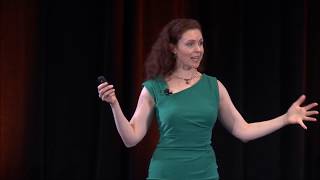
This is a short YouTube excerpt (uploaded by extraordinary-journal) showing an onstage introduction for Dr. Deanna Minich. Dr. Rita Marie introduces Minich as an author, speaker, artist, and PhD in nutrition who takes a holistic, energetic approach to food; she references Minich's books (Whole Body Detox and an upcoming The Rainbow Diet) and the clip ends with a brief exchange and audience applause.
Chapters
Pleasure of introducing you to someone who I just met for the first time today. But I've been watching her work and I've really admired it because she's so about the food. It's Dr. Deanna Minich. She's an author, she's a speaker, she's an artist. She has a PhD in nutrition. And she combines, you know, the energetic qualities of the food, the. The non necessarily, not just the physical pieces. She looks at it holistically and. And it's all about the food. And this is what I love about what she's going to be sharing. She's an author of five books, her six books coming out in January called the Rainbow Diet. And she has a book called Whole Body Detox, which is not just about. Here, take this protein powder and, you know, skin brush. It's a whole body system of how you cleanse and detox. So without further ado, I am going to introduce you to Dr. Deanna Minich. So give us a big round of applause. Yay.
We even look like we're. We thought about this, right? Yeah, we planned it. We planned it. Thank you so much.
Thank you.
It's an honor to be here with all of you. Really fantastic. Are you awake? Yes. And I'm sure you're shining. Hello, everybody. On Livestream. Wonderful to be here. All right, so we have a whirlwind. What Dr. Rita Marie just mentioned is so true. We come from the same foundation, which is really based in food. And the way that I've taken food is a little bit different. So I want to prepare you for that, that we're going to have a little bit of neuronal plasticity going on. Okay. As you can see by the title of the presentation, food is essential, Food is medicine. And I've often found that food also connects to our entire lives. And so it's about nourishment. And I want to take you down that path of nourishment. Okay. Clicker magic. Can it work? Let's see here. I'm pushing the one. Okay, very good. Thank you very much. So we're going to talk about how to heal the whole self. What I have found in nutrition, being in nutrition for over two decades now, which is. Yeah. Oh, my gosh, I can't believe it's been that long. Is that many times people will heal with food, and then other people need other things that connect to their lifestyle. And so I'm going to talk about that. Like, what is the whole self? What do we mean by that? So do I need to Turn this on. Maybe that's what I need to do. The wizard has appeared. Good. I just turned it on. Maybe it wasn't on. Yeah, now it's okay. Oh, my. So one of my mantras, personal mantra, that I've observed from so many people, is that how we eat is how we live and how we live is how we eat. So think about this for yourself right now. How would you characterize or categorize your eating? Is it colorful? Is it vibrant? Chances are you're living a colorful life, and also you're feeling vibrant. Or is it rushed, processed, quick? Chances are you're probably living a quick, processed, just on the go life, right? So I always mention to clients that whenever you need to find out how you're living and get insight into that, look at your plate, look at how you're eating, that the two are truly one. So the way I see it, food is like a spiral. And in food terms, it's like an onion. It has many layers. And when I first got my PhD in nutrition, I was thinking, oh, it's only about the physical body. We need to feed these different systems, get the nutrients we need. And then I realized that that was only one layer of the entire onion that I started to see people that had strong emotional connections to food. And I'm going to talk about my own emotional eating and eating dysfunctions along those lines. So I knew about that, but I was needing to go deeper into that. It's also social. One of the biggest things that I see with people is that it's so difficult to implement eating a different way if you don't have support from your spouse, your partner, your family, your kids. So how do you make that happen? And then also, eating is spiritual. What do I mean by that? That's kind of a buzzword. That's kind of a catchy term, right? Spiritual. What I mean by that is the sense of meaning, purpose, and connection so that every time we go to eat, we're connecting into the lineage of that food. Where was it grown? The earth, the rainbows, the sky, the sun, the stars and everything that it captured the love of the farmer. And how essentially every time we eat, we're taking in a lineage of connection. That's how I define spiritual. So we all have a story. And what I really like to do is to look at people's timelines around eating. Have you all done your own timeline where you draw a line? This is a great activity for you, for your clients, for whomever I would say start with you, because it always Does. So you get your timeline going. What is your story around food and eating? You can draw a line or what you can do is. Usually what I tell students is make a list of the top 10 things that happen to you with food and eating, and you'll know what those are. You'll know if they're important or not. For me, I grew up in inner city Chicago. My dad was a Chicago police officer. I went to Catholic school all my life. So there was this sense of restriction and kind of confinement, a lot of discipline around food. So there was one layer that was the layer of my father. And then on the other side, my mother, when she was pregnant with my brother, which was when I was nine years old, really got into her food and faith. I come home from school and she was watching Richard Simmons. You remember Richard Simmons. And she started buying Adele Davis products and books and Adele Davis bread. And I was going to school with lunches that were grainy brown bread, sandwiches that looked like there were twigs coming out with the kind of peanut butter that looked like you had to do the butter churn too. You know, like the rocky road peanut butter. And then I didn't have jelly like the other kids in the 70s. I had banana, sliced banana. Or a little bit of honey. A little bit of honey. Just a little. And I would come home crying for me. I didn't have the wonder bread. I didn't have the peanut butter and jelly. I wanted to trade my lunch. I couldn't. I started binging. I had a newspaper route when I was 12, and all the money I would get from that, I would take that money. And it wasn't a lot, but I would go up to the five and dime store when we had those. Yes, that's how old I am. And I would literally buy the candy and I would just gobble it up on my way my newspaper route. Before I would get home, I felt like I had to sneak food because I couldn't have all these other things. And I felt like I was in this process of withdrawal. So it was hard. And when I was a teenager, I had bad. I had a poor gut, and this was the start of my own endometriosis. So I was completely blocked every month for about seven to 10 days. I was in pain, doubled over, lots of clots, bleeding, moody beyond moodiness. And why I was also binging on all the sugar, of course. But did I know this? No. I was the resist authority rebellious type, trying to defy my parents about their structure. Right. So I felt different. And that didn't feel cool to me growing up when I did. I don't think any kid wants to feel like they're outside of the community. Keep pushing that button too fast. So as I went through my life, I decided, after all, not to study pre med, but to go and study nutrition. I couldn't believe that I made that decision that day. I did. And I began to realize that maybe my mom was onto something. I became a little bit fixated on food, actually. And I noticed that everybody in the graduate program that I was in was also fixated. We were chomping on carrots or following certain diets. We were trying to figure out our symptoms. And for me, a lot of it was very gut and very endocrine, very reproductive. So throughout my life, trying to follow these different diets, make it work. I got a Master's and a PhD in nutrition because I thought I just needed more knowledge, and there was a piece of it. But then I also realized that I was missing the creative, the feminine, the organic, the story, the metaphor. Seeing food is symbolic rather than just the literal meaning of food. So in my lowest points of my life, I started painting. And I just went on this. I mean, I'm not a painter. I mean, I'm a nerdy, geeky science girl, right? So I never took an art class. I. But I felt compelled to start painting. So I would get on the ground, my hair in a ponytail, just sweatpants, and I would just start making these shapes and using lots of vivid color. For me, it was just all about color. I started to see people as color. There was a certain point in my life where I'd start talking with somebody, and all of a sudden I'm thinking, oh, my gosh, they're so blue. Or, you know, they wouldn't turn into a Smurf or anything. I would just kind of connect the colors to the person. And so I'm painting these drawings, and my then boyfriend, soon to be husband, was noticing that all of my paintings had a certain feel and flavor to them. And he said to me, deanna, I think you're painting your ovaries and your uterus over and over again. Like, what are you talking about? I guess if you look at this picture, this painting that I did some time ago, I don't know, maybe. Maybe it looks like ovaries and a uterus. But he turned me on to something. I had no idea that my body was expressing itself. And the moment he said that, it clicked. And then I said, that is great. And then all of a sudden, I started doing all the phases of the uterus. I started doing menstruation, conception, menopause, fertilization. I really started to embrace this. Like, I didn't even see it. You know how sometimes you get so immersed because it's an emotional experience and you don't really see what the symbolic is. So even though with nutrition, I could only get so far with my food and eating and where I was with my endometriosis, I even developed a blocked fallopian tube on the left side. The left side is feminine. I resolved it all. And I remember the day I went into the gynecologist after doing this whirlwind of painting. I even did a gallery showing, small gallery, just a friends gallery. And in my mind it was all the phases of the uterus, all the phases of the feminine. But I didn't want people to really know that, right. I just thought, okay, they're just going to look at all these paintings after I did this. It was such an experience. And my gynecologist did the ultrasound, and she says, deanna, your uterus looks beautiful. I actually started crying on the table in this vulnerable position. I'm like, what is she talking about? My uterus has never looked beautiful. And my blocked fallopian tube, which we were monitoring every year because that's serious. Eventually I might have had to have surgery, had resolved itself, was completely gone. That sausage structure that was in me forever was gone. So this was a moment for me. And then I was feeling out that so much was happening in what I was researching, how I was seeing people. And I said, you know what? I got to bring together this. I got to bring together the creative with the logical. I got to sync it up because this is working for me, and I need to start talking with people about that, right? So this is really sensitive. So what I believe, I do think that nutrition will eventually evolve in the 21st century. You know, even on my Facebook page today, I had somebody write, you know, just. He had some really strong views about certain things that I was posting. Right. I think in nutrition, we have this top down. I know the right answer approach, and I know that we hear a lot of that in the 21st century. What I feel like we're evolving into is 21st century personalization. Know thyself, know thy body, and let's form an exploration, a creative exploration. Because you know what? So many people are in this space of analysis. Paralysis, another diet to follow, another thing to do. And then it brings me back into my childhood of more restriction, more really putting me into a box and putting me back into dogma. So I do think we need a marriage of science and spirit. I don't want to negate the science. The science is so important and all of you know this, but it hasn't been married to, to the creative, to the artistic, to the feminine. And I feel like that's really my calling. So body, mind, mind, body, medicine, bringing that to the forefront with nutrition. How do you do that? How do you sync up science and spirit? You know, it's interesting because in undergrad I was a biology major and I geeked out on that. You know, here I was, glasses, you know, I just sat in the front of the class. I just wanted to learn everything. And then I would go over to my English lit classes, which I loved to have that class on Emily Dickinson and Walt Whitman. And I took classes on world religions and philosophy of language. And I really saw that there was so much beauty there and really feeling like meeting in the middle, like, oh my gosh, every plate I have is spiritual, it's poetic, it's literature embodied. Why aren't these groups talking together about food and eating? How do I do this? Poetry, practicality, how do we bridge those two domains? And even what I know Dr. Rita Marie also embraces is this whole idea of how do we take the ancient traditions and knowledge that are so rich and deep and steep with so much learning and bridge that into modern medicine, which is genomic, which is point of care, which is quantum, which is physics. We're going to get faster and faster using light as a means to detect what's going on in our bodies ultimately. Right. I do believe that eventually one day we're going to have our cell phones, our smartphones, and we're going to put our finger on that little light. We're going to get our blood sugar reading, we're going to see our heart rate variability, our heart rate. We're not going to have to wait to go to the doctor in order to get all of our labs. We're going to know it moment by moment after everything we do. And there are even devices now that are in the works and being researched to scan foods so you'll know if there are contaminants, you'll know what the antioxidant potential is of those foods so you can make smarter connections to them. So I feel like we're entering into the age of energy energy, the subtle body as it relates to food and eating. Point by point measurements, we're going to get there, but we have to bring in that ancient and the modern. There's even a term in the literature called Ayur nutrigenomics. You know what? That's a combination of Ayurveda plus nutrigenomics. Looking at the dosha types in Ayurvedic medicine and how they do sync up to different genomic profiles. Looking even at traditional Chinese medicine, the elements, and connecting that elemental energetic information around food into the body. And how do we read that vis a vis things like epigenetics? I think it's all valuable. We're all speaking the same language of food and health and healing, but using different terms. So I think we're going to rally that together. I really feel like this is the age of unification, really and truly. So one of my favorite pieces is this whole idea of symbology of food. If you ever crave something, what I'd like you to do is to ask yourself, what does that food mean for me? What does it symbolize? So many people, including myself, crave sugar, things that are sweet. So then I would ask, well, what is it about my life that doesn't have enough sweetness? Where do I need more joy? I had a client some years ago who was craving potato chips all the time. Crunch, crunch. And it was almost like the back breaking stress that she was having as an executive. It was almost like her eating again had paralleled her living. And so continue to ask your patients, your clients this, what is the deeper meaning of that food for you? And if you do the timeline, you'll see that there are certain foods that have memory, epigenetic memory for us as adults. I also like this idea of logos and mythos. The logical. This is kind of Greek, right? The logical and the myth, the metaphor, the storytelling of food and eating. You know, once I read a quote around how most times what people want to do is to be heard, they want to be listened to, and we all have that eating story. In fact, I even created this tellyoureatingstory.com because I wanted people to get out there and tell their eating story. So much healing can happen when you're listening to somebody else's story as much as it is for you to actually just tell it, right? It's a win, win. So there's something in there around myth, archetype. What archetypes come out for you when you're eating? Have you ever thought about that? Check out Carolyn Mace's book, Sacred Contracts. She goes through all the different archetypes, right? There are many, there are hundreds. But are you the magician when you eat, are you the queen? Are you the hero? Who are you when you're eating? Ask yourself that question. Because who you are when you're eating, you might be somebody a little bit different. You may exude other things when you're actually living your day to day. So how do you make sense of all of this? How does this get practical? So what I did back 17 years now back in 2000, was I was starting to see patterns. I would see people see them as certain colors and then I started to realize that what they were eating was reflecting what they were living. And certain people avoided certain colors or they had certain body issues, just like I did with the creative, with my feminine, with my endometriosis and certain issues with food. So what I did is I started to cluster these. It's just simple pattern recognition. It's actually a very scientific way to go about something that's very all encompassing and holistic. So I called this food in spirit because I felt like, yes, I am embracing food and nutrition and the holism, but I'm also embracing the whole self. And there's a lot more that goes into food and eating and I want to bridge together all of those pieces. So you will see I'm going to take you through the rainbow. And I know that Dr. Rita Marie and I are very synced up on this concept of what I call the seven systems of health. So each of these colors, I'm going to take you through the rainbow actually. And I want you right now, before we even go through the rainbow, what color is really speaking to you right now? If you just look up at that screen, you don't have to say it, just kind of keep it in the back of your mind for right now. But as we move into the symbology of the colors, I want you to see how that resonates for you. You right, all these different colors. So for each color, each color is its own entity and they all interrelate with each other. So they have a color, a body part, the lifestyle, nutrition, core issues. It's almost like how do we weave together psychology and physiology through the portal of color? So that's what I did is essentially I took this and everybody is getting one of these. If you don't have them, I know our, our staff has these charts to give you and they're assembling them. If you don't have it in your live streaming, you can also go to my website and just download it. I make this free and available for everybody. It's a very simple chart. This is how to navigate. Right. So you have at the bottom. I'm going to take you through each of them. The root, the flow, the fire, the love, the truth, the insight and the spirit. And I have a questionnaire that can help clients to figure out where they have the gaps. So we're going to actually tour through this as we go. So every food, this is what I feel like has been lost in modern nutrition. Every food has a signature, it has its imprint. Even food within one food class. So either it's coming from a plant or an animal. That's its foundation. It has certain macronutrients, the three musketeers, as I call them, protein, carbohydrate, or fat. It has the micronutrients, vitamins, minerals, you know, the small ultra trace minerals that I know that you've done lots of learning about, potentially through Dr. Rita Marie Phytonutrients. These I call the underdogs of nutrition. This is where you don't hear a lot about all the thousands and thousands of plant pigments, what actually gives food its natural color. And this is really essential because what we're finding out is that these colors are not just antioxidants. To me, Antioxidant is a 1990s nutrition word. These colors have cell signaling effects in the body. They're actually altering structure as much as function. For example, what I mean by that is blue, purple compounds found in blueberries, proanthocyanidins and anthocyanidins are connecting into certain parts of the brain that are responsible for learning and memory. Not just because they're antioxidants, but they have a role on bdnf, they have a role on cell signaling. They're changing neuroplasticity. They're actually doing something more. So there's an intelligence, there's a color coding of foods that we are starting to see coming out. Chemosensory. I think this is fascinating. When I think of chemosensory, I'm thinking throat, mouth, how we take things in. What we're learning is that these taste receptors on the tongue are not just on the tongue. They're actually through our entire body. We have taste receptors primarily in the gut, a lot of them in the gut. And they taste bitter, they taste sweet, they taste even fat. A lot of this newer research is coming out that we've got these many different types of taste receptors too. And depending on the genetic variance of these taste receptors will determine how, how we taste and how we take in that signal. So, you know, what it is, it's not just taking in the food, but it's hearing and receiving the signal of that food. What allows us to take it in and what allows us to then receive it through our entire self. Hence the entire adage, you are what you eat, right? We are constantly in communication with food and what it's providing. There's that dualistic relationship there. Then there's psychoactive effects which we all know, eat a piece of chocolate, have a cup of coffee, you know those psychoactive effects. But there are bigger psychoactive effects. For example, did you know that there are studies showing that people that eat more fruits and vegetables compared to people who do not, in other words, have a more colorful diet, are more creative, curious, have a better sense of well being, and have a better mood. So if you're ever feeling down and in the dumps, you might want to say, am I getting my colors? Am I even wearing color? I'm looking out at all of you trying to figure out, what's the color of this group? What colors are we all wearing? Because in some way, this is reflecting who we are on the inside. Many people that go through my online program will have this revelation that, oh, my gosh, Deanna, I'm wearing black, beige, navy blue, and brown all the time. I need to go shopping. Or maybe it's even in our environments, color signals us on the outside. So I remember I had one client years ago where she was having difficulty with her gut. She had a lot of inflammatory bowel disease. We did all the nutritional things that I could think of, but yet I couldn't get her into the kitchen. I couldn't get her in there. So I asked her this question. I just had this intuition, and I said, tell me, what color is your kitchen? And she said, white, you know, kind of white. And I said, really? I said, well, what's your favorite color? Sage green. I love sage green. She knew it immediately. There was no question. And I asked her, I said, what would you. What would happen if you just happened to paint your kitchen sage green? I don't know. You know, just kind of letting her kind of own that. Well, she kind of, yeah, whatever. Okay, interesting. Three weeks later, she comes back to see me. She had painted her kitchen sage green, much like your shirt. Very beautiful color. She was so excited. She's like, deanna, I did it. I painted my kitchen sage green. And I love it. It's now my sanctuary, is what she called it, which led me to write a blog called My Kitchen as Sanctuary. How many of us think of our kitchen as. Yes, it's a busy place. It's also a great nucleus, a great sanctuary. It can be. Right. And again, that leads us to that sense of spirit, that sense of interconnection. Okay, the last one here is more the subtle, the energetic. This is where I think science falls flat. And I'm waiting for science to catch up on this end because I can see studies in research talking about biophotonic emission. So what does that mean? That means that our mitochondria is producing photons from the energy that has been harvested through the cytochrome system. Right. Oxidative phosphorylation. And a lot of that is put out as light. I mean, cytochrome. Let's break that down. Cyto cell, chrome color. We are breaking down bonds of color in food. Frequency, vibration in order to get to energy. Chi prana. So we take that in and how is that received and taken out from the body? It's through light. When we eat, every time we eat, we're eating light. Photonic nutrition, Right. Whether we're eating plants or animals, it's all the same. We're still harvesting the sunlight into whether it's a plant photosynthesis, breaking down those bonds, or the animal has done it, breaking down those bonds. Right. We are harvesters of the light. And that's what we want. We want to feel more. Right. We want to shine. That's essentially what we're here to do. Right? Hence the word enlightened. Feeling like we're in that altered state. All right, So I do think that there are subtle aspects, energetic aspects of food that we have yet to really uncover. You can already see that there are studies showing that when people meditate, when they just have those moments of pause and silence, what they have shown is that they can conserve light better. They've actually measured this from the fingertips versus people who aren't meditating, who have just. They're letting off all the time. They're actually casting out their energy rather than bringing it in, corralling it so that we feel energy. Isn't that one of the biggest complaints that you see with clients? Why are you coming to me? I have no energy. I'm just tired all the time. And I don't know why. Right. This is huge. This is why people are seeking your help. All right, so the seven systems, let's whip through them. First one, how many of you like the color red? Holy moly. I would say you're the action oriented people. You know, these are the take, no prisoners. I'm going to do this now. You know, it has so many meanings in our life. There was a study that showed that when you eat from a red colored plate, you actually eat less than from a blue or a white colored plate. And I think that the reason why is because red is a signal of action. It's getting us to do something. You see a red stop sign, right? Why didn't they paint that orange? Why didn't they make that a green stop sign? Red evokes an action. So all of you people that like red, if you want to be really active on a certain day, wear red. I mean, they even talk about that when you go in for a job interview, you wear red. You wear your power suit, get into your power pose, right? So red is about our foundational aspects in the endocrine system. The adrenal glands fight or flight, getting us to respond, to react. So from a food perspective, what are we talking here? We're talking about protein. Protein is so grounding. I mean, look at our bodies, our skin, our hair, what you see, our boundary, our immune system. Protein, protein, protein. So if we want to ground, we want to feel more rooted, really focusing on what we're taking in and having that energetic property of protein coming in and really nourishing and supporting the body. Other things that help are minerals, what gives us structure, what gives us our foundation of structure, our bones, those minerals that we're taking in, right? And even the insoluble fiber that keeps us grounded, fiber stays within us. What I want you to reflect on, and I know that all of you are in some way so interested in nutrition. You've done lots of study in nutrition. What I want you to feel out is next time you eat, notice the feeling. How did that feel when you just ate those blueberries? I want you to notice where in the body, what is your energy level like? Did your mood just drop? That's what the root is calling us to do. So simple things that I teach people is looking at body, looking at your body pose when you're eating. Many of us are doing this. We're crossing our legs, we're blocking our oxygen, we're blocking our circulation. When we're eating, feet aren't flat on the floor, which is really important for really grounding and being present in our bodies. I mean, it just is, you know, we inform ourselves through our posture. So with red, all about nutrition, that's what you're here for, right? What to take out, what to put in. Really looking at the physical part of the body, the earthy element of who we are. Next one is the flow. Now, this is the one I was wrestling with, was I had so much root and rigidity and groundedness in my everyday life as a child, and I didn't have the flow. I didn't have creativity. I didn't have that sense of expression and movement and dance and water, the water element. So let's think of the nutrient here. It's fats and oils. Think of how many women, especially I see, who have a phobia of fat and also have a lot of emotional eating issues. Have you ever seen this correlation? Start looking at these patterns that you start seeing in your clients. Emotions, stuffing emotions, fear of fat, phobias around that, cravings, unexpressed emotions which manifest as cravings. This is the flow. To me, this tells me that they need more flow. You know, incidentally, a lot of my paintings, I would never wear orange, Couldn't stand orange. But I would always feel called to paint orange. Every time I would paint, I'm like, why am I doing this? I don't even like orange, But I would still do it. There is something healing about orange. If you look in nature, orange is the mating color. It's a reproductive, creative color. You look at guppies, when they're ready to mate, they exhibit carotenoids, those orange colors to their skin. Certain birds, when they're ready to mate, they exhibit the carotenoids at the level of the skin. And that's kind of what the orange does for us, all those carotenoids, Beta carotene. Did you know that the ovary concentrates beta carotene in vitamin A, which is essential for ovulation? Serum progesterone coincides with serum beta carotene, at least in animals. So that's orange. How many of you like orange? I didn't even ask you. All right, not as many as red, but some of you like orange. Okay, so feeling. This is where. When I talk about the seven modalities for the seven systems, Red root. Let's get grounded with our food and eating. Get that foundation. Now we go into emotions, into what we're feeling and flowing. All right, Yellow. How many of you like yellow? Hmm? Okay. I'm not even talking wearing yellow. Just. Do you like it? Okay. All right, good. I was hoping, because there was a study done in Manchester, England, in which they showed people a color wheel and then they asked them about their health. And the outcome of that study was that people that like the color yellow, that kind of yellow, essentially, were healthier. There was something about their connection to that color. So I don't know. It's just an association, but isn't that curious? And they also did the study with children, and when children saw the color yellow, they would say, oh, I feel happy. I feel like it's my birthday. It's the sun. It's what's driving our food and everything else. This is the fire element, which is right here in the digestive system. Look at all of the gut complaints these days. We are burnt out, and I use that term very conscientiously. Burnt out. Our fire is burnt out. So what are we eating? Yellow, brown, and white foods. Where's the color? Right. And if you look at the macronutrient here, it's carbohydrate. Got pancreas here. Obviously, you're breaking things down. You're breaking a lot of things down. But primarily, I see this as the center of carbohydrate. When people have an imbalance in their fire, right away I start looking at their sweetener intake. I look at their carbohydrate intake. Most times people are trying to get more energy, trying to get more fire by taking in those sweeteners, because it's just like the quick fix. But ultimately it burns us out. One of the things I like to do is the modality here, because I'm always practical. I want to know there are ways, and I have protocols, and I have a training program which teaches people to actually put this into motion with clients. I'm giving you very, very top level. But for the yellow part, for when we talk about the fire, it's all about transformation, breaking our food down, breaking our thoughts down. And many times we are just too cluttered. We're too cluttered. We're taking so much in. We're looking at all the different books and websites, and we're taking it in, but we're not processing it. We're not transforming it. So things get kind of congested. All right. I know that this room is filled with green people. Well, that you like the color green. Let me say it that way. I love the color green. I've always loved it. You know, I think that we have constitutional colors, things that we've always liked, and then conditional colors, things that we kind of move in and out of. Like, some days, I really connect to purple much more than green, but green is always my steady eddy. So green is the heart. We move up now. Did you know that the heart is now considered a neuroendocrine gland? Yes. Yes, it is. You knew It. Yeah, definitely. So it oversees oxygenation and circulation. And so here think of green leafy vegetables, which are expansive and broad leafy. What's interesting is that if we look at the nutrients of green leafy vegetables, what we see is that they're high in dietary nitrates. Dietary nitrates do what? They break down in our bodies to nitric oxide. Nitric oxide is a gas that vasodilates. So what are we getting with the love, the green? Expansion. Look at trees. Expansion. Going upward, opening. So that's why when I think of the heart, I'm also thinking of the hands. I'm thinking of the arms opening. So bringing that in through plants. This is phytonutrients. Then I'm. Oops. Movement. I'm sorry, I'm having some issue with the slide here. So when I'm thinking of the green and how do we heal that? Bringing in some sense of movement, circulation. And it can be subtle movement, just always moving. Right. Because I used to work with a physician who used to say, sitting is inflammatory, so just fidget. Always be moving. And that's why you get lots of movement at this conference, which I really appreciate too. All right, truth. This is a big one. How many times do we think about truth with eating? You know, I. I'll ask people in the whole detox program. I'll ask them about, what are your eating truths, what feels true for you? Not what you were told by somebody else to believe or do, but what feels true for you? I really do believe that we're living in the age of authenticity where we speak our truth. We have a voice. Social media is really good for that. Social media. So what is your truth around eating? How do you take things in? It's not so much the foods as how we take them in. I think that that's important. It's not just the what, it's also the how, it's the when. And so this is about mindful eating. Thyroid gland. Thyroid looks like a butterfly. Also, we think of sea plants. Any nutrients to feed the thyroid as well. So whether it's sea plants, I also like to bring together what I call the alchemy of eating. So the alchemy is where we take two different elements and bring them together through some type of thing like heat and create a new substance. So I think of soups and sauces and broths and juices and smoothies, things that get us to pause, that take a physical substance combined with a liquid or heat and create something new. And so all those things get us to really slow down too. All right. And so when I'm focused on the modality to heal truth, I focus on words. What are we saying to our foods? You know, I did a course some time ago where we cooked up some white rice, put them in two similar containers, and we put words on them just to see if there was any power of those words. What would happen if we were saying those words. And it was fascinating. It was fascinating what we saw. There was one woman who, she cooked up oatmeal. She didn't do rice, she did oatmeal and she put them in two glass containers. Same thing every day. She would sing Amazing grace to one and then the other one she had on it, hate. She would ignore it. And what she found was that the one that had amazing on it stayed free from decay longer than the one that had hate on it. And if you don't get into this and you're kind of like, that's wacky. Just do it. You can go home after this conference and actually just do the experiment at home. In fact, I was teaching a yoga class once and I was talking about this, and there was a Doubting Thomas and I was like, great, go and do the experiment. She actually did. And within that three week, three to four week time period, she came back and she showed me on her cell phone that, yes, they were decaying at different rates. Fascinating. There was another person who did this, who did a third container and just ignored it. Ignore had greater decay than even hate. Isn't that interesting? Like what energy? At least the hate had energy directed at it, but the ignore had nothing. Just try it yourself. Insight. Now, insight is all about the brain. All about the pituitary gland, the master gland. And so if we think of that, what creates better thinking, better intellect? You know, it's not just the intellect because I feel like we're a very heady people in general. I feel like it's also the intuition, intuition about what we're eating and helping our bodies to really kind of connect with that sense of internal wisdom. What I really try to do when I'm working as a mentor with students is I'm always deflecting the question back to them. What do you think? Not just what do I think, what do you think about it? Just give it right back. Give it right back to a client. Well, what do you feel? I really do feel like we are moving in that direction. So this is imagination. This is why I created a card deck called nourish your whole self Cards where it's just you pick a card when you eat, and that card has an inspirational message, something beautiful on it, something that gets you to reflect and have an intention. So when we get to this part, I focus on imagery. I focus on guided visualization as it relates to food. I do a lot of mindful eating and intentional eating, type of activity activities, which I think really helps people to focus and vision. And when you can focus and vision, your experience with food and where you're going, even with your health, you can get there faster and easier. The last one is spirit, which is the color white. But I do have a lavender overlay so that you can see it at least. I didn't ask you how many of you like that blue, purple color. I knew that that would be a popular one. So the color white, lavender, spirit. Here's where I think about detoxification. So white foods. When I was growing up, of course, I thought that white foods were bad. White sugar, white salt, white flour. And so then I was thinking, how can any white foods be good? My mom used to say, the whiter the bread, the quicker you're dead. So I had this thing in my mind of, oh, my gosh, nothing white. We cannot eat white. So I had to reframe this. My mom was really very zealous, and she still is about food. So the spirit, the why Cleansing. This is why we're hearing so much about intermittent fasting, why we're hearing so much about cleansing, and why detox is not a new thing. My goodness. As long as humans have been in existence, we have been detoxing, we've been cleansing. It's a medical and a spiritual tradition. I've studied with Native American teachers and healers and the idea of the sweat lodge. You go to Scandinavia. I have relatives in the northern part of Sweden. What do people have? They have saunas in their backyard. It's a part of cleansing. It's a part of that ritual. So there is something here about white and abstaining from food when we feel like we need to reset. So bringing in not just a resetting of body, but a resetting of mind. And whether it's prayer or meditation or for some people, it's, let's just have five minutes of silence. Sometimes we just need to go within and have that silent period. So this is how it all looks together now. This is where I'm going to speak with you more as clinician to clinician. And how do you take these seven colors, seven systems, and now see this play into somebody's life. How do you actually Help them with all of the information. So what I just took you through were the seven systems and the seven modalities, which you can see here. I like to think in circles rather than lines, because if you look at what we're finding out about systems biology and systems medicine, it's like, wow, it's like a big chaotic web versus, right? So I think in circles. The way that I put them all together is through the certification program that I have, the food and spirit certification program. I have a toolkit. So these are all proprietary tools in which we look at the timeline of a person's life. So looking at when they're rooted, the flowing years, which are the teen years. This is why telling their eating story is so important, because each of these seven systems is correlated with a certain part of our lives. So I'm in my late 40s, which is the truth phase, which is probably why I feel even more really assertive and wanting to get this information out there. Right. The 50s are where we start moving into our insight, imagination, and really, you know, re enchanting our lives with another focus. There is a quiz that people can take, and the quiz will tell people if they're overactive on a color. Like, maybe you've got too much red, too much inflammation, or you're underactive. Maybe you've got autoimmune disease, or maybe you've got, you know, any number of things. It could even be dissociating, kind of like not feeling connected into your body. And I see that a lot with people. A lot of trauma, A lot of trauma there. We take those scores and we plot them on a spectrum tracker so that we can find out which color is excessive. It's almost like lab values, but it's system levels. We look at the lifelog, so taking in the food and drink. Oops. Oops. And, you know, I always like to bring in the lifestyle together with the food, of course. So that gives me a better sense of what they're doing, how they're eating, and then how they're living. I just jumped in and then I put it together. Similar to a functional medicine matrix. I have my own matrix of how we look at the different systems and what we need to do. We then create a plan. And I encourage students and practitioners not to fill up that plan with too many things. Going simple is really the way to go. So that's it. There's much more behind this, of course, but what I'm really cultivating is a sense of nourishment, taking nutrition to the next Level and just having small, simple things. Awareness building exercises that we take into our lives. So nourishing the whole self by centering and grounding with our root. Expressing our creativity with our flow. Fueling our fire. Expanding into love. That keyword expansion. Speaking our truth with compassion. Listening to our intuition. Connecting with all of life. So I want to thank you all for being here, for being part of this conference, this great couple, collective and group. And yeah, my next book, the Rainbow Diet, is coming out explaining all of this whole detox. Does the same with all the different modalities. Would love to have you be part of that. So thank you so much. Please stay in touch. We have four minutes. I don't know if you want questions or. Oh, we still have four minutes. Yeah. According to this. Yeah, questions. Go for it. Okay, I have a question and I think many people in the room can probably relate as well. Hopefully. So what if you like every single color? What if you just love color and you could not pick because you like every single color? Does that mean that we need all of these colors or does that mean that we're. We're cool, then we're good? The color, everybody can relate to color, which is why it makes such a great entryway into a conversation around food and living. But just knowing your favorite color and colors you don't like doesn't tell the whole thing. So there's a little bit more behind it, what each color represents. So you may like all the colors, but we may find out that you may have an imbalance of maybe inflammation in your body or maybe insulin resistance. And that coincides with certain colors which connect to the systems. Don't forget that the colors are just the hook into the larger system. So there can be other things that are going on there. And sometimes when you like a color a lot, that can also say something. You can be overactive or underactive in some of these as well. So that's a great question. Anybody else, three minutes? Yes, we need the microphone, I think. Okay. You mentioned alchemy, and I was wondering if you've taken the colors of the alchemist and somehow applied it to your color work. I have not. I do a lot of my work intuitively. By the way, I personally have stopped reading books or even, you know, I just really do a lot of my own inner work. So that's why none of this aligns perfectly to whether it's Ayurveda or the chakras or even tcm, because I have experienced different things around those. But that's a great suggestion. And I know that many people are really connecting into color these days, which I think is fantastic. I think that's where we're going in a health and even a society perspective. It gets back to energy. Of course it gets back to energy. Exactly. And, you know, I've always been intrigued with energy. And I even asked my mentor, Jeff Bland, some years ago, and I said, jeff, what about energy medicine? I get functional. I understand all these body systems, but I want to go into the, like, what happens before the biochemistry, what is happening at the fine level, even beyond the ph change? Like, what are the electrons and the atoms doing? Right. And what's even beyond that? So let's just continue to be curious and to explore those areas. Thanks. All right. Thank you so much, everybody. Thank you. Okay.
More from Deanna




Gut Health, Stress & Sleep: The Truth About Supplements and Real Detox with Dr. Deanna Minich




"99% of Melatonin Is Made From Petrochemicals" Dr. Deanna Minich & Lara Pizzorno Interview (Part 2)



🎙️ FMP Essentials Show: Balancing Menopause Naturally with Phytochemicals | Dr. Deanna Minich