AdSignals AI App Launch Demo & Q&A Call!

Live demo and Q&A (YouTube) led by Depesh Mandalia describing the BPM (Brand‑Driven Performance Marketing) framework and demonstrating the AdSignals AI app. Depesh explains the three core pillars (avatar, offer, funnel), shows how the app automates avatar creation (5W + Maslow/Eugene Schwartz awareness layers), targeting (Meta interests via API), ad copy generation, one‑click campaign installs into Ads Manager, bulk uploads, and AI‑driven test/creative analysis. He emphasizes AI as an assistant (not a full replacement), notes a beta in August with ~100 testers and a recent public launch, and walks through a live example (mums with kids / waterproof clothing). Session includes a short Q&A about scaling and performance insights.
Questions this video answers
About 100 people beta‑tested it in August.
Depesh says the public launch happened 'last week' relative to this end‑of‑September recording.
Chapters
Foreign. I think we are now live got through the YouTube gremlins that were blocking us from going live. Three people on so far, which is cool. Let me know A where you're listening from and B if you can hear me. Which is more A can you hear me? And if so B tell me where you're listening from. Just a quick sound check, make sure that you can hear me okay before I go ahead and do this product demo. Otherwise I'll be talking into a black hole and obviously no one will be hearing me at all. Ecom Rom hello my man. Hello my man back. I'm from Germany call. So for you it's what 8pm so thanks for joining so late on a Monday. Hopefully you've had a good day, productive day, achieved your goals. My day is just starting. It's 12pm here in Calgary, Sunny Calgary.
Today, end of September, which is good.
Just make sure. I just want to make sure the sound checks good. So just give me a thumbs up or a yes or whatever. Just let me know that you can hear me. Okay? So that for the next 60 minutes when I'm demoing the software, I'm good on the audio front.
I think it looks good.
Ecom Rom, can you hear me? Let me know. Just confirm in the text. Obviously you can't put a thumbs up because I can't see you. But just drop a chat and let.
Me know if that's all good. Yes, no.
Awesome. Sound is awesome. Thank you very much. So today got nothing to sell. I'm doing my homozy pitch. Got nothing to sell to you. All I'm going to do today is to demo the Ad Signals AI app. A couple of reasons. Number one, we haven't really done it properly. Number two, I've got a lot of existing customers that want to see the inside as well and I just figured we'd combine it with people that also are not customers to let them know what an AI meta ads platform could look like as well. And I think it's cool because it's. There's a lot of people that look at kind of AI apps and say, well it's just a wrapper for chat GPT and what can I do in your app that we can't do in ChatGPT? That's what I'm going to show you here and show you how you cannot, absolutely cannot do this in ChatGPT. And not only that, but how the AI app that we've developed and using our system is, I'd like to say guarantee results but I can't because I don't know how you're going to use it, but it's going to give you a far higher chance of getting results if you just follow the process. So I've been running Facebook ads for 15 years, give or take. And in that time I've gone from I want to run an ad, I'm going to measure the click through rate, I'm going to see what my cost per acquisition is and things like that. And it was all numbers driven. And I did that for three years before I realized that's not how you run ads on meta. Why did I run ads like that? Because I was doing paid search before I did Facebook and in paid search you've got limited text, you don't really think too much about creative and things like that. Yes, you need to get the ad copyright but with paid search your key metrics are cost per click and you know, conversion rate and things like that. So I brought that into Facebook ads back in 2011 and I failed for three years until I started to realize where I was lacking was not having a clear idea of who my avatar is. So an avatar is a picture of the ideal person you want to target. So getting an idea of kind of who they, who, who they are could be one or more avatars. So that's step one. Step two is what's the offer, what's the messaging that's going to work for them and then once I've got those two together, then building the funnel that's right for them. So I had a call this morning with a customer and we're talking about his ideal funnel. We've talked about low ticket offers, direct call to booking, he's got a high ticket offer and in the end we decided the best thing for him was a quiz funnel followed by a low ticket offer followed by high ticket offer because that's perfect for his audience. There isn't a one size fits all. Whereas when I started I didn't really understand all of this many, many years ago. And when I looked at that, then I started to have success back in 2014. That's when things started to come together and by 2015 took an e comm business to 26 million, got Facebook's attention, started to do advisory work for Facebook, which was weird for me because I'd only figured out Facebook for about 18 months and they're like, how did you do it? What's your secret? I didn't know at the time. And then I started to deconstruct it and I realized the power is in what I just explained to you. Avatar, offer, funnel, like that's it. And if you can get that part right, you're going to go miles ahead of everyone else. And I'm talking about ahead of the people that think they're really good with the ads platform and manual bids and all these kind of like launch five ad sets and do CBOs. Like that's all the technical cream on top of the cake. But you still need a cake, right? So the cake is offer audience and funnel. So I'm going to show you my process and I'm going to illustrate how we do that in the app to make it easier and faster to do so. Like the app isn't there to take over media buying. I don't think right now and I've looked at other apps in the digital world, we're not at the stage yet where AI is going to take it over from us. Now you could for example, build rules and things like that, but it's still human driven rules. Can you at some point let matter or you know, let an app do meta advertising for you? Possibly you could build some kind of AI intelligence. And you know, I've looked into it as well. You could where it understands your goals and it makes decisions based on what you need. But would you give your budget and trust to an AI right now? You should absolutely not do that. Don't trust it to make budget changes, to pause ads to all that. Like the AI isn't that intelligent enough to know the right decisions. But what it can do is it can analyze your results and give you recommendations and that's what we've built. I don't want to go down the path right now because I don't think the AI tech is there for it to actually do the work for you. 12 months time, 24 months time. Let's come back and have a chat. End of 2026, let's see where AI is. But right now, my belief from AI and I've been in this game now for three years now in terms of AI and understanding it, the knowledge isn't there yet. There are still hallucinations, it's still gaslighting to the extent that it will tell you what it thinks you want to hear. This is really important because if, if you have an AI system and it's analyzing your results and saying hey, you should do this, it's not because it's super intelligent and it knows that you know, your roas is this and you need to increase your budget by this and you need to do that. It will look at that and say, what should I say in the, in respect of, like, what. What would the user want me to say? It's not, it's not like me coming in and looking at your business and saying, from my 10 expertise or 15 years, this is what I recommend because I've done it so many times. And it doesn't work like that. It looks at its knowledge. Most of it's coming from Reddit, by the way, and this is really important. Like, if you look at the knowledge sources for chat, GPT and Claude and all these other platforms, a lot of that knowledge comes from Reddit, not from Facebook groups or anything like, not from courses. And there are some things that come from other places as well, but the majority is Reddit. Now, my thing for you would be, do you trust an average Reddit user to run your ads? If that's a yes for you, then go and let AI run your ads. That's essentially what you're doing. So because of that, it's just not there. Now, what I believe the future can be is that experts put their knowledge into a system and that system starts to make intelligent decisions. And I think we're at the first kind of step of that. So, yeah, like Rom says, yeah, that's. He's had the experience, the same experience. So use AI with a pinch of salt in terms of when the recommendations come through. Use your own knowledge to decide if this is good or not. The systems we've built, I'm constantly analyzing it to make sure the decisions are good, because what ends up happening is even sometimes, like, for example, my AI app, I use it myself, personally, I've used it for a few months now, and I know it's good. I use it, it's. It builds everything, it analyzes and things like that. But even then, I don't trust it 100%. I'm always analyzing, okay, it says this, does that make sense? This is just what I recommend you do. So that's kind of where we are right now with the AI world. Now, we launched this back in August, 100 people beta tested it, gave some great feedback, and then we went for a public launch last week. And, and essentially what we're trying to do with this is to bring in the BPM method into an AI infrastructure. So this is really important because I want to first of all explain what my process is and then how we make it work with AI. And I think this will help you understand why this system is so good and whether it's right for you or not. Like, I'm not here to say it's going to be the right thing for 100% of people. But ultimately, at the end of the day, the BPM method is a process that I created many years ago based on what I think advertising should be now. Bpm, Brand Driven Performance Marketing. It splits out into a couple of different things.
Just get my writing pad in place.
So first of all, like the B for brand.
Where's my drawing tool?
The B for B for brand. That actually has to do with.
I need a thicker pen. I think that's a highlight.
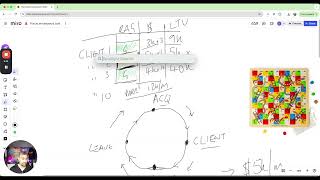
This has to do with understanding who your customer is. Like everything about brand marketing is customer centric. This is about being clear on who your prospect is and how you're going to get your proposition across. So for me, the brand starts with the product or the service. So you know, if you're selling physical products, digital products, that's one side. If you're selling services, agency services, local dentist services, everything starts with this first. Because your first point is, what is it that I'm trying to pitch across? Then you get into your avatar. And this took me the longest to realize the power of. Because the fact is when you look at brand marketing, you might think of that as, you know, how do we get our kind of proposition across? I just realized I'm not sharing my screen. Share my screen. When we think about brand marketing, some of you might think of logos and tone of voice and other things that come with brand. But essentially it starts off with what you have to offer and who you're offering it to. The power of the avatar, if you get this right, is like everything falls off the back of this. What kind of ads should I run? Should it be video or static? What, who should I target, how should I target? What kind of copy, what kind of funnel? Everything comes off the avatar. So going back a few years prior to AI, I would spend a lot of time doing manual research and finding out how to kind of develop my avatar. Then you have the performance marketing side. So B, pm, brander and performance marketing. Here then we have the offer. Now offer is not just a discount offer. If you look at the dictionary term, is when you give something like your offering, something offering, offer, offering. Nowadays it kind of offer is like discount and promotion and things like that. That's one part of an offer. But essentially an offer is matching your avatar back to your product or service. That's literally what an offer is. So if your avatar is, let's say, you know, 35 year old moms with young kids. And you know, the product is clothing for children, for whatever, you know, for example. But the clothing has some kind of special waterproofing XYZ widget, whatever it is. So your avatar is your mom and your product is your waterproof thing. Then the offer might be, hey, winter's coming and now's the time to get winter ready. But this type of product is great for winter because. And that starts to form your offer. So that's the next part. Then you think about the funnel and the funnel. There is no one size fits all. And you'll know this if you've been running ads or doing marketing for any length of time. There are so many different funnels you can run even with E commerce. Like the example I gave. You could send them to the homepage, you could send them to the product page, you could send them to a category page. Or like I like to do is create a custom landing page and tell a story, build an advertorial. There's four examples right there. If you're doing low ticket offer, you could do a short form page, you could do a quiz funnel. There's, there's like you, you could list lots and lots of funnels. Like they're all the routes into essentially making money. Whether it's lead gen or whether you're actually taking transactions straight up, ultimately everything's pushing towards a dollar value and also then into lifetime value. So here, you know, we're measuring what's our average order value here? We're measuring like this is all performance marketing. Now. Where I failed many years ago is I kind of didn't consider this at all. So me, it was like, in fact, my offers were all just discounts, promotions, things like that. And many of you would have started there as well. And it was like, let's just put them in a funnel and let's make ads work. And then waste a lot of money, lose thousands of dollars and then you kind of get back into, okay, that didn't work. But what, what should I actually be doing? So now that I've got the process across and then now that you understand the process.
We just see a black screen. Why is that?
So can you not see this drawing? Ecom Rom. Just let me know what's happened. Kings style, let me know. It says it's sharing.
I'm not sure sharing this time to YouTube.
Let me know if you can see it or not. Oh, now is good. Okay, cool.
Awesome stuff.
So yeah, this is the framework. Now we've got the framework out of the way. This has been responsible for me driving millions and millions of dollars for myself and for my clients like this process. If all you do today is take this process away and go and apply it, I guarantee you're going to make more money and profit than you are right now. You know, just getting this brand part right and this is 80% of the thinking and this is 20% of the thinking, whereas this is going to give you the results once you get this right. I spend a lot of time on this top part, product, service and avatar. And when I bring a new client in or I have a new offer for myself, I spend so much time on this, this part becomes easy because I've done it so many times. I can create an offer funnels. You know, there's software and things like that and a lot of businesses focus on here because that's all the flashy stuff, the click funnels, the go high level, the Shopify, that's super easy to set up. There's templates and everything like that. This is where the money's made, the building, the offer via the avatar and the products and service. So what I'm going to show you today is how we're using that in the AI app to simply make this faster and easier. Because where I am right now is I can do all of this myself. And I, and I can, you know, I spent. When I started my agency in 2017, the stress for me was teaching people in my team to do this as well. And this is where the BPM method came from because I needed a framework for my team and then that became a program to share with other people. Now with AI, I don't need sops like standard operating procedures to explain everything. I just say go in the AI and just follow the process. That's essentially what we've gather in what is the Ad Signals AI app. I'm going to show you the inner workings of this. So whether you're using it right now or you want to use it, or you want to build your own processes, by all means go ahead and do that as well. I'm not saying you have to use this tool, I'm saying that is it and it helps me make a lot of money. So within this kind of process. Let me share this tab. So here's what it looks like inside. Let's just make sure it's refreshed. What we're doing is building a step by step process to allow you to essentially do what we're doing right now with our process. As I've developed this App I've gone through and said I want to build avatars faster, I want to build messaging faster, I want to build my funnels faster and things like that. That's essentially the route we're taking to be able to analyze results faster and get those insights. So the way we built this is and there's a number of tools that we currently have and more on the way as well. So you can build your avatar, you can then go into meta and using that avatar it will come back with interest targeting in future. It will come up with some look alikes and also some other ideas as well. You can generate your ad copy basic stuff with AI hook and angle creator and I'll show you how we use this as well. You can create variations as well with the add variation engine. What we actually do with this is you can take once you've run your ads, you can take a winning ad and you can spin up a challenger within one click. And it's super fast as well. You can put ad copy in and try and analyze why it's working and why it's not. This is one we've just added recently and this has been such a time saver as well. We can one click install campaigns in Ads Manager. So this isn't just about AI apps and being able to do things faster with AI, which is the avatar and targeting and things like that. But part of it is just workflow. So every time I take on a new client, for example, it could take 10 to 20 minutes to set up the campaigns and set up the right objectives and stuff like that. Now we can just do it in like a minute. You can select the right camp set up. So for example, if I go into.
Here and let's just go into add.
Signals, I can for example say, right, what kind of campaign structure do I want to set up? E Commerce, Low ticket, lead gen, VSL and there'll be others we'll be adding soon. So let's say I come into E Com, I want to set up an ecom, a complete E Comm campaign in an account. I can then do that from here. This is, this, here are the, these are the campaigns I would set up if I was to set up your campaigns for E Commerce directly. This is what we teach in our trainings as well. So if you imagine in the, in the video training that we have for the BPM method course, it will explain all these things and then it will tell you what to go and install and there's a spreadsheet and things like that. It would take you about 30 minutes to go through the video and then maybe another 20 minutes to set up. So give or take, it'll take you about an hour, if you've never done this before in terms of our structure, to go through the training and then to go and set it up. But now just come here and just install and it's like literally just puts it into your ad account and you could say, right, I don't want this, or, you know, I want these kind of things. And that's it. And that's pretty much it. So, like, I can do that now, I'll delete them again later. But within seconds it's installed all of those campaign structures so that you don't have to do the thinking. And I think this is, this is a combination of using the power of AI and also the power of technology. So that is all just done as well. And I'll just quickly show you that.
In Ants Manager, so you can.
Kind of see that as well.
Let's type in BPM because that's our new campaign structure.
And there it is. So literally everything that I showed you just there, I'm going to share this tab here. So here it is inside of Ads Manager. So literally every campaign that we just set from the previous screen is now available here. And it's literally just one click done in 10 seconds and you're ready to go. And what we're trying to do here, and this is something for you to think about when it comes to AI, is is it making things faster for me, is it making things easier? That's, that's my measure of success with everything we're doing with AI. So very quickly you can see one click and it's done. Okay, great. So let's go back to our apps.
Make sure we're on the right screen.
So like, that's just one example of making things faster and easier. I can upload bulk ad sets. We've got a new module, should be landing today, tomorrow for bulk ads. And what this allows you, like these nine apps here? For me at least, it allows me to launch campaigns literally in 10 minutes. So I can come in with a brand new prospect or an idea. I can build the avatar, build the targeting, build the ad copy, build hooks and angles, launch the campaigns, launch the ad sets and launch the ads and my campaigns are ready to go. So again, AI does a lot of the heavy lifting in terms of, you know, copy and avatars, but also the tech that we've created does the heavy lifting in terms of where I want this to go is I don't want you to have to think about how to advertise. I want you to just go and advertise for me. If once this app is up and running and people are using it to an extent, you won't need training courses. This is my big play here. Ditch the training course, just go and do the thing. It's the same thing behind mathematics. There are many things you can go to learn about mathematics or you can just use a calculator and that's just so much faster and easier for people. So what's the square root of this? What's that and that? Going into creating a P and L report, for example, I was just looking at mine yesterday and there's some fancy algorithm or there's fancy formulas and things like that. I don't know how to. A lot of them work, but I know they work and I don't really care to know how it works. I just need to know that the numbers are right. It's the same thing with Facebook ads as well. Follow the process. You don't need to know the inner workings behind it unless you want to. When you want to be a professor, that's absolutely fine, but this allows you to just do the stuff. So going back to the process that I shared brand is, you know, product, service, avatar, offer and funnel. So if we go back to our app, here we go to launch tool. This is the very first start point of the entire app. You know, I've been tracking how people are using it. Some people skip this and if you skip this, by the way, you can't actually use these other things that they're reliant on choosing your avatar. And the reason we've enforced that is because the way we program these avatars is done in a way to give the AI the highest chance of success. So I'm going to just use. In fact, it would be great if you wanted to. How does the app know which campaign we should run? Where does it get the information from? So the campaign structure I shared with you is other templates that I use. So then they're. They're configured by me based on how I run these different funnels. So, you know, if you're looking at that and saying, well, you know, for the E Comm structure I have a slightly different. Whatever is, that's absolutely fine. But the structure I'm sharing with you is exactly what we use for my own e commerce store, for example, or for clients, or for my own info products and my clients, or for my own High Ticket or vsl. So essentially what I'm doing within the app is whatever we use in the agency or whatever we use in our own campaigns is what we put in the app as well. So one click, you can install it, you can modify it however you want, like it's your ad account, but you're getting the framework as we use it. So if you look at, let's say you want to do high ticket offers, go and install our framework or campaign structure, go and follow the process. And by the way, if you're unsure, we have many different modules in this system. The most used module is the BPM Method AI Assistant. This is packed with knowledge from the BPM Method book. So this book, which I wrote two, three years ago and kind of launched earlier this year, this contains all the frameworks, all the knowledge and things like that. Again, you could go and buy the book, you could read it. I'd love for you to go and buy it and read it. It'd be amazing. But again, I'm encouraging people to skip the learning phase and just do so. For example, let's say you want to use the BPM Method, which is my advertising framework, you could go and go and take the training. Or you come into the AI Assistant, which has been preloaded in the background with all of the knowledge on the BPM method, plus some case studies, additional frameworks and things that we use in the agency. Because like I said, I use this myself and I've been using it for months now. So I lean heavily into this. I've got clients in here already. If I ask a question of the BPM Method, AI Assistant is based on almost speaking to me because it's basically my, my knowledge in the background, it connects to open AI and it has the knowledge of open AI, but in the foreground, it has all of the relevant knowledge on how I run ads. So if you came in and said, you know this campaign structure, I have this, how could I adapt it based on what I need? It can do that for you. And one of the coolest things about this is what we've done is, and this you cannot do in ChatGPT, when you create assets, you can bring that into your chat so you can actually have a conversation about it as well. Now, let's say, for example, I have an avatar called Small Business Owners. I could say based on this avatar.
Give me three front end offer recommendations.
What that will end up doing is that will take that avatar that I've already created, I'll show you how to create that avatar and it brings it into the context of the conversation. I could bring in ad copy, I can bring in targeting, I could bring in ad results and I can have that conversation with the AI, which if you were doing it with chat GPT, you'd have to get your avatar, you'd have to upload it and things like that. This is just literally one click and it's there. So you know, based on the avatar and it knows it's a small business owners structured marketing training program, membership platform, trial based access. So it knows it's for ad signals. So it's trying to figure out front end offers specifically for ad signals. I could say, you know, let's put 3, 4, 5, which is the best.
Headline and let's put this.
Ad copy for this avatar. I'm just giving you quick examples. This is not literally my recommendation how to run this, but it's how you combine things together. One of the challenges with AI is having context. Context is this is my business, this is who I'm targeting and things like that. When you're using ChatGPT, it's very difficult to keep that context in place. Memory gets lost and things like that. Whereas this way you can pull out exactly what you need to have that direct conversation with AI. So it has that knowledge as well. Econ Rom says I've got the book. Thank you very much sir, I appreciate that. And hopefully if you're using the AI, you'll start to see these things coming through in terms of how the AI is using what's inside that knowledge as well. So this is just a sidetracking to the BPM method AI assistant. But the fact here is we're building a system where you don't need an agency if you are running your own ads or if you are an agency or a freelancer, you should be able to take on a lot more clients, which is exactly what we're ending up doing as well, and be able to undercut your competitors, which is what we're testing as well. So we can charge less, take on more clients, get work done faster and actually have a good upside, which is percent of revenue or percent of ad spend, whichever one you want to move on to. And it allows you to get things done faster and easier than ever before as well. So now going back to campaign build, if you want me to run the avatar process for your brand, just drop me who your target audience is and what your product or service is and I'll push that into the app and.
I'll demonstrate that for you.
Now as well. In the meantime, let me just run an example. So target audience. I did say mums with kids 5 to 10 years old. I'll just put it lightly, it doesn't have to be too complex. Offer is waterproof and.
And easy to clean. Clothing designed for the outdoors.
I'm just making this up just to give you an example. You can select your language and stuff like that. So what this will do the avatar process. So while it's doing that, I'm going to explain to you how my avatar process works and why it works as well. So I call it the 5W avatar. Some of you may have heard of this before, some of you may not. And this is a free marketing lesson on understanding your audience. So you first start off with who and then the what. So I've just given you the who and what in the example. So mums and you know, whatever the mom's thing was and you know, the clothing, for example, this is just like the higher level. Obviously I put more details in. Then we look at the Y. Now for the Y. There are two parts of this. I'm going to call it Y E and Y.
B.
Now here is where a lot of the magic is. These are the emotional wires. These are the benefits or the functional wise. I'll call it F. An emotional Y is, for example, I want my kid to be. What's the word I'm looking for? Not safe, but like protected. I'll put protected in there as a word. So when it rains, I don't want my kid to get wet because if they get wet, they're going to get sick. If they get sick, they don't have to take time off work. They're all emotional things that would trigger the mum to take action. So I would go through and list three, four, five of these and I'd go and do some research, go to Amazon and all these kind of things and figure out what the kind of emotional connections here. Then these are the functional benefits. So it's waterproof, it's, you know, quality. List out all the benefits of your product on this side because that's going to help you construct your, your ads and your landing page and things like that. Then we have why not? So these are the five W's. So 1, 2, 3, 4 and 5. Why not are your objections. These are the reasons why someone would not transact with you. For Ecom, a lot of it is trust. I don't trust you, I don't know who you are. And some of it is, you know, quality. For example, I don't know if your products are any good. There's going to be lots of objections. This process alone takes me about maybe anywhere between 15 and 30 minutes of deep research and things like that. This structure was actually developed off the back of work that Ogle V did. So Ogle V, go search him up. If you don't know him, you should know him. A lot of my marketing techniques and stuff are based off of what Ogilvie Ouv taught and this is where the avatar came from, based on how he kind of built his own avatars and I've adapted it for meta ads. So that's the 5W avatar. This takes me a little bit of time to go through because it's manual research and things like that. Again through the app that we've created that's all automated. So here you can see whilst I was doing that, it takes about probably between 40 seconds and a minute for it to develop this. Now it goes above and beyond what I just showed you and there's a reason for. So I'll just show you this first. So who demographics, what pain point? Why emotional motivation? Why logical motivation? Why not objections? So that's the avatar there. Bread and butter for an AI system which in the background we've programmed with exactly what I've just showed you there. But it goes a level deeper. So Maslow level. At the safety level of Maslow's hierarchy, they prioritize reliable clothing that protects their children from elements while ensuring comfort. This is exactly what I just showed you in the the 5W diagram that I gave that one of the emotional triggers is safety and protection of the children. AI picked that up easy awareness level. They're at the solution aware stage. What does that mean? I use Eugene Schwartz's five levels of awareness that determines where in the market my product is going to connect with them and then how I bring my solution to them. You can go and research that. His framework is really good. I've used it for many years. I built that into the AI and I'll explain why all these things are here, who they are mums, engaged in the children's activities. They value practicality, balance between personal and family, friends, core motivators, convenience, fears, money, lies. They may believe that higher price clothing is not necessary or fear spending, etc. Etc. So I'm not going to go through every single thing here. But what I will tell you is this has been set up specifically to program the AI to give you ad targeting and AI copy that is going to be of higher quality than you could create just through ChatGPT, because each of these elements here, when we have a client that we bring in, we start off with a 5W avatar. Then over time we start to add these as we start to do some testing and we understand and things like that. That would take us at least hundreds of dollars of testing and running ads and 2, 3 days of time to start to collect data and understand these things. But we program that into the AI based on all the work we've done, and the AI can just produce this in under a minute. So this massively saves us time and money. So, okay, great, the avatar's done. So I'm going to save this avatar.
I didn't create a project for this. Let me quickly.
I don't want to lose this avatar.
So let me duplicate this tab and.
Let me go into projects.
Let me create a new project.
I'm going to call this Mum clothing.
Brand, because I literally just make this up. Moms with kids 5 to 10 years.
Old create the project.
Oh, okay. I think I've run out of projects.
Okay, that's fine.
I've hit my cap.
Is that cap? Okay, so I'm going to save that for add signals for the time being.
Mums plus kids 5 to 10.
Just call it that for now. That will do. So now that we've created an avatar and that takes 30 to 60 seconds, depending on what you're doing, I can then go in and create my ad copy. So I'm going to go in. In fact, let's. Let's do the targeting first because that's the process and that's the ordering we've set up. So here, if I go into ad signals, moms with kids I want to target, I'm going to go for us.
It'S like most common market.
So what this actually does is it takes your avatar, so everything that we've just built in and it will go off to Meta and it will find interest, valid interests that are relevant for this audience. Now, the very first audience that comes back is always broad, because I recommend broad, if not just to test. Most cases it will work. And there's ways to make that work, and that can come later. But audience one is based on going broad, and then they will come back with nine alternatives that it thinks we could target based on interest. So when it comes back, you'll start to see how it pairs things together as well. What that is doing is we go off to Meta's API, we get a list of interests from the AI. The AI is looking at Your avatar and it's looking at keywords that it thinks that this avatar could be related to. It then goes off to Meta's API and says do these keywords exist as interests? And if they do, it then packages all that up as potential audiences for you to target within Meta based on what's valid and what's available. So here we've got broad audience tests. Age 35, 45. Female budget suggestion. There's not much here to talk about. So that's just basically a broad outdoor recreation and parenting. Sounds good. Again, same female demographic. Interest is outdoor recreation and interest is parenting.
Sounds pretty good.
Mums and children's clothing. I don't know what that is. Maybe it's a clothing brand. Children's clothing, active lifestyle mums, outdoor recreation and sports games, gardening and family activities. That's. That's an interesting one. I wouldn't have thought about that. Eco friendly living mums, research driven shoppers, moms in active communities, frequent travelers with kids, targeting moms who travel, maybe looking for versatile clothing. Pretty good family focused shoppers. So essentially what it's done is to give you ideas. So you have an avatar and the avatar says, look, I could target moms like this. And I showed you the whole breakdown. This is now put it into Meta's language and say what do those avatars look like? And then from here I could save and say, okay, I want to save broad, I want to save outdoor and save mom's clothing. That's all great and it kind of gives you a breakdown of strategy and setup. But now what I can do is upload those straight to Meta as well. So I can go into my ad signals account. I could.
Where's my.
Let's just say so you know, based on campaign structure, I'm going to put into my newly created GT1 Phase 1 testing. Just realize there's no. Yeah, so that, that is actually set up conversion event. Let's just put purchase for the sake of it. Budget things like that, attribution window. And then here I can say which of those audiences do I want to go and install? I could select three of those here. Create ad set and that then goes and pushes it straight into meta. So again I'm demonstrating how to make this process faster and easier for you. I don't know about you, but I. The, the less time I can spend in Ads Manager, the happier my day is. Ads Manager is very. What's the word? Messy at the moment. So if I go back into here, I'll just quickly show you all those ad Sets look like it's literally just created these. So mom's clothing, outdoor recreation and things like that. So I can go to edit. It's got the purchase pixel. Everything is set up. Now, those three ad sets to create, you know you have to come in, you have to duplicate, make sure the names are right, do all your targeting set, your interests and things like that. Like the app just does it. I just realized sharing the right tab. Let's just go back. So I just installed it into the phase one audience testing. There's three audiences I can go in, check, make sure they're all set up properly. It's got all the right wording in place. It's got the right conversion event. Like I just showed you that. We just install the targeting. Now. Setting that up for one ad set would have taken maybe a minute or two. Then you duplicate two, three minutes. I can set up an entire campaign this way and it's done in literally minutes. So just again showing you the speed and the convenience as well. So not only are we building audiences way faster than I would have been able to do myself, we're able to get that installed in seconds as well. So that's kind of building the avatar, building the targeting. The third one is building the ads. So now obviously need ads for that as well. So we go back into our avatar. Moms and kids, what's our offer? Try our. Let's. Let's call it our.
It's not working.
Brand new winter comfort range of outdoor.
That want to stay warm, dry and look stylish. I'm just making this up and I'm.
Going to save that as an offer so I can reuse that as if I want.
I'll delete that later.
Anyway, so that's my offer again. It doesn't have to be a discount. You can if you want. You could just say 25% off.
Until end of October, for example.
I'll go for one variation. So you could just run that. And I'll just run that just to show you what the base looks like and then just show you the advanced options there as well. With the advanced options, you've got your different levels of your funnel that you can write copy for. You've got your different copywriting styles. One of my favorite is Billboard. Ben, we'll come up with better ideas soon and I'll just do that as a cold audience ad. So like this one here. Remember those days spent scrubbing muddy jeans after every outdoor adventure? What if you could let your kids chase puddles, climb trees, or roll in the grass without worrying about ruined clothes or endless laundry. Meet our brand new winter comfort range.
Blah, blah blah.
Finally I can relax. Enjoy. 20. This for me is a pretty good ad. I don't know if you feel the same. Let your kids play freely. No more laundry headaches. Might be a bit too long for the headline, but that's kind of. We set 100 character limits probably to think about keeping that a bit tighter, but essentially for me just demoing this to you right now, the avatar was on point, the targeting was on point, and the ads on point as well. I can save that again to that if I want and then I could try different styles. So let's like one of the.
Where'S the witty feline? I need to give it a better name.
This one, for example, uses a lot more humor and you could be quite creative as well. This kind of goes back to AI and says how much should it veer away from specifics and kind of be a bit creative? I'll run that again as well. It takes five to ten seconds for.
It to come up.
Writing copy is easy for AI, but again, it comes down to what you're actually giving it. I'm giving it a clear avatar. I'm being clear on what my offer is. Did you know your washing machine is secretly plotting against you? Okay, maybe not, but it sure feels like it after yet another soggy playground adventure. Kids live for puddles, but you, you live for dry clothes, sanity, and a moment to sit down without the faint scent of UDA mud drifting by. Like this is humorous. This is pretty good ad as well. So again, I could save that and.
Say.
That'S a pretty good ad as you've seen. And I'm demoing this and it's a bit slower to show you, but creating the structure, creating the targeting, creating the avatar, creating the ads. Literally just seconds between each. Then I can go in and say, right, let's go and install that. Now let's go back to our phase one testing campaign. We pull out our ad set and say, right, we want to put this.
Into where's our bpm?
So let's just say we're going to go into our brand new ad set. For example, we want to put this into outdoor recreation parenting ad set. Here's the ad, here's the example.
Urlwwmyecom store.com I'm going to say.
Shop. Now I'm going to select a creative. Obviously it's not going to be quite so relevant. Put my face on it. I'm gonna Run it from whatever page and that's it. Creating ad sets and. And we have bulk ad upload releasing this week and essentially you can get all of your ads published again with very little effort. Can view that in Ads Manager this.
Tab and let's do a quick preview.
To see what that looks like. I put in a low quality image that's not quite right. Did you know your washing machine is secretly plotting against you? That's it. It's done, it's. It's published and you're ready to go.
Let's go back to our when we're.
Close to our hour and I've only shown you a few of these modules, there are a lot more as well and I'm going to be conscious of time because I want to get back to Q and A as well. So by the way, if you've got questions, just keep posting them. I'm keeping an eye on the chat. There is anything else, just make sure you get your questions out while we're on the call. Got about 10 minutes left. So I want to make sure that I get your questions over everything as well. But what I'm showing you here is the speed of getting things done and the convenience of it as well. So not only is this partly saving you time and money in the setup, it's also working on the optimization as well. So if you go to Campaign Insights, we have a couple of tools here. Which for example, do we have the.
Latest one here, I wonder. Let me just double check if we have. Let's go into the ad accounts. Let's have a look at that one.
So with this, for example, you can get your analysis of performance and things like that. You can do creative analysis. We have audience insights on its way as well. And one of the other developments, I'm just going to bring up our development.
Site so you can actually see this.
As a special preview before others can.
Just bear with me, let's get this logged in.
So one of the cool things that we're doing is when you're developing your testing, you're running your analysis, you're trying to figure out like what do I do next? We're also covering that as well. So this isn't just about campaign builds, it's also about we are bringing across insights on what to do next as well. So this site that I'm sharing with you right now is our development site and this is going to be published out today or tomorrow. So one of the updates we've made on Performance Overview is not only breaking down your Results to give you kind of highlights and things like that, but also starting to go down the route of breakdown of funnel analysis. So warm, hot existing customers, for example, also going down to test analysis. So if you recall here, where are we? Share this tab. I have a very structured way of doing testing. So this phase one testing is I want to test some audiences and see what ads work. Then I have creative testing. So I have got ad sets that work and now I want to test my creatives and then we're going into scaling and testing for growth as well and we're marrying that in our testing process. So if I share this development website.
Let'S say we go down to this one here.
What this does is it starts to analyze your test results. It will give you obviously the data and things like that, but it will also allow you to speak to the AI and get direct feedback on your results. For example, statistical significance. One of the common questions I get asked is how do I know when my ads have enough spend? Well, we base it on impressions and the AI knows obviously if there's enough impressions then you could give it project context. For this one, I could say this is a project and what this does is it takes the avatar and hooks and angles and anything like that. And then when you generate your AI analysis, it will use that alongside the results for that particular test and give you feedback. This is exactly how I would do it. If you came in and let's say, for example, you booked a call and all you wanted to know was what did my test results look like and can you give me feedback? I do the same. I'd come in, look at the data and say, right, who's your avatar? What ad copy have you used? What additional hooks and angles are there? You provide me that and then I have context. This is exactly what I programmed into the AI. So look at the results. You do generate AI analysis and it will tell you based on the click through rate, based on engagement rate, based on video hook rate, if you're running videos based on conversion rate and the funnel, how your ad is performing and what to do next. So it's a step by step process where we're taking the thinking out of, you know, is this thing working? And essentially making myself redundant to the point where a lot of people book a call with me and say, hey, can you help with xyz? Well, actually you can help yourself with this and you can go in and look at your own test analysis and use the same AI, which is the same BPM method AI, but contextually looking at your results, you can come in, load up and say, right, I'm running this ad set here. I've got three results I can see. You know, this is a high ticket funnel. This is the ad that's working. It's got $92. What do I do next with this? Is it good? What do I kind of test out? It also says low performer versus other ads. So it has all the context as well. And again, what we're trying to do is make the process of launching the ads easy, optimizing them easy and being in a position to scale. So for you, as you're working through this, you might look at this and say, well, I can do it myself with ChatGPT and that's fine. And by the way, you can like when I started off, develop the tool, kind of figuring out what I could use these things I was using ChatGPT for. So for example, the 5W avatar, I built a custom GPT which I would go into and then I would create my avatars, the ad copy generator. I built another custom GPT. All these things became custom GPCs. Even for example, the campaign insights and being able to build this test analysis, I built that as a ChatGPT custom GPT. I put a CSV file in and said analyze it and gave it instructions. But then I realized I can actually build an app and put everything in there and just make it all seamless. That's exactly. That's kind of what you see here, which is a simple process where it just does it all for you as well. Cool. So let me take your questions. Got five minutes? Okay. As I understand it, the app helps us create and deploy ads on meta. Can it also help us better scale winning ads once we've identified some? Absolutely. So there's two ways that you do that. So first of all, with analyze performance we've got, so we've got these tools here. Performance overview. Creative analysis. Creative analysis goes down to the ad level and it tells you which are your top performing ads, why they're top performing and what to do to create more performance like that as well. So you select your ad account campaign and it will create an in depth report. This one takes about two or three minutes to produce. And what the AI does is it looks at your targeting, it looks at all your ad results, it reads the copy in your ads, it looks at all the performance metrics and tells you which ads to continue scaling again. So that's at the ad level. Soon we've got the audience one dropping as well. So this is again in development right now that will look at it at an ad set level. So it'll say, you know, these ad sets are worth scaling how to go through the scaling process. So you know, should you consider a 10% or a 30% budget increase, should you consider manual bid, it will walk you through all those things as well. And like I said, the BPM method AI, you can come come and have conversations with it here as well. But the cool thing is once you've run a report, so if I take.
This one here, let's find a.
So once you run a report, for example this creative insights, you can now start having a conversation with it. So you either go through and you know, like I said, you can go through and have an in situation chat and say give me detailed feedback on this thing and that thing or you can take the entire report so the insights report to your chat and just have a conversation and say based on this, what do you recommend? I had someone who went through this process and he both scaled his clients lead gen and also reduced cost using this exact same process. So we're trying to build that into as much of a streamlined process as we can using the AI in the right way and at the right time. So you kind of get access to using the knowledge when you can as well. I hope that answers your question. Any other questions that can cover off before we close the live? Hope that was interesting. I hope that's giving you some ideas on how you can take your own targeting forward as well. Like I said, I'm not here to sell, I'm here to share. If you want to use the app, absolutely do so. Add signals.bpmmethod.com But I would encourage you to think about how you're using.
I'm going to write this down.
In fact, I can paste the URL in rather than typing it. This should get you thinking about how you use AI because I think there's a big confusion into this fear. First of all that AI is taking jobs maybe in some cases, but with things like this, all of what you've seen here still needs human input. Could AI take it and do everything? Like for example, one concept we have is to give it a URL and with one click it will create the avatar, the targeting, the ad copy, install it and run it. It could absolutely do that. But the problem is AI is not 100% foolproof right now. Because of that we still need a human in between doing stuff. But as technology is evolving then those things become more of a reality as well. So hopefully that was useful for you. Doesn't look like there's any more questions and that's fine. Cool. Well, thanks for joining me. I appreciate the questions, your time. Hopefully that's giving you some food for thought. Ecom Rom, I don't know if you're using the app already. If you're not, then give it a go. If you're using the BPM method process from the book, I would love to know obviously how that's helping you with your business. And yeah, I mean, if the stream's useful, I don't mind doing this on a regular basis. And every week, every two weeks, we've got new features and new developments coming in. You know, Creative Hub, APM Builder, Gateway offers, they're all in progress as well. And really for me, I'm. I am the use case for this. I'm building it for myself as I'm working through my own Meta ads campaigns. I'm like, I wish I could do this. And then all of a sudden I work with the AI dev and it's installed and it's available in the app. It's literally as fast as that. For example, we have a new development coming in, hopefully soon, which can connect with audience insights inside the API and give you depth of stuff that you can't actually see. In Ads Manager, there's a few little tricks and things that we're taking discovering that Facebook are hiding behind their API, which is going to be super cool when we start to surface that. There's work on conversions and events and attribution as well, which are built into Meta. And I don't think a lot of people realize how much data you can get from Meta on this as well. Yes, third party attribution tools are great and useful and needed, but there are things inside Meta as well which we're.
Going to be revealing through the app.
As well, which will give you better insights into how your ads are. So hopefully that was useful. Thanks for joining me and we shall be back again soon as well.
I'm sure.
More from Depesh
[Q&A] $4.3Million from $270k Ad Spend using The Ascension Path Model (APM) [AOA Podcast Part 2]
How I Made $4.3Million from $270k Ad Spend using The Ascension Path Model (APM) [AOA Podcast Part 1]
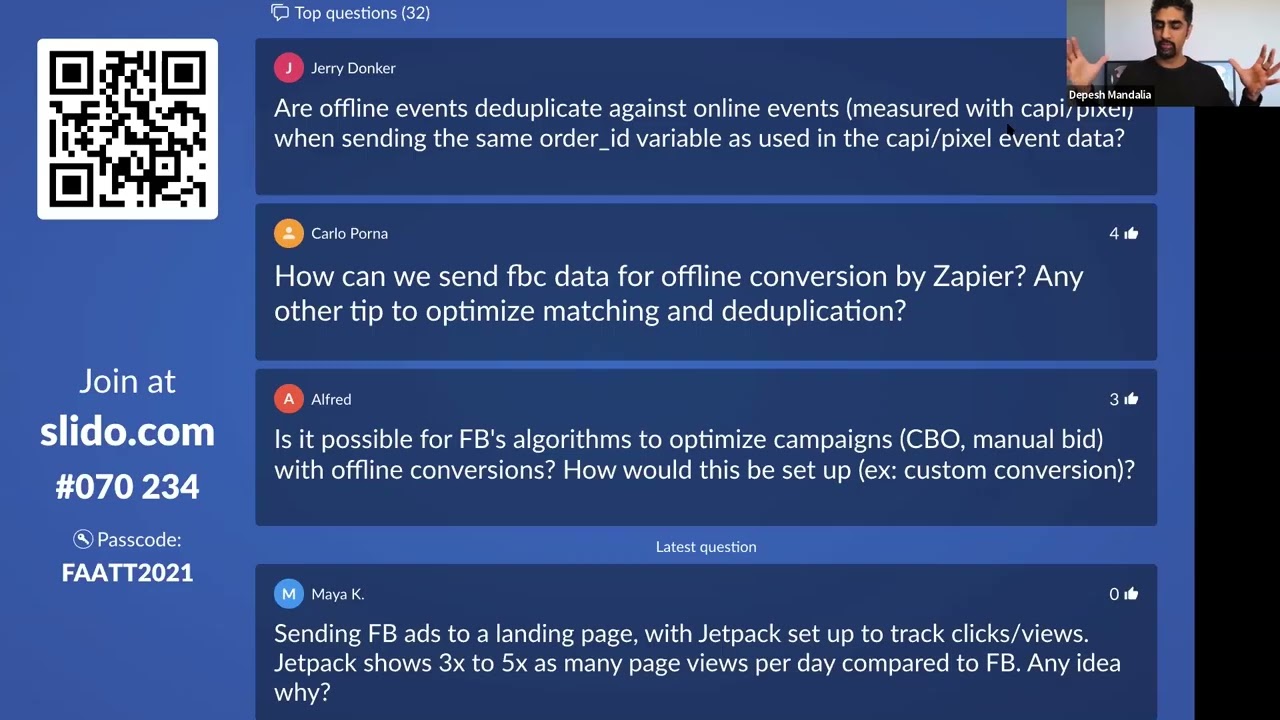
AI BUILDS FACEBOOK AD CAMPAIGNS 10x FASTER (Real Account Walkthrough) - The BPM Method
I Built a $1,000 Ad Landing Page in 10 Minutes Using AI (PRINT Money Using This)
60 Meta Ads Created & LAUNCHED in under 15 Minutes (Without Touching Ads Manager!)