Why Scaling Your Agency Is Killing It (And How to Fix It)

In this presentation, the speaker explains how traditional agency scaling—adding more clients, raising prices, and hiring aggressively—often amplifies existing problems, leading to unstable revenue, client churn, and founder burnout. He illustrates the vicious cycle of acquisition, delivery, and replacement, showing how unpredictable monthly recurring revenue (MRR) and high client concentration create anxiety. To break the cycle, he introduces practical tools: a traffic‑light client grading system, tracking of MRR and lifetime value (LTV), and a focus on automation to reduce founder involvement. He then presents the CALM framework—Clients, Automation, Lifetime value, Margin—as a holistic index for agency health, recommending a 0‑20 scoring system (0‑5 for each pillar) to assess stability, predictability, free cash flow, and personal time. The talk concludes with a call to action for viewers to rate their businesses using the CALM Index and seek feedback, emphasizing that a calm, automated agency enables the founder to pursue personal goals and investments.
Chapters
Most agency owners think that the only way to scale is through more clients, getting them to pay you more and getting them to stay longer and hire as many people as you can. And I followed the same path and it nearly broke me. But what nobody will tell you until they've been through that process is scaling a broken system will just break your entire business. It amplifies everything that's wrong. And today I'm going to show you the exact framework I use to fix this problem. Let's go ahead. Now for this, I'm going to demonstrate to you what it looks like what it's like when an agency is burning itself from the inside and how to transform that into what I call calm. Calm is when you are in control of things and anxiety and stress are reduced. Now, if you've started your business or if you're looking to start your business, there's a high chance that you're either going to be going through it or you're going through it right now. And the problem that happens is it's easy to get those clients, it's easy to actually get some money rolling in. Get a $1K client, a $500 client, a $2K, $3K client. But therein lays the problem— people overlook what it takes to keep the clients. You end up in this very dangerous trap where you're cycling through clients because you're struggling to bring the quality results. So if we draw this as a circle and you're just starting off here and let's say you're working on acquisition at the top, you then get the client here. So, you know, that client is paying you, they've signed the contracts, everything looks good, right? The problem is then you need to get results. And this is where it doesn't matter how good you are, right? Some people come into this and say, I'm just going to get clients and then I'm going to learn on the job and I'm going to get the results. Other people are really good at what they do and they want to get the results. It doesn't matter which side you are. I personally was on the side of I have experience, I can get results. I'm going to get 1 client, 2 clients, 3, 5, 6, 7, 8 clients and things are going to be great. But then what ends up happening is you don't get those results and the client ends up leaving and then you're in this vicious circle, which I've been through and it's not fun and my circle is not quite a circle. then you end up having to acquire and replace. This will absolutely kill your business off if this is all you're doing. Let's just try and finish that circle line at the bottom. If all you are doing is bringing in new clients and you cannot get them results and you're struggling to retain those clients, you're going to end up in a situation where you're burning through your brand equity. If you have a team, it's going to stress them out. And you as a business owner are going to end up in a situation where you don't really know if your next paycheck is coming in. So let's say, for example, you're churning out now $5,000 a month or whatever number it is, $50,000. It doesn't make a difference. But your MRR, your monthly recurring revenue, is not predictable. Then you do not have a stable business. Let me just repeat that. If you don't have monthly recurring revenue, you do not have a stable business. And if you do not have a stable business, that's where you bring in anxiety and stress and things like that. And then what ends up happening is you will burn yourself out. You will dislike your clients, you'll dislike this game. You'll say running an agency or freelancing just isn't my thing, and clients are horrible and all those kind of things. And you'll blame Meta, you'll blame the weather or whatever else you'll come up with. So we have to look at this and say, how do we fix this? Now, one of the things that I often talk about is the growth stage for a business is like playing snakes and ladders. So when you're going through the process of understanding how to grow your business, you're going to make a lot of mistakes. So you go through the process and if you've never played this game before, essentially the way it works is you roll some dice, 1 or 2 dice, and then you move your pieces across the, the board. And the goal is to get from 1 to 100. If you hit a square that has a ladder, you can jump up and you go to 21 and you might go on and you go on, you hit 47. 47 has a snake, so you have to go all the way down back to 18. This is how most business growth exists. So here, for example, you start your business, you got lucky, you got one client, you're at square 21 and you're working your way through and you got another client, you shot up to 69 and things are going so well and you know, you shot to 94, but guess what? One of those clients is really unhappy and that's a chunk of your revenue gone. You're back to square 53. Now, what does square 100 look like? That's a business that is stable and predictable where you, for example, maybe you're at $25K, $30K a month, but predictability is based on looking at your client base and understanding what is the chance of someone leaving. So for example, one of the easiest ways to do this is to map your clients out. And so you might say, Here's— let's get my drawing tool back. So you might say, here's my client list. So client 1, client 2, client 3. One of the easiest ways is to grade them. So you can have a red, amber, green score. Are they red, amber, green in terms of performance? So you say, hey, this client is really good. This one's kind of struggling. And this one's good. So you might have a performance-based one. Another one could be based on how you enjoy working with them. But at the top level, what you're doing is grading your clients and creating some kind of predictability where you're actually looking at whether you need to be concerned or not. So if you imagine you've got 10 clients and you've scored them all, you want as many of these to be green as possible because what that means is you have a business that is performing and performing for you as well. So if I go to highlight that instead of color in. So you end up with a, a visual look where you can actually look at your performance and actually see what's working. So you look across this and say, here's my greens, here's my ambers, et cetera, et cetera. You now have a traffic light system to look at performance across your business and instantly recognize where a problem exists. Now, let's say for example, we are looking at clients and we say, you know, what's the monthly fee? This green client is paying $3K a month, this one's paying $5K a month, this one's paying— you want everyone to pay the same, but there are reasons why different people are paying different amounts. Then you know where to put your attention. And I think this is where a lot of businesses struggle, is just finding out where to focus your attention. So if we go back to our board and we say we went all the way up to square 94, why did we slip? What went wrong? Chances are we dropped the ball. Because this client here was slowly suffering. Maybe the client wasn't telling you that they were upset with your performance, or maybe even the way you're treating them. It's not just about the numbers. Sometimes business owners are people as well. You need to check in and make sure they're okay as well. Now, if, for example, I know that this is a green client, this is a green client, I've been checking in, performance is good, etc., but I know I have an amber concern. Maybe it's the performance, maybe there's just some negative feedback and things like that. Guess where I'm going to pay the attention. I want to make sure that I'm retaining my clients and I'm also tracking, as you need to be, what is my lifetime value. So we track monthly recurring revenue and that would be down here. So we say monthly recurring. So for example, it's $12K a month. That's your recurring revenue. But I can also track and I want to track my lifetime value because I want to know what is my lifetime value stack up like for each of the clients, like who's my priority? Who do I need to look at? And there are two sides of this. So let's say, for example, this client has been with us for 3 months, lifetime value of $9K. Maybe this client's only been with us for 1 month and it's a $5K lifetime value. This client's been with us for 10 months. It's a $40K lifetime value. So when you look at it like this, not only are you looking at the greens and the ambers, But here I would be concerned, like this client has only been with us for a month and things are not look— looking good. They might end up leaving. I don't want to lose that. That means 5 over 12. I'll do the quick calculation there. That means 40% of my revenue. I think roughly that works out, could be lost. That's a problem. And you don't want to be in a situation where you're happily working on this number that my business brings in $12K a month and my take home is $5K a month and I've got this profit and you got all these plans and things like that, then all of a sudden you lose that $5K client and it has a disastrous impact. You can, you can amplify those numbers up and you could be making $120K a month and you lose a $50K a month client. I've had it happen where we've lost a client that was paying $35K, $40K early on, and it was probably about 60 or 65% of our revenue. That hit us hard. We were not prepared for that. We were not tracking things properly. If only I had a proper dashboard, I would have been able to track that. So in this case, I look at this and say, this client could be in trouble. I don't want to lose this $5K client because, yeah, it's great. This client's been there for 10 months and paid me $40K overall. This client's been here for 3 months. They're happy. That's great. Doesn't mean that I dropped the ball on these guys, but it does mean that I have to focus my time and attention here a lot more because that's where I know the problem is. So when you're working through the process of how do I build stability for my business, think carefully about what that acquisition process looks like. It's a whole lifetime. Now, ultimately, many, if not all, of your clients will leave at some point. So if, for example, we say there's a 10-month client here, the life cycle is very specific per client. So this client Maybe they spoke to us for 2 weeks and they became a client. We got them results and they've been here for 10 months, which is amazing. And now they want to leave and then we need to replace that. What you end up looking at is what is the lifecycle and how am I retaining and what does my lifetime value look like on a per client basis to build that predictable lead flow and to build the retention mechanics to allow you to actually grow your business. Let's say, for example, you fast forward and now you're making $25K or $30K a month. And you need to hire, one of the biggest risks is hiring and not having stable income. So let's say you're making $30K a month and you know, there's a client that's taking 40% of your income. Maybe there's, I don't know, $12K, $13K a month. If they leave and you're hiring or you've just hired, guess what happens? Huge gap in your revenue. And that's going to hit you. At the end of the day, you have to pay your team and that's good morals and good business values. You need to make sure your team are paid. So if you are short, your team, your suppliers, your software and everything like that has to be paid and you're going to take the hit. I can tell you that as a fact because that happened to me a lot in the first 6 months of my business when in 2017 we started to bring in those clients. I was in this situation where it was acquisition seemed so easy. We can close these clients and building up this list of clients and things look good, except we were not able to get results. For as many as we needed to, which meant we had too many people joining and leaving within about 2 or 3 months. And therefore we were just going round and round in this acquisition circle and it was driving me insane. So I decided to fix that. And how I fixed that is creating better visibility on performance, building predictability on my clients, and working on the internal operation of my business. That's the most important part of this entire process of getting yourself out of your business so that you're able to start growing it from the outside. And it's something I call the CALM framework. So CALM essentially is something I've developed over the last kind of 6 or so, maybe even 8 years now as the process goes back, is thinking about what does it take to get your business into a position where it is predictable, it's low, lower stress, lower anxiety, and more than anything, it's calm. So it starts off here with clients. Now, clients, it's not just a case of we need clients. There are multiple parts of this. Number one, when I look at prospects, I'm looking at are they a good fit for us? Number two, I'm looking at are they able to pay for our services? Because when I started off, I took everyone and I adapted the pricing based on the call. And this is going back to 2017. So if we had a client and they're like, here's our business revenue, we're making, I don't know, $5K a month, then I might come in and say, all right, we're going to charge $500 a month. Another one might come in and say, hey, we're making $50K a month. And I might say, we're going to charge you $2,000 a month. So that wasn't good because then what ends up happening is you bring in the wrong clients. So first of all, you want to bring in the right clients that can pay you well, that will stay a while. And a while could mean whatever it is for you. For me, If I can get a client to stay for at least 12 months, that's a good result. The next part is automation. Now, this isn't just AI, this is automation done without you. So going way back to 2018, as we start to improve our processes, automation for me meant I wasn't doing everything. Fast forward to now, then obviously AI can help out, and that's something which we also implement as well. But automation gets you away from the day to day. Then the third part is lifetime value. This is just— this is the one of the biggest benchmarks of your current and future success. If I look at this business here, even though it's 3 clients, I'd say you're in a good growth position. Client that stayed for 10 months, which means to me you've proven that you can get results. You've got another client here that stayed for 3 months. That's good. And another new client. So they're all benchmarks and gauges there as well. And then margin. Now, this one might surprise you, but I can tell you as a fact, having run my agency for many years, not right now, the thing that I value the most above everything is my time and also the free cash flow. So when I'm looking at the businesses I'm helping to grow, I'm grading them on their CALM score. So what I generally do is get them to score back out of 5. How much do you rate yourself for? Are you working with the right clients? Are they paying you well and are they staying? Rate yourself out of 5 for your automations, your processes. How much do you have to get involved versus how much you can delegate? Then looking at lifetime value, how long do clients stay? Are you actually generating good case studies and testimonials and things like that? And then finally, How do you rate yourself in terms of free time and free cash flow? So everything trickles down here because if you bring in the right clients, your business is mostly operate— mostly automated or fully automated, depending on how much you want to get involved. And you're generating predictable long-term income that results in more free time and more margin for you so that you're able to do the things that you actually want to do. Because I know for a fact you didn't start your freelance business or an agency in order to spend the rest of your life serving clients. I didn't. I wanted to use money to do the things that I wanted to do in my personal life, invest in other business opportunities, invest in real estate, in crypto, all those kind of cool things that you want to be involved with. But they are enabled by having a business that can work without you. And that's really what the K.A.R.M. process is entirely about. If you found this video useful, a like, a comment, and a subscribe subscribe is always useful. But what I want you to do actually is rate your freelance or agency business out of 20 in terms of the CALM Index. So out of 5 for clients, out of 5 for automation, out of 5 for LTV, out of 5 for margin. And I'd love to give you direct feedback in the comments. So go ahead, give me a score in the comment, let me know where you're at right now, and I'll give you direct feedback. And that also helps me to understand how I can continue producing good content for you and help you to create your own CALM agency this year as well.
More from Depesh

[Q&A] $4.3Million from $270k Ad Spend using The Ascension Path Model (APM) [AOA Podcast Part 2]
How I Made $4.3Million from $270k Ad Spend using The Ascension Path Model (APM) [AOA Podcast Part 1]
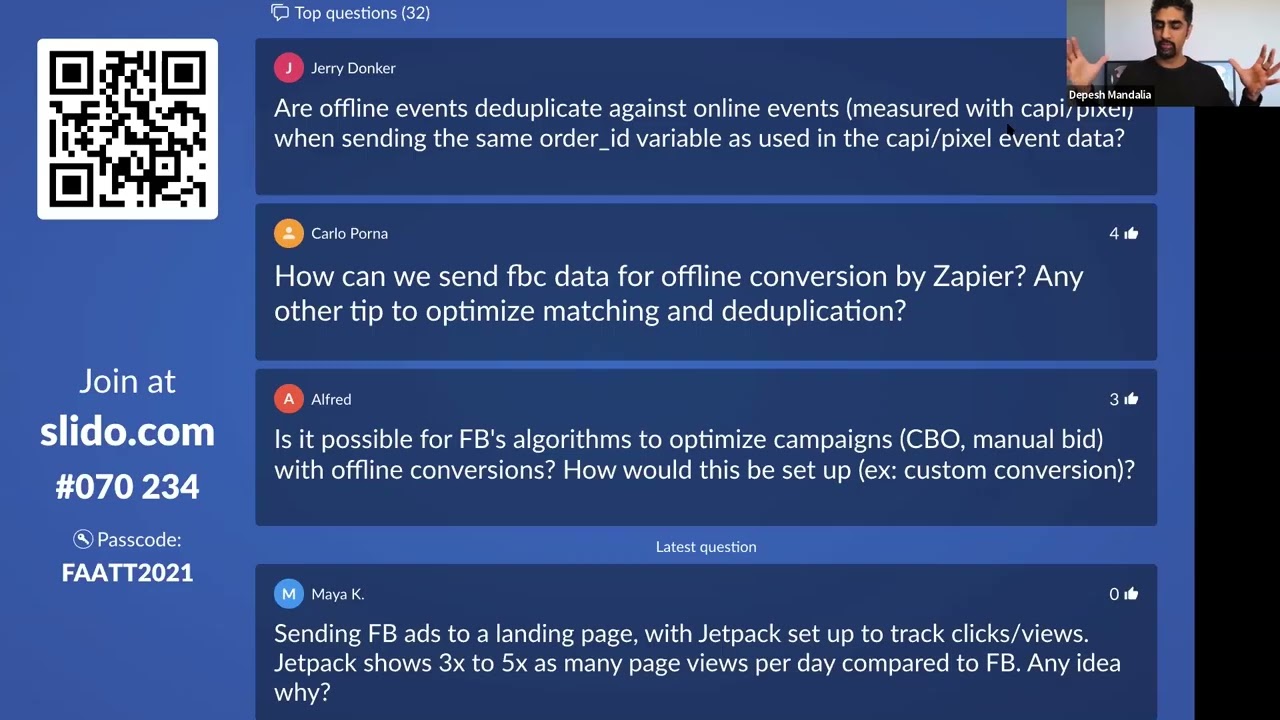


AI BUILDS FACEBOOK AD CAMPAIGNS 10x FASTER (Real Account Walkthrough) - The BPM Method

I Built a $1,000 Ad Landing Page in 10 Minutes Using AI (PRINT Money Using This)

60 Meta Ads Created & LAUNCHED in under 15 Minutes (Without Touching Ads Manager!)