[Q&A] $4.3Million from $270k Ad Spend using The Ascension Path Model (APM) [AOA Podcast Part 2]
In this 90‑minute AOA podcast, host Austin interviews agency founder Depesh Mandalia about the Ascension Path Model (APM) that turned $270k of ad spend into $4.3 million in revenue. Depesh explains how they structure "gateway offers" (free lead magnets, $27‑$97 ebooks, $2K services) to move a single Ideal Customer Profile (ICP) through awareness stages, using broad Facebook audiences powered by pixel data. He details conversion timelines (free lead magnet → months, $97 ebook → weeks, fast‑track $97 GA tracking offer → immediate calls), creative production (static images, video snippets, repurposed podcast content), funnel tech (WordPress landing pages, ClickFunnels, GoHighLevel) and the MVP approach of embedding an ActiveCampaign form. The conversation also covers hiring strategies (outsourcing tech, design, and funnel building via agencies or Upwork freelancers), scaling the agency (35‑person peak, then lean ops), content formats (ebooks vs video vs challenges), AI‑assisted ebook writing, and applicability of the model to B2B niches (machinery, LinkedIn, Google, YouTube). Practical advice includes budgeting a test spend ($5k), segmenting workdays, and using challenges to increase engagement. The episode ends with a Q&A covering audience targeting, creative volume, and the feasibility of the APM in high‑ticket B2B markets.
Chapters
Depesh, that was awesome. Thank you. I think one of the biggest takeaways for me is instead of identifying multiple ICPs, you're actually identifying the same ICP, but at different parts from the awareness stage and then catering the appropriate lead magnet based on price and then drive the funnel based on where they're at in the awareness cycle. So that was huge for me. Let's pop it over to the chat. I know that we had a couple of questions in here. Yeah. Noman was asking, what was the time from lead to converted customer? I think that was in reference— Noman, do you remember what that was in reference to?
Yeah. So it's like early on I was watching the video. So I was just wondering, like when you first got a lead and you were able to generate those high-ticket conversions, how long did that take? Was it like, seems like it would take a longer time to get to the higher-ticket conversions.
That depended on the gateway offer. So for example, the lead magnets, when we ran the free lead magnet, that was, I think that was a 12-email sequence over couple of weeks. But a lot of those people didn't convert for a few months, because they still— they were consuming content, they weren't sure and things like that. When we started to run, for example, that $97 ebook, that was one of the faster ones to convert. Because first of all, they paid $97. So they're a bit more invested in getting information. And obviously, they're in a position where they want to grow and do things. And then that, that email follow-up was very similar to the free lead magnet, But people were taking action faster. They were booking calls. So that, that's a reflection on how fast people can go through it. For the $97 ebook though, there were still a lot of people that wanted to apply the information there and then book. So I would say we were generating more calls quicker, but the better calls were coming out actually after. So I'll give you an example. One person bought the ebook for $97. I think it was around September, October time. That Q4, his business generated an extra million dollars through the work that he did through learning on the ebook. And in January, reached out to the agency and said, I want to work with you, you guys helped me generate a million dollars. And it helped us realize that actually, if you spend $97 and generate profit, of course, you'd want to give it to us as an agency and help to run your ads. And it's free for you, because you've now made lots of money, in his case, a million dollars of profit. But we pitched a month offer to him. And he was like, yeah, let's get started. So it becomes a no-brainer, because we showed the proof of what we did works. And they've gone in and seen the results. And then they come back to the agency. And by the way, if you think about time to convert, the fastest, fastest funnel we had was when iOS 14 kicked, kicked in 2021, we created a front-end offer, $97, which was how to improve your Google Analytics tracking, your pixel tracking, and a few other things for $97. But on the thank you page, and this was as simple as it was, once they'd made the purchase, it was like, you've been selected to get a free strategy call on how to implement this. So the number of calls coming in was huge. But essentially, we use that as a filter to determine who could be a good agency client. So we've— our call closing at the time was about 35%. With that funnel, it was 15%. But the volume was through the roof. Because people were taking that opportunity up. Essentially, that became a triage call for us. But we generated a lot of money, a lot of business back into the agency that way as well. Because a lot of people were, for example, if we sold this ebook for $97, we had a service for 2K where we'd go and implement all of that for you as an agency, we'll go and audit your pixel, fix your pixel, set up your Google Analytics, and then to try and get them into agency services if they're a good fit. So again, it's a highly profitable funnel. But a lot more immediate in terms of results.
Man.
Yeah.
Thank you for that, Dipesh. And for the question, Noman. Let's see, let's go over to John Paul Mains. He said he was thinking of something similar to launch a similar ad strategy, funnel strategy in January. But he was talking about the target audience. It's a critical component to the type of campaign. What are you doing for getting the audience right? Like, how are you finding the right audience?
Yeah, so I'm a huge fan of broad audiences. But in order to get broad working, I don't know how many people know about this, the Facebook pixel can read your site data. So when you've installed the pixel, it knows all the text on the website. And based on that, it also knows who's visiting your website. And it also knows what other websites they visit. The long and short is, if you think like a search engine optimizer, when it comes to creating your website, creating your ads and things like that. What broad ends up doing, and I kind of term it as a super lookalike, what broad targeting does, and by the way, broad targeting is no interests, no lookalikes, anything like that. It's just age, gender, and location. What Facebook ends up doing is uses its pixel data. So first thing is broad doesn't work very well if you don't have much pixel data. So if you just launched a website, there's no data there, it's not so good. But in our case, for example, That $27 ebook we launched this year, that's— that ran on broad and continues to run broad worldwide. So we're attracting people from all around the world. And what we did is when we create the website and drop the pixel on, we thought of it in terms of what kind of keywords are important for us. So what kind of people do we want to attract? And we just let Facebook run with it. And the ads that we create, we put the keywords in that we want there as well. So it's not just as simple as saying, hey, if you're running Facebook ads, It's just what would people be searching for as well. So we're building all of that in. And that enables us to make broad work really well. Doesn't mean I don't run interests or lookalikes or anything like that. But broad is generally the place I start with. And then I might start to test with other types of audiences to see what would work. There was a time, I think a few years ago, where interests were really bad. This year, we're seeing them pick up again. So interests are working. And what I often do, and some of you probably do this as well, is when I see an ad and I'm like, oh, that was highly targeted, they do quite well. I'll go and look at why am I seeing this ad? And I'm looking at what interests, if there are any, they're using for me. And then I'm getting ideas from that as well, because I'm also a target market for other people who are in a similar niche to myself as well. So it's a good way to keep learning and test different interests out. And some things work, some don't. And that's all part of testing.
One question to that. We have a lot of blog topics on our site, general marketing, talking about different niches and how to do this and how to do that. So we get a lot of more of the techies that are visiting our websites, not necessarily buyers, not VPs of marketing and CMOs and people like that. And overhauling in order to try and create content specific for that market, you know, that's all, of course, that's a ton of work. And I get that, that work is valid, but all you have got is techies right now. Facebook is, oh, okay, we'll throw more techies at you. Yeah, not so good. They're not the buyers.
So.
How would you overcome this?
Yeah, so the pixel obviously has the data from the blog. But when you're creating your sales pages and your landing pages, you can write differently there. So for example, let's say you had a $27 ebook, and it's targeting the executives and things like that, your ad would be talking directly to those executives, and the landing page would have the type of copy that would talk about as an executive or, you know, whatever the thing is, and talking about their problems and the things that they'd be thinking of. So that's the way I would pitch up that funnel.
So also, you're saying put the pixel specifically on those and not the entire site?
You keep it everywhere. So by the way, the way the pixel works, it's just a database, it's just collecting data. When you run a campaign, that pixel is now targeting that campaign. So there's 2 levels of the pixel. One is all of the data is collected from your website. Second level is campaign specific. So if campaign specific, you're targeting these executives, then Facebook is smart enough to know that for this particular campaign, here's the target, Here's the ad copy, here's the offer, here's the landing page copy. And it will start to find people related to that. Does that make sense?
Yes.
So that's the way I approach it. So just building that funnel completely around them. The other example I want to give you is we had a client who was selling employee benefits programs. They wanted to target the business owners. But often the business owners were 7, 8-figure business owners that really weren't on Facebook. So what they actually did was to create ads and content that would get the employees to tag or send it to their bosses. So you can also think about that as well. So if even if you have a lot of people that are techies that are not going to be the decision makers, how do you get the decision maker to look at your ad? One example, I don't know if you've heard of Agora Financial, huge company out in the US. One of the guys from Agora Financial saw my $97 ebook for CBO Cookbook. Sent it to his media buyer. So this is the other way around. This is a high-level exec that saw a 97 Book said, this looks interesting, sent it to his media buyer. His media buyer implemented it over a few months, and they made a lot of money off the back of it. So it can work both ways. So if you want to get the decision maker, but you want the person that's actually going to implement, or vice versa, there's different ways you can try and tackle that as well.
Thanks.
Yeah, that's fantastic. And that's smart to be targeting one audience. Like with almost like a call to action to send this to the right person.
Okay.
Very good. Alian asks, how small will you start and when would you begin spending on ads as an agency? Going way back to the beginning. Alian, help me with clarification there. Is it how small would you start like charging a client?
No, just how, when would you start spending money on ads? Is there any threshold or is it after you find out your best ICP or niche or how, what's the mindset would you have if you had to Because I think a lot of us is from— but I'm still in the 6-figure stage. So I'm still finding out what's the best ICP for me. I'm sometimes chasing money. So I would love to have your thought on that.
Yeah, the long and short is don't run ads until you've got money to burn. Because the thing is, if you're still too small where you don't have profits, then ads isn't the right thing. You need to do referrals and LinkedIn and organic and things like that. We didn't run ads for probably 12 months of starting our agency. And it was just all grinding and just trying to, like you said, figure out who our ideal client was. We had to kiss a lot of frogs before we got the princesses. And we had to just learn the hard way, who is our ideal prospect? How do we speak their language? What are they looking for? And things like that. So we had to go through that organically. Some of you might be starting your agency and know exactly who you're offering stuff. We weren't, we weren't in that position. Up until that point, I'd freelanced and contracted for lots of different niches and lots of different businesses. I came in with this noble goal of I want to work exclusively with small businesses to help them scale up. So small business making $5K, $10K a month, or whatever it was, or even less. But they were the hardest clients to work with. But we had to figure that out the hard way because they didn't have money to invest. They stressed about money. They didn't give us any leeway to do any testing, all those kinds of things. So It took us a while to shift to who our ideal prospect was, which then made running ads easier. So the free lead magnet was the first time we ran ads. So that was— we had a really good case study, how we scaled up an e-com client. And the way we built that case study was we built it for our ideal prospect because we knew exactly who he was, because that's the client who we based the case study off. We wanted 10 more like him. So we went through and said, if we build this case study, what's going to appeal to him the most? So we almost had a frame of exactly who this person is. And the way the case study was written was it was slightly too complex for our ideal prospect to understand, but just enough information for them to be wowed. And the idea was we want them to look at this and think, wow, this looks really good, but it looks a bit too complex for us. I wonder if the agency will run our ads. And it worked. And that's exactly who we attracted in.
Thank you. So a lot of hard grinding at the first—
For us, it was, yeah. And at that point, we'd started to generate some profit in the business. And I then set aside $5K as a test budget for this funnel, knowing that if I'd got a zero return on ad spend, we're not going to die as a business. But I wouldn't have been able to do that 12 months prior.
$5K. It's a benchmark. Thank you.
Cool.
Yeah, thanks for the question, Aliyan. Kevin was asking, do you use the same framework/formula for your clients? Not just to get clients for your agency.
Yeah, that's where it all started from. We didn't call it gateway offers. But the idea was, whichever funnel a client had brought in, we were looking at what's a high-converting but easy first purchase. That was always the mentality. So for example, the free lead magnet case study that we generated, the case study for that client was selling skiwear. Now the idea was the skiwear average order value could be $150, $250. But in order for you to spend that amount of money online, you have to really think about it. Because there's fit, there's comfort, material, there's so many things you have to think about. So then we're thinking, what's a low-ticket thing that we could get you to buy, just to get you to know and trust us? For us, it ended up being ski goggles. So it was like the big kind of thing, like in particular snowboarders wear. And we found that if we could sell that, and I think it was like $60 or $80, it was high quality. that would get them to like and know who we were as a brand. And then we could start upselling the jackets and the whole skiwear and the gloves and things like that. And that just came through testing. And that enabled us to access the market with higher conversion rate, lower cost, because $60 versus $200, big difference. And then we could build our funnels based on that as well.
Smart. Adam was asking, I have a question about the funnel tech and guidance on simple steps to get started. Adam, do you want to jump on and maybe clarify that?
Yeah.
And just to be totally real about this, it's so exciting, like hearing about this approach to passion. And I've read like the Hormozi books and this guy, Sabri Sumi, and like the How to Sell Like Crazy. And it's like, whoa, this guy's actually doing it. And he like had it intrinsically. It's himself. It almost seems like, so it's like, wow, he did it. I read these books, I get it. And I just can't actually implement the funnel. I just stick with like the easy stuff, like doing SEO, SEM, and then there's some other like strategy work I do, but I've never been able to build the funnel because the tech doesn't seem to come together for me. I don't have a team that can help me, so I just give up. And that's just the honest to God truth. So it's like, what's the most powerful part of the funnel you think that a simple 8-mind would be able to get off the ground and drive some impact?
Yeah, no, I think that's a big thing to overcome. Going back to 2016, I started to read about Russell Brunson and ClickFunnels and things like that. I joined his Facebook group. And a similar way to you, I was inspired by all these people and all these funnels and things like that. But when it came to building it, I too was stumped. And I think I'm fairly technical. But it was like, what's on the landing page? How do you write it? How do you do a webinar? What's an upsell? And how do you build across? There was too many things for me to think about. In the end, despite the ClickFunnels subscription and reading the books and being inspired, that lead magnet that we launched was literally just a WordPress landing page. So just literally gone into WordPress, put some text on there, brought the— what do you call it— like the embedded signup box from ActiveCampaign, stuck it onto the WordPress page. And then from there, we just had an email flow on the background. So it wasn't— there was— that's pretty much it. And even then, like, there was no second page. It was just like, here's the WordPress landing page, here's the embed. And when you submit your email address in that little spot, it said, thank you, your email has been submitted. It was really quite crude. But that allowed me to just get the ball rolling, to just get the emails coming in, start running ads. We had the pixel set up. It was on my own personal domain. It wasn't even the agency or BPM Method or anything like that. It was just on my WordPress because we had blogs and stuff already. So it's literally just effectively a blog page talking about SEO and SEM, right? WordPress and SEO go together pretty well as well. So WordPress is very easy to get started with. Even if you don't have your own domain, you can go to wordpress.com and just start a WordPress blog there and get it hosted there and things like that. Just write the content as you see it just to get started. And that's what I did as well. Eventually, I started to hire funnel builders and started to get I guess more professional things created. But initially, in order to get out of my own head, it was like, okay, I know WordPress, I can create a landing page there. And I can embed this email capture form. And that was it. And that got me started.
That is helpful. So that's the ultra simple foundation that you can—
The MVP. And the thing is, when we launched our first funnel, I actually paid a guy $12K, $15K to launch this whole funnel because we wanted to invest in bigger growth and stuff. And When I looked at what he'd created, it was like, that doesn't look that complex. And then from then on, we started to build these funnels internally through ClickFunnels. But sometimes it's just like, it looks daunting, looks scary and stuff. But when you actually see someone's built it out and done it for you, you realize actually it's not difficult at all. And we've built hundreds of different funnels through ClickFunnels. We're on GoHighLevel now for reasons that funnels, I just don't trust and don't rely on them anymore. And I don't mean to knock them. They've helped us grow to a huge stage. But GoHighLevel is where our funnels are mostly done right now. And they're still fairly simple. We just create— I have a funnel designer I found off of Upwork for about $100. He will look at any funnel I send him, competitors or otherwise, he'll recreate it for me in my own GoHighLevel, whatever you call it, the platform. We then just go in and change the copy and stuff, and the funnel's there. So you can go out and do things like that as well. Go to Upwork, whatever platform you're on, Show them the funnel that you like, get them to implement it on yours, change up the copy and everything like that, and it's done. So there are different hacks to get around getting out of your own head as well.
Can I ask a follow-up to that?
Yep.
So you mentioned hiring. Do you hire— you found someone off of Upwork, that would be probably project-based, but do you hire— when you— how do you hire for the types of campaigns that you guys run? Do you guys full-time Contractors? Do you onshore, offshore? What's the best approach that you found to work well?
So when we were at peak, I was speaking to Austin before, like when we were at peak, we had 35 people in the agency, multiple clients. At that time, we needed a lot of tech resources for our clients as well as our own funnels as well. I hired in a tech agency. I think on his retainer, it was like $4K a month retainer. He would manage our WordPress, our ClickFunnels, all the integrations, Zapier, and things like that. And that just made it easier for me because I didn't have the knowledge or the capacity to hire someone in-house that I could also manage. Like, for example, when it comes to creative services, we tried to build an internal creative team, but we realized we don't have the expertise to nurture and build that team in-house. And then again, we went through a design agency and then outsourced all of that. So design, tech, funnel building, all that kind of stuff was outsourced. What we kept internally was client management, media buying, all the kind of things that we're doing for clients, which would obviously lean in for our own products as well. But that kind of stuff we ended up outsourcing. And then actually what we realized is we don't need— we didn't necessarily need that full time. And that's when we started, especially for our own projects, going off to Upwork and finding decent freelancers that we could trust and rely on, and just give them work as it came in as well.
Okay.
A question about the various lead funnels. So you're capturing, it seems to me you're kind of capturing just a broad base of potential prospects, right? With smaller ticket offers. And then it feels like what ends up happening is you have products to address their needs, right? Does that feel like a lot of that, that feels almost like serving the people who can't afford the, if you're looking, if your ideal customer are $1 to $10 million e-com clients, the people who are maybe just making $1,000 and spending the $97 on your ebook. Does it feel, I guess what I'm asking is I'm afraid I'll drown in that, you know what I mean? Of like having a bunch of people who can't afford your true help for your ICP, but they just need a lot of support. Yeah.
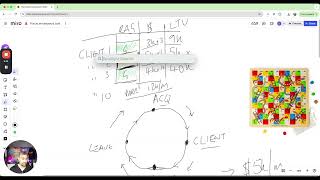
So here's the thing. They can't afford it just yet. I'll give you an example. I had a lady that bought this CBO Cookbook program in 2020, spent $97, and I didn't hear from her again. I then ran a mastermind out in Mexico last summer, and it was $5K per person. She actually joined and she attended, and from there she became an agency client. And when I spoke to her, I was like, how did you end up in my world and stuff? And she goes, oh, I bought your $97 cookbook in 2020. And it had really great results for me, but I could never afford your program and services and stuff until last year when she actually came out to Mexico and then became an agency client. So the way to see this, if you've heard of Scott Oldford, he talks about the slow lane and the fast lane of marketing. That's the way I see it. So let's say I've run this $97 ebook. 90% of buyers are in the slow lane of ascension. 10% are in the fast lane. And it's those 10% that I want right now. But I'm not going to knock the 90% that could become customers in 12 months, 24 months' time. It doesn't impact me either way. If they never become a customer, so be it. But if they do, guess what? Just Dawn, who was the lady that flew out to Mexico last year, she's popped out of nowhere. And it's like, great. Now she spent $5K to attend that event. And she's paying, I think it was a $5K or $10K a month retainer for the agency. That's in effect, free money. I didn't advertise for her. She was already on the list. She saw this promotion. She's like, that's my opportunity to go and hear from this person. And here's my opportunity to join the agency because at the Mexico event, I did a pitch. So it's like things like that, which further on down the line can give you an added benefit that you didn't think of.
Yeah, makes sense.
Thanks.
Yeah, nice. I wanted to push it over to Pat. He has a couple questions in here. But I think we answered the first one. The second question was what kind of creative— how many creatives do you create on a monthly basis?
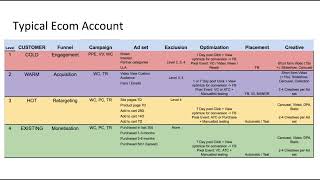
We create a fair amount. So it depends on what it is. I find that with kind of low-ticket offers, static images just generally work well. So for example, our $27 ebook, static images probably 9 out of 10 times just work far better because it's— you're capturing people at a journey where they might not necessarily have the time or desire to go through a video. Now, if you compare that to another funnel that we run, I have a video guy that for 90 minutes every month, he will interview me. So we'll go on to Riverside or whatever it is, we'll prepare some questions ahead of time. And he'll just kind of ask me these questions. And I'll answer them on camera, as if I'm answering a podcast or something like that. He'll then go away and then cut that into 30-second to 2-minute videos. And creates 30 days of social media content from it that goes on my Instagram and Facebook and places like that. But where I use that is I then turn that into top-of-funnel ads that I run to a broad audience that if people watch a certain amount of that video, 75%, or we go through play, which is they've watched an actual 15-second segment, then we serve up a direct response ad. So when it comes to creating content, I do try and create new— I do create fresh content every single month. Because everything's always changing so fast, especially with Facebook ads and the niche that I'm in. So you have to remain relevant and talk about— now we're talking about Q4 and Christmas, and January we're talking about New Year, new start. So there's always new themes and topics coming. So from a brand and growth point of view, content's always streaming out. Something like this talk here, I've done talks like this before where I might say, hey Austin, can I have the raw material because I'm gonna repurpose it for my own marketing purposes? Great. Now I'm going to cut that up and put that into my advertising or my social media. So I'm always thinking about when I did a podcast last week, and I said, can I have the raw material, he sent it through, that'll go through the video person to now create small snippets to go and push out. So sometimes it's forced, and 90 minutes where I sit down with my video person, we'll create content. Other times, I'm dual purposing and pushing content out. But content's a huge part. And it's not something when I started my agency, I was thinking a lot about. It's only when we start to run ads and start to see different funnels working, I realized you have to be present, you have to be in all these different places, have to stay front of mind. And it makes a huge difference to your growth going forward. When— take Dawn, for example, she bought this product, a $97 product in 2020, had been consuming my content for 2, 3 years without buying anything or doing anything. I didn't know she existed. Now all of a sudden, she remembers who I am, I've got this event, and she's like, I want to sign up. So that's kind of the power over the long term as well.
The sleeper prospects.
So for context, so you have to be on social media. That's what I also noticed buying stuff like $27 ebooks and stuff like this is that I then check the person's social media. That's the first step that I do. Like once I see like an ad, if they're person is legitimate. Follow-up question on that is like, what do you see? Because it, maybe it was mentioned because I jumped in half an hour into the call, but what kind of, are like ebooks better than to implement than like a mini course, like a 3-video mini course or something like this? Did you test out like different types of deliverables, like things that I can implement? Immediately. And so I guess that's the, the first step is that you give them something that they can implement almost immediately, or they can implement and they let it work for a couple of weeks, months, and then they convert because you nurture them through email. Is that correct?
So we've run lots of different formats, ebooks written only, and then videos and combination of both. There's never a time where one works better than the others. It's just literally people have different preferred learning styles. So for example, when we launched that $97 ebook, a lot of people like, this is good, but it's like 130 pages of PDF, I'd prefer a video. We then launched it as a video. And some people like, there's a lot of videos to watch, I'd prefer if it was written. And then we just combined the two and said, hey, just have both and decide how you want to do it. So that's one thing. But the second thing is, and an important point that you made is, how long is it going to take them to implement and see results as well. And this is where, for example, in that $97 ebook, we put too much in there. So it was like, here's how you launch your ad campaigns. Here's how you optimize them. And here's how you scale them. It was like literally just threw the kitchen sink in there. And we realized some people were taking months and months to go through it. Because it takes months and months to implement it, get results and things like that. So for example, the new $27 ebook, all it is how to launch successful campaigns in 5 days. By the way, that was created from a 5-day challenge. Then broken into 5 chapters for an ebook. So again, we're repurposing, but we realized that we have to focus on how quickly can we get them to implement and how quickly can we get them to get results in order to get that next action in as well.
Got it.
So what about like those challenges? I think those might be quite good to implement if I have— so my niche is YouTube channels or like generally we do video editing services and video publishing. For clients. So like a challenge would be maybe improve your thumbnails over a period of 5 days, stuff like this. Does it, does a challenge convert? Like, would a challenge convert more people? Like, I'm just like thinking about my niche right now, but maybe—
So a challenge gets better commitment in terms of your next offer, because if they've turned up for 3, 4, 5 days, and they're getting to see you live, they're building that bond and that relationship right there as well. So that's far better than an ebook will ever do, because the ebook is impersonal. It's just written copy. Okay, there's a video maybe, and they get to see you talk and things like that. But the cool thing about challenges, and I've run multiple 5-day challenges, and also I've done 30-day challenges as well. I like the 5-day challenges because the way the process for me is get them all into a pop-up Facebook group. First of all. So get them engaging and things like that. Turn up every day for them and share like this, 40-45 minutes of knowledge. And then for your VIPs, allow them to join the Zoom like this and take those questions and things like that. And then give them activities that you will review the next day. So on day 1, here's activity number 1. And if you could submit it on day 2, I'm going to start the next video and I'm going to talk through your particular thing. So for example, if we're doing a 5-day challenge on Facebook ads, Day 1 might be create your avatar, submit it in the Facebook group, and then I'm going to pick the top 5, or I'm going to pick the 5 first ones or whatever. And in day 2, I'm going to review those. So they're feeling like they're interacting and getting feedback and things like that. So it builds that relationship a lot faster and a lot better. But challenges are very hard to run. So there's a lot of work that needs to go in the background. So ebooks are easier. It's literally just write the book, PDF it, send a link and So you have to weigh all these things out. And we, I had run my first challenge, I think it was 2022, after spending 3, 4 years advertising for clients' challenges. So I knew already what went into it because we've funneled and trafficked and we understood everything. I just never run it for myself. And then there's a guy called Pedro Adeo. So I was following his process. He's like the king of challenges and stuff. And then I finally had the confidence to go and run my own challenge. I really enjoy it. And we'll be running another one soon as well. But it just takes a lot of effort because you have to turn up every, every day, you have to go through and mark people's work and give them feedback and stuff. But we've got that process nailed down as well. So I'd say, for you, for example, I personally would test with something that's just easier to get up and running, an ebook, for example, because what that allows you to do is, are people interested in this topic? So let's take thumbnails, for example, run that as an ebook, free lead magnet, doesn't even have to be paid. Are people actually interested in this? If they are, great. How can we now turn that into something a bit more profitable for us?
Yeah, that's great.
Thank you.
Cool.
On the topic of ebooks, and I know we're running short on time, so I first of all want to thank you again, Dipesh, for being here. This is super valuable.
Cool.
On the topics of ebooks, Chris was asking, are you outsourcing the ebooks? Are you writing it using AI? What's the process?
I love writing, so I write my own ebooks. I have tried one with AI. So actually that was another 5-day challenge, which was 5 Days to Build Your Client Attraction System. So I turned that, I ran that on Zoom, took the transcripts, put it through ChatGPT and got it to write my book. But then I made some edits and stuff like that. And what I do with my list, I always give them my stuff for free to a small select number of people and get them to feedback. And it's almost very obvious, not that they'd know it was AI or non-AI, but the ones that they found engaging versus the ones that weren't. And I think for me, when I'm doing my writing, I drop little stories in. So taking Hormozi as an example, one of the reasons why his book did so well is he dropped all these little mini stories in it, it just relates so much better. And I think when you introduce that into your ebook, people get different insight and stuff like that. So I have an ebook which we haven't launched yet. It's all about ads attribution. And when I shared that to this small group of people, they're like, this is 10 times better than your last one, which was AI written. I didn't tell them one was AI and one wasn't, but they're like, it just feels more personal, like you're speaking to us. So I think that's something where, as you start to build an audience, they'll kind of know when it is more personal and when it isn't as well.
Follow up to that really quick, if you don't mind. Do you have a length of ebook? Obviously it's going to depend on topic, but do you have a length that you find is a sweet spot to get them? You know, you talk about front-end offers and then on the back end, getting them to upgrade to something better. Do you find that there's some sort of sweet spot in overall length of ebook with that?
So the shorter the better, but you obviously need to put enough content in there. So I wouldn't say there's a number of pages or anything that I aim for. I generally write it and just put everything in there, then spend probably a week or two trying to trim down as much as I can. I actually do have a proof editor and a person I found again off Upwork. I think he charges $300. He'll go through and do all his proofreading and stuff like that. Does it make sense? Is it coherent? All those kinds of things and give me all that kind of feedback. So stage 1 is just put everything in there. Stage 2 is really try and cut it down as much as possible in terms of the sections and things like that. Stage 3, send it to the proofreader and then finally get it published.
Cool.
Thanks.
Nice.
Good approach. Matt asked, and then we have one more question from Aliyan, but Matt asked, how much of your time do you spend on funnels, like building them out versus operating your agency?
So here's the thing. So first of all, I don't spend more than a Monday to Wednesday working on agency and clients. Thursday and Friday, internally we call it no contact days. I have no client calls. For example, today's Thursday. I put podcasts and anything that doesn't involve clients onto a Thursday or Friday, which means Monday and Wednesday is just focused on clients and client work. Thursday, Friday is other stuff. So to give you an example, when ChatGPT really started to take off in 2021, I would spend a lot of my Thursdays and Fridays just playing around with it. Now in 2022, I launched my own AI app on top of ChatGPT, but that's because I've freed up my time to allow me to do those kinds of things. So Monday to Wednesday is just client stuff and I don't try not to deviate too many into too many shiny objects and stuff. We all do it, but I've set aside 2 days a week just to do shiny object stuff. Some of it works, some of it doesn't. Writing an ebook, for example, I'll do that on a Thursday, Friday, attending events if I have to, I'll try and push it to the end of the week, running my own events, I'll do that on those days as well. It took me a lot of time to get to that stage. But thanks to hiring a really good ops director many years ago, she said, look, I know you want to work on these cool things, but you can't do it and do your client work at the same time. We just started to work through these kinds of things together. And initially, it was just like, just take one day off. And it started off with Thursday. And then I realized my team weren't really missing me because we had the processes and stuff. I'm going to also take a Friday as well. And that kind of helps both to help me focus intensely on the clients and the client side of running the business, and then to just step back and really enjoy the rest of it as well.
That's awesome. I know Eric does something similar, like Mondays are all his internal comms and catching up from the weekend, and then he'll do Tuesday creative, Wednesdays. Yeah, so segmenting out the days and the weeks, that's very very smart. Yeah, thanks for sharing that. Last question here. Aliyan was asking, do you think this approach, as far as funnels, would work for any B2B industry, for example, like machinery businesses targeting importers?
If you can find them on Facebook, like, that's the thing. So this system doesn't rely on Facebook. That's just my expertise. So it could be that there's another paid platform or another platform where you can find these folk. Obviously, LinkedIn is where a lot of business folk hang out, but it's expensive to run ads. And it's not as good as Facebook. So I think that's part of it. Google search, for example, if someone's searching for something that's in your niche related to something you can offer, you can still run ebooks, lead magnets and stuff on Google based on the searches. YouTube, for example, the amount of times where, you know, I'm into my cars. So I'll do a search on something car related. And an ad will pop up for something and I'm like, that's cool. And then I'll go and click that ad and then I'm going to go on. Now, how do you find a car enthusiast on Facebook? Yes, you can. There's interest and things you can do. But a lot of people going on YouTube just to find that how-to video, and then your ad pops up and it's like, oh, that was cool. So there's lots of different ways to target them, whether it's whatever your gateway offer is, that's independent of the traffic. And that's the kind of way that I see it as well.
Okay, because I was thinking like machineries, like more than like $100,000, $200,000, even the millions of dollars of machineries. And what kind of gateway offer would look like? Is it There's no lead magnet, but what I've did so far is like, I've done, I've made some white papers for that industry, for that specific industry and writing out, writing a bunch of the industry knowledge on that. It had some good results, but I would, I was thinking, do you think that this setup, this funnel of like email flows, I don't know about the email flows. Will that work in that particular setting in the with the machinery and all that in that industry.
But yeah, I think it's gonna work. Because at the end of the day, whether someone's running a $100 million business or lower or higher, they're the same human behind it. This is the way I see marketing, right? We're selling to humans, forget how much money they're making, what kind of business they are and stuff. Humans all react to the same stuff. They all react to the same stimulants and the processes, the marketing tactics and things like that. So all these things can work. Now, for example, in your example, an idea that I want to also implement is using a podcast-style interview as a YouTube ad. So I've seen this run many times. I'll give you an example. I think it was on the weekend just gone. I saw an ad from Mindvalley. It's the first ad on YouTube where I've spent about 15 minutes watching the actual ad because the content was that good. And it was like, as I sat through it, I knew it was an ad. But I was like looking at this and thinking, this is run— I knew it was an ad, but I was like, I really want to hit the— sorry, I was knocking everything over. I really want to listen to this thing that they're sharing. So it was basically this guy who has a memory technique, and then it was kind of his background, his history. He's a really interesting person. And then Vishen comes in and they're doing a podcast interview. Then at the end of it, there's obviously a call to action and stuff. But I just thought it was done. Yeah, Jim Kwik. That's exactly it. And I thought it was done so well. How could I use something like that? So rather than, hey, if you give me 5 seconds, I'm going to tell you how to generate all these leads. No, here's like a different approach. It's like you're sharing a ton of value. So in machinery, for example, what is it that you could present there that is an ad, but is pure content and value based? Obviously, there's a call to action at the end, which is, hey, by the way, click this link and download the white paper, and it will give you these kinds of things, get them into your email list. But there's so much priming and stuff done with a really good ad like that. I don't see enough people doing that kind of stuff. Thank you.
That's fantastic. Dipesh, thank you so much for sharing your insight. I know this has been really powerful and there's a lot to digest. And Dipesh, I will put your, your contact information along with that in case anyone wants to reach out to you and inquire further and maybe work together.
Sounds good. Appreciate it.
Cool.
Thank you for being here. Thanks so much, Agency Owners Association members, and we'll see you next time.
Nice one. Thank you. Have a great day.
More from Depesh
How I Made $4.3Million from $270k Ad Spend using The Ascension Path Model (APM) [AOA Podcast Part 1]
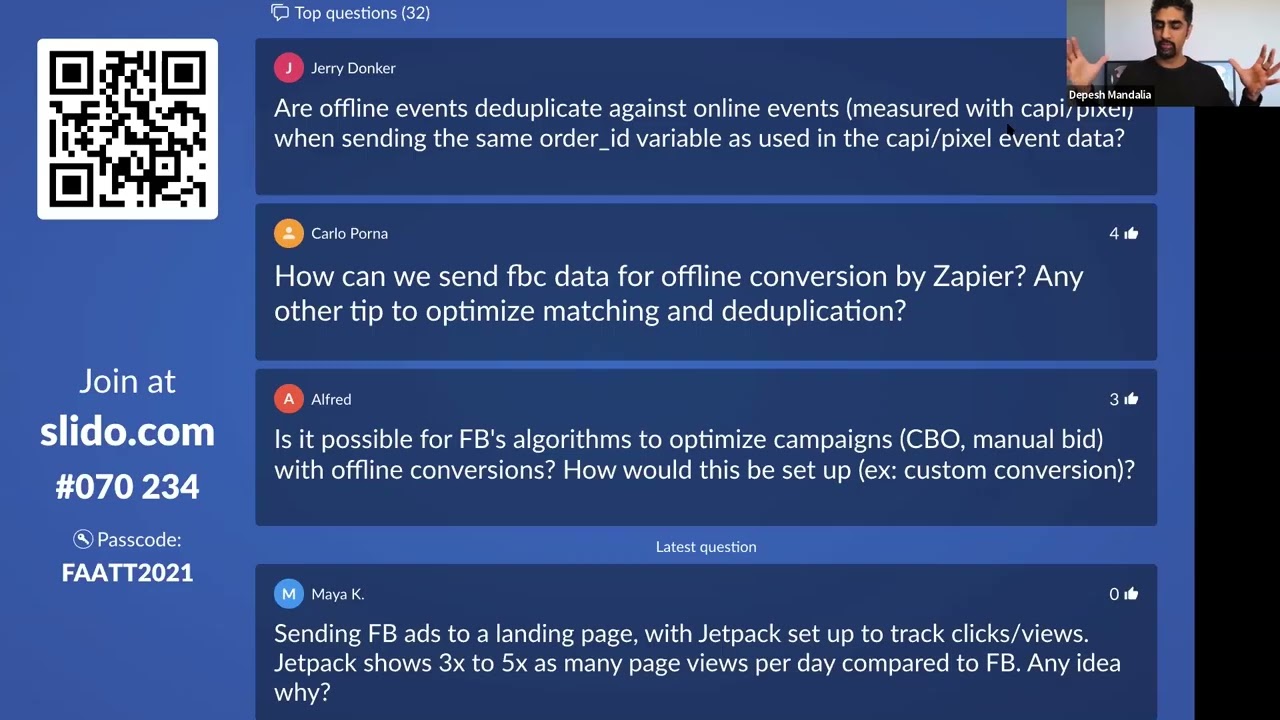
AI BUILDS FACEBOOK AD CAMPAIGNS 10x FASTER (Real Account Walkthrough) - The BPM Method
I Built a $1,000 Ad Landing Page in 10 Minutes Using AI (PRINT Money Using This)
60 Meta Ads Created & LAUNCHED in under 15 Minutes (Without Touching Ads Manager!)