CHEAPER META AD ACQUISITION COSTS USING CONTENT FUNNELS
Video (YouTube) by Depesh Mandalia explaining a content-funnel strategy to reduce cost-per-acquisition on Meta (Facebook/Instagram). He outlines targeting top-of-funnel audiences (unaware/problem-aware) with value-led content (blogs, podcasts, case studies), pixel-based custom audiences, tailored direct-response follow-ups, and long-tail SEO benefits to lower CPA and build lifetime value. Examples include segmenting avatars (freelancers/agencies) and using scroll/time-based view-content events to improve audience quality.
Questions this video answers
Depesh Mandalia
20 to 25 minutes
July 3, 2025
Chapters
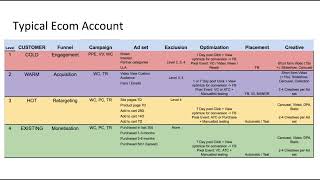
Have you ever wondered how to tap into a difficult market with meta ads or to try and reach people who are cheaper and to drop your cost per acquisition? Then this video is for you. So what I'm going to show you over the next 20 to 25 minutes is how we are building content for our top of funnel audiences to attract new cold prospects into our funnel in a way that bypasses the competition and, and actually brings us lower cost acquisitions as a result as well. This is a strategy we've used for many years across many niches. It works whether your product or service is mainstream, or if it's a bit more of a difficult niche, maybe it's a new product, maybe it's a new way of doing something, or a new service that's never been offered before. It's a great way of bypassing the competition and bringing in leads based on value and trust. Let's jump in and take a look. When it comes to Facebook ads, content is the most important thing. I know we're looking at algorithms and conversions and ad types and everything like that, but at the end of the day, people are consuming content. So the way we deliver that to our prospects is really, really important. So I'm going to demonstrate to you here is how we use content to position ourselves as a brand or position our products or our offer, and how that can layer in with your organic strategy as well. So if we look at a typical ad account, we have different levels of targeting. We can target people who have never heard of us, who can retarget people that have maybe engaged or clicked. And there are different types of content that we can deliver. But one of the things I was speaking to a customer about, a client about this, so one thing I was talking about with a client about is how we can use content to draw people in, especially in niches where it's really difficult to cut through. So if we have a product or a service which is maybe not so mainstream, we can approach things in a different way. So first of all, when you enter any kind of market, you have your different levels of awareness. So if you think about this as a funnel, your total addressable market is literally everyone that you could potentially speak to. Doesn't mean they're all customers, doesn't mean they're all going to transact with you, but that's the total addressable market. Then below that, you have people who are problem aware, you have people who are solution aware, you have people that are product aware. So there are different levels of the awareness for your particular niche. And as you go down that funnel, there are fewer and fewer people. Now, as you go down the funnel, although there are less people, what actually happens is the cost increases as well. So to reach someone at the top of the funnel is cheaper than reaching someone at the bottom of the funnel. Why is that? It's because of competition. So the more competitors there are, the more expensive it gets. Why are the competition at the bottom of the funnel? Because that's where all the active fish are. That's where all the prospects and customers are ready to transact, especially if they're product aware. So they're aware of your product. If they're solution aware, they're aware that the problem they've got can be solved and there is a solution out there. Now, if they're problem aware, they know they have a problem and they want to, they're not necessarily looking to address it right now, but they're aware of it. Then you have people who are the kind of unaware, and I'll put them up here as well. So what's the difference between problem aware and unaware? Now if you imagine someone with some kind of challenge that they've got, but they kind of consider that normal, they are unaware in the sense of your market and thinking about solving it. So, you know, for example, let's say, and this is a really kind of abstract, simple, probably not the most practical example, but I'll give you something I saw recently, I drove past a house and the grass had overgrown. Now it didn't look great. Obviously if they're looking to sell the house, they'd probably cut it. But all the other houses in the neighborhood were nicely trimmed and things like that. Probably unaware or probably doesn't care. Like that's another side of this kind of top of funnel that we're looking at. If they're unaware of any kind of problem, they probably don't care about it either, right? So if it's very hard to convince those people to do something about it. Now, if I'm a landscape business owner and I'm trying to sell my service on landscaping, if you're problem aware, then that means that you know that your grass is overgrown, but maybe still you're not motivated to do something about it. Now if I went to knock on the door and I said, hey, we offer landscaping services, we can do your front and backyard and things like that, you're problem aware. You're more likely to respond to me. If you're unaware and you don't care, you probably just tell me to get lost. So the problem where folk know that there's a problem there, they're just not handling it. Then you look at the solution aware. So I know that my grass is overgrowing and I know that there are solutions out there. Landscapers, this is where people start to go to Google. If you're problem aware, you start to look at Google for options, then you look at solutions aware. So you're aware of local landscaping companies, you've done searches on Google, maybe seen actual companies come up and then you get down to product level. So product aware, meaning service aware as well. So you're aware of local business as well. Now that's a step by step process just to define the types of prospects that you have in your funnel. And when I was speaking to one of my clients this week, they're in a very difficult niche in real estate where they're trying to crack through with a brand new service and then a brand new way of buying houses. They're trying to tap into what is a multibillion dollar industry, but do it in a different way. Now we went through the process of understanding their total addressable market, which is obviously a home buyer, and then breaking that down into the different types of home buyers. So one of these, for example, are people looking to move from renting to buying. Now if you look at those people, the unaware market. So the total addressable market of people that are renting right now, the unaware people are renting, they're doing it robotically and they're not even considering buying a house. So if you think about someone like that, they are happily going down the path of renting. It could be doing it for one year, they could have been doing it for 10 years. Those people have no interest in buying a house. Then you go down to problem aware, which is, hey, I know that I'm paying so much money in rent, I would love to actually put that into my mortgage. Then you have solution aware, which is, hey, now I'm looking for a mortgage thing. That's the stepped path that you can walk through. And the challenge here is the further down you go the funnel, the more expensive it gets. There's more people looking for mortgages and houses and the competition is high. So how do you capture people that are either unaware or problem aware or just completely unaware? So in this example, what I actually spoke to them about, and this is something we've done in any niche, if you want to go for people who are the cheapest to reach, are open to be converted, and could potentially become a real loyal customer, and actually bypass the competition if you can reach them at one of these two stages, unaware or problem aware. So the folk who are unaware of the problem. I'll give you an example. If you're renting and you've been renting for three years, just for the sake of rounding numbers, you're paying $1,000 a month in rent over 12 months, that is 12k, and over 10 years, that is 120k. So over 10 years you've sunk 120k of your own money into somebody else's mortgage. So just think about that as a message. Now, if you've been renting for 10 years and you still plan to rent for the next 10 years, there could be many reasons why you don't want to buy and that's fine. But if you pitch it like this, and I put thousand just around the numbers up, many people are paying 2, 3, 4k around and you can kind of obviously look at those in multiples. So you could say, for example, over a 10 year period, you could be spending 100 to 500k paying off somebody else's mortgage. Why not do your own? Now that as a message can prompt people who are in the unaware stage, who are in that I can't be bothered to do anything about this stage, to really think hard about their next move. Because if they're at this top stage and we talked about the landscape example where the grass is growing outside and that person does not care that it's growing outside in the same way our renters are, they don't care, they just mean renting. It's easy, they're happy, they're settled and things like that. But now if you switch it and say, okay, how do we get these people to care? Especially the ones that would be open to discussion. So for example, if I'm now renting and I want to go and buy, what kind of messages can I put out there? Now, I won't go into the specifics that I created for them, but this is to give you an idea of how to nudge people into your domain. So from a total addressable market, yes, we can still run ads to our bottom of funnel, yes, we can still run ads to people who are looking to move house, looking for a particular service or product you're offering. And there are many, many people there. But obviously with meta ads in particular, right now it's the conversion game is different. So we're talking about, you know, going back to 2018, you could almost run an ad and get a sale or a lead it was so much easier. Now it's harder. Not just because the algorithm's changed, but because the actual person that's browsing Facebook has actually changed as well. A lot of the novelty's gone. A lot of the guards are up as well. A lot of people have been burnt by particular services and things like that. Which is where when I run my content strategy, I'm looking to nail content for these people at the top of the funnel, give them value early on and get them into my funnel. So I'll give you an example of kind of how I've been doing this probably since about 2018. So for example, right now I have multiple services and offerings. But back in 2018 and 19, I had only the ad agency, SM Commerce, and I think one training course, maybe two. I can't remember at the time. So my content strategy was very simple. So for my cold audience, so cold audience is literally these people at the top. I'd be running blog posts, I'd be running podcasts, I'd be running other types of content. So it'd be kind of how to guides, case studies, things like this. These would all be run top of funnel to just bring people in on value based on the content. Then dropping the pixel on the website, I would then retarget them using a custom audience. So with meta, for example, you can create a custom audience based on activities on a pixel on a website, on emails and things like that. So for example, if someone's come through any of these, I can put them into a custom audience just based on top of funnel content. So we'll just say to Tofc, for the time being, then I can deliver them a direct response ad. Now, there are additional levels to this, but just for the highest level right now I would run this campaign and you can debate it as much as you want. I'd run this on. Back then it was called website conversion or sales objective. And I would focus my pixel optimization on the view content pixel. Now, depending on what level you're at, you may or may not understand how this works. Let me just explain this. When you have your pixel on your website, you can tell Facebook to optimize for that particular action that's important for you. Now, for my landing pages, my blog, podcast, et cetera, et cetera, we would fire the view content pixel. That's just a pixel that tells Facebook this is an important page. By doing that, if you've got an ad here, they take one click into my landing page and this is where view content happens. So we have click Data we have view content. It's one step. So the data is fairly accurate. And also because of the way the pixel is firing, I'm getting lots of conversions so Facebook can find me more more of these people. Now as an advanced way of doing this, and I'll share this for people that want to know, you can then enhance that further. And there's two ways of doing that. One is based on scroll depth and one is based on time. So the idea there is the view content event, not the entire pixel. But the view content event either would fire after you view 25% of the page, especially if it's a blog post or a how to or a case study. If you haven't scrolled past 25% of the page, you kind of haven't paid attention. I don't really care if you scroll right to the bottom or not, but as long as you've engaged so that inside the actual script with Google Tag Manager, it's beyond my knowledge. But we made it work for those people that scroll 25% more as soon as they hit that scroll depth, then the view content pixel would fire. We also did it another way around. In some cases where there was video to make sure they've been on the actual page for at least 10 seconds. Because some pages, for example, especially if it's a podcast, would have the video at the top and a bit of copy. They're not really going to scroll that far. But I want to only fire it on people that have actually spent time looking at it. So 10 seconds for us is a good medium between have they actually stayed and read and maybe click play. You can also fire it on a click play event as well. We use Vita Host, there are others as well. I think maybe Vimeo offers it as well. When you click Play, you can also fire an event. What we're looking for here is quality. So the reason why you would implement this thing here with 25% or 10 second is because I want people that are engaging in my content in order to push them into my custom audience to give them a direct response ad. So content types is one thing. Getting the pixel to fire at the right time is another. So this is more advanced. I wouldn't stress about this to get started, just get the right pixel going using the SALS objective. Now one of the questions I get asked is can I use traffic? Yes, you can and yes I have. As long as you are optimizing for landing page views. Because the traffic objective either works on click or content, I don't care about clicks, I want content. I don't see any reason why you'd run a traffic campaign for clicks unless you're testing for click through rate and things like that. But they're just click happy people. They're not people that are going to actually engage in the landing page. Landing page view is something that Facebook can calculate itself. It doesn't need any special kind of pixel added. So that's a quicker way to get started. You can absolutely use traffic landing page view objective and optimize your event at the ad set level for landing page view and run the same content. So it could be a blog post, podcast, how to case study, et cetera. And what you're doing is they're enriching the pixel. So the way I'll go through the kind of campaign structures and kind of ideas there as well. But essentially my goal is to build a custom audience of people that have attributes that I can then market against. So this is the high level. Let's say, for example, in my case, if we start to advance this, I had particular avatars that I wanted to go after. So for example, for one of our offers, we would go after freelancers and also agency owners as well. Difference being, you know, this is generally a solopreneur, this is generally their team. Now within freelancers, we had two breakdowns of avatar people who were in the kind of growth stage and then people that are capped. The reason for this is you can have freelancers who have capacity but need more clients, or you can have freelancers that are at capacity and completely stressed out. Two different types of the same avatar. And for agencies, we had people that would, you know, hit 50k and really struggle with process and systems. We had people that were actually past that but now in growth mode and thinking about expansion. So for us they were two avatars broken down into four based on the content. We could create content that could hook people in based on where they are right now. So for example, hey, if you're a freelancer and you've got extra capacity for leads, here's how to use Facebook ads. Or if you're a freelancer and you're completely maxed out, here's how to optimize your client account management and squeeze out more time and more profit. So knowing that we can communicate in a different way, I can create content around this. So if we call this C1 and C2 and C3 and C4, so four different types of content that we can create, it's the same formats. So blog, case studies, podcasts, etcetera and it's the same thing for each of these. Now what happens? And this is a lot more advanced and you need a bit more spend and traffic and also content in order to pull this off. But I'll show you the advantage of doing this. Now. Let's say, for example, C1 is freelancer that has capacity to grow. So we have C1 AD set and when we then have a C2 AD set, C3 and C4. So C1 is a freelancer that has capacity, C2 is a freelancer that's maxed and now needs help to optimize that, etc. Etc. What happens is when we create the custom audience, I know something about them. So it's not just a general offer to say, hey, look at our program, whatever it is, course coaching, one to one, whatever the offer is, I know something about them. So at this stage I'm saying if I'm delivering my direct response ad, I can talk in their specific turn. So if you know, you've self identified, because our content talks about how to take your freelance business from 50% capacity to 100% in 30 days, I'm just giving you an example. If that's the content you came in on and the topics are generally themed around that, then the custom audience, which is built on specifically these pages that people have come in and self identified as freelancers that are struggling. Now when I deliver my direct response ad, so this is a sales objective, it could be purchase, call, booking, whatever it is, I can talk specifically to who they are and what their pain point is. So it could be, for example, hey, as an ads freelancer, if you've got more capacity to grow, check out this lead magnet on growing or check out this training course on how to go get, you know, five new clients in the next 30 days and you know, get more revenue in because they want more revenue, they've got capacity, they want to grow. If you look at this audience here, it's a different story. Their direct response message is very different because it's like, hey, if you're maxed out at, you know, 20 to 30k a month and you're working seven days a week and if you take time off, your whole business is going to be destroyed. Here's the guide to relieve your stresses in the next 30 days or here's the course or book a one to one call, whatever it is, I can understand their pain. So I'm likely to get a higher response rate, which means my conversion rate is higher, which means my ad cost drops because I'm more relevant to my prospects and therefore my CPA is a lot more efficient. So you could argue and say, right, well, you know, I want to go after these audiences, but I'm going to go for people who are solution aware, so they're aware of courses and things like that, product aware, you know, they're already in the research phase. I want to go to Google and things like that. I just guarantee you that your cost per acquisition is going to be that much higher. With this kind of method, not only are we able to tap into them at a higher level, we're going to get them cheaper as well because we're going after cold audience. It could be broad, it could be some general interests like digital marketing, like pay per click marketing, social media agency, whatever it is. We can go after some broad level interests or just go completely broad and hook them in on the content. And the content is 100% value based. That then gets them into our ecosystem. We can pixel them in many cases. Our blog pages also have an email sign up as well and say, hey, if you want more cool stuff like this, sign up for a newsletter. You can also capture it in case studies and giveaways and whatever else you have on your landing page. But we're reaching them for pennies to the dollar. Compared to converting them into a sale, we're reaching them higher. Which means the added benefit is as you start to help people higher up the funnel. Yes, they may not be in a decision state right now, they're not ready to buy and convert right now. But essentially what we're doing is we're enabling them to, to come into our funnel, build trust with us. And therefore, as we start to deliver more content and more opportunities for them to transact with us, they're more likely to choose us because we're already provided that value upfront. So when we present an offer, they're more likely to take our offer up. That's a huge advantage when it comes to ads. And you can use that on Google and you can direct people there from YouTube as well. But the other benefit is as you start to develop this content. So you know, my content is on a typically WordPress hosted website. It starts to improve your SEO. So I remember back in 2021 when iOS 14 started to become a problem for people, I wrote some long form pages, I run ads to them and got people to sign up to an email to get more information. I stopped running ads about 30, 40 days into it because I didn't need it at that point. And this is an article I published four years ago. We still have a drip of leads coming through those articles through SEO. It will tail off and die at some point. But that's content I created for ads on a blogging platform that's really designed more for SEO and it's just living its own life. So what ends up happening is this content that we're producing is great for our ads and to funnel people in, as I just showed you here. But there's a massive knock on impact on your organic as well. So your SEO traffic that can come in and the other advantage now, which I didn't really think about four years ago, or is the advantage for AI search as well. So nowadays, and I had a message literally this morning from someone saying he was looking for an updated course on meta ads and he goes, you won't believe he brought me back to you and your result came up first and said, you know, check out this guy, he's got great Facebook ads, calls, training and things like that. How does that happen is because I've been consistently publishing content for the longest time, all the way back I think 2014, 2015, LinkedIn and then eventually on Facebook and then blogs and being shown on other people's podcasts and other people's blogs and things like that. So there's a whole web of information that's out there already about me, about my services and what I do, which means not only am I now appearing on Google searches, I'm now also appearing on AI searches as well. So that enables me to still remain front of mind and create a massive long tail impact on my future prospects. So on the one hand I'm going direct response, I'm running ads and trying to bring in people in the short term. On the other side, all this content is building up potential pipelines going into three months, six months and even 12 months time. I've had people that come in 24 months down the line and said, you know, I read this article and I ended up buying this ebook and now I want to work one to one with you or now I want you to run our ads through your agency. They're prospects that I wasn't actively chasing, but guess what? I caught them up when they were either unaware or problem aware. So I'll give you an example. Back in 2019, I published a training course on CBO campaign budget optimization that was going after people who are unaware that a problem existed, people that were aware of a problem and people that were solution aware. So what was the solution at that time? Solution was CBO can help scale your ads. Problem was stability. Unaware is they weren't even aware that this was a thing. I was going after these three markets. Now a number of these people who were problem aware and unaware ended up buying it, were wowed by it, and actually moved down my funnel even faster. Other people used it, made some money out of it, and then came back with a lot more money and said, hey, we want to spend it with you. That's because I reached them higher up. And this is where it integrates with other strategies around low ticket offers, ascensions and things like that. But this particular strategy is all about bringing prospects in for a lower cost, building up the know like and trust very early and being able to develop clues about who that audience is so that you can actually deliver content that's tailored to them and builds that ascension through your funnel a lot faster and allows you to drop your cost per acquisition dramatically. And we've seen this on my ad accounts, I've seen this with clients as well. And it's something not to sleep on. I know it's very tempting to go straight out there with a direct response ad and say book this call, get this VSL, download this eBook, buy this product and things like that, but you'll very quickly clean up the bottom of the funnel. Especially if you're doing well. You'll clean up the bottom of funnel and then you'll struggle and then you'll cap out, then your costs increase and then you worry and you're like, what do I do next? And meta's not working and my business is stuck on 100k a month or 1 million a month. What do I do next? If your total addressable market has the capacity, then you need to think differently about how you reach the top of the funnel. And that's where a content strategy can really make a massive, massive difference.
More from Depesh
[Q&A] $4.3Million from $270k Ad Spend using The Ascension Path Model (APM) [AOA Podcast Part 2]
How I Made $4.3Million from $270k Ad Spend using The Ascension Path Model (APM) [AOA Podcast Part 1]
AI BUILDS FACEBOOK AD CAMPAIGNS 10x FASTER (Real Account Walkthrough) - The BPM Method
I Built a $1,000 Ad Landing Page in 10 Minutes Using AI (PRINT Money Using This)
60 Meta Ads Created & LAUNCHED in under 15 Minutes (Without Touching Ads Manager!)