Steal My Facebook Ads Strategy For 2022 - Still Works THIS YEAR?!?!?
Depesh Mandalia explains advanced Facebook ad scaling techniques for peak-sale periods (e.g., Black Friday). He covers country (horizontal) scaling, audience scaling, pixel-event/objective strategies, vertical scaling (budget bumps), and practical tracking/optimization advice (UTMs, offline conversions, cross-channel ROAS). Recommendations emphasize risk management (audience overlap, learning phase), tiered country campaigns, and using multiple objectives to broaden reach.
Chapters
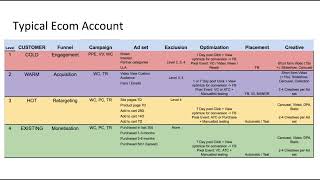
When you introduce a new country, it has no bearing on the countries you're already running. So if you're running US and UK in a campaign already and things are going well, you duplicate that same spend, same everything, into two other countries, let's say Canada and Australia, then that doesn't have any impact at all. However, when you do this H scaling, depending on how much you're spending and how big your audiences are, it can destabilize your account performance. So for example, if you've got a CBO campaign and you're spending it, let's say thousand dollars a day, and you want to scale up and duplicate that on a higher budget, there's an element of competition. It might not be high because you've got super high, super large audiences, but it's just introducing risk. So just bear that in mind that when you're country scaling, there's literally zero risk of audience and auction overlap. And I know some of you, for example, will do worldwide campaigns and look at running multiple countries in single ad sets and just see how the sales come in. The problem with that is with the pixel based reporting, you can't see the breakdown of the sales by country, so you're gonna have to do some manual check backs. If you've got your UTM tracking set up properly and you've got your offline conversions, you can do that. But if you don't have time to do that in time, then consider this is my preference. I tier my countries by top countries, then the next top. So like I have tier one, tier two, tier three campaigns where my top countries are in their own campaign and their own ad sets, then I have my separate like next level down countries so that I can manage the budgets effectively and the optimizations and therefore I'm not even. For example, if you run a CBO and you're targeting UK and us, I would have them in separate ad sets. There's zero competition because you know, no one's, you can't be in the UK and the US at the same time. And by the way, make sure you're targeting people that live in the location, not have recently visited. So if you've got a campaign with two ad sets, UK and us, they are not competing at the auction level. However, you're still potentially competing at the spend level. So this is just something when you're looking at your kind of your launch strategy, if you haven't launched already for Black Friday and then your scale up, it's another option to be able to spend more without introducing risk as well. Then the other one is audience scaling. With audience scaling, this is something which often comes up and I think probably most of you will know this already, but let's say you have a 1 million audience. When you look at that and say, hey, my audience is big, let's just make it 10 million. 10 million audience is big. Maybe it's a US based interest or a small look alike. The problem with that is when you optimize for purchase, you're already limiting the reach. It depends on the type of audience. But let's say you're optimizing for purchase on a 10 minute audience and there are half a million people that Facebook recognize as potential purchases. And I guarantee you will have seen this where your frequency increases and you're looking at that and thinking, how is that even possible? Because I've got this super large audience, I'm only spending this much a day, it's not a lot. But Facebook is upping my frequency. Well, guess what? That little subset of purchases is where Facebook is just hammering those ads. And now you're not dealing with a 10 million audience, you're dealing with half a million. Potentially it could be even less, could be more. I'm just using that as an example. So how do you actually reach more audiences? Again, you should know this from the BPM method. But as a reminder then you optimize for different objectives. So for example, most common for us is video views, page post engagement. I had a chat with Facebook actually this week and I, I often ask them questions that I know answers to just to get their perception, perspective. So I did ask them like, what are your suggestions for scaling on Black Friday? And the feedback was to go for a brand campaign, not reach, not traffic, not video views, not page post engagement, but to literally go for a brand campaign. And her argument was with a brand campaign, they're working on making sure they're hitting people when they're just casually browsing and hitting them in enough times so that they remember the brand and therefore they take action. Now I wouldn't recommend that for Black Friday. I would recommend that as a test. And I said to her, we'll test that with our store, but just not for Black Friday. Because I like the idea and the concept of it. I know people have made it work, but it works best when you've got a structured campaign set up behind it. It's not just set up a brand reach campaign. And things are going to be well having that plus a series of videos that are top of funnel, it goes wider and as she said, which I agree with, you will reach far more people in your audience and you will pay pennies for those CPMs compared to what you do for purchase events. So it's a fine balance between I want sales, I want to go bottom of funnel, but then you're going to get charged more versus I'm going to expand my funnel out and reach more people. Now, one of your questions might be, can I really do that on the day on Black Friday? Should I really be, you know, introducing all these new objectives and things like that? My answer would have been, you should have done that kind of weeks ago to build up your audiences. But on the Black Friday itself, I wouldn't necessarily go for a brand campaign, but there's no harm in doing another one which is optimizing for different objectives. Pixel events. Now, the thing about this is, if you imagine over the last four, maybe six weeks, there have been a lot of window shoppers. So people that are firing, add to carts. People that are firing initiate checkouts. Facebook have identified them as such. So you'll know if you optimize a campaign for add to cart, you will get super low add to carts. Probably not many purchases because these are just people that are. Maybe they either don't have money or they're thinking about buying and things like that, which throughout the year is really hard to predict what their kind of mindset is. But at least in this time of the year, October into November, you probably could guess that a lot of people are thinking about buying a gift on the Black Friday itself. If you are targeting add to cart or initiate checkout, guess what? A lot of those people will be in market. They may not be tagged up as purchase because they haven't recently fired the purchase event. And Facebook doesn't recognize them as purchases. But you can still test running that as well. Now this, this will allow you to tap into more of your audience. So this isn't a strategy for I want to fast scale up and this is one strategy you're going to use. This is something I would use alongside something else. So if I'm trying to reach more audiences by spending more, I can also in the same audience, if I want to reach more people in that audience by spending more, I can also reach more people by going deeper into that bucket and reaching out people who were not, maybe not in the buying phase as well. So they're the kind of different things that I'm queuing up and planning for my H scale. The other one is vertical scale. So you hopefully heard these terms through the BPM method and the cookbook. Vertical scale is literally just take what you've got and spend more money. That's the most easiest thing to do, the fastest thing, and I would argue it's safer than doing a H scale. Facebook's recommendation for this is that you don't scale more than 40% per day. My experience, I'll put DM experience, is 30% per bump, not nump. Now, the thing about this is when you are increasing those budgets, whether it's CBO or ad set, it will knock things into learning phase because it's considered a significant, significant change. But if you've got a good size audience, like over 1 million, and your budgets are not that big, you're not overreaching them already, that 30% bump will tell Facebook, A, I'm happy with performance, B, go and find me more people like you just found me recently. So there are caveats to this, obviously. A, that you've got at least three days of good performance and then B, that you're confident that there's more scope to scale up. Therefore, the question should be on your mind. If I launch something on Black Friday and I can see good experience and I don't have that, that kind of back view of previous performance because it's a new ad set, what do I do? The first thing is you've chosen an audience and a creative for some reason on Black Friday, there's I very much doubt you're going to launch something brand new on an untested audience, untested creative, untested lander on Black Friday. If you are, don't. So most of you will have done some prep and you'll be either scaling up existing campaigns or launching new campaigns based on audiences and creatives and stuff that, you know that works. If I'm in that second phase and I'm not leading into Black Friday and then scaling up and I'm launching something new. What I'm looking at is certain times of the day on account, time zone, where the performance is and then making decisions on that. So for example, my first check would be about 10, 11 o' clock in the morning to say, right, how's performance? And is there an opportunity to scale up? If I can see that performance is looking good on the data I can see in Facebook and my analytics, then I'll make the decision to bump up budgets. Now herein lies the problem. 12 months ago you could look at Ads Manager and you'd immediately see your conversions come through and be like, this is performing really well. I'm really happy now and this is my biggest concern for Black Friday is you may have some really good performance coming in, but the data is not hitting Ads Manager. So the decisions that you make may not be as confident as you would have done 12 months ago. And this is where you need to make sure. Obviously your UTM tracking is set up so you can track what's happening, but also keep a close eye on your E ROAS or your mer, whichever one you use, so that you're looking at how much you're putting into your top of Funnel spend and other parts of your ad spend, not just on Facebook but the other channels and that you're maintaining a high roas Again, I spoke to someone, I think earlier this week or last week about this and he's mentioned the top of Funnel isn't performing and things like that and said although you're increasing spend and your top of Funnel isn't showing direct performance, how does your overall roas look? And he said, well, actually looks good. That's what I'm looking at on Black Friday. How does my overall ROAS look? What other activity am I pushing out? Because that's the thing that's most important for me right now. I can't confidently look at my numbers immediately in Facebook and make a decision. I have to look at other things. I have to look at Shopify and Google Analytics. You can also upload your offline conversions literally hourly or every half an hour if you want, if you don't have the API. So I'm using using as many data points as possible.
More from Depesh
[Q&A] $4.3Million from $270k Ad Spend using The Ascension Path Model (APM) [AOA Podcast Part 2]
How I Made $4.3Million from $270k Ad Spend using The Ascension Path Model (APM) [AOA Podcast Part 1]
AI BUILDS FACEBOOK AD CAMPAIGNS 10x FASTER (Real Account Walkthrough) - The BPM Method
I Built a $1,000 Ad Landing Page in 10 Minutes Using AI (PRINT Money Using This)
60 Meta Ads Created & LAUNCHED in under 15 Minutes (Without Touching Ads Manager!)