2009 Dawn Ewing - Oral Obstacles to Optimal Health
Dr. Dawn Ewing explains how dental health, especially root canals, affects your whole body. She uses examples and illustrations to show how oral problems can create systemic health issues.
Chapters
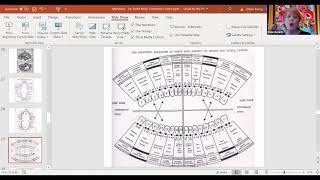
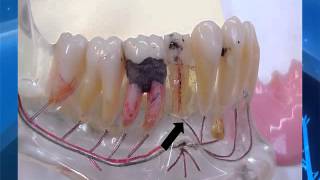
This presentation is entitled Oral Obstacles to Optimal Health. The design in this presentation was to allow laypeople to understand what the dental burdens in their mouth could be to their health. The following information is based solely on my personal opinion and intended for educational purposes. This is a picture of a soup bone. If I take a soup bone and I bury it in the ground, later I decide to dig it up, I won't see any marrow on the inside of that bone. I'll be able to see all the way through it. That's because in God's plan there's certain bacteria placed on this earth to scavenge dead flesh. Here I have a model of the human jaw. It's in plastic, of course, but it shows you the arteries and veins and how they come in through the bottom of the tooth. The tooth that's in the center has been cut in half so that I could show you that the artery and vein goes all the way up through the center of the tooth. This is the part that a dentist can remove when he does a root canal. Where the tip of my black arrow is, is a portion of the nerve and blood supply that cannot be removed. It always stays in the jawbone. This is a drawing of a tooth. Notice in the center where the pulp chamber is, it's red and blue. That symbolizes the nerve and the blood supply going to the tooth. That's the portion of a tooth that a dentist can remove during a root canal. All the part that's yellow symbolizes the dentinal tubules. Those tubules are hollow and they contain bone marrow that cannot be removed during the process of a root canal. Now, one of the things that's a little confusing when you're looking at this drawing is that the nerve and blood supply give you the illusion that they go in straight lines. Later you'll see how that's not necessarily always so. This is a microscopic view of the dentinal tubules that I was talking about. If this tooth were alive, all of those tubules would be filled with a marrow like substance. This is the cross section of those dentinal tubules. If you could somehow take each one of these millions of tubules in a front tooth and lay them end to end, they would stretch for three miles. Realize that these tubules are wide enough to accommodate up to eight streptococci abreast. I'm going to try to give you a simple explanation about how a root canal is done. A file is introduced through the top of the tooth into the canals. The file is twisted and turned in an effort to try to entangle the nerve and the blood supply as it is torn free from the inside of the tooth. This is reaming out the main canals. The idea in the center picture is that we hope to gain as much freedom of those canals as possible so that we can clear them out in an effort to be able to push a putty, either gutta percha or biocalyx or any one of the newer materials into the center of that tooth. The idea is you'd like to try to seal or caulk those tubules that we've been talking about. Now, here's where the problem comes in. The inside of the tooth is still wet. You just tore flesh out and a nerve and blood supply out from the inside of the tooth. Now, they do try to use some paper points to try to absorb as much moisture as possible, but there's still a small amount of moisture. Then this material that went in there slightly shrinks, which means that there's a gap between the tooth and the actual material that's in there. Let's envision your bathtub in your house. Let's say you're going to caulk the tub on a day that the tub is wet. Well, that won't work. You end up with a small amount of moisture underneath that sealant material. And bacteria can get underneath there and mold can grow. That's the problem with the inside of the tooth. Remember when I showed you the slide that shows show the tip of the arrow going right to a blood vessel that's at the tip of the tooth. You see, when you have dead flesh, that bacteria does not require a blood supply in order to move. We get back to our soup bone that we buried in the ground, and there was no blood supply in the ground carrying that bacteria. The bacteria is free to move, but it requires a blood supply for a white blood cell to move. So the white blood cell can only get as far as the tip of the tooth. It can't get inside. Yet that bacteria, which is anaerobic, can crawl right inside that tooth in order to try to scavenge the dead flesh that's inside the tubules. That bacteria is anaerobic. It lives without oxygen and requires a few things. A dark, moist, warm environment. Therefore, we have heaven inside this tooth. As that bacteria multiplies, it can either move the back outside of the tooth and destroy some of the supporting bone around the tooth, or it can get back into the bloodstream and circulate throughout the body. Now, your primary care physician may pick this up in your blood work. If he sees that your neutrophils are slightly elevated and the lymphocytes are slightly depressed, then that means that you could have a chronic low grade infection or your white blood cells may be too high or too low. That seems to be the main problem with the caulking material. Here's another representation of a dentist doing a root canal. You'll notice that the file is in one of the main canals, but you'll also notice some lines coming off to the side. Those are called accessory canals and they still maintain some blood and nerve tissue inside. There's not a way to clean those out. Here is an illustration of the gutta percha being placed inside the tooth after it's been root canal. You'll notice that the gutta percha material cannot go into the accessory canals. Occasionally, the patient will still have pain and have to be referred to an endodontist. Here we're looking at the anatomy of the canals. The earlier pictures that I showed you gave you the illusion that there were only two canals in these molar teeth with two roots. Sometimes there can be three, four or five canals in a single tooth. Here you will notice that sometimes the canals branch off, making it virtually impossible for the dentist to remove all of the dead flesh inside. Here I have an X ray on the left of two teeth that have apparently abscessed on the right. Those two teeth have been treated with root canal therapy. You will notice that the bone around them is still dark. It's assumed that doing the root canal treatment will totally take care of all of the infection in the bone. Realize that There are over 150 different bacterial strains that have been identified at the tip or apex or within the pulp chamber of dead or dying teeth. Since gutta percha doesn't show up on the X rays, heavy metals including mercury and lead are sometimes added to make it radio opaque or appear white on the X ray, sometimes up to 20% of its content. Other chemicals it can contain are formacresol or parachlorophenol. These substances can cause inflammation and infection as well as allergic reactions and compromise the immune system. Here's yet another problem with the material that's used to caulk the inside of the tooth. The material has to be warmed so that it's slightly malleable, so it can be pushed down into the canal of the tooth. Sometimes the material gets pushed too hard or the apex has a hole that's too large and the material goes beyond the confines of the tip of the root into the Bone supporting the tooth. So why can't you just simply take an antibiotic if the tooth re abscesses? Well, remember, the dentist took out the blood and the nerve supply that goes to the inside of the tooth. We only have a nerve and a blood supply that go to the tip of the tooth. When you take an antibiotic, it requires the blood in order to circulate and get throughout the body. So that means that that antibiotic can really only get to the tip of the tooth. It can't get inside the tooth where all of our bacteria is feeding off of the materials that are inside those small tubules. Here we see an image of digital imaging or thermography. We have some suspicious areas that may be dental infections. Remember, the bacteria inside a root canal tooth can travel to another area of your body. And remember that 75% of root canal teeth have residual bacterial infections in the dentinal tubules. Most dentists would look at this X ray and try to explain to a patient that this is an X ray of a perfectly healthy root canal. That's an oxymoron. You can't have a perfectly healthy dead something. That's like me taking you to a funeral home and asking you to vote on which of the 10 dead corpses that are laying there is the healthiest. What we can agree on is that it is a technically well done root canal. Doesn't appear that the material has gone beyond the tip or the apex of the tooth. Some dentists will claim that they can do something called a biological root canal. There's no such animal as a biological root canal. The root word bios means life. All the life force has been removed from this tooth. What I do want you to take notice of is that in this X ray we are looking at the root tips themselves, which don't always show up in every X ray. Once a year you will have a set of X rays taken called bitewing X rays based on the standard of care in dentistry. This allows your dentist to see in between the teeth, looking for decay at the earliest stages. Where are the root tips? They don't show up in this typically taken X ray. Let's look at this X ray and see what we see. At the bottom of the root, you notice that there's a dark area. That's an area where bacteria may be eating the bone. If we looked to the left on top of that, we notice what looks like a screw. That's actually a pin that is placed inside the root of the tooth in an effort to try to support the crown. That is above it. If an endodontist gets involved and decides to try to save this tooth at further cost, then the right root will probably be cut off, which is called an apicoectomy. They will just save off part of the root tip and clean out that area. If that fails, then the tooth will be cut in half, which is called a hemisection, and then a new crown will be placed on top. Realize that having the root canal, the crown, an apical, and a hemisection may still result in the tooth having to be extracted. The mantra in dentistry has been to save a tooth at all costs. And yet all of a sudden you've got eight to $10,000 invested in that tooth, which is just really not acceptable. See, somewhere in the 1920s to the 1930s, dentists decided that they could perform a root canal, or what I call taxidermying a tooth. But I don't really believe that there was much discussion with physicians because if they had talked to a doctor and said, hey doc, we're going to taxidermy your patient's tooth, and they asked, what does that mean? And they would give an explanation. Well, your patient came in and they had a finger that was gangrenous. And what we did was made an incision in the side of the finger and we pulled out all the meat and then we stuffed it with silly putty and we sewed it closed. Well, a physician would absolutely go berserk because they realized that means that the body would have to deal with a low grade infection for the rest of that person's life and it would be healthier to live without the finger. There isn't a place in medicine where they decide you have a bad gallbladder or a bad appendix that they're simply going to stuff the organ and put it back in, it's removed. For the sake of the health of the individual, let's look at this X ray. First off, what I need to tell you is this person is having absolutely no pain. The area that is above the root tip has become reinfected, either because the tooth next to it has abscessed or because the root canal is dumping the bacteria into the bone. The point in showing you this is so much bone has been destroyed that two teeth were required to be removed. I would again get back to you asking your dentist to take an X ray of the root tip of any root canal teeth that you have and simply ask him to take a few moments to compare it to the year before to try to prevent spread of infection to an adjacent tooth. Remember That a dentist is trying to save a tooth at all costs because that is the standard of care, and their licenses work under that. But they do try to reduce the bacteria that's in the tooth. One of the things that they're using now is ozone injections, because ozone can be used in the swimming pool to reduce bacteria. Bacteria. It's thought that it may reduce some of the bacteria around the tooth. Here's where my problem comes in. If I have a dead carcass sitting on my kitchen countertop and it's got bugs eating it, I call an exterminator to come in to spray for the bugs. But they don't remove the carcass because that's not their job. At some point in time, if the carcass isn't removed, new bugs come in. I don't know whether that's two days, two weeks, two months, or two years later. But at some point, new bugs do find the carcass, and the process starts all over again. When we're looking at the laser treatment of root canals, the crown is removed and the putty is removed in an effort to be able to shine the laser into the center of the tooth. Here's where the problem comes in with the laser. A laser can only travel in a straight line, so the canals that are the straight ones have the opportunity for the laser to get in there and be able to kill the bacteria. But all the bacteria that's in the sideways tubules is sitting there. Man, you better be glad you're not eating lunch down there, because those guys are getting nuked. Then the new putty goes in, which still doesn't make a very good seal, and a new crown goes on, which puts them back into their anaerobic environment. And all the bacteria in those sideways tubules Goes back to multiplying all over again. Let's talk about the laser for just a moment. The laser is a light and can travel through a tooth. If directed through a tooth without a crown, this will not remove the dead flesh, but may nurse the tooth for a period of time to help control the bacteria. By now, you can understand that a root canal cannot be sterilized. As a result, the trapped bacteria can mutate and migrate to infect either your heart, kidneys, eyes, stomach, or countless other body tissues. This theory is called the focal infection theory. It means that a person can have an infection somewhere and that the bacteria involved can be transferred by way of the bloodstream to another gland or tissue and therefore start a whole new infection. Here we have a tooth that's been extracted three weeks after it was lasered. We sent it to Affinity Labeling Technologies to find out the level of toxicity for the tooth. The five enzymes that have to do with the inhibition of ATP are at 38%, which means that the ATP in the body is going to be reduced. Adenosine triphosphate is what your body uses when it creates fuel in the body. You take in food, take in sunshine, and you create ATP. This tooth would reduce the body's ability to create ATP. This is the same patient. Three other teeth had to be removed at the six month mark after having the laser treatment done. Look at the toxicity level. It is at its peak. It can't go any higher than five. Look at the inhibition percent that those three teeth inhibit the body ability to create ATP by 78%. That's remarkable. If you will look at the black arrow at the center of the screen, you'll notice that it's pointing to a broken root tip. Now, the reason the dentist didn't realize that it was there is because he's only been taking those bitewing X rays that we were talking about earlier. There are also some other areas of the bone that when looked at through the eyes of a conventional dentist, they would think that the areas are perfectly healthy bone. And yet when some additional testing is done, there becomes very high suspicion that it's not healthy bone at all. That in fact there may be voids in the bone. Here's an actual photo after the surgery was done. See the arrow where the root tip was. And then you'll notice the areas where the bone tested that it wasn't very healthy. We actually were able to determine that there were some voids in the bone through the surgical procedure. Every tooth is connected to the jawbone by way of a ligament. Every bone in your body is connected to another bone by way of a ligament. In dentistry, it's a periodontal ligament. Dentists are trained to remove the tooth, but never told anything about removing the ligament. By having this in place, where the blood clot occurs sends messages to the brain telling the body that it needs osteoclasts and osteoblasts. It needs the blood clot to be broken down and carried away and the area to be filled in with healthy bone. Having that ligament there is like buying a brand new watch and the second hand is not running. But then you notice there's a slip of plastic between the battery and the watch. You pull the piece of plastic out and the second hand starts to work. That's the problem with Leaving the ligament in place is that we oftentimes don't get good healing of the bone. This slide is out of one of Dr. Bocault's books. It shows neuralgia inducing cavitational osteonecrosis, which is a very fancy name for an area of dead bone that can cause pain in the jaw. There are also other problems that could be similar to this one called bone marrow edema, where the blood flow can get in but it can't get out. It's kind of like someone who has asthma where they can take a deep breath in, but they have to push to get it out. That creates pull problems in the bone itself. These areas in the jawbone can be created from things other than just extractions. For instance, the jawbone ischemia can be from someone who smokes cigarettes, or from a protein C or protein S deficiency or blood clotting disorder, or someone who takes certain types of, types of drugs like Imitrex, where the reason that the person has a headache is because the blood vessel size is large. And so in effect, the drug tries to make the blood vessel size smaller so the person doesn't have the bounding headache. This reduces the blood flow to the jawbone as well. So what's the big deal? Well, energy can't go through dead tissue. No, it's. It's not a burden for everyone, but it is a burden. Does every area require surgery? No. Nattokinase, lumbrokinase and proteolytics are being used for those patients who have clotting disorders. There's also promise with low level laser that's being used in some of these areas in order to improve the circulation of the blood to the jaw. There are also some homes, homeopathics, that can be used to help the person that has a clotting disorder or problem with circulation to the jawbone itself. There are some areas that will require surgical intervention. Remember, the electric flow is invisible, not imaginary. Let's put a lamp on a table and plug it in and then turn it on and we see that the lamp comes on. If I unplug the lamp and I get an X acto knife and I trim open that rubber cord, peel it open and I get a pair of scissors and I cut out an inch of the wiring that's in there, fold the rubber back and then plug the cord back into the wall, you'll probably understand why the lamp won't turn on because the electricity cannot jump the gap of where there is no wiring. And yet in the instance Of a root canal or an area where a tooth is taken out and there's dead bumps. There's a small area in the jaw that the electricity cannot flow through. Your body was designed to be able to have electricity flow through any part of it, Whether it's an emg, an ekg, an eeg. It just doesn't matter. So what happens when there's a short or a blockage? I believe that God designed a perfect immune system, One that can pick up a phone, dial another part of the body, and say, hey, we have a problem, and I need you to activate some T cells and some B cells so we can take care of this problem. In other words, clean up on aisle nine. The problem comes in when we have a disconnected phone cord. No place else in the body do we take out nerve and blood supply and expect to keep a dead organ in play. This X ray shows you implant materials that are in place. There are several implants, and if you look at the tip of the white arrows, you'll see that is the floor of the maxillary sinus. You will also notice that these implants have gone beyond that floor, making them foreign bodies. The typical implant material used in the United States at this moment is titanium. Titanium can suppress a T cell count. It is a very conductive material. And the problem lies in if I were trying to take a fork and I stuck it in an electric socket and I bent it around and stuck it in the bottom, I could short out that entire circuit. That seems to be a problem here with the meridians. When we stick so many different metal conductive titanium implants into multiple meridians. You see, the meridians are much like the circuits in your home. Here I have a lamp in one room, A dishwasher in my kitchen, and a washer and dryer in my laundry room, and they don't work. I go out to the breaker box, and I see that one breaker has tripped. I push it back, and everything seems to work just fine. But on another day when the same thing happens, none of the switches have tripped. I call two electricians to come out. One tells me that he's going to have to replace all the wiring in my house because my house could burn down. The second one comes out and uses an ohmmeter to check two outlets that are between my breaker box and my lamp in the bedroom. When he finds there's no power going to the second one, he takes a screwdriver out and removes the wall plate from the wall. He simply reconnects the wire and finds out that Everything works just fine. Some dentists have equipment that they can use that will allow them to be able to tell if the flow of electricity in a particular area is causing the problem. This is a slide showing the acupuncture meridians where a flow of energy can go up and down the different meridians. The testing equipment oftentimes uses these meridians. Here in the United States, we seem to think that they are imaginary instead of invisible. Dr. Kim Ban Hanh demonstrated that the meridians do exist. He injected a radioisotope into an acupuncture point. The flow could be seen following the meridian, not an artery or a vein or a nerve pathway. This is an analogy of the meridian. Here I see a freeway that's temporarily blocked by water. If you went to an acupuncturist, he may be able to increase the flow of Qi on a particular meridian. That would be like me taking a giant vacuum cleaner and being able to remove the water from from the freeway so that I could temporarily use the freeway. But if that water is there because of a broken dam, then I'm only going to end up with another blockage. So the end point should be finding out what the root cause is. Here are some old charts that have been around for many years. This particular chart shows the correlation to the teeth and different muscles. Here's another old chart that shows the correlation between different teeth and different organs in the body. You see, acupuncture has been around for a long time, but it's actually the Germans that many years ago started linking the teeth with different organs. This chart is color coordinated, so so that you can understand how the teeth are on different meridians. Up to now, I've done a pretty good job of explaining to you how a tooth can interfere with the health of your body, but the health of your body can also interfere with the health of a tooth. The arrows are pointing to fillings that are on two teeth that are related to the lung and large intestine. This particular patient has had changes in her bowel habits. This could make the teeth more susceptible to decay. That's the theory that we're looking at. Sometimes a patient will come in with a toothache and we find that it's not the tooth at all, but referred pain from the organ that requires additional help. Could my mouth really be the source of my health problems? Well, research is now pointing us to links with biofilms and cardiovascular diseases. Secondary infections from hidden dental infections can happen any place in the body. The following information that I have to provide is thanks To Bob Jones and all his hard research, this is the link to the oncogene, or the cell that has to do with apoptosis, known as P53. It also has to do with the P21, which has to do with the cellular replication rates, and the CDK2, which has to do with the cell size. It seems that the bacteria inside the root canals, which is so mutant, can affect all of these three things in the body. It means that your immune system can't function like it's supposed to. So in the instance of cancer, we might say that a root canal and the toxins that are in there could be affecting the patient's ability to fight a tumor. It also means that the body could be so toxic that maybe a pancreas is not functioning like it's supposed to and the patient has been clinically diagnosed with diabetes. And yet when the mouth gets cleaned up, the diabetes goes away. The example that I use is when a woman is pregnant and she gets gestational diabetes, or if an individual is overweight and they get overweight diabetes and they lose the weight, or they have the baby and the diabetes goes away, it means that the diabetes was conditional. So here, if we have a patient that's diabetic and they do get their mouth cleaned up and the diabetes that was clinically diagnosed seemingly goes away, then my analogy would be that the body was so toxic the pancreas could not function like it was supposed to. Dr. Thomas Rao runs the Paracelsus Cancer Clinic in Switzerland. His research showed that 98% of women with breast cancer had one or more root canal teeth on the same meridian as the original breast cancer tumor. Dr. Weston Price found that root canals were deadly in 1925. I suggest you do your homework. So could the state of your health have anything to do with your mouth? Could the state of your teeth be a direct reflection of your health? How much good health are you willing to give away? Do you need a biological Dentist? Visit www. IABDM.org which stands for International Academy of Biological Dentistry and Medicine. Be a wise consumer and ask questions. After all, it's your health.
More from Dr.


Revolutionizing Dental Health Diabetes, Root Canals, and Holistic Healing with Dr. Dawn Ewing