Light Warrior Radio | Are Your Teeth Making You Sick? | Dr. Dawn Ewing
Dr. Dawn Ewing, executive director of the International Academy of Biological Dentistry and Medicine, discusses how dental materials like mercury amalgam and root canals can trigger systemic illness. She explains biological dentistry's approach to avoiding fluoride and BPA, safe amalgam removal protocols, and how cavitations may act as chronic infection sources affecting whole-body health.
Chapters
Foreign.
Hello and welcome to the light warrior radio show. My name is Dr. Karen Kan and I'm the author of the book sensitivity is your superpower. How to harness your gifts, fulfill your purpose and create a life of joy. And if you are new to my channel, would love if you'd hit the subscribe button and actually join us in the light medicine community where we talk about all sorts of things. Wellness, spirituality, all sorts of things. And today I'm really excited because I have Dr. Don Ewing here and we're going to be talking about her book. And it's all around the teeth. The teeth and gums and a lot of things. To be honest, as a medical doctor, I did not know and I am still learning, which is why I have Dr. Dunn on this show because I was learning from my patients. My patients were coming to me and were asking me, you know, how do I safely remove my silver fillings? And I was like, your silver fillings? Why would you want to remove yourself a fillings, right? And then come to find out this is many, many decades ago. But I was like, wait a second, these are not silver per se. They look silver, but they're made of mercury. And I'm like, well, if it's loud in your mouth, must be safe. And the answer was, no, it's not right? And so I did have a patient come to me after having removed a silver filling with a regular dentist, meaning a non biological dentist, and we'll define these terms, guys, by the way, and he got really sick. And then here I was, you know, as a holistic doctor trying to figure out what, what, what's going on. Long story short, realized there's a huge difference in how you can, if you wanted to remove these fillings. One of the mistakes that my, my patient was making was that they were getting 2, 3, 4 fillings are more removed at a time. And that is extremely or can be extremely toxic, especially if you do it conventionally. And then I found out some things about root canals which did not make me a happy camper. And we're going to talk about that today as well, because I'm all about holistic health and empowering you to live a healthier life. And so let me tell you a little bit about our guest, Dr. Dawn here. So she is a naturopathic practitioner in the Houston, Texas area and she's the executive director of, of the International Academy of biological Dentistry and Medicine and the author of the Tooth Be Known. And now it's in its fourth edition. I'm going to put the links below this video so you can check out the book as well as that association, especially if you want to find a dentist near you who is a holistic or a biological dentist. So she's an integrated practitioner. She offers a wide range of services to help you understand your current state of health and guide you through improving it gently and powerfully. Code gradually and effectively. Combining 21st century diagnostics, quantum medicine, the traditional wisdom of natural healing. Holistic services she offers include things like thermography and meridian stress assessment. In fact, a lot of her patients and clients come from other health practitioners like acupuncturists, like, like naturopaths, et cetera. So she's not really concerned about diagnosing or treating or prescribing disease like a conventional healthcare medical practitioner might be, or a doctor, but really helping you discover what's really the root cause of what's going on. And of course, her expertise is in the teeth. So without further ado, Dr. Don, please welcome her to the show. Yay. Thanks for being here. Thank you.
Thank you so much for having me. It nothing brings me better joy than to explain to people things that seem so out there and so difficult in some easy word pictures so that they really can understand how their body works. So that's grateful to be here.
Yeah, we're grateful that you spent the time with us. Can you tell us a little bit about your history? Like how did you become this holistic practitioner and learn all the stuff about dentistry?
Totally God driven. Because I don't think I would have been able to put two and two together to know that this was the path I was supposed to take. I started off in 1975 going to the University of Texas for dental hygiene. Now you have to know that back then here in Texas, dental hygienists had to learn how to do crowns, have to actually make the crown out of gold material or other alloys, how to do an amalgam filling. It was crazy because here in Texas we can't do it, but in some states you could. So we had to learn how to do it for two years. And you did it on a denture. Well, you're not working on a patient, so you don't have to wear gloves. You don't have to wear a mask. At that time, you didn't wear masking gloves even when you were working on a real patient. Because we didn't know to. I mean that you have to look back to what 1975 was. And so I was dry drilling with no suction, no water on this little denture over and over again. No learning to place mercury fillings. And I was breathing all of that. I don't have any fillings myself. But at some point, I became mercury toxic. I didn't know it because I didn't feel odd. I just was trying to get pregnant. And every time I get pregnant, I would miscarry somewhere around month four. And my obgyn said, you know, I think something's not right. There's a lot of research on maybe using folic acid. So I started taking 800 micrograms of folic acid. I have an MTHFR flaw, and I can't break down folic acid. We didn't know that at the time. There's so much that we didn't know. So all of that mercury exposure was getting in. Even my God given natural ability to get things out wasn't functioning correctly. Because I moved out to the country, I oddly became a member of a fire department. I kind of made a call and it was a car accident. They found out that I was a dental hygienist at that time. Oh, come join our fire department, because I bet you know how to do cpr. And we need more people out here in the country that can do that. And that led me to becoming an eca, then an emt, and then finally a paramedic. And then I became a licensed paramedic. And then I got tired of just volunteering and I went to work for a 911-service, kind of in between my days working at a dentist. And then that led me to working as a flight medic and traveling around the world. And that intrigued me because by that time, I'd given birth to a son that was autistic and nobody knew what was wrong with him. Autism was not well diagnosed 31 years ago. And yet when I was in other countries, they were going, oh, no, we can tell you what's wrong with your kid and you need to change his diet. And then I would come back here, talk to his doctor about diet changes up. Diet doesn't have to do with anything. And so I had this conflict. I'm in Asia and they're using herbs. I'm in India, they're using herbs. Here we don't use herbs. We just use prescriptions and nothing else. So it led me to go back to school to be a naturopath. I finished that and realized there was a program in integrative medicine where you literally would not learn to do each other's scopes of practice, but you would learn the value in networking. So you understood when there was deficient chi. You understood when chiropractor was saying that, you know, that they needed to be aligned and they couldn't hold their alignment. And it just gave you a better perspective of what was going on, this, with this person. Basically, you learned to be a medical detective. You went back through their history and said, oh, my God, what is everybody missing? It's just right here, clear as can be. But until you see that, you don't even know what to look for. And then once you see it, you can't unsee. Just pops up every single time. So I have a very, very unique path. I get that I am. Have dabbled in a bunch of different things, and I am where I am now, and I have a bunch of information in my head I wish I could transfer to other people and clone myself, but I haven't figured out how to do that yet. So that's my story. I'm sticking to it.
All right. Well, that is fantastic. Well, and they say that necessity is a mother of invention, meaning that sometimes when things happen to ourselves, then we have this impetus to what's going on and to figure things out. And I know it is for me as well. Like, you talk about yourself being a detective. I call myself a spiritual detective. So, you know, it's, it's that, that curiosity, like, what's going on. So I think that you're definitely sharing your mission and purpose, you know, with the world. So we're really fortunate to have somebody like you. And, and we want to know, like, for the people that are brand new to this, you know, that are like biological dentistry. What's biological dentistry? Maybe we can kind of go back to the basics and define a few things. So let us know what, you know, what biological dentistry is versus conventional dentistry.
Okay, first off, a biological dentist has. Have a conventional dental license. I mean, they, they have to start someplace, and then they have an epiphany. Wait a minute. I was told in school that this amalgam won't release any mercury, and yet it's 50% mercury. How can that be? I mean, we're, we're convinced in school that once it's in the mouth, it's safe. It's. Don't touch it, don't breathe it before you get it in the mouth. And the moment it's in the mouth, it's fine. The moment you take it out, it's toxic again. It can't go down the water trap. It has to go through a special filter. You can't swallow it, you can't touch it. But wait, the gums were touching it, the tongue was touching it. It was safe then. It's the oddest thing, but when you look at the money trail, you start to realize that the American Dental association owns the only patents left on mercury fillings. And so they really, as they are funding some of the dental schools, don't want to shoot themselves in the foot. The only dental school that I am aware of that does not make it mandatory for a dental student to place amalgams is New York. Everybody else, you still have to learn how to place amalgams because it is still the standard of care. Even though there's been the Minamata convention that has a phase down of mercury not being used in anything. Phase down of amalgams as well. And in some countries, a dentist can be fined for using an amalgam, but not here in the United States.
Wow.
Still use amalgam as the standard of care. That's what your insurance will pay best on.
Right? I remember, yeah. Patients who were on Medicare, Medicaid, and they had to, if they wanted to use that insurance, they could only go to this one dentist that was hired by the hospital. So it was salaried. And that was the only thing he was allowed because of money, whatever was allowed to put in, they could not request anything other than.
And it's not like, it's not like you can say that you're putting a mercury filling in and put a white filling in and just have them pay the difference. If you put. If they are turning it in for insurance and it says an amalgam, you better have placed an amalgam or you're going to go to jail. So, yeah, it's crazy that the person is not given a choice to say, let me have a white filling. But the white, white fillings aren't all safe. Some of the white fillings had bpa. That's where biological dentistry comes in. A biological dentist has to go through training. Now, that's a caveat because anybody can join an organization, get their name on the website that they're a member. They may not be trained. They may not have gone through any training whatsoever. And so when I took over, which would have been almost 30 years ago now, that was very frustrating to me. So I created a certification that a dentist had to go through and then had to prove that they had all the safety mechanisms that we needed in order to get a certification as a certified biological dentist. And then we trademarked it because I didn't want anybody to be able to say that they were certified biological dentists. So I've tried to protect the lay person as best I can, but they do need to know that anybody can join any organization and say on their website that they're anything. Right now I'm dealing with a doctor in Florida that's written some very, very nice things about biological dentists all over his website. He's not even a member. But if you look through his website, it makes it look because he has so many articles about this is what biological dentists believe. He doesn't say, this is what I believe. This is what we believe. He says, this is what a biological dentist believes. So he's not. He's not lying. But it. It certainly misleads the public that that is what they're going to get, and they're not getting those services there. So they keep calling me, saying, one of your members. And I'm going, I'm sorry, he's not one of my members. Wow. Wow.
Oh, man, what a pain.
Biological dentists would do compatibility testing to make sure that you're not going to be allergic to anything that we're going to do. If you had to have a white filling done, wouldn't you like something that you're not allergic to? And I hate when somebody says, well, this is safe, because everybody's okay with this. Yeah, everybody's not okay with all the fruit in the world. There are plenty of people who are allergic to nuts or strawberries. There is no everybody. You might be reactive to the glue that we use to keep that white filling in there. About that, you know, the anesthetics, they're all neurotoxic, all of them. But we would like to find something that is the most compatible for you, because people won't get dental work done unless they're numb. A biological dentist would look at a root canal as a dead tooth and understand that not everyone is going to do well with something that's dead in their body. And all the breakdown from that tissue, they would understand that that root canal would have mycotoxins in it and that not everyone does well with mold exposure. It's just a different. They don't use fluoride. I mean, that is so ingrained in us through the dental schools, that fluoride is healthy and good for you, and yet it is a known neurotoxin. And so we shy away from it at just about all costs. So it's not just finding a biological dentist, it's finding one that's educated and that has made the investment in themselves and their staff and follows the rules.
Yes, thank you. I appreciate the detail. I remember one time my patient was impatient to get an appointment with someone. And this is a different patient that I'm telling you before the call and after the fact, when I, you know, said, well, did they do this, this, this, you know, there was like this whole checklist, including the, the whole air exchange. I don't know what to call it. I forgot the air exchange thing. So the mercury vapors, minimally, you know, they get sucked into the system and it's not just blown into the air anyway, so apparently they did not have that. And they said it was broken or that day. And I'm like, oh my gosh. And you did it. Like, I would have just walked out of the, you know, anyways, I was not happy with, with the patient. And that person did suffer a little bit. Now, of course, doing what I do, frequency medicine, things like that, we can minimize, you know, after the fact, but preferably do it healthier to begin with. So could you point without going into huge detail like, like some of the differences between if somebody went to a regular conventional dentist to say, remove their silver fillings because they think it's toxic versus a biological dentist?
Any dentist, any dentist has a license to remove mercury fillings. So when you ask the question, can you remove my mercury fillings? Any dentist would be able to tell you, yes. If you ask them if they follow a protocol, then you would expect to hear things like the patient is networking with the primary care to make sure it's okay to remove their amalgams, to make sure that they have an at source, which is what you were talking about. It's a huge suction that comes right up. When I say huge, it's huge. It's not the suction tip that goes in your mouth. There is a suction tip that goes under the dam. There's a dam that's placed on the tooth that does not prevent the mercury vapor. The vapor goes right past that dam, which is why there's a suction on the inside. There's a handheld suction on the outside, right by the tooth. And then there's this huge at source mercury vapor collector that is placed as close to the face as possible. That's not just to prevent mercury exposure to the patient. It's really for the employees, for the staff. Because there's this huge amount of particulate that comes out kind of like graphite, it's required that you have a constant spray of water on the tooth to try to keep the heat down that's generated from this diamond drill that touching the tooth, creates this invisible cloud of mercury vapor. And. And just because it's invisible doesn't mean it's not there. It's there. You can use different filters to actually see that, but that particulate ends up on the person's shoe. So if you're following all the guidelines that a biological dentist would. Would have to follow, the staff would be completely covered in what looks like a zoot suit. They just have. They have their safety goggles and they have their mask. And other than that, their hair is covered, their neck is covered, their wrists are covered, their hands are covered, their shoes are covered. Because if that particulate gets on their shoes, which they wouldn't know because they can't see it, if it's not covered up during an amalgam removal, it should be thrown out. That's including the patient. So we have to cover the entire patient. We cover their hair, we cover their face. There's just a hole for the mouth, and then we put the rubber dam on top of that. I have photos on the website, on the IABDM website, and I have a checklist for people to take to their dentist so that they can ask, where's your mercury separator? What do you. Where's your card that shows that you've only used this mask for your assistant 50 hours? It has to be changed out every 50 hours. These are not guidelines that we made up. These are guidelines that the EPA and the OSHA has decided are safe for the employees. And you know, it's interesting, because most dental offices are sole proprietors, so that means they're not an employee. They have employees, but they themselves are not an employee. The OSHA rules were written for employees for their safety. So the dentist is not required to take those safety precautions. If he wants to kill himself, he can. He should offer those for his employees that are exposed. Now, if the dentist office has been incorporated, now the dentist is an employee of the corporation, even though he's still the owner, he is now an employee, and he is required under OSHA rules to follow all the OSHA rules.
What if he's. Or she is. Sorry, I'm just gonna move my camera here. Is an employee of the state. I'm thinking of the state and federal prisons, and they hire dentists, they're on salary. But I've never heard of these sorts of precautions.
No, they don't. It is the poorest regulated. There isn't enough funding to have enough ocean inspectors go out, which is why it's very eye opening when somebody hears about us and they kind of poo poo. And then we show them all the science behind it and we show them all the legitimate rules that are out there that they could be fined for. And they just about have a heart attack. Because it costs a lot of money to get these items in your office. It costs a lot of money to provide. These are. We're talking about throwaway stuff that, that you come into this jumpsuit and you put everything on and you have to cover the patient up. It's so bad that required by osha, a dentist should be taking, let's say like a, an inexpensive drop cloth that's thin plastic that I could open up a huge sheet of should be taped to the walls. If they have anything on their walls, like pictures, they need to be covered up because this particulate gets thrown out at huge levels. So we're talking about 15, 20ft away. You will still be able to find mercury particulate once the amalgam is out. Before we place the new filling, we have to take all of that stuff and bundle it and take it out of the room and put on clean stuff and take the instruments out into where they're going to be sterilized and bring in sterile instruments to place the new filling because there's mercury particulate on everything. Otherwise we're just putting some mercury stuff back in there mixed in with the white filling. Those are the rules. If somebody is following the absolute rules, it's insane what has to happen. Therefore, it makes it more expensive. So a dentist will usually try to do a quadrant at a time and say, okay, we're gonna, we're gonna do everything that's in this quarter of your mouth in an effort to not have to charge you this fee to pay for all of this stuff we have to do for each tooth. So let's just do it one quadrant at a time.
Okay. Yeah, that makes a lot of sense. Oh, my goodness. Well, I, you know, you were talking about the, the heat and the diamond drill and that could volatilize the mercury. Yeah. And there's, and we can link it below as well to this video is there's a video on YouTube that clearly has one of these filters. And all they did was have a fake tooth with the mercury amalgam and they're all get it up in the suit. But they actually show just this tooth put into hot coffee. And then they show that you could see the mercury vapor coming out of the tooth. Then they actually show it after being tapped on like as if you're chewing and you put some pressure on it, it also volatilizes. So like everybody's chewing? Yes, like everybody uses some sort of hot coffee, tea, soup. I mean when do we not?
Well it's not just hot, it's anything that's cold, that's acidic. So I only.
Acidic.
Right. Lemonade, Coca cola. I mean so if you, if you brush your teeth or if you use them to chew or if they're in your mouth when you drink anything hot or cold, you're going to expect to have some kind of mercury vapor come off of it. Now if your body is completely functioning correctly, it is supposed to discard it. Not all of us have a body that works correctly. I have that the MTHFR as well as the comt snip and it makes my body not work correctly.
Well, I remember in Dr. Dietrich Klinghardt's one of his conferences many years ago, he did have a biological dentist do a presentation. He said that he had invited a number that refused to be on camera at that time. But one was brave enough and he showed us. They did this experiment where they put amalgam in, in this case sheep, you know, like real amount in a real sheep. And they radio labeled it you probably. Yes. And after I think it was 24 hours and 72 hours or whatever it was, they showed where the, the mercury went and of course it was black right where the teeth and jaw was. But what's amazing is you could see it go into the bone and then you could see it into the different organs, the kidneys and.
Yes, and that research was po food because they said sheep chew like this, they grind. So they redid the, the research completely using monkeys. Oh, and it came out the very same. But you're right, that was the University of Calgary that did that research and if you look it up that it's out there all over the place. But again, well intentioned dental students were told and are still being told the mercury doesn't come off the amalgam. You guys don't have to worry about it. But it's an occupational hazard for anyone in the dental field. I mean we're looking at Denmark. They, the dental assistants actually sued the dentists because they were not being protected and they could prove that the mercury levels were really high. I mean it's so well known in other countries and yet we pride ourselves in, in the kind of health care that we have and we think it's better than other countries. And yet my experience is there are a lot of countries that have better health care than we do. There's a money trail on a lot of what we're allowed to have done and not have done.
Yes, agreed, agreed. Oh, my goodness. Well, and then, you know, when. When people go to their dentist, they often, like, for example, if they break a tooth or something like that. I know we're switching gears a little bit, but if they. If they break a tooth or something like that. I heard through this conference with Dr. Klinghardt that one of the dentists. Another one, another dentist, was very, very upset with his colleagues because he had gone to some sort of training. This is, again, decades ago, where the whole point of the training was to do root canals as quickly as possible and to earn as much money as possible. And he was so sickened by it. He just swore like he was not he was going to do the exact opposite and teach people what was really going on. So he was showing us X rays of before and afters of people with root canals, and he said, see this shadow? This is infection. The dentist will just ignore this, but this needs to be cleaned out completely and that root canal removed. So I just.
What.
What's your experience with, you know, broken teeth, root canals? What are the alternatives?
The.
In.
In school you are taught, oh, my goodness, the decay went into the nerve or the tooth has abscessed on its own from trauma. We're going to go in and take out the nerve and blood supply, and we're going to sterilize the tooth, and then we're going to put a crown. You'll be just fine. We'll set up a payment plan for you. The best thing for you is to keep your own tooth.
Yep, that's what they're told now.
Now let's back up.
Natural.
Yes. Let's back up and let's tell you how the cow ate the cabbage. You're going to pretend you're brushing your teeth before you go to bed. They feel nice and slick. You go to sleep, what do they feel like the next morning? You haven't gotten up and had anything to eat or drink, but they're slimy and you have bad breath. Oh, my gosh, it's awful. A healthy tooth. Every time your heart beats, there's a little bit of gradient goes through the dentinal tubules. It's like bone marrow that goes sideways in the tooth. So that fluid makes its way through to the outside of the tooth. Basically, your tooth detoxes 24 hours a day. Day. But we. Hold on a second. I this up.
I remember you saying this in that YouTube video, and I was kind of going, ew, gross.
That pressure gradient makes the, the fluid go through the tooth. So a healthy tooth pushes its fluid through the tubules to the outside so it detoxes. So you can think about this way. Your tooth poops while you sleep, which is why it smells so bad the next morning. Now, it happens all day long, 24 hours a day, but most of us are eating and drinking, and so we're not as aware of it as we are when you sleep. Which means that when you crown a tooth, you smother the tooth and prevent it from being able to detoxify.
Okay, can you define what crowning a tooth means?
Putting a shell or condom over the entire top of, of the tooth. Whereas we'd rather have a three quarter crown or an inlay or an onlay.
So that it's an inlay and an onlay.
You can leave a window of enamel on the tooth. I'm so sorry.
Okay, well, this is good because I actually don't know these terms. And so this is really great for those of us that don't know all the biological terms. Ask me anything medical doctor, and I can pretty much answer you. But for dentistry, not so much. Don't tell my dentist uncle that I don't know much about it.
You're looking at the tooth as a box. Okay.
Box.
Okay. If we could do a filling and just do a portion of the tooth versus putting another box on top of the box. A box on top of the box. A complete covering is a crown.
Okay.
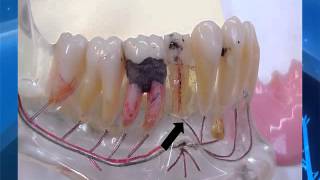
And when we can leave a window of enamel on the tooth, that's natural, it, it makes all the difference in the health of the tooth. When we crown a tooth and we're using, we're taking away all of its ability to detox, you increase the chances of that tooth dying because it's basically smothering in its own waste. So we'd like to leave just a portion of enamel somewhere if, if we can. There are certain times where a tooth breaks and you, you just do what you can for it. It's easier for a dentist to do a crown than it is to do an inlay or an onlay, because now you're creating a custom puzzle piece and making it fit in that tooth. When we do the root canal, we are told that we're sterilizing the tooth. Now again, we get back to what is fat. We can remove the nerve, we can remove the blood supply, we can remove the lymphatics. What we can't remove is up to three miles of flesh that's going sideways in the tubules. It's not possible to remove that. But the moment you disconnect the blood supply, four minutes later, you're going to start having dead tissue. So we hollow out the center of the tooth, we pack it with a putty that we were told would seal those tubules.
Right.
But it doesn't. It shrinks because you put it in warm, and then it shrinks and there's a gap. Now, remember I told you that a healthy tooth, its fluid goes out. I was taught in 1975 that the tooth is like a tupperware container. It's sealed. Nothing can get in.
Yeah.
No, that's not true. Those tubules, those microscopic tubules that allow fluid to go out, Once you remove the blood supply, bacteria can come in. And. And God put bacteria on this planet to scavenge dead flesh. So you pick up a fork or a spoon or a straw and you put it in your mouth. And that bacteria. There's dead flesh in here somewhere. Let me find it. It gets where it needs to get. Gets inside that tooth. And now it's in heaven. It's in a dark, moist, warm environment. We have never removed a root canal tooth that has been sterile. It has bacteria, it has fungus, has all kinds of virus. It has parasites in there. And you can get that tested. So now I tell people know in dentistry, we have a nasty habit of taking things out and throwing it away because we didn't know there was some place to send it. Now we can send it off and find out what bacteria, what with this person who has all these random symptoms, only to find out when the tooth results come back that the person inside the tooth have babesia, borrelia. Oh, wait a minute. My patient has lyme. Well, I didn't even think to do lyme testing or I'd done it, but it came back negative. Negative. Now this person has Lyme. What if they have H. Pylori? H. Pylori is precancerous. Is it fair that we throw that tooth out and don't give the physician an opportunity to know every single time that person was chewing that whatever was in there was squishing out into the jawbone that still has blood supply and carrying that bacteria, virus, fungus to other parts of the body? It's not fair. Plus, that bacteria that's in there inhibits the body's ability to create ATP. So now the chief complaint we hear from the person is, I just am tired all the time. And we try giving them glutathione and we can't breakthrough because we've got this toxin coming off of this bacteria waste that is inhibiting the body's ability to create ATP. It's insane how if things were working in a perfect world, the dentist would say, this is what I was taught to do in school. I'm, I'm gonna try to taxidermy your tooth. I know that sounds crazy, but I'm going to call your primary care and I'm going to tell them that if they see changes in your blood work, like the white blood cells go up or the neutrophils go up, the lymphocytes go down and they feel like there's a bacterial infection, I want them to send you back to me because I also took out the nerve. And you won't have any awareness that you have an infection here. You'll be clueless. And we don't take X rays of the root tip of the tooth. We just take the part that's in your mouth for cavities once a year, every five years or so. We might take the Panorex, but we're not going to be able to monitor that. So I won't know to take an X ray unless your primary care. And then the primary care would get the results. When the tooth is taken out, I get phone calls from primary care that go, what kind of test is this? Let me tell you what you don't know. Eight of these bacteria could only be in a cadaver. They would have had to dig somebody up, scoop some of their tissue out and send it off as a sample. I'm going, calm down.
Wow.
Did they tell you that this was a root canal tooth? Well, that just means there's a crown on it, right? No, it's a taxidermied tooth. Why would a dentist do that? Because that's the standard of care. That's what they were taught. And they were taught to tell you you would be okay. It's the same thing I was taught to tell people. I didn't know how to read blood work, so I didn't know if there were any changes when I started reading blood work and, and going, what? You have a bacterial infection that's been there, it looks like, for the last four years. But I don't understand where finally to say, do you have a toothache? No, but if you want me to have one, I will. No, I don't want to think. I'm just trying to Figure out what's going on. Have you ever had a toothache before? Oh, yeah. Four years ago. I had to have a couple teeth, root canal. I'm going, wait a minute. Let me send you to your dentist. I want them to take a picture of the root of the tooth. And oftentimes the body can't deal with that and it keeps breeding and it starts to disintegrate the bone around that tooth. For me, it's not about the bacteria. I recognize it's an issue. It's an electrical disconnect.
Yeah.
Where can you get a house and cut out wiring and expect it works? Where can you buy a TV set and cut the cord and expect that it's going to work? Our body is electric. I can't tell you the number of times where I'm sitting there. This last year, we took out a tooth with a woman that had non Parkinson like tremors. I was trying to draw blood on her, and her arm was moving so bad that I was kind of bouncing in my head to be in rhythm with her. And then the tooth was removed and all of her clonic tonic movement stopped. Wow. How do you explain that? Yes, we sent the tooth off for pathology. Yes, it came back with, I think, 12 different things that affected neurology particularly. But that bacteria would not have worked out of her body completely. The second that tooth was taken out, it connected. It's just like having a lamp that the cord that's been connected in the part of the plug is in the wall outlet, and you touch the two pieces of wire and you make the gap of dead air go away the very second that light comes on.
Wow. So by taking that dead, diseased, whatever that is, tooth out, her body was just like, hey, I can communicate now. Yep.
Sometimes we have to go in and scoop out more dead bone in order to get that. But that was a very, very visual holy crap moment. Wow. What just happened here? Because that's not anything you're taught in school. I mean, you're. You're actually doing against what you were taught in school, which is to save a tooth at all costs. Yet when I started looking at blood work, I'm going, but that's not fair. The patient's not even told what the costs are, and we don't know until we do it. So it was my friends that I had sent to every dentist that I'd ever worked for that I had told them, you need to have a root canal on this tooth. You need to have a crown. This is what you need to do. Those are the people that I was now having to say, you have an autoimmune, and I think it's because of your teeth. Whereas the people that I was looking at their blood that are affectionately what I would term not out loud, but in my head, these are my pumpkin people. They're missing every other tooth, like a pumpkin would. I was taught that those people, their teeth should shift. They wouldn't be able to chew, they wouldn't be able to digest, and they would die. And that is what you needed to tell people, so that they would replace their tooth immediately and not wait. And yet now I'm looking at blood work going, somebody didn't tell me the truth because these people did what I told them to do, and they're the sick ones.
Wow.
So do you think that in countries that can't afford implants or root canals, that those people die when they have a tooth taken out because they can't chew and digest their food?
Well, I think. I mean, in the first world, it's. I hate to say it, but it's more aesthetic.
Yes, it is. It's all about the cosmetics. It's all about the cosmetics. Now, do I believe that the teeth tip and that you lose functionality of a good bite and can that alter things? Absolutely. You know, it. It alters your airway. There's a lot that it can alter. I'm not ignorant to that fact. But there's a bare function that we are told, you have this window and you have to replace this tooth. We did bridge work for years, and now we're telling people, you can't do a bridge. You have to do an implant. If you don't, the bone will disintegrate around here. And patients don't know. They don't know what to believe.
I don't know. I'm a medical doctor. I don't know. So tell us. So I heard and I don't remember, like decades ago when I was at that conference, A bridge is safer. So can you. Can you tell us what?
I'm not even going to say the bridge is safer because you're tying two teeth that move. You have a craniosacral movement. You know, some days you floss and your teeth are tighter than on another day where there's a bigger gap in between there. And so I'm not going to say that a bridge is the best option for some people that have cancer in their immune system, can't handle anything. I would coach them on a removable partial until they have enough good health to give away and we look at what our options are. I don't want them to spend a great deal of money on dental work if they're stage four and I think they're going to pass on anyway. I would like to relieve the burdens and see what we could do to get energy to go places that hasn't been able to go and see if they would heal on their own. There isn't anything as good as what God gave you. Your original enamel is priceless.
Right.
And. And there's even a cost when we're talking about implants. Most dental implants are titanium. All titanium has nickel. Many women are reactive to nickel. Nickel isn't it?
Yes. My mother included. And she has had all sorts of issues with her implants. I didn't even know she was getting implants. I didn't know that she had even any problem in her mouth. And she's whatsapping me right now that she had to spend another four hours with her mouth open. And. And the. The dentist actually swore because whatever he put in one just fell out after the four, two, whatever. How many hours?
The dentists are not told that they need to look at a vitamin D lift on a patient. So how can you take out a tooth and expect that bone is going to fill in if you have a vitamin D of 8?
Yeah.
How is that going to happen? It needs to be between 60 and 80 for a full year in order for them to modulate and remodel good healthy bone in that area. That's where biological dentistry. We make them network as a team with a primary care physician and say there's things outside of your scope that in order for you to get the best results for your patient, you're going to have to create a team. You're going to have to. Because the primary care physician doesn't know about the dentistry. They don't. Yeah. You guys see patients and everybody has sleep apnea. But do you know why? Because for years dentists removed bicuspids in an effort to get teeth straight faster. They took a mouth where God thought it should be an inch to an inch and a half longer and they shortened it. And that person's tongue doesn't fit in their mouth. So when they sleep at night, what happens? They're. They're intuitively trying to get their tongue off the back of the throat. So they clinch and grind. This creates a problem for this person that now their cortisol levels are off because they're hypoxic at night. And dentistry created that which is why in 2017, the ADA mandated that dentists must screen for airway issues. So everybody's dentist, whether they're biological or not, should be looking at their airway to see if there's a problem. Sometimes we put a mandibular enhancement appliance in in order to advance the jaw forward and lift the tongue off. Other times, jaw surgery is required or the person goes on a BiPAP or CPAP.
Yeah, my patient, which was trying some sort of dental appliance, you see, that was really uncomfortable, but I didn't understand what it was for or why it was there. And it makes sense that to try to shift the. The anatomy or the alignment you got.
Now, a lot of times we're expanding the jaw, even on adults where it. We're going through jaw expansion. If they have to wear it during the day, that's the appliance they're in. If they're just wearing it at night, it's just to bring the jaw forward at night while they sleep, to make the tongue lift up off of the back of their throat.
Okay, what about wisdom teeth? I had all four impacted wisdom teeth taken out. And from now, the work of Weston A. Price realized that, you know, my parents went from eating whole food in Hong Kong and China, came to Canada, and I grew up as a young and in Canada, and we started eating what everybody else was doing. Right. Like McDonald's and macaroni and cheese. Oh, I hated that. And all sorts of what we would call junk food now. And so my jaw became narrow and I couldn't fit these teeth. So what do we do with people that have had these wisdom teeth taken out? Is it, like, horrible for their apnea?
You. You test it to see if it's an issue, because dentists were taught to remove a tooth and not to clean out the ligament. So the teeth are connected to the jawbone by way of a ligament. And if that ligament is not removed, or if they had a dry socket or if they had a clotting disorder or if their vitam D level was low, then it didn't fill in with healthy bone, and there's actually a void there. Now, we call that a cavitation. It's kind of like a cavity in the jaw, but it's not. Yeah, it's a void in the jaw. And that particular meridian goes to the heart, the small intestine, and on the bottom, it goes to energy exchange. So you will hear oftentimes someone say, I have an irregular heartbeat. It's not necessarily a thyroid issue. It could be atrial fib. And. And then they get these areas cleaned out and they don't have atrial fib anymore. How do you explain that? I mean, as a physician, you just go.
Surgery. That. We're talking orthodontic surgery.
No, we're talking about surgery where a dentist makes a small incision in the gum and uses a bur and sets it on the cortical bone and starts the drill bit going. If that were solid bone, it would feel like they're pushing on a tube before. But what happens is it pops and it goes into a void. And then they make a small window in the cortical bone, and they go in and they scoop out what looks like dark blood with oil beads on it. Now, you tell me, if you drew blood on somebody and you saw beads of oil in there, what would you think?
You.
You'd freak. As a physician, where in the heck did this come from? But it is the old discarded blood clot that could not be carried away because the ligament was still there. So the osteoblast and osteoplast that got messages to go to the area where the blood clot was and break it down and then march in with healthy bone could not get through. So this area degraded and there's fatty tissue.
Yes. And. And it's on the panoramic. Can you see that?
Sometimes you can. It's not a C feature. Even when we do a cbct, we can see if there's thinning bone, but because it's filled in with gunk. Right. You have an illusion that there is something there. It's more an energy test. So like Dietrich Klinghardt does muscle testing. I use eav. It's just an electrical test. If I see something that's an anomaly on the X ray, but I can get energy to go through there, then a dentist may tell you that they see something, which I would agree with. But doing surgery in that area is not going to improve your health. What we're looking for is something that will improve your health. And so the way I translate that is if you. You have four wisdom teeth. So I'm going to say if you had four moles, and three of those moles always look the same ever since you'd ever noticed they were there. But one of them now is irregularly shaped and it's dark and it started to raise. That one is the suspicious mole. We would remove that one and hopefully improve your health. The other three, if we take them off, it's just going to be unnecessary. Surgery. I'm not going to say that it's going to improve your health, and maybe it would prevent them from turning into something later. But it's very, very iffy, and. And we want to take a conservative approach. We don't want to just start telling people because you had wisdom teeth out. You should go in there and drill in an open bone biopsy to see if you have cavitations. And I don't tell people that. Just like I tell them, look, you have a root canal. I don't want you to just go randomly get someone, take that tooth out, get it tested, find out if it's a burden to your health. And if it is, then you would want to evaluate how you're going to handle it, which will probably be removal. But I have tested people that are very young. They bumped a tooth and it did its own root canal, meaning it died slowly. And I tested. I'm going, go figure. I see you have a root canal, but I don't see that it's a burden for you. Now, in my mind, I am reminded that when I went through college the first time, I could stay up late, drink whatever I want, eat whatever I want, and still get to class the next day on time. I am 67 years old now. I cannot do any of those. Those things. My husband has a sign in our house that says, welcome to our home. Leave by nine. Because by nine, I'm in bed. I. I can't do any of the things I used to do and expect my boss bond the same way. So I tell those people, look, I don't see that it's a burden for you. Right now. You're able to divert energy, do whatever. I don't know why. It's okay. But if you start having problems on this area of your body, I can tell you specifically what organs, then come back and have me retest you, and we'll re evaluate if it has become. I'm going to say 99% of. Well, 100% of them that we've taken out and tested have all come back with something. But again, I'm reminding you that if your body were functioning as God intended, it would be able to take care of that bacteria. The problem is that it's an electrical issue. And so your body is trying to make a phone call for an ambulance to come on a phone that doesn't have a dial.
Mm.
And so you're going through the motion, and then you're frustrated why you're not getting the desired result. Mm.
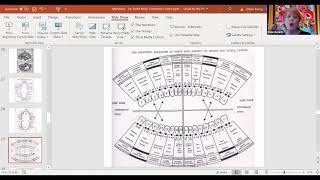
And so those meridian tooth Meridian charts that you can see, like on, you know, the Internet for free. Are those like, do you use those? Are they accurate? Are they. Is there a better place for people to get them?
That's a fair question. When I did my first thesis, I did it on the Odontons and the energetic relationships, which is just a fancy word to say the teeth and the meridians. And I found that many of the charts had clerical errors where they switched something from the bicuspids and didn't realize they would go molar, bicuspid, and then regurgitate it over here and not realize that was a bicuspid and not molar. And so there were some clerical errors. And I went through and. And redid a chart of my own and color coded it so that I could try to learn those meridians better. But there are several out there. There's an interactive tooth meridian chart that I helped develop through another company. So there are several that are out there that are really good. It's interesting that it is not an Asian thing. You would think every acupuncturist would know this. My acupuncture school here in Houston doesn't have a clue that teeth are on the meridians. The points that we use for testing are not acupuncture points. They're vogue points, which is German technology.
Right, right.
And so it's a little deceiving when somebody goes to their acupuncturist and says, you know, I went to see this lady and she told me this, and they're going, what? And. And then the patient goes, what? You don't know about this? No, because they didn't, they didn't learn that.
No.
Marco, Marco Polo went over to Asia and was intrigued with acupuncture and brought back all these acupuncture books. And then one of the dynasties started burning acupuncture books there in Asia. And so the, the Europeans had some of the old original books and they got fascinated in, well, we want to help people, but when we touch these acupuncture points, we're not doing pulse testing, so we don't understand when is there too much Qi, when is it deficient? And around that time frame, you have Tesla, who was doing stuff, you have Ohm, who was doing things. And so Ohm had a meter and he said, let's start touching these acupuncture points. And if the meter is too high, it should mean there's too much energy going through there. And if it's too low, it should mean it's deficient because in acupuncture they would use gold needles to stimulate the Qi and they would use silver needles to depress the Qi. But the Germans are going, well, we don't know when to use the what needle. And so they started this technology which they weren't certain would work, and it became Vol's work. So it's electroacupuncture, according to Vol, which can be done with muscle testing in a similar thing. You're just looking at the energy and the ability to get an answer to go through. So I'm, I'm particularly fond of doing what I do because I can do it, whereas the muscle testing, I'm always guessing whether I'm pushing too hard or not. I just feel like it takes me out of the equation and I can just get my answers much better.
But now is there, can people buy that chart from you, that tooth meridian chart?
I'm sure they can, but they don't have to buy it. That's like I said, there's, there's lots of websites that a lot of dentists use the interactive tooth chart and they put it up there for patients to, to see at no cost.
Oh, that's, that's really cool. That's awesome. So if somebody, for example, like myself, who has, you know, at age 14 told you have impacted wisdom teeth, they have to come out. So if a parent was getting that message from a dentist, a conventional dentist, what would you coach your counsel?
Oh, I mean, you have to look at it legitimately. If they have a stunted jaw because of nutritional deficiencies, then there isn't going to be room for that tooth to come in. If it's laying down sideways, it's going to attempt to go in a coronal forward motion, which is going to put pressure on all of those teeth and you're going to have crooked teeth. And if you just paid to go through braces and you don't want crooked teeth. And so I do understand why in some instances it's told to a patient you need to have them removed. But there have been times where I've seen them in a correct positioning, they just aren't in. And the patients being told you need to have them taken out because they're there.
Ah, okay. So if they're in the correct position and the teeth are not getting crowded.
And you have room for them. I, I have seen not thousands of patients, certainly hundreds, where they have lost a tooth, a molar, and because they had a wisdom teeth, it was being able to be guided into place and use normally you don't chew on a wisdom tooth. We stop our chewing about halfway on the 12 year molar. But if you have a tooth and it's in your back pocket as an emergency and you're not having problems, I just don't understand. I think it's more on a case by case basis instead of making a blanket statement that people need to evaluate how is the jaw. I think oftentimes we don't give the child enough time for that job to develop and grow. We're taking it out when they're closer to 15 instead of waiting until they're closer to 25. A lot of things have changed in what we believe. You know, in 1975, when I started at the dental school, I was told to tell patients, don't eat butter and don't eat eggs and make your cholesterol go up. Right. And then we realized we were telling people to eat plastic margarine instead and that we were removing a perfect protein source and that neither of those made the cholesterol go up. It was more sugar based. Yep. So things change. And I think that's why they call it practicing medicine and dentistry, because we don't actually know, we just theorize and we do the best we can.
Yeah, yeah. And it takes, as, you know, very, very long time for what is conventional to shift, even with new data and new science and things like that. So still to this day, you know, everyone's, you know, still saying things like, well, you, you know, you, your cholesterol is high, you need to stop eating saturated fat and cholesterol and things like that. So that's going to take a bit of time for people to share.
It's funny, I was on the, I was an affiliate faculty in the American Heart association and I was at a meeting and I got really frustrated because diabetes had not gone down, cardiovascular disease had not gone down. And the diet that the American Heart association at that time was touting was a fat free diet.
Right.
And I remember I brought a bag of jelly beans in because this bag of jelly beans, their branding was ideal because the layperson doesn't know if it says fat free. Right, right, right. Which they labeled this bag fat free.
They did.
So someone who's on a. I'm not supposed to eat fat. Wow, I can have these. So I said, do you, do you, do you see my point? Which it took years and now they're more on a Mediterranean bent than they are the fat free. Because we removed fat from diets of women that then started having hormone problems because they didn't do a good job educating the difference between bad fats and good fats and that you can't live neurologically. You will have problems if you remove all fat from your diet. Yeah, but they just didn't do a good job educating.
So. Yes, well, and some would argue that that was, there was a plan for that. So I'm not going to get into that.
But there were drugs for that. Right?
Well, you know, you have, have patience for life. Right. You have customers for life. There's the follow the money. Now if somebody says, well, Dr. Dawn, I do have a mouthful of root canals and the dentist is telling me I need another, like, what would you counsel them to do?
At this point, the blanket statement that I can make about root canals is that because it's an electrical disconnect, I, I believe with my entire heart that you are giving up some good health. I just don't know how much you're giving away until it's tested. So if you have good health to give away, great. Go eat at McDonald's every meal. Don't eat nutritional food. It's a waste, organic, total sham. If that's what you believe, go for it. You get what you put in. I personally would not have a root canal in my mouth. I don't have enough good health to give away. I want all the health that I can muster.
Well, that's not. Yeah, I think that once my husband hears this, he's not going to be very happy. But at the same time, you know, he worked for UPS and they had, had, they had hired this dentist which was really cheap. You know, he, he served the, the lower income community, but that was what UPS paid for. Oh boy. Probably shouldn't have said UPS anyway at the time. And so he was in some sort of school where they were practicing root canals. They were letting the students practice on him. And so he has half a mouthful of root canals now. He is incredibly healthy. Got a, you know, gotta say, you know, and, and now he's eating better because he's with me.
Right.
Eating more whole foods and less junk food and less all sorts of things. However, I gotta wonder, you know, like, would it be helpful for, for him to remove some.
One of the things that I have noticed is that with chronic low grade infections, people have a tendency to have elevated blood sugars. And so some of the people are absolutely, I'm not having my root. Cause I don't, I don't feel any discomfort. There's no way. I'm not having them taken out. Ultimately they will start having problems with their blood sugars and they'll come in and say, okay, my blood sugar is 11, my blood sugar is 15, my hemoglobin A1C, and I'm going, okay, are you on anything yet? No, not yet. Okay, but that's not good because that hive sugar on a 24 hour basis is going to put all kinds of inflammation and scratches on the inside of your arteries cause problems for organs. I mean, you're going to end up on dialysis, you're going to end up losing feet. It's just stupid. It's not a good choice. But let's see if there's anything that we could do that would alter that. Because I have seen people have root canals removed and then they've not done anything else and their blood sugar comes down. Because it's kind of like when a woman is pregnant and she has gestational diabetes. It's, it's conditional given the circumstances. Right. If your body has that chronic low grade infection that is taxing to the pancreas, because how else do you explain that you've not done anything else, you've not put them on metformin, they've not changed their diet, and now their hemoglobin A1C is 5.4 and you're going, what happened?
Well, you know, we actually don't go to the doctor, so we won't know what his blood sugar is, but he is an elite athlete and so it's, it's really hard to tell if there's anything wrong because there's usually nothing wrong. So. Yeah, but, but he's not happy about learning about root canals. He's not happy. Like, I mean, yeah, I mean he, he does have a tooth. I think a composite just broke off one that they fixed. So it sounds like the bottom parts, his tooth, and the top part is, if I got this right, I'm not sure is some sort of filling or something. He has bridges as well. He's just not really sure, you know, what to do because he's otherwise healthy. Seemingly, yes.
Those individuals, they crash hard when they do, because then they, they go, I don't understand. I, I've been a runner, I've been able to do this and all of a sudden now here I am and I have hypertension and I've got diabetes. What happened? I think that they have a tendency to take better care of their body as a whole and they understand rest and repair sometimes. Now, some people push the envelope and, and totally don't like people, women that are so athletic that they don't have a cycle because they don't have any.
Oh, right. Yeah. On them.
I, I think there's an extreme as well.
Absolutely.
But I'm talking about somebody who, you know, plays tennis on a regular basis, gets outside and jogs, rides a bicycle, does aerobic classes, something to, to get moving that they have this crash and burn really hard. And I, I would encourage people get lab work done. The most of the states you can get blood work done on your own through direct labs, lab core, and they even provide, you know, a service. It's not exactly idea. It's not.
New York's a little tricky, but anyway.
Yes. New York's awful.
Yeah.
You have to go outside of the state in, in order to get some labs done. That's true. But yeah.
So the high, the high white blood cell count is a, is a sign. Yeah.
Elevated neutrophils, lymphocytes that are low. I see a lot of people that have iron problems where their ferritin is either too high and, and, or it doesn't exist. And they have no idea that they have anemia and that you can have non iron anemia. You can have plenty of iron, but still be deficient in copper or vitamin C or B12 or B6, any one of those folic acid that play into that anemia. So it's a good idea to find out common things your husband probably would do well having a CRP done and just to make sure, because it's an inflammation marker and that much chronic low grade infection, you'll start picking up elevated CRP on somebody. So.
And this is not even that sensitive, guys. You know when we talk about like lab tests are not.
Oh no, it's late. Yes, it's very late.
Yeah, yeah, yeah. Better. Thank goodness I. We have muscle testing. Yeah.
Better to go with, with your gut and what your symptoms are. I can't tell you how many people come in and say, I'm tired, I'm constipated, I have dry skin, my hair is falling out, my hands are cold, my feet are cold, and my doctor says my thyroid is fine.
Right.
Because they're looking for labs only. They're not looking at the fact that this is a subclinical thyroid issue all the time. Yes, yes. And that kind of a condition will set up specific teeth to decay.
Wow.
So we'll only see decay on those teeth. See, I was taught that the only way a patient could get a cavity is if they didn't know how to brush and floss so we were supposed to teach them how to brush.
We weren't taught.
And that if they had sugar exposure over and over again, it would make acids on the teeth and burn holes in the teeth where the bacteria was. That basically that bacteria would pee on their tooth. An acid that would burn a hole. But if that was true, these people would have fillings on these lower front teeth because that enamel on that tooth is thinner than any of these molar teeth.
Teeth. Oh.
And yet when you start looking at people and their decay patterns, I can almost say you have a chronic thyroid problem that finally created a lung problem. Or looking at the X ray, although you have an airway issue that set up these specific teeth. And you've only had dental work done on those teeth. You haven't had dental work done on any teeth that have to do with liver or a gallbladder or a kidney or a prostate. It's this teeth. Why those teeth? You just, your body just knew. Just, just let these teeth decay. So I try to teach the biological dentist. The moment you see a mirror image tooth with a cavity on a kid, you need to get that kid in someone's hands that can figure out what organs are on there and whether they're functioning. We don't teach our children to breathe correctly. I'll take an entire class of adults and I'll say, everybody take a deep breath. And what I'll see across the room is everyone's shoulders go up. They don't know to breathe abdominally. So you have 500cc's of air in your lungs. But we exchange 350cc or basis, which means we have 150cc's of dead airspace that doesn't get exchanged as I take a deep breath. Teach our kids to breathe and then we need to teach them that. You put something in your body, something should come out 20 minutes later. You should poop after every meal.
Wow.
People look at me crazy and I say, take a baby somewhere and don't take a diaper. Feed them and don't have a diaper and watch what happens. You're. You're going to have an emergency. You need a diaper because nobody wants to be around you. Feed somebody's doll and don't let them out in 20 minutes and find out what happens. They'll poop in the house. If they're not allowed to go outside and do their business, they will just do it. We get so mucked up and patients get so used to that that when I say, tell me how often you poop oh, it's normal. Yes, I asked you, I used to ask that how often you poop? At least once a day. Okay, so you're constipated. No, no, I thought at least. Well, sometimes it's every other day. No, I said once a day is not good enough. What? I mean, if, if this were a tube of toothpaste and I put more toothpaste in, some would have to come out. It's a no brainer. But that's not what we're taught. And we're taught that whatever happens to you is normal and that normal is healthy. No, that's why looking at blood work is so difficult. Because your primary care is taught to look at the ranges that are there. And each lab has a different set of ranges.
I know, it's so frustrating.
Who came to that lab? Not healthy people. So functional medicine will chuck those ranges and look for a woman your age that's completely healthy. Now how does your number compare to that individual and how do patterns look? So your glucose is slightly high, but we see that your CO2 is too low. That could be a thiamine deficiency. Instead of waiting until you are really thiamine deficient. So yes, I think that there's blood work is way down the road. Listening to symptoms of people makes way more sense.
Oh yeah, super helpful. And, and I love the, the tips around where the cavities are and the correlations of where it is because we do have children that, you know, seemingly are eating healthy. And a so called healthy family, they're not eating too much sugar or carbs or things like that, but yet they're still having symptoms, they're still having a cavity. And then the parents are like, I don't get it. Like what's, what's, what's the problem?
Worse yet, you will have a son and a daughter come in and you put the daughter in the chair and her teeth are pretty clean. You get them all cleaned up and you check afterwards. Oh, honey, I'm so sorry. You have two cavities. Do me a favor and sit over here while I work on your brother. You put the brother in the chair and you go, your teeth are green. Why are your teeth green? I lost my toothbrush. When? I don't know, three months ago. So you haven't brushed your teeth in three months? Right. Okay. So you get them all clean and he doesn't have any cavities, only for the daughter to go. It's not fair. It's not fair. I brush, I floss, I do what you tell me to do. And I have cavities and he doesn't have any. I'm just going to stop brushing. No, she has a health problem. She has something that is not found because he is doing just fine, because he is healthy. There are countries that don't have toothbrushes and floss and people have their teeth because they eat healthily. I mean, when Weston Price went to different countries and said they have incredibly wide arches, they don't have decay, they aren't white teeth, in some cases they're discolored because there's spunk on there. But hey, they got their teeth and then they introduced sugar and they started coming back. Yes. They started seeing crooked jaws. The teeth didn't fit in there anymore. There was decay. And he is the first person that put the link together with diet. And looking at God was so perfect in his wisdom. Wisdom that there's cold water fish up north and yet the people that are in the tropics, they have coconut. So we can get our omega threes in different forms and it's put on the planet based on where you live. So eating foods that are more indigenous to you, instead of trying to pick things that are green and get them shipped to you and artificially turned orange so that you can have something that looks like it would have a lot of vitamin C in it. That when you actually test the juice coming out of this, whatever it is, doesn't have any vitamin C in it. But we were told oranges were high in vitamin C. Yeah, they would be if you got it off of the tree when it was ripe.
Right, right. Well, I was amazed just to read about how, you know, in the Inuit societies where they ate basically meat and blubber, that they didn't have scurvy. Right. Because they didn't eat the carbs that we did in the minute you introduced the carbs or that kind of processed food, then they started, you know, getting sick and cavities and then other places where they were, you know, a lot of dairy, a lot of raw dairy. I mean, obviously in China we don't do a lot of. At least I don't know that. That we do. We don't do a lot of cheese or dairy or things like that, but we had a lot of fish, you know. Right. In some of those societies. And he, in my understanding is that he was Western. Price could not find a vegetarian society that was healthy. Is that true? If, if you.
I believe that's true. Because they are pro meat.
Yeah.
I mean, it's. It. You need at the very least, bone broth. But most societies, even if they couldn't get certain things, could, could get animal and get everything that they needed. I mean, we're talking about, though, eating all of, you know, like, we're talking about liver and. Yes, all the organs.
Right.
That is not what we do here in the United States. We take societies like Asia did research on tofu and its benefits, but you have to understand it was in a soup with. It was used more like a spice. Tiny, tiny little portions. And you might get two little pieces in your bowl of soup. Now here in the United States, we get an entire bar of tofu, slice it, fry it, and then eat it and wonder why our estrogen levels are through the roof and why we have problems. Because we take something that was small and way over, abuse it.
Well, now we have, you know, soy chips, we've got cricket chips, we've got, you know, all sorts of processed food of things that supposedly are healthy and, but they're processed. So all the life has been taken out of it.
Yeah, yeah. Look at Carilian photography of fruits and vegetables. Google Carilian photography. And you look at the life force coming off of organic, vibrant, healthy foods. That's what you're taking in your body. And then look at something that is non organic or has been cooked. And then you look at the fact that you're taking in something, expecting something out of it. So I'll hear people say, I'm vegetarian, but they're not organic and they're cooking everything. Everything. So they're taking in product, but it's not giving them any benefit whatsoever. So they have nutritional deficiencies and they're racking their brain trying to figure out why. They will tell me, I eat healthily. Yeah, you think you do. But let me show you what you're actually eating. And then it may change your perception. People my age oftentimes think it's ridiculous and that it's a ploy to buy something organic. People from Europe will come over and say, I'm, I'm gobsmacked. I went to the grocery store because I'm here for two weeks and I'm at a hotel with a little kitchenette. And I went to the grocery store and there was a very small section with a big sign that says organic. And then I turned around and. And there's hundreds of fruits and vegetables that tell me, what, what is that? Why do you do that? I said, welcome to the United States because we eat chemical and, and we.
Give them to our children.
It's a very, very small group of people that understand the benefit of eating organic. But you've got physicians that are my age that are not enlightened, that will tell people your diet won't make any difference.
Yeah, I did hear that in medical school and I believed it right? Until, you know, I got sick, you know, and then I was like, wait a second. My patients are not getting better on the 15 medications that I prescribed to them based on all the ADA guidelines and everything, you know, all the American Medical association guidelines. And I'm like, there's something wrong with this picture.
Yeah, it's very, very eye opening. It was interesting for me. I took a man from Houston back to Guangzhou, China, who had been hit by a car and he had two broken legs. And because he had seen a physician here at a hospital, obviously, but because he was from China, he was insistent that they also bring in somebody that could communicate with him. And so I was having to give him not only his prescriptions, but this stuff that I would have to peel the top off of. And it looked like, kind of like lemon jello. I didn't know how to describe it. What it was was a congealed bone broth from chicken bone. Because that Asian physician here in Houston understood the value of trying to get this into him because he had broken bones. Wow. And once I got that, I went, oh my God. There's a whole way of practicing medicine that we have not been exposed to that is more food based.
That's amazing. That's just amazing. Well done. I know we're past our time together. It's been so interesting talking to your wealth of knowledge. Thank you so much for just being, you know, you and spearheading all of this and, and sharing your information online. We're going to put the, the links below, but I'll just say them out loudest as well here. So the iabdm.org is where people should go, especially if they want to learn more about biological dentistry. What's involved? You have a list of practitioners there in various different parts of the world who have been certified, correct? Yes. Yeah. And then of course, the link to the book Let the Tooth be known by you. We'll also link below as well. And then there is some other extra links here, some extra information. Information. Other workshops that you've done that will link below as well. Do you have any last words of wisdom, Dr. Don?
You know, I follow your gut on what you think is right. If somebody is telling you something, a second opinion is probably really a good idea. There isn't anything as what good is what God gave you. Somebody wants to put something in your body that's going to be a part of you for forever. You would like to know that that is going to be okay for you, wouldn't you? I mean you wouldn't want to have something that has we take out a mercury filling which is a known neurotoxin only to put in something that has bpa. It's not a fair trade off. So yeah, do your due diligence. Don't always believe the person that is trying to sell you something because they may be a very well intentioned, nice, lovely person. That is misguided.
Right. Beautiful. Thank you Dr. Don. Really appreciate you being on the show and perhaps I. I believe this is going to be pretty popular so people might want you back. Really appreciate the work you do. I want to also thank all of our Light Medicine community, our Light Warrior network community for tuning in. Until next time, big love to everyone. Thank you. Thank you. Thank you.
Bye for now.
More from Dr.
Revolutionizing Dental Health Diabetes, Root Canals, and Holistic Healing with Dr. Dawn Ewing