Why every person should have a holistic dentist | Dr. Dawn Ewing
Dr. Dawn Ewing, a naturopath and integrative MD, explains biological dentistry: standard care plus attention to material compatibility, safer mercury removal, and tooth-organ connections via meridians. Root-canaled teeth can burden some patients energetically or through infection. Oral infections seed systemic inflammation, and materials like nickel crowns affect overall health.
Questions this video answers
findabiologicaldentist.com
International Academy of Biological Dentistry and Medicine (IABDM)
Proposition 65
Chapters
Hey everyone. Welcome to the Thrive Beyond Cancer Summit. Today's guest, I am so excited to speak with her. Her name is Dawn Ewing and she is a naturopath. She's also an integrative medical doctor and she is the executive director of the International Academy of Biological Dentistry and Medicine. And you can find her in and the new Netflix documentary root cause. Welcome, Dr. Don.
Thank you. I'm happy to be here and answer any questions you have and hopefully enlighten some people about some burdens they may have in their health that they didn't even know they had.
Yes, yes. So can we first start, like, can you tell us what is the difference between biological dentistry in medicine and traditional dentistry?
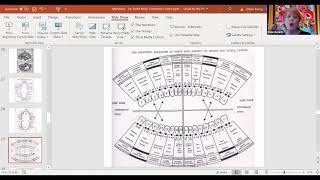
Okay, sure I can. Traditional dentistry gives you a foundation of working with teeth to correct things like decay or a bad bite, a broken tooth, to mend it. They also focus on things like prevention, teaching people how to take care of their teeth, preventing them from getting periodontal disease. Biological dentistry says, we believe in all of those things, but what is it we are placing in this person's mouth? You know, if you're allergic to gluten and you eat gluten, it's going to take about 72 hours for it to work itself out of your body. But when you put something in someone's mouth that is a 24 hour a day exposure, 365 days a year. So if you get a filling done and all of a sudden you start having headaches, it is possible that you could be reactive to the glues or the filling material. So biological dentists will go so far as to test you for things that you might be reactive to before they actually place those fillings. Biological dentistry says we want to protect the planet and our patients, but we also want to protect our staff. So how they take out a mercury filling will be completely different than what they learned in dental school. A biological dental hygienist takes care of her perio patient, but goes a step further. Maybe they have a microscope in their office or they send out samples to find out what bacteria is in the mouth, to find out if they need an antibiotic or if they can use something more alternative minded, like a silver product or something with tea tree or neem. There are so many good products out there. Unfortunately, a lot of the commercially available toothpaste and mouthwashes also have some toxins in them. And so biological dentistry says, yes, we need to wash our hands, but what are we washing our hands with? So they pay attention to those types of things. They even go A step further. Each of the teeth are on an energetic pathway. And that is not something you learn in your traditional dental school or in a dental hygiene program. People are very aware of that because when they say, oh, my gosh, I give my eye teeth for that, they know full and well that that is the cuspid. And if you look on the meridian chart, that is the tooth related to the eye. So somehow we've been brought up with this theory, but we really didn't understand what it is. Yeah.
Wow, that's deep. So how are our teeth connected to other parts of our body? Because I was just. I'm still amazed by that.
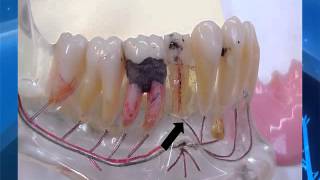
Yeah, you and I had a conversation last week that happens in my office all the time. Someone may come in and they say, this is what I'm complaining of. And I go right to, okay, what's going on on this tooth number or this tooth? And they go, well, I had that tooth taken out years ago, or I have a root canal on that tooth, and immediately then I want to know if that area is a burden to them. So, yes, each of the teeth are connected to different organs. And my goodness, the first time I heard this, I had a patient that came in, and I tell the story all the time. But this lady came in, and at that time, I was working in very traditional dentistry. She said, I'm here because tooth number six needs to have an X ray and I need to have it removed. And so I did take the X ray of that tooth, and in my mind, it looked like a root canal that. So it didn't have any pathology that you could see. So at that time, I called it a perfectly healthy root canal, which I have to stop and say is an oxymoron. You cannot have a perfectly healthy dead anything. I liken that to us going to the morgue and looking at 12 dead bodies and trying to vote on which is the healthiest of the 12 dead bodies that are laying there. But at that time, my training was save a tooth at all costs. And so I said, why do you want to have this tooth taken out? This is just ridiculous. The doctor must be a quack. So I got on the phone and talked to the doctor, and he explained to me that she had hepatitis C that was non responsive to interferon, that he thought this was an energetic block to her healing. I had never heard of that before. She actually had to sign a waiver that said, I'm giving permission to have this perfectly healthy dead tooth removed from my body. This is my wishes. This is what I want took the tooth out. And I did follow the case. And she went into remission spontaneously without anything else. So just opened my mind because then this doctor started sending more patients my way and he kept saying, it's on the meridian. I didn't even know what a meridian was. It's an electrical pathway through the body that you can measure with equipment. But when a doctor says, well, I am in the cadaver lab and I don't see these meridians, well, no, you won't see them because the person's dead. Their chi, their natural energy is gone. So you also cannot do an EKG on a dead person because they have no electricity going through the heart. So it's these energetic pathways that what's key is they are invisible, not imaginary. Wow.
So then how do our meridians become blocked?
Oh, my goodness. They can become blocked in so many different ways. You could have a porcelain implant placed into a particular meridian and it completely blocks the electricity being able to go through there. You could have a liver that is so congested. In Chinese medicine, everybody has a bad liver, and that doesn't mean that they have hepatitis. It's just the organ that does an awful lot of work to help detoxify us. Most Americans eat junk and we are stressed out and we're in a chemical environment and we wear perfume and dry clean clothes, and so we're just exposed to toxins all over the place. So it' uncommon for someone to have issues with the liver that then block the energetic flow going through to another area. But you have to understand these blocks are things that can be lifted off. So when I lecture to physicians, because honestly, they don't get it until I really start giving a lot of word pictures. Many years ago here in Houston, which is where I am, we had parts of our freeway system flooded. And so I have a picture of a freeway where the water is going over the freeway. So if you envision that you're in a car, but you can't get to the other part of the freeway that you want because there's a body of water on there now. Now, if I were in a magical helicopter with a giant vacuum cleaner and I could suck up all that water instantly, my car would be able to travel on that freeway. So the meridian is still there. It just has a blockage of some kind that we have to offload for the person.
Wow, that makes a lot of sense. So of course, with having root canals and different things like that, can you talk about, like, whether it's a root canal or any Other procedure where bacteria is left in the mouth and that it can travel to other parts of the body like organs and tissue.
Yes. You know, the most common in the most research is on periodontal now when they are sending coronary clots off for evaluation, they are finding the bacteria that's in the mouth in the blood clots. So we do have a stronger connection of this oral systemic health that your mouth is not just all by itself and the rest of your body is disconnected. Periodontal disease will make a C reactive protein go up, which is blood work looking for inflammation. Well, my goodness, if you brush your teeth and when you spit, you see pink in the sink, that's not acceptable. You need to be in a dental hygienist chair finding out why you have an infection in your mouth. If you scrubbed your fingernails with a fingernail brush, because I told you that you were going to get to participate in something really cool, but you needed to have clean hands. You would freak out if your fingers started dripping blood. Yeah, okay. But a lot of people have become very used to the fact that when they brush their teeth, they spit in the sink and they see blood and they think that's normal. That's not normal. That's not healthy. That is something that needs to have attention drawn to and that infection taken care of. A lot of times I'll talk to holistic nursing groups and I'll show them different pictures of wound care, and they go in very lovingly and debride that wound and then place new bandaging on there. But when I ask them, how often do you pick up a toothbrush and brush this patient's teeth? They're, oh, I wouldn't do that. There's no way. That's gross. Okay? That is a wound. If it's bleeding and it needs attention to it. If they don't take care of it and this person is in a really bad place, that bacteria that's in their mouth is going to set up maybe a pneumonia in their lung and they're gonna die. We have to take care of the whole body. Just as a diabetic gets a wound in a foot and it has to be taken care of or it's amputated. We don't go in and taxidermy a toe and leave it in place. If it becomes gangrenous, it's removed.
So why do you think that it has become so acceptable for us to, like, not really take care of our mouth like that? And then everything else is like, oh, like you said, I need to go in and be seen for this, but we're not going in to be seen for things like that.
You know, it's very interesting. I oftentimes will talk with patients and say, when's the last time you saw a dentist? Because I'm now not in the dental environment as much as I used to be. So I'm seeing people and they think it's odd when I pick up dental floss and show them how to lost their teeth. They think, what happened here? But I will ask them, when's the last time you saw a dentist? And they may say, well, gosh, it's been four or five years. I haven't seen one. It's too expensive to go, oh well, how was that trip last summer to Hawaii? Oh, it was great. Oh, I love your hair. The highlights are just amazing. Oh, I have this lady that, she's the only one I'll go to. I know I spend a lot of money on that, right? But your hair having highlights in it does nothing for your health. So you should be spending some money least, at the very least getting your teeth cleaned if you don't know how to keep them clean.
So let's get into root cause when I say that you've given us so much information regarding root canals, how we should not have root canals and what.
Are they.
Please just help us.
First off, let me say that, and I want to make this statement very clear, not every root canal is a burden to the body. I do believe that you are giving up some good health in the way of electricity, not being able to get through the meridian. So therefore you might have something slightly compromised. But everyone is different. Honestly, if I had a patient that came in and they were 104 and they were smoking cigarettes, I wouldn't say, oh my God, let me tell you, in case you didn't know, cigarettes can cause cancer. So you need to stop right now. I think that in all fairness, each of those areas need to be re evaluated. Many years ago, before we had 3D cone beams in X rays and I would find a problem, I would refer the patient back to their dentist, only to have a call from a dentist going, what kind of a quack are you? That is telling the person that they need to have this root canal tooth taken out. I'm going to send them someplace and we're going to retreat it. Okay, that's fine, you can try that. But chances are it's going to fail again. You have to understand that a tooth is not like a Tupperware container. It's porous, and it has micro fractures in it. And this bacteria is so small that it can get in and out of the tooth. And yet those micro fractures are so small that a white blood cell can't get in there to fight it. Plus, the person's had the nerve, the blood supply, and the lymphatics removed from the inside of the tooth. So even if we give an antibiotic, it can't get to the inside of the tooth where all the infection is. So, yes, root canals can be a burden to people's health, and we find that all the time. But there are times where I will refer someone to go get a root canal done, and I want it done at the best of its ability. For instance, let's say a young girl comes in, she was just in a car accident, she broke a tooth, and the nerve is showing in the tooth. She is two weeks out from her wedding. Do you think that I'm going to suggest you get that tooth taken out, have no tooth for a wedding? There definitely are times where I tell people, go do this. For right now, we're putting a band aid on it. I'm going to be monitoring it. And if we see it fails, which because most root canals are not done by specialists, most root canals are done by a general dentist. And so I don't know the statistics of the failure of root canals with endodontic. I do know that when I see most of my patients, it was done by their traditional general dentist. And I'm not blasting general dentist, but, you know, there are times where there's an extra canal in the tooth and a regular dentist just can't find it. But now that 3D cone beams have come out, these same dentists that thought I was cuckoo that there was nothing wrong with this tooth, they look at the X ray and go, oh, my gosh, look at this. We can see a little cyst at the end of the root tip. We need to take that tooth out. Really?
Oh, my goodness.
It's the same people. It's just that now they have different information. You know, you don't know what you don't know until you open your eyes to something. And you don't look for things unless you are aware of those. And so I just ask people, keep an open mind. I find myself believing in things that 10 years ago I would have rolled my eyes at and said, oh, my God, seriously, that is like voodoo medicine. And now I find myself saying, hey, you know what? You need to go see this person because of whatever. And then I sit back and think, wow, you sure have changed. And that's just. I'm grateful that I have an open mind and there are still a very conventional side of me. You have to understand that I started off in the conventional world and everything that I do. And for many years I was a paramedic on a 911ambulance. Enjoyed the rush. But then I went off to working in air medicine where we're traveling around the world bringing patients. And that opened me up to acupuncture in China and herbs in China. And seeing that different cultures use different things than what we do, it's still in my mind, if you're in a car accident, it is not the time to be dragging out your arnica at 30C and popping a homeopathic remedy. Your butt needs to be at the hospital making sure that you don't have a ruptured spleen. So that's what integrative medicine is, is really looking at the best options you have. There are times where I tell people I'm looking at the research for pinpoint radiation and I think that the statistics are excellent. It's just that I would like to use some homeopathic remedies with that to help assist dead cells out of the body. If your oncologist is open minded and will work with me, that's what we're going to do. Something that will not interfere with any of the prescriptions that they're using. So people misunderstand sometimes that seeing someone who is more alternative minded means that you're not going to get prescriptions. That's not true. It's looking at when it is appropriate to do what.
Yeah, I'm glad you broke that down. And I'm so glad you broke down. Like I didn't even know that you're supposed to go see a specialist if you do have a root canal and not like a general dentist.
So general dentistry gives you a license to practice those things. But if I have the need for a brain surgeon, I am not going to go down the street to a general practitioner. I'm going to go to someone who specializes in that area. So if you're going to have a root canal and you understand that it is going to be a dead tooth in your body, going to an endodontist would be your best chance at success. And even at that, we have to monitor it to see if it fails. So what we do is tell the patient, these are the organs that are on this particular meridian. So let's say it's a front tooth. It's the Girl that we were talking about before her wedding, she got a temporary crown that matches her teeth. She has a root canal now, and she looks gorgeous for her pictures in her wedding dress. I am going to want to monitor that tooth, and I'm going to tell her that is on the energetic pathway for your kidney, your bladder, your uterus, and your anal canal. So if you start having chronic urinary tract infections, maybe we need to look at the fact that that tooth could be interfering with that and creating setting your body up to have chronic urinary tract infections, because it's also on the uterus. Maybe she has a hard time getting pregnant, and maybe it's not because she has an MTHFR flaw. Maybe it's because she has a root canal on that mar. So we'll go in and test and then find out. Here's what the tooth tested right after the endodontic treatment, and here's what it's testing. A year, two years, three years out. And now we have an issue. So now we give them an option. Get the tooth retreated, which means that it'll probably have to be retreated multiple times in your lifetime. So in all fairness, the patient needs to have informed consent, which means that you sit the patient down and you say, where we're going to do a root canal on this front tooth. The cost for that root canal is going to be $1,000. Because we did a root canal on that tooth, it's going to make it more brittle than your other teeth. So we're going to have to put a crown on top of that tooth, which is now going to be $1,500. Okay, so she has an investment of $2,500. Two, three years later, the tooth re abscesses. Now she needs to have it retreated, which means that they're going to drill a hole through the crown, which could ruin the crown, which means she's going to be out another possibly $2,500 three or four years down the road. The tooth needs to be retreated again. This time, she's going to have an apicoectomy, which means that they're going to make an incision up here at the root of the tooth and try to saw off the root tip and then retrofill it in an effort to try to. To entomb the tooth. So they're trying to put it in a Tupperware container, but you can't. The tooth is like a sponge. It's porous. So it's not possible to completely confine that bacteria. But my point Is some of these people, if you sat them down and said, there is a chance that this tooth is going to create an issue for you where you're putting money into it over and over again. My family has to budget for everything we do. And if you didn't allow me the opportunity to know that I needed to be setting aside money for that or I'm going to be possibly walking around without a tooth, that's not fair. And oftentimes dentistry really doesn't do a good job of informed consent. I have people that come in, I may be taking a Panorex on them, or they come in with their own Panorex and I'm looking at going, oh, okay, I see that you have three root canals. No, I only have two. No, you have three. I can see it right here. Let me show. No, that's not my mouth. Yes, it is your mouth. Let's go through tooth by tooth. I don't ever remember having that root canal. I do remember that the dentist told me that the tooth broke and that it got to the nerve, but I don't remember ever having them tell me that I had to have a root canal. I had to go back for a second visit. Because it was a crown. Yes, but they also had to finish the root canal. It's just that the patient wasn't involved with knowing that you don't go into medicine and then do surgery on you and then you come out and you don't have someone sit down with you and say, look, we couldn't wake you up during surgery, but we also had to remove your gallbladder because when you were hit by the car, not only did your spleen rupture, but your gallbladder ruptured too. So we had to take it out. They informed the patient.
Right.
In dentistry, we don't always do that.
That is crazy.
You know, the materials that dentistry uses, oftentimes we use high nickel based crowns and paint porcelain on top of that, which is considered the standard of care. It's a pvc, so we just call it different things. But it's a porcelain veneer crown where we've got the porcelain bonded to a metal. California mandates that if you're going to use something that could cause harm for this individual, you have to educate them. So it's Proposition 65, which means that if you're going to place a nickel based crown on the person, they really need to be advised that nickel is a known carcinogen, which is supposed to make the patient say, that's a really big Word. I don't know what that means. And it's supposed to allow an opportunity to say, well, there is a small chance that it could cause cancer. Well, heck, I don't want that in my mouth. Do I have an option? Yes, you do. It's going with this crown, which is all porcelain. But the risk is that tooth could break, and you might have to have it replaced more often than this crown. That's more durable. Well, let me tell you, I would rather my patient have to have their dental work redone than to have their dental work put them in a coffin.
Right, right. Yeah.
But again, we get back to informed consent. You know, here in Texas, we don't have to tell them anything. We can just put whatever we want in. Oftentimes people have a nickel retainer, which is a bar that goes from one tooth to the other on back after they've had orthodontic treatment. And because that's the meridian that not only does it affect the kidneys and the bladder and the uterus, like we said before, but those four teeth down on the bottom also affect the adrenals. And sometimes having those teeth tied together, which the orthodontist wants. He doesn't want teeth to move after you've had them straightened. But, you know, our teeth have a natural ebb and flow. Some days when you floss your teeth, it's so tight, you can't get the floss in between there. Other days, you floss the same area, and the floss just falls right in there because the suture lines in your skull have this very gentle ebb and flow. So now we have practitioners that are called craniosacral, which means that they. They focus on the skull and the movement of those suture lines. So when you put that lingual bar on there, that metal bar that's on the back, you restrict movement from those teeth. So it's as if you walked into my office and I, for whatever reason, decided we're going to weld a bar from one shoe to the other and glue your shoes to your feet. Well, it was really nice that you came in to see me, but you need to leave now. And you get up and you try to walk and you go, wow, this is really awkward. No, no, I think it's healthier for you. You're going to have to either wobble out or you're going to have to hop. Have a nice life. So there are many times when I test teeth, I find out that that lingual bar needs to be removed to allow the teeth that ebb and flow. And yet I will suggest they see a dentist to get a guard made that they wear at night to keep their teeth from moving. So I'm not opposed to that. But I would like during the day for their teeth to be able to be free. I was gonna say that.
Be free. And like you said, like, I wish my dentist told me that my. I would have a dead tooth in my mouth. Like, no one explained it like that to me. I'd be like, well, just remove the tooth. I don't want a dead tooth in my mouth, you know?
You know, often it's interesting to me because when I lecture two physicians and they're in the same room with the dentist, many times the physician will look down at a dentist as if they're not a real doctor. And depending on the training of the dentist, they, you know, they could be an oral surgeon. But usually oral surgeons are MDs and dentists. They went back to school for another four years and then had to do their residency. But sometimes they have a chip on their shoulder. So oftentimes what I'll do is I'll have them look in a dentist's mouth, and I'll say, write down everything that you see. And then we go around the room and I say, okay, physician, Doctor, what did you see in their mouth? Oh, you know, I see an elongated uvula and striated tonsils. And they'll just come up with all this stuff. And then you ask them, how many teeth is your patient missing? Teeth? I don't know. I didn't even look in his mouth to see that there were teeth, because that's not my domain. Years ago, you used to go to the doctor and he would look in your mouth, use a tongue depressor. They would do an oral screening. And at some point, they really stopped doing oral screening. So now when you go to your dentist or your dental hygienist, they take a piece of gauze and they put it on the tip of your tongue, and they pull your tongue out and look at it on both sides. They pull your cheeks out and look, because they're looking for oral cancer. So it really has fallen more on a dental office. Then I'll ask the physicians. Tell me what a root canal is. Oh, well, they went in and they chopped off the roots of the teeth and they put a crown on it. That's not it at all. So I have to put it in words that they will understand. If you had a finger that has become gangrenous, we're going to make an Incision and we're going to go in and remove as much tissue as we can. We're going to remove the blood supply, the nerves, the lymphatics. Gosh, you notice that this finger over the next day or so has started to turn dark. So we want it to look pretty. We're going to dip it in something that's flesh colored. Well, immediately they go, no, no, you cannot do that. My patient will become septic. They'll die from that gangrenous finger. It's got to be amputated. And I'm going, really? Welcome to a root canal. The bottom line is there is nothing as good as what God gave you. You need to consider those teeth precious. You would never let your child go without bathing them or feeding them, putting them in clean clothes. This is something God gave you and you want to keep them throughout your entire lifetime. You. I understand there are circumstances for some people where they're challenged, maybe with their dexterity and they have a really hard time taking care of their mouth, or they're challenged because they were in an accident and they broke out teeth. If I had to lose a tooth, for me, it would be a big deal. I would really be sad.
How do we figure out if root canal is infected? So what, like, how do we find.
You know, okay, you could go see a physician or practitioner that has a way to look at the tooth energetically sometimes that's an acupuncturist. Not all of them, though. A lot of acupuncturists that are the way they were trained does not involve the teeth. Certainly if your dentist has a 3D cone beam, that's a different kind of image than has ever been used before. And they're able to. They can even send that cone beam off to a radiologist. So if the dentist is not proficient at looking at everything that they're seeing, they can, for a small fee, send it off to a radiologist who will go through it with a fine tooth comb and look for everything possible. They could see someone who uses eav, but you have to buy or beware. Not every EAV practitioner knows how to check teeth. It's really a subset specialty. You could see someone that uses applied kinesiology. Same statement I have to use. A lot of people are not aware of how to test teeth. So you really have to ask that particular office, do you guys check teeth? And what do you do then? Like, in my office, of course I check teeth, but I'm not the one that's going to be doing the work. I have no vested interest in that person and what I'm suggesting they do. I'm just honestly looking at what is an energetic burden and how they may be able to lift it. Sometimes they're being referred in by a physician who is throwing their hands up in the air going, I don't know what to do. Their hemoglobin A1C is 12. And I see that the neutrophils are high and the lymphocytes are low. Recognize that there should be an infection somewhere, but I can't find it. And then I go through and say, oh, wow, it's this old root canal tooth. It appears to have reabscessed. Let's send it to a dentist for further diagnosis. They get the tooth taken out, and in this instance, this guy's hemoglobin A1C went from 12 down to 5. So that's important because he was being treated as if he had diabetes, because that's the information we had. And in actuality, what he had was a reaction to this infection. Diabetics can't. They don't tolerate infections very well. And I'm not saying that he wasn't diabetic at that moment under the condition. So checking your teeth out is pretty important.
Yeah. So how can we find a holistic doctor? I know that you're the executive director.
I am. And if people will go online and just Simply type in findabiological dentist.com they will get to our website. Because our website is the iabdm International Academy of Biological Dentistry and Medicine. And that's a mouthful, but I need to make sure that everybody knows there are some dentists that join different organizations because they want to be associated with that organization, but they've not gone through the training to be able to offer all that the organization stands for. So I have members who have just joined, and they don't have the equipment to be able to safely remove a mercury filling from someone's mouth. So when you're talking about that safely, the dentist has a license to remove the mercury filling. That's not the question. If I take a tooth that has a mercury filling, which we call an amalgam, sometimes they call them silver fillings, the same thing. It's 50% mercury. So it is a mercury amalgam. If I could magically remove that tooth and then wave a mercury vapor sniffer over the top, I might get a reading of like 0.06 micrograms per cubic meter, which is ridiculously not enough to bother an individual. But if I take a toothbrush and go over the top of that tooth twice. Really? Who brushes their teeth and just goes over the top of a tooth twice? People get in there and they scrub. Okay, but just twice. We're gonna do this for our experiment, and then I'm gonna take this mercury vapor sniffer. My reading will easily go over 200. So if, and most people have more than one filling. So if you brush your teeth, then you're going to be creating an opportunity for mercury to get into your body because the vapor is the most hazardous form. If I broke a mercury thermometer, don't do this at home, but if I broke a mercury thermometer and swallowed the mercury in there, my body would likely detoxify 80% of that and I would absorb 20%. If I breathe mercury vapor, my body will absorb 80% and only discard 20%. So the mercury vapor is really the most hazardous form. What do you think is going to happen when a dentist touches that filling with a diamond burr, which is the drill that they use? They're going to have this invisible cloud. Invisible, not imaginary, invisible. It's there, it's measurable. This cloud of mercury vapor sitting between the assistant, the dentist and the patient. So they're all three getting this hit of mercury. If the dentist is following OSHA guidelines for that amount of mercury, they would be wearing a gas mask. It's got two cans on either side. The dental assistant and the dentist need to have protective gear on. They look like they're at a chemical spill. They have suits on their entire body that they then remove after the last mercury filling is out. The patient is completely covered. You can't even see the patient because we don't want any of that mercury particulate getting on your clothing. And then you take that clothing and putting it in the washing machine, and then you put it in the dryer. And now we've got mercury vapor in your house again. So there is a safe way to remove mercury fillings. And yes, the dentist needs to have the equipment to be able to do that. So I always tell people, when you call one of the people that's listed on our website, query their office. I even have a list of questions on the website that you can ask the office with the answers that you would like to hear. You want to hear that they remove the mercury fillings following protect protocol. It protects the planet, the staff and the patient. You want to hear that they do compatibility testing so that they're not taking out something that is a known neurotoxin, mercury, and putting in Something that maybe you start having headaches to. Do you really think that if you were having headaches three weeks consistently after having your dental work done, that you're going to go back to your dentist? Now I'm going to tell you what you would do. You would go to your primary care and say, I've been taking ibuprofen or Tylenol or Sudafed for the last three weeks, and I don't know what's going on, but I have these horrific headaches. So they draw blood looking for things like anemia. Could this person have a GI ulcer? And they're so anemic that they're experiencing a headache. But then when those labs come back and they're good, they go, you know, gosh, I don't know. But I do hear you, that you had this bad headache. Let's do a CT scan and an MRI just to make sure you don't have a brain tumor. But then when that comes back clear, they write a prescription for Neurontin and say, here, you just need to go on this for the rest of your life, because we can't tell you why you're having a headache. Oh, my goodness. So dentistry can impact your life in so many different ways. You know, you can have a crown made that interferes with your bite, such that when you sleep at night now, you snore. So I always tell people, put your hands behind your back and tip your head out and drop your jaw very comfortably, and then very slowly bring it back up and feel where you hit when you touch. Then bring your arms like this and tip your head forward and do the same thing. Relax your jaw and then bring it together. Where they touch, it's going to be different. So how the dentist has you seated in a chair to take the dental impression is going to impact how it hits the new crown with these other teeth. When I got into dentistry years ago, the standard of care, if you had too many, you know, your mouth was just really crowded with teeth. They would take out the bicuspids, which are teeth about here in the center of your mouth. It's not uncommon to have two bicuspids removed on the bottom and two taken out on the top. And then they would just fit all the rest of the teeth in. But no one stopped to think and say, huh? So we're making the mouth smaller. What's going to happen to the tongue? So the tongue is not going to change sizes.
Right?
Right now, the tongue doesn't fit in the person's mouth, so they snore. So now we have sleep apnea patients that are. It's actually iatrogenic. It means that dentistry or medicine caused a situation. So those people who had orthodontics done where they had teeth removed, many of them have very, very small airways, and their oxygen saturation is horrible. And so now they have to have kind of a reversal done where they grow the airway by using appliances that make the teeth come out more. And then they have to look at replacing or doing something in that gap they created. So dentistry and medicine, we call it practicing both of those, because we've not gotten it right yet. It's always ever changing. We do the best of our ability, and when we recognize that we're doing something that's not working, we strive to change that. Wow.
So what would be some of your methods in addition to, like, you know, we take the mercury out of our mouth? How do we remove the toxins? Is it possible to remove the mercury that's in. That's left inside, like, that 20%?
That's where you would want to. Yeah. Yes. You actually. You want to before you just jump into having mercury fillings removed. Generally, a biological dentist will make sure that your natural.
More from Dr.

Revolutionizing Dental Health Diabetes, Root Canals, and Holistic Healing with Dr. Dawn Ewing