Intro to EAV as it applies to Dentistry by Dr. Dawn Ewing
Dr. Dawn Ewing explains Electroacupuncture according to Voll, a diagnostic tool used in biological dentistry to identify dental foci like infected root canals and cavitations, test material compatibility, and guide safe mercury removal. The lecture covers EAV history, meridian theory, and the tooth-body connection with clinical case examples.
Chapters
I'd like to know who I'm talking to first before I even introduce myself. So if you're a dentist in the room, if you'd raise your hand, I know a couple of y'. All. Okay, back in the back. That's good. There's a bunch of dentists. If you're a chiropractic or if you're a naturopath. MD do. Okay, yeah. Okay, good. That's helpful for me. So most of y' all are dentists. Don't shoot me if you've never heard this stuff before and it's new to you and you guys that are old hat over there, fine, you can critique me and write your notes afterwards. This particular class is about EAV and what I wanted to do first was kind of give you an idea of who it is that is sitting in front of you. I'm a this is the way it is kind of person. I want you to know that this is my opinion. You will find that I am very opinionated. And I really am a redhead. That makes me very opinionated. I'm very quick to temper. I process things and then come back to it later. But I am very stubborn. I started in a conventional world, which means that I started like most of you all. And it was really very eye opening to me to think that I went to a state run university that lied to me because now I had information that was different. Medicine and dentistry changes. I do believe in prayer, but I can't explain to you how it happens. I can't even explain to you how my cell phone works. So there's a lot of stuff that I use technology wise, but I'm not very about explaining it. This is me. I am the executive director of the International Academy of Biological Dentistry and Medicine. That's a mouthful. I'm also a member of the iaomt, which is a different organization. One is very good about teaching you the science and one is very strong minded about the energy. Which is why I kind of morphed over to that organization and helped run it. I am also a PhD in integrative medicine. I am a board certified naturopath, but doesn't do me any good in Texas because we don't have licensure. I am a certified homeopath. I am a licensed paramedic because that was part of my journey. I'm a licensed dental hygienist. That's where I started. And I'm also a certified clinical thermographer because I use that in my private practice. You also see some random Pictures throughout of my pets through time. I was appointed to the state board of Dental examiners back in 1982, which is a really long time ago. I have a bird rescue, so you see some of my birds in here. I have taught at many institutions through the years and so I won't run through all of them. You can see them on here because it's going to be videotaped. If you're interested, you could go back. I am published. The most recent book is this one. This book was my thesis work, compounded with the fact that I was doing EAV at the time and there was no book to teach you how to do EAV on teeth. And so that's why I wrote this. But it's now in several editions. In the other publication is. My son, who has since passed away was born pretty autistic. Couldn't find out why. I don't have any amalgams in my mouth. I just had my wisdom teeth taken out. But I had a high exposure of mercury and so I kept miscarrying until I had him. And then he had a great deal of mercury in him because our blood mixed together and that affected him neurologically in utero. As I was trying to find help for him, I couldn't. So that led me out of dentistry, back into medicine, which is where I was just gobsmacked constantly that things that I had been told weren't really true in the medical world. But he amputated his finger and we regrew it. And that is just the coolest thing ever. I mean literally regrew it. He disconnected the distal phallics. We used some silver cloth, kept it wet and he ended up with the same fingerprint but not reattached. Regrown. Super cool. I also like to dabble in all kinds of different research and I was involved with cavitat pretty heavily at one point in time and very heavily in eav. Matter of fact, in the beginning of my journeys for EAV because I thought it was so bizarre. I still have a 6 inch binder of when I would find something was an anomaly, meaning it was a cavitation or tooth that needed to be removed. I would always get the pathology report and I would staple them together because I just thought it was cool and nobody was keeping data like that. I have had several media appearances, some of them not so major and one of them on my son's finger. And one of them pretty major the root cause, which was all a buzz and Netflix of course removed it. But it is everywhere. You could Possibly find it. It's available. I've also done some podcasts where I've interviewed different people, and those are all available to you. You can either hit my website or you can go to IABDM and. And there's all kinds of topics, from cavitation to airway mercury. Just a whole smittering of different things. I started learning EAV in 1995. I started with Andy Landerman, who has since passed away. Lost his license in California because he refused to play some albums, if you can believe that. He sent a patient to us that had lymphoma. He wanted a particular tooth taken out. He said it was on the lymph meridian. We couldn't find anything wrong with it, just like Dr. Yu said. And so we called Andy and Andy basically said, if you don't have the balls to take it out, send her to someone who does because it's a huge problem for her. We took the tooth out and sectioned it and there was nothing. There were no canals. It had done its own root canal, but it didn't show up that way on an X ray. But it was dead. So it was an energetic blockage, which you will understand hopefully, by the time I'm finished. Of course. Then I started with Doug Lieber, who was a maniac with Computron. Got involved with the Computron, but couldn't get technical support. So whoever you're working with, technical support to me, is just supreme. Got involved with Andreas Marx, who is a German that does oriental medicine. Very involved with Marco Pharma, and then with Rob Capps, who is a naturopath, and then took some of Doug Cook's classes. The only thing that I couldn't really track or do that Doug suggested is removing people's tags in their clothing, which was such a big deal for him. And I just couldn't make that be the same issue, so I chose not to follow that. But you'll see that everybody has their own unique spin that they think makes the difference. He thought the methylene blue in the tags interfered with his readings, and he stuck by that for years. You can ask Simon. I don't know why, other than that. Okay, so Dr. Voll was a German physician, and his claim to fame was that he made this comment that 80% of people's health problems could directly be correlated with something that was going on in the mouth. That was a pretty big, bold statement. I have all of his books, so that makes me like a vole nerd, because access to them is really difficult. They're Very dry reading, if you want to know, but they are there. So who was Dr. Vohl? You realize that people went over to Asia and they came back with this technology of acupuncture, and they brought it back to German, and the Germans kind of thought, oh, wow, this is really pretty cool stuff. He was born in 1909 in Berlin. He engaged in preventive medicine in southern Germany. In 1943 is really when he started his practice. And he was comfortable enough with the research that he'd been doing in the early 1940s to bring Eav into his practice by 1953. He founded the association of Electroacupuncture in 1956, and it grew into an international organization, and he was the president until 1972. Electrically, when you look at voles points, this is something that you need to be very, very aware of. They do not deal with disease or diagnosis. It's almost like they're a reflex point. Where do you have pain when you have a gallbladder problem back here? Well, your gallbladder is not there. So these points, you can't even call them acupuncture points, because if you're dealing with an acupuncturist, they'll think you're an absolute idiot. When you're talking about certain points on the feet, they'll go, no, that's not a point for the liver. Who told you that? They're vole points, so stick with the fact that they're vole points. Realize that when you cut yourself, there is an exchange of energy that happens first before any of the chemistry happens. And you are trying to capture this energy that's going on in the body. A thermometer is something that we use on a regular basis, but it doesn't tell us if we have a disease, just tells you what the body temperature is. And then you, as the practitioner, have to take that information from there. So then Dr. Vohl hooked up with Dr. Tiller and Dr. Schimmel. First, you have to know that Dr. Tiller set out to destroy all of Volsworth's work and said it's crazy that he thinks that there are actually points on the body that you can use to measure something. The skin has a uniform conductivity all over it. And what he found was Dr. Voll was correct, that all of these little windows, these actual points, is where you could gather data from the person. They also found between the three of them, that a degenerative point would have a lower reading and that the energy reading would slow down. And when there was a Higher point, there was more inflammation. So I want to remind you, because I'm going to say it probably over and over again, it's invisible, not imaginary. You are breathing oxygen in this room. It also has nitrogen, but you can see neither. But I promise you, it's in this room. If we have a short in an electrical circuit, there's going to be an issue. And again, we'll describe that in a couple of different ways. I wanted to tell you that this is not new stuff in case, you know, like a patient will come in and go, wow, this is just the newest technology. I bet you're like, on the cutting edge. And then I go, well, no, actually, this is, you know, something from the 1940s. It's just new here in the United States. One of my other mentors, who I didn't really mention, but he's from China and he bought a vole machine that the FDA came and took from his office. Not because the equipment was illegal. The manual for his vole equipment stated that it could diagnose. And because that manual had the word diagnose in there, and they found out that he had it, they took it. And of course he paid somebody else to bring another one in and then didn't need the manual. So it was no big deal. But this is not new. New stuff for you. People that are like me, that are very scientific minded, that go, this looks like woo, woo, and I need some proof. There's tons of proof. Matter of fact, at one point in time, we were going before our board because the dentist that I was working with had taken out an anterior tooth on a gentleman whose PSA was 760. Okay, that's not good. That's horrible. His MD had written letters saying that he wanted that root canal tooth taken out, that he was so sure it was involved with the prostate issue. The daughter found out that the dentist was going to take out the tooth, and so she really paid close attention. He went back to his dentist that did the root canal. The dentist was so certain that his root canal was done adequately that he marched the patient across the hall to an endodontist who agreed it was a perfectly healthy root canal. You're going to see that's an oxymoron. Can't have a perfectly healthy dent, anything. But they agreed it was. And so he didn't have the tooth removed. He later went back to the MD who fussed that in the MD said, you have to have the tooth taken out. I'm not going to work with you anymore. The dentist did Have a letter from the physician signing off saying, take out this tooth. And the way it is in Texas is the physician is over a dentist. So if a physician says to do something, the dentist is going to follow suit. And when the tooth was taken out two years later and the patient is still alive and his PSA is under 4, he voluntarily went up to Austin for the state board hearing. The daughter losing her inheritance because her father did not pass away turned the dentist into the state board for removing a perfectly healthy root canal. So I started doing research on EAV because I was scared to death that I was going to end up losing licenses as well. And fortunately I didn't.
Did he lose his license?
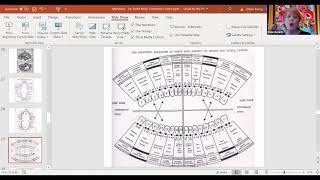
No, he did not lose his license. And they didn't go after the eav. Actually, what happened was he had to do some CE for record keeping because the assistant didn't write down something on there. More research for you guys that don't believe what I say is. So I also put some PubMed studies in here. I'm not going to spend a lot of time on these because you will have the slides and you can go back and look at some of these references. But when we get into things like allergy testing and you go, okay, this is just really weird. I've got plenty of stuff in here for you that will allow your scientific mind to absorb all of this and just enjoy what you're trying to learn today. Now, this is a really, really good example of a meridian. Now, obviously, it's a road, and it's a road in Houston when we had one of our hurricanes come through, and momentarily, this road is not usable. It's blocked. Once the water goes away, once the blockage is removed, whether it's a problem with the liver or whether it's a tooth that is removed, the road that's there is going to be perfectly usable. Does everybody understand that? Because in a patient's mind, they're going, okay, the meridian is disconnected, so it's like chopped kind of. When you get your vasectomy done, you hope it doesn't reconnect. There are dental uses for EAV compatibility, testing of dental materials, which doctor you went over testing for dental burdens and testing during surgery and even creating an autosode. And I won't have time to go over absolutely everything today, but I'm going to touch on things so that if those of you that are more interested want to get deeper, you can. I'm also going to run through some slides that for those of you that this is new, new to as far as mercury being toxic, that there's a safe way to remove it. All this kind of stuff is going to be in these slides as well. The coloring in a denture is a problem for some people. Some people are reactive even to the teeth. Titanium, in case you don't know, is a problem because it can electrically disconnect the body. It can challenge the immune system. And for those of you that don't know, all titanium has nickel in it. How many women do you know that are reactive or sensitive to nickel? A bunch. And so what I've done is I've gone through here and I've shown you some information about that. Of course, me freaking out, knowing this information. Last year, I had to have two hips replaced. Not something that I wanted to do, but I was in a wheelchair at that point. And it really took one of my biological friends to sit down with me and go, it's not the same as having dental implants done. Yes, there are some things that we can watch, but you think of a hip, it's in an environment where it can be sutured closed. The mouth is one of the dirtiest places. We see so much corrosion on some of these that if you could see ones that we take out, it would make you think twice. But I have another issue with implants, and we'll get to that later. So what kinds of tests are available to check the sensitivities? We can do blood serum compatibility. Now, there are some disadvantages to this. Your patient has to be fasting. You have to spin the blood down. You freeze it, you ship it off on dry ice. Your results take some time to come back. And then you get this huge book that says, safe or not safe. So now I'm going to take you on a journey. Let's pretend your patient is from Russia and they've never had a strawberry before, ever. And you want to place a strawberry filling. So you go through the trouble of drawing blood, spinning it down, shipping it off, and you send it, and it comes back that they're safe with strawberry. Of course they are. They can't have an antibody. They've never been exposed to a strawberry before. How many dental materials have your patients been exposed to? The other flaw with the blood testing is they don't test for things like anesthetics. When I ask why, they go, well, all anesthetics are neurotoxic. Yes, but most patients won't get dental work done without one of them. So you've got to give me some kind of idea. I'm not against it. If you're in an area where you don't have somebody who can use EAV or do really good muscle testing to tell what the person is going to be reactive to, I think it's better than nothing. But I personally like using eav. Your teeth are organs. They have lymphatics. They have a blood supply. They also have a nerve. That plaque is a biofilm. It's like slime that develops on the tubes in your fish tank. You brush your teeth before you go to bed. You wake up the next morning, you have this slime on your teeth. Your tooth basically pooped while you slept. It detoxified and pushed its waist out through the tubules to the outside of the tooth, hoping that you will remove it either in the chewing process or in brushing. I encourage patients to dry brush their teeth just like I encourage them to dry brush their body as well. I don't think that there's a toothpaste that can help remove plaque. You know, if I did, then we would smear it in between our teeth when we got ready to floss. It's the mechanical action of the floss or the toothbrush. And sometimes that taste deadens the ends of the taste buds, so the patient can't feel if they have clean teeth or not until they're driving down the road an hour later and they go, oh, I miss that area. So I just prefer that they dry brush. How do you dry brush? You just pick up the toothbrush, dry and sit and watch tv, brush all your teeth, rinse out. You know, if you want to use a mouthwash afterwards, I don't really care. And, you know, make sure you floss again. ADA doesn't even encourage flossing anymore. They dropped it and said that it's not necessary for people to reduced decay or periodontal disease. How crazy is that? Okay, but that's the ada. That's not us. This is what I feel like. I feel like when I'm looking in someone's mouth, I'm looking at their organs instead of their teeth. Because now that I have this information from starting in dentistry and then leaving and then going into medicine and trying to blend these worlds, you have to understand that dentists don't really learn about blood work. So all of a sudden, when I'm learning about blood work, I'm going, no. How come this person's labs are all jacked and they've been that way ever since? And then you'd query them and find out that they had endodontic treatment done in this year. And now they're living with a chronic low grade infection. And now their hemoglobin A1C is elevated and it's all because they have a dental infection. How cool is that? Hang with me and you'll learn all kinds of stuff. So, yes, we connect the dots in what I call the tooth body connection. We do have meridians that are these invisible, not imaginary pathways that go all through the body. I think one of the things that was the most interesting to me was when I first learned about this and I was trying to learn from someone whose English is not very good. And this is no reflection on you. It was not you, but it's someone who really was having a difficult time with me. And he was trying to tell me that. Can you just say that one more time very slowly so that I can try to write it phonetically? And it still didn't make any sense to me until probably, I don't know, maybe a year later when I'm actually. My thesis work was on the meridians. I took everybody's meridian chart, everybody's. And went through and found where there were discrepancies or where there was something that could be added. Sometimes there were actually errors, sometimes just in typing, sometimes they had accidentally. So I went through and when I was doing this, I went, oh, my God. All I could hear was Dr. Kong saying that this tooth is related to the thyroid. This tooth is related to the breast, and it makes a criss cross on the face. I was having the most difficult time. The wisdom teeth are all in the same meridian. But then when you start learning about your maxillary molars and you try to line them up with the mandibular molars, they don't line up. They go to the bicuspid and they flip when you get to the bicuspids and go to the molars. So you'll see how I dealt with that in my mind with me looking at my charts. These are just some of the charts that I pulled up. I mean, I had so many charts, it wasn't even funny. And I was finding that this was not new information. Okay, here's one that shows some arrows. So it gives you an impression. Hey, you should be paying attention. Maybe these teeth don't line up. This is the one that I. Oh, I'm sorry, apologize. It means that those teeth that are the molars on top relate to the bicuspids. You'll see closer in just a second. Hang with me for just another minute. This is the one that I actually use on one of my business cards right now because I thought this one was really pretty. And so you'll see that, because I thought that that was really cool. And it kind of explains what I do. This is my thesis work. So what I did was I took everything in everybody's chart. And because my son was neurologically challenged and we were trying to home school between my husband, myself, my mom, which is a nightmare in itself, I decided to color code it. And when I started to color code it, you could see. Well, I started with the anterior teeth because most of my research was showing up that men had elevated psas. They either had a missing anterior tooth or they had a root canal. And so I had this pile of people with dental issues that could be correlated with actual lab work. And so I knew that that was on the prostate, on the uterus, ovary, kidney, bladder. So what do kidneys and bladder make? P. So I made it yellow. And a pretty color next to yellow is purple. There is no rhyme or reason to the colors other than how I chose to place the colors on here, other than the urine makes sense for me. Okay.
The glimmer is dark, so that makes sense. It's almost that color.
There you go. But you can now see that the green tips in and that the blue makes. So it makes that crisscross. But it's in color for me because that's how my brain processed this cross midline. Occasionally it can. You can have a pan focus. You can have one tooth that jumps off of its meridian and ends up screwing up a whole body. Okay. Then I learned about acupuncture points on the face and got involved with a couple of other things. I am going to run through these because it's in my book, it's on the slides. It is just simply how each of these teeth go to different meridians. This is how you would chart something in a dental office for you physicians that are in here. I always tell somebody, you have to have a panorex. You have to. You have to. I'm going to say it again. You have to. Because there are so many quirky things that show up. People have had teeth taken out. They have supernumerary teeth. They've had bicuspids removed. I had a lady the other day, and she was in a car accident, and she has all kinds of wires in her jaw. There's all kinds of things that you cannot see by simply looking in someone's mouth. You will look like an absolute idiot if you misnumber a tooth and Tell someone they need to have that tooth removed. This is a really good example. There are normally eight teeth that are in a quadrant. There are 10 for this individual. So again, don't try to test people without an X ray. Yes.
If you have supernuminary teeth, how would you know which?
It doesn't matter at this point. You're going to go ahead and test it as an individual entity. Then working with a dentist, of course, you could learn to test the teeth. You have to learn the numbering system so that you are not telling them to remove a wrong tooth. This helps the communication between the two of you. If you choose to test teeth, I want you to get trained so that you're really confident in it and you're not diagnosing. Did you hear Dr. Yu say that? You know, he says he finds something and then he wants the dentist to collaborate and see if they find something. So I always tell people, send them to the dentist with what you found and then see if you guys can't work as a team. This is the part I'm going to run through. This is each of the teeth and what they are related to. And I'm going to show you in a new way how that connection happens. So what's the current theory of decay? You tell a patient that if you don't brush your teeth and you get a cavity, it means I'm going to shake my finger at you and tell you that you're an idiot. You don't know how to brush your teeth, you've got the wrong end of the toothbrush in your mouth or you're not flossing. Thank God you met me. And I'm going to show you how to save your teeth. So this is how you take care of your teeth. Oh, and by the way, drink or eat a lot of sugary food very often because the carbohydrates are consumed by the bacteria in that nasty plaque. And that bacteria then tinkles on your tooth, which makes decay in the tooth. That's how decay happens. Does everybody agree with me? That's the current theory of decay. Okay. This man is almost 50. Almost 50, never had a cavity in his life. I just saw this guy, there might be a date on his MSA on here. But recently and decided to use this as a teaching opportunity. So I asked him if I could his family. Somehow he got an email saying that the United States government was going to start collecting people who had not been vaccinated and putting them in concentration camps and vaccinating them. And so in Fear. He moved his family out into the country. They are working off of a generator. They don't even have running water. I am so happy I'm not his wife. Okay, so that happened in June of 2020. Just recently, he started experiencing a toothache, so he had to come out in order to find a dentist. Those of you that can see, notice that tooth number two has a decay on the mesial, and it's really good size. It's probably very close to the nerve, which is why he's experiencing a problem. But I also blew up the part of the panorex to show tooth number 20, and on the distal, he has decay. Okay. Now, when I see the MSA and I sit down with him, you're going to see something show up. Now, I don't ask anybody anything about their health. I don't want to know. Matter of fact, I'm a little rude when I go, don't talk to me. Just let me do my stuff. Let me collect my data, and then we'll have a conversation afterwards. This is his MSA, which is Meridian Stress Assessment. Okay. This was on March 17th. So I thought I had that on there. I then start doodling on it in front of them. So tooth number two shows up with Cary's nosode, which is a homeopathic. That should mean there's decay, but it also shows up with chronic pulp. So it means that this didn't happen just yesterday. This has been going on for quite some time, and it's due to the thyroid. Tooth number three shows up with thyroid affecting the tooth. Tooth number 14 and 15 show up with thyroid affecting the tooth. They're low readings, but they have a thyroid issue. And then I go down here, and I see tooth number 29. Thyroid affects tooth. So I go, holy moly, dude. What's going on with your thyroid? That is just like an eight ball. I can't believe that you could find that about me. December of 2019, my doctor told me that I had a nodule on my thyroid. But then, you know, Covid happened, and life got in the way, and I haven't been to see anybody. Of course, in my mind, I'm going, this guy probably has thyroid cancer. I mean, there's some huge problem with the thyroid. In order for it to show up on a tooth, those teeth are not getting the same amount of energy that other teeth in his mouth are. So let's back up here. Let's look at. Oh, I love my pointer here. Just the kind I can use. Okay. There's decay Here. But there's not decay here. Why? If the current theory of decay was true, then you're telling me that that bacteria is so smart that it can back up to tooth number 19 and just whiz on tooth number 20? No, that doesn't happen. This tooth has more energy going to it, therefore it can thwart off the acids that this tooth cannot. And when you start understanding that, then you will understand why Dr. U is finding things sometimes before they happen. Because remember, that energy precedes our chemistry. Okay. There are some other things that show up for him. I wrote down that there were an adrenal issue on one tooth. And so I usually scribble out to the side things that I want the MD to pay attention to because it is a team effort. Yes. This patient came in from a dentist. And about 60% of my patients come in from dentists around the country. About 40% of my patients come in from physicians where they go, I don't know what's wrong with the person. Go see Donna. See if she can figure out what's going on with you. So I wrote down, could be a methylation issue, could be MTHFR or comt. Could be that they have cortisol levels that are off. Could be food allergies, could be blood sugar slings, it could be that they're low in B12 or folate or magnesium. Not my job. Go away. Take this piece of paper to the dentist. And you need help. Okay. Do you see how easy this can be? So I haven't given any kind of a diagnosis. So what kinds of. Yes.
So can you back up to the previous slide? You have all those, like, thyroid effects too. So I'm coming from a medical perspective and from like Dr. Yu.
So you're thinking that it's the tube that's affecting the organ. It can go both ways. You can have an organ. Let's say this person is low in iodine. Let's say this person has mercury in the area of the thyroid. Let's say this person has Hashimoto's. Let's say God forbid that he does have thyroid cancer. I didn't want to write anything down in this case because I really thought I gave him a name of somebody to go to and I knew that that person would know my heart and would investigate. So I'll be keeping up on that case.
So a quick follow up. Does that mean in this case that if we fix whatever is affecting the thyroid, then the tooth will recover?
Yes. Thank you so much. That is exactly what I wanted to try to relay, because in traditional dentistry, they would say, okay, we can root canal tooth number two, and you'll get to keep that tooth. Because we're all about saving teeth. That's important. You don't want to have a tooth taken out, so let's root canal the tooth and put a crown on it. And tooth number 20, we're going to drop a composite in there, and then you're done. No, this person is set up for failure. Do you understand that this thyroid problem could make any one of those teeth spontaneously abscess with no decay? And then the only thing dentistry knows to say is, you must have had trauma, you must have been hit in the jaw, or maybe your bite is off and you're grinding your teeth at night. And maybe that's what traumatized. No, this person has a thyroid problem that is leaving these teeth susceptible to issues. So, yes, it can go both ways.
I was pretty successful when people come, and these are people with rampant decay, with huge, deep, deep cavities. But the tooth test is vital. So I clean the decay out and I even expose the nerve because I have ozone water. Yes, it's actually. When you open it up, there's actually some pus that comes out, but the rest of the nerve is still has. It has blood in it.
It's not bleeding profusely.
But I do some MTA and the derived pulp cap with ozone injections and the two stains of item.
And that's good. But why did the decay happen to begin with? That's the whole concept of biological dentistry, is this poor guy made it to almost 50 with no decay. You know, he should make it the rest of his life with no decay. Something interfered with that process. And if we just take care of the decay, which is what you were taught in school, you're missing the bigger picture.
My question is, do those teeth have to come out?
The teeth that you're talking about? He is probably going to have tooth number two taken out. No, in this case, I want him to address the thyroid issue. And see, it's kind of like having pretend I have 10 azaleas in the corner here, and a couple of them are turning brown and the leaves are starting to drop off. I go over there and find out there's a kink in the water hose. Smart me. I'm going to unkink the water hose and try to get water to these. They're guarded. I don't know if they're going to continue to die or if I got to them in time with getting water to them if I can turn them around. In this case, it's a very strong case for the body being a problem. You have to understand that coming from very conventional world. You know, we were told, again, shake your finger at the patient when they have decay. All of a sudden now I'm looking at children's teeth going, the only cavities they have is in the six year molars. So it made me ask the mom, is your son constipated? Does he poop 20 minutes after every meal? He poops twice a week. Okay, that's a problem. And it could be the large intestine, but those teeth are not getting enough energy. So again, it goes both ways. A bra. I can't tell you how many times I check women and I see that the tooth has a low reading and I go in to see what the issue is, and I see that the lymphatics are involved. So I'll ask them, are you wearing a bra? Oh, of course I am. You think I'd go outside without a bra? Okay, well, I have on a triple X sports bra. Triple x? I have to order them online. Do you think I need to wear a triple X? I hope not. But it's because I don't want anything touching on the side that will restrict the movement. It's like saying, Dr. Dawn, I'm here because I have blue thumb syndrome. Yeah, but you have a rubber band on your thumb choking it off. No wonder you have a blue thumb. Take it off. No, my mom put this on when all us girls turned 12 and we only can take it off at night. Okay, that's stupid. So take it off right now. I'm telling you that bras can kill teeth. That's how ridiculous it can be.
Can I make just one comment?
Yes.
So the question you're addressing is a medical point of view. What reading we have. I don't usually send to dentist right away. If your dental reading is like a low 41, 39, sometimes you can regenerate. That's what you do. Cleansing, detox, whatever. Then sometimes you would go back to normal at 50. Sometimes breathing might be 35. Unless patient really sick. I sent to the dentist, get a second opinion while I'm doing my job. Detox and cleansing, parasite cleansing. And dentist, I don't see any problem. Patient come back and I check. And sometimes it looks fine because you have to clean the whole body. That's what she's saying. But if the reading dropped out to 2015, it usually, almost always requires intervention. And they're usually Very sick people.
So some of the things on here which we will go over are root canals and extractions and crowns and impactions and even missing teeth or non vital teeth that have done their own root canals. It's important to me that when you are taking your bitewings and I always teach this to biological dentists and their staff. Take a periapical of every endodontically treated tooth. You will see it ultimately fail. It's not scar tissue. And of course now with CBCT's people, believe me, but you can see all kinds of issues with this particular tooth. Here's one where this is a brand new crown on a severely neurologically challenged individual. They were actually put to sleep so that they could have this dental work done. And then she came to see me and I picked up a dental issue. So I just asked if we could take a periapical. Can you see something wrong with this? Of course. It's just a crime that that's a brand new crown. And the crown that's the distal crown doesn't even have a good margin. And this is considered permanent work. Sometimes we find things like broken instruments. Yes.
Can you explain it to people that aren't dentists, what you're seeing now?
Oh, certainly. Okay. There's internal resorption. There's. That's a great question. Thank you. There's internal resorption. There's basically the tooth is decaying even from the inside of the tooth. But here easily it could be decay that started there. This crown does not fit the tooth. Do you see that? Has a lap over. Okay. It's an overhang, has a poorly fitting crown. I'd be embarrassed if I were that if I even worked with that dental office, I'd be dying of embarrassment. See things like this on X rays and they go, oh, yeah, it broke off during surgery, but it's not causing a problem. How the heck do you know that? You're not testing. It's just crazy. So when we talk about dental foci, they are areas that are concentrations of toxins where the body has chosen to wall it off or surround it with lymphocytes. That is what blocks the flow of energy on that meridian. And the energy gets into this area and basically hits a black hole and is displayed dispersed in different directions. I do thermography as well. And so sometimes when you're using thermography, you expect to see things, but you don't always see heat where there is a problem. Sometimes we see cold where there's a problem. In this Case you would expect. Again, thank you for pointing that out to me. That I need to point out things. There is gross infection at the tips of the roots there. And here we see a pimple or what we would call an abscess on the side of the tooth. So we would expect it to be warmer in this case. This is how this person imaged. No, not that person. This is how this person imaged. I take a face forward and you see that in thermography the areas that are white are the hottest, then red, then orange, then yellow, then green, then blue, then black. It goes in that order. Black being, it doesn't even measure. Can you see that when she is facing which this is her right side of her face, it's different than the left side of her face. Here she has an area, she doesn't have any pain. Now she does clench and grind and I can see that because I've got white in both ears, but there's more white on this side. So I'm inclined to think that there might be a problem. I asked her if I could take an X ray and then we see on the X ray that in fact she does have a root canal, but right in this area. Oh, it's just a coincidence, isn't it? Okay, when you're using your EAV, we've got AMA, EAV, CEDs, EDs, so computerized electrodermal screening, electrodermal screening, meridian stress assessment, they all mean the same thing. It's basically using an ohmmeter to touch different points and you put electrons in, you want to see how many electrons come out. That's it in a nutshell. Just, just that easy. But you can use it for surgery. You can use it to evaluate the procedure. You can use it to create pre surgical homeopathics. You can use it to create a homeopathic for the anesthesia that is being used. I don't even care if it's just the local that's being injected. It will help the body recognize it and work it out so that they don't have problems with it. Anesthetics, most of them break down into anilines, which is a whole different issue. It will help you with site entry. Let's say the person is edentulous, which means they don't have any teeth. How do you know where the cavitation is? Yes, somebody pointed it out to you, but now how do you know where it is in the mouth? You can actually help go in and figure out where that area is. Making access into that osseous site. Curettement and debridement is all done by the dentist. But knowing when to quit is the person that is working the eav because they are cleaning out, let's say it's a pumpkin and you cut around the top of the stem and you lift it off. And now you're going to go in and clean out all that pulp and the seeds. That's what a dentist is doing. When they're cleaning out a cavitation, I ask them, you know, make an incision in the top of the gum, retract the tissue, and you will see white bone. But it's not necessarily healthy bone. Even if you're looking at an X ray, it may have filled in with things and it's going to be a void, but it doesn't look like it on the image. Then I want you to take your drill and gently start it and push down. If it were solid bone, it would be like pushing a drill through a two by four. But instead they're going to pop. And when they do, they know they're in a void. So they're going to make a small window which will be removed. And now they can take a smaller instrument called a spoon, but it's not like one that you eat with. And they go in and clean it all out until they can feel solid bone. How do they know they're done? How do they know? Okay, pretend that I send one of you outside and we want to change one of these ballasts. I don't want to get electrocuted, so I need someone upstairs or someone outside to be flipping breakers and tell me when the breaker for this light is off. So we're screaming back and forth to each other, but we cannot see, see each other. Do you understand? Once I get it replaced, I'm going to start screaming back and forth to flip the breakers back on. That is what you're helping a dentist with when they're doing surgery so that they know when all this dead bone is out and the meridian has reconnected, because you hit 50, 50, 50 every time. So dentists that get used to using this during surgery feel like they've had both their arms cut off. If the person that does the EFE leaves for whatever reason or is on vacation, they feel so challenged because they become dependent on doing it. It will also assist you in making your autosodes for afterwards and for the closure and for post surgical homeopathics and for follow up. Did you have a question? Yes. Do you irrigate the area? Oh, my gosh. We Irrigate it with something that's alkaline. We irrigated with those on. But not until you get a 50. Because you don't want to change anything. You want to get your electrical connection, and then you want to deal with. Because it's not really a bacterial issue, it's an electrical issue. And we'll go into that. You'll see. So the cavitations, you know, every bone is connected to another bone by way of a ligament. And in dentistry, they teach take out the tooth, do the least amount of trauma possible. Just take out the tooth. So me learning that even though I started as a hygienist, hygienist in Texas go through the first year that the dental school students go through. We actually have to place and remove amalgams. How stupid is that? In certain states, hygienists can do that. So in Texas, we couldn't do it on patients. We had to do it on dentures. Major mercury exposure, sitting there drilling and breathing with no protection whatsoever, over and over again. So that I could get that off my list.
Did you blow the air?
Oh, I mean, we did all the stupid. We were playing with mercury in our hand. Look, stupid stuff, because when I was there, you had to mix your mercury drops with your pellets of amalgam, put it in the trichro. I'm old. These guys, they know what I'm talking about. I just pointed you out as being old. Yes. So I leave dentistry and, you know, I'm in the naturopathic world, and we're talking about a D and C. And I raised my hand, I said, well, actually, you don't have to do in D and C. I don't understand the value in having to have to do it. Because in dentistry, we could take out a tooth and just leave the ligament, and we're told that the body deals with it. So can't the body just deal with this, too? And it was actually my professor said, okay, so you're the one that's, like, already been a paramedic. And I said, yeah, okay, so you deliver a baby, but before the afterbirth, you just decide to suture her closed. Well, no, you can't do that. She'd become septic. Okay, so dentistry is not medicine. And unfortunately, it's not that you were lied to. You just weren't told the whole truth. And if you knew how the body really worked, you would lean more towards what we're talking about in biological dentistry. This is thanks to Dr. Boko. Jerry and I did some Crazy research where I changed some of the ways things were done, and you'll see that on here. But you can get cavitations in different parts of your body. It's been called different names through the years. This is again from Jerry. This is a man who had trigeminal neuralgia and had excruciating pain, was looking for help. He ended up having a technetium 99 scan done, and all the dark areas are osteomyelitis. Once he got his results and realized that it was all in his spine and in his face, he committed suicide and willed his jaw to Jerry. Cool. He says it's the only time he's ever gotten anything like that, where he's gotten ahead. But it was so that he could use this for research. That area that is dark is necrotic. Electricity can't go through anything that's dead. And in certain instances, it will create pain. It should look like the nice white one on the right instead of the dark one that's on the left. There are different risk factors. Some of them are controllable, some of them are not. The person could have protein C or S deficiency. They could have a plasminogen deficiency. Smoking plays a big part in this. Different drugs, including anti inflammatories or vasoconstrictors, diseases of circulation, trauma, like football. So now all your football players are going to be at risk for this exposure to pathogens. Now everybody is at risk when you clean out those pockets. These areas could be areas of dead bone with no blood flow that are holding toxins. And for me, in thermography, why that's important is because it won't image red, it will image blue because it's avascular. You understand? That's me many years ago. And I actually am sitting up on a chair only for the picture because usually I am on the floor. Floor. I don't like to know where they are because if they've taken out a tooth and I'm taking a reading, I don't want to know where they are. So. And when I would take my reading and it wouldn't be 50, they would continue to clean out. And one day, Bill got very, very frustrated. That's the dentist that is in this picture. He got really super frustrated at me and went to another tooth and touched it and it went up to 50, whereas we were down around 30. And I went, oh, my gosh, you're done. No, I just want to make sure you knew what you're doing because it's very frustrating here. He actually ended up having to perforate through the maxillary sinus, which is the dentist's nightmare. They don't like to do that, but if it's dead tissue, it's got to go. And this was my very, very first case that I freaked out about. Well, no, it's my very first case, comma, I did freak out. It's my first time in telling someone, Okay, I see that you have a root tip that's broken off in there, and I'm sure you've been told that that's not a problem. I actually am seeing that there's a problem, but I also see that there's a problem in the area more than just that. And I see that there's an area distal to the molar. And so Bill was willing to go in, and that is exactly what he found. There is no drill used in this crazy. So, documentation. This is something you probably want to take a slide on. When I started in dentistry, documentation was the person's chart was pulled, you wrote the date, the tooth number, the surface. Let's say O. C. I did a composite on the occlusal surface of tooth number 14. That was it. And that's what I was used to. Okay. I left and went into emergency medicine. If you knew my whole path, I mean, it's just crazy. I spent years on an emergency ambulance. I also became a flight medic internationally. And so I have gotten to do some really cool stuff that only happens usually in a hospital setting, on people that were not in the hospital. But I learned that you had to document differently. I learned that if it wasn't written down, you didn't do it. It doesn't matter what you said you did. You didn't do it. But dentists charting is not that way. And so when I came back into dentistry kicking and screaming because I really didn't want to go back into dentistry, it was Bill Gall who said, I need somebody who understands about dentistry, but also understands the body that is willing to change into this person that can interconnect the two. And if you're willing to do that, I can direct you about where you need to go. Which meant go back to school and take out more student loans. But that's okay. So when I sat down with Jerry and said, we're going to send all of our path reports to you for everything, teeth that are removed, cavitations, this is how I know how to document things from medicine now. So it's going to be completely different. And it's things like, why Was the surgery done? Was it because the patient was in pain? Was it based on eav? Was it based on an X ray? Was it based on a physician sending them there and saying that they have cavitations? And you do want to document eav? Because there are white papers on eav. So, yes, do put that in your documentation. How many carpioles of anesthetic did you give? What kind of anesthetic did you give? The exact times that they were given? What physician would give EPI and then give EPI again, and then give EPI again and not document how the time for those. Dentistry doesn't do that. So you're going to start doing that. Where was it given? In the butt? No, but you have to document it or it wasn't done. Where your incision started and where it stopped, what did the cortical bone look like? Were the proceeds oily? Those of you that have done cavitations, sometimes you'll see this oil kind of float up. How is it rated? Just a little medium? A lot. Are there bone shards? What's the color? Was there augmentation used? What specific kind? How many sutures were placed? What kind of sutures were placed? Does the patient smoke? Because that's super important. Did the surgery go as planned? Did that person walk out the door unscathed? Because if they come back and say that they were raped during the process, you don't have that documented. Were the vitals taken before and after? Was nitrous used? If so, what was the percent of O2? How did the patient arrive? Like by car or did someone drive them? How did they leave? Who did they leave with? Who was the assistant during the surgery? This lawsuit is going to come up years later, and you may have a different assistant now than you had then, and that assistant is going to get called into the lawsuit. How long was the entire surgery lengthwise and where did we send any biopsies or cultures? Is this different than what you document now? Because if it is, this is how you should document your surgeries and get results of your pathology and make sure that they are included. And so you will see on here that I have. I have poorly forming new bone with a skin ischemic damage consistent with bone marrow edema. Bone marrow edema is different than osteonecrosis. Osteonecrosis is dead bone. Bone marrow edema means the blood gets in, but it can't get out. It's like having asthma. You get the air in, but you can't get the air out. So bone marrow Edema is different. Giving Jerry as much information as I got changed our pathology results. We would get information back. Person at risk for clotting disorders. We never got that information before I started documenting the way I was doing it. This person was healthy. She was a patient of mine. She was cruising and traveling all over the place. Her husband had passed many, many years ago. She was dancing. Every time she'd come in, she'd tell us about all of her adventures. It all came to a stop. I got in touch with her daughter to find out what happened. Oh, Dawn. She didn't want you to know she was dancing. And while she was dancing, her denture flew out, which was an incredible embarrassment to her. So she decided to have some permanent dental work done. But after that surgery, she got so sick that I had to admit her into a nursing home. And she died. I said she died. Oh, my gosh. Can you get any of that information for me? I'm just curious. Okay, so this is why it's so valuable to actually see an X ray. Because if I write it all out on here, it doesn't look so bad. That's her X ray. Where do you see those implants go into the sinus. Those are now foreign bodies. She died of old age. That's what's documented. She didn't die of old age. That's iatrogenic. She died from a loose fitting denture. Yeah, a broken heart. Okay, so we're talking about root canals. Usually when I'm teaching a group of physicians, not necessarily here, but I will ask if anybody has a root canal. And usually I get a hand or two that will go up. And so I want to make sure that they understand fully what a root canal is. So I try to put it into their world. I smashed my finger in the door. It's really traumatized. It's not going to have to be amputated, but it doesn't look so good. They're questionable. So we're going to make an incision and we're going to suction out as much of the tissue as we can, and we're going to remove the nerve and the blood supply and the lymphatics, and we're going to shoot it full of Silly Putty. It's starting to look dark. We're going to dip it in plastic. Yep, that's good. And the physician will go, no, you have to amputate that finger. If it's that bad, you have to amputate because that person is going to be septic and they're going to die. It's going to travel up their arm. And if you don't get it then. Then it's going to go up to here. If you don't get it, then they're dead. Yeah, welcome to my world. That's the root canal. And yet dentists are told they are removing the nerve and the blood supply and the lymphatics in the tooth and that they are sterilizing the tooth. That's what they're told. They're not bad people. They're just terribly misinformed.
Have you ever got to test teeth that were treated with a platonal laser?
Oh, yes.
And they're still coming back.
Yeah, Dead is dead. Yeah, you're going to get that in a minute. Now watch this. And you create in your mind what you think is right, because I'm going to give you different information than what somebody is trying to sell. Something. I got nothing to make off of this. All I'm going to do is tell you what my experience has been over almost 30 years now. So just listen and then you can create your own. This is the anatomy of a tooth. For those of you that have never seen an anatomy of a tooth, you got a blood supply that comes in from the bottom, lymphatics and a nerve. Then you have these tubules that are filled with marrow, like a soup bone. Now, when we do a root canal, we can only take out that part that's in the center. We can only take this out. We can't take the yellow out. It's not possible. So if I bury a soup bone in the ground and I come back two weeks later, there'll not be any marrow in there. But there's no blood supply in the dirt. God put bacteria on this planet to scavenge dead flesh. That bacteria is going to get in this dead tooth regardless of whether there's a blood supply or not. Now there's a blood supply that's left down at the bottom of the tooth. But even if we give an antibiotic to this person to kill the bugs that are in here, it can't get up there because we took out blood supply. So it can only get to the base of the tooth. When you start taking periapicals of endodontically treated teeth, you will start seeing things that will just make your jaw drop. You're not having any pain. Are you sure? This particular person, you can see that the tooth next to it has a hairline fracture in it. But this was due to trauma to begin with. So what's the big Deal about root canals. Well, first off, energy can't go through dead tissue. It's not a burden that is overwhelming to every person because every person is unique and different. But if that's an infected tooth, every single time that person chews, a little bit of bacteria comes out of those tubules and scoots into the bloodstream that does still have blood in the bone and it is carried to another area of the body. Used to have an infectious disease control doctor in downtown Houston that would refer patients out to me when she was getting ready to amputate a leg whenever she found osteomyelitis in a knee because she thought she found the connection. That whenever she found that, I was certain to tell her there was a tooth. That was an issue, which I would, because there was. But she's not the person that found that. It's just that she stumbled on it, which is great. But it's crazy how it can go throughout your body. There is no such thing as a healthy root canal. It is a taxidermied tooth. There is no such thing as a biological root canal. Now, I'm going to have certain people go crazy, but just bear with me right now. The current theory is that we ozonate it to reduce the bacteria and the virus and the fungus and the parasites that are in there, because that's what ozone is good for. We use a laser to try to sterilize it as well. We use GentleWave to try to get some of the tissue out of the tubules. And we tell the person, you have a biological root canal. If I have a lamp and I plug it in and it works, I know I've got power coming to the building. A good cord, a good outlet, a good light. Now I unplug it. I take an exacto knife and trim open some of the plastic and cut out an inch of the wiring and plug it back in. My light doesn't come on. Maybe it's a bad bulb. Let's go put a new bulb in. Now, do you understand that it is an electrical disconnect? The reason my light is not working now is because I removed part of the wiring in this lamp. Now, I've called an electrician because now I realize that he can splice the wire back together and my lamp will be good as new. But while I'm waiting on the electrician to come, my dog poops on the wiring right where there's a void. The bacteria is not the issue. I get it that dentists are all, let's do this to try to Reduce the bacteria. Let's send them to an endodontist so they can have the tooth retreated to reduce the bacteria. The bacteria is not the issue. The issue is the electrical disconnect. You have a taxidermied tooth with about an inch and a half of electricity. Disconnected. Electricity cannot go through dead tissue. If you're on one side of a door and I'm on another and you have Christmas lights and we want to know if your lights light up and I plug. Plug in an extension cord and the door is closed, it's a sliding door. I'm going to start sanding the door. How much of that door do I have to sand away before we can connect? All of it. Which means removing the tooth and all the dead bone and instantly the body reconnects. God made this incredible piece of equipment. We are designed to heal ourselves. My computer can't even do that when I cut myself. I don't have to go to an encyclopedia and look up the clotting cascade and tell my body what to do. It's programmed to do that. The bleeding stops, a scab forms, the skin heals over it. I'm healed. Do you understand that if we remove everything, that's the offending factor. Electrically, you can heal yourself. So, Don. Yes.
The argument that Donna says, and I have talked to one of my friends, and he said obviously he hadn't done this or went wrong. So when you have this conversation that the majority of people can handle a root canal, you hear that statement.
I'm going to show you some of the majority. Go ahead.
And then we get into the conversation. I started talking about the immune system, you know, and that just blows them.
Out of the water.
They don't even talk about that.
Did Dennis learn about that in school?
He's not going to be able to back it up with the immune system.
And so I always say, well, most, and I will say, because I had a lecture one time with some colleagues and a few were ended on this. And my thought process now is like, some people can handle it, but they're not cure of it. I mean, it's just waiting for that day where they wake up.
I do agree. I don't tell people to have every root canal taken out until I test it, because I want to test it and see how their body is handling it.
That's not even in the realm of conversation.
No, no. My purpose in putting this in here is as the executive director of the iabdm. Of course we get phone calls all day from patients. Our organization answers phone calls. I mean, we talk to patients and educate them. And so when they're going, well, this dentist told me that they could do a biological root canal. Have a conversation with them about this. This is what they can offer you. They can reduce the bacterial load, which may be a temporary help for you. What they can't do is bring this tooth back to life. It's like voting for the healthiest of dead people in a morgue. One of them may have all the flesh off of him and one of them may be newly dead. He's still dead. I just need for you to get that concept. And by the end of this presentation, then I'm going to ask you to think where you are. This lady saw a biological dentist. Then I looked at the Panorex and went, no, you didn't. But she was told the dentist was a biological dentist, so she believed that. But this is some really horrible work. And she's got root canals that are on the meridian to the breast. And when I started doing thermography, there was just this red line that went right down to the breast.
There's a few patients that just refused.
To get this pulled. Yeah, that's fine. It's their body. They can do what they want. Not my job. So with root canals, of course we have gutta percha shrinkage, so we're told. We put the gutta percha in, but then it shrinks. So bacteria is small enough it can just creep right in there, even though it doesn't require a blood supply. Those toxins can create secondary infections anywhere in the body. You've got thioether and mercaptan which were used in the world wars. Those are the off gassing from specific anaerobic bacteria that can oftentimes cause neurological jack with your brain. They are energetic blockages, if you think of it this way. You pick up a nasty, dirty, filthy phone that's been sitting in cow manure for days and you try to call 911 for help, but the phone cord has been cut. There's effort on your part to go through the process, but you will not get your desired result, which is to have an ambulance there because there's an electrical disconnect. You get it? There is bacteria. I could give a rat's ass about the bacteria. These teeth, we were told certain teeth had certain numbers of canals, and then only the endodontists found out that there in many teeth were extra canals. But really nobody talks to you about the fact that some of the canals can go laterally. It isn't until you start looking at teeth that have been dyed. And there's lots of research out there on that to show how many canals can be in a tooth. These dental tubules are really small, but they're filled with that marrow. Now, remember when the tooth was healthy, the tooth detoxed at night and pushed its waste product out through those tubules to the outside of the tooth, creating that biofilm. When the tooth becomes sick or is exposed to sugar, and that's based on research from Loma Linda, the flow reverses and it comes in. This is a tooth that was lasered. The person flew out to California because at that time, this is. If you look at the year on here, and I could probably remove stuff to find the year, but I'm going to say it's early 2000s. Yeah, they flew out to California in order to get testing done. And this is when Boyd Haley had alt. And so we're looking at the amount of inhibition of enzymes that helped the body create ATP. This person was told this tooth was sterile. We didn't have DNA testing to see the bacteria. This is the best that we could do. Three weeks after having that tooth sterilized, she made the choice to have the tooth removed. So this tooth is removed, and there's 38% inhibition of the enzymes that have to do with the body's production of ATP. That's pretty significant. This person's probably taking glutathione. If they're dealing with somebody who knows. But three weeks later. So basically, three weeks after being sterilized, this bacteria has remorphed. So the analogy that I use, and you'll see in many of the different videos that I've done, it's like having a dead cat on my countertop and it's got maggots all over it. So I call a pest control to come out and spray the maggots. They're gross. They're moving everywhere. He sprays them with ozone. Ah. I found a natural pesticide person. Great. I'm excited about that. All the little maggots die. Okay. Three weeks later, I call him up. I want my money back. What? My cat has maggots again. Lady, you didn't throw out the cat. No, I love that cat. I plan on keeping it here. You're kidding. Okay. All I can do is come out on a regular basis and spray your dead cat with ozone that's retreating a root canal. At some point, the dead flesh that's in there is going to call on bacteria. That's in God's plan. You Guys are not going to change God's plan. I don't know who you think you are, but you are not going to change God's plan. That bacteria is going to end up back inside of that tooth. It's in a dark, moist, warm environment and is going to multiply all over again. So all you did was reduce the bacterial load and get some money out of it. But sometimes people choose that this is the same patient, six months later, decides to take out three anterior teeth, 8, 9 and 10. Can you see that? That is 78% inhibition of the enzymes. Her chief complaint was, I cannot get my ass out of bed in the morning. And now we understand why. Now we have DNA testing that we can do. We can do it for Perio. And we can see the link between different dental infections and cardiovascular disease. We can see that the root canals really could be. Did you need to take a picture of that?
The oral DNA? Thank you.
Yeah. If you guys need to take a picture of something, sometimes I'm good about seeing the cameras go up, but if I'm not, just let me know. Now we know that research does show that secondary infections can happen from dental infections. This is a DNA connections report. I'm sorry, I stuck this one in rather late, so it's a horrible copy. You can see my hand trying to take a picture of it. Point being, oftentimes the patient is not educated about the value of having this test done. So when I do my MSA readings, usually they have not seen a dentist yet, or they've seen a dentist for a new patient visit, but they've not been given their treatment plan because the dentist needs my input in order to make the treatment plan. So I am the one that drops the bomb on them, saying, there is a test that you could do on this. I mean, they can just throw the tooth away after the tooth is removed. But you're going to miss an invaluable tool for your physician if this tooth is sent off, which is going to cost you about $550 to send it off. But in case you're not familiar with doing this testing, there's a vial that is filled with liquid nitrogen. Open it as infrequently as you can, but you can put up to six teeth in there. It's not. The test is not per tooth or per sample. It's per test. So if you're doing cavitations and you're doing a couple of extractions, cram as much as you can in there and then get this report back. Well, then when the report comes back, the dentist calls me and goes, well, what in the hell am I supposed to do with this? This is. I don't even know what this is, but it looks bad. Yeah. Okay. It's like a physician removing a mole and sending it off and finding out that it's melanoma. You're not the person that's going to be dealing with that. Obviously, this is outside of your scope. So refer them to a physician that can handle it. What if this comes back with Borrelia, which it does often. This person maybe has gone through testing multiple times to see if they have Lyme, but it's always been negative because it has to be at a very specific time. Unless you're doing PCR testing, which this is. Question.
Yeah. In my mind, I always. From a scientific point of view, research point of view, I have a problem with taking stuff from different areas and pushing them in one area.
Just your body is systemic.
Okay, but is that like. So you're saying that this information can come to you and you can interpret that? If I understood that correctly. Right. As far as the connection between this.
And other organs, it doesn't need to. If you're taking an antibiotic and you're taking it orally because you have multiple infections in your body, it is addressing that. Correct. Because it's systemic. When you have several infected teeth, every time you chew, that comes out and is circulating throughout your whole body. All we're trying to find is what's circulating throughout your body.
Collective of stuff.
It is, yes. The scientific world. Would it be ideal that we could say this cavitation produced this and this root canal caused this? People can't afford that.
I have one case. There are four extracts. The four DNA separate and microorganisms, similar. Half of them are same, but slightly different.
Is that so? My question is, is that of the value. If money was not an issue in a perfect world, would that be of extra value to say that this.
I don't think so. If you're going to lecture on the difference between root canals and cavitations, maybe, but for the patient, no. And all I'm concerned is that they're able to get in the hands of someone who can give them a treatment plan that will actually work and they need to know what they're fighting against.
Will you talk about when this information comes back to a dentist?
Yeah.
How do we.
You refer them. You are bundled. Every patient that comes in. When you start learning with me, I start teaching you the value of. Your patient comes in and the first thing they are signing is what MD are they working with. Because you have to be absolved of certain things. If your person has low platelets and they know that and they come in and they have a horrible toothache and you want to take out their tooth and their platelets are 85, that person could lead to that. That is not your call. But you're trained. They have a toothache. It's really bad. I can help them. Today I want to put you in a safer world where there's a team and so just hang tight.
So this is the word.
Let me get a sip of this teeth.
I test them Doxycycline, zithromycin and tanadazole. Sometimes it is clindamycin. Sometimes dentists will amongst the is not strong enough augmentative. A lot of standard drugs I would recommend guilty is augmented.
I don't think the dentist should be treating it at all. I think they should be in somebody's hand.
They take two steps when they start.
Taking.
Either clindamycin and diet itself. So I already give them ahead of time. So they know to take it the night before the same day that for like a three weeks at a time. This is a sick people I so.
This next slide is actually research that Robert Jones did. Robert Jones is the creator of a piece of equipment called the cavitat. If you knew his little story, he was diagnosed with ALS and then he ended up having all his amalgams removed. His cavitations cleaned out, his root canals removed. And he didn't have Alsace. He had dental burdens that were making his body not function correctly. He was an airline pilot and an engineer. And so he ended up trying to create something that could help us do speed of sound imaging, which is what Dr. Yu was showing you earlier. There were some flaws in the system, but he started doing research after this and what he asked for was root canal teeth. That and cavitation proceeds. Now, before this research was done, the most toxic thing we knew of was mercury. Okay. What he found is that it played a part in our immune system more than we knew. P53 is known as your oncogene. It's a tumor suppressant. You don't have to know anything more than that right now. And the CDK2 controls the cell size and the P21 controls replication rates. So let's look at what happened. 4000 samples were taken from different dental offices throughout the country. Those teeth were washed, so it wasn't something on the outside. They wanted to make sure it was the inside of the root canal teeth that they were getting. The first sample that went in the equipment, they stopped the research totally. They called Bob and said, we have to know what is what we're testing because we need our scientists to be in complete zoot suits. We had to dilute the first sample by 8,000 times in order to get the computer to even register. That's how toxic it is. What in the hell did you send us? And Bob said, teeth and jawbones of humans. Really? Yeah. Okay, so 900 root canal teeth. They're tested after three separate washings. The top from the root canal teeth totally inhibited the P53 by 99%, the P21 by 68%, the CDK2 by 67%. The toxins from the cavitations inhibited all three by 99%. Remember I told you that, you know, before this we thought mercury was the big issue. After this we're going, holy crap, look at what dead things do inside of the body. The beta tubulin destroyed by toxins in root canals and, and cavitations is actually five times faster than it is with mercury. So I want you to consider these dental infections. The effect on the P21 was overstimulation of the cells, kind of like autoimmune links. Different links were found to als and ms, lupus and Parkinson's disease. How this research changed me. If you were a young woman and it was a week away from your wedding and you were in a car accident and you broke off number eight, I would say, oh, my gosh, that sucks. I'm going to send you down the street. They're going to do a root canal. They're going to put a temporary crown on there. You're going to look gorgeous for your wedding. Don't worry about it. Later, I'm going to ask you to come back and get some testing done so I can get a baseline on this tooth. If you have a problem getting pregnant, because this is on the meridian, for that, come back, let me retest it, and let's see where you are. And I would leave it at that because my belief was everybody handles different burdens differently. After this research was presented, what it proved to me is, you know how you have patients that come in and they go, oh, my God, I'm MTHFR positive. Oh my God, I'm gonna die. And you're going, oh, my God. Just because you have a SNP does not mean that it's turned on. But okay, good that you know you have it. This is the things that you want to pay attention to, but they literally think they're going to die. Having a root canal tooth with all this dead tissue in there that I have just now seen the research on that is worse than mercury by five times, makes me understand that it has the potential to turn on that gene and make it a dirty gene now, which means that this woman who hasn't had a baby can now have dirty genes, get pregnant and pass a snip on to her child. They end up with cancer that I could have prevented by giving her different information. I'm all about giving the information. I don't want to scare somebody and have them have things taken out that don't need to come out. But I want to tell her over time, this is what I know will happen. It's going to be a personal choice. You'll either have the tooth taken out after the wedding, after the, you know, maybe a year later, whatever. I get it. We don't want to have you swollen from surgery for your wedding pictures. You guys see where I'm coming from and how even what I have said changes. Yes. Repeat the doctor's name again. Oh, no, it's not a doctor. Oh, that. Which the person who's doing all the research. Okay. It's Robert Bob Jones. Yes, but he's not a doctor. Okay. Have your patients watch my video on root canals. I have it on my web, my personal website. It's one that just educates them. It's not as scary as root cause, but you don't want to be the one necessarily telling them all the information because then it looks maybe one sided. So I think it's better when patients come to me and I tell them I have no financial gain. I don't care what you do. It's a personal decision. It's your body. You can choose wrong and always, you know, correct it later. Taking a tooth out is a permanent decision. So I need for you to go home and pray about what you want to do. I need for you to talk to your family about it because your family is probably going to think differently than how I think. But after you have all the information, then make a decision and move forward with that. Let's talk about amalgam. Just so that you know, one gram contains a half a gram of mercury. So if we say that the average adult has 10 fillings, that means that they have about 5 grams of mercury that are available. So I'm going to put this in a way that you can completely understand. I'm very visual. I Speak in word pictures so that patients leave with concepts. If you had a 10 acre lake, that's a pretty big lake, and you have Guido throw a body in the lake that has a half a gram, that's not even the average for the number of amalgams in there, it warrants a fish advisory. So you should tell Guido to dispose of them someplace else and not in your 10 acre lake. Mercury is in the amalgams. So when you say a silver filling, it's not really silver because it's not the bulk of what it's made. It's silver and color. So that's how we have chosen to distinguish it. It's an amalgam. It's a mercury amalgam. When you buy cookies. And sugar has the highest amount of what the ingredients are. Sugar goes at the first of the list. So it is a mercury amalgam. Because you now have mercury coming off of that filling. Every time you chew, every time you brush, every time you drink anything hot, every time you drink anything cold, it's acidic. Mercury is now going to get into your body. Candida is a normal microflora that now sees a purpose to help try to prevent the mercury from going to the brain. So you get a bloom of Candida. So I'm in disagreement with physicians or even a nutritionist that says, oh, I see you have Candida. Let's put you on a Candida diet. Well then you're interfering with God's plan because God put that in as a compensating mechanism for the fact that that this person has high levels of mercury. It also will make the cholesterol go up. So why is the person's cholesterol high? Just don't give them something to bring it down. Try to figure out why it could be a thyroid problem and their cholesterol is high. Mercury will go to the brain, to the kidney, to the joints. It actually will go everywhere. It loves thyroid tissue. It will not show up on blood tests unless you just had mercury removed or if you'd have just had mercury placed, it's going to find a home. So it's a stupid way to draw blood and see if you have mercury. Remember that the mercury can pass the placental barrier. Proof positive here. Dental amalgams are a 24 hour a day exposure. It's not like you just went and got a vaccine that had thiomerosal in it. It's like every day you got a vaccine with thiomerosal in it.
Can you please repeat the Candida part? Because I Still don't understand. So are you saying that if they have mercury, but they for some reason cannot remove it right now, not to put them on a candida diet.
That's my preference. That is God's protective mechanism. So I am trying to reduce mercury in other ways. If you reduce the mercury, then the candida doesn't have the need to be there at that same level. Not that I don't tell them about sugary foods and things, but it is a natural flora there that has taken this reaction because of something else that's happened. Okay. Yes. You guys heard about the smart protocol. Research was done with both organizations, us being a smaller part. So we choose to call ours the Protect protocol. It is a very similar protocol. Our doctors are trained the very same way as far as the safe mercury removal. But we go as far as to say it's also about protecting your employees. It's also about protecting the planet. So me working as a hygienist, even though that first year I was drilling out mercury fillings and breathing it, then for several years I worked in a mercury dental office cleaning teeth. And so I was breathing the mercury in that office. So it was just adding to it each year. I mean, mine started off with my vaccines when I was very small because my mom didn't know any different. And then in second grade, I started wearing contacts and Contact solution used to have thiamerosal in it to help prevent bacteria growth. When my eyes turned red, the doctor put me on contact solution for sensitive eyes, which was a much smaller bottle, which only pissed my mom off because now we're having to pay more money for something. And she didn't understand that it was because there was something toxic in there. It's not that she doesn't love me. She just thought that the doctor was trying to make more money. And then in grade six school, I played with mercury. And then as I'm going through the hygiene program, I don't want to get pregnant. So I'm using a contraceptive called the sponge. You get it wet, you insert it vaginally. The spermicide was mercury at that time. So I've had mercury in my eyes. I've had mercury injected into me. I've had mercury in my hoo hoo. I have breathed mercury. And then I'm breathing it again, going through the dental program. Can you see that my exposure was over time. And even though I do have methylation flaws, I had no awareness. I didn't feel weird or stupid. I'm just as weird and stupid as I'VE always been. And so I didn't feel the difference that some patients feel when they have a methylation problem and they get the hit. Getting pregnant and having a pregnancy not hold. Of course, this part of the mthfr, we look at that. But it's a huge clue for you. Could this person be mercury toxic? Is the fetus aware that there is not conducive to life? Because I three times had miscarriages until my body was less toxic and could hold this pregnancy. But it wasn't until after Trevor was born and didn't meet his mile markers that the doctor said, I think it's you. I think you are mercury toxic. And you gave it to him, which is a horrible thing to tell a mother, a horrible thing. But anyway, the protect protocol is. You realize that any dentist can call themselves biological. I have made this my life's mission to change this. But anybody can say that they're biological and put it on our website. So when a patient calls, I actually give them a list of questions. Ask your biological receptionist if she can answer these questions and if not, then you're not in a good office. Go to my website and I actually have certified biological offices so that you're not getting duped. Because again, we've gone so far as to trademark the term certified biological dentist, certified biological hygienist, certified biological assistant receptionist. We are the only organization that trains the entire staff down to your person that answers the phone. Because if a patient who is now savvy calls your office and your receptionist goes, what? Compatibility? What? They're gonna hang up, not gonna go on to your office. Removing mercury filling can be dangerous. So we want to make sure that you are in someone's hands that can do it safely. We don't want to take out something that's a known neurotoxin unless you replace it with something that's gonna cause headaches. Because where are you gonna go? You're not gonna go back to your dentist. You're gonna go to a doctor and say, I've been having headaches for the last 90 days. Is he going to ask you, did you just get dental work done? No. He's going to draw blood to see if you're anemic. But when you come back and you're okay and you're not anemic because he hasn't even drawn iron or ferritin. He's just done an incomplete panel and decided that you're not anemic. He's going to say, well, but I hear that you're having headaches every day. You could have a brain tumor. Let's do a CT and an mri. But when that comes about, good, he offers you a prescription and a rotten to take for the rest of your life, and that will help you so that he will be your friend. Things have to be done in a correct order or you could end up with disastrous results. And I use all kinds of analogies here, so hopefully that gets my point across. We do cover up the patient. This is what's under how they're going to be covered up afterwards. So you have to talk to the patient so they understand if they're claustrophobic that this is not going to be a pleasant experience. But it's for their protection. The staff also has to undergo all of this. It's not fun, you guys. It's not fun at all to be compromised in your breathing all the way down to hair coverings that need to be done. What we do with the operatory, what we do with the environment, this is ultimately what the patient will look like. And so it's important that the patient have this. So I literally hand out these flyers as the patient comes in so that they understand the worst thing for me is for them to hear that they have to have a mercury filling taken out, but think that the price is something that they can't afford and not understand that going to Mexico and getting it done wrong or down the street could cost them way more in health problems down the road. So it's my job to make sure that they get it and they do by the time they leave. Okay, so this is what the staff should look like while they're working on the patient. Scary. It's an occupational hazard to be removing mercury fillings. And yet in the dental school, still, they don't allow any protection for the students. Not fair. Don't you want an office that pays attention to all the details? Yes, I do. So I want a dental office that answers all the questions correctly. You guys have to practice within your scope. Just like I said, when you get your results back from DNA connection and it shows that there's all these bugs and cooties that you can't even pronounce the names, they need to go to somebody else. You're not the person that's going to be handling that. Likewise, most MDs are not going to be taking out teeth. Most MDs freak out about injections in the mouth, and yet dentists freak out about, I had the worst time getting them to actually stick the needle in. Don't just sit there. I'm looking the other way. Stick it in and get it over with. But stay within your scope of practice so that you don't get in trouble.
More from Dr.

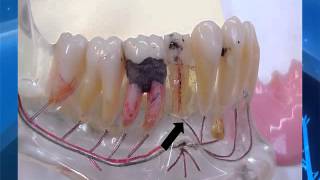
Revolutionizing Dental Health Diabetes, Root Canals, and Holistic Healing with Dr. Dawn Ewing