Revolutionizing Dental Health Diabetes, Root Canals, and Holistic Healing with Dr. Dawn Ewing
Transcript of a YouTube interview (Root of the Matter) in which Dr. Dawn Ewing (naturopathic practitioner, former dental hygienist, executive director of the International Academy for Biologic Dentistry and Medicine) discusses biologic/integrative dentistry. Key themes: how root-canaled and non-vital teeth and poorly healed extraction sites (cavitations) can harbor infection and systemic inflammation (affecting HbA1c, CRP, ATP production); the role of meridians/energy diagnostics (EAV, NEST) and electrical concepts in dental health; screening/biologic protocols (IABDM certification, mercury-safe/removal protocols, implant materials); and adjunctive modalities (ozone, ionic foot baths) for supporting detoxification and healing.
Chapters
Everybody. Welcome back to another episode of the Root of the Matter. I am your host, Dr. Rachel Carver. And today we have Dr. Dawn Ewing with us who is. I don't even know how to describe you, Dawn. Your resume is about 20 pages long. She is an amazing practitioner, a naturopathic practitioner based out of Houston, Texas. She has so many different certifications. As started out as a hygienist, has certifications and in naturopathic medicine and integrative medicine. She does a lot of energy work, thermostat. Don is also the director of the International Academy for Biologic Dentistry and Medicine. So maybe we'll talk a little bit more about that academy and how it helps dentists like myself and hygienists really embrace some of these technologies and philosophies to bring better healing to our patients. She's also an author. She's written a book called Let Tooth Be Known. So after this interview, I can read a little bit more again about biologic dentistry and get to know some good stuff. So again, you have a very. I love that you were an EMT for all those years. You just have your finger in so many.
Yeah, God took me on quite, quite an incredible journey.
So what I love and I think is so special about you is that you have so many different perspectives because you've been in different facets of health care. And I think the more open minded we are as practitioners, the more we can bring to our patients and our colleagues because I think sometimes that's part of the problem in conventional medicine. We go to medical school, we do a residency maybe and we have a very narrow focus of practice. Right. We forget that the rest of the body is all connected. Right. We know one thing and we're an expert and thank goodness we have specialists like that. However, sometimes it becomes so narrow minded that you forget how the whole body is works. Right. So maybe just tell us a little bit about your background, how you came to be the executive director of the iabdm.
Okay. I did start off as a dental hygienist. Went to University of Texas Dental branch here in Houston. And I was perfectly content doing hygiene for many years. I got so involved in hygiene that I served on the Texas State Board a dental examiners for two terms. And then I moved out to a small town and that small town I happened to witness a car accident and I got out of my car to help the person. And that was a rural area with a rural volunteer fire department, volunteer ems. And they just freaked that somebody got out to help and asked me If I would start taking EMT classes, which morphed into paramedic classes. And then I became a flight medic and traveled around the world. So that did give me a different perspective. In dentistry, nobody ever tells you thank you. Oh, my God, you saved my life. And that was what I was thriving on in ems. It didn't matter what kind of a call we made. Usually there was a thank you. And I didn't realize how much I was fulfilled by hearing thank you over and over again. So it's really hard to go back into dentistry. But I got married, I gave birth to a son that had neurological problems. And I tried going back into EMS because I loved it, but it was really difficult for me leaving my son. And, yeah, it was just became too hard. So I did find a dentist that was a biological dentist that really started. It seemed like he was courting me, kept showing up at my house, talking to Toby and I about how I need somebody that understands how the whole body works, but understands dentistry. Please come be my hygienist. I will change your world. And what got me was he said, I will let you set your own hours. And I said, I really am thinking about going back to school, getting my PhD, and I'll let you set your hours for that, too. That was really what made me want to go there. I didn't even know about biological dentistry. And then as I started going to courses with him on biological dentistry. And I don't want to say I knew as much as the dentists, but I knew as much as anybody else that was attending those conferences. But you're right. From maybe a different perspective, I just started hook, line, and sinker getting into it. And then Toby told me that our school notes, because I had gone back to school school were more than our home mortgage, and that I needed to suck it up and start bringing in income. And that it was ridiculous that I had so many different licenses that required so many hours of CE every year that I would have to take off a day of work, fly somewhere, pay $1,500 to attend the class. And he just didn't understand that. And so that particular meeting, I was going to an IABDM meeting out in Carmel at that time. It's called the Abduction. And the person that was the executive director, her husband is the one that founded it, and he'd had a stroke, and she was just tired, and she looked at me and said, is there any way that you'd be willing to take over the academy? And I said, I have a neurologically challenged child at home. I don't think my husband would let me do one more thing, tell me what it is I have to do. And she said, basically, your main job is getting together the conference each year, deciding on who the speakers will be. And I said, wait a minute. I would get to pick the speakers and I would get CE and listen to speakers that I want to listen to and not just somebody else. I'm in. I don't care what I have to do.
I'm in.
And so I came home, told Toby, who was not real thrilled, but as time went by, he became the treasurer of the organization and the assistant director. So he really has been very helpful through the years. And I did get to finish my PhD in integrative medicine. And then I did open a practice, but part time, because I do. I put in at least 40 hours a week for the academy, answering people's phone calls, trying to find a dentist, explaining to dentists what they need to do in order to satisfy being a biological dentist and why anybody can call themselves anything, somebody can call themselves a natural dentist. There's no anything that would keep them from saying that. But the criteria for biological dentists is set. And so it was frustrating to me that anybody could call themselves anything. And it wasn't clear to the lay people. So we actually established a certification and we got it trademarked so that a dentist will go through 17 modules of training, anything from homeopathy to meridians. Not that they're an acupuncturist, but they do understand the application of how that applies to teeth and where they would need to refer to. And because the body is a whole, but not one person can work on that whole body, it does get divided up into different practitioners. And so the Academy has become instrumental really in education, not only to lay people. I spoke at Weston Price this last year, and that was basically to lay people, telling them this is what you should expect when you're looking for a biological dentist. Educating people about root canals very clearly. I was told at the dental school that a root canal is taking out the nerve and the blood supply and the lymphatics, sterilizing the tooth, putting a crown on it and telling the patient they would be fine. And I believe that wholeheartedly. And that's what I told people, let's try to save this tooth at all costs. We'll set up a payment plan for you. It wasn't until I got into naturopathic medicine and I'm learning how to read blood work, because dentists don't learn anything about blood work. And I was frustrated because I had a patient that obviously had an infection that when I timelined the labs four years ago, the neutrophils were high, the lymphocytes were low, and I could not find an infection anywhere in this person. They did have an elevated hemoglobin A1C. And so everybody. That was my professors, Don, what? Don't you see? The person needs to go on metformin. Obviously they've got diabetes. Yes. The hemoglobin A. When she was 15, I couldn't find an infection, though. So I'm seldom quiet, but I was laying in bed and I was quiet. And that's when you hear voices of God coming into you saying, this is what you need to do. And I went back and I said, do you have a toothache?
No.
Are you sure? I'm positive. I don't have a toothache. I know what a toothache feels like. About four years ago, I had to have a couple of teeth, root canal. And I went, oh, my gosh. I didn't even ask anything about teeth. In my quest to learn more about natural medicine, I was trying to abandon anything I knew about teeth. And yet I sent him to a dentist. He had several root canals, but one of them had re. Abscessed. And it was so bad that it couldn't be retreated. It was going to have to be extracted. But the patient was mad at me and he called me all upset. I don't feel any pain. You don't know how much I spent on that root canal and that crown. I'm not having the tooth taken out. And I thought, oh, my gosh, is your wife home? What? I said, put your wife on the phone.
Let me talk to her.
So I explained to her what was going on or what I thought was going on. She did exactly what I would have done, which is be like a Chihuahua on his heels. And he ultimately got the tooth taken out, but he was still angry at me. But because he was one of my case presentations in school, I need to track him down and finish his case, which meant I had to redo his blood work because it had been so long since he'd seen me. Been like four months. And when I did, his hemoglobin A1C was 5.2. So I ran to one of my professors who said, missy, somebody put him on Metformin, okay? I didn't ask him. So I ran back and I said, are you taking any prescriptions? What are you taking Metformin. What's that. Never mind. And I went back and I said, no, he had a tooth taken out. I don't understand. How can a tooth have anything to do with diabetes? And so it was infected. It was a root canal. What's a root canal? And I'm like, what physicians don't learn, they have no concept. I've had doctors call me that, have received reports from a DNA connection test and physically tell me it's a sham of a test, because eight of these bacteria can only be found in a cadaver. And my patient is sitting across from me, breathing. So this is just a sham. And I said, okay. Did they tell you that this was a root canal tooth that was removed? No. What would that make any difference? It's a cadaver tooth. What? When I explain to them what a root canal is, most of them say, why would a dentist do that? Because that's the standard of care. That's what they're taught. Physicians. Now is my quest to get them to understand, to at least ask more questions. They're pretty good now about asking a patient to open their mouth and look for amalgams. They're better about that. At least the functional doctors are. But I remember when I was growing up, your doctor would look in your throat, put a tongue depressor in, and would look for oral cancer. Not anymore. That's fallen on the dental office, and we've taken it up probably better than a physician ever did, because the mouth is our arena. So that's my background and how I got started. Now my passion is really teaching as many people what I have come to know as the truth and let them decide for themselves. I'm telling anybody, this is what you have to do. Just tell them this is. These are the facts of how a tooth works, how the tubules work, how your body works. And if you will do some more research, you will actually find that I'm not pulling any wool over your eyes. And then they make their own decision and go into a dentist and talk to them about what they can offer.
Fantastic. I think the best thing we can do as dentists, especially as biological dentists, is tell these stories. Because people, you can lecture to somebody all you want, right? But when you tell a story like you did, that's so relatable, that's so helpful to a patient, but. And so interesting, what you said that, hey, you take out an infected tooth and the blood sugar gets so much better, right? HbA1c, for those of you who are not familiar, is a measure of blood sugar. Over three months so it's a really good marker to see how a patient's doing versus a blood glucose that day in the blood. That's just a momentary marker.
Yes. What was interesting in his case was I, and I got to present it to my class, was that they need to create a new level of diabetes. We have type one, we have type two, we have gestational. But there should be a conditional diabetes, and that is when someone has something like an infection. Because he wasn't really a diabetic. Once this tooth was removed and the infection was reduced. Now, mind you, he still had other root canal teeth that I am absolutely 100% sure, if removed and tested, would have been infected, but not at the level that one was, that there should be a conditional diabetes. That lets us understand that there can be certain situations. So we should start looking for. As soon as the A1C is over 5.7, let me see if there's something else going on that would reverse.
So can you explain to us a little bit what's the mechanism? How come a tooth that doesn't hurt? How can that affect your blood sugar?
Just the infection itself. And the reason that this tooth didn't hurt was because the nerve was removed by the dentist in the process of the root canal. Now, the hemoglobin A1C is actually looking at the amount of sugar that's coated on the outside of a red blood cell. And I explained to a person that those sugar molecules are like spikes. And I speak in word pictures because of my son being neurologically compromised. So every time I lecture, it is very visual. And so I like to think about those, the martial arts that have those metal discs that they throw and they're like a star with sharp points all over it. That's what those red blood cells look like. It's super interesting when you are doing cadaver lab and you're involved in an autopsy and you've got someone very knowledgeable doing it with you. And so I've had opportunities where I've had either a mortician or I've had the pathology professor open a blood vessel and show you the scratches on the inside of a blood vessel, which is what happens when those red blood cells have that sugar coating on there. And that is why diabetics go blind, because the blood vessels get all mucked up. Because what happens when you have an injury to the inside of a blood vessel, you're going to start laying down a scab to cover that over and that blocks the blood being able to flow through that blood vessel, they end up on dialysis, they end up losing feet because of it. And when you can present that kind of an image to somebody who is just coming into diabetic, diabetic realm, you can usually try to sway them. Not everybody is willing to change their diet. I get that. So then we start looking outside of the box about what other things we can do. And an infection for a diabetic, if they get a cold, their sugar levels are going to be harder to manage. If they get an ingrown toenail, if they get an abscess, which is why it's so critical that diabetics take care of wounds, because simply getting their toenails cut can be a big deal. If they injure themselves, they can end up with a massive infection.
It's funny because I had a patient just the other day scheduled for two removals of two teeth. And she said, I don't want the right one removed. It doesn't bother me. Again, I have to go into this comment, only take out the left because that one is bothering me. Have to go into that conversation of you're fortunate that it's not bothering you, and that's because the tooth is dead. Right. And the problem with root canals. And it's a great technique that we learned to try to save teeth, but when that technique was developed, we didn't understand what happens when something is dead. I explained to my patients, like, if your appendix was inflamed, right. We don't go in there, clean it out, stuff it with rubber and put it back in your body. Right. People just laugh every time I say that because that sounds ridiculous. That's essentially what we're doing with a root canal. We're taking, we're, as you said, removing the blood, the limb, all of anything that makes a tooth alive. A tooth is an organ, just like an appendix, a liver, and we're mollifying it. Like you said. You called it a cadaver tooth. So the tooth is now dead. There's no more blood supply and there's no more nerves. And this is why root canal teeth generally don't. Once you've had the root canal treatment, they don't hurt. Hurt typically, sometimes when they re abscess. Yes, you can have pain with that, but typically they don't hurt. However, you talked about DNA connection. So this is a lab that you can send extracted teeth to. And they will test for hundreds of different bacteria, parasites, lime fungus. 100% of root canal teeth will always show what the amount may differ and the type of organisms May differ, but you always find that. Because when. And I think of this as in a way of frequency, and maybe we can then go into that a little bit. When a tooth is dead, the vibration, the frequency of that tooth is going to be different than one that is vital and alive, that has blood and nerve, right? And so that frequency can attract those organisms, right? They can go live up there at the end of those teeth because the immune system can no longer see them, right? So they're. It's like their little haven up there. There's no more blood spread. Their immune cells are not in that area anymore. And so that's why these organisms can proliferate. And big problem, right, is that their byproducts, their toxins, are released right into our lymph system, right? The lymph, 20% of our lymph in that head and neck. And that's how it can travel to the rest of the body and can create inflammation in other parts of the body, right? Even though the. The source may be in the teeth. And this is why I think we really want to educate our physician friends, because when the crp, which is another kind of common inflammation marker, that HSCRP can be elevated. Why. And if you can't find an obvious infection, we've got to look in the mouth always, right?
See, when I went to school, I was the. What I was told was the tooth was like a Tupperware container. The enamel on the outside wouldn't allow stuff to get in. That's what I was taught. And that plaque magically appears on your teeth every 24 hours. But we're not really sure how. We think it has to do with the enzymes in your saliva and food that you eat. And that's how it appears. Wasn't until I ended up in naturopathic medicine that first off, I'm seeing people that have feeding tubes, so they're not eating, using their mouth, and they still build up plaque. And I'm going, huh, that shouldn't be. And then I started learning how a bone works. So now when I talk to patients, I say, pretend you're brushing your teeth, you're getting ready for bed, and you really want them to be nice and clean. So do a really good job. You floss, they feel so slick with your tongue, but what do they feel like the next morning? They're all gross and slimy, and your breath stinks. Why you didn't get up and eat anything, because your tooth is made of tubules that are like three miles of little straws with Bone marrow inside each straw.
And.
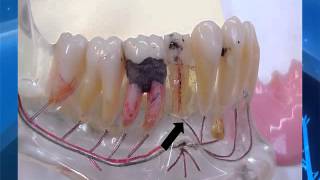
And when your heart beats, the blood that's inside the tooth pulses and pushes through that bone marrow to the outside. So basically, your tooth poops while you sleep. But the truth is, it poops during the daytime, too. But we don't often stop long enough to notice that. Some of us that are very teeth driven will say, my teeth feel scudsy. I need a toothbrush. But most people notice it first thing in the morning. So if that's true, that the fluid flows from the inside of the tooth to the outside in a healthy tooth, then when you remove the blood supply in the center of the tooth instantly, you have stopped all nutrition to this bone marrow that's in these three miles of tubules, and it starts to become mushy, and it sends off a stink. God put bacteria on this planet to stick, scavenge dead flesh, and somehow in the things that you eat, pick up, touch that bacteria, ends up in your mouth near that tooth, gets in through the tubules and starts eating the dead flesh. It's in a dark, moist, warm environment. It's basically in heaven. Multiplies till it can't fit inside the tooth. And every single time you chew, you are squishing out the bacteria into healthy blood in the bone of the jaw, and it circulates to other areas, which is why years ago, there was an infectious disease control physician downtown that every time she'd find osteomyelitis in a knee, she'd send them up to me to find out if there was a dental problem. And we had a conversation one day, and I said, why do you only send them up for knee? Oh, you know what I found out is that every time I'm about to amputate somebody's leg because they have osteomyelitis of the jaw, I find they have a root canal. I think I found a link. And I went, oh, my God, yes, you did find a link. But it's not just for osteomyelitis of a knee. It can be anything. Everybody should be looking for them. And yet it's very frustrating. In the dental school, they're still teaching the same thing. You can remove the nerve, you can remove the blood vessel and the lymphatics. No, don't worry about the flesh, because we're going to see, seal it in there. We're going to entomb it, which we're only entombing it from the inside. The bacteria is getting from the outside of the tooth in, so we haven't done anything at all. We've just provided an anaerobic environment, which means it's not, doesn't have any oxygen supply and that bacteria goes crazy. It doesn't matter if we laser it, it doesn't matter if we use ozone. So when someone tells a patient that they're going to do a biological root canal, I would just like to tear their eyes out, because it's not true. The word BIOS is life. If we've done a root canal, we have just taxidermied this tooth. It is no longer alive. It created a disconnect. If you had a lamp and you plugged it in and it worked, that's the way a healthy tooth is. If I unplug that lamp from the wall and I got an exacto knife and trimmed open a small amount of the rubber and peeled that rubber back so I could see the wire, and got a pair of wire cutters and cut out an inch of that wire, folded the rubber back so that the cord looks great, plug it in. I cannot get that light to turn on. That is a root canal. Forget the bacteria. Even if we could sterilize a tooth, I have an electrical disconnect. There is no place in medicine if we remove a mole, we are duty bound to send that to a pathologist. Dentists take out teeth and frickin throw them away. It should be the standard of care that the patient is educated. Now the frustrating part is, let's say, and I'm not quoting anybody here, but let's just say it's fifteen hundred dollars to take out a tooth. I think what happens is the day they're collecting the money for the extraction, they say, oh, Ms. Jones, we have this test, it's like $500 to have that tooth check to find out what's in there. Do you want to find out what's in there? And the person says $500 more. No, I don't think so. Now if they were shown a report and said, look, out of 500 teeth that we've tested in our office 150 times, Borrelia shows up, that's lying 350 times, H. Pylori shows up, which is a precancerous situation which your physician can give you an antibiotic for and retest you to make sure it's gone, if they understood what they're saying no to, and if they understood that you can put more than one tooth in the bile and it's $500 per test, not per tooth, they might answer differently. And then they have to be educated that when the Dentist gives them the report. The dentist doesn't even know what those bacteria are. They don't know how to pronounce them. It's not in their scope of practice. So they just hand them the sheet with their eyes bugged out. And the patient looks at him and goes, well, this is pretty bad. What do I do with it? Take it to your functional medical doctor. They are the ones that will go through there and decide, do you need systemic ozone, do you need an antibiotic? What kind of treatment do we need to do? Sometimes some of the things that show up involve an infectious disease control physician. It's mind boggling what shows up in these.
You talk about Lyme, which is one of those insidious things that I think probably almost all of us have some of that borrelia or a co infection because it's not just ticks, right? We can get it through mosquitoes, we can get it, the mother can give it to the baby. Sexually transmitted. And really it's when your immune system becomes depressed that those can come out. But those that can linger for so long and create so many low grade issues. And again, these things can be in dead teeth. So you mentioned about electric. I want you to talk a little bit about how you use your eav. So for example, my best friend gotta give a shout out to Dr. Candice Bruno out there in Austin. So she'll look at, as a biologic dentist, she looks at these 3D x rays and trying to determine what's going on. Somebody's having all these symptoms. Is there a potential cavitation which those of you not familiar with that term is when you have an extracted tooth, for whatever reason, it doesn't fill in properly. That's another place. So we have root canals where these organisms can overgrow. But a cavitation site or an extraction site that didn't heal properly now and it heals from the outside. So if you look in the mouth, the gum tissue may look perfectly healthy. Again, you're not having a major fever or anything. But this is another area where there's no blood supply. And so these organisms can hang out and the same thing, all of their byproducts, and still get into circulation and cause problems. So one way we try to diagnosis is symptoms. A lot of people who will say after having a wisdom tooth, maybe a year or two later, or maybe right away they started having neck and shoulder issue, maybe ringing in the ears, things that you wouldn't think to connect to tooth extraction. And then you may look at this 3D X ray and maybe there's an area that doesn't look as dense on the bone, but it's not necessarily. Tell us how you help biologic dentists determine whether or not we want to be more invasive and do a cavitation surgery. Because as we know, every time we cut tissue, we can create more interference fields and pathogens, potentially other electrical issues. So we want to make sure we're making the right diagnosis and do the proper treatment. So maybe explain a little bit how EAV works and what it is.
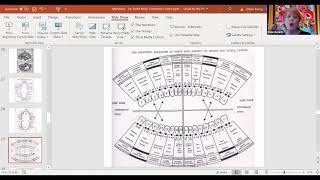
Okay. The way I explain it to a patient is you're looking at a dishwasher in your kitchen that doesn't work. It could be that the dishwasher burned up, it could be that the breaker tripped. It could be that there's an electrical disconnect somewhere on that circuitry. And so when we talk about a tooth and a meridian, each tooth is connected to organs that are on that specific meridian. A meridian may have up to eight teeth on that particular circuitry. And that's the way a patient understands it. Better. If my dishwasher were dead and I bought a new one and installed it and it didn't work, it's of the part, probably an electrical problem, not the dishwasher. And in that case, the electrician would use an ohm meter and go to every wall outlet and start plugging it in. And if he plugs it in and the light comes on, that outlet works. The second outlet, it works. The third one, it doesn't come on. So now he's got to cut a hole in the sheetrock, find where the wire is disconnected, splice it back together, goes to the next one. It doesn't come on, it has to cut another hole in the sheetrock. Can't just repair the first place, we've got to repair both. The moment he splices that second wire together, the dishwasher starts running because now we have electricity going on the complete circuit. That's the way the body is. So if you have a root canal tooth, there are eight teeth on that meridian. Think of it as an eight lane freeway. That's the way your body is and all your little cells are going and a tree falls out of the sky, blocking all eight lanes. That's a root canal tooth. We have an electrical disconnect. You pick up a phone and Try to dial 911 and you have a dead phone line. You're going to go through the process, but you won't achieve what you're after, which is to get an ambulance because nobody hears you, because you have an electrical disconnect. It's not the bacteria, it's the electrical disconnect. Yes, there's bacteria in there. I believe that God designed a perfect piece of equipment. We're designed to heal ourselves. We cut a finger, we don't have to go look it up. The clotting cascade starts. I believe that everybody is exposed to cancer cells, but if your immune system is strong enough, you think you had the flu and your body's going, the flu? Who told her she had the flu? We just beat cancer. It's all about your immune system. But when we have that electrical disconnect and we're calling out for clean up on aisle nine and nobody hears it, then we have a hot mess on aisle nine. And that's where dentistry really needs to really focus more research. Because to me, that was so foreign. The very first time I heard a patient came in and was told that they had lymphoma, which they knew they had terminal lymphoma, and they flew out to California and saw a person who had their dental license revoked. So that sent up red flags for me. Now it must be a quack. He had his license from him because he refused to place silver fillings. He refused to place mercury amalgams. And California at that time told him, you can either work in a clinic and we will monitor you, you will place mercury fillings for the next three years, or we'll take your license. And he said, you can have it. He went back to school, became a naturopath, and started doing this process, which was eab. And he told her, this tooth is the issue. It's dead. I personally took an X ray on that tooth. It was not a root canal tooth. And you could see. See what looked like viable tissue inside that tooth. So I remember telling the dentist that I was working with at the time, this guy's a quack. I would not do anything to this person. This person's family owned about half of downtown Houston. It's very prominent family. And they chose to have a lawyer draw up a contract that said, we're not going to hold anybody responsible for this, but we want this tooth taken out. And so the dentist that I was working with took out the tooth and sectioned it in half, and it was dead. That was very eye opening for me. How in the heck did he know that tooth was dead when everything else we had in dentistry told us just the contrary? But that those all three of the canals were as calcified as could be, which was just the most Bizarre thing, she wasn't having any discomfort. She did have the tooth taken out. She did go into remission for some time, but unfortunately it came back. Her immune system had been challenged for so long. But I've seen people, I remember sitting in a surgery when tooth number six was taken out and the person started crying because they could see. Now my explanation at the time was it must have been putting pressure on an optic nerve that, that this is stupid. You can't take out a dead tooth and somebody be able to see. But now that I know that it's an electrical connection that's being fixed. Removing the tooth, taking out the ligament and any other infection is like removing the dead air space in a wire that's cut and bringing the two wires together instantly. That wire, that lamp, will come on before you've even taped it together. That is what happens. Your body heals itself when those blockages are taken out of the way. It's absolutely amazing. The anecdotal stories that I have witnessed through the years are what keeps me going. You, you have so much hope. No, you can never tell anybody that their cancer will be healed or that their non Parkinson tremors will go away instantly when a tooth is removed. But I have witnessed both of those where I'm. I don't have an explanation. I don't know. All I know is that we removed a burden and the body could function as it was designed. I don't have an explanation. I'm the one that can't figure out how my cell phone works. I don't know when I type an email, where cyberspace is when I send it, and how it takes sometimes instantly, sometimes longer for somebody to get an email. There's a lot of technology that I use, but this one is basically an ohmmeter. And I am going through tooth by tooth, area by area, putting in 50 electrons, seeing how many can come back. And if I've got a disturbance there, then I have to go in and try to figure out what is the problem. You could have a toothache and that toothache because you have a thyroid problem. But it's referred pain. Just like someone saying, oh, I have pain radiating down my left arm, Doc, cut my left arm up. No, I think you're having a heart attack. No, I'm having pain radiating down my left arm. I'm telling you what to do. Cut my left arm off. Okay, they're going to die. It's not the problem. And so it is not uncommon that a patient would go to a dentist over and over again. I have pain. I have pain. This tooth bothers me. Take an X ray, we tap on it, we do a cold sensitivity test. We can't find out what's wrong with it. Maybe it's a hairline crack. I want to be your friend and make your pain go away. So I'm going to take the nerve out, I'm going to do a root canal. Doc, I still have pain. I think it's the tooth behind there. Oh my God. The only thing I can offer you is to root canal the tooth behind there. Okay, I still have pain. Only I don't know what to do for you because it's referred pain. It's so frustrating. And I get it. We're taught in dentistry something and you. I thought that whatever I learned, especially if it was from a state run university, was the gospel. Now you have to understand that I went to UTDB in 1975 and in 1975 when were told to tell patients, don't eat eggs and don't eat butter because it'll make your cholesterol go up. Now somewhere that changed. And those of us that have continued educating ourselves know that eggs are a great source of protein unless you're allergic to them. And that butter is incredible. It makes your good cholesterol go up. That's not. Sugars are more reasons why your bad cholesterol will go up. If you don't keep up with education in that arena then you're still thinking that what you learned in school was the gospel. And because you went to a state run university and paid really good money to go to that school, they couldn't have possibly taught you something that was wrong. I think they call it practicing medicine in dentistry for a reason because we really don't know what we're doing and we do things and then if we're smart and we pay attention to. For years we put sealants on kids teeth and then we found out that we could actually seal bacteria in the tooth and that the decay could go on under the sealant. And we found that those sealants were plastic and they were estrogen mimicking and we were seeing more young boys with man boobs because of the increased estrogen. And not only what we were doing in dentistry, but what was being done throughout everything was in plastic and they were being exposed to so much. Funny that we, in the very beginning, yeah in the very beginning we took out mercury fillings and we put in gold. We thought that would be better. But then we, those of us that pay attention to our patients found out that we were stimulating many cancers. Gold in acupuncture is used to stimulate the meridian, and silver needles are used to depress the energy in that area. And so those of us that were talking to each other and saying, are you seeing this? Yes, I think we should stop using gold. Then we started using plastics, and we had BPA in there. Then we saw patients with glioblastomas. So now we're going, oh, my gosh. When people call and say, what material should I use? You have to do a compatibility testing. I can't tell you. I cannot tell you if you're allergic to a strawberry by just looking at you. And if you've never had a strawberry, you don't even know if you're allergic to a strawberry because your body hasn't been challenged yet. So by doing a compatibility testing, then we're putting in materials that you won't react to. That's the best thing to do.
That's so important. I just want to make one comment about the whole idea of practicing dentistry. I had a patient the other day tell my hygienist, I hated that toothpaste that you guys gave me last time. It was a toothpaste. It was all minerals and probiotics, none of the junky stuff. And she's, I like Dr. Carvinol, but I grew up in the era of fluoride, and my hygienist is telling me the story after. And I said, oh, I wish I had you had brought me in. Because I would say that's the great thing about science. It's always evolving, and we're constantly learning. And now we know that fluoride is a neurotoxin. There are a lot of problems that if we really want to have a healthy mouth, we need to put the nutrients back in and remove all those toxicities again. That's. That's. I'm just a curious person. I always want to know why. So my practice is always evolving. I've had my own practice now, 15 years. I, the first few years, didn't know anything about biologic until I had my own health issues. And then as I started to learn that, I just keep evolving. For years, I would try to do a better root canal, like you said, more biologic. But then I finally said, I can't do this in good faith anymore. And if a patient say it's a younger person and they fracture one of the front teeth and they want to have a root canal, I said, it's temporary. I want you to think of this as a temporary solution. Because again, we go into that education and sure I have patients who may have multiple root canals and they maybe don't have any health issues. And what I say is the root canal still bad. If you took that out, I think you'd still find all this. That person's immune system is fantastic, right? And they are able to mitigate all of those negative toxic toxins and what it is. But I think we're seeing in now modern life with so many toxins, with people born, people who are in their 70s, 60s, 70s, 80s, they were born before plastics came about. They were born before all of these terrible toxins exist. So their immune systems developed really strongly. Unlike today. Kids today are already born with their buckets half full. Their immune systems are already shot. So that's why I think it's more problematic and we have to be more aware of. And just like you said, we've replaced heavy metals now with plastics. And there are some plastic by the other. But that's why I'm such a proponent of prevention education. If I see a little decalcification on an X ray, my first thought is not, we better drill that up, put some plastic in there. No, what can we do to improve the nutrition? What can we improve? How do we get more oxygen? How can we prevent that? Because once you cut into a tooth, we haven't figured out how to regrow enamel yet. I'm sure there's going on and maybe we will someday. But until that, I want to change the body's terrain so that little decalcification doesn't turn into full blown cavity. Because as I try to tell my.
Patient or look at the meridian that tooth is on and ask the question, why did that tooth decay when the tooth next to it that's on a different meridian didn't? Because when you start looking at people's decay patterns, you will often find that the teeth that are decayed are on the same meridian. So it used to be when I would look at a six year old and they'd have decay on the two mandibular, the two bottom molars, not on the top ones, but on the bottom ones. Of course, we turn and fuss at the patient, the parent, and say, you're not a good parent. You haven't been brushing your child's teeth. They didn't lose a tooth before they got this one in. Now I don't do that now. What I do is look at the parent and say, tell me if this kid has asthma. Tell me if they're in a house of secondhand Smoke. Tell me if they poop 20 minutes about after every meal. If not, then that is what we want to focus on so they don't get decay on six other teeth that are going to come in and be on that meridian. So when we're looking at those teeth now, we see incredible opportunity to fix something to prevent decay more downstream.
I have the meridian charts laminated in every operatory and I love the one with the pictures because patients, like you said, patients can really see it with a picture. And just like you said earlier, the person comes in, they have a toothache. You can't find any clinical evidence. I always, I will pull out my NEST scan, which is like a bioenergetic scan. And I'm looking for where is the energy not flowing properly, right. So often. Right. An upper molar. It's on the stomach meridian. And I. So then my first question is, are you having any reflux? Are you having any digestive issues? And oftentimes I've had so many times where I help somebody with their reflux, the tooth stops hurting, right? Because like you said, it's referred pain. And it happens a lot in teeth. It can happen in teeth. Maybe they've been worked on a lot, so they're a little bit weaker, they have some kind of filling or something. But I love the energy because it's so important to understand that it's all connected. And if, and it is, we are.
Energetic beings having a spiritual experience. We are energy. The moment your energy ceases, you die.
And how often when you're having a toothache, are you also having some stressful emotional experience? So again, the whole energy in your body has shifted to more of a negative frequency, let's say that doesn't allow health and vitality. This is the thing that I've struggled with the most, is getting my thoughts in line. Because the thought patterns, the negativity, the stress, all of that feeds into your physical body and creates those physical symptoms. But it's starting in the mind, right? Because again, we are all just energy.
When. When you were talking about root canals, something came to mind. Years ago, Boyd Haley had a company called Affinity Labeling Technologies. And those of us that were practicing biological dentistry at that time would send teeth to him or proceeds to him, or some paper points around root canal teeth. And what he found was that there are five enzymes that inhibit the production of ATP and that root canal teeth, the toxins that are in those by byproducts from all the different bacteria and fungus that are in there, inhibit the production of ATP. So now I'm very comfortable telling someone. I can promise you that those teeth are going to come back non sterile. I can promise you that. Can't tell you what bacteria or fungus or is going to show up until the test results come back. But I can also promise you that the bacteria is inhibiting your body's production of ATP. So you are giving up energy by main, trying to maintain something that's dead in your body. You may tell me you feel great, you could feel better. But here's the caveat in dentistry. When we take out a tooth that's a permanent choice, the tooth is now gone. What do we replace it with? We've got a couple of choices. In the traditional dental world, it used to be a bridge and then we morphed over into implants. Titanium, which is the most common thing used for dental implants is a hapten. All titanium has nickel. Haptens are anything that can trigger an autoimmune response. Because it's metal. It's like sticking a fork in an electric socket and bending around, sticking it in the bottom, it can easily short out the entire meridian. I'm not a fan of titanium implants. It is like a telephone pole falling across all eight lanes of traffic. So you removed your dead tree and now telephone pole with wires going, probably not a good choice. We do have a zirconia implant, which is porcelain, but electricity cannot go to porcelain at all. It's not ability. I know, I've heard Dennis say, oh yeah, well, when you chew, you stimulate the meridian. That's like taking my two wires of a cut lamp and trying to hit a coffee cup as hard as I can in order to get the light to come on. It's not going to happen because it's non conductive. But having said that, it's only like a stalled car in one lane of traffic. You still have seven lanes open. The issue comes in when people have multiple extractions all on the same meridian, and then they get multiple porcelain implants put in all on the same meridian, and they have no energy to send through to the organ. They end up sick. And that's where I think a physician and a dentist should create a team, where the dentist physically asks, okay, I need to put two implants in and they're both on the same meridian. It's the thyroid, breast, stomach. Is this person healthy enough in those organs for me to consider blocking 25% of the energy going through to those organs? Because every tooth on an eight tooth meridian is 12.5% a quarter may not be a big deal to a healthy individual. Then again, if it's a breast cancer survivor, it might be the dumbest thing you do. And a dentist is not really the one looking at your health, nor should they be the one responsible to make that decision. It really should be a physician that helps guide the dentist, saying, yes, I have no problems with you doing that, but that requires a special physician that's somebody that is more functional, that's really taken the time to educate themselves. Just having a license doesn't mean you know everything. Matter of fact, new doctors coming out of school know nothing. You think of a new dentist getting out and you think about a new hygiene. We just have a license to touch you and be able to start practicing. And then after we've practiced so long, we do things completely different than we first did out of school because that is when we learn. I'm not saying don't go to a new dentist that's right out of school, but they're not going to be as seasoned. I wouldn't go to a new surgeon and have an appendix removed or have cancer surgery performed by somebody who just graduated. I would probably look for someone who'd been out in practice for a little while. Maybe not somebody that's so old that they hadn't been up to date on their continuing education. But yeah, somebody who's been in practice for a while.
Yeah, excellent points. And again, we talk about on this podcast all the time about those meridians and that connection and it's just, it's super important. You can look it up so easily on Google, teeth, meridians and just something really important to be aware of. And all biologic dentists through the ibdm. I did the whole certification process and even working full time, having kids and all that is so doable and it's wonderful. And maybe if you've been doing biologic stuff for a while, it's not totally new, but every time you hear something, it more cements it in your brain. Right? Every time you're learning, it really cements those really important sacks. And I think it's so valuable that if you feel like you want to be in this field, this is conte that you have to get certified. There's just, there's a lot of information and as Don said, there's people call themselves whatever they want, but if you really want something, you want to look for somebody who is certified as a biologist, who's done this extensive training, who really understands all this background, who the most important thing is understand that whole body Connection. And then somebody who has connections with functional medicine doctors or health coaches or whatever, because we may know a lot, somebody like Don, who has all these different certifications. Fantastic. But most of us know a little bit about a lot of things, but we're not all, you know, everything to everyone. So it's important to have that team. And I think I'm also a certified health coach, but I realize I don't really have the time that requires a lot of dedication and more than one time that I don't necessarily have. So I've found a health coach that I like to work with. Myofunctional therapy. I think that is so important if I'm trying to expand and help with the jaw. But again, I don't have the time or the bandwidth to do that. So we have people that help us with that, and that team really, I think, is so valuable. As we're winding up here, one more thing. You did some research on the ionic foot bath. I think I saw that people always say that's ridiculous. You can't pull toxins out. So maybe tell us a little bit about what is the foot bath? What does it really do?
It's. It's not really. Yeah, it's not really pulling toxins out. Depending on the hardness of the water, you will see different colors. I know when I first was exposed to was an aqua chi and it came out of Australia. That was the very first one I saw. And the person that was selling it said, oh, if it's green, it comes out of the liver. If it's white, it comes out of the lymphatics. And where's the research on that? So I started doing research, what I found and especially after I talked to the people that designed the original ones. It's a copper wire wound around a nickel plate. It creates a magnetic field when you turn it on in the water. And so basically your body becomes a car battery. And the foot bath is a trickle charge. Because if you. Actually, I tested the water before and after, and it was interesting what I found. But what was really interesting is if you tested the person's urine before they did a foot bath, and if you tested it the day after they did a foot bath. So what physically happens is you are getting energy where you need energy, where you're deficient, it will only take it where you need it, and then those organs function better and you are able to discard toxins because the difference between the urine was amazing. And you hadn't taken a supplement or anything. Now you can use it too long, too often and end up with a slight mineral imbalance. And that becomes an issue if you're a cardiac patient and you are. I had a person who called me from another state and said, I bought one of these from my chiropractor. I was told to fill the water in the bathtub and sit in there for about an hour and do it every day. And I went, oh my gosh, it's just too much. You will end up with higher minerals in the water afterwards. And I think that is just part of the process. And again, part of that depends on the hardness of the water that you're using. Because I could use the same person and get different results depending on whether I was using distilled water with a little bit of salt in there or whether I was using tap water. Made all the difference in the world. But the truth of what it does is it's a trickle charge for your own body. And like I said earlier, your body was designed to heal itself. It knows what to do. Even if you could, in acupuncture, we can find these areas that the Qi is not functioning, and we can get in there and twist the needle and we can force Qi around the blockage and temporarily get a connection. If I had a dead phone line, but temporarily, I could have it functioning just long enough to make that phone call. I would get an ambulance.
Yes, the water's going to change, but even if your feet weren't in there, based on the minerals that are in the tap water, it's still going to change. But that's what we're doing. We're talking about the body is just this one electrical being. In our modern world, a lot of us don't have enough energy. Right. So many of us have the symptom of fatigue. Right. We're not. Like you said, there's a lot of things, not just dead teeth, but a lot of things in our bodies. All the toxins, all the lotions and potions and mouthwashes and stuff we're putting in our body are diminishing our ability to create good energy. So. So that therefore we can't detoxify as well. So yes, we may have genetic issues with that too. But again, it's lower energy. When we're putting our feet in this water, we're giving our body that energy it needs, it's support. Right? So this is what I love about all things biologic is ozone is one of those things too. We're not giving you a drug that is going to stop a biological reaction Instead, we are trying to soak, support your own body's ability to heal. And that's really, in my opinion, the basis of biologic dentistry. What can we do to support your body's system so you heal yourself because that's how you have fewer side effects, right? You don't have any contraindications because we're supporting your body's natural ability to heal. Unfortunately, in our modern world, there are so many blockages to proper healing, but your body knows it innately, knows how to heal. And so when you go to somebody who's biologic, you go to a functional medicine doctor. We understand these concepts and have these different tools, modalities that can, that's what we want to do, support the body. So I think the foot bath is a nice way to help support your body's ability to remove toxins. And the research I read it can last for about three days. Like you said, you did the urine test a day after. Suddenly there's way more toxins that are being flushed out of there. That's exciting. So you can sit in a foot bath, which is very nice and comfortable. It feels nice for 30 minutes and then have a good, good detox for the next few days. Toxins. In my opinion, toxins and infections are at the basis of all chronic disease. So if we have, and it's not.
Just when you're talking about the chemical toxins and the emotional toxins, an interesting find. You're in your home and you choose to put a bed somewhere. If you have a cat and that cat sleeps in that area, is not a healthy place for you to be, is not your cat is not choosing to sleep there because it smells you and likes you. Cats are drawn to negative energy. Dogs are not. The American Indians used to look for wherever a coyote would make a little dent in the grass and make a den to sleep. That was a safe place to put your teepee. We expose ourselves there. Underground water. And so we've got these magnetic fields. A refrigerator in ems, if somebody had a heart attack in their kitchen and they're laying on the floor and I put EKG pads on them, the moment the refrigerator turns on, I cannot get an EKG. I've got 60 cycle interference from that refrigerator. I've got to drag their butt into another room away from the refrigerator. So that means that if you are sleeping above a refrigerator, behind a refrigerator, to the sides of the refrigerator, and if your bed is there, you're being exposed to an incredible amount of emf. That can affect your health. But it's not something I. I had one of the people in the class behind me that was doing their thesis work on a dead fish. And when I was waiting for my counselor, I am listening to this guy pitch what he wants to do and I thought, I'm not believing this. But I did listen to it at the end. What happened was he bought his child a fish at Walmart. They put it in a bag, put oxygen in there, rubber banded it. He went home, floated it in the water, released the fish. A little while later, fish is dead. Well, he scoops up the fish, puts back in the bag, takes it back to Walmart. Sick fish. They give him another fish, he goes through the same process, same thing happens, fish dies. Nara's angry, takes the second dead fish back to Walmart. It's not a joke. It sounds like, I know, it sounds like I'm telling a joke. Goes to the manager this time and says, look, twice I bought fish, twice I got them home, twice they died. You have sick fish? No, sir. Let me tell you what happens. We get the fish through the back of the store. When you walk out of the store, you go through the theft detector. I want you to walk out this time with the bag in the air so that the fish doesn't get zapped. And let's see what happens. His fish lived. So now think about it. How often do you walk through a theft detector? Think about how often. When I was growing up, I was the remote control. My dad would tell me, get up and change the channel. Nowadays you have a remote control. If someone is standing behind you and they're pushing the remote control, there is some energy field going through you to the TV to elicit a response. You're sitting and the garage door opener is this way. Somebody hits the garage door opener, that energy doesn't stop right there. It continues. So we're constantly being bombarded. In the uk, I have a friend, John Roberts, who's a Dennis, and when he came over here to visit me one time, he said, don, do you have laws about your WI fi? Don? I don't even know what a wifi is. And he said, oh, the stuff that connects your computers through the air. And I said, WI fi. Oh, okay. If that's what you call it. I said, yeah. What do you mean by laws? If we have a patient that comes in and says they're EMF sensitive, we have a switch we have to flip that takes us back to hardwire. What? No. We are just now building schools with WI FI in them. Homes with WI Fi in them daycares with WI fi. Are you telling me that you all have information that says that's not healthy? Why don't the countries talk? So there are a lot of things that we are exposed to. 5G is a good example. We're being exposed to things that we can't see and yet can feel. I have a patient that when they put the smart meter on her home, her daughter started urinating on herself. It took her forever to figure out that it was the smart meter. They had to have their house grounded with some copper wires in order to stop that effect. But then later, her daughter started having a problem about three years later because they put a 5G on the pole outside her house. She is going to be exposed, exposed to this throughout her entire life. She's going to figure out what she can do to protect and shield herself. Because as. As fast as we are trying to detox, mankind is coming up with more toxic stuff to expose us to. It's awful.
Absolutely crazy. We have no WI Fi in our office. We had a woman who was so sensitive that she had to come to the office before she could be seen, just to see if she could tolerate even being in there. And she unfortunately said, this is one of the cleanest offices. But we've had no wifi for so many years because I learned about this such a long time. And in the house, we make our kids wire in all their phone. They hate it, but I'm like, oh, I'm sorry. This is just the way it is. Because their schools, it's crazy.
And I know people will think you're cuckoo.
I bought my daughter a sweatshirt one year that said having a weird mom builds character. She never wore it, but I was like, that's good. I was like, I have to buy it. So great. Someday maybe she'll appreciate it. But dawn, this has been awesome and so eye opening. I encourage you to go check out read her book. Where else can. If somebody wants to find out more information about what you do all your research, is there a website or something they can find more information?
I. I have stuff out there. I have some videos out there. I encourage somebody to find a biological dentist. They can go to the IABDM website and that's really where they can start. And we even have a list of questions so that if they don't have a biological dentist and they're not near you, they're not here in Texas where they can find. We've got quite a few here in Texas. Used to be when I took over oh, my gosh, almost 30 years ago now that biological dentists were just impossible to find. You had to go to California where people are weird, but now Texas has a huge amount. I don't have a biological dentist in absolutely every state. There are some states that still have gag orders where they're so fearful of losing their license that they're just not willing to go there. But it's becoming much more popular because it's being patient driven. So we do have a list of questions and we even have the answers so that they can call an office and find out what the difference is between an office that says, says, I'm mercury free, don't worry about it. No, no. Mercury free just means they have made a personal choice not to place new amalgams. It does not mean that they know how to keep you safe when taking out one of your old amalgams. So you don't want to hear that someone is mercury free. You want to hear that they are mercury safe, meaning that they have a protocol to keep you safe. And we have that all spelled out. Matter of fact, the protocol just changed because OSHA changed the mandates on the filters being changed and the mask fitting and what kind of mask can be worn by the office. And now you have to change your filters after 50 hours of exposure the first time you breathe in. You have got to count down 50 hours and change those filters afterwards.
Somebody called and asked, are you smart certified? Which is what IOMT calls it. IBDM calls it the protect protocol. Very similar. And my team knew that we did the smart protocol, but I'd never called it that. So my front office is like, I don't know what your time. And obviously the person. If you don't know what it is, then I'm not coming. So it's really important that we also educate our team members about, obviously our assistants. They're involved in that, but the team are the people at the front. They have to understand what things are called. So that questionnaire is good for those of us who are biologists in doing it. Look at that. Are we actually biologic? Right. Are we doing all these things that are supposed to be somebody who is certified? Really important that the whole team, everybody understands the whole mission and what we're trying to do. Getting everybody educated is.
It really is. I just talked to the. At the last meeting that was in Las Vegas, I talked to two dentists that are in California and I had met them the year before, and they said, you scared us to death so much about mercury that neither my Brother nor I do amalgam removal now. We hired somebody, I said, okay, and that person does all the amalgam removal. And I was going to tell them about the filters. And so I said, what kind of mask do they wear? And they said, oh, yeah, both the dentist and the assistant wear charcoal masks. And I said, no, those aren't NIOSH rated. They are not OSHA approved. What? The IAMT says they're okay. And I said, but they aren't OSHA approved. I'm trying to educate you here that as the owner of the practice, you can choose to do something that kills yourself, but an employee, that's what OSHA is all about, is required that you provide correct PPE for them, protective equipment for them, and you are not right now. So you're not in compliance and you could end up with a huge fine and your staff could sue you. So they ran over to the person that I pointed them to in order to get masks and they just wanted to buy masks and take them home. And I said, no, it has to be fit tested. So you, you can't, you have to have someone that comes in and fit tests you with a bag over your head and they spray something that's like mustard spray, skunk spray, and they make you move around so that you see if the masks still fits and if it doesn't and you smell that, you start coughing. And that's how they know that the mask doesn't fit. But there's a little bit more than just simply having something for show. It's yes, I, I want people to be educated. You have any questions, you call me. I will personally email you the new protect protocol, which will even tell you about the protective clothing that you are wearing. You don't cover up your patient's shoes during an amalgam removal. Those shoes must be thrown out. They are now hazardous waste. So there's an entire protocol to protect the patient, the planet, your staff, and yourself.
Well, thank you so much, dawn, for everything that you do and helping us have a better health. Better planet, better dentistry. Forget trying to deal with your outcomes, are dental schools. Like you said, it's becoming more popular because people are demanding it. But if people aren't aware, they're not going to demand it. So we try to create this awareness so that people understand and start asking for better health because it's available, it's well known, and we just got to get it out there. Yes, that's my mission. Thank you for helping me.