What You Need to Know about Safe Mercury Amalgam Removal

Dr. Dawn Ewing explains that mercury amalgam fillings are about 50% mercury and release vapor when chewed or drilled. Safe removal requires specific protocols like rubber dams and high-volume suction, plus chelation by a trained physician to remove mercury from your body. Finding a mercury-safe dentist and affording out-of-pocket costs are the main barriers.
Chapters
Sam.
This is Healthy Living brought to you by the ghwc, where we discuss healthy options for humanity. I am Michael Lane, and joining me today as co host is Lisa Thomas, the director of the ghwc. Hi, Lisa.
Hi, Michael.
How are you? Good to be here.
Doing good, Doing good. That's good. Well, today we welcome back Dr. Don Ewing to discuss the safe removal of amalgam mercury fillings. Dr. Don Ewing is a naturopathic practitioner in Houston, Texas, executive director of the International Academy of Biological Dentistry and Medicine, author of Let the Tooth Be Known, and featured on the movie Root Cause.
Thank you guys for having me again today.
Thank you, Dr. Dawn. So, Dr. Dawn, I missed the last show, but I got to watch it. It was phenomenal. You're a great wealth of knowledge. We so appreciate you being here. I do want to mention, again, for those that haven't seen the movie actually teach a healing class. And I reckon I give this as my students, as one of their assignments is to watch the documentary of Root Cause. I know you were in there, and I think that this show is going to really tie right into that. So I think it's really important for people that are having tooth issues, not even tooth issues, because a lot of people don't associate their issues with their teeth. So they may have heart issues, they may have gut issues and not realizing that it's associated with their teeth and all kinds of other problems. So I would really recommend everybody that can watch that movie, and I think it'll be a good preface to the show or a good. A good tie in. So. Well, thank you for coming back. I'm really excited to do this show. We have a ton of great questions for you and very thrilled that you're here. So thank you for being here with us today. So thank you.
We love to educate.
Oh, good. Yes. Okay, so let me see. Okay, so we're gonna. Before we dig in too far into the show, I want to just kind of just really start with the basic, basic questions for those people that maybe aren't familiar that their teeth may be hurting their health. Why would. Why would somebody want to remove metal fillings from their mouth? If we could maybe start there.
Some people might want to do it for cosmetic reasons, just because when they laugh, you know, you see dark, oxidized restorations. Some people may do it because a physician has told them that they did testing on them and found out that they have high levels of heavy metals. Now, in dentistry, for years, we've been using amalgams. We call them mercury fillings. They have also been called silver fillings, but they are 50% mercury. And that mercury has a tendency to come off of the filling. You could brush your teeth and it would come off. You could chew and it would come off. And who doesn't chew? You could grind your teeth and it would come off. You could drink something hot, you could drink something cold that's acidic, like iced tea, orange juice, lemonade, and that mercury would come off. Now, if your body were working properly, it would be a small amount and it would be discarded. But many people have genetic snips that interfere, and then the person ends up building a toxic load of mercury. That would be one reason some of the dental work that's done has nickel in it. Many women are reactive to nickel. So you can see that there would be some legitimate health reasons why somebody might look into having fillings replaced. Okay, thank you.
I got a question for Dr. Dawn. So what were the symptoms that they would have that might indicate that they need to be removed?
That's a great question, because there's such a long list. Most of them are things like poor memory, brain fog, neurological symptoms, maybe tremors. Having mercury in your body at a certain level will force your body to create a higher level of Candida. And a practitioner might pick up that they're irritable and they are having a hard time digesting. So it might be a more downstream root cause of what's going on instead of just trying to get rid of the Candida.
Wow. Oh, interesting. I did not know that it. That it affected Candida. So that's a great one. Wow. Would that. So at what point is it considered mercury poisoning? Or do we even. Is there a way to even measure that?
Yeah, mercury is toxic for 100% of people on the planet. There are not as many people that are allergic to mercury, so that's not so much the issue. An allergy, it is toxic for everybody and it's a neurotoxin. So when you're talking about a small amount, it really depends on how your body reacts. I've had parents tell me that they took two children in to get vaccinated, and one of the children was just fine, and the other one now has no eye contact and is non verbal. Obviously their body reacted differently. But we used amalgams and mercury fillings for so many years. And even I was told in. In the beginning in school, look, the mercury doesn't come off. And I believed that.
Right, right. Okay, fair enough.
Dr. Dawn, if you know. Okay, if you know, mercury poisoning is being Caused by a specific tooth. What do you recommend? I mean, you know, should it be extracted, the mercury removed, or are there any other options available?
Oh, okay. Well, first off, we don't want to take out a tooth if we don't have to. So if the filling is still serviceable, the patient is given an option. Do you want to keep this filling knowing what you know? Now, a lot of states put very strict orders. For instance, in Virginia, you have to have a physician write a letter that says that you're having a problem with heavy metals in order to direct the dentist to take it out. Whereas other states, you have free will. Here in Texas, if you walked in and said, my fillings are ugly, I want some white ones, they can change them out for you. We don't like to just take out a tooth simply because it has mercury filling in it. But we also want to be cautious about what we're replacing that with. It's not a fair trade off if we take out a known neurotoxin, which is the amalgam with the mercury in it, and we put in something that has BPA and the patient ends up with a glioblastoma down the road because we put in something that was toxic as well. So in biological dentistry, we prefer ask the patient if they'd be willing to go through some biocompatibility testing, because we would like to place something that they're not going to react to, and we use things that are less toxic than what the standard of care is.
Now. That makes a lot of sense. A lot of sense.
Yeah. So should mercury levels be checked before and after removal of. Of the mercury? Like, should you have a test from a doctor to kind of see that it worked, it didn't work. Or is that something that.
Okay, now that's a great question. If you got tested and your primary care suggested you go get your amalgams removed because they thought that that was part of your source, that would not make your mercury level go down. It would stop the source. You have to go through chelation in order to remove what is stuck in the body. So it's a great question and a misconception of a lot of people. When I'm testing them and they had their amalgams removed years ago, and I'm going, well, you still have a lot of heavy metals. No, I had them done years ago. Well, how did you chelate? Well, whatever my dentist did. No, dentists don't do the chelation. That's physician that does that. And so if you didn't do any follow up, then it's probably still there. And it's not just mercury. You know, we have high levels of arsenic. For years we used arsenic in root canals. We don't anymore. But you know, we have high levels of nickel from orthodontics. The different metals that make up a gold crown, it's not 100% gold, it's not even 50% gold. It would be too soft to use. So we have a lot of other junk metals in there as well. So when you get this heavy metal testing done, it will show you maybe that you have high levels of uranium. Well, I don't know where you got that. Maybe you're from Utah where they did atom bomb testing, but it will give you a reason to then look more downstream. So I don't want to mislead anybody and have people think that mercury fillings are the only way that you can get heavy metal toxicity. I'll use me as an example. I don't have fillings. I had mercury toxicity along with a couple of other heavy metals because of my time in dentistry, because I was vaccinated as a kid, because I played with mercury in class one time. I don't know how much that contributed because I used to wear contacts, which I still do. But in second grade when contact solutions still had thimerosal in there, I was putting mercury in my eyes. And then at one point in time, I didn't want to get pregnant, so I was using a contraceptive that used mercury as part of the contraceptive. So you can get mercury different ways. Goodness, how many people have eaten tuna? Don't think that it's just your fillings, but your dental work can be a large portion of the contributing factor. And getting that removed stops the source. Unless you see someone who does not follow a protocol. The moment that dentist touches that tooth with the diamond drill, it creates this invisible cloud of mercury vapor that if you're not protected, you're just going to breathe in. So your mercury level could actually go up if you see someone who doesn't follow a particular protocol.
Okay, that makes sense. Okay, that makes perfect sense.
Wow.
So is there a protocol that you advise, Dr. Dawn, when somebody like I know, you know, they go to the dentist, they have it removed, and then is there a specific protocol that you put them on to help detox, continue to detoxify that?
Not a specific one because it's unique for everybody's individual needs. Okay, so they're going to see mthfr. I'm going to have to address that. If Their bilirubin is too high. I'm going to have to address that. So, no, there's not a specific protocol.
Okay, so you would. You would test or you would. You would work with that person individually to see where their levels are and what their symptoms are and then kind of advise accordingly. Is that right? Everybody's gonna be different.
Yes. There are great organizations. One of them is the International College of Integrative Medicine, ICIM. They train nurse practitioners, dos MDs on how to do chelation. So I usually will guide people towards that organization to look for someone who's been trained.
Oh, that's wonderful. Okay, wonderful. All right, Dr. Dunn, what is the proper procedure for removal for the patient and the dentist, if you can kind of explain that to us, or what somebody should be looking for if they're having this work done, they should be.
Asking very specific questions. They want to ask, in particular of the receptionist. Explain to me the process of removing an amalgam in your office. You want to hear that they're going to be wearing protective clothing and that you are going to be protected, that you're going to have a nose piece on that. Your body is going to be completely covered. Realize that when they start drilling that and that particulate comes out, it's going to get on your clothes if they don't have you covered, and you're going to go home and put your clothes in the washer and dryer and end up with mercury in your house. So we take it very seriously. If you broke a thermometer in your home, there would be very specific guidelines about how to clean that up. This is just as serious. So we are wearing what look like hazmat suits with gas masks, and we are protecting that patient. There are specific pieces of equipment we use with very high suction to try to remove as much of the vapor as possible. We make sure and spray the filling with copious amounts of water. We have a rubber dam on the person's mouth so that none of that water gets to them. We make sure that they are breathing an alternative source of air instead of what's being generated right in their mouth. We make sure that the filling is quartered in the largest pieces and suctioned out. We do actually have a very specific protocol spelled out for the dentist and for his staff.
Okay, good. All right.
That's good stuff to know. Yeah, that's really good.
It is pretty scary if you're thinking about most of us that went in to see the dentist years ago, and, oh, you broke a filling. Let's just put a new filling in or you broke part of a tooth. And we're just going to leave the filling in there. We're going to crown over top of it. And so there are people who have gold crowns on top of a mercury filling and it creates a galvanic reaction. I mean, we were told in school that you shouldn't place a gold crown anywhere near a tooth that has an amalgam on it because touching will create a galvanic reaction. And then in school we worked on patients and we did exactly that. You know, you had a patient and you needed to satisfy the requirement of a particular size filling and it happened to be next to a gold crown. You did it and nobody stopped you.
There's explain what a galvanic with the galvanic reaction is.
It's two dissimilar metals in an electrolyte solution. Basically it's a battery. And the electrolyte solution is your saliva because you have lots of minerals in there. And so if you have two different kinds of metals and they're not exactly the same, then you have a battery effect. And that battery effect can be so high that it actually affects your brain.
Wow.
So it's gets pretty serious.
It certainly can. You know, we caution dentists on removing the amalgam a particular way. And we go so far as to say, and now you have to think about how you're going to dispose of this because you just sucked up all this spit that now has mercury in it. You cannot just dump it in the municipal water or we'll have three eyed fish. So how we discard all of that waste is just as important. That's why we try to really explain everything to the dentist and to the staff because it's very easy for them to get complacent. So we have to educate them. Heck, I remember years ago when I started in dentistry, you never wore gloves for anybody. At the same time I was working on the ambulance and we didn't wear gloves for anybody there either. And now you would never think of working in somebody's mouth or in their blood and body fluids without having gloves on. It's just a basic necessity. We've come a long way in both medicine and dentistry.
Yeah, there seems to be a shortage of these types of dentists, it seems to me. So, you know, that's probably maybe for a later show, but it seems like there's not a of these types of trained doctors around the world. Maybe you have better numbers than we do.
No, certainly the cost drives the cost that you have to pass on to the patient. And so for some people, how they get started is they find out that they're at health risk and they're concerned about themselves. And then it translates into, well, I'm going to get some of this equipment. But as you get some of that equipment, the, your fees have to go up and your standard insurance is not going to be able to allow you to provide that service with all of those goods at the same price that insurance is dictating. This is what you should be able to do a filling for. Okay, Fair enough.
All right.
I know they, speaking of insurance, you know, kind of brings up, because I think we touched on this last time, they, they really pushed amalgam's, you know, the mercury fillings, they don't want to cover the composite. It doesn't seem as much or any of the others, do they?
True. It's still the standard of care. I mean, in September, I think 2019, our FDA mandated a few people that follow within guidelines. Okay, you shouldn't have an amalgam if you're a child under the age of 12, if you're a woman and your childbearing age, or if you're pregnant or, or if you're a man and you have neurological problems, then you probably shouldn't have mercury fillings. But the standard of care here in the United States is still to place an amalgam. And so insurance will pay better for that than something else. Now, there are states, and I think that's what you were alluding to, Michael, that like California, where they really did their homework and their research and found out that most of the prisoners that were there had problems with serotonin which translated into they were mercury toxic and they had all had indigent care done. So in California, if you're indigent, you won't be offered an amalgam. But if you're a family of six kids and you've got insurance and you've got one on your hip and one screaming on you pulling your arm and they're shoving a piece of paper in front of you that says, here, sign this. What is it? I don't have time to read. Just says that your insurance won't pay as well for the white filling, but it'll pay better on the shiny silver one. Is it okay that we just put one of those in? If you don't understand the difference and you're not reading the paperwork to see that that shiny mercury filling is 50% mercury, it's a known neurotoxin and can cause problems, then you're not asking the appropriate questions.
Dr. Dawn, does insurance typically cover any removal the metals from your mouth?
No, Matter of fact, not unless the the restoration is cracked or leaking. Would they even consider paying for a new mercury filling? And they oxidize and oftentimes leak underneath, so you can't see it because the X ray blots out all those metals and so you can't see the decay under there. Yeah, no. Your insurance does not care about your health at all?
Well, I'm an insurance agent over 20 years and I agree with you. I don't sell insurance anymore, but I agree with you 100%. It doesn't actually care about your health. And that is a true statement right there. So I would tend to agree with you. Okay, fair enough. So most people that want this type of work done are going to have to pay cash out of pocket in the current system, is that correct?
Yes. I mean, there is, there are some offices that will call themselves mercury free. I always caution when people call into the academy and say, you know, what is it I'm supposed to be looking for? Mercury free simply means that the dentist has made a personal choice not to place any mercury fillings, regardless of what your insurance will pay. They're all about cosmetics and pretty. It's not about the fact that the amalgam is not healthy. They're doing it for a whole different reason. If you find a dentist that says that they're mercury safe, that means that they should be able to provide you the protocol and take you through from removal to the end. I always suggest that the person also be networking with a primary care of some kind. Don't care whether it's an md, a naturopath. Some people, it's not good timing for them to have their mercury out. Their health is in such a delicate state that we may have to build them up a little bit before we can take them through that process. I like for someone to be in charge of helping them keep things cleaned out and the detoxing which the dentist is not responsible for. The way I can explain it to someone is if you are sitting in your bathtub and the faucet is on full blast and the water is about to overflow and you scream through the door, Dr. Dawn, Dr. Dawn, the water's about to overflow. I can give you two choices. One is to turn off the faucet. Then you're going to be sitting in a bathtub filled with water. It's not going to go down. Two would Be pull the plug. If you pull the plug and the faucet is still on, you're still sitting in water. If you turn off the faucet and you pull the plug, you have stopped new source coming in and you are going through the process. But that takes a physician and a dentist as a team in order to get that out. It's very deceiving when people go online and say, look, I did some research and I found out I can use this particular product and I can chelate on my own. You cannot. First off, you have not been able to do the testing to find out what heavy metals you have in your body. Depending on what heavy metal is, the highest will drive what kind of chelating agent we're going to use. And anything that binds to heavy metals also removes minerals. So you're at risk of depleting your zinc, your calcium. You know, you're going to end up in an electrolyte imbalance.
You should be fairly healthy before you start this process. You should have everything checked to make sure you're fairly healthy because it can make you sicker. Right?
Well, true. I mean, it would be ideal. I would not work with somebody to chelate if I knew that they had severe anemia. Knowing that whatever we're going to use is also going to tag out iron. I mean, that just wouldn't be smart. You have to make sure that their kidney function is impeccable because it's a lot of work to drag these heavy metals out of the body and dump it out through either the feces or the urine. And so it's true, you need a good practitioner, which is why I direct people to go find someone who's actually taken a course in chelation to help guide them through that process while they're seeing a dentist who can make the source go away and not make it worse. My goodness. When I lecture to physicians, I show them, here's a worse. This person had three tiny little fillings taken out and she is 20 times worse than she was before. I wish she had just left her fillings in place.
Okay, so you should definitely, if you're going to be doing this work, you should be, definitely be working with a physician and the dentist together. Right. It should be a joint effort or a triple effort by all of you. Is that right?
Yeah, It's a team effort.
Yeah. Okay.
The dentist, his scope or her scope of practice is very limited. They can't do some of the other stuff. And of course, your physician doesn't know anything about your teeth.
So on this Chelation, just to be clear to Dr. Dawn, because I know you see out there on the market, they even got, you know, chelation pills and everything. So that's really. That does nothing.
That's.
Know that you're done. I'll use my husband as an example years ago, and I have these results. I'm happy to share them. But years ago, I was curious if he had lead toxicity because he was reading a paper and his hands were really trembling and he doesn't drink coffee, so it wasn't jitters. I did heavy metal testing on it, and he was really high in lead. Now, he was raised in Chicago. I don't know if they had lead pipes. I don't know if they had lead paint on the wall. I don't care. I'm gonna take that and try to remove it. And in six weeks, he was good. I redid the test. He was good to go. Now, that's unusual. Most people take much longer than that. But, okay, he's done. Years later, he ends up with a head bob. And it looks like he's always yes ing to everybody, but even while he's watching tv, there's a head bob. So I chose to redo heavy metal testing on. Now, at that point in time, we were flight medics flying all around the world and picking up patients in certain countries that you'd go into. We signed a waiver that says we would promise that we would take Pepto Bismol, which has bismuth in it. But bismuth is not supposed to be over, like, four, and his was 770. Wow. He became toxic with bismuth, which is notorious for tremors. So I had to use a different something to chelate him than what I used to remove the lead. That's my point. There is not anything that I'm aware of that will take out every heavy metal. And seeing as you don't know, and it's a very delicate balance, you realize that you could have high iron, which a lot of people do with hemochromatosis, but you could have high iron, and you could use zinc to try to bring it down. But if you take zinc for a long time, you're going to get your copper out of balance. And then if your copper is out of balance, the molybdenum may be out of balance. Your God puts your body together as only God knows how. And when we start trying to mess around with it, there's a price to be paid.
I agree with that.
Yeah, you can't. You can't be God, God. God wins in all cases, you know, and that's.
We get back to the Candida. Candida is a normal microflora. It's gonna be there even in healthy individuals. When you start getting high levels of mercury in your body, the God given compensating mechanism says, what could we do to prevent this mercury from going to the brain? What could we do? Oh, let's make higher levels of Candida because the Candida will help demethylate the mercury so it won't go to the brain. Okay, let's do that. Ooh, Cinnabons. And you start eating all these things that make, you know, like Little Shop of Horrors. Feed me.
Because you're craving the sugar side effects.
Yes, yeah, yes, exactly. You end up in a practitioner's hands who recognizes that you have Candida and says, I'm going to put you on this horrible diet. You can't eat any of these foods anymore or drink any of this. You can't have any sugar because we want to kill off the Candida because. But when you do that, you are thinking you are smarter than God because now you still have heavy metals. If you went going with God's plan and you got rid of the heavy metals first, the body would let go of the candida on its own and likely not come back. Otherwise you're going to slip up, go out on your anniversary dinner and have a bite of cake and just a sip of champagne and your Candida level is back where it was in square one.
Yeah.
Because it starts right over.
Yes, I've done shows and have studied candida for over 20 years. And you're right, that one bite of sugar just takes you right back to the beginning. It just starts the whole process over. So I agree with you 100%. We are going to take. Doctor, we're going to take a quick break and come back to discuss. Continue discussing how to safely remove amalgams and mercury fillings from your mouth. We'll be back. We are the Global Health and Wellness Consortium and are creating one of the greatest stories that will ever be told. Our mission is to enable all living beings on Earth the highest possible level of health and vitality. We are just at the beginning but are currently preparing to support each and every human being on this planet with life assurance for your health, assuring you can get the medical care you need, life essentials to help provide you with clean water, essential everyday necessities and a variety of home support for everyone. We even have pet assurance that will help you provide veterinary care. For your furry friends in times of need, Join us on our journey to help transform the health of not only each of us, but the entire planet. Stay tuned. Our greatest life is on the horizon. Hello, everyone, and welcome back to healthy living. Before the break, Michael and I were here with Dr. Don Ewing discussing how to safely remove mercury fillings from your mouth. Michael, take it away. You're ready.
I am. I am ready to go. And in that same line. Yeah, I've taken those mercury fillings out. So after mercury is removed, Dr. Dawn, what exactly are the filling options to replace the am?
Okay. It really depends on the size of the filling. You have to understand that years ago, when amalgams were being placed and really, we didn't even have good composites. You have to bevel the preparation of the filling inside the tooth in order to keep the amalgam in there. The amalgam is mixed with mercury. It's kind of soft and malleable at that time. You can carve out the anatomy, and then it starts to set like cement would and becomes harder. We have some plastics that we can use. We have glass ionomers that we can use. We use them especially on front teeth, because on a front tooth, you want the light to go through your tooth and look natural. You don't want a white blob on your tooth where everybody's going, oh, what's that? We use porcelains on some of the back teeth because the crushing strength is good. So it depends on the size of the restoration. But those fillings that I just discussed, whether it's a glass ionomer or plastic or ceramic, the restoration is not beveled in like this. It could be scooped out, but there has to be a cement that is painted or, you know, stuck on. On the surface of the tooth for the porcelains or plastics or glass ionomers to stick to. And that's where we get into not. We don't use gorilla glue. In dentistry, there is not one glue that will stick in every filling. So there are specific glues and cements that work best with other items. The analogy I give to a patient is I can promise if you put super glue between your fingers and then stick them together, they will bond. You will have to soak it in acetone in order to get them apart. But if you put that same super glue between two flat pieces of glass and stick them on top of each other, when it dries, you can put a little pressure on it, and it'll pop apart. It's not a bonding agent for glass.
Right.
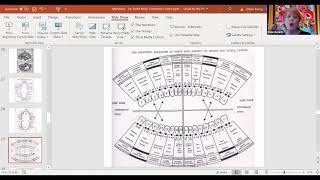
So when we look at the biocompatibility, the allergy testing, and we say, okay, we're going to do a front tooth, I would love to use this kind of filling material. Are they okay with the glue that works for that? No. Okay, let's go find another one. There's one. Oh, and that glue is. Okay. So it really becomes more than just what one kind of filling can I have. It becomes a menagerie of what kind of anesthetic can I have, what kind of sutures can I have? My husband is really allergic to certain sutures. Heck, he's even allergic to the adhesives on Band aids. And he has melanoma. So multiple times a year, he is getting something removed. And it's always an issue because of him being allergic to the sutures. He. I mean, you do what you have to do. There are several different kinds. There's one that they use that's the deep down. And inevitably, he'll have some kind of a reaction. It'll kick the suture out maybe nine months later. But he's got a wound that's not healing very well. So there are a lot of factions that go into biological dentistry, more than that. I mean, dentists are trained to fill teeth. My thought process is, why did that tooth decay? I was told in school that the only way a patient gets decay is if they're too stupid and they don't know how to brush and floss. So it was my job to coach them how to take care of their teeth. You don't know how to take care of teeth. Let me show you what to do. And when they would come back, I would say, you're not doing what I told you. Show me. And when they do it, and they do it right, or worse yet, you'd have a daughter in the family whose teeth are clean, but she has decay. And her brother sits in the chair, and he's got green teeth because he lost his toothbrush four months ago and never bought one. And he doesn't have any cavities. And the poor daughter's going, it's not fair. There is a reason why those teeth decay. When you really start looking at this from a naturopathic standpoint, it makes no sense that a molar will not have any decay. And the bicuspid immediately next to it in this space has a cavity. Until you look at the dental meridian chart and you realize what organs are on there, and you see, oh, wow. All the other fillings that are in this person's mouth are all on the same meridian. Well, if that person has a thyroid problem or they're constipated, and you have not corrected that issue. And the reason those teeth are getting decay is because they're not getting enough energy from the organs that are associated with it on that electrical circuit, which sounds bizarre. I realize I sound like I'm making up stuff, but when you see it over and over again and you find out a problem as simple as the person is low in iodine, therefore the thyroid was not functioning, and you fix that problem, you can help stop the decay pattern. And that's what we're supposed to be about, is prevention.
Wow. Because I was told, Dr. John, that it was all about sugar. You know, you eat too much sugar and it rots your teeth. That's what I was taught.
But now think this through. Your front teeth, top and bottom, have a little thinner enamel than your back teeth.
Okay.
If it was true that it's all about the sugar, I drink soda and it has sugar in it, and I'm drinking it all day long, all that acid exposure, I should have rotten front teeth before I ever get decay on those back teeth where the enamel is thicker.
That's a great point. You're right.
But it doesn't work that way. I mean, time and time again. And I have really good illustrations. If you guys are interested, I'll be happy to put some slides together for you. Where the one case is the guy who's almost 50, never had a cavity in his life. All of a sudden, he has really bad decay on a top molar and on the lower bicuspid on the other side. Two completely different sides of his mouth, top and bottom. You wouldn't think they had any correlation. By the time I finished, I found out he had a thyroid problem. I didn't know that he had thyroid cancer. I knew that there was a horrible thyroid problem that was causing those teeth to not get enough energy, because I was also getting that other teeth were involved, but they weren't decayed yet.
So this would be choked off from energy. Right. It's kind of like that meridian, which is just like.
Yeah, it's just like your plants where you have garden hose out there or sprinkler system. You. You bend the hose, those plants aren't going to get water. If you can find out where you said that.
I'm really glad you said that, because we. We actually work in, you know, energy. I come from an energy healing background. And really, everything we teach, I teach a class. Everything we do in there is really energy. Frequency. And if that's choked off, whether it's causing you neurological, like, like when mine, for example, when I see a nucle doctor. So when my atlas is off, I feel foggy headed, my digestion's messed up, my equilibrium's off. Like it's just choking off the main meri on my spine. And there's just meridians, all of our bodies going to the different organs. And if that specific meridian is being choked off, then that's going to affect your teeth. Is that, is that kind of.
That's it, that's it. But that is not what we're told in school and that is not what they are currently teaching. It's postgraduate woo woo stuff which to me makes absolutely perfect sense. I mean, once you see it, it's like you can't unsee it. You start paying attention to where people's crowns and their root canals are and their fillings. And it's as if without even the testing that I do, which I do value the testing I do, so I like to do it, but in my head oftentimes I can go, okay, I know you have a thyroid problem and I know you're constipated. And they're going, oh my God. How do you know that? You have to have some kind of long standing issue because you still have new decay that's showing up. So we're not correcting the underlying problem. That is not anything a dentist can do. The dentist has to be with it enough to see the pattern to say, I need to put you in the hands of a gastroenterologist because it's outside of my scope. But I do believe that you're having some digestive issues. Now those digestive issues could be bulimia. I mean, we do see people that their enamel gets eroded off because they're vomiting so much. But it could be gerd and that's not something a dentist can fix.
You're absolutely right. I'm so glad you talk about the meridians and they talk about the different organs in the body because I know they're all related, but not everybody, you know, and like we talked about, you know, in the, in the documentary, the Root Cause. It really does explain how so many people have health issues and never even connect the dots that it's really starting with their mouth. Because if you have heart trouble, it starts in your mouth. If you have gut trouble, it starts in your mouth. So everything is, is reflected in your mouth. So if you get, you know.
There used to be an old adage that you would look at the horse's mouth before you would buy the horse.
Why, yes. I didn't know that. Right.
Yeah, I remember that. Yeah, I remember hearing that.
You did.
So there has to be something to that, you know, and to. To expand on that. Of course, then dentistry, because we're such a cosmetic society, is all about putting implants. And if you have a tooth that fails, let's just put an impl in and it gets back to an energetic issue. The same thing with root canals. It's an energetic issue. You have something that's dead. Electricity can't go through something that's dead. So it's an electrical issue. If you put a titanium implant in, it's like sticking a fork in an electric socket and bending it around. And you're wondering why you're having health problems. If you put a porcelain implant in, it blocks energy. You guys think about it. What do you put in your plugs to prevent your grandchildren or your children from sticking their fingers in the outlet? Those little plastic things. Imagine I glue it in there. Okay, great. But now I don't have an outlet to run electricity through anymore.
Yeah, it's acting like a Faraday cage. It's keeping everything from going in.
I just plugged it up. So when people get implants, I'm not anti implant, especially the porcelain implants. I'm not anti implant. But when they start placing implants all in the same meridian, and then the person has health problems because the eight teeth that are all on the same meridian now all have implants. That's an issue. And if a physician and a dentist were working together, the physician might tell the dentist, look, this person has Crohn's disease. So I do see that they have four teeth missing on that meridian. I'm going to clear one implant, and you're going to have to be more creative about how you replace these teeth for right now. And as the person gets healthier, I might clear you to put another one on instead. These $5,000 a piece implants go in, and then the people find out they're sick. And it's really sad because, you know, even if they take it out, I'm not sure that they're going to regain health. I would rather go slowly, methodically, in a team effort.
I love that. It's great.
That's a good point.
As good as what God gave you. There isn't anything man has not figured out how to do what God did originally with your teeth.
Yep, agreed. All right, that's.
That's a good point. You Know you talking about the extractions, you know, so if a tooth is extracted, if it does have to be extracted, do you put anything in its place? What do you put in its place? You know, or do you just leave it? And if you do leave it, is it, does it affect the, you know, cosmetically, the jawline or, you know, or the structure of the bone structure in the mouth or teeth alignment or anything like that? Does it affect.
Really good questions. Yes, yes and yes and yes. Now, when we take out a tooth in a biological world, we don't just take out a tooth, we take out the tooth, we remove the periodontal ligament which is what was attaching that tooth to the jawbone. We reconnect that meridian. So we try to use where we can eav so that you can literally see, oh, wow, okay, it's reconnected and that's an electrical issue. Then if you're going to put like maybe prf, I would prefer people do that rather than use bone augmentation because so many people react to bovine or to porcine. Even using cadaver bone, I don't know, I have my doubts. And naturopaths like to stick more to what is more natural. So we prefer to prf where the dentist would draw your blood, spin it down. It's the closest we have to your own stem cells. That little plug is pushed in the hole and then it's sutured, closed, and you're allowed time to heal. Why would you want to put an implant in a hole that you just created by taking a tooth out? Wouldn't it make more logical sense that you'd want it to fill in with healthy bone before you put an implant in there? If the person had cancer or they were really sick, they might not be getting an implant. They might be going with a removable partial or we might talk to them about bridge work instead. There are options and it really depends on the setup of where the tooth is, the state of the person's health. I had a dentist that sent me a patient that had six infected root canals and the dentist knew that sent them to me because he really thought I was going to tell the guy, take the six teeth out and do the implants. I did agree that there were six infected teeth. This guy has stage four cancer and he's, I think he was 86 at the time and he's married to a 66 year old woman. Why would I want him to spend as much money as $5,000 an implant having these teeth taken out when in my Heart of hearts. I'm not so sure it's going to be a good use of money. I'm not going to tell him that he's not worth it for his sake. Take the teeth out and see what you can regain health wise by removing that electrical burden and the infection. But I'm not so sure that putting implants in is the smartest thing to do at that moment. I'm going to err in the favor of his health and of his future, you know, wife that's going to lose him. So, yes, you have to take a lot of things into consideration.
Well, yeah, there is. That's, that's, yeah, there's a lot there. So, you know, there it is. There's so much to digest and when we get into, you know, you know, what can be done and who can do it. So what are the questions that we should ask a biological dentist to ensure that, you know, that they're following the recommended guidelines? You know, as you've, as you've talked.
Here, if people go to our website, which is iabdm.org, international Academy of Biological Dentistry and Medicine, we have things to educate the public. I have a list of questions that you can download and it tells what you would like to hear the answer for that office. To try to help the lay public. We have the protect protocol all spelled out so people can download that. We really do try to educate not only practitioners and their staff, but the lay public so that they know exactly what kind of questions to ask and to know what the answers should be so that they don't get duped. Nice.
I have a question. So if someone's listening, and this actually applies to me personally, so it's very. I actually had mercury poisoning like two weeks ago in my mouth. So this is very near and dear to me. When you said if you broke a thermometer, I remember being a teenager sitting on my bed, breaking a thermometer, not even knowing what mercury was. And I was playing with it and rolling it up and down my bed. So. And I've had issues with Candida most of my life. So it's all kind of coming together for me right now. And I definitely need to get my metal out. But let's say someone's listening whether they have insurance or not. It's very expensive to do. Are there any holistic things or things people can do at home until they can maybe afford or we issue assurance for people to have free dental? Is there anything anybody can do at home to help remove some of the toxins? And the heavy metals from their mouth. I mean, I could share my protocol, which I'm actually going to do a health tip on next week, how I kind of keep the dentist away, so to speak. But doctor, what can you offer people that maybe just can't afford this right now, but really want to start at least detoxing themselves or preparing for this in any way?
You can't detox while you still have a source.
Got it? Okay, fair enough.
That's in all fairness now, there are times where I tell people, if you don't have the money to do this right now, do not err and get it done wrong, then you are going to sit with what you have right now and I will look at your blood work and see if maybe we could use a little selenium to try to bind the mercury in place for the moment. But you cannot detoxify until you even prepare the person for detoxification. And the analogy I like to use. It would be foolish for me to put a brand new towel in a dryer if I had not checked the lint trap. It would just be insane. The dryer will go and go and go and go, but the towel will not get dry because the lint trap is already full. Your lymphatics, your lung, your liver, your large intestine, your kidneys are ways that your body discards trash. I need to focus on getting those all cleaned up before I can start pulling heavy metals out of the inside of the cell and even expect that it's going to get into the potty. Or you're just going to move that heavy metal from one cell to another, one cell to another, you've not removed it, you've just moved it and that didn't do you any good. So if you can't afford to do the dentistry or sometimes I help people create a four year plan. Every you're going to get a quarter of your mouth completely cleaned up. And then when you are finished getting the mercury out, then we will start the chelation on you. Because if you still have mercury fillings and I'm starting to do something that pulls metals, I am going to be stressing that filling that has 50% mercury in it and causing it to fail and leak under the filling. And what if you need a root canal now because I have destroyed this filling, Not a good choice. It's just.
Okay, that's great information. I think this is really going to hit home for a lot of people. Okay, we have a question actually from one of our teammates and sent this in for us. And she said, I have a question about safely. This is her experience currently. I have a question about safely removing mercury. What does someone do after the metal removal? Is it better to fill it in with a new composite and cap it if the tooth is still alive, as most are told? Or can it be filled and left alone to see if an extraction is needed in the future?
Okay, now that's just not. She must be having a toothache and the tooth must be cracked. Taking an amalgam out, it depends on the size of the filling. Oftentimes the amalgam can be removed and a composite or a porcelain placed. A crown covers the tooth in its entirety. A filling is just that. It's digging out a little portion of the tooth and filling that void. The crown is more like a cap over your head. Not every tooth has to be crowned. Many teeth can be simply filled. The tooth only has to be removed if it fractured all the way through and is really causing discomfort for the person or if the decay got into the nerve and the tooth is abscessed. So we don't just take out teeth because they had a filling. There really has to be something more major going on.
Okay, that's fair enough. Okay, can. Well, let me ask you this. When somebody has this stuff done so they have maybe a quarter of their mouth removed or, you know, fixed, maybe like you said, like the four year plan or something like that, how soon do they see or feel the effects, would you say? If there is a norm?
I have had people swear the instant that the last little bit of filling is removed, I just had brain fog removed. And I'm going, really? I think those people are reacting more to the metals, the other metals that are in the mouth, and that maybe it was some kind of a galvanic reaction. More than not. What you hear is they went through the mercury removal and then when you talk to them six months down the road, they're going, yeah, I remember when I had that brain fog. No, it's been a process again, you stop the source, you have not chelated. You still have all the same mercury and all the nickel and all the arsenic and all the tin and everything else in there until you chelate. And that chelation, my husband was weird that it was six weeks. It's usually a very long, slow process, either going by IV or by patches or by suppositories. There are lots of different ways to work with the primary care to help get those metals out. It is not six week process.
I agree with you. I'VE done that. I've worked with people that have had that done. And it could be years to remove all the headaches it can be from your body. Yeah. Okay.
I have an MTHFR flaw. If you move it out too fast, I feel horrible. So you have to go really slow with me.
Okay. All right. That's fair enough. Because you feel the effects. So you get sick. You feel sicker. It's kind of like period. Yeah, exactly. It's like when we get rid of the Candida or the parasites, then you feel sick as that die off. What we call the die off occurs. Right. Because you have to almost feel sicker before you get better. So we don't want to go too fast in any detox or any removal. Right, Right on the bottom. Right.
When you're talking about Candida and you go too fast. Yes. You have all these dead cells and now they can't get out. So then you become very acidic because you didn't prepare yourself. So you have all this lint that can't get out through the lint trap because it's full. Somebody's got to stop and clean out that lint trap, put it back together and let you go through another spin.
Exactly. Okay, fair enough. That. Yeah, I think that applies to any kind of detox in our body. It just hurts. And if you didn't prepare your colon to release it and you didn't get youryour liver flowing and everything moving first, then it's just kind of rebuilding up there and getting reabsorbed into your system. So it sounds a lot like what's going on here. Right. You gotta clear the.
I do want people to know dentistry is expensive.
Yes.
Do not rush down to Mexico or Costa Rica or someplace that you can't have someone vouch for thinking you are getting best care. You will pay that price on the other side. I have had patients who thought they were going to go down and get amalgams removed someplace and that it would be a cheap experience for them only to have their mercury level go up so high that they have spent 150, $200,000 on chelation because the mercury level was driven up sky high. Don't do that again. If you can't afford to get it done, leave it where it is until you can start creating some kind of a plan safely. And work with a biological dentist, a functional medical doctor, and take it like you're eating an elephant, one bite at a time.
I love that analogies, doctor. You really do. You really do. Okay, so I wasn't here on the last show, Michael has a last question for you, because I hear that after the show there was some great questions that, that came up after you guys recorded. So Michael's gonna. Going to take you into that, and then we'll. And then we'll finish up so.
Well, when I wanted to get to, because, you know, it was off air, and you're giving some great examples of the healings after, you know, the removals. And I know you talked about a person got the eyesight back, right, and another one with the shakes. And can you go through some examples and give some testimonials, examples of just, you know, what's possible when you have this procedure done correctly?
Of course, in our world, those are called anecdotal, you know, as if you're blowing smoke up somebody's skirt. I always tell a new biological office, you have to have your own aha moment. And once you experience some of these that you can't explain, how did that happen? It stays with you. And you want to provide this level of care because you do start seeing these miraculous healings. The one that you spoke of was a biological dentist and his assistant. I was participating in surgery, doing eab, and I was patting her hand because I didn't know what else to do during the process. And all of a sudden she started crying, and I thought she was in pain. So I was going, oh, it's going to be okay. It's going to be okay. And she said, no, you don't understand. I can see. Now, we all knew that she was blind in that eye, and she had a root canal on an eye tooth. Why is it called an eye tooth? It's a canine. It's your cuspid, but it's also called the eye tooth. Go figure. Okay. Her practitioner had sent her in and said, this is a bad tooth. Take it out. Well, when we took it out, all of a sudden she could see. And we're just going, what? What happened? Well, now we. We could explain it later because there was a very large cyst on that tooth, and it was probably impinging on something that had to do with the optic nerve. And once that was removed and it. It came intact with the tooth. They don't always. But this one did. Possibly. That was our explanation, but that was for us, just sitting there going, that's not what we were taught in school. We can't heal the blind. We would never tell anybody you're blind. We can fix you. Let's take out a tooth. No, it's an Unrealistic expectation. But when you see that happen over and over again. The other one that I shared with you was a woman that had some severe non Parkinson tremors. So much so that trying to draw blood on her the day of surgery, I had to think I was back in the ambulance going up and down a bumpy road in order to make the stick for the iv. And I was joking about that with her. But the moment the tooth came out, she stopped trembling, she stopped all tremors. She saw her rheumatologist, she saw her neurologist. Nobody could give her any kind of an explanation. We sent the tooth off for pathology testing and it came back with 12 pathogens that specifically had to do with neurological symptoms. Wow, that's. I mean, that's not anything we were taught in school. You know, there isn't enough time in school to teach you everything. And then medicine changes. When I went to school originally we told people, don't eat butter, eat margarine and don't eat eggs. It'll make your cholesterol. That changed. If you don't keep up with things, then you aren't even in the know that things change because some things change so fast. For years they didn't think H. Pylori existed. Now we know it's a real thing. So that's why they call it practicing medicine and dentistry, because we think we know what's going on and then we find out there's a different way it might be better.
Yeah, and I think, I think we know that for sure. In the health business, you know, the insurance business, you know, they pay for things that, you know, they'll pay for, you know, chemo, radiation, if you have cancer. But if you want to go the holistic route and maybe do alternative type healing that's not paid for. So you kind of have to make a decision, you know, do I want to use my insurance and have everything paid for or do I have to sell everything I own and be broke so I can go the holistic route?
So unfortunately, you have to combat your family and your friends who are thinking that you're an absolute idiot and you're going, really? Look at the research. This destroys my investment immune system. This builds my immune system up. I don't understand why I'm making a foolish decision.
Yes. And nobody should really ever have to make the decision of, you know, of not having medical freedom. If I'm paying for this insurance policy or I'm paying out of pocket, I should be able to get a solution that's actually making Me better not treating the symptoms again, getting to the root cause of the problem and fixing it. And so we're going to finish out here. But I do want to say one of the things that GHWC will be doing is bringing out assurance, not insurance, but assurance to every person on the planet. And we're so excited to bring that and things like this holistic dentistry. People will get medical freedom, they will get to have this work done, and they will get to have it paid for 100%. And we are so looking forward to bring that to the globe. So we really want to. You know. Doctor, I'm going to task you with something. If you knew today that we could get everybody who had health, health, you know, dental issues and in their mouth, how many dentists would you get would you get training on so we could have plenty of dentists to fix all the people? Yeah, it's almost like we don't have enough. If we, you know, if everybody got free, free care today, would there be enough dentists to fix all the people or would there be a long line around the block of people trying to get their teeth fixed? So, you know, it's. It's about, you know, we really want to get that message out that that is coming very soon, where people will have, whether they have cancer or they just want to do preventative, or they want to get their, you know, their teeth fixed, that they can walk in anywhere and have that paid for and not have to make the decision, can I afford this? Do I have to buy? Can I pay rent this month? Or do I pay for my medical care? That should never be an option. And that. That is our goal, to bring it to the world. So you are so in line with everything we are and everything we teach. And so I want to thank you. We are, we are so grateful for this knowledge that you brought us today.
Thank you.
And I think it's going to help so many people. Michael Lane, thank you for being here with us, for taking the first show when I had too many technical difficulties to even get on air. So thank you. And again today, I'm just on audio because they don't like me on camera for some reason. So, you know, they just like my voice. They don't like my face, evidently. So I'm okay with that, to be quite honest. I'm just grateful that you were here, Dr. Ewing. Grateful for you, Michael, and all of our team behind the scenes doing production and so forth. So thank you. I think it's been a great. A great wealth of knowledge and I appreciate all of you for being here and. And thank you, Dr. Ewing. And we will post your website under the show as well when we. When we post it on our channel and send it over to you as well. So thank you.
Thank you. Anything.
Thank you, Dr. Dawn. Thank you.
Yes, thank you. All right.
Thank you, Lisa.
Thank you. I know if I could just. I'm just not supposed to be on camera. If I could just do audio, it all works for me, but, you know, it's. We have so many shows lined up, they just don't like being there, so. No. Dr. Dawn, you were awesome. I love your analogies. I think you make it really simple for people to be able to understand because not everybody is on the same path or advanced. Our team is because we're very health conscious here, but not everybody is. I think the average listener can take it in and digest it and take some information whether they're in the beginning of their health. Health path or, you know, a little more advanced. So I appreciate how simple, how you simplify it for people. I think. I think it's really digestible and easy to absorb. So I appreciate that. So thank you.
I welcome the opportunity to reach out to more people. Unfortunately, it still isn't taught in school. You know, we have so many things that are health related just to stay on the topic, but branch to another one. When I started in dentistry, if you needed to have your teeth straightened, we removed four bicuspids, two teeth here and two teeth here. It was the fastest way for us to push everything back and you have a good bite. Fast forward 30 years, I'm sitting in naturopathic class talking to other people, and they're going, I don't understand why all my patients need a CPAP or a bipap. What. What is this that all of a sudden people are having breathing problems? Oh, you know what? You start polling those people and you will find a large number of them had four teeth taken out, their teeth pushed back. Their dentist, their orthodontist decided their mouth should be shorter when God decided their mouth should be longer and made their tongue to accommodate a mouth that size. So now man thought they were smarter. So they're sleeping at night and the tongue doesn't fit in their mouth. So they're grinding their teeth at night trying to find where their tongue can come up off of the airway so they can freaking breathe. They have diabetes, they've got all kinds of other health problems because they're not sleeping, because they have an airway issue. So now we're trying to get the most downstream and tell parents about things that, you know, I watched a little boy try to swallow a pill, a vitamin pill the other day. He cannot swallow. He cannot swallow that pill. Puts it in his mouth. There it is. After he has a tongue tie that could be addressed and he would be able to swallow like that, but he is not swallowing correctly. So now our mission is to try to get to parents so that they will do things smarter for their kids and not allow somebody to take out teeth. Why would you take out a perfectly healthy tooth?
Exactly, exactly. So you would do periodontry if you wanted to straighten them and put braces on. Right. But you wouldn't. You wouldn't.
You could do a palatal expander if the jaw actually is stunted, which does happen because of all the poor diet that we've had through the years and sugar. You know, we, our jaws don't accommodate wisdom teeth much anymore, whereas you look at older skeletons and the jaw was much longer before sugar was introduced. And that's a western price's stuff. But yeah, dentistry involves more than just what we were talking about today and amalgam removal. Yes. There are things that you could do to be more preventive.
Yes. And, you know, I would love to maybe have you back, Dr. Dawn, and maybe do like a Q and A show where after people have watched the last show, this show, maybe they can come in, we can have like a zoom where they can come in and actually ask you questions directly. I think it might be great because I think, I think this show was, was filled, was, was packed full of knowledge, but people might still have other questions or things. And I think if you're willing, we'd love to have you back and do.
A Q and A anytime.
Anytime.
I gave you a list of topics that were just kind of off the top of my head. But if you guys have other things that you want to talk about and if I don't feel like I am authoritative enough as a resource, I will find somebody.
I love your honesty. That's wonderful. I just think this, this two things is so impactful and it's causing so many people health issues and they don't even know it. So we just have to even. They don't even know to look in their mouth for the problem. And so we want to make that, you know, they don't even know to check there.
And we've been trusting through the years. I don't know how many times I look at somebody's X ray and say, okay, let me make sure. This is you. I see that you have a root canal up here on the top left. No, I have a crown. No, you have a root canal. No, I went in for a filling and then they told me that the filling was too big, so they put a crown. I said, yeah, they also did a root canal. Did they not tell you? Did you not realize that you had to pay more money? I thought that was for the crown. So there's not very much informed consent.
Right?
I agree there and said, you have a choice. I can either take the tooth out or I can go ahead and root canal it. I mean, if I was run over by a car, you're not allowed to amputate my arm without giving me choice of going through rehab. Even though I would not have a fully functioning arm, I would have my own arm versus a prosthesis. You'd have a choice. You have a choice and say, these are your options and I'm going to give you the good, the bad and the ugly. It might be a lot for you to absorb right now and we might have to visit this in a week or two. Maybe you can't make a decision today. You got to sit down with a spouse and discuss. If I knew that this root canal tooth was going to cost me $1500 for the root canal, $1500 for the crown, and it might not work. And in a year or two I might have to have it re root canal crowned. Most people think a root canal is a one time, they're never going to have to have it addressed again. If I knew that tooth was going to cost me upwards of $10,000 in my life, I might make a different choice and opt to have it removed. It's not fair.
They're probably still paying off the debt from the first time they had it done.
The answer is yes. You guys know how to get in touch with me anytime. You reach out and I'll be available, I promise.
Thank you, Dr. Ewing. You were amazing. Thank you for being with us today.
Thank you. Thank you.
Bye, guys. Take care.
More from Dr.
Revolutionizing Dental Health Diabetes, Root Canals, and Holistic Healing with Dr. Dawn Ewing