Meridians: The Tooth/Body Connection
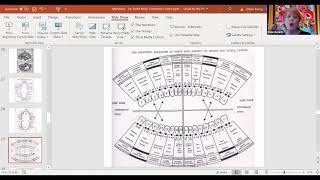
Dr. Dawn Ewing explains how teeth connect to body organs through acupuncture meridians, and how dental work like root canals or implants may block energy flow. She presents a color-coded tooth-to-meridian chart and describes electroacupuncture screening as a diagnostic tool, with a case of a patient's blood sugar dropping after dental cleanup.
Chapters
What we're going to be talking about tonight is the tooth body connection. The picture that I found here is just one of very many charts that are out there that show the different connections of different teeth to different organs. We're going to try to explain what a meridian is. And so you need to know that that meridian is a highway in which energy can flow and it goes to different parts of the body. Most cultures are very knowledgeable about the acupuncture meridians. Different cultures may not call it acupuncture. They may talk about the qi or the prana that is flowing along these pathways, but we make use of it in acupuncture, acupressure. Even when we're doing yoga or Tai Chi, we're looking at trying to improve that energy flow. The vital force, or the qi, which again is the name for the energy, actually has two kinds of forces. There's a yin and a yang. So there's always a light and a dark. There's always a cold and a hot. There are opposing forces to try to create balance. So in this type of medicine that we're talking about, everything is about balance. I happen to find this great video that I'm hoping will play here. If it's not, it's going to drive me crazy. There we go.
My God, I saw this and it scared the crap out of me.
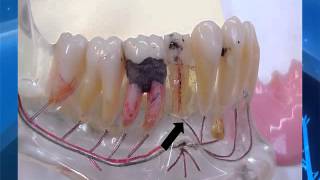
This is not me driving. This is your body trying to balance all the stressors of every day. If you don't think God is amazing that he made this piece of equipment that is able to do this, this is a great example of your yin and your yang. And let's give a hand to the guy who finally made it. I wouldn't have tried that, not for the world. But yes, when we're talking about those acupuncture points. At one point in time, Americans thought that acupuncture was voodoo medicine. Of course, then you have President Nixon who goes over to China and ends up being treated by acupuncture. So now it's like the cool thing to do. We still don't have proof that it exists, but it's just cool to do it because the President did it. There is a Korean doctor named Dr. Kim Bon Han who demonstrated that those meridians existed. And what he did was he injected a radioisotope into. Into an acupuncture point and then imaged on a CT scan the fact that this was now flowing not on an artery, not on a vein, and not on a nerve pathway. It was later reconfirmed to show that it actually existed. But that was the first proof positive that we had these acupuncture meridians and points actually do exist. For me, it's kind of like trying to understand that the battery in this car cannot run if it's a dead battery. Well, neither can a human. You just can't function without good electricity going to your body. If we're looking at this corpse, there's no way in hell I can do an EKG on this individual because the life force or the qi is completely gone. I remember years ago when I was teaching a class to physicians and to dentists, and one of the physicians was trying to be a smart ass, and he said, you know, I've never, in all the autopsy labs I've ever been in, seen a meridian. So I just think that this is bonk science. And I said, well, the moment you can do an EKG on your cadaver that you're working on, you'll be able to see your meridian. And of course, then he got the concept that, you know, you can't do it when once the person's dead. It's kind of like when we're thinking about the smoking tooth video. You're talking to a traditional dentist and you're telling them that mercury comes off of an amalgam. And they look at you and they go, what? It does? But in school they told us that it didn't come off of the amalgam. Well, surprise, it does. And now we can show it. If we use a special background, we're able to visualize the mercury as it's coming off of that amalgam. And then we can make it come off more if we rub it with an eraser or we use a toothbrush across the top of it and we can see how much more is coming off. The energy is like that. You know, we have meridians on our planet and we talk about longitude and latitude, but we have these energy meridians because we have a north and a south pole. The energy is flowing through these pathways in our body. And what happens is disease sets in when they're ends up with a short or a blockage in that flow. So I want you to visualize that you have a lamp sitting on the table. What happens if I cut the cord? Well, besides getting electrocuted, I can now see that the light is not going to light up anymore. This is what happens in dentistry when we do a root canal. We taxidermy a tooth and we leave it in its place, but it's energetically dead. Now, I understand that there's bacteria in there. There's a whole nother reason why a root canal could be a problem for you health wise. My reason is the fact that there's something dead. No place in medicine do we say, oh, by the way, your gallbladder went bad. So instead of taking it out, I decided to stuff it with cotton and silly putty and left it in so you didn't have to have to tell everyone you don't have a gallbladder. I mean, that's just insane. So we want to make sure that our body connects so that it can talk to each other. You put your hand on something hot and messages get sent to your brain almost instantaneously to then send messages back to your hand to say, jerk your hand away from that hot item so that you don't get hurt. Imagine you pick up a telephone to call 911 and it's dead. Somebody cut the wiring. There's a lot of things that won't happen. Even though you placed the call, the call did not go through. So there's disconnects that can happen throughout the body and that disconnect can happen at either end. I think it's particularly interesting when you look at bitewings and you see that the mesial of the six year molars have decay on an individual the but not the distal of the bicuspids. Now those molars are on a different meridian. They're on the lung and large intestine. And traditionally, if you ask the person, how often are you having a bowel movement? Do you know what healthy is? 20 minutes after every meal, that's healthy. That's what happens when you're an infant. You never take an infant someplace and don't take a good supply of diapers because when you feed them 20 minutes later you're going to get a prize. But somehow we muck up our diet and we stop having a bowel movement every day. So when I see patients and I say, how often do you poop? Oh, at least twice a week. And I'm going, oh my God, that's not only not normal, but that's deadly. So you got to get that moving again. And those are questions that it's okay for you to ask. You want to think of this meridian as being a circuit. So I want you to visualize that you go into your kitchen and you try to turn on the dishwasher and the garbage disposal and they don't turn on. But your oven and your stove work just fine. I'm going to Go out to the breaker box and see if it tripped, because that's about all I know about electricity. It didn't trip. So I don't know what to do other than call an electrician. When the electrician comes out, he uses an ohmmeter and he starts sticking it in different electrical sockets throughout my home, seeing what is on a particular circuit. As he comes in and tells me, ma', am, you have power coming from your circuit breaker to the first two electrical outlets, but from there on it's disconnected. I think a mouse must have gotten in your wall, which I'm freaking out about. How did a mouse get in my wall? I don't like mice. But it must have nibbled a hole in the wiring and it's disconnected. So everything from that point on is no longer working. I don't need to go get a new garbage disposal. I don't need to get a new dishwasher. What I need to do is slice the wire back together, which is what the electrician will do. Another good analogy is when you're looking at that flow of energy, it should be like traffic that is free flowing a steam. You don't have to put the brake on. You're just continuing to go at a steady pace. There's no jams whatsoever. When we talk about a jam, that's going to be something like my cows that I've got in the picture here. You can have the blockage be that the liver itself is not functioning correctly. It could be a tooth that's off at the other end of the meridian. The cows are easy enough to move. I could have a tree that is down. It's not a permanent disconnect. It's something that's temporary and it can be moved. There are some things that when we remove them, are quite dangerous to do. And in this instance, I'm talking about more like a cavitation or a root canal, where we really have a bigger obstacle to overcome. This is the best picture I've ever found to explain to patients about different blockages here. I have a freeway here in Houston that is completely submerged underwater. If I had a magical vacuum cleaner that could just suck that water all away instantly, I would be able to get my car to go from one side of the freeway to the other. I no longer have the water as the blockage. When you have a root canal tooth that is a dead tooth and you've got dead tissue in there. Electricity can't go through anything that's dead. It's not possible. That's why when I worked with the fire department as a paramedic. We would use wooden pike poles and things. If we had to move electrical wires, then, you know, we had on special equipment, but we would use wooden poles because something that's dead cannot conduct that electricity. So once that water is off of there, once that tooth is out and all the dead bone is out, the meridian connects instantly. It's measurable. When we're using EAV during surgery, you've got that connection immediately. You think of it as the light that we showed and the disconnect of the wire. What happens when you splice that wire back together again? The moment that wire touches, your light comes back on. It's an instantaneous connect. There are some things that really create more of a blockage than others. Like I said, root canals. Cavitations, implants. If you don't really know what a cavitation is, I'm going to give you a very short description of what one is. Oftentimes they occur where a tooth has been removed. Usually it's a wisdom tooth. That's the highest number. But it can happen anywhere. Dentists are trained to remove the tooth and not do any more harm to the individual. Let's do the least amount of trauma as possible. But in actuality, that tooth was stuck into the socket by way of a ligament. And if that ligament is not removed, it is like giving birth to a baby and leaving the afterbirth in and just choosing to sew the mother up. You can imagine how septic the mom would get. The body gets messages that says that there's been trauma in this area and they need to send specialized cells to this extre extraction site to break down the blood clot, carry it away and fill in with healthy bone that they cannot get through to the site because that periodontal ligament is still there. So it creates a void in the bone, thus termed a cavitation. Now, that's the most common way. Cavitations can also occur because of drug use. In certain prescriptions that inhibit blood flow, like your drugs that you use for migraine medicine. It can be because of trauma. So maybe a football player or a car accident could end up with trauma to their jaw. There are other reasons you could have clotting disorders that create a cavitation. And the other thing here is implants. Again, electricity can't go through anything that's dead. But I want to show you what happens when you put in a titanium implant because it's metal. It's like sticking a fork in an electric socket. And Bending it around and sticking it in the bottom, you completely short out that circuit. Well, that happens in your body as well. Plus, titanium is known as a haptin. Please do yourself a favor and Google that word. H A P T E N. It is anything that can trigger an autoimmune. Why would you want to put something in your body that you don't have? Hashimoto's or scleroderma or lupus. And now you get an implant and now you have an autoimmune. Taking out the implant will not reverse the effect. It's done. The damage is the trigger's already been pulled. So our other option is to look at porcelain implants. But I want to at least educate you to know that electricity does not go through porcelain at all. Zero zippo. If I get this cute little gadget that goes on a lamp and I put it on the lamp so that I can touch the lamp by my bed and have it turn out without me having to reach up to turn on the switch, I must put that little gadget on a portion of the lamp that's metal and I must touch with my electrical body a portion of the lamp that's metal. Then it turns the lamp on. If I choose to put the little gadget on a porcelain part of the vase, it will not turn on because electricity cannot go through that porcelain. Now is that detrimental to the patient and life altering? It's like putting a stalled car in one lane of traffic. A lot of these teeth have eight teeth that are on a meridian. So taking one lane of traffic out of the picture might not be the end of the world. But some of these areas only have four on a meridian. And so if you're doing a lot of work and let's say, let's take the cuspids, you for some reason are missing all your teeth and you're going to have implants placed on all four cuspid areas. Now you've just put something across all four lanes of traffic and completely blocked everything going to the liver. My point is, if someone has something that is detrimental to them, that is they had breast cancer and they had a root canal tooth removed because it was correlated to that breast cancer. It was on the same side they have that tooth removed. You would want to think long and hard before you put any implant back in that area. We're trying to relieve burdens, not create burdens. And that's why I need you to understand about these meridians. There are bioenergetic devices out there that allow you to measure the amount of energy, just like you're looking at an EKG or an EEG or an emg, this is using eav, which is electroacupuncture. According to Vol, it also goes by other names, eds, Electrodermal Screening, Meridian Stress Assessment. Lots of different acronyms that are used for this particular type of technology. And that is a technology that I use and I'm gonna start offering some classes on that while we're in our downtime. We get back to the connection about the tooth body. You know that there is a papyrus out there called the Edwin Smith Papyrus after the person who bought it. It was in 1862. It seems to be one of the oldest known ones where they're talking about surgical issues. That papyrus was written before 3000 BC, not new stuff here. And it gives instructions on how to heal and treat wounds of the mouth. There's another papyrus that's out there, that's a 4,000 year old papyrus that describes a dialogue between a pharaoh and his physician. The pharaoh is complaining of severe arthritis and the doctor's suggestion is, is that he get his bad teeth removed. You know, there's a very tight connection here that we're just now acknowledging. Even orthodox medicine is now slowly catching on to realize that heart disease can be associated with microorganisms from the mouth, from the teeth, from the gums and from the jawbones, and in particular some of the root canal teeth. I want to show you some of the different charts. I actually did my thesis work the first time I had to do a thesis for my PhD. I did this data collection of different people's problems and what meridian it seemed to correlate to because I really. This is not something I learned in hygiene school. This is not something I learned when I was going through postgraduate. It was something that was being presented to me new. And because it had never been presented to me before, I wanted to set out to disprove it. I thought it was actually bunk. When you start to look at these different charts, there are so many similarities. Where physicians, chiropractors, people who do muscle work, like massage therapists, had all these old charts out here with many, many similarities. This is a good chart for you to see the X that is. I don't know if you can see my X on my fingers. There's an X in two places here. Because the maxillary molars are, are on the same meridian as the lower bicuspids and the lower molars are on the same meridian as the maxillary bicuspids. I couldn't make that transition in my head when I saw this chart. And honestly, I was working with a doctor that was doing acupuncture. I couldn't even understand his English. And so I was a little frustrated trying to commit all this to memory. So I just keep. Kept collecting different charts from different people. This was one from the Academy of Biological Dentistry. But when I was trying to correlate all the different charts to see where the commonalities were, I found that there were some errors in accidentally flipping them on teeth. So what I did was I decided to make my own chart. This was the one I made for my thesis work. And for me, I'm very visual. I needed to see things in color. I still could not understand why the wisdom teeth corresponded maxillary and mandibular, but when I got to these molars on top, why they did not correspond to the ones in the bottom. And it wasn't until I decided to do this in color that I could really see that crisscross that we were talking about earlier. So. So here you see that I just made the decision to make the center teeth, top and bottom yellow. Because that has to do with the urinary bladder, kidney, prostate, ovaries, anal canal, and because it had to do with urine. I thought yellow was a good color. I thought purple looked good next to the yellow. So I decided to make purple on the other side. From there, I took it to the blue, and that's when I realized, you see that the blue does not go straight like the yellow and the purple do. It makes that crisscross. And the green is the same way. So the acupuncture meridian actually makes a zigzag on your face, as shown in this next picture here on the side, you can see that it kind of makes a little jig there. So they don't line up straight. When I'm looking at a patient now, I don't oftentimes get to look in their mouth. I'm looking at a Panorex. And then everything else I'm doing is kind of on a computer and looking at blood work and everything else. But I feel like when I look at their Panorex, I'm already in my mind looking at where teeth are missing, what organs would be related to that, where there are root canals, so that I'm already in my mind kind of capturing what could be going on with this person. Let's go over what these different teeth have and what they're related to. The wisdom teeth, number one, 16, 17, and 32, they're all on the heart and small intestine. Lot of times people will come in with mandibular cavitations. The mandible is on the energy exchange, not the maxillary, but the mandible is as well. So this is a slight difference there. Now we're talking about tooth number two and three, 14 and 15, 20, 21 and 28 and 29. That's where that crisscross happens. So the top teeth on the this side of the molars and the bicuspids on the mandible. On the right side is the pancreas. It's also related to the breast and the stomach and the thyroid on the left side it's more spleen. But you still have the stomach and the breast and the thyroid. When you get to your now your bicuspids on top and the molars on the bottom, that's where it does that flip flop. And this is lung enlarged intestine. This is the one place where a tooth jumps off its meridian. The second bicuspids on top are also breast teeth. There's no other organ that is related to so many teeth as the breast is. Instead of just being related to eight teeth, we've got 10 that it's related to. Then we go on to the 6, 11, 22 and 27, which are your cuspids. No wonder they call it your eye teeth because it's actually connected to the eye. It's also connected to the liver and to the gallbladder. And then we look at our anterior teeth. So we've got 7, 8, 9, 10, 23, 24, 25 and 26. Those are all the things that are on the kidney, the bladder, prostate, uterus, anal canal on the bottom. The teeth are related to the adrenals. Common, common thing to find is someone has a lingual bar from their orthodontics going across the bottom. So imagine that you walk into my office and your feet moved just fine. But now I think it's healthier for you to have a bar welded in between your shoes. It was nice meeting you. I need you to leave now. And you're trying to walk, but you're having to waddle or you're having to hop. You know that you have suture lines in your skull that actually move. Now, when I was going through hygiene school and we took our skulls home, I was told that those bones were fused. That's a lie. They move. Proof positive. There are some days when you floss your teeth and the floss will not even go in between those teeth. Another Day you're trying to floss the same area, and the floss just falls down in between there. That is because of that ebb and flow. So when you have a bridge or a lingual bar, it restricts the movement of those teeth and can bother the things that are on that particular meridian, things that block the meridians. As far as dentistry, like I said, the lingual bar bridge work, root canals, even though they are a huge bacterial issue and there's lots of controversial research out there with us sending these teeth off for pathology to find out what's inside. It's not the bacterial issue. If I have a disconnect in my lamp, it does not matter if that lamp cord is sitting in dog poop or it is completely sterile. It is the fact that the wires are now disconnected. Once you reconnect those, the body will work. God made a cord. Wonderful piece of equipment that we tend to muck up if we can get that functioning again. That's our goal. We talked about the implants and how they can create electrical problems. The extractions can also create electrical problems if they're not done properly. So when you take out a tooth, we encourage someone to strip out all the periodontal ligament. If you're using EAV in surgery, you are able to tell when you have all the dead tissue out. There have been many times where I've been involved in participating in surgery where I'm not the surgeon, I'm not the dentist, I am working the EAV equipment. We cannot get a good reading because this is a maxillary tooth, and the lining of the maxillary sinus is dead tissue. It's not until they pop through that maxillary sinus, which is not what a dentist wants to do. But if it's dead tissue, it's got to go. And then all of a sudden, you're ending up with perfect readings. So the bottom line is, even though we're in the business of dentistry, there's nothing as good as what God gave you. Our focus should be on prevention for children and encouraging everything we can with good diet and food and proper hygiene to keep those teeth so that we don't have to look at things like implants and root canals and extractions. I wanted to put on here some scientific information in case there are those of you out there that go, this is all hooey. Here's an article on EAV. There's tons of white papers out there on EAV. Dr. Vol is the physician that actually came up with the concept. He was learning about acupuncture he didn't know when it was appropriate to use a gold needle or silver needle. You use gold to stimulate an acupuncture point. You use silver needles to depress the energy when you need to. But he didn't know when it was appropriate. So a friend of his said, well, why don't you just use an ohmmeter and figure it out? And he said, well, I thought the skin had, you know, a consistent resistivity over the entire being. Well, they found out that it doesn't. The acupuncture points are actually windows to be able to find out different things. And the teeth are involved with that. It's actually Dr. Vol's research that is quoted often and over again that 80% of people's health maladies stem from something in their mouth. Now that something in their mouth could have been tonsils as well. And when you're reading through his research, he finds a lot of stuff with tonsils, but there's an awful lot that's involved with teeth. Here's another one looking at the relations of odontans and the tonsils again to the disturbance fields, which means his acupuncture readings that he's getting another one here that is looking through nine different universities and the studies showing that EAV is confirmed in its use. It's not just for dentistry. I mean, Dr. Vohl was involved in research with looking at liver cancer and they were actually using toes in order to do that research and could find out when a person's cancer had returned. Here's another one. We're looking at EAV again and this is all the use of meridians in this eav. I want you to do what I did. I want you to go in as a skeptic and say this is who we and just start looking at your patient's X rays and start asking questions. Wow, you have a root canal tooth and it's on tooth number three. You just got that done six months ago and now you're telling me you just got diagnosed as a diabetic. That's interesting. It's on the same energetic pathway. Do you know that diabetics can't tolerate low grade infections? So it's not uncommon that someone who has an elevated hemoglobin A1C gets their mouth cleaned up, meaning they have root canals removed. Cavitations clean up. I personally have had a patient that had a hemoglobin A1C of 12. He didn't claim to have any toothache. But when I took his X ray, which I should show sometime he just had root tips left. The teeth had completely rotted off. We ended up having him get those teeth removed, and within 120 days, his hemoglobin A1C was 5.2. So he didn't really have diabetes. His body was responding as if he had diabetes. But that is similar to what happens to a woman who gets gestational diabetes. Under the condition that you are the size you are and you're carrying an individual, your pancreas can't handle it, and you end up presenting as if you have diabetes. Once you give birth and you lose that weight, you're no longer labeled diabetic anymore. That goes away. It's the same thing with many individuals who have these diseased root canal teeth, or once you get that infection, that low grade chronic infection out of their mouth, they seem to improve. But I want you to just start asking questions. Oh, you have a root canal. It's on a thyroid meridian. Oh, you have thyroid problems. Be as interested as I was when I started my research. I actually ended up with an entire pile huge of men that either were missing teeth or had a root canal tooth or an implant in one of their four front teeth, top and bottom. Now, at that particular time, my husband was going through seminary and so we were invited to a Christmas party and he was. I heard him talking to somebody while I was getting some dip and putting it on my plate. And she went over to him and said, oh, Toby, we pray for my daddy. He just found out that he has prostate cancer. Well, he had just asked me that day, what's the big pile that you have there of all the papers? And I said, that's all the people who have prostate problems. And, and the root canals are on one of their four front teeth, top or bottom. And so his response to this woman, instead of certainly, let's pray, was, oh, my God, we need to have him talk to dawn and somebody needs to mute themselves.
Dawn, I have a question.
Yes.
So I had a patient today. He was emergency patient. We extracted 29 and 30 reversible pulpitis. His, you know, going back to what you're telling me now, his medical history presented with, he had thyroid cancer. He had his thyroid removed. He also has. He's a diabetic and has high blood pressure. And he also had 18, 19, 20 extracted from before. So he's missing 18, 19, 20. And today we pulled 29 and 30.
Yeah.
So look at that chart you're going to see. It's amazing.
So how would you tell this patient this? Like how do you say. Oh, I mean, because you're saying he's him missing his molars. You know, him missing 18, nine. He's missing 18, 19, 20. And now he's gonna miss 29, 30.
Correct.
Is.
Is gonna. Is that possibly gonna make his diabetes worse? Or. I mean, how is that related? How can I present that?
Well, the first thing you do is you take something like a dental chart and you post it in the bathroom of your office, or you put it in your operatories. Go ahead and mute yourself so that I'm not talking over kids. There you go. If you put that in different places through the office, the patients will start asking about that. What does that mean as it's going down? That's interesting. I'd like to know more about that. Yes, you will find. I remember years ago having a patient referred to our office where we were told that tooth number 18 was to be extracted. And I went in and did eav, and I couldn't find that it needed to be extracted. The patient was hypertensive, but they had just placed a gold crown on this tooth. And so what I was finding was it was the gold crown. So we had to call his primary care physician, who was the one who was referring for the tooth to be removed, and ask if we could pop off the gold crown and see what happened with the blood pressure. And in that case, it just needed a different type of crown. So I advocate for testing teeth before we just start removing every root canal that you see that's. That's in there. That's not what we want at all.
As far as verbiage, what would. How would you have talked to this patient like, oh, I see you have, you know, a couple of molars missing in the back and premolars.
What I would do is tell them it's more than coincidental that you have teeth on the same meridian that are missing. And so I'm going to get you connected with a functional medicine doctor or a naturopath that can help you. Because maybe it's that your bowel is not working correctly, or maybe you've got an issue with your lung that is making these teeth poop out on you. Realize you can have a tooth that causes you pain. Let's use the example of tooth number three. It's causing you pain. You do a pulp test on it. You don't find a problem. You put heat on there. You have them bite down. There's no problem whatsoever. But they keep telling you they have pain on occasion. If we do EAV on It. And I find it's a thyroid problem. Taking that tooth out is not going to fix the thyroid problem. Fixing the thyroid is going to make the pain for the tooth get better. So that's where you as the dentist can't make some kind of a diagnosis. You're gonna have to send them to a naturopath or a functional medicine or an MD that gets the tooth body connection. So that you. Yes. Who's. Teresa's raising her hand, I think.
Yes, I'm trying not to interrupt.
No, please do.
So I wanted to say that my, that I have a story just about that, right. So my mom came to see me a few years ago, right? And she had, she had tooth pain on tooth number 26. And it was driving her nuts. I adjusted the occlusion. She kept telling me, it hurts, it hurts, it hurts, it hurts. And I was like, there's nothing wrong on the X ray. I can't see any infection. The tooth is testing alive, you know. And so I asked Dawn, I said, I said dawn. And that was my first, my first inkling that, oh my God, the whole meridian thing was right, you know, like, like there was something there. And I asked dawn and she goes, well, does she have a kidney or bladder infection? Because it, you know, that sits on the meridian. I said, well, yeah, she has kidney and bladder infections a lot. She goes, well, you might want to get her checked out because it might be like a really bad one. And so she goes to the doctor and the doctor goes, oh my gosh, it's the worst one you've ever had. So the doctor puts her and she's. She has multiple antibiotic resistant infections. So anyway, the doctor found the right antibiotic to put her on this one time, right? And darned if the tooth, the tooth pain didn't just go completely away. It completely went away and years later, her tooth is still okay. You see what I'm saying? So that's the beautiful part about EAV is you don't have, like, typically a patient will come to you and they'll say, I have a toothache. And so your answer, right, as a, as a dentist is like, well, if you have got a toothache, you're going to need a root canal, right? Well, what if some of the things that come to you are not actual dental infections? Maybe there's something going on on one of the other organs, right? And so the beautiful part about EAV is if you can look at a tooth and you can't see any kind of infection on that X ray or Any kind of infection on a cbct, then, you know, consider going to have them tested. You know, sending them to dawn to have them tested or find somebody near you. Because not everybody is lucky enough to have Dawn. I have. Don't. I'm very, very lucky. But have them tested, because sometimes it's not the tooth, sometimes it's an organ. You know, that's what I wanted to say.
We had a zoom earlier for hygienists, and so I am going to repeat myself in something that I said because there are lots of people here that weren't on that call. But when you are looking at a patient and you know that they have a heartbeat because they're alive, you don't know how that heart is functioning until you hook it up to an ekg, and then you're able to look at that rhythm or dysrhythmia and figure out what's going on with the individual. EAV is like that. It's an electrical test for teeth. And it's not just teeth. It's an electrical test for the entire body to see how the body is functioning. And you can use different acupuncture points to elicit different information. It's just that I particularly focus on doing the teeth because there are so few people that do that. We really need to get more people educated on how to do that. I want to answer a couple of these questions because I'm not sure that I understand this one. This one says Dawn. So is all this implicating that there is decay, for instance, on a tooth where it hasn't grown into an abscess or infection around a PDL that an organ can likely be affected to. Or is it the associated organ affects the tooth? It can go both ways. You can have a tooth that becomes so sick that it affects the organ. You can have an organ that is so sick that it affects the teeth. So a lot of times I'll tell people, for instance, if their four mandibular anteriors show up with adrenal issues and there's no lingual bar, I'm pretty sure then, then that's an MTHFR individual. And I'll tell them, look, I think that you have a genetic flaw that is preventing you from being able to methylate correctly, which is affecting your adrenals. Bottom line is, you don't get that addressed. These teeth are not getting enough energy. They could spontaneously die for no reason that a dentist would find. They would just give you some reason. You must have gotten hit by a sling when you were A little kid or one of your kids bopped you and you don't remember it, but it was, it was enough damage to cause the tooth to die slowly? No, it's the adrenals that are causing a problem. And if you don't get it addressed, all of the teeth that are on that adrenal pathway. I remember having a lady who had a toothache up here. She was frustrated with me because I told her it was her thyroid. She went to a dentist down the street, had the tooth taken out. Several months later, the tooth right beside it, tooth number two started bothering her and she came back to me. I said the same thing. It's a thyroid. Wait a minute, where's tooth number three? I was so frustrated at you telling me it was a thyroid that I went down the street to another dentist and I just told him to take it out. Do you realize that's like going to an orthopedic and saying, I'm having excruciating pain going down my left arm, please cut my left arm off. And he's trying to tell you you're having a heart attack. It's referred pain. So not every toothache is a tooth that needs to be root canaled. Not every toothache is a tooth that needs to come out. That's why it becomes so valuable that you work with a practitioner that is taking that burden off of you. And they're helping determine that. The next one was, it says, are there instances where the organ affects the tooth? And some where the two. Okay, well, that's pretty much the same question. And that was Teresa and her story. I actually can tell another story on Teresa and I know she'll remember this one. A lady had severe pain in her neck and she went to an ER and the ER told her it was abscess and she needed to have the tooth taken out. And they referred her to an oral surgeon instead. She decided to go see Teresa. Teresa said, I'm not comfortable. Let me send you over to Dawn. It actually was a maxillary tooth that was the problem, not a mandibular tooth. And all it needed was neural therapy. Which means that she just gave a bleep of anesthetic. And that woman instantly turned to Teresa and said, shut the front door. My pain is gone. It's just that fast. So this meridian system that we're talking about may be new to you. I get it. It seems like voodoo medicine. It's not. Just keep an open mind. And as you start learning while we're in all this obligatory downtime, you're you're gonna come back and practice completely differently than what you left your practice with. Does anybody else have any? Oh, there's one that says, what does MTHFR gene in incisor. Okay. MTHFR is methyl and tetrahydrofolate reductase. It's mthfr. If you spell that out, it looks nasty. So I'm going to ask you to remember mother, father, if you say that to your patients, then they'll remember that it's an MTHFR gene. The MTHFR has the two parts to it. And of course, now we know that there's a comt. And a lot of other things that play into the methylation, but they play into this methylation process. So I'll use myself as an example. I have an MTHFR flaw. I don't have any amalgams. I have very high levels of mercury because people who have the MTHFR gene can't methylate. They hoard mercury. They store it in their body. You hear stories where moms will tell you, I took two children in to get their vaccinations, and one is just fine, and the other one won't have eye contact with me. The one that won't have eye contact is not methylating the mercury. They can't discard it from their body, so it builds up to toxic levels. People with the MTHFR gene have a difficult time getting B12 out of the red meat that they eat and. Or they don't have the enzymes to break down folic acid into folate, which is the usable form. So when I was trying to get pregnant with my son, my OB GYN had me on 800 micrograms of folic acid, which did absolutely nothing for me because I can't break it down. It just builds up to toxic levels. My son was autistic, deep in the spectrum, you know, he had very high levels of mercury. He got that mercury from me. Part of Teresa's and my passion is networking with women that are in dentistry and. And helping you get safer, helping you detoxify so that you don't have children like I had to deal with. I don't want anybody to go through that nightmare. My son has since passed away, but we had done everything that we could possibly do to get mercury out of his system and get him functioning. Anybody else have any questions over meridians?
Good.
You're all my little gurus now. Happy, I want you to know that these zoom meetings are every single night of the weeknight. We're trying Very hard to bring you interesting topics.
I have one question. Sorry, you got me really interested about you said hygiene meeting. How do I get my hygienist on these meetings? What meeting do you have for hygiene?
Okay, great question. What we did tonight is we put out an invitation to dental hygienists to try to get them interested in biological dentistry. We had a meeting which was just kind of a talk to them session. Right now the Academy is offering if they're a member, which is $75 to become a member of the IABDM. We are offering them the free zoom meetings that we have for everybody else. We are offering them free certification to become biological and that's a multi step. They will watch the Biological 101, which is normally $100. It's free. The Academy is bending over backwards to help you guys make use of your time during this downtime so that you go back to a completely different way of thinking in safer dentistry. And your team is on board. Your entire team can sit in these zoom meetings. They're being recorded. You can pay them, say I'll pay you an hour to sit and listen to this zoom meeting. I will pay you six hours worth of wages for you to sit and listen to the biological 101. Right now. It's free. And then they take an exam and the exam is similar to you. All's where it's a question. And then you have to find a credible reference to answer it correctly, provide that reference for us so that we have a pool of credible references. And then you of course have to answer the question correctly. And then they can do a presentation, they can do a zoom presentation, they can do a video, anything that shows that maybe they want to study tongue diagnosis or essential oils used for people that are having a lot of anxiety. And they would do a PowerPoint presentation on that in order to finish getting certified. So every night we have these zoom meetings. The hygienists, your dental assistants, everybody is welcome to come to them. They're welcome to go to the IABDM website where that red bar comes across. Click on that and watch our old videos that are up. If you've got suggestions for new ones, please please email me drdawnrtrdawn.net and I will get on as many of these as we can. I am passionate about us doing this at no cost. Teresa wanted to reach out to non members. So right now you don't have to be a member to attend any of this. To be certified, you have to be a member. But education is important that we get it out to everybody. Teresa's goal over this next couple of years is have every office be a biological office and practice safer. And I applaud her for that. So is there anybody else? I'm going to check this chat thing one more time.
Oh, I'm sorry. Go ahead, doctor.
Oh, yeah, this is actually interesting because you talk about diabetes. So I got into biological dentistry because of sleep and airway. And so I was taught, you know, if a patient's diabetic, they likely have airway issues. So I'm curious because patients come to me and say, where's this coming from? I had a patient who obviously had sleep apnea because he grounded his teeth, but he also asked about meridians. I was like, well, I think you should look at your airway first because that's like king, because that's oxygen. And, you know, of course, he was diagnosed with severe sleep apnea. So how do I tell. How do I talk to patients about that? It's like, I guess, is my question.
Well, first off, breathing is not alternative medicine. So it trumps everything. Yeah. And there are times where we even have to keep a tooth if we can, in order to create a better airway and then look at the burden later. Other times where somebody comes in and I'm testing a tooth and I'm going, airway can be managed with the mandibular advancement appliance. And we're going to have to make that do because the root canal tooth is killing them. It's that much of a burden to their body. So that's not something that you would be doing, though, as the dentist, you will be referring out to someone who does that. Unless we start doing these seminars enough that you get a hygienist or somebody in your office, which I know Theresa has someone in her office that does it, and Dr. To is trying to get someone in her office that would be able to do it as well. And I'm happy to start realize learning to do EAV is. It's not something you learn to do over a weekend. It's something you learn to do over several months. But we've got time right now, so there's no reason why we couldn't get some equipment that is inexpensive. And I'm talking about something that's maybe less than $200 and start training at home with some of these acupuncture points. It wouldn't be computerized. It wouldn't give you data collection. It wouldn't have any of the homeopathic capabilities. But we certainly could start learning in that area. It says I'm a hygienist and excited about this. I learned about meridians while visiting Germany in 2008 with a ceramic implant being placed. Yes.
Okay, I'm sorry, I want to interject really fast.
Now.
I'm just going to say this. I see a lot of names here that I know, girls that I know, you know through other Facebook pages. I'm so excited that you're here.
Yes.
So I was going to ask, do we. Because they're just sticking their toes in the water, kind of just figuring it out, see if this is something that they're really interested in. Do we potentially have a meeting like we did earlier today again, just. Or do I create a. Do I create something for them to be able to ask more questions to see if it really was something they want to delve into?
I would love to have another meeting if it is of value to do what we did today to encourage people to start sharing more often. And this seems to be a good platform. I do know what was on the news today about how people can come in and post pornographic pictures during your meeting. I don't, I don't know.
Maybe a good distraction, who knows? Only kidding.
I wonder what meridian they're gonna show us.
I'm sorry, I take what I do very seriously, but I don't take myself seriously. Sorry guys, look at me, I'm turning all red. But, but I just, you know, because I love this so much and I want everybody to be so interested in it and the fact that we have girls that are just starting to ask questions about it. I think I would love to be able to have more of these meetings so they can ask more questions because they're going to do a little research now. They're going to be like, I want to look into that. And by next meeting they'll have more questions. So when do you think we could do something like this? Or do you want me to get back to them?
Yeah, we can do that offline of this and we'll put out another meeting post and we can do it like this where it's a 5 o' clock and then tandems into a 6 o'. Clock.
Okay, great. Now and actually no, the earlier meeting wasn't. It was basically just a roundtable just talking about like what stressors we have and you know, what we're looking for. So it was basically just like to feel out what was going on. So it's usually going to be always posted on the ibdm paid members page. I will also post it everywhere that I did. So the girls that and the ladies that found it where I posted it, I'm going to post it there again because the moderators are awesome. They're, they're putting it right on the page. And so, and then if you know me, you know you're friends with me on my, my page, I'll post it on mine also. So you always have like at least three ways. And then if you don't know, you can just friend request me. Fran Horning. I'll be happy to get any information. You can private message me anytime.
And if they become members, then they start getting notices as well to become. If you're a dentist, we recognize that it's difficult for you. Right now it's $45 a month for a hygienist. It's a one time annual fee of $75. And then the hygiene exam to be certified is completely free. We have a discounted version for the dentist. Normally it's 7:50. It's 250 right now. So we're again we're trying everything we can to help everybody out. And if anybody else has any other ideas, I'm open. But I'm going to go ahead and close this meeting so that people that are listening to it like tomorrow don't have to listen to all our chit chat. And be prepared for tomorrow night as we have another speaker. Okay.
There was one question that came up that asked if. Yeah, it's Carol. There was another meeting, asked if the.
Hygiene meeting earlier was recorded and I.
Don'T believe that meeting was recorded.
No, it wasn't.
No, I answered that and it's not. Thank you.
Okay, thank you guys.
More from Dr.

Revolutionizing Dental Health Diabetes, Root Canals, and Holistic Healing with Dr. Dawn Ewing