Bobbie Rachford on Building Better Biostats | Fractional, AI in Clinical Research & Founder Truth
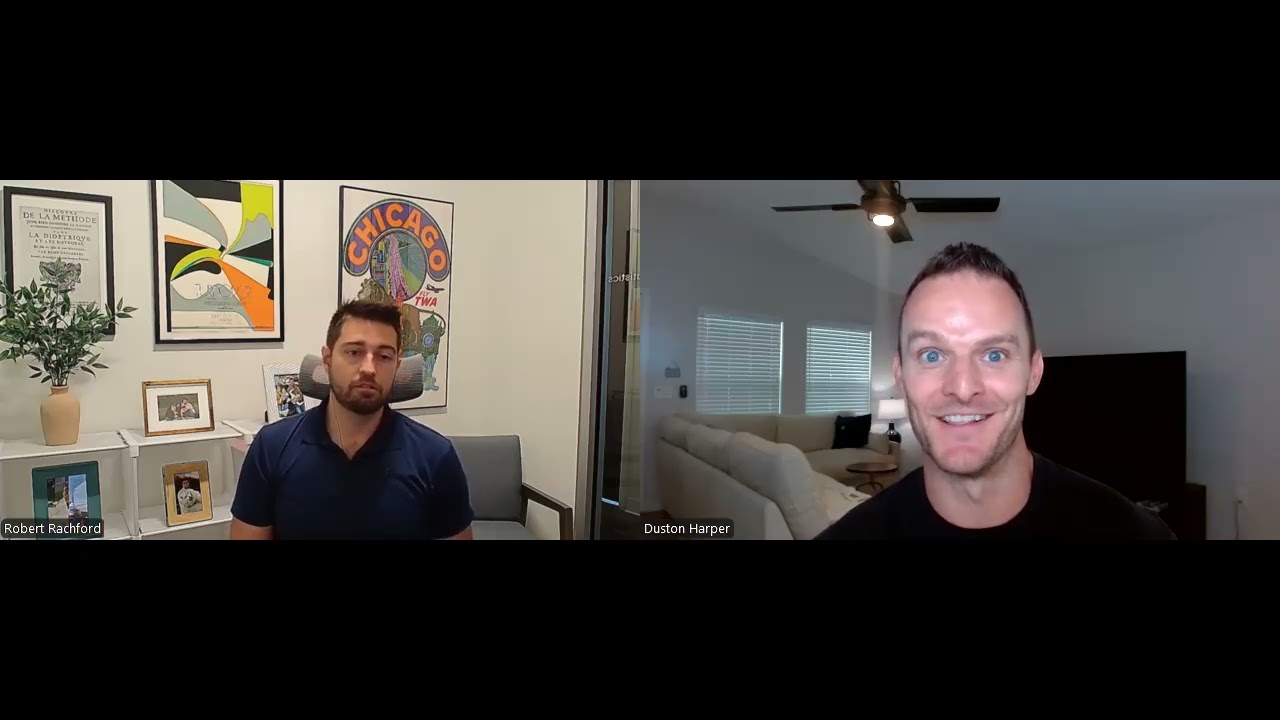
In this interview, biostatistician Bobbie Rachford discusses the creation and evolution of Better Biostatistics, a peer‑attested matching platform that connects small‑to‑medium biotech, medtech, regulatory consulting firms, and private‑equity portfolio companies with fractional biostatisticians, data managers, and medical writers. She explains the market gap she observed—small companies need high‑quality statistical expertise without hiring full‑time staff—and how trust, specialization, and AI tools (LLMs, Claude Code) enable efficient matching and service delivery. Rachford outlines the ideal client profiles, the types of engagements (project‑based, retainer, fractional), and the emerging demand from regulatory consultants and PE firms. She shares founder pros and cons, emphasizing agency, sales pressure, and emotional volatility tied to business performance, while advising prospective consultants on networking, sales, and community involvement. The conversation also covers AI’s double‑edged impact on clinical statistics: democratizing analysis but risking over‑reliance, and concrete AI implementations (website generation, CRM automation). Finally, she highlights Better Biostatistics’ community initiatives—monthly webinars, newsletters, mentorship for junior statisticians—and future plans for AI‑enhanced tools and a mentorship program.
Chapters
Bobby, good to see you. Appreciate you joining today. As a way of getting started, yeah, just tell us a little bit more about yourself and what you're doing now. Absolutely.
No, Dustin, thank you for having me. Truly an honor. I know we've been talking about doing this for a while, and I've been more difficult to get a hold of than the Pope, I think. So I apologize for that. I'm not— it's just a busy time for us. But just a quick introduction. Bobby Ratchford, I'm a biostatistician. So we work to design clinical trials and analyze clinical trials and other science areas outside of clinical trials, but I'm primarily clinical trials focused. And our goal is to show that new drugs are safe and effective and can be given to the larger indication as opposed to just that small sample that the clinical trial is run on. I've been doing biostats for 17 years now, and in 2024, I started my company called Better Biostatistics, and that's how you and I met. And I'm very excited to talk about everything that that entails and everything that entrepreneurship and founding a business entails. So again, thank you for having me. Looking forward to the discussion.
No doubt. And likewise as well, I'm glad we connected a few months ago. On that note, so it sounds like you were doing, working for a variety of companies for a while, big companies, maybe medium size. What made you want to start your own thing? Was there something, a gap you saw in the market or you just sort of stumbled into it? What happened?
Yeah, I think, I think now is the most exciting time ever to start a business. I'm very, very, uh, so I'm 2 years into it, started Better Biostats at the beginning of 2024. And looking back, I'm, I'm very, very happy that I made that, that maneuver. Prior to starting Better Biostats, I did work at a bunch of small, middle-sized, big-sized companies in the life sciences industry, all as a biostatistician. But most relevant and most impactful was in 2019, a man by the name of Mike Stomberg gave me a real chance to build the biometrics division. So biostatistics, data management, and statistical programming. So the function that really kind of cleans the data, organizes the data, and analyzes the data of a clinical trial. I was put in charge of building that division for a startup company. And that went really well. From 2019 to 2024, I grew that division from just myself. By the time I left, we were just shy of 30 people globally. And during that time, the clients we serviced, by the vast majority, the trend was every year it would increase a little bit in terms of small biotechs, small medtechs. So like 2 people in a molecule or 10 people in a medical device, those types of clients were just gaining in prevalence. We saw more and more of them.
Right.
And I started to recognize that they had a real need for our services, but they didn't have a full-time need in-house. And so when our team would interact with them, we would ask them statistics questions, we would ask them data management questions. And they didn't have anybody on their side of the fence that could answer our questions. And so it made the interactions a little bit more difficult, a little bit more clunky. And I started to think, what if that company, that small biotech, that small medtech, had a fractional biostatistician or a fractional data manager? So not somebody full-time, but somebody who could give them 10 hours a week to really guide them and instruct them and oversee their vendors that they had outsourced to. At the same time that that was happening, so this again was 2019 to 2024. At the same time that that was happening, ChatGPT comes out and the proliferation of LLMs becomes very evident that an individual can now become super strong, right? Like a Terminator-type consultant can be born. And so I left Trexamo. We had been acquired and rolled into Propharma by 2024. I left Propharma to start Better Biostatistics, which is a— it's a matching company. What we do is we find those small, super small to like medium-sized biotech and medtech companies who have real biostats needs, real data management, real medical writing needs, and we match them with a network that we've built on the back end, a peer-attested and trustworthy network of the best of the best consultants. Because I think the most valuable thing, and we were just talking about this right before this call, the most valuable thing in all of life is trust. And time, I think, is the most valuable thing, but trust is very, very valuable. And so we've built this trusted peer-attested network, meaning that in order to join the network, somebody who's in the network has to refer you in. And we can match this peer-attested network with these small biotech companies to give them their fractional consultant. And so we're very much this, kind of matching firm. We're not a consulting firm. We don't do project management stuff. We're not a staffing agency. We're not going to LinkedIn and trying to find, you know, and rolling the dice and hoping the consultant we find is good. And so this long-winded way of answering your question of why did I start Better Biosets when I did, I think we're at this like merger point in time where more and more people are becoming independent consultants because of the ease of it. The AI, large language models give you a real leg up. And there's a lot of lack of trust in large organizations these days. How many large layoffs have we seen? A lot of people are starting to think about, maybe I should become an independent consultant. And I'm trying to just help them find their clients. And I'm trying to help clients who are doing really, really good science, really, really cool stuff, find the best of the best because they could go to LinkedIn and roll the dice and hopefully find somebody. But that's a roll of the dice. And so we want to match them with the perfect person who has the experience that they specifically need. in that therapeutic area with those statistical techniques, whatever the need might be. That's why I started Better Biostats. And it's, it's been playing out that way. We're almost 2 years in now, and it seems to be that the market is responding very, very kindly to us. And there's a real hunger for trustworthy talent in this biometric space.
Love that. Yeah, a few things I want to follow up on. The idea of just having the best of the best, I think there's something to be said about that. You can call it A-players. I don't know what the right word is for Biostatistics, but having the best that that bench of people. I don't know how many people you have on there, and being able to just understand the industry and who you're talking to and who might be the best fit. And then for the the client, you know they don't have to deal with all that ramp up, all that just training or going on LinkedIn and finding people. I mean, it's just such a although you have a lot of tools with AI, which we'll talk about later. It's just it's so much work, right? And there's a lot of risk with that and time. And and I think with these There's high stakes with what you're talking about, right? To get, to get that FDA submission, all this stuff, each month burned is massive amount, usually 6 figures plus. So you have to act quickly and it's usually very urgent and a lot's at stake. So being able to do that seems phenomenal. Did anything like this exist before or was it more for like the bigger mid-caps, large caps, not as much with like the smaller companies that maybe don't get service as much or what? what did it look like before with fractional?
Yeah, super good question. So, and just very quickly, everything you just said was spot on. Like, you know it well. That's exactly right. We're trying to de-risk placing the specific talent that these companies need because it's so high risk in terms of each month that you fail to get to IND or fail to meet investors' thresholds. It's brutal. In terms of what came before, there were, there have always been independent consultants. There have always been staffing agencies, and there have always been consulting firms. We're not trying to replace any of those. We're trying to facilitate a way to find trusted talent quickly. So I think what happened before and what still happens today is a lot of these companies will just go to their own referral networks, right? They'll go to their board and say, do you know a biostatistician, or do you recommend a consulting firm that we might be able to go to? And what we're trying to do is really find a way to— while that board might be able to recommend a statistician, we're trying to find a way to narrow down that to a very specific statistician who has familiarity with that FDA review division, for example, and who's familiar with how that agency division likes to review or handle missing data, or what their thoughts are in terms of using an external control arm. for a randomized phase 3 trial. So we're trying to not replace anything or, or kind of usurp anybody who's in the industry. We're just trying to elevate, uh, these small and medium biotechs who don't maybe have the referral networks that they— that the other larger players have. We're trying to get them to the point where they can find that exact talent match, uh, for their specific need.
Makes sense, makes sense. And then you mentioned, uh, the Terminator for consultants. That made me laugh because it, it is It's true. I, so I, I had started my own business with another good friend about 5, 6 years ago. And just something as simple as creating a website was like a huge process or creating, you know, it, it was so much, it was so much more work. And, and we'll get into AI here in a minute, but I think like context switching, some of the stuff you mentioned for, for independent consultants is, it's definitely easier now than it was before. So I think you can be almost like a super consultant.
Yes.
If you, if you get matched up the right way when, uh, When you're looking for what is like an ideal client for you, you mentioned a few things with, with maybe the size, but like, what, what does that client really look like? Like, what is their pain? Is there a trigger event or something that happens where they might need a fractional person on your team? When does it typically come up or when do you want to get in front of them?
Yeah, no, great question. So up until this point in our conversation, I've only been talking about the super small and like medium-sized biotech because that's who I— that's who initially put this idea in my head. But what we've seen over the course of the last 2 years is that's true, they are our ideal client, but their needs maybe aren't so much for like a fractional team member right away. They'll come to us and they'll say, we're going to IND, we're an oncology company, we're going to IND, we need to help design our dose escalation study. Can you help us run some simulations, do some sample size calculations, put the Boeing parameters in place, whatever is needed? And we're happy to take on that small bolus of work to start. And then what happens is they say, hey, that statistician you presented to us was phenomenal. We would like to continue working with them. Can you put a— can they become our fractional statistician with some type of retainer agreement in place? And that works well. There's another type of client that we've uncovered recently And that is the, the service vendor. So, like a regulatory consulting firm, regulatory and statistics are tied at the hip. I like to say that regulators only speak one language, and that is the language of statistics, because at the end of the day, you run a clinical trial, the output of that clinical trial is a statistical result. It is statistical inference. And so what we found is that regulatory consulting firms really rely on statisticians to come in and help bolster their ideas, flush out their ideas in terms of how should we be applying to this NDA, or what is the correct meeting type that we should be working on, and what, what information needs to go into the meeting package that we're going to submit to the agency. So we have— basically what I'm trying to say is, is that as time goes forward for better biostatistics, we are finding more and more clients that just rely or benefit— not rely, but would benefit from fractional or even just project-based biostatisticians. Another one is actually private equity. Private equity firms have a lot of portfolio companies, especially those that are focused in life sciences. They have a lot of small biotechs. Instead of hiring a full-time biostatistician that's really good in one space, be it oncology, then they have a portfolio company of some people who are selling gene and rare disease and neuro, they can come to us and find that really specific match of a trusted biostatistician or a trusted data manager to be able to deploy to that portfolio company to make sure that it continues to do what it needs to do and to keep it on track as it matures. So we— I would say that our bread and butter right now is that small, super small, medium-sized biotech. But as time goes on, we're finding that more and more people are hearing of us. More and more people are coming to the network to find trusted talent for whatever their needs might be.
Nice. And the private equity is interesting because if you can get in with some of those portfolios, you know, that, you know, be— you guys could be the better— the go-to whenever they need biostats or programming or whatever the case. And then they sort of tee you up. That's a great place to be. Not always easy to get into private equity, but it is a great place to be for sure. Once you do a good You do a good job for one of those, one of their portfolio companies, and then you're kind of in for a while, which is awesome. And going back to just being a founder, it is easier than ever to do that. I think that can also be a little bit dangerous because people think they can just start something and just set the world on fire, which there's certainly examples of that, but that's usually the 0.1% or the 1%.
Exactly.
And so what are the pros and cons, I guess, from your perspective so far and just to share with other people out there who might be, because there's a lot of people that have done really well in corporate world, but then they want to branch out there or maybe they're earlier in their career and they think it's easier than it really is. But what advice would you have for people on like the pros and cons of being a founder?
Yes. Yes. This is something that you and I again were talking about right before the call. I would, it's that there are so many pros, but there are certainly cons. I would say that the first and probably most important pro is that I feel like— and it's feel, like it's a feeling— I feel like I have agency over my life. Like, I feel like I am making my moves when I want to make my moves, how I want to make my moves. And that, for me personally, it's a feeling that for me really brings great joy. Like, I am so happy that I am able to wake up And even if the day goes absolutely sideways, at the end of the day, I can look myself in the mirror and say, I tried my absolute hardest and I got to make my own decisions. And that to me is freedom. And that to me is what it's all about. With that comes the, the, the opportunity for the day to be an absolutely sideways day that just does not go well. Yesterday was one of those days. Yesterday I woke up to 2 separate emails that were 2 separate sales losses. And then I got a 3rd sales loss throughout the day. So I've never had a triple loss day before, and that was the first day that that happened. And one of them I was kind of not banking on, certainly not, but I was definitely very excited for it, let's say. And so the con there, easily the biggest con, is that my feeling, my joy, is dependent upon, partially dependent upon how the business is doing. And some days the business is doing phenomenal, and some days the business is like, all right, that was a tough day. That's like, how are we gonna do this tomorrow? And I have 3 little girls at home, and that is, that is my true reason for living. There is nothing more important to me than those 3 and my wife, than those 4 women that I have at my house. And it is so difficult to leave the failures and the losses in these 4 walls. And to come home and be bubbly, be happy, you know, focus on the girls. It is difficult. It is very difficult to not let those, those bad thoughts permeate in. And so I would say one real con is that you do tie yourself, for better or worse, to how the business is doing. Now, one thing I do want to say that you mentioned, and this isn't necessarily a pro or con, it's just something to consider. I do think that a lot of people should consider this route. Because of the lack of trust that we're seeing in the larger organizations, and as LLMs become more capable, as the world continues to evolve the way we are seeing it evolve, this is a very real thing. I do think we're going to see less and less trust in larger organizations as they become more efficient, as they look to automate almost everything away. And so I do see a world— a real reason why I started Better Biostats is to help people who want to become full-time consultants find opportunities, because sales is the most difficult thing. It's the most important thing, in my opinion, and it's the most difficult thing in running a business. If you don't have sales, you have nothing. And so if you are considering becoming a consultant or if you are considering starting a business, the most important question you can ask and answer is, where do my sales come from? How do I sell? How do I win new business? And if you can answer that quickly, clearly, concisely, go for it, do it. Don't even look back. But if it's a question, then start to answer those questions before you make the jump because it can be brutal. Like when I first started, I knew that I had a good network of people that I could call on and say, hey, I'm a consultant now, would you like my services? And I figured if I could land a couple of them, I would be okay. And that's how it played out. But if you can't do that, start to think about how you could do that and then make the jump or then consider the jump because it's Without sales, without it, you have nothing in the business. I don't know how you— I'd love to ask you that same question because you've done this a couple of times now, right? This is— you're going again. I'd love to take— to get your take on that. Yeah.
Yeah. Well, I mean, so many good takeaways. I got a few follow-ups, but the— I think being a founder, starting your own business is the ultimate sales role. Like I've been in sales my whole career in a variety of ways. I've climbed the ladder. I've been in multiple industries, individual contributor, commission only. And being a founder is pretty much the ultimate sales role. A lot of it, rides on getting that retainer client, getting a few small wins to get in the door. And if you're not used to that, like you're, you have more of a technical background, a lot of people might have more of a technical background, so it might be very uncomfortable to do that. And people have a lot of misconceptions about what sales really is, but it, but it is the lifeblood, right? And if you don't have that, you're going to be pretty miserable. Like you're going to be scrapping and clawing. You better make sure you have a really good burn rate. of cash saved up because it's going to take— most likely it's going to take you 6, 9+ months to really start getting some momentum. And you got to have a plan of how you're going to get customers. The best way is if you already have built up a network. I mean, a lot of people do that because they've already built up a lot of trust over the past decade or 2, and you want to go to those warm people, but you still have to figure out what are you solving for them and whatnot. So yes, it is. And, and it's like you, It's really the ultimate accountability role too. Like you don't have anybody else to blame. So when you're the founder, if you're not closing that deal or you have a bad day, I mean, you, you can blame whatever you want, but it's really, you gotta look back at yourself in the mirror, which I think can actually be a great thing for, for you in life and other areas of life.
Yes.
However, very painful in the moment. So yeah, ultimate sales role. And then that, that thing you said about when you do have the bad days or good days, you have to find out some way. One of my mentors put this, separate the performance from the performer. You might have done everything right and it just just didn't go your way with those 2 accounts. And you can really beat yourself up on it. You definitely want to learn from your mistakes and not keep repeating them, but okay, reflect on it for a day, maybe do a weekend trip with the family, get it outta your system. And then you have to kind of flip the switch because if you let it keep dragging you down for the next week or month, next thing you know, you can be in a downward spiral. And that's very classic with sales, but definitely with founders because you have so much, it's your baby essentially. So Yeah, I don't know if I've cracked the code 100%, but I would say, you know, take a day off, maybe do a little mini vacation if you're able to. I live close to the beach, like take a half day, go to the beach and just don't bring your phone. You got to do something that like helps you relax or maybe go work out and go run 5 miles, you know, something like that just to get it out. You need to— don't ignore the emotions, right? Those negative emotions you have to You have to feel it one way or the other and then you can move on. I don't know if you do anything. Is there anything you do like when you have a good day, bad day? Like, is it just hanging out with the family or do you go work out? Anything like that?
I wish, man. I wish I— so I'm a big runner. I was a big runner. I wish I had the time. Like, time is the most valuable. So I wish I had the time to go run. Right. But for me, the biggest therapy— and maybe I'm just like twisted in the head, I don't know. But the biggest therapy for me is like spend it, spend the evening with the girls. Do whatever we're going to do as a family, put the girls to bed, and then hop right back on and crush more emails, more ideation in terms of how can I, how can I do better? Like, what do we do to fix this? And I just work until I feel like I've put enough time in where I can look myself in the mirror. Something you said, right? Where you can say the performance from the performer, where you can say, I gave it my all and I'm happy with that. That's what I do. That's my— That's my therapy. If I lived next to the beach like you though, I think I'd be like at the beach for sure. Chicago, it's tough. There's nothing here. Yeah.
Yeah. That is one like hack of why people keep moving here is like you can have a bad day, bad morning, then you walk outside and you're like, okay, why am I in a bad mood? So it really is its own therapy and a hack in life. That's why so many people go to Florida. But yeah.
Okay.
So yeah. And then real quick on that, uh, because you have more of a technical background, I think some of the best, because I obviously do a lot of sales stuff, right?
Yeah.
Some of the best salespeople I've ever been around used to work in that trade, right? They used to be the technical person that was getting called on and then they realized, oh wow, you can actually make a lot of money in sales. And then they switched to the other side. And then the fact that they understand the technical side, they're more like a peer. They, they weren't looked at as a salesperson. They're, it's like a peer-to-peer expert conversation. I think that can be great when you're starting a company or just in sales. But any, any thoughts on that? Because you do sell a lot now and you have the technical background. Is that, Does that resonate, or what do you think?
It— you're very good at this. It resonates. You're— you are very good at this. It resonates more than anything with me. I know earlier I said I'm not— we're not trying to replace anybody in the, you know, in the industry, but that probably was not true. I think, and this might be controversial, but I think staffing agencies where it's like non-technical recruiters who are calling biostatisticians and asking general questions How are they— it's not their fault. They're not biostatisticians. They don't have master's degree in biostats. How are they supposed to suss out if that person is technically good or not, and if that person is a good fit? So I think that Better Biostats having technical leadership on board where it's like, I know exactly what this statistician is going to be doing in this role. I can ask them very specific questions about their experience and how it's going to carry over into this next project. it's just that much more of a leg up. And I think that the world needs to move more towards that super custom, super tailored, super technically specialized area. And the analogy I love for this is, you know how there's no like really big, I mean, maybe there is, I'm totally out of the zeitgeist right now 'cause all I listen to is Frozen.
Yeah.
But there's really no like, Foo Fighters of the modern day. You know, like there's, there's like, like the last big superstars I think were like Drake and Taylor Swift. And then you have like these new people who are coming up that have much smaller fan bases, but their fan bases are like that much more diehard. And it's because of the customization. It's because of like, if you go to Spotify, you have music that's curated for you. And I think we've all agreed that that's better for our listening tastes in terms of like, I like this kind of music. I found new genres that I never would have known about before. So if we take that same principle and apply it to business, you want that super customized, super tailored thing for your business, be it a little gizmo or gadget, or be it a biostatistician. And that's one of my operating principles of Better Biostats is to say, like, technical should be leading sales. And, and we've seen that work out pretty well for the past 2 years.
Yeah, for sure. And it's one thing to say it too. I think a lot of companies probably try to say this or talk about it, but like, you can, you can tell the difference when you you meet with the company or meet with that founder, whatever the case. And it really does add value. It might not fully convince them to pay more of a premium on the front end, but if it doesn't work out and they come back, you're probably, you're good for a long time when that happens. And shifting a little bit. Okay, so we talked a lot about your business, founder, sales, all that type of stuff, which is great. The other thing that came up quite a bit, which is a very popular topic, and we're all a little probably tired of hearing about it, but it's just AI. AI is taking over the world. It's taken over everything in our personal or professional life. With your industry, it's very unique because healthcare tends to be laggards with any technology. I mean, that's just how it's always been for a variety of reasons.
Yeah.
AI can be scary because you're dealing with patient data and all these different things. So I guess first off, From a clinical standpoint, like maybe how your fractional folks work day to day, what are you seeing with that? Are people adopting it? Is it— are people scared of it? Like, what's been going on with AI and like the clinical space that you're in every day?
Man, it's this— we could talk probably for multiple hours on this. And so I'll do one super good and one super bad.
Sure.
I'll start with the bad. So the bad is you have now access to— the large language models have access to a lot of just statistical knowledge. So you can go to Claude right now and type in, what type of analysis method should I use to analyze this time-to-event endpoint? And it'll give you, you know, you should do a Kaplan-Meier curve and look at time to— you can look at anything with a Kaplan-Meier curve, right? And it'll give you those specific calculations. And the issue is that chief medical officers and other scientifically trained professionals can do this, and they think, oh, I, I've, I've taken my statistics course back in my graduate school days. I can apply this. And now they think they don't need a statistician anymore. And so you're seeing— that's why you're seeing a lot of layoffs from— it's one of the reasons why you're seeing a lot of layoffs from larger CROs, larger industry, and larger companies is because they think they need less statisticians. Because if you're just somewhat competent with statistics, or if you're somewhat familiar with statistics, you can leverage these tools. The issue is, is that a lot of times those tools aren't given the correct context. The tools are good. They will give you the right answer sometimes, only if you've given it all the things that you need to consider from a statistical perspective in terms of that time-to-event analysis. How do we want censoring to be handled? When does the clock start? All of these things that need to be conveyed to the engine, to the large language model in order to get a reasonable response. And then you still have to do some processing and some massaging of that to get it into something that's ready to go to the agency, for example. But that is a challenge because when we go to sell to these small to medium-sized biotechs who have very limited budgets and they say, we don't need a statistician, we have our chief medical officer Steve who took biostats 20 years ago. It's like, okay, I get that, but you probably still want somebody who can, even if it's only for a couple hours, who can talk through things. So that's, I think, the danger side of it. And I think that's a danger side of it in any industry, right, is just thinking that you know more than you actually do because the large language model gave you the answer. The good side of it, and I would say even it's probably like the great side of it, is that you now have individuals who can do the work of what teams used to be able to do. And that a lot of people think that sounds bad because it means that people are being let go and you have loss of jobs. But over time, what this should mean is that you have more people who can do more work. And as long as the work is there, and I think we're going to start to see that as these companies start to recognize revenue efficiencies, they're going to start to deploy more clinical trials, more capital into developing more clinical products. So you'll have people who are now freed up to do more work. And what we're seeing at Better Biostats is our consultants who used to just be a statistician, right? They used to— and not just a statistician, but they used to do the work of a statistician. They could do maybe like 3 or 4 projects, and that project really was just designing the trial. Now, and this is— I'm speaking directly from my experience because I still actively consult, which is a big founder dilemma, and we can talk about that in a moment too. But I, in my day-to-day, when I'm actually consulting for my clients, not only am I doing the design work, but I can also do my own simulations. I can also do my own programming with Claude Code and develop our Shiny apps that give dashboards and give the ability to give my clients real-time views of data and of things that matter to them. Whereas before, that would have taken me months. And so just the ability to deliver things that actually move the needle, right? Because you can be a consultant and you can be the type of consultant that just sits there, gets paid to join the meetings, and nothing really ever gets pushed forward. Or you can be the type of consultant that says, this is our goal, here's how we get there as quickly as possible. And these large language models really facilitate that. And it's super exciting, super cool to see. Going from design to operation to execution in, in, you know, minutes as opposed to days, if not weeks, is a lot of fun. It's, it's, it's been a good, good thing to see.
Yeah, some great points there. I think what you said first about the negatives is, is totally fair and, and true, especially with clinical and the healthcare side. That, that gets way more tricky and, and dangerous. There's a lot of stuff behind it and It can make you feel a little invincible at times. I mean, I love Claude. I'm in Claude all the time, and it's almost like your therapist, your advisor. It's a genius in so many ways, but it can make you feel like you know more than you actually do.
Oh.
And just because you read it off a screen doesn't really mean you can execute whatever, whatever it said. So that, that can be a little dangerous for sure. And on the pros, yes, if you get— now you have to get in the game though. I think a lot of people maybe try something and then they give up after a day. But then, like, I remember when I first started using Claude, I was I was a little, I guess, earlier adopter and it took me a while just to figure out. It was just like trying to create PowerPoints. It wasn't that good. And I was just asking it the wrong type of questions. And you have to like just get in the game and start using it for basic stuff. And then you can, you get better and better about how you take advantage of it. So I would say for people out there, a lot of people are skeptical, rightfully so. I get it. You know, start with something small, right?
Yeah.
Something very basic. A lot of people are trying to tackle massive problems with AI, and I think that's where you don't get good ROI. Or you get, you get AI slop, whatever. But just start with some basic things that can maybe save you a little bit of time. And even just having Claude on your phone to, you know, ask about stuff in your personal life, I think it can be, can be really good. As a founder though, what, because you, you have a lot going on, right? You said you're doing consulting. You also are, are running a, a substantial business in the, in the fractional world. Have you seen any ways as a founder that it helps you save time or like, ROI there? Or is it more just what you're saying, like executing for your customers and the outcomes? Is that where it's been best?
No, I, I know that you and I have spoken about this a little bit and I've actually made progress. So I'm happy to report that we've implemented AI and Claude Code specifically in 2 kind of super key areas for us. So the first area is redesigning our website. Like you mentioned before, 5 years ago, brutal to make a website. Now with Claude Code, it can, it can create the index file for you, upload it, push to GitHub. It's incredible. Like, you can, you can build a website in less than 10 minutes. Not a good one, but you can do it. You can still do it.
Yeah. And so we're using it that way. It's better, it's better than paying like 10 grand for a consultant. No offense to consultants, but yeah.
Agreed. But, but their, their, their value still remains in terms of they know what works on a good website, right? So I've never built a website before. I would want to consult them and say, like, how do I build this website to to make my search engine optimization and to make sure that LLMs are gonna notice my website and recommend me when people search. So I think they still have a job. I think, I don't think LLMs take, and I know I'm going on a tangent here, but I don't think they take any jobs away. I think they just reframe them in terms of like, where does the human fit in the loop now? As opposed to before they were the doer, now they're the creative mind behind it. It just kind of gets pushed up the chain, I think. Either way, the other way we're using it, and I think this is a super cool way, is Our whole business model is dependent upon our ability to track who are, who is in our network, what their expertise is, how busy they are, and what the same exact information for our clients and matching them up. And so I've built our own CRM in Notion, and we now have Claude Code hooked into this to be able to extract information from the emails that we exchange with the network or with our potential clients. And to start populating the CRM, to start making those matches without me having to sit there and manually scroll through and think, I think this person has this experience. Let me go check the CV real quick. It's doing this search for us on the back end so that in real time while we're having calls with our prospective clients, we're getting feedback as to who in the network might be a good fit for that glioblastoma study or for a type of project that uses a time-to-event endpoint. So those 2 kind of infrastructure development on the front end and infrastructure development on the back end are super cool and super fun uses of AI for us as a business.
That's great. That, that's awesome progress, and I'm sure saves you a ton of time, which is phenomenal. And last thing on AI is just from my perspective, I use this quote all the time too. It's a guy I follow named Gary Vaynerchuk, but he's, he just says technology is undefeated. If you look back, in history the past few hundred years, whether it's like the internet or even, you know, horse and buggy versus cars, like the TV, radio, like all this stuff happens and people fight it. But eventually technology tends to win. And I think, you know, who knows, looking back what will happen. But I think try to figure out ways to embrace it, right? Because if you can figure out how AI can help save you time and at least be pretty savvy with it, I think those people will keep elevating in their roles, whether we're talking about sales, founders, fractional statisticians like what you're doing, the people that know how to use it to leverage are the ones that are going to keep doing well and do even better. And at the companies, it's not just— I know there's a lot of layoffs and stuff going on, but those people can be redeployed to other areas in the business that are really important too. So, you know, you can't really fight it in the laggard industries. You can fight it longer, right? So healthcare is a laggard. That's gonna be a few years behind. But, you know, I see a lot of other industries that are like way in a whole nother area. And, and like as salespeople right now, if you don't embrace it and you're just an order taker, you will get replaced in a few years. I mean, it's just, I, I don't know any other way to put it. So I think embracing it, trying to stay positive, get in the game doing something. It doesn't have to be super complex. Just start using it. And, you know, that's kind of my, my ending view on AI.
I totally agree. And I actually have to give you like mad props because you are the one who kind of kicked my butt and got me into gear on this. I saw how you were using your tools to send reminder emails. Hey, we're gonna have a meeting here tomorrow. Here's the agenda that we're gonna talk about. I know you, you gave me some ideas in terms of how you use AI. So I think that if somebody is totally a novice and has like ignored this thing, the best thing to do is to find somebody who is using it and just talk to them. Just ask them, how are you doing it? Can you show me the ropes? What is this? How do you use this? Because I knew that I needed to do this. I just never took the action to do it. And then I saw implementation of it and I was like, oh, this is like really, really, really good. Let me figure this out real quick. So big props to you for being an early adopter and getting things like that set up. Super cool to see and helpful. Very helpful.
Appreciate that. All right. A couple more questions for you and we'll get you out of here. If you had to give advice Let's actually do advice to people that might be a good fit for your roster, I guess, as fractional. Like someone who's out there that maybe has dabbled a little bit, but they haven't really done it. Maybe they've always worked full-time and they're thinking about going off on their own, or maybe just the people that are that best of breed that are trying to find a place that actually can help place them in the right area. I mean, what advice would you give them to, I guess, get in the game or get better, get more opportunities? I mean, is there anything they can do to stand out? And then, you know, how do they get ahold of you guys, I guess, if they do want to do something like that?
Yeah, yeah, good, good questions. So there's 2, there's 2 categories. There's somebody who is already a full-time consultant, and then there's somebody who is a full-time W-2, a full-time employee, but who is considering becoming a consultant because Better Biostats only allows full-time consultants into the network. We don't work with We don't—
I see.
We don't have anybody in the network who is a full-time employee. We'll still talk to you. We'll still absolutely entertain what you're saying and keep track of you if you eventually do want to become a full-time consultant. But what I would say to the first group, the people who are full-time consultants, if you are a full-time consultant in the life sciences industry, and I know that our name is Better Biostatistics, but we're due for a rebranding. We have data managers in the network now. We have fractional chief medical officers in the— we have a good spread. We're still primarily biostatisticians. That's what I know best. That's where we are. But we have people now to do vetting of other functions. And so if you are a consultant in the life sciences space, and even if you have a good referral network and you have good business coming in, that's great, like very, very good, but still never a given, right? If you're completely dependent upon referrals, you have no say in when a referral comes in. And so if you would like to bolster your sales, please do reach out. We'd love to speak with you and see if you know somebody in our network, because again, the only way you can join the network is if you— is if somebody who's in the network vouches for you to start. And the other thing that we haven't really spoken about that Better Bioscience does is we're two-pronged. We're not just a sales engine. We're also a community. We're a network. We do monthly webinars. We do a newsletter. We try to make consulting less lonely because it can be lonely, right? Like you're out there doing your thing and there's, there's no company events to go to. There's no company happy hour. Maybe you can do a coworking space. That's great. But what Better Biosets tries to do is to facilitate learning, not only like technical learning about stats, but also just learning about entrepreneurship and like, where should I go to buy my health insurance? Why is it $10,000? This is insane. That type of thing is something we try to do. So if you're interested in not being so lonely as a consultant, please do reach out. We'd love to hear from you and see if we can't add you to the network. And then to the other cohort, the full-time people who are considering becoming a consultant, the advice there is what I said before about sales. If you can't rely on Better Buy Us Ads to find you deals, we never charge anything to join the network. But we're not also guaranteeing placements. That's, that's not who we are. We, we, we present you with opportunities as they come to us, as we find them. There's no guarantees there. So if you're thinking about becoming a consultant and you're going to be 100% reliant on BetterBioStats, don't do that. Don't do that. Do it where you know that you have a network that you can reach out to and that you think you can find deals on your own and that you could support your own. And then if BetterBioStats is there to bolster and to support with some extra deals, every now and then, extra projects, extra fractional retainer work, great, do that. But, um, only, only, only if you have a very clear path to finding sales on your own is what I would recommend there.
Makes sense. I, I had forgotten about the community part of it and that's so, so good. That, that, that's huge because we talked a ton about AI, obviously, but there's like a barbell going on. You have the AI and all that and then you have this need for community. Of course, in person is great if you can do in person, but just the idea around community I think is also trending. So if you bring both, both of those together, that's phenomenal. And, and that's so needed, right? You can learn from your peers, you can learn what's working for them. And, and those little things like insurance and whatnot can really eat you alive if you don't get, get some of the right stuff. So that, that's amazing that you guys do that. And then last thing for you is just what are you excited about with Better Biostats over the next year or maybe beyond? Is there anything in particular that you're really excited about for the future?
Yes. Yes. So I've placed a pretty big bet on this business, right? Like literally my, my wellbeing and my family's wellbeing. I bet that these trends continue, the trend of trust being an invaluable commodity in terms of like, who do I trust? And so Better BioStats being there to be the source of trust for biometrics functions and probably even beyond as we continue to expand. I'm super excited about. I'm super excited about more and more people becoming consultants because of the ease of it with large language models. I'm super excited for Better Biosets to be a tool that those consultants can leverage to find additional work and to continue to build community as well. I'm super excited about— we're going to turn on next year AI tools that have been custom built for biostatisticians, data managers, these companies are now releasing products. Better Biostats is going to be a marketplace where if you're a member of the network, you get a discounted price. And again, becoming a network member is zero cost to you, to a consultant that's allowed in or that's approved in. And so getting access to these AI tools that are custom built for biostatisticians is just going to make people stronger and more capable. And I'm super excited to see what that happens. But what I'm most excited about, and, and I, and I haven't— I'm, I'm furthest away from this, but I think it's the most important thing, is the real risk of AI that I, and I think a lot of people agree with this now, is the lack of transfer of knowledge to the juniors. Right? Like, all of those, all of those tasks that we used to give to juniors, hey, review, give me the first draft of this, document and then I'll review it. Give me the first draft, take it, take a first stab at this. That's gone. That, that goes to LLMs all day, every day for every industry. Man, that's horrifying because now we're not transitioning our knowledge to the juniors who just graduated who need to, like, you can learn a lot from your master's program in biostats, but I learned way, way, way, way, way more in my first job where I was just sat down next to an expert statistician and just literally watched him work and, and learned from him. That's gone, and I'm so worried about that. I'm going to— Better Biostats has on our roadmap, without an official date, but probably, hopefully before 2028, a mentorship program where a Better Biostats network member can choose to take on a junior for no pay. So it's going to be like an unpaid internship type deal, but at the very least, that person can Watch and understand and learn from the Better Biostats network member who is like a Terminator statistician, right? These are really good people to learn to make sure that that institutional knowledge is passed down, because you used to get that from working in a larger company. And my bet is that larger companies don't hire juniors for a little bit, right? And I really, really worry about that, and I want to help out there if I can, and I think I can. So that's what I'm excited about. What about you? What are you— I'd love to learn what you're super excited about for the future.
That, that, that, that's awesome, by the way. I, I didn't think about that. That's very profound about just some of that, that, that knowledge transfer that isn't gonna happen because you can find everything on ChatGPT or Claude, and that could hurt people and their career, even though those people are gonna be savvier with this stuff because they grew up with it. But if they don't, if they're learning just from the machine and not people, that obviously creates a lot of issues in a variety of ways. So that is very— that is true in probably all industries, not just yours, which is great. For me, I, you know, it's my first year in this current consulting that I'm doing, and it's been going really, really well. I think I've been able to, from the front end, have a lot more SOPs and scalability compared to when I first did it. It was just me trading my time 100%. So I'm going into next year. There's a couple things that I'm really trying to scale out a little bit more. And one of those is is a it's basically community, right? Where speaking of communities, so the big thing right now is that people are just getting overwhelmed with so much sales tips and tricks and all these different things. The reality is is that you learn better from your peers and you learn better from cohorts, right? So me hearing. your story of a deal that unfortunately got lost, why that happened, what went wrong. Learning from other people, especially in sales, is key, and that can definitely get lost right now. So what I'm working on, I should have it hopefully in the next month or two, is basically a sales community. It's like closing the complex sale, all the stuff that goes into it.
Cool.
From a core standpoint, stuff you have to map out, having that process more curated based off what you're up against. And then so there'll be a whole course side to it, but then there'll also be a community where there's like office hours. People can post on the feed of all these different things that happen and don't happen. And it's meant to be very interactive and community focused. And also it's all, you know, powered by AI in a way, because if you don't, with sales processes now, if you don't have it adapted to the LLM of your choice or just the way people are learning now, you're You're, you're just getting so far behind. So there'll be an AI element where there's like prompts and different ways that you can use stuff universally with, with the current LLM. So I'm excited about that. You know, I've, I've been in those for a long time. One of my mentors had that. And I'm, I'm gonna, you know, be starting my own, which will be exciting. So yeah, that, that's probably the biggest thing. And I had no idea.
That's awesome.
That's, that's super cool.
I think that's great. Yeah.
Yeah. Yeah. Yeah. I've already done it a bunch in a variety of ways in the past. It's just trying to bring it all together. And then with AI, you gotta like, it moves so fast. So how do you relate it without making it complicated and then try to make it evergreen? That, that's a little more nuanced there, but yeah.
Yeah.
That'll be good. And, but yeah, no, it's been great, man. What if people want to get ahold of you? What's the best way to get ahold of you? LinkedIn or your website or what's easiest?
Yeah, well, both of those are easily the best way. So LinkedIn, Robert Rashford, and then our website is betterbiostatistics.com, all one word. If you search for it, it will come up. But yeah, thank you so much for having me. And that, Dustin, like, I can't think of anybody who'd be better to lead that community. And that, that though, anybody who joins that is going to really benefit because I've learned a lot from you just through interacting with you. I can't imagine how much people are going to learn if they actually have you as a teacher and actually have you as a community leader. So I'm excited for you. I'm excited for that. That's awesome. And thank you for having me.
Appreciate it, bud.
More from Duston

CRO Brett Godwin on Ownership, Pipeline Habits & Wealth #sales #salestips #salestraining #ai
68% of Sales Reps Think Client Drinks Are Essential. They're Wrong. #sales #salestips #alcohol

The Hardest Sales Interview I Ever Had — The Stryker Gallup #sales #salestips #stryker
My First Sale Was a $1,000 Cutco Knives Set - To My Own Dad #sales #salestips #salestraining #cutco

Why Hiring - not Coaching - Is a Sales Leader's #1 Job | Shaun Priest, Promptly #sales #salestips
"Make it about them, not you" — Dan Fabrizi on Selling in Healthcare #sales #health #seniorliving
How Zain Hasan Scaled a Company to $14M ARR, Walked Away with Nothing, and is Happy #ceo #ai #sales

Hannah Pencek on Sales Process, Leadership & the Real Role of AI in Sales #sales #ai #podcast

Solve Problems, Don't Just Sell with VP Ryan Messer of Meridian Insurance #sales #ai #insurance

Jeremy Clarke CEO of Quin: Digital Human Assistant That Gets Work Done for Sales Reps #sales #ai