"Make it about them, not you" — Dan Fabrizi on Selling in Healthcare #sales #health #seniorliving
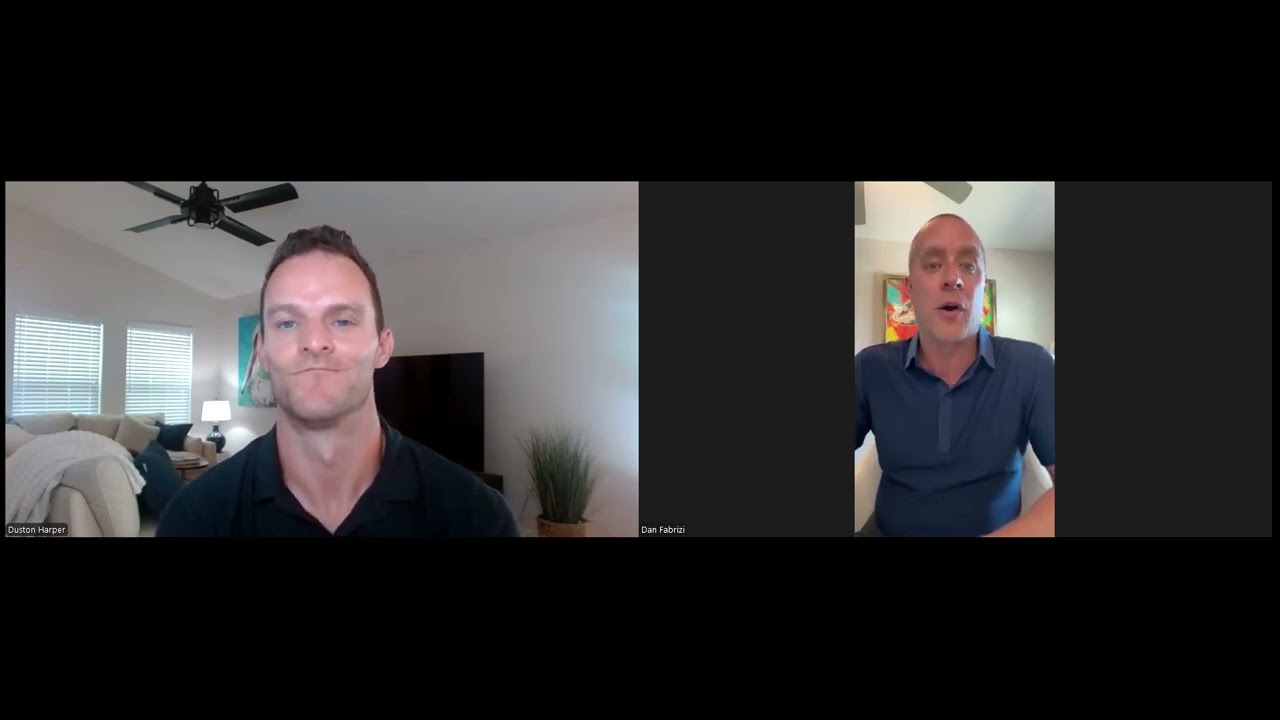
Dan Fabrizi, a senior-living sales leader in Tampa, sells healthcare by focusing on clients' pain points rather than his own agenda. He built the ROSE Program, a palliative-care service for senior communities, using a four-step implementation process and partnerships like Woundology. He stresses patience, education, and making every conversation about the customer.
Chapters
Dan, good to see you, buddy. As a way of getting started, tell us a little bit more about yourself and your background.
Yeah, it's good to be here, man. Thanks for having me. Um, when we do a pod, I'll have to have you on and we can reverse roles here. Um, so yeah, I am originally from Pittsburgh, Pennsylvania. Um, lived there the first 27 years of my life. Uh, moved down to Tampa in 2013, um, with a very distinct plan of never going back to Pittsburgh. And 13 years later, here I am. I'm still here. I live just outside of downtown Tampa. Absolutely love it here. This is absolutely my home going forward and will be my home forever. I don't see myself living anywhere else other than here. Hopefully we'll have a second or third home other places, but not my primary residence will always be in Tampa. I love it here so much. I think you could probably relate to that. You're kind of a newbie here. But yeah, man, 13 years after moving here, it still feels like I just moved here. I can't say enough good things about the area. No doubt.
I completely agree. I'm a little bit over a year, so still a lot to explore, but there's— it pretty much has everything you could want it to have, and there's no reason to go anywhere else, the Tampa-St. Pete area. Uh, so from a professional standpoint, I know you've been in Tampa for quite some time. I think— I know you're in sales right now, but tell us a little bit more about just your background career-wise and then what you're doing now from a sales standpoint.
Yeah, so I, I kind of came down here— it's an interesting story— I kind of I came down here without a plan. When I lived in Pittsburgh, I worked in urgent care for MedExpress for about 4 years. I also carried golf bags at Oakmont Country Club for 14 summers before I moved. And so I just reached a point where I was like, there has to be more for me somewhere else. And so I had a buddy that lived down here and said, you should give Tampa Bay a try. And this was before Tampa Bay was even on the radar, right? Like all the stuff you see in downtown Tampa with Water Street, like none of that moved here. It was parking lots back then. And so I moved down here knowing that it had a really good medical presence here, and I had that kind of experience walking into it. And about 3 weeks after I moved here, I started working in senior living with home health, which never in my life did I ever think that would be my career path. Um, but what I found out pretty quickly was I was very niche in that market being a younger male, um, walking into a lot of these marketing events, and I kind of saw a lane where, you I can probably make some noise in this industry. And so over the first 3 or 4 years, I worked across all levels of care in senior living. So I went from home health private duty to home health Medicare to assisted living to independent living, and then to a skilled nursing community that led me to oversee an entire what's called a CCRC, a continuing care retirement community. And then I linked up with my former business partner at that point, who I'm still good friends with, and we started a management company. for that individual building, got involved in what was a bankruptcy process and went to court, was able to buy one half of the campus out of bankruptcy, which was an assisted living and skilled nursing. Across the street was independent living that was bought by somebody else. But our timing was perfect because we ended up discharging the residents out of our skilled nursing because we just— oversight in skilled nursing and senior living is really tough. And so when we discharged our last patient was March of 2020. which was right before COVID And so we got a call from Governor DeSantis's office about running a COVID unit out of our building. And that was when nobody really knew what it was, and all we knew that it was really bad. And so in about 4 days, we converted our first floor of 120 beds into a mass COVID unit. And what we did was, is we took residents from other senior living communities in Tampa Bay, residents that were testing positive for COVID, but were asymptomatic. And so there was no reason for them to go to the hospital and clog up beds for those people that actually were sick and needed, you know, ER attention. In about 11 or 12 months, we saw over 1,200 people and not a single resident died under our care. And so we really were successful with it. We got paid beaucoup money from the county to run it. And so that led to my business partner and I expanding out into what was Seacoast Health Systems. It still is Seacoast Health Systems. And so, we bought, I think, 7 or 8 buildings across 4 different states. I was the senior VP of that company, kind of running things from a 30,000-foot level. Kind of hit a wall after doing that whole thing for about 10 years and left the company and started a real estate business and was going well. Was doing flips with a developer that I'd met through a friend of mine, did 7 projects that were going amazing. And then, those storms hit. And you saw the ugly side of real estate, of what happens when 2 catastrophic storms hit. Everybody panics, insurance rates go up, flood zones change, a market dips. And I got my ass handed to me. And simply put, that's what happened. And I'm pretty transparent about that because I do talk to people still about the real estate space. And when it's good, it's really good. And when it's bad, it's really bad. And so I had an opportunity presented to me from a really good friend of mine who I've known for about 6 years, Dr. Dave Timmons. And he is the CEO and medical director of the ROSE program, who I now currently work for. Dave came to me and said, look, we need a guy in Tampa Bay that understands the senior space, that can really get out there and market this product. And what the ROSE program is, is the nation's only— as far as we know, we know it's the most successful. We're pretty sure it's the only standalone palliative care company in the whole country. And so it gives us a lane in a trillion-dollar industry that nobody else is doing. And basically, Dr. Tim has just found a lane that palliative care— about 80% of residents in senior living are eligible for palliative care, and they don't know it. And so I was brought on as a regional sales marketing director to get the product out, right, to educate the community, help them understand the resources that are available to them that they may not even know that are available to them, and help them understand that it's free of charge to them. It goes through Medicare, it goes through insurance. There is no charge to the resident, and we are staffed with nurse practitioners. And we're, as far as I know, the only specialty service in senior living other than primary care that's staffed by nurse practitioners. Now, you'll have wound care that will have nurse practitioner oversight, but day-to-day seeing residents, we see them with nurse practitioners, and it's very unique to our industry. So just in the short time that I've been with them, about 7 months, I have about 20 buildings pending, over 2,000 beds pending just in the Tampa Bay area. Went up to central PA where my family lives, went to 10 face-to-face meetings, all 10 committed to using us going forward. So it's a really exciting time for the program. And the biggest thing for me as it pertains to the Rose Program is like, yeah, the program is great. We, like I said, we found a lane that nobody else is doing. But more importantly, I think with the team that we have on the ground here, we have the ability and the opportunity to systematically change patient care across the entire industry in senior living. And I can tell you, it's an industry that needs a reboot because it hasn't really changed much in 20 or 30 years, and the next generation coming through is not going to accept that. So we are currently collaborating with a lot of people to say, let's come together, let's put our smart brains together, and let's change this entire industry. And that's where we are right now. Nice, man.
I appreciate you sharing that. I definitely have a lot of real estate horror stories too, so we could do another podcast on that, but we'll save it.
Yeah.
On that one. But, and then on the healthcare side, curious if you go a little bit deeper there, because there's a lot of people are like, oh, I want to break into med device sales, or I want to do this and do that. And healthcare is just, it's such a massive industry, and every little vertical has its own niche. You have, you know, selling capital equipment, you have doing wound care disposable products, you have what you're talking about with senior living. And each, there's 30, 40 verticals that are all completely different. But in general, I think healthcare is hard. It's really hard to get change done. So could you talk a little bit about just selling in the healthcare environment? Is it really hard to get things done? You know, what does the sales process look like? That type of stuff.
You know, it's a good question. It's actually not a question I've ever been asked before, and it's something that I ponder all the time. It's a double-edged sword, I'll say that. So the tough part of— and I'll just keep it very basic to senior living because that's kind of what my wheelhouse is. And I think this kind of extends across the whole industry of healthcare in general. Is it is a knowledge-based industry. So like, if you come into a senior living marketing event and you kind of stand up and it kind of comes off like you don't know what you're talking about or you're new to the industry, like, yeah, people will be nice to you, but it's hard to be taken seriously in an industry of ours because everybody inside of our— like, it's a very fluid industry in the sense that people bounce around a lot, but they stay inside of that senior living umbrella. So you You have a lot of people that will bounce from job to job. They'll be chasing money or they'll be chasing a better opportunity. And that makes it tough because it's hard to trust people when they do that. And again, it's an industry that's very concentrated with people who have been in it for a long time and understand the ebbs and flows of senior living. However, as I went to on my original point, I mean, I walked into the industry with absolutely no clue what I was talking about. And I just basically implemented determination. I did a lot of offering and research myself, I figured out, like, what are people's pressure points, right? When I walk into buildings with a program, and whether it's the ROSE program or I was marketing for a community in skilled nursing to fill our beds, I really figured out what are people's pain points, because I don't think people spend enough time looking at that and addressing people, because I think people go in and say, I'm here for Building A, you have residents, you know, help me by giving me residents. But no one asks the question, How can I help you personally? And I found out pretty early in my career that I had made it less about the building that I worked for and more about the people I was working with. And when I started to learn again what people's pain points were, what they were interested in, and who's doing what, and can I do it a little bit better, can I do it a little bit differently— it's a really cool industry in the sense that you have pretty— if you're an outside sales guy in senior living, you should— your building should give you complete autonomy to To do it the way that you see necessary, because senior living is definitely not a one-size-fits-all. Every building is a little bit different in their own ways, and their marketers should be that way too. So I found it pretty early in my career that I got a little creative on how I did my sales and marketing role. I became a super resource for all of these places. Like, if my building couldn't do it, I knew 5 or 6 other buildings that could in different ways, and I would take that referral. See if I can facilitate it first, and if not, I would kick it out to the buildings that I make collaborations with. The major reason why I've been successful in this industry, communication and collaboration. If without those 2 things, you will drown in this industry, you'll be put on the back burner, and people won't talk to you or care about your products. So thankfully, I've had a lot of education and experience in this field because it is paying off now with the ROSE program, because that's our biggest issue right now is not enough people know about our services. So my biggest thing that I do is education.
That's great, man. I mean, what you were describing there is making it about them, not about you.
Yeah.
What is their personal win, right? You can talk about your deal or your program, but what do they get out of it? Does it make their life easier? Does it make it harder? Is it a change? I mean, that's the stuff that people— you tend to get stuck on your own business, your features, your benefits, your service, but that doesn't really matter as much. It's more about The change part of it. How does that help them? And being like a partner in crime. What you're describing there is being a partner in crime in a good way and, you know, making it about them. And then, and then it sounds like you really know what your differentiators are. So you said a few things. I think obviously being male, you know, that might be a little bit of a differentiator.
Yeah.
Being collaborative. But do you really try to hone in on that for yourself? And then do you see, is that like a good way to be successful, you think, of like knowing how you're different and trying to stand out?
Yeah, in the industry that I'm in, I think it's the number one thing that people should be doing that they don't do enough of. I'll give you an example. So like yesterday, I had— well, it was Tuesday. I had a meeting with a large skilled nursing group, right, that is really, really hard to get in front of, right? They just— they're not very open to outside conversations. They have their tight-knit group of people that they work with, they've worked with in the past. But what I did was, is I identified what was one of those groups that they work with, and it just happened to be somebody that I collaborate with all the time. And that's called Woundology. And so Woundology is a mobile wound care clinic. They go into post-acute, ALFs, memory cares, and they do wound care. They're in some of the buildings that we had the dinner with, and I would have never in a million years had the— as good as I am at what I do, there's no way that I could have gotten in with these guys because they just They don't know me, and I really don't know them. Therefore, I didn't have a chance to get in front of them. However, I leveraged the collaboration I had with Woundology. Woundology went to this group and said, hey, Rose Program is standalone palliative. You guys need this in your communities because they are one of the few skilled nursing management groups that have a locked memory care unit for dementia patients. And dementia skilled nursing is probably the hardest subset of senior living that there is. So we had dinner with them, we got in front of them, we explained our product, and now we're moving forward into implementing into possibly 37 of their skilled nursing communities, starting in the locked memory units. And then as they see our services and how beneficial they are, move us across their entire platform. If it wasn't for the collaboration I had with Woundology, that meeting doesn't happen.
No doubt. And you don't always see it in the moment, but it builds up over time. You're, you know, having that giving mentality. You're connecting people even if it doesn't benefit you. Yeah, eventually that usually comes back around, although you shouldn't just rely on that. And then what does the process look like? You mentioned, you know, you sign people up, then you have to implement, then it takes time probably to get some momentum. Is it a long process or is it short or what does it look like for you guys?
It's funny because it kind of depends on the building. So my process, if I had it my way, would take 2 or 3 weeks. But unfortunately, the senior living space doesn't move at that speed. And so I'll give you the basic, like, what it looks like when I walk into a building. So I walk in, have the initial conversation. I think my close rate is north of 90% because, again, it's free to the residents, free to the community. It's an extra add-on service. We're consultative-based services, so we don't sign contracts. What we do is very, is very easy implementation on the inside. But there are things that we need from the building in order to move it forward. So if I come in and they like the initial meeting, the second step is I ask them, is there any specialty docs or primary care in-house that would have a problem with our services? Because I think one of the misconceptions of palliative care is 2 things. One, we're going to come in and take those patients on a primary care level. We don't do that. We only want to do palliative care. The second kickback that I get is everyone thinks we're hospice. And let me say this very clearly, palliative care is not hospice. It isn't. And so having to talk to some— and I've had plenty of conversations with hospice companies that see the benefit of having a palliative care resource that isn't doing hospice on their team. And so we've done a lot of collaborations recently with hospice because they have a little bit of a hole to dig out of too, given what's, you know, being said in the news and some things that were done by companies prior to them that kind of give hospice a little bit of a black eye. But partnering with us definitely helps that. So come in, have a conversation with docs, make sure everybody's on that page. And then the third step is I like to go in and talk to the actual residents because it's one thing to pitch it to the members of the community that work there. But you got to make sure that the residents are on board with it too, because if they're not on board, you're not going to get any— you're not going to get a census. And then what's the point of coming in? So I usually do a Q&A. I'll bring food in, drinks, and we'll have a conversation. We'll get people signed up on the spot. And then the last step is hiring a nurse practitioner for that area that can work in that area, implementing them into the building, and then starting services. So it's about a 4-step process that could take anywhere from 2 or 3 weeks to 3 or 4 months. It depends on how quickly and ambitious a building is on moving forward with that 4-step process, because I might say, look, like, I need to come in and do a Q&A with the residents, and they might say, cool, come in next week. Or they might say, we're booked out until mid-June, then I gotta wait 6 weeks to have that meeting. And we work things on the back end to hire a nurse practitioner during that time. So it's all dependent on the building itself and how ambitious they want to be with getting the services started.
Makes sense. Yeah, there's always a lot of moving parts in healthcare, and sounds like it can be, it can be pretty quick if the timing's right, but otherwise it takes a few months. Which, that's actually a good next question for you, is with healthcare in general. So my— I did med device for a while. My dad's a doctor, my mom worked at a hospital as an administrator. I have a lot of friends in the industry in different facets. It can, uh, it can, it can wear you out at times, let's just say that. With healthcare, you get beat up a little bit, you see some Things that aren't always great. But on the flip side, I think a lot of people that are in it, at least for most of the time, are really passionate about what their product or service does, like how it helps people. Does that keep you going? Or I mean, what do you see with the passion side? Do you think if you're in healthcare and skilled nursing, excuse me, or in senior living, do you need that passion to keep going? Doing well and thriving, or what's your perspective on that?
Yeah, I mean, it's a great— it's a great question. And let me start by telling a little bit of a personal story. So when I was going through a lot of the stuff with real estate and a down market, and flipping is tough when it's a down market, you know, it was tough, right? Because I am— and you know me, like, I am a very social person. I'm very extroverted. I like being out doing things. And with the real estate market the way it was, it was hard, right? Like, there wasn't a lot going on. A lot of people were sitting on their hands, not making a lot of moves. And I felt a little bit isolated by that. I'm someone that likes to be in front of people, talking to people, making stuff happen. So when this opportunity presented itself, obviously I was excited about the idea of the Rose Program and palliative care getting into these spaces. But what I was more excited about was getting back into the community and talking to people and going to events and, you know, kicking ideas off each other and figuring out like, where's the collaboration or where can we make this work? And being a part of a team again was really great. You know, it's tough with senior living because I feel like it only goes one of two ways. It's either really good or really bad. Um, people are either 100% in and fully dedicated to the process and willing to help out and, you know, throwing events and being good partners in the community, or you have people that are just in it because they think they can make money. The people that think they could just make money on senior living— you can make money, don't get me wrong. As a sales guy, if you do well, you can make 6 figures easily. It doesn't matter what your level of experience is, you can make good money in this industry. But if your head and heart is not in the right place, one, you'll get exposed really quickly by the people that are passionate. People like me, who, when I walk away from this in 25, 20 years, whatever the case may be, I want to be able to leave my stamp on something, and that's important to me. And I want to do it with people that share the same type of attitude that I do. If you don't, you get pushed to the back and nobody talks to you. So Can you burn out? Of course, man. Like, there's a lot that goes into this. There's a lot of conversations, there's a lot of education, there's a lot of breaking down barriers and changing. I mean, think of senior living. It is a trillion-dollar industry that really hasn't changed much in 25 years. So coming into this landscape to try to rattle people's cages and shake things up, get them to see things not as we are right now or where we've been the last 20 years, where are we going to be in 10 years? In 5 to 10 years, you have the Woodstock generation coming through. That is a different clientele than what is in these buildings right now. They're gonna have to up their games. They're gonna have to bring in AI. They're gonna have to change their marketing strategies. And trying to rattle the cage in a trillion-dollar industry is not easy. But we stay at it and we collaborate and we try to make it happen. There's, of course, there's times where, you know, it's like, oh, another marketing meeting, another, you know, I gotta go talk to 25 people and say the same educational spiel 25 more times. You get beat down by that a little bit, but man, when the wins come, it makes it all worth it. And there's a lot of wins to be had in this industry. We need to get more young people involved with this industry because again, if you do well, you can make good money. But this is an industry where you can see and feel tangible impact, and it's hard to find across the spectrum these days.
Well said. Yeah, no, I totally agree. And you just gotta— if you have that passion, you can, you can see it, you can sense it. If you don't have it, You will get exposed for sure with whatever you're selling, right? It doesn't have to be healthcare. It could be anything. Healthcare is a little more personal, right? Because you're dealing with patients and people's lives and you see a lot of uncomfortable things. So on that note, so like there is a lot of ups and downs though, right? It's a roller coaster. You were talking about it, especially in healthcare, whether you're in sales, marketing, etc. When you have those tougher moments or maybe tougher seasons, like how do you deal with that, right? You mentioned the real estate stuff and all that. Do you do stuff? to stay sharp otherwise? Like, you know, working out, mindset, like any stuff you do to like, because it's gonna happen, right? It's not, it's inevitable that you're gonna have some tougher times in sales or whatever it is, but you have to navigate those. So how do you do that?
Yeah, I mean, I, a couple things. I mean, I like to think that I have a lot of good hobbies. I do try to go to the gym. I mean, I just turned 40, so it gets a little bit tougher as you get a little bit older. But you stay at it and you— I could say that every time I work out or take the dogs for a walk, I feel better. You know, my— I'm blessed to have a significant other who is involved in the nonprofit space. So, you know, she brings me into a lot of that stuff and she's amazing at it. So I get to meet a lot of cool people, get involved with other foundations that maybe don't even have anything to do with senior living, and some do and some don't. But, you know, what I think is one of the things that I really do enjoy is Talking to people across different industries because I love picking their brains about how they do what they do. Because I do think that, and I think you would agree with this, that most salespeople operate under the same type of terms. It just depends on what industry they're in. And you can learn things from people that have been successful or have failed. You know, through this real estate thing, you know, it's been tough for me, but I've had a lot of people that I look up to and respect tell me, look, man, I've never met a successful person that haven't had a downtime. So like, that's part of the journey. And I think that was one of the things As I was going through it, that really, really helped me take a step back and say, this is part of the process. Like, it's never going to be all good all the time. And so to be able to talk to guys, even like, you know, the CEO, Dr. Dave Timmons, who's a good friend of mine, be like, dude, you think that it's been good and easy for me my whole life? Like, I have gone through some serious valleys in my life. And hearing that from a guy that I massively respect and looked up to, who is doing really, really well now. Gives you some encouragement. So, I mean, I love hockey. I'm a huge, huge diehard hockey guy. Golfer, as you know, love playing golf, even if it drives me nuts sometimes. Have 2 dogs that I love. I have a great immediate family. They live in Hershey, PA. We talk all the time. Again, I'm in a very healthy relationship. So you just gotta— The senior living, the work thing is just one aspect of who I am and what drives me and what keeps me going. If you got to have those other pieces because it's not always going to be sunshine and roses on the work front. Honestly, more often than not, it isn't. So you got to have things to fall back on. And I think I've done a pretty good job in my life of making sure that I've had those pillars behind me, that when one or two things, even in the real estate space, when I was going through that time, I still had really good friends and a good relationship and good family and good hobbies to kind of keep me level and to help me get through to where I am now. And now that we're through that, it's time to get after this Rose Program thing, which I'm really excited about.
Appreciate you sharing that. A lot of good gems there. I think what you were describing was working to live all those other areas of your life that are, you know, going really well versus living to work. And we all fall into those traps at times. And then, yeah, it's like we're all gonna have those valleys. And if you don't have them, then I'd probably question if you're telling the truth.
What are you doing?
And the reality is you learn way more from the tough times. I know it's cliché, but you learn those hard lessons. As long as you're not repeating the same things over and over again, You— it usually points you in the right direction. And, and learning from others that are open about it too, and, and, and trying to learn from others' mistakes. So yeah, I'm, I'm right there with you. I, I wouldn't be where I'm at if I wouldn't have gotten punched in the mouth multiple times. And, and it's, and it's not going to stop, right? It's not. Even when things are going great, you got to be like grateful of like, okay, hey, something, something might change here a little bit if, if everything's humming.
Yeah.
Uh, there's periods like that for sure, and you got to be grateful. But it doesn't, doesn't always last. So, uh, one quick pivot because you mentioned it earlier and I, and I do talk about this quite a bit is AI, right? Everyone hears about AI. It's nonstop every day. It can be overwhelming. It can be exhausting. It's, it's confusing at times. But the reality is we know it can help us probably in a variety of ways, especially in sales or business development, et cetera. What's your thoughts on it? Have you been using it? Do you see it starting to disrupt your industry? What, what have you been seeing?
Yeah, great question. And I'll be honest with you, man, prior to 8 months ago, I never used AI, right? It was just something that wasn't on my radar as much as it maybe should have been. Once I kind of stepped back into the senior living space where I know not a lot of people are using it, I think people in the sales and marketing fields and the guys and gals that are out talking to these buildings, I think they are using it. But I guess I never really understood or perhaps underestimated how useful it can be. And I can tell you that the ROSE program in the next couple months is going to go through a complete rebrand. And AI has been so helpful for me in creating at least a concept to send over to Dr. Timmons and really start to pick through what do we like, what don't we like, what do we want this to look like, what's the color scheme look like, what's the new logo look like, and then creating marketing materials based off of that logo and things we can start to implement in our communities that You would have to pay somebody a full-time salary to come up with this stuff. And in an industry where margins are already pretty tight across the board, I mean, our margins in ROSE Program are real tight. And so anything that we can use at our own disposal that helps save us money, but more importantly, helps save us time. I mean, I was able to put together a full rebrand plan of an entire company, 3 hours. When that could take an agency a week, that could take a full-time employee that was doing it manually a week or 2. I was able to do a full rebrand in about 3 hours. So, I think it is going to change the senior living industry because, again, margins are tight already. Anything that anybody can do to save time and money is going to benefit them. And so, although it is still a relatively older— as I mean, like, people that are working in the industry, it's a little bit of an older generation. Everybody's gonna have to get on board because if you don't, you'll get left behind. And so I have definitely seen the perks of it over the last 7 or 8 months, and I will continue to use it going forward.
Yeah, that's right. That's a great example there of where you'd have to find a consultant or some agency, and it would probably not cost, or it would cost a lot of money to get what you're talking about.
And, and it's, yeah, it's, it's, it's, you know, what is monotonous?
What is holding you back? What is something admin related that you're doing all the time that drives you crazy? That's the stuff that AI can really help with, or projects like deeper projects, scope of work. I created a website with AI that took me a few hours versus months of pain and frustration years ago when I tried to create a website. So all these applications, I think you got to get in the game, right? You can't— if you try to fight it, technology's undefeated. You can't fight something like this. You have to figure out how does it help you and what are the most practical, easy places to start. So I agree, man. All right, couple, couple more things for you. If— and this is kind of just overall— if you could go back to your 20-year-old self or earlier in your life and give yourself some advice on— it could be on business, could be on sales— what, what, what advice would you give your younger self?
It's probably advice I give to myself right now. Um, be patient. Uh, you, you got to trust the process, right? And I think that what I've learned a lot in the last couple years Um, is that karma is a big thing. Um, I really do believe very heavily in karma. If you put a lot of good out, you're going to get the good coming back, and it may take time. Um, I am always somebody that I want it done yesterday, and that puts a lot of people off because I'm just a naturally assertive, aggressive, want to get things done right now type of person. And not everybody moves at that pace, and it shuts a lot of people off. So, um, I would definitely tell my younger self, just be patient, man. Like, I I think I know what I'm doing. I have a pretty good head on my shoulders. I put a lot of good out into the world. And sometimes I think it should come back a little faster, maybe even a little better than it does sometimes. But again, that's life, right? Like, not everything comes back the way you expect it to. But I still am a little bit to this day, a little bit impatient because I move so quickly. I have this— I am blessed with the ability to do 15 things at one time and do most of them pretty well. But yeah, I know that most people don't move at that speed and sometimes you can put people off to what you're trying to do. So Patience is such a virtue and it's something I'm still working on every single day.
Yeah, it's a lifelong journey with patience. I think most salespeople, most business leaders are probably not patient and you have to really work at it, you know, same as like the mindset and all the stuff we talked about. So yeah, I like that for sure. And then lastly, what, what is something you're really excited about the rest of the year? It could be personally, it could be professionally. What, what's something you're really looking forward to?
Yeah. So next month, some things are going to change with the ROSE program where we're gonna have some capital coming our way. And just the thought of what we've been able to achieve so far, kind of as a skeleton crew. I mean, we only have 4 reps across the whole state of Florida with kind of a guy who was kind of the OGs of the company, does clinical and business development. He's all over the place running around trying to make stuff happen. We're in 95 buildings now in the state of Florida, and that is all organic. Like, We have been on boots on the ground, going to these buildings, having these conversations, working with a skeleton crew. And I do think that once some things happen in the month of June, we'll be able to expand our practice and start to draw in new people to come and work with us and to really get this program out. Because again, I go back to, I do think that the ROSE program is something that can systematically change the entire industry. And the thought of that is exciting, but I think that Once we kind of get the resources that we need in order to hire more people and get some more marketing materials out and do more events and be presenting sponsors at some of these conferences coming up. The summer should be really, really great for us. The, the Dr. Timmons, who had another business, he's now able to focus on this one more. His expertise is going to be vital in this process. We are a team that's ready to start turning and burning, man, and it's a really exciting thing to be a part of.
Love it, man. I'm sure everything's gonna go well. Looking forward to seeing the the momentum and everything you're talking about. If people want to get a hold of you or get a hold of the Rose program, what's what's the best way to do it?
Yeah, so we we don't have any kind of social media yet. I am currently in the process of facilitating that and figuring that part out. That'll probably be coming in June as well. But in the meantime, you just look me up on Instagram, Dan Fabrizi. I think it's DJ Fabrizi. That's kind of my main source. I'm not real big into social media, but I'm on Instagram. The Rose Program will have a new website here very, very shortly. But yeah, follow me on Instagram. I'll be posting updates, you know, relatively soon about what's coming online. But I'd say in the next 2 to 3 months, we'll have a full social media presence. It'll be the Rose Program. Social media, website, maybe a podcast coming up that you'll be a part of. Yeah, we really I think if I could finish with one thing, I think the—
Yeah, go ahead.
Gap is the biggest gap in senior living as to why things are the way it is, is because it's not mainstream. And it's just one of those things that it is a massive industry and not a lot of people know much about it because nobody's talking about it in a mainstream format. And so that's where I'd really like to see the ROSE program going, because again, at some point in our lives, if we were lucky enough to live to be this old, Senior living is going to be an option for all of us, and a lot of people have no idea where to start or what it entails, or what, what do you have to do with insurance, or what do I do with my assets? All of that stuff is super important because if you live to be 70 or 80, senior living will become an option in your life, and it'd be better to be educated than not be educated. So it's my goal to really start to make senior living mainstream, talk about it with people across different industries. Get the exposure up, get the excitement up, and get more people involved so we can move this industry forward and make it a really exciting resource for people our age in the next 30 to 40 years. And make it something where people feel comfortable going into it and get rid of the stigma that, you know, you go into an assisted living to die, you go into a skilled nursing to die. It's not true. Across many of the platforms of the people that I work with, people get better when they go into these places. They're happier, they're out of isolation, they make more friends, they go to activities, they eat good food. They're doing things that they weren't doing living in isolation at their home by themselves. But nobody hears these stories because nobody's on a mainstream platform talking about it. So that's where I'd really love to see this go, and I would love to be on the forefront of it. And we have such a great team, man. I can't tell you how good our team is and how much better it's going to become in the future. It's a bunch of people that really, really care, and it's a bunch of people that want to change the industry. So I'll leave it at that. I'm looking forward to talking more about in the future and bringing people in. If you're in a different industry and you want to learn more about the senior living industry— and I forgot about LinkedIn— look me up on LinkedIn, Dan Fabrizi on LinkedIn. Let's chat, let's get together, let's link up, let's have some coffee, and let's talk about it. That's the only way you make changes.
No doubt, man. Appreciate you for sure, and I totally agree with everything you're saying.
Yeah.
More from Duston
Bobbie Rachford on Building Better Biostats | Fractional, AI in Clinical Research & Founder Truth

CRO Brett Godwin on Ownership, Pipeline Habits & Wealth #sales #salestips #salestraining #ai
68% of Sales Reps Think Client Drinks Are Essential. They're Wrong. #sales #salestips #alcohol

The Hardest Sales Interview I Ever Had — The Stryker Gallup #sales #salestips #stryker
My First Sale Was a $1,000 Cutco Knives Set - To My Own Dad #sales #salestips #salestraining #cutco

Why Hiring - not Coaching - Is a Sales Leader's #1 Job | Shaun Priest, Promptly #sales #salestips
How Zain Hasan Scaled a Company to $14M ARR, Walked Away with Nothing, and is Happy #ceo #ai #sales

Hannah Pencek on Sales Process, Leadership & the Real Role of AI in Sales #sales #ai #podcast

Solve Problems, Don't Just Sell with VP Ryan Messer of Meridian Insurance #sales #ai #insurance

Jeremy Clarke CEO of Quin: Digital Human Assistant That Gets Work Done for Sales Reps #sales #ai