How Zain Hasan Scaled a Company to $14M ARR, Walked Away with Nothing, and is Happy #ceo #ai #sales
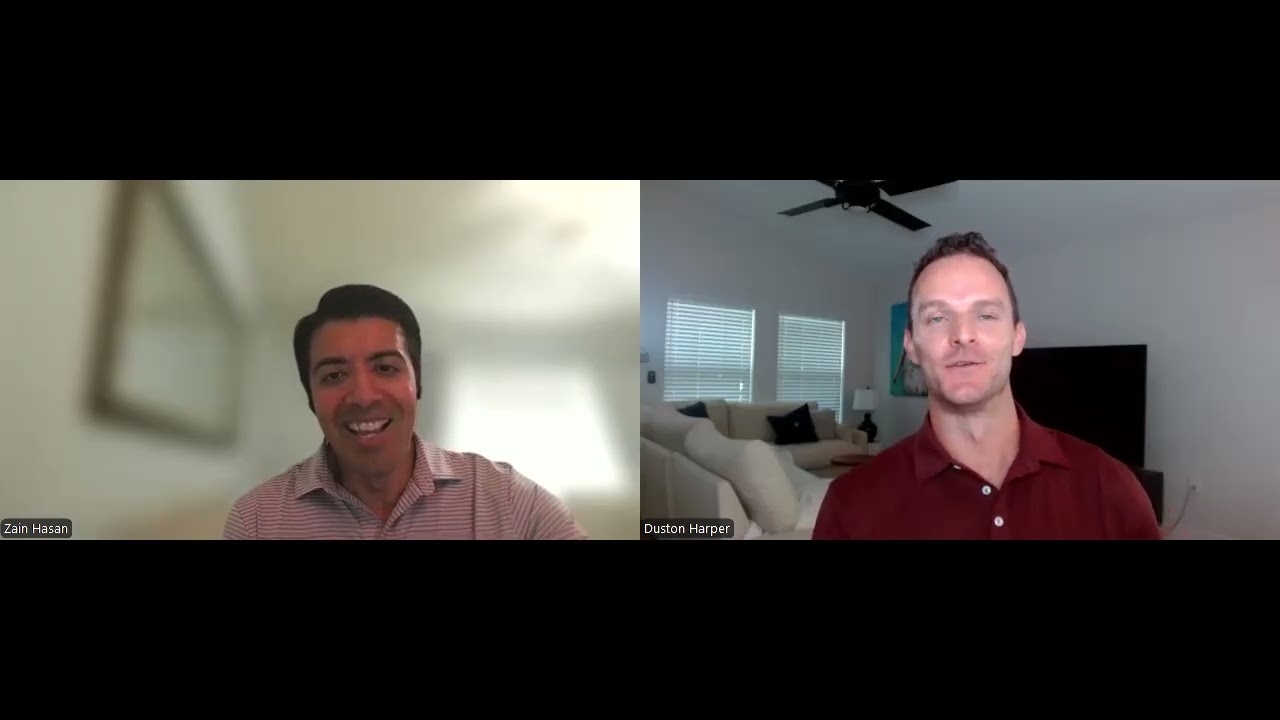
In this interview, Zain Hasan (referred to as Zain) shares his journey from a health insurance sales role at Cigna to becoming a serial entrepreneur who founded, scaled, and exited five companies, including a $14 M ARR venture he ultimately walked away from with no equity. He discusses the hard lessons learned about scaling, cap tables, and private‑equity dynamics. Currently, Zain serves as Chief Growth Officer at the publicly‑traded Health & Tech, an AI‑enabled underwriting platform that reduces group health insurance quote times from weeks to minutes. He explains how AI, especially agentic tools like Claude, has shifted his daily focus from information gathering to decision‑making, and how it reshapes sales preparation, authentic buyer relationships, and the overall sales cycle. Zain highlights the post‑COVID evolution of sales, emphasizing AI‑driven research, marketplace models, and the need for curiosity and adaptability in sales hires. He shares his coaching philosophy—only stay with reps who are more committed to their success than he is—and warns against over‑investing in under‑motivated people. Governance and change management are framed through personal example: leaders must model AI adoption themselves. Zain also talks about his prolific angel investing (210 deals in three years) and plans to launch a formal fund focused on AI, robotics, and “physical AI.” A near‑death experience in 2025 reshaped his outlook, leading him to seek work that feels like a hobby and to pursue flow states. He ends by expressing excitement about the upcoming fund and the broader AI revolution.
Chapters
Zan, good to see you, buddy. As a way of getting started, tell us a little bit more about your story and how you got to where you're at today.
Yeah, no, appreciate it, Dustin. It's always, always a pleasure getting a chance to catch up with you. Um, all right, my story. So I started out at Cigna Healthcare, um, in sales, uh, really focused on selling health insurance plans, uh, and I got to a point to where I realized pretty quickly that I wanted to start my own business, and then I saw an opportunity to drive the value down for employers. So what I was doing is I was selling to insurance brokers, and I saw that I could build a brokerage and felt very confident that I'd be able to do that well. So I started my own brokerage. Long story short, I ended up starting a brokerage, a payroll company, and 5 companies altogether. I started, scaled, and sold all 5 to private equity firms. My most ambitious project was I merged 6 agencies together without cash and then was able to raise $33 million from private equity to recapitalize the company and roll that forward, then did another 6 acquisitions. And long story short, I ended up with a near-death experience, which put me in a position, and this was last year, it put me in a position where I was essentially taken out of being CEO of my own company. And then I got found— I just called a buddy of mine, the CEO of Health and Tech, which is the company I'm at now. It's a publicly traded company, and now I'm the Chief Growth Officer here. So, um, at the same time, I've been investing heavily in startups. Uh, I've invested in 210 companies over the last 3 years, so I keep myself pretty busy.
Yes, sir. Sounds like it, man. That's a lot of good stuff going on. Going back to the 5 5-time founder, I guess 5-time exit as well. That's pretty rare because I feel like there's always a lot of things that happen in between there. What, which one stands out the most? Like, that was the most exciting. Was it the first one that you got it to the finish line or what stands out the most out of those 5?
That's a great question. So what stands out the most is actually would be the last one. So although I took a company from 0 to $14 million of ARR, I actually walked away with 0. So it was a big loss. It's like you can learn everything on how to scale a company, how to grow a company, and the idea of revenue solves all problems, but scale exposes meaningful problems that you don't necessarily see early on. And scale exposes things like the cap table and the capital stack, meaning where returns sit if there's an exit and some of the details of working with private equity. So that was It was a big learning lesson to see. I mean, my first business, that was certainly to me, that was a big highlight that returned 68 times the initial investment that then early investors invested with me. And obviously, like that first exit, it helps you understand the world of exiting. And by now it's like acquiring and exiting are very similar and it's just sort of become part of my normal daily life, it feels like.
That makes a ton of sense. I mean, you, you've had so much success, but there's still going to be some battle scars along the way, and, and I'm sure those, you remember them sometimes more often than the successful ones. But that, that's amazing. So a lot of good value to the audience. As far as what you're doing now, you mentioned Chief Growth Officer at Health and Tech. You also do quite a bit of investing. Can you explain a little bit more about just what you guys do at Health and Tech and, and what else you got going on?
Yeah, absolutely. So at Health and Tech, I think my job, I look at it as allocating attention. And when I say allocating attention, it's 20 years ago as a growth leader, I would've spent most of my day gathering information, right? And today, because AI does all the information gathering, I spend a lot more time making decisions. A typical day for me is like coaching sales leaders, it's reviewing pipeline, it's bringing on M&A opportunities, It might be talking to analysts because as a publicly traded company, a lot of our growth and things like that, everyone on Wall Street would want to talk about. And then, yeah, separately from— so to me, a big thing with AI and the day-to-day is that now the focus is on heavily— it's elevating because the preparation of what it normally took before and the amount of time it took to get reports, that's all automated. What's not automated is the human interaction and building real authentic connections. And then simultaneously from the investing side, that's just because I love being around founders and I love backing the founders that I think are going to change the world. So I've been investing for a while in AI, robotics, and areas that are— whether it's AI, machine learning, robotics, or the hardware, or what I call physical AI. But those are kind of two different, two different things that I tended to do both. One's a hobby and the other one's just my full-time job.
I definitely want to dive deeper into the AI side of it and how much time it's saving you to do the execution decision-making, because that's super relevant for leaders, but also for the individual contributors, which we'll get into because they should be spending time customer-facing. But okay, great. So a lot of momentum at health and tech and some other exciting things going on. Shifting a little bit more towards sales, because you've seen it from every angle possible based off your experience. What do you think's changed in the last, I guess, 5, 6 years since COVID I mean, you mentioned AI, but what else has changed just in the world of sales?
Yeah, I think a lot's changed in that, in terms of really, it is the area of preparation, right? So if you think about it, like, I look at it as before you get on a sales call, like, there's, you now have the ability, if you're using AI, which if you're not, that'd be To me, that would be hard to fathom, like anyone not using AI given how much work it can do for you. And really it's just about, you know, you used to walk away, you'd do discovery calls and you'd maybe walk away with 20% of the information and then you'd have to figure out, okay, how do I get the next call? The always goal is momentum and moving the deal forward. Now it's like you can actually walk in with like 98% of the information specific to any given buyer. Before you walk into that room. But that's only if you're using the right AI tools. And so I think now it's everything is about building that authentic relationship. It's how do you establish a vulnerable, authentic connection with your buyer to know what matters to them so that you can understand whether or not your product can position them to achieve what matters to them. Because at the end of the day, that's the whole goal is trying to figure out, can I help you succeed in what you're trying to do? That's how I look at sales. It's like I'm just solving people's problems. Sometimes that problem might be like where it lines up perfectly is when what the problem I'm solving is also what they say they're— the problem that they're trying to solve, right? Is that the solution I have mixes? That's kind of where it lines up perfectly. But it's a numbers game. It's a volume game and its timing doesn't always line up perfectly. So it's about staying top of mind, you know, having a lot of thought leadership and marketing out there for your brand. But like, I think at the end of the day, the biggest thing is now you have the ability to multiply your impact because I think AI has changed the game of sales.
No doubt. And whether it be context switching or the meeting prep and research, there's just so much that can be automated for you now so that you can be the best version of yourself in front of the client, right? You know, the most energy at the right time. And yeah, give me more of those people that to solve the exact problem that I solve. I need more of that inbound. That would be great. And as far as your deal cycle, so currently now with what you're doing as a chief growth officer, maybe in the past, is it usually a more complex sale or is it a quicker sale? What does the sales cycle look like for you?
Yeah, I mean, sales cycle, so it is, we're selling to, so, and compared to in the past, it was like I was selling directly to the employer and And try it. Now I'm selling to a broker that sells to the employer. So the sale, it's more of like, you know, it's we're never typically selling one product. We're getting a broker on our platform. It's like a marketplace for them to be able to utilize so that they can easily get their insurance quotes for their clients. So the sale is less about selling a product to the broker. It's more about getting them engaged with the platform, and then the platform kind of does most of the. The— they're having them, their team trained, training their team on how to use it and making sure that they're using the platform to increase engagement. Because then for them, it increases— it reduces operational expenses. Excuse me. It reduces their overall headcount they'll need to do the work they used to do. Because we are an AI-enabled underwriting platform where now it takes 3 to 5 minutes to underwrite an insurance quote for large group health insurance. It used to take 3 weeks and it was really manual and required a lot of emails. So I think that's where this company really changed a lot of the industry. And, but we're so early on. I mean, we're still a small publicly traded company that's significantly growing because we're in an industry that's pretty legacy and antiquated, and not a lot of the companies in this industry have fully adopted AI.
Definitely, man. Makes sense. So some of it's disruptive, so you have to— it's trying to get the change management across and how much easier it can be, which, uh, with the legacy industries can be tough, and it can take years sometimes to convince them of that. And where do things usually get stuck or stall? Is it like, hey, trying to get people to get out of the status quo? Is it trying to get them to be open to change because they're more laggards? Or where is it? Where do things get stuck and go off the rails?
You, you, I mean, your first question, you said, is it trying to get them out of status quo? Our biggest competitor is status quo. It's not like there's someone else doing exactly what we're doing. It's just like, for whatever reason, because there's so many, these are large institutions, right? So it's like trying to get them to understand like, hey, what we're doing works. Sometimes they won't even give us the time. They're like, well, we're so busy with quotes. And I'm like, I know, that's why we're calling you because you're so busy with quotes. and we can make it so that you don't have to be busy with quotes at all. But they don't actually spend the time to even understand it then. It's like, all right, it's almost like we know that eventually everyone will be using this, but, you know, we might be a couple years or maybe we're 5 years ahead of the rest of the industry. So it's trying to figure out like who the right buyer persona that's willing to adopt this and then where we find engagement going deeper in those firms. But there's been so much M&A and consolidation in our industry that there's not a lot of firms to go reach out to. I mean, the majority of them are still owned by 35 large institutions because everything else that's independent has pretty much been bought up.
Got it, man. Makes sense. Makes sense. And from a leader point of view, it could be in your current role or just in the past, when you're looking to hire a really good individual contributor, really good sales rep, what traits stand out that you're looking for in the interview process? A few things that you're always looking for no matter what?
I think the biggest thing I'm always looking for no matter what is curiosity. Like, curiosity, not just in it being there, but like a demonstrable— and even in an interview, I want to hear them ask me a lot of questions that help me understand they did a lot of prep, they researched this opportunity before they got in here, and then they asked good questions that you wouldn't be able to find You know, online, like so that they genuinely—they to me—that's from a sales perspective. It's the same thing if I'm talking to a client, if if I'm talking to someone I'm recruiting, I'm looking for someone that's extremely curious and then very adaptable. Those are the two things because today I think adaptability with how much AI and technology changes what you may have to do or need to do. I don't want to have to untrain you as much on bad habits. I want you to already be proactive on. Trying to change your habits to optimize your time because now you everyone runs their own little business within in sales the way I look at it, right? And why would you not run your business in the most optimal way? The only way to do that is through curiosity and asking other people what they're doing and finding people that are doing way better than you to ask them. Like you can see a lot farther when you stand on the shoulder of a giant. So you know find a giant you can sit on their shoulders and. See what they're doing.
Love the curiosity, and I think that goes back to being authentic. If if you're genuinely curious, you can see that; you can sense it in a conversation, and buyers definitely pick up on that if they're just going through the motions or if they actually do care. And yeah, I mean, at the end of the day, that's table stakes. That last part you're talking about—that definitely in the future—it's table stakes because if you're not acting like a salespreneur, I call it, then you're going to be. Not in a good spot depending on what industry you're in and all the AI disruption. On that, on that note, you know, talk about individual contributors. I mean, it is hard. There's a lot of asks from corporate. There's all these tech tools that they're supposed to be using. It's hard to focus on deals that are gonna close. Like, what, where do you see reps spending time on the wrong stuff? Is it they get obsessed with busywork and they think that's actually moving the needle? Is it some of the other stuff you mentioned?
And so right now, and I'm just thinking about the experience I see the most, what I see the most is I feel like there's a lot less that level of like, you know, sometimes the what's working is so uncomfortable to them that like, and there are some people that have been historically very successful, you know, President's Club or top producers, they find themselves in a role where it's like, wait, now I have to do things or Like the people that are laying out a sales process that works might be completely contrary to everything they've done in the past. And so like, even though it's counterintuitive, it works if they, if it's already been shown it works. And so there's a hesitancy to do it. Like they're almost like, no, I'm still going to try things the old way. And I see that a lot and I'm having to coach a lot of people through. And my patience level, I mean, I think I have a pretty high patience level, but like, At the end of the day, when I notice someone's not going to change and then the results aren't there, then, you know, I, I believe you hire slow and you have to fire fast. So unfortunately, like, if I notice someone's not going to be adaptable because they, they were successful in the, you know, old school days where all the stuff that was available today is, is something that they don't necessarily need, but they're still focusing on it. And a lot of that's busy work. A lot of that is— What the things that they're proud of are doing things like understanding all the things you can do with an AI Claude inside an Excel. And that's still the area that they're spending a lot of time doing when the whole idea is like that, that is now very easily done and automated. And then another aspect is just the idea of like not doing the cold calls. Like I keep hearing all these people saying like, oh, if I find the right AI tool, I don't have to do the cold calls. I don't know about you, man, but I haven't found an AI tool that will let you not have to do the cold calls. There might be one out there. I just haven't found one yet.
There's definitely a lot of companies that market that, but does it actually work is the question on that. But yeah, so I mean, yeah, it's human nature. You're ignoring the hard stuff that you know you have to do, like cold calling, et cetera. Or they've been in other situations at really big companies and other people did that for them. I do think there's a comeback right now of just that all-in-one sales rep because you have all the AI automation. You need to be able to prospect. You need to be able to run it like your own business. You need to be able to be proactive versus reactive and do a lot of the stuff that you're paid for because if you can't do that, all the other stuff is going to get automated and you'll get exposed in my opinion. So the sooner you can kind of I think it might be making a comeback where in SaaS for a while you had customer success, you had BDRs, SDRs, account executives. Now it's like, uh, I don't know if we need all that different stuff. We want people that can do— act like an entrepreneur, basically. So, uh, but we'll see what happens. You know, a lot of things change. And the last thing on that before we get into some of the tech side, from a leader standpoint, I know you like to coach, you enjoy the one-on-ones and really helping people get to the next level. But it's also hard from a leader standpoint. So what's a mistake that you've made as a sales leader that you think might be beneficial for other people to hear? You know, just from your experience as a leader.
Yeah, I mean, so I, this, to me, this one was huge and it took me a long time to realize it, but I used to overinvest in other people's success to the degree where now I have a rule, which is that like, look, as long as I notice that anyone I'm coaching As long as they're more committed to their success than I am, I'm in. The moment I realize that I am more committed to them being successful than they are, I'm out. The partnership's over, which means we're going separate ways. And to me, that, that can be in any part of life. That is that where if I'm coaching and there's— to me, that they're looking for my perspective to help them, I have to know that they're They're, they have to be hustling harder and be willing. They have to be willing to put more energy into their success than I am. Because if I want it more than they do, that won't work. And I wish I had learned that very early on because man, I spent entirely too much time coaching people that really never had the same degree of ambition that they said that they did or that I wanted for them.
That's a powerful one. I'd call that the intrinsic motivation or the growth mindset. Uh, you can't necessarily teach that. It's gotta, there's gotta be some reason that they already have that, whether Whether it's money or their family or recognition or proving someone wrong, whatever it is, you can't convince people that don't want to be convinced, basically. So if you're, if you're spending all that time, that's so much energy and time for you, and they're never going to change until something else happens that makes them self-motivated. So that's a, that's a huge one. I haven't heard that recently. That's really, really good. And speaking of that change, AI. We talked about it quite a bit already, but it's taken over our lives. We hear about it all the time. It's chaotic. It's confusing. Sometimes when you see AI just on TV or whatever, your eyes roll back because it's just getting shoved down our throat. And sales, same thing, depending on what industry you're in, you hear it all the time. What's, I guess, for yourself, how have you embraced it? And then what have you seen so far with like salespeople or sales leaders? Have they been open to it or has it taken more time than you thought?
Yeah, so I can only speak from my experience, right? So, and from my experience in terms of me, I'm embracing AI heavily, particularly like the agentic AI, which is mainly Claude. That's the tool I'm using the most, right? But it's my team, like a lot of my team, they'll be, because I kept emphasizing the fact that like I needed them to understand AI, I needed them to be what I'll call AI fluent, like fluent, not necessarily in one tool, but fluent in looking at a business, looking at the areas of where AI can make a significant difference and to always be reading up on that. But, and I'm seeing that in our organization, there are a couple of people that are hesitant, but for the most part, I mean, enterprise-wide, we are adopting a lot of AI and we are an AI-enabled company. We're called Health and Tech. So if you joined us and weren't intending to learn technology, then there was, I don't know what that person would've been thinking. So it's like to me that the AI, that separately though, I'm using AI for everything to the degree where sometimes I get worried, am I outsourcing my critical thinking capability? Because I mean, like it doesn't just help me with the information preparation, right? In every way I can ask it questions to have it lay out growth strategies that I should be thinking about. And it will give me a lot of things to think about. It'll give me a lot of different roadmaps like Claude will. And I'm sure there's lots of other platforms just like it. So it's been something where I think the degree, the knowledge, knowledge is now becoming something that we all kind of have the same access to the same degree of knowledge at our fingertips. It's just a question of are we using it? And then figuring out what our differentiator is, which is the authentic connections and the human connections. Now stand out far above the rest because that's where, you know, emails and automating emails doesn't get you anywhere near the same degree as building real relationships.
No doubt. No doubt. A couple of things I want to follow up there. You mentioned obviously health and tech and the background there. So you would, you would think people already are AI pro-minded and what have you. But I think governance is key from a leader like yourself. Because AI is great, but you still have to implement it. You still have the change management side. Some tools are more intuitive than others. Claude is really intuitive, so that makes it easier. It's almost working behind the scenes. But how do you see the governance side? I mean, do you still think companies, leaders like yourself, they have to embrace it? They can't just be like, oh yeah, hey, we need you guys to use AI. Like, you have to practice what you preach, I guess, in a way, right?
Yeah, I actually, to me, I fundamentally believe that a department Or a company takes the shape of its leader. So I can't expect anyone on my team to do anything that I'm not willing to do myself. So I'm, in every aspect that I'm expecting them to do, the team to do something like master any tool or master any process, I have to master that process first. I have to bring the energy and show them what the behavior is. I think about it a lot like actually my children. I can tell my children to do all sorts of things, What they're going to learn from though is what they watch me actually do, not what I say. What I say almost means nothing to them. It's like they don't hear what I say. They only hear through what they see visibly. And what I do is what they're going to learn from. And in no way am I saying this in a way to degrade my team, but I think about it similarly. My team's only going to follow me based on what they see me do. If I tell them, hey, you need to do this, but I don't do it myself, then I mean, what kind of leader would I be? Maybe that's a lot like a lot of leaders out there, but that's not the leader that I'm trying to be anymore.
Well, no, I think, yeah, I think leaders can just get— they might think it's easier to implement than other stuff because it is AI, so they let it let off the gas a little bit. I think that happens quite a bit. But that analogy you gave with your kids is spot on. I, I totally agree on that. The other thing is So there's a lot of stats out there about the ROI of AI isn't happening or it hasn't been foreseen yet. There's like the MIT study that said 95% of AI pilots fail. I think that's changing rapidly. But one thing that I'm seeing, I wanted to see what your perspective is, is a lot of companies or sales teams, they're trying to solve like a massive problem with AI out of the gates versus looking at what is something that's driving you crazy that's not a good use of your time. that you're spending 5 hours a week on, CRM data entry, research, follow-up. Start with something like that that's driving the salespeople crazy or the leader crazy, and then get a quick win that's saving you time. Then you can start branching into bigger stuff. But what do you think on that? Because I know you invest in a ton of companies.
You just said that beautifully, right? So to me, it's, if you, the worst thing you can do is say, okay, I don't understand how to solve this problem. So maybe I can fix it. It's like, no, just figure out what the problem specifically is, work with your team and figure out like, okay, what would be the way to solve this specific problem? If you then figure out that that's a process that can be automated, then you can start looking at what kind of AI tools could be used to help you because you've solved it. But you can't, I don't think AI should be, it's like, yeah, I've talked to countless CEOs that say, you know, I'm not great with finance, so I just need a great CFO. I'm like, dude, the job of the CEO is to allocate capital. Sometimes it's to raise capital, and then yes, to lead the growth and the vision of the company. But it isn't the idea of saying, oh, as long as I have the right CFO, then I don't need to worry about that. I'm like, I don't understand that philosophy whatsoever because the whole concept of driving returns and enterprise value means you have to think about where you're putting your investment. where that return will be long-term. I don't— to me, the studies, those might be actual studies that are right. I don't really know the answer to that. In my experience though, it's like if you're not looking at it from the idea of, oh, I'm going to stay away from this issue because I don't know much about it, and just throwing money at the problem, like you actually have to lean into the areas you're not comfortable in and figure out yourself. And I learned that the hard way. Because there were so many times where I used to think, like when I was younger in my 20s, that I would just hire the right partner or find the right executive and then ask them to handle that. When the reality was like, if I didn't figure out how to actually handle it, I wasn't gonna be able to lead any other executive to handle it either.
Very well said. Very well said. And you still have to have some skin in the game. And I completely agree on that. And also, With, with the Claude thing you mentioned, I love Claude too. I use it all the time. But there is times where you can just let Claude think for you, and that's not good. So you gotta be careful there, and you have to like put in some effort. You have to, you know, whether it's the prompting or other stuff, so you have to tread lightly. But that's in general, you gotta get in the game. You start making some mistakes, you learn from it, you get better over time, and that, that naturally happens. All right, man, couple more questions for you. We'll get you outta here. If, if you could go back, give yourself one piece of advice to your younger self that might help. some other people out there that are in sales or trying to start their own business, what, uh, what would that advice be?
Yeah, you know, this particularly hits home because of the, um, what I said in the very first question where like my journey and I'd gone through this near-death experience. Um, so like early in 2025, you know, I'm the CEO of my own company and we had grown a lot and like I had, uh, I had the flu, which turned into pneumonia, which turned into sepsis, and then I was in a medically induced coma for 9 weeks. It took 9 months to recover from that. That whole experience really changed my outlook on work in general. I would say I was a complete workaholic before that, and I was probably chasing financial outcomes. I wouldn't have thought that I was chasing, but in hindsight, doing a lot of self-reflection, I wasn't really necessarily focused on like, okay, what am I uniquely qualified to do and where can I add the most value? And trying to find— I think a job is still a job, so I don't think it's possible to be like, oh, 100% of what I do is bliss. Like, I don't think I'll ever find a job that's like that. But if I can find one that 50% or 40% of what I do feels like I'm uniquely capable and qualified of doing it, and the things that other people find as work I find as like a hobby and enjoyable— that's one of the things where if I was talking to my younger self, I'd be like, hey, make sure what you're doing is something you really— you actually, you enjoy 40% of it enough where you look at it and other people say, I mean, I would hate doing that. And you look at it and you actually, there's certain parts of that role you love. And for me right now, that's actually the investing side. Not that I don't love being a sales leader, but the investing side allows me to kind of do both, help founders grow their company and learn how to do founder-led sales or how to grow a sales team and drive early revenue, and also to invest in companies that are emerging NSF teams. So like, for me, that, that hobby has sort of taken on a, a degree where like, if I looked at it in hindsight, it'd be, I think you can find a way to make great money by bringing value and you'll find more value if you're doing something that doesn't feel like it's a burden on you or a ton of work, if that makes sense.
Yeah, it does. I mean, first off, thanks for sharing the story about the, the life event, I guess I would say, and just how much that changed you and glad things are going well from a health and business standpoint. And then, yeah, I mean, what you're Describing, I call it maybe the flow state. It's really hard to get into that flow state. It's hard to find that. I think you have to make mistakes and try a bunch of different things to really figure it out. And maybe you never get it 100%, but if you can get that 80% close to that flow state, that's a really good place to be. And there's always gonna be some suck, whether you're a business owner, a sales rep, a leader, there's always gonna be like 30% of just stuff that you don't wanna do. But hey, maybe we can just, maybe we can just outsource that with AI now. That would be great. And, but no, that's, that's awesome. I, I, I love the flow state and what, what you're talking about, and sounds like you're on the path to get there. And then last thing for you is just what's something you're really excited about over the next year? Could be personal, could be professional, or just anything that comes to mind.
There, I'm excited about a lot of things, uh, but I mean, candidly, this whole— I, so I've been deploying my own personal capital as an angel investor, and now I think very soon I'll be launching a formal fund. So I mean, I'm extremely excited about that and the ability to see as these companies that are coming out, whether it's in robotics, the agentic AI, and sort of the next revolution, which is physical AI, to me is I think the whole world's going to change. It changed already. It's just a whole new revolution with everything that's going on with AI and how much that's changed us. It's like what happened with the internet. So I think seeing that now and being able to back and be a part of that, That's exciting to me, and particularly on the fund side, being able to drive value back to the early investors and to help founders really build category-defining companies.
That's awesome, man. No, I'm excited for the future as well. Glad we reconnected recently and were able to do this. If people want to get ahold of you, what's best? Go on LinkedIn or hear more about your company?
What's the easiest? Yeah. So I mean, if they want to reach me, LinkedIn certainly is an easy way to do that. I assume you'll drop the notes in the post somewhere for them to be able to see my LinkedIn. But then in case they're interested in the— I've also got a Substack, which is an angel investor journal, and that's kind of like me documenting my journey, very raw journey of angel investing and all the learning lessons in the process. But So it depends on what they're looking for, but definitely LinkedIn would be the easiest place to reach out.
More from Duston
Bobbie Rachford on Building Better Biostats | Fractional, AI in Clinical Research & Founder Truth

CRO Brett Godwin on Ownership, Pipeline Habits & Wealth #sales #salestips #salestraining #ai
68% of Sales Reps Think Client Drinks Are Essential. They're Wrong. #sales #salestips #alcohol

The Hardest Sales Interview I Ever Had — The Stryker Gallup #sales #salestips #stryker
My First Sale Was a $1,000 Cutco Knives Set - To My Own Dad #sales #salestips #salestraining #cutco

Why Hiring - not Coaching - Is a Sales Leader's #1 Job | Shaun Priest, Promptly #sales #salestips
"Make it about them, not you" — Dan Fabrizi on Selling in Healthcare #sales #health #seniorliving

Hannah Pencek on Sales Process, Leadership & the Real Role of AI in Sales #sales #ai #podcast

Solve Problems, Don't Just Sell with VP Ryan Messer of Meridian Insurance #sales #ai #insurance

Jeremy Clarke CEO of Quin: Digital Human Assistant That Gets Work Done for Sales Reps #sales #ai