Money Mindset Coach Workshop - Day 2

Emily Williams coaches Blaze, Amber, and Megan on handling money objections in sales calls. They decode what "I need to think about it" and "I can't afford it" really mean, explore the worthiness and scarcity beliefs underneath, and practice questions to uncover what's actually blocking clients from saying yes.
Chapters
Welcome, everyone. Amber, I haven't seen you forever. I'm so happy to see your face. It's been so long.
Yes. Thank you.
Yeah.
So excited to see you, Emily.
You too. And, Blaze, you're back with us. Welcome. Today's going to be so good, so we're excited to dive into all of this content. And the really cool thing is, as I was looking at the slides and. And just preparing again, is that once you get this and you kind of see some of the insights that we're going to share with you today, you can't unsee them. And so it's really transformational just to have this information and then obviously go and apply it to your coaching practice. But I think you're really going to love what we're going to share with you because it's super easy to implement, and it's a skill that's going to change the game for you. So today, as it says here, we're going to talk about how to coach money with confidence and clarity. And this doesn't just pertain to your sales conversations, which is a lot of what we covered yesterday. It really goes deep into your coaching sessions as well as client retention. So when you're looking to renew people and continue working with them. So we're going to cover all of it. We're going to hit the ground running here and really focus on that transformational piece that I know you are all craving. So, like I said, this is not about you learning new scripts or pressuring anyone. We talked about that yesterday. That's not what we're here for. But it's about how to hold people in the moment when that resistance shows up. So a lot of your clients are being asked to change their identity in some form or another, and so there's going to be resistance that comes up. It's just natural. So, as it says, if you leave today with one thing, it really is that ability to pause, to decode what it is they're actually saying, what's really going on beneath the surface and respond from clarity versus your normal patterns, because we all have normal patterns and ways that we show up as coaches as well. And so there's, like, dual things happening here that we're navigating and looking at today. So we're gonna. We're gonna approach it from both sides. But before we get there, I want to just check in with those of you who did the exercise yesterday. So I gave you that bonus workshop around the money blocks, and I'm curious to know what came up for you. As you were working through that, if you took time to dive in. So it was the six money blocks worksheet. So anything come up? Blaze, I know you were on yesterday. Did you have a time. Did you have a chance to go a little bit deeper with that?
I didn't have the chance to go deeper with it, honestly.
Okay, no worries. Do you know, have you. Were you able to identify anything that does stand out to you in those six money blocks from yesterday?
Yeah, I do remember saying so.
Just doesn't putting you on the spot. Sorry.
No, I don't mind at all. It's good for me. I just want to pull the worksheet up really quick because there were specific ones that really.
I can grab it for you if you'd like to. I'll share my screen.
Let's see, ones that affect me or ones that show up for clients and specifically for you?
Yeah, if you went a little bit deeper.
Yeah, for me, the hard work wound. I know we. You were speaking to that yesterday. That's a really big one for me. There's other ones as well, of course, like avoidance and receiving. But I really feel like the hard work wound is the biggest one for me because in my family we come from doing a lot of like construction and manual labor and things like this. And I very much grew up almost as a boy. So for me, it's very much instilled in me that if I am not physically creating it, then it's almost like my product is not worth as much because I'm also a photographer on top of a coach. So it's funny, I actually have an easier time selling photography than coaching because I'm delivering a physical product, even though coaching is a physical manifestation in someone's life. So it's really interesting for me to witness that I'm selling in myself to observe that.
Yeah. Thank you for sharing. And do you see that? I know yesterday you mentioned a few of the different ones you see within your clients. Do you see that one in particular in your clients too?
In certain ones I do, but not as much. It feels more like a family one for me. I notice the worthiness one and the scarcity one is the biggest one. Usually I notice come up with people where they're like, I either don't feel like you said they could borrow money for someone, but they don't feel worthy of that or that's not even.
Yeah.
Of asking. Or it's just such a scarcity thing of like there may not be the money in some way, shape or form, but not even a willingness to go there, because it instantly means, like, back into survival mode and.
Yeah, totally.
Yeah. I talked to it with one of my clients, who's also one of my friends, when we finished our session, and that seems to be one of the biggest ones that shows up for her.
Yeah. And it's so interesting, especially with women with receiving, because there were so many lifetimes and decades where we didn't have choice. It's almost like we've kind of, like, swung in the complete opposite direction. And it's like we don't want to be dependent on anyone. And so it's. It's just interesting to navigate all of that.
Cool.
Thank you for sharing.
Of course.
All right, so let's dive into today's content. And per usual, if you are on live, you are welcome and encouraged to share in the chat box if anything lands for you or anything comes up. And we will have time for questions at the end. Okay. So within our conversation today, I want to remind you that your role as a coach is not to persuade people. It's not to argue with them. It's not to push past fear. It's not even to assume that you know better than they do. Okay. It's to listen beneath the words and to regulate the space. So what I mean by that is, so, for example, if we talk about, you know, even parenting. So we're going to be doing potty training in a few weeks with Charlotte. So we've been watching all the videos, and they keep reminding us of, in this course how important it is to essentially be calm and to be regulated so. So that your child will emulate the emotion that you're expressing. Right. And they'll calm themselves down. Same thing with coaching. So just really being able to stay regulated and not activated, not triggered, is so, so important. And that's why oftentimes when we do this work, and many people who come through our certification in particular, they have done the money, money, money mindset work for themselves first because they understand the importance of they. Of them working through those blocks. It's not always a requirement, but we know that it goes hand in hand. And so it's really important for you to understand what dysregulates you, what might trigger you or activate you. And it doesn't mean you have to be perfect before your coach. It's even. I remember one of my coaches telling me she had a little piece of paper next to her during conversations so that she could write down anything that activated or triggered her in the moment, and she could Come back to it later on because we're not here to be robots or be perfect. Right? That's not what we're talking about. But there is a way to work through your own stuff and stay regulated and then to reflect the truth gently of what you're seeing within your clients. And that's going to make more sense in a second. So I want to talk about really decoding what objections actually are. And so I've put together a series of examples for sales conversations as well as coaching sessions that I know all of you are going to relate to in some form or another. Maybe it's what you've seen in your clients so far. Maybe it's what you hear other people talking about if you haven't yet jumped into coaching conversations. But what we're going to talk about today, again, it's not about following a script. It's not about overcoming every single objection. It's really about recognizing patterns within your clients and supporting them in creating real transformation. Okay. And once you're able to see the pattern in your clients, your response will get calmer and cleaner. And again, you won't be as activated or even potentially confused as to what's really going on. You're able to see what's going on beneath the surface. Okay, so let's look at one of the sales objections that many of us see over and over and over again. So the whole I need to think about it. And again, as we're going through this, think about for yourself. Do you often say I need to think about it? And this is not about being a person who makes a split second decision. I understand that there are times where processing is important, but you're, there's a way for you to go deeper with the client in these moments. So in this moment, the client is most likely thinking, I'm being responsible. It's a good thing to think about it. I don't need to just dive right in. And in fact, I shouldn't. Maybe they had parents that taught them that they need to think things through, right? Don't jump too quickly. Don't make rash decisions. We've all heard this before and so it's really been ingrained in us. But ultimately what's actually going on is there's not a level of trust there. There's a self trust gap. Okay. So there's also a fear of committing to something that might change their life. There is an over reliance on logic instead of tuning into intuition. And as you can see, these are all so skills that can be developed we can be taught how to have more trust. We can be taught how to not fear change. We can be taught how to tune in to our true desire or in intuition on a different level than what we currently are experiencing. So the real question here is, can I trust myself? That's actually what's going on when people say, I need more time, I need to think about it, I'm gonna sleep on it. There's a trust gap there. There might. Might also be a trust between you and the program and what they believe it will offer. But we're not talking about marketing here. We're talking about the client. So we want to stick with can I trust myself? That's what's really going on. And so what I like to do in these moments, and I wanted to give you guys some tangible sentences, like pure sentences to say, is when someone tells me they need to think on something or they need more time, I simply ask them, how will you know that right next step for you? Because I want to understand what their thought process actually looks like. Like, what does their decision making process actually look like for them? And what are they actually looking for? Are they looking for, you know, are they going to hope that they have a dream in the middle of the night or like a voice? This is. This is kind of making fun of this, but I had a dream about Charlotte before getting pregnant, and it was a thing that helped me, like, really decide that I wanted to have a baby. And so, like, maybe they do feel like they. They get some level of Clari. They're asleep, and then they wake up knowing the answer. Like, maybe that truly is part of their process. Maybe they need to go and have a conversation with their spouse or they have a friend who they really rely upon to make big decisions. So you want to just get into the process with them because you can also then start to see, okay, is this a delay tactic? Do they actually know that they don't want to do this? They're just hesitating to tell me we want to get to the truth. And my ultimate goal on all conversations at the beginning of a coaching relationship, especially as it pertains to money mindset, and the work we're doing here is to help people get to either a no or a yes on the call, because no one likes to be in limbo. That's not a comfortable place to be in. It's not fun to go back and forth. And I want to help people to be strong in their decisions and to trust the decisions that they're making. And so this question really opens up a way for you to have a conversation with them and go deeper with what it really looks like for them to be certain about something. Does that make sense to you guys? Yeah. Okay, so that's one example. So the next sales objection I want to cover today is a big one. I can't afford it right now. Anyone ever said that? Anyone ever had somebody say that? Yeah. So, personal story. I actually made a commitment years ago to never say that phrase. And the reason is because I know for me, there are tons of things in my life that I can afford. There are tons of things that I'm purchasing on a regular basis. I just bought Charlotte a new ballet outfit this morning. I just bought some new magnesium supplements. And so for me to come out and say, I'd love to, but I can't afford it, it's actually not true. I'm just choosing not to spend my money in that area right now. You know, that's potentially one scenario. And so coming back to what we talked about yesterday, if this starts with you and you choose to have an abundant mindset and no, no longer say, I'd love to, but I can't afford it, imagine what energy and perspective you're going to bring to your conversations when other people say this to you. Right? If that's not even in your vocabulary. And you know that people can afford whatever it is that they choose to spend their money on. Again, we're not talking about having every single penny in the bank, but we're talking about deliberate choices that people are making on where to spend their money. Okay? And so what this sounds like when people say it is, oh, it's a practical black, black and white money issue. I literally don't have the money. Okay, but in what reality? What's actually going on is there's a worth issue, potentially. Maybe they don't feel worth worthy of it. Maybe they're not making it a priority. Maybe there's a fear of the investment or investing in themselves. Maybe there's a belief that they have to do it first, and only after they achieve the thing can they invest. And again, going back to yesterday, that's a pattern. That's something they might have been taught before, that you need to do it first, try it for yourself, and only then can you get the help because you've already given it a try, right? And so the real question here is, am I worth allocating resources to, or will I even be able to do it? That's a big thing for people if they don't feel like they're going to be able to get an roi. And again, we're not talking about marketing here. If they personally don't feel like they're going to be able to follow through, they're going to show up, they're going to be able to move through whatever it is that comes up for them. Then there's going to be a real question mark in their mind as to whether it's actually worth the money. So what do you do in this instance? So one of the things I mentioned before is I literally ask people, would you like me to help you find the money? Now, there's two reasons I do this. Number one, they may actually have the money, but they might have a block in their mind around what they're allowed to do. So for example, maybe they have a 401k, but they're hesitant to use that money because they've allocated it for savings. Okay. And I'm not saying they need to withdraw from their 401k, but it's good to just explore the belief system around that. I've had tons of people jump start their dreams because they allowed themselves to use that money instead of saving it until whatever age you're allowed to take it out. I don't even know. And so you get to help them go deeper with some of the blocks that are coming up. Maybe again, they have a spouse, they have a family member who has already offered to give them money to do this thing. Maybe they have a credit card. Maybe they actually have the money sitting there, but they're not allowing themselves to use it because it was, you know, it was bookmarked for something else. Like it was supposed to be for the trip to Disney World or, you know, the kids college fund. And so help them see what is already available to them. Maybe you work with business owners and they could literally sell something and bring in the money tomorrow. Okay. And then what we want to do here, the second part of this, the reason I asked that question, is because if they really do have the money, then you can actually get to the root of what's actually going on. Megan and I have talked about this many times. Oftentimes the. The phrase, I'd love to, but I can't afford it. It's like a reflex. It's like an automatic reflex. It's their habits. It's what they are used to saying. And so they're used to blaming money. It's a way to get out of things. Like those people who blame their kids when they don't actually want to go to the party. They're like, oh, no, we can't find a babysitter. But really the truth is they don't want to go. They just don't want to say that. And so we want to get to the root of what's actually going on for them. And if they have the money, then let's get clear about the real reason why you don't want to do this or why the resistance is coming up for you. Maybe it's actually, you know, if you're a business coach, they're scared of selling. They're scared of being visible. They're scared of starting a business because of what their family might think. They're scared of hiring you as a health coach because they've already tried to lose weight and they haven't been. Been successful. And so their husband told them not to do this, and they're going to be throwing money down the drain. And that's their perspective. Okay, and another good question here does the same thing. Would you like to explain, explore ways that this could happen together? So let's brainstorm. Let's put our thinking caps on, on how we could make this happen. And again, you will very quickly see whether someone is actually in or not. And that's the goal of the conversation anyway. We're not trying to persuade someone who's not a good fit, but we are trying to get to the truth and help them do that. And I'm sure you guys can see if that if you ask these questions versus, you know, what I did previously, which was, okay, you can't afford it, no problem. Buy this is way more supportive, and it puts you in the position of being the coach and helping them transform in a healthy way right here on these conversations. And I added in the phrase in a healthy way because we're not. One of my coaches previously told me it's not like the sales conversation is the whole surgery, so to speak. You're not opening them up on the operating table in a way that is unethical or in a way that you won't be able to help them process what's coming up. We're not processing everything here. We're taking a piece of what's coming up that is going to be a part of the coaching anyway. And we're looking at it. And we all know, or at least I'm going to share with you here today if you don't, that it's never about the money. It's about the process that the money takes us through. And that literally Happens right here. The coaching starts right here on these conversations. You guys with me. Okay, great. So as you can imagine, money resistant doesn't, money resistance doesn't end after the yes. So if somebody says yes, there's going to be things that come up for them. And I wanted to share some examples, different types, types of coaching, relationships that you will relate to here regardless of what industry or what type of coaching you do. Because it across the board, money resistance comes up. So for example, in business coaching, maybe you're asking your clients to be more visible or publicly claim their expertise or raise their prices and charge their full value, or sell consistently instead of when it feels safe. Or hire support and release control or take up authority in their industry, risk being seen, judged and rejected. You better believe all of that when you as a coach ask your clients to do that or that's a part of your program, it's going to bring up money resistance. Or if you're a life coach, maybe you ask your clients to want more than what their current life offers, right? To go bigger. That's going to bring up resistance. Invest in themselves instead of others. Put themselves before the trip to Disney World where the family gets to benefit. I had a, I had a high level client say that to me once before. She said, I don't take trips by myself because I only want to spend money when my family also gets to benefit. And I was like, wow, you know, like amazing, you're such a great mom. And let's look at that. Because that's a level of resistance and not restricted receiving that we can, we can take a look at. Right? Because that's essentially holding her back from living the life that she really wants because there was a retreat she wanted to attend. Okay, so maybe you're asking your clients to choose desire over obligation or approval. Maybe you're asking your clients to outgrow familial roles so that care familiar roles, rather the caretaker, the achiever, what we talked about yesterday, the strong one, all of those identities. Maybe you're asking them to make changes that disrupt family or relationships or identity dynamics. That's a big one. Or to receive support instead of proving that they're self sufficient. So you can see that money resistance comes up across the board. Another example, health coaching. So maybe you're asking your clients to put themselves first, to actually go to the gym, to hire, to book that babysitter so that the kids are supported and they get to put themselves first for once. Maybe you're asking them to invest time or money into their Own their own well being to rest without earning it right. Change long held habits tied to control or comfort. Trust their body instead of overriding it. Let go of self punishment as a motivation. So again, all of this will bring up money resistance once you're actually in the coaching relationship. So let's look at a few examples here. And remember, this is not about strategy. These are not about logic. This is really deep seated belief systems that are running the show for people that they don't, aren't, they aren't aware, actually exist. Okay. This is about what someone believes they're allowed to be and what feels safe to change. And so ultimately they're not feeling like it's safe to show up different. And that's what we're working with here today. Okay, so let's look at a business coaching example really quick. So maybe your clients say, I know I should just be more visible, but I can't. And maybe you've said this again. We're observing from both, both, both angles. Okay, so what it sounds like is I'm just not ready yet. I need to be more confident before I put myself out there. But what's actually going on is there's a fear of judgment, there's a fear of outgrowing their current identity, there's a safety in staying small. And so you can simply acknowledge your client in this moment and display to them, reflect to them. I see you. And let's take a look at what this actually is. This is not procrastination. You're not lazy, it's just you protecting yourself. And so let's explore that more deeply. Right, because the strategist mind goes from, oh, my client doesn't want to be visible. Let's just create a new marketing plan that works with where they're at. That might be one solution, but that's the band aid solution. So we want to go deeper with what's actually going on here and get to the root of it so that then they can be more free. They can actually show up. They can sell in the way that you know they want to sell. They can make more, more money. They can attract the dream clients. They can be their true selves. Okay, let's look at one other example here. I just need things to settle down first. Maybe this is what you hear as a health coach or a life coach when you're encouraging your, your clients to move forward with a specific plan and life is too crazy. I don't have time to implement this. And you know, you may hear this even after a Person. A person signs up for a program and signs the contract, all of a sudden, everything's too busy. I always say it's really easy to have all your dreams out there on a vision board, but when you bring them close and they become your. Your reality and you actually have to take the steps, that's when those blocks really come up. Right. So maybe your clients are saying, work is crazy right now. This season is just a lot. I'll come back to this later. And I often am really direct with people in this at this moment, and just ask them simply, have you ever had time for this? Has there ever not been a crazy season? If you're waiting for things to calm down, how's that working out for you? Have you been waiting for the last five years? Right. Because the reality is, most of the time, things aren't just going to naturally calm down. So what's often underneath this is there's nervous system overload. There's a fear of adding more to their plate or more responsibility. There's waiting for certainty before actually choosing. So they're not certain that things are actually going to happen or move or the result isn't going to come. So they're. They're hesitating to choose. Belief that growth must feel convenient. If it doesn't fit perfectly into my life, I must not be ready.
Right.
If there's not a slot for it. Okay, the real question is, will this destabilize me more than I can handle? So again, you can ask, can we slow this down for a moment and look at what settled would actually mean for you? Can we slow this down and look at what your ideal schedule would look like for this to fit in? So as you can probably see, this work is really about being better at asking questions and not taking your clients to. Not. Not looking at everything that they say as truth. I told you guys that yesterday. So I don't believe what people tell me when it comes to excuses because there's so much going on beneath the surface that we get to explore together. And it's the same thing with coaching. So let me pause for a second and just check in with you guys. What is resonating for you so far? So we talked about the sales conversations as well as some specific examples that could come up during coaching. Where are you at? I just want to get a pulse on the room.
I'll jump in. This is pretty helpful for me because I feel like this has been the part of sales where I've really struggled with having these conversations with people. I'm good at asking questions. I'm good at the emotional depth, but on the side of selling something and selling myself, that's where it's felt uncomfortable. And it's like, I'm okay with sitting in the discomfort, but it's like, huh, what are the right questions to ask without overstepping people's boundaries? Because I know what it's like to be that person in that position. And I went through a sales call with someone who I ended up hiring as my business coach and website designer last year in March. I remember it being the scariest thing, but similar to what you said about children, that really resonated with me because I've worked with children for almost a decade now of mirroring that calm nervous system back and then asking not the right questions, but the questions to dig deeper under the surface. So the way that you modeled that in the beginning really clicked in my brain. And then just the type of questions and responses to mirror back and really get to the depth of it, instead of being like, you're lying. I don't think that that's what's actually going on is really helpful for me right now. So thank you.
Yeah. Okay. Beautiful. And I remember Megan. You might remember this story, one of the coaches that Megan and I had. To your point, Blaze, it's not about making somebody wrong. I remember one of my coaches saying she had a client who truly believed he had been through this literal battle and been shot, but her belief was that this wasn't a true story. And it was like a memory. It was just, you know, something had gone wrong in his mind, and it wasn't an actual real thing that had happened, but it didn't matter. He believed it was true. And so her job was to stick with him. Not to, you know, be in the boat next to him, like, way far ahead, but to be right there side by side, and to walk with him through. I'm bringing up a lot of metaphors at the moment. Walk, row, all the things to bring with him right there through the process and to go deeper with what was coming up, up. And I'm curious to know, Blaze, when you had that conversation with your coach, what were the things that were really helpful for you because you mentioned, you know, a lot of emotion around it? What were. What was really helpful for you in that process?
I think it was just the fact that it didn't feel forced. It was exactly what you said. She was really calm. She didn't push it. It wasn't. I've been on other calls before, and People have been like, well, this is the time to do this if you're ready for it. And it was more like she believed in me more than I believed in myself. It was so fascinating because I was like, huh, you're the business coach version of me that I am for life coach. So this is. This is clearly what I need. And we had a lot of similar energy, so that felt good. And it was just the fact alone that, yes, I wasn't forced, but it also was just like she believed in me enough to bring things forward because I had all those things come up. I need to think about it. I'm the type of person where I do like to go walk and then pretty much directly after can be like, this is what I'm going to do. And I did need to consult my partner in it. And that was very uncomfortable in that moment of being like, oh, I already know what he's going to say, but I know what I want to do and I'm still paying that off. But for me, it feels like in the moment, I genuinely didn't have the money, but I found a way because she offered me a plan that ended up working out for both of us because it was so important to her and it was so important to me. And for me, I'm like, of course this is worthwhile.
So, yeah, amazing. Yeah. And so you can bring that into your conversations and now you even have that story. I find that, you know, you sharing openly your experience in investing can be very regulating for people as well, because they know you've been through it and you understand firsthand how it feels to make that decision. And to your point, there are people who like to go away and process. What I like to do is have some level of accountability and just say, okay, great, that's your process. So let's book another call tomorrow or send me a text with your decision or whatever it is. So there's a level of accountability and you're not there, like, waiting. Okay, well, I don't know what I'm going to hear from them. It could be tomorrow, it could be weeks. It could be. Because if someone. And that also tells me something as a coach, if someone can't follow through on a simple contract, so to speak, verbal contract, that we're going to check in tomorrow, or commitment. That's probably a better word. Then are they really going to be able to follow through with the big coaching package? Right. And it's okay if they're not there yet, but I would like to know, and I would like to, you know, be on the same page from the get go completely. Yeah. What about you? Anything coming up for you, Amber?
Yeah, there's been quite a lot coming up for me. One of them, I think, saying where you said about the. I can't afford it right now, just making the decision to never say that. That to me is, is so huge because if I'm, I think what's with the clients that are coming on board, if I hold that belief, it's almost as if I can transfer that belief onto them and then I'm not going to accept it when they are saying those things to me, which is really important. And then the other, the other one. So I'm, I'm primarily helping my clients with their marketing and then there is some coaching that's intertwined and both of the coaching examples that you used in, in the slides are things that I have been hearing and I've been trying to push some of them out there to still get more visible. And I never recognize that it, that it very well could be that a money belief that is below the surface that I need to support them or I want to support them in working through so that they can actually reach the goals is that they want to reach. So yeah, it was super, super powerful.
Okay, good. Incredible. Yeah. And I'm excited to hear about, more about your work and what you're doing now. Yeah, it's so interesting because sometimes, I mean, even with myself, I'll look at things and be like, is this really, does this really require a new strategy? Does this really require a pivot or is there something else going on beneath the surface that I get to look at and release in the moment? And so we can do that for ourselves and then also for our clients because it's very rarely about a strategy. It's about what's going on. And you know, Megan and I have talked a lot about this. There's, you know, so many strategies out there, especially when it comes to coaching and consulting, and so many things can work. And so it's important that you look at like what is the energy that people are bringing to the table as well, and what are they. What is like the frequency that they're omitting in addition to the steps that they're taking. Great. So I'm going to turn it over to Megan here because one of the things I also want to cover is not only does money mindset work affect the sales process, but the actual coaching sessions. But it also, and the actual coaching sessions, it also affects client retention. This is Megan's mastery, it's the thing that she's the most passionate about. So I'm going to let her talk more about that. But I also want to say before we dive in that this is often a piece of the puzzle that people forget about, because we're all about attracting next clients and, you know, having the, the sales conversations and more people in our DMs and growing our email list. But we all know that there are people who could continue to work with us year after year after year, and people we love working with where that would absolute blessing. But we don't necessarily know how to create that retention. And so, Megan, I want to turn it over to you because I know this is something you're super passionate about and it's what a lot of people forget.
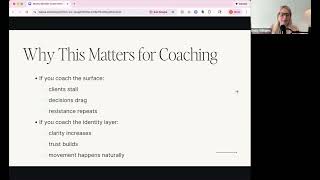
Yeah, totally. This is where it gets really interesting because most coaches think retention is only about, let me just make sure that my clients get amazing results and that's it. Or they think it is having amazing content. And something that you'll see a lot of coaches do is they'll just keep packing on more and more pieces of content that could be videos, it could be modules, it could be worksheets, it could be more calls. But they're just like, let's just give them more. Give them more stuff, give them more information and they're going to stay. And yes, it's not like those things don't matter. Yes, we have to provide content to our clients. Yes, we better be making sure that our clients are getting results because if they're not, they are not going to keep coming back. But here's what I see constantly. A client will make incredible progress and think about some of your own clients. If this is kind of clicking for you and you're like, oh, wow, okay, I now kind of see that. I've seen that with some past clients. So a lot of clients will make really amazing progress in those first 90 days of working with you. And a lot of clients can handle and just really go for it for about 60 to 90 days. And then somewhere around day 90, it might happen around day 75, it might happen somewhere in month four, but kind of averages right around day 90, month three, they start to disappear. I always use the language like they literally just like fall off the face of the earth. They're still paying you, they're still a client of yours, they're still enrolled in your program, but they're not showing up up in the way they are. And you finally one day you're like, hey, I haven't seen Sally in a while. Like, where is she? And the coach can get really confused because the client typically was getting results. They were getting exactly what they signed up for. And sometimes they're getting better results than they expected. And this is why sometimes it's a little surprising for the coach because you're like, wait a minute, this person was getting amazing results. What. What's happening? Where did they go? So what did happen? What's happening there is your client is hitting a capacity ceiling. A capacity ceiling. Write that word down. Capacity. And here's how this works. When someone starts coaching, they're operating at a certain identity level. So let's say they see themselves as someone who's stuck or someone who struggles with money, or someone who can't seem to follow through in the first few weeks. You help them get those wins and they start moving out of being stuck. They start to feel different. They're building momentum. But then, and this is the part that most coaches miss, their nervous system starts to panic.
Why?
Because now they are becoming someone new, someone who follows through, someone who makes money, someone who gets results. And their old identity, which is the one they've had for probably decades, it starts screaming at them internally. And they might even hear voices in their mind like, this is so not safe. Like, I don't know what's going on here. This is just not me. This is not what I do. I don't know this world. I'm not used to this. I'm not accustomed to this.
This.
Let's go back to what's familiar now. They're not necessarily going to say any of those words out loud to you. They're not going to say those words out loud. They're not just going to come up to you and say those things. But this is what's going on inside their mind. And it's even, you know, when they're laying in bed at night, we always, you know, hear that phrase, like, what are people laying in bed at night thinking about? They're thinking about this when they're laying in bed at night. It's almost like this internal tension or this internal friction between two identities that's at.
At play.
Then suddenly, that's when they start ghosting you. They stop showing up. Or they suddenly have a crisis that takes all their attention away and they got to go handle that. It could be a sickness. It could be anything. Or they tell you, I just need a break. That's a really common one. Or they say another one you might hear is, well, the program isn't really what I thought it would be. But what's really happening is they're hitting their identity ceiling and they do not have the tools to expand through it when left to their own devices. And if you're not trained to first recognize that pattern because again, they're not going to come out and tell you what's screaming in their mind, they're going to say something else. They're going to give you a completely different reason why they're kind of drifting off. I call them drifters, right? They're the drifters. They're drifting away. But you've got to see them through it or you're potentially going to lose them. And you might think they weren't the right fit, they weren't the ideal client, or you wonder if you did something wrong. You might even wonder like if they even like you. I hear all of those. Or you just assume, oh, they just were not committed. I mean, I can't tell you how many hundreds, if not thousands of times I've heard coaches just say, like, write it off. Like, oh, they just weren't an ideal client. Oh, they just weren't committed. I mean, I hear it all the time. But the truth is it's a money block and it is showing up as a retention issue. Because staying in coaching means continuing to invest not just financially, but also energetically and identity wise. And if they're not safe at the new level, they're reaching their system, their nervous system will find a way to pull them back to what is familiar. And oftentimes that's what's actually happening. So when you know how to spot this, when you can say in month two or month three, hey, you know, I'm noticing some resisting coming, resistance coming up. That's actually normal when you're expanding. So they need to know that it's normal because they're freaking out on the inside. Let's talk about what's happening. You are going to lose fewer clients, you're going to keep them, you help them integrate and they stay with you longer. Because you're not just coaching the surface, you're coaching the identity shift shift that's happening underneath. That's why money mindset work isn't just about enrolling clients, it is about retention as well. There's a through line that goes through that entire client journey. Because the same blocks that keep people from saying yes in the sales conversation are the same blocks that make them want to quit right before the big breakthrough. Remember, there's like this friction or tension going on internally between these two identities. And if you're trained to navigate both, your business becomes so much more sustainable. And one more thing, the last thing I'll say about this, the coaches who understand this stop blaming themselves when clients leave again. We as coaches can really get into this blame game, blaming ourselves and they realize, oh, this client actually just hit their ceiling. They hit their identity ceiling and I just didn't catch it in time. That's not failure, that is information. And what's going to start happening once you have these skills and these tools, you will start to catch and see those patterns earlier because you're going to start seeing them in more than just one person and you will start normalizing that and then you can coach your clients through that. That's the difference between a coach with let's say only 30% retention and a coach that has 70 to 80% retention. It's not better content, it's not just helping them get the result because they are becoming someone new. They are developing and knocking on the door of a new identity that they now have to learn how to live with Every single day 24 7. This is all about better capacity coaching.
So amazing, Megan. And you know, transparently, seven years ago I had a Mastermind and one of my students in there literally wrote me an email. We had a big event in New York, she was there and we had a retreat and it was amazing. She wrote me an email saying, oh my gosh, I just had a six figure launch. Everything we're doing together has far exceeded what I thought was possible. Thank you so much. Literally a week later I get an email saying I need to leave the Mastermind. It's not what I thought it was going to be. Etc. The whole thing you just described, not only did that happen, she also decided she was going to tell everyone else in the Mastermind that it wasn't what they thought it was going to be. And it literally took the whole mastermind down. And excuse me, I didn't know what was happening at the time. This was seven years ago. And so I hadn't yet started to do the identity piece of what you're talking about. But had I known, things would have been very different. And I just wanted to share that because I've seen this firsthand in my business and what you're saying, it's, it's so easy for it to happen because of course someone who all of a sudden hits this level of success, they're not going to know how to handle it. They're not going to know how to Shift into that next level, identity and person, and hold that level of wealth and abundance unless they learn. And so this skill is so, so powerful at every level. And, yeah, I'm just grateful for you for articulating that. Amazing. Okay, beautiful. So let's go ahead and keep going here. So I'm going to put you in. In breakout rooms in just a second, but I want to reiterate this. Like, this is not about you responding perfectly. It's really about this level of presence and regulation that only happens when you understand, you know, this is what's actually going on versus what someone's telling you is going on. Right. And being willing to go deeper and not abandon yourself or the client in the moment. So it's really about that new level of presence and remaining calm. And with this skill set, when you master this skill set and. And you improve upon the money mindset work, of course you're going to be a lot calmer because there's a level of trust with yourself where, you know, you've got this. Regardless of what the client brings to the table, you've got this. I mean, at this point, you know, Megan's been doing this for almost 15 years. I believe I've been doing this for 12. Like, we've seen it all to a certain extent. And so there's very little that rattles us because we can see what's going on. Right. And so you can get to that place. And it's not about being perfect, but it's about having that level of confidence and calm. Okay, so I want to put you into breakout rooms and I've put together another workshop worksheet for you. It's all about mapping your client patterns. And because I know all of you are building businesses, you're focused on a lot of different. I want to give you a few minutes to go through this today in a breakout room session so you can make a copy of this document and type directly in it. And there's four questions here. And so I'm going to put you into a breakout room so that you can just work with this with your partner. You can take a few minutes to answer it for yourself, and then you'll just share your responses with your partner. Okay, so I'm going to. Do you guys have the documents in the chat box? Good. Okay, cool. All right, so I'm going to open up the rooms here. We'll do about 10 minutes, and then I'm going to bring you back. I'm going to be strict with that. Might even be more like Eight minutes. So just take a few minutes each. Okay. And you can either type out the questions first or you can just answer them in real time. Okay. The room should be open. Okay, cool. All right. Welcome back. Amazing. So, as we move into a minute or two for any questions, I'd love for you to put in the chat box your top takeaway from today.
It.
Amber said money, mindset blocks or capacity issues can show up in client retention even when you get client results. Yeah, that's a huge one. Plays how to respond to clients with better questions in their moments of fear. Max capacity, irregulated nervous system is what the client needs the most. Beautiful. Amazing. You guys have done such great work today. So are there any questions that you would love answered as we close day two? Totally open to stay on a little bit after. If anything's coming up for you, just let me know. Are you complete? Emily? I do have one question.
I don't know if this will be covered in another, you know, potentially tomorrow. What about clients that say, you know, you're presenting to them, and then they say, yes, I'm excited, and like, yes, let's do it. And then they have no questions, and then they ghost later?
Yeah. So there's a few ways to handle this. So, number one, if someone is excited, what. And says yes, what is your process next?
I invoice them.
Okay. So there's one thing that you could do potentially, if it's part of what you know is aligned for your process, you could register them right there on the phone. So I've had clients or even people who I've worked with, where they get the cart ready to go, and I'm there on the phone and literally sign up right there with them. And so that's something you could definitely test out, because I've always found that that can be part of the process where, you know, it's just kind of black and white. Like, you want to get started? Okay, great. So I'll. I'll be here with you as you're registering on the phone, and then we'll book our first session together and so on and so forth. It's just like, black and white. That's part of the process. Yes, that's one option. Number two is, is there anything. Were there any red flags or anything that you experienced when you did have the call for the people you're thinking about? There weren't any red flags.
So I. And I. I definitely was thinking about that that I can, like, part of. It was, like, the systems that I'm Using. So I'll.
I'll.
I'll make those adjustments. What I saw after is that, like, we would have their first session that was booked on the calendar, and then two people that I'm thinking in particular came back to me, and they were just like, I'm sorry, you know, I can't move forward. I really want to work with you. It's a financial thing. But what interests me about it is that I notice that oftentimes people have no questions at the very beginning. And maybe this is just my whole mindset about it, that those are typically.
The people that go most interesting. Okay, so then get really specific with them and say when you mentioned, you know, how much it is, or did you even get a chance to mention how much it was, or did they not even ask about that?
Yeah, yeah, I go through everything I mentioned, the pricing, all of that, and they're like, yes, okay, great, let's do it. Okay, yeah. And then from there.
So, yeah, so then that's where you could go a little bit deeper and just ask, you know, you could have some questions ready to go. So, for example, if everyone's like, okay, great. Hey, let's do it. You can say, okay, awesome. So my process is that I will either send you the invoice today or I will. Let's go through the invoice and. And do it together and get you registered and then see what comes up for them. And if you're going to be sending it later, just say, when should I expect to receive your payment so that you're all on the same page? And then that could potentially bring up something for them. And they'll be like, oh, you know, well, I'll do it next week. And you can be like, okay. And you know what? So there's a few ways to handle this. That's why I'm hesitating. So, number one, I don't like to be pushy in a sense, because I only want people who want to be there and want to work with me to sign up. Right. So it's not convincing anyone, but if you have a hunch that something else is going on or there is some hesitancy, or you feel like intuitively that they might be not sharing everything with you, then you can literally just ask and say, like, is there anything else that's coming up for you that could get in the way of you moving forward with the final part of this process? Because that is the final part of the process is the registration. And just say, I like to be clear, when are you planning to make this payment? Is there anything we need to address right now that might come up between us hanging up on the phone and you filling out the registration that you want to discuss right now together? And there's only so much you can do. Like I said, I'm not trying to convince anyone here like they are adults. They. They get to, you know, follow through on a process. That's not what this is about, but it is about giving them the space to open up in case there is something that they're not being forthcoming in a way they're not being forthcoming. Does that make sense?
Yes. Yes.
Okay. What about that? Do you feel you could implement or.
Would be aligned for you both, what you said, relative to just the invoicing them on. On the call? There is a way that I can do it, or like at least collecting the first bit and then also asking them, because I did feel intuitively that there was. I can tell when something's going on with people, but I didn't think to ask about it. I'm like, okay, well, let's go. And I'm just moving forward with it.
So.
Yeah, yeah. So trusting yourself and those little nudges that, you know, those little instincts that you have that something may be coming up and you can also speak to it, you know, not necessarily at the end of the call, but throughout the time and just be like, you know, one of the things I really love when I work with people is full transparency because marketing requires a lot of visibility. You know, even signing up for this, it's, you know, it's a decision that I don't take lightly. And so if there is any hesitancy on your part, please just bring it to the table. This is not just about marketing. It's not just about business strategy. It truly is about you, you know, like stepping into your next level self. And so there's bound to be things that come up, whether that's today or three months from now. I'm totally here and available for those conversations. Okay. And you can also, like, I like to be transparent with people and just say I like to be on the same page with my clients. When should I expect payment to be made?
I love that.
Or, you know, if you have a team, so. So I can let my team know. When can we expect your registration to come through? Okay, cool. Great question. Anything from you, Blaze?
I don't think so. I want to have questions because you're full of insight, but I feel like more of this I just need to put into practice and be able to see and then be able to come back and be like, okay, what. What is coming up with this? I feel like I have a lot of really great notes now. I feel like a lot of strategies and ways to implement in those conversations that instead of being like, oh, this is awkward. I don't really know how to take this deeper, though. I clearly know this isn't about money now. I feel like I have the tools to get there. So thank you so much for this.
You're welcome. Yeah. And both of you have been in conversations with coaches before, and so ask yourself, what would feel supportive for you? You know, Amber, if there has been times where somebody held you accountable or was just open about their process or you signed up for something right on the phone, you know, how. What did that feel like and what worked for you? And again, it's not about forcing anyone to do anything. It's just about re. Like, again, it's part of the process. Registration is part of the coaching process. It really is. It's like the follow through. So anything you can do to support them throughout that is a positive thing. Awesome. Well, I'm so looking forward to tomorrow. So we're going to talk about how this further integrates into your work and also expands your inc. I'm sure you can already see that these tools, not just the sales conversations, but like Megan was talking about with the retention pieces and even being able to go deeper in your client sessions will naturally lead to you making more money. So we're going to talk more about that tomorrow as well. So, so excited to have that time with you again. All right, ladies, have a good rest of your day. See you then. By.