Why Strategy Alone Won't Get You To The Next Level
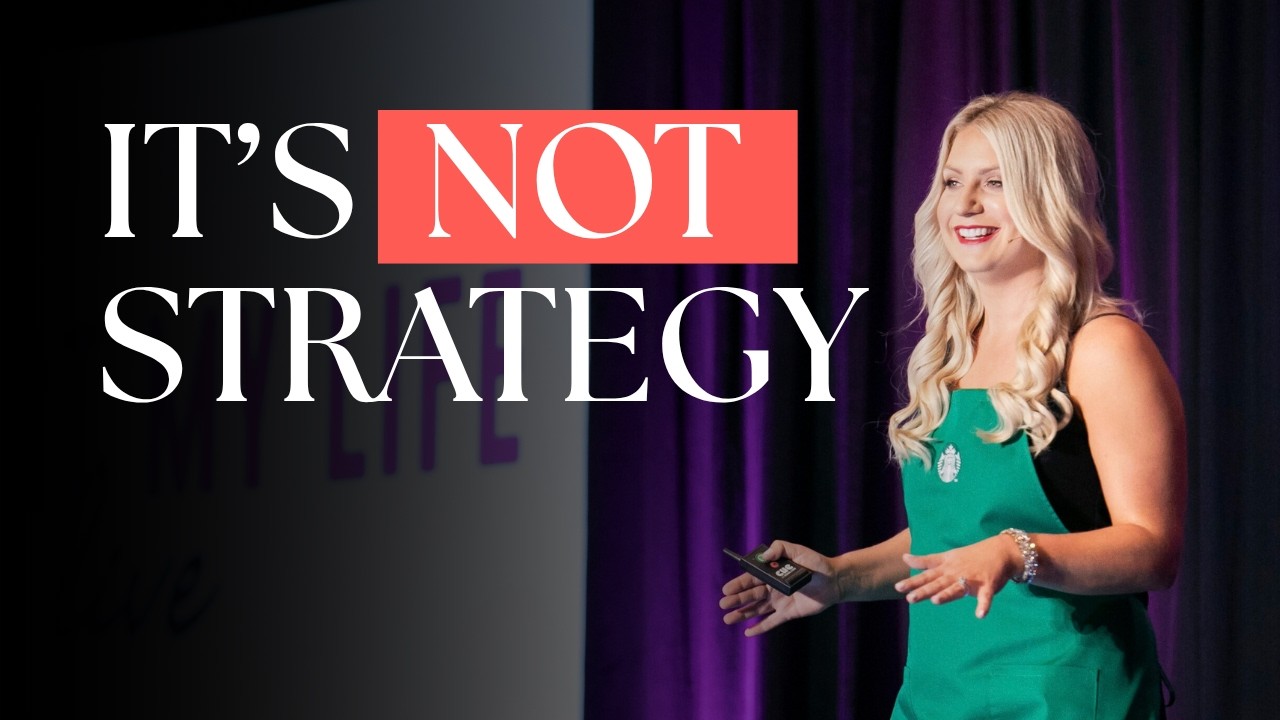
Emily Williams argues that strategy and mindset tools fail because they ignore the real barrier: your self-concept shaped by childhood roles and family beliefs. She maps five survival archetypes (hero, scapegoat, lost child, mascot, enabler) that lock women into patterns like overworking and undercharging, then offers journaling prompts to identify which one runs your behavior and rewire it.
Chapters
So let's talk about why strategy and mindset aren't enough. So chances are you've already tried a lot of things to go to your next level, maybe strategy like new funnels, launches, coaches, productivity hacks, maybe even mindset. So affirmations, journaling, vision boards, and maybe some of those worked for a while and have created shifts. And that's great because we actually do need those things. But oftentimes for ambitious women like us, They're not enough. So you might be feeling like you're hitting the same income ceiling over and over, like you can't hold onto the money that you're currently making. Maybe you're struggling with burnout, fear, procrastination, or even overworking. So if that sounds familiar, you are not broken. I promise there's nothing wrong with you. The real problem is strategy and mindset alone can't shift the identity that's creating your current results. Okay. I'm going to say that again. Strategy and mindset alone cannot shift the identity that's creating your current results. So essentially we need a whole new self-concept here. Okay? So you don't just need to change what you think or what you do. You have to change who you're being in order to get next level results, which I know is what you're here for. So let's look at 4 levels of influence here. So what has been shaping your current results? Okay, number 1 is the core level. So this is essentially what's rooted in childhood experiences like being told money doesn't grow on trees, being praised for good, being good or responsible, or maybe seeing your parents fighting about money and then that memory standing in your mind. These experiences shape your early money blueprint. Number 2, your family level. So inherited belief systems that have been passed down through generations. So things like, we're not the kind of people that will get rich, or you have to work hard to get ahead. These create unconscious loyalty to financial patterns. So you literally don't want to be ostracized by your family. And so you adhere to all of these belief systems in order to stay loved. Then at a societal level, there's conditioning from culture, religion, school, media about what's appropriate for women to earn, to want, or to receive. Leading to guilt, shame, or fear of being too much. And then finally, your identity level, which is the deepest layer, is the self-concept that you've built around being the caretaker or the achiever or the overgiver. Okay. And the one who always figures it out. This level determines what you believe you're allowed to have and keeps you repeating the same results until it's rewired. So when you work on all 4 of these levels, I'm sure you can imagine transformation happens a lot faster and lasts longer because we're no longer just changing your thoughts or your to-do list. We're actually changing your foundation. Just know this, you're about to see yourself more clearly than you ever have before. You might notice some of these patterns being very confronting at first, but that's a good thing. Because you can't shift the things you can't see. So we're going to bring them into the light and have that awareness that's going to make all the difference. So I'm going to suggest a few action steps at this point. You're going to see some of the journaling prompts below. So I want you to ask yourself, which of these 4 core levels— so core, familial, societal, or identity— feel most alive for you right now? What do they have? Which ones have the, the tightest grip on you? What patterns have you noticed yourself repeating in your money or your success journey? And then where do you feel like you're hitting the same wall again and again and again? Now we're going to uncover the identity that you've been living in, the role you took on in early life in order to stay safe, feel loved, and belong. I call this your survival role. And until you see it clearly, it's going to keep running in the background and running the show. Shaping your decisions, your money patterns, and even how much success you allow yourself to hold. So what are survival roles? Our survival roles are not who we really are. They're just who we learn to be. So as children, we absorb the dynamics of our families and we take on roles to help us feel secure. These roles help us survive emotionally, but as adults, they can keep us Overworking, overgiving, or playing small. So for years, as the oldest daughter, I took on the hero role. So swooping in to do everything, to save everyone, carrying the weight of the world, working myself into exhaustion until— because I believed if I don't fix it, no one will. Maybe you have seen this come up for yourself, maybe within your business, feeling like you can never find the right person to assist you or be on your team. So you literally just do everything yourself, or you're addicted to hard work. And to be honest, that identity served me for a while. So all identities, all survival roles have a positive and a shadow side. So it helped me succeed. It helped me achieve. It helped me feel in control, but it also left me feeling burnt out, resentful, and constantly attracting situations where I had to rescue people. So recognizing that that pattern was the thing that was running the show in the background was one of the most powerful turning points of my life. Because once I saw it, I could choose something different. And again, there were certain scenarios where it did serve me to be in the hero role, but more often than not, it was actually more draining than it was helpful. So once I realized that, everything started to shift. So let's look at the 5 common survival archetypes. And I want to be clear, I did not coin this. This is a very well-known term and point of work. In psychology. And so again, this is not mine, but it's going to be super helpful for all of us. Okay. So let's look at the 5 most common roles so you can see which one you've been living in. So number one is the hero. So this is the responsible one, the fixer, the one who carries it all. You're reliable, you're capable, but you're often exhausted and resentful. Okay. And so again, when it comes to money and business, you show up as the person who is overworking, potentially going into burnout. The next one is the scapegoat, so the rebel or the truth teller who calls out the dysfunction but may isolate or self-sabotage as a result. We also have the lost child, who is the quiet one who stays invisible, avoids conflict, and struggles to take up space, often hiding her desires or numbing out. This is the mask— the next one is the mascot, so the entertainer, so the person who lightens the mood, makes jokes, keeps everyone else comfortable, sometimes at the expense of her own feelings. We also have the enabler, who is the peacekeeper, the helper, the one who smooths things over and makes excuses for others, often abandoning her own needs. Now, you're going to have a worksheet that goes along with these, so you can actually go through and self-identify which category you fall under, which archetype. And you might already have an idea right now, but again, I want you to start to look at this In terms of how this has been holding you back in your business and also with making money. So there are a few of these which actually lead people to undercharging, to not being comfortable even receiving money. And so you're going to learn more about this as you go throughout the worksheet, but I want you to start to think for yourself, which of these do I resonate with? Which of these are coming through just in my current life and also causing me to not be in my truest self? To not be in my fullest expression and ultimately are holding me back. Again, there might be periods of time where this archetype served you. Most likely when you were younger, it served you greatly, but you probably don't need it anymore, at least not to the degree that you're currently carrying it. So once you go through the worksheet, you're going to have even more clarity around how this archetype has been holding you back and potentially even keeping you stuck when it comes to your finances. Okay. So here are some reflection prompts to dive in. So which of these roles do I recognize within myself? How has this role kept me safe or helped me belong? And also, how has this role helped me stay stuck, overworked, or playing small? Again, there's both sides of the equation. We want to have gratitude for this role that kept us loved, belonging, safe, but we also want to be able to release it and recognize when it's no longer serving us. Okay. So remember, these roles are not who you are. They're who you learn to be. So you get to say to yourself, this is who I've been, not who I'm becoming. This is who I've been, not who I'm becoming. You don't have to abandon the gifts of these roles, your compassion, your humor, your strength, but you do get to release the parts that keep you in survival, which is what we're doing here together today. So again, start to write down which survival role you identify with the most. Identify how it has served you, but also how it's kept you stuck and write down what you're ready to release. Okay? This is who you've been, but it's not who you're becoming. And you can also use the suggested resources below. I'll see you in the next training.