EXCEED by Clari 2017 - Data Driven Sales Management and Your Board
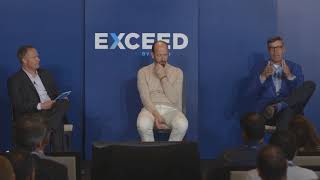
Enrique Salem and Jeff Williams explain what boards actually want from sales leaders: not just revenue numbers, but pipeline health, rep productivity, and conversion rates. Real-time data tools let you forecast accurately and coach reps early instead of scrambling at quarter-end.
Chapters
This session is on data-driven sales management in your board. And the irony of this whole session is we wrapped our quarter up last Friday, and these two guys are on my board.
And we got lots of questions.
Yeah.
Yeah. So in two weeks, I'm gonna have to apply a lot of this at our board meeting. So this is kind of a This is gonna be fun. This is gonna be really fun. We want this to be interactive. I may get one sentence in, in the next hour if I'm lucky. But more importantly, let me go ahead and introduce the folks here. Enrique Salem is the managing director and partner at Bain Capital, former CEO of Symantec. Jeff Williams, operating partner at Bain Capital. Former Senior Vice President of Sales at FireEye, also in his past IronPort and several others. And I'm actually very fortunate to have these two fellows on my board. As you know, at Clary, in order to sell world-class sales organizations, I need to run a world-class sales organization. And having coaches and mentors like these guys really allow us to excel and be the best of the best. So what I want to focus on today is I really want to talk about when I go into a board meeting and, you know, everybody sitting up here has run a sales team. I haven't been on board yet. I hope, you know, maybe down the road. But the reality is that, you know, being sales leaders and now in their shoes being board members where they sit on several boards, what's really important to them? What do they really want to hear other than we hit our number, we didn't hit our number? And, you know, as we roll into the first question here, you know, especially here in the Valley, we talk about hypergrowth companies, companies that are scaling very quickly. What are those factors? And I'll open it up to either of you to start this, but what are the factors that are critical to your assessment of the health of how a company is scaling outside of just we hit our number? And then which ones do you see as red flags, as potentially preventing you from scaling?
Let me— I'll make a comment, and then if you want to go, and then I'll come back. So first of all, thanks for having us. We work together every day. We literally sit next to each other. We love just going back and forth and chatting with people, and you can't stop us once we start. So thank you. Just bear with us for a little bit. So here's how I think about it. In boardrooms, too many things are left to chance. That's one of the things that I always start off with. What do I mean by that? Mark asked the question as he started, he said, "What are you expecting to hear as a board member?" You know, quite frankly, I'll tell you as much as Jeff and I will talk about a few things we want to hear, what matters more is what agreement did you make with the CEO, the exec team, and the board of what they want to hear. Because in every business it's going to be different. So, and that's why I would just preface it, too many things are left to chance. Make clear what it is you're going to talk about and make sure you're prepared for that. And then let's talk about what we should be preparing for and I'll give you a couple other anecdotes. But kind of what are the key things you want to hear for the health of the business?
Yeah, so I mean the first one is did you hit your number, right? I mean let's not get away from that. Because if it didn't, it changes the conversation dramatically. You know what's interesting about boards? And you— they're a little bit different when you go public. Obviously, the, the bar is raised dramatically, or even when you go pre-IPO. But what's really interesting is, is that the board actually helps manage the operating plan, right? That you have an investment in an organization. And although, yes, we're measured on a 90-day window, what we're really doing is we're looking for data that is going to determine how quickly we're going to invest in sales and marketing and engineering across the entire operating plan. So when we look at sales results, that's one thing. But when we actually do the real analysis and really dive down into from rep productivity to what the pipeline looks like on a, on a rolling 6-month basis of how healthy is the business and how much are we going to invest in the business, right? So things aren't going well. You're always going to have your Plan A, which is your operating plan. Certain number, here's how we're going to get there. But every board that understands that there's actually an opportunity to accelerate the business is looking for very specific points of light. And that's what we're looking for on top of did you hit your number, did you not hit your number. It's the health of the business.
Makes sense. So let me tell you what I would add. I think every company is different. So if you look at the boards that Jeff and I sit on, each company has a different go-to-market model. So I'm on the board of a company called Atlassian. You may have heard of them. They are a very low touch from a closing process. They're very high touch on generating leads at the top of the funnel. They're very high touch on getting you up and running on Jira or Confluence or whatever product. But then when it gets through that you're up and running, the whole procurement process is low touch. There's no one you can call and say, "I want a discount. I want different than what's available through your website." And so for each company, in that company, what do we care about? We care about two things. We care about how much are we putting in at the top of the funnel, and everybody is aligned on that. And then we care about how many people are active on the software. And those are the two things that if you come into the boardroom and you can't articulate how you're changing those two numbers, increasing them, then it's going to be a long conversation and we're going to dig into a lot of details. And, you know, boards aren't known to be the nicest group of people, right? If you're ready, they can be very, okay, supportive. If you're not ready, they're not. So there we're looking at one set of metrics. If you go to the other side, a very high-touch business, and, you know, if you look at part of— we're on the board of DocuSign, and DocuSign, when we sell to big companies, it's very high-touch. We're changing business process at DocuSign. We know we're not just an e-signature, you put a little squiggly line on a piece of paper, we literally are going in and trying to say, "Here's how you're going to run from the time you touch the initial, let's say, contract to how it's going to flow through all your systems in the back office." There, what we're thinking about is we're very focused on what's happening to our sales cycle and what are the metrics that we can look at that say when we started that business, we'd sometimes spend 450 days trying to close a deal. 450 days. Think about that if you're a rep in the field with trying to close a number and it's taking you more than a year to close, right? So we'd focus a lot on where are the barriers in that process? What's going on?
What—
how are we reducing friction? And so again, each business, what you have to do with a board is figure out what matters to your business. Is it length of sales cycle? Is it how many leads come into the top of the funnel? Is it how many people get active? And just be prepared for those questions. And don't be prepared just at the very high level. Think about what are the tough questions they're going to ask you. And the other thing you don't want to do with a board especially is say, well, it's somebody else's issue. So at one of these companies, what killed me was they'd say, well, engineering needs to make it easier for us to get up and running, and that's why our sales cycle's so long. And I'm like, you're kidding me, right? And so I think don't ever walk in and be in a situation where you're going to say, I did everything I could. Metric isn't improving because somebody— so those are the hot buttons for boards. They want to see that the organization is saying, I understand the metric, I understand who needs to work on it, and I have not just the top-level numbers, but I understand what's behind it if you want to go deep with me.
Interesting. So I'll tell you a recent story. So I was working with the investor of one of our— now one of our partners, and He said, you know, I went into the first meeting— they had recently acquired this company— and he said, we went into the meeting and the head of sales ran the forecast call, gave us the forecast. And I said, so why are you so sideways on this? And Chris said, well, because he just put a number up on a PowerPoint slide. What are we supposed to do with that number? I have no visibility into the health of the business. So if we talk about visibility into the health of the business, what are some of the metrics? You know, we talked about the number, we talked about peeling the onion back a little bit and different types of businesses you sit on the board with. From a sales perspective, what are those different metrics that you like to look at? Is it productivity per rep?
Is it—
How much of the percentage of the TAM that the company has actually brought on? What's—
Yeah, I'll start that one. Yeah, I think, look, in order— here's what board members, like you said, can be prickly. Not us two, but—
Never, never.
But one thing you learn about a board is that whether you meet on a monthly basis or a quarterly basis, they take notes. And everything you say, you'll be held accountable for, right? And ultimately, as you start to wind down in a quarter, If you actually aren't predicting, if you can't demonstrate the ability to predict the business and all the metrics associated with it, then, you know, and you're trying to raise your round A, you're trying to raise B, you're trying to go public, that you won't be able to do those things, by the way, and it's gonna cost you dearly. So I think having predictable data is absolutely critical. And I think what's great about data today is I know that Enrique and I, I'll date us a little bit, but we spent a big part of our career relying on our gut and spreadsheets. And I'm so jealous at the amount of data and big data and augmented artificial intelligence that we have today to make much more calculated decisions. And so, when you think about, like when you want metrics, it's what's the average deal size? What's the average sales cycle, right? What is the compelling event? What is your close rate that you have? And then you can, instead of just getting a pipeline, if you can reverse engineer the deals in the pipeline and add historical metrics that you're talking about, then all of a sudden your data becomes that much more predictable.
Yeah. So I know very few sales organizations, especially once you get beyond your first, let's say, 20, 25 teams. You know, with some geographic distribution, you're gonna be hiring salespeople, you're gonna be onboarding people, training them on how to do what you do. And so one of the key metrics— because most of the models that I work with today are capacity-based, meaning if next year we're going after a 20% increase, you know, we're talking about how many new sales heads do we need to bring on. And so for one of the metrics I always try to think about outside of some of the things Jeff was covering is how long does it take from the moment we hire somebody for them to be fully ramped and productive? And decompose that process. What are the steps you're taking? What are you training them on? You know, I, I work with one company and they've got this great system that I love. Every time they hire a new rep, they do their onboarding and we get into what they do. But the other thing they do is they immediately assign them a partner in the field, some— a, a other employee at the company who is their kind of go-to person. And there's a lot of tricks that some of these companies have done because how quickly you get rep productivity— people measure, you know, we call it in the venture community, spend a lot of time talking about CAC, right? Cost of, you know, how much it costs to acquire customers or get new customers. And I would tell you that initial ramp I care a lot about, because as you all showed, a lot of you put your hands up, and you're always going to be either somebody doesn't make it, so you're replacing them, or you're growing and you got to keep adding new people. And so I care a lot about what does that look like? What does that cycle look like? What are you doing to get productivity up as fast as possible? And that's a metric I care a lot about.
So to shift gears for a second— got it shipped on you. You know, we talked about— I used to always call it my black box, right? My spreadsheet, my inspection, and my reps. I think that it was a triangle and my gut prior to some of the more recent, you know, technologies that have come to market. But, you know, I've told you folks this story about, you know, my last company had about 150 reps and I used to get calls all the time. Hey, we can predict your— we can predict your Forecast. Oh, you can? How are you going to do that? Oh, we're going to analyze your CRM data. I go, goodbye. One of the things that I still struggle with, and in the selfish state here that Clary has helped me using Clary every day, but the ability to look forward. Traditionally, it's been which way is the wind blowing 2 quarters out? You have some historicals. The reality is though, what is the confidence that sitting on the board you do when you get forward-looking, call it 2 quarters out, forward-looking projections, how much confidence do you put in those today and how much has the newer technologies helped you feel better about what you're hearing or have they at all?
Yeah, so I'll start on that. We look at— Jeff and I work on the same team at Bain. We look at about 400 companies a year. And a lot of times folks will come in and we do everything from very early stage investing to growth investing and then we have our private equity team that neither of us are on but we work with them. You know, a lot of times when people come in they'll show us their pipeline and then they'll say, here's the pipeline, here's the bookings or revenue that we're going to generate from that pipeline. And oftentimes we'll look at each other and you can just see us both go, not going to happen. That pipe does not support that revenue model. And, you know, some of the things we're seeing in it is they expect things to change from one quarter to the next. Things like how many proof of concepts convert to closed business. And we just look at some of these things and we're kind of like going, You know, it's like, it doesn't help, especially when you're on a board or you're pitching us, to say this converts to that and it feels like a miracle happens in the middle. Just— and it— so we've just seen enough of these that we can kind of tell. And so with technology, what makes a big difference is when you can look at the underlying variables and say, okay, so it is showing me that the conversion rate needs to be X, or it is showing me that this is the amount of contact you're you're having with that account. So the technology is helping us have more visibility, so I don't just have to listen to an entrepreneur who is saying a miracle's gonna happen and it works. The technology validates or supports it by giving us better visibility into what's really happening inside what might look like a stacked bar chart that has $40 million pipe. So the technology gives us more of that visibility.
[Speaker:ENRIQUE SALEM] Yeah, agreed. And again, I've always looked at things, if you really are gonna, I mean, we all live in this 90-day window, And, you know, we're asked to look out into the other windows, which has been very difficult to predict because we didn't have the historical data, right? So I look at, at reps. You talk about rep productivity and being able to look out is that what you find is that before you'd wait till the end of the quarter and then you would analyze the data and then you would try to make a decision. It's too late. And so now, because, you know, we obviously have reps that have a certain what I call sandbagging factor. And some of them are better at it than others. But the great thing is, is that if you truly analyze people's ability— now this goes down to the rep level because they're locking, whether it's week 2, 4, 6, 8, however you have them locking— is that now all of a sudden you can literally take it down to the rep. You got 150 reps. If I know the predictability and the sandbagging factor of where people fall on a spectrum, then I can gauge my business better moving forward. If I, in the middle of the quarter, if I'm in Q1 and in the middle of the quarter I have predictable data that I can see where I'm gonna close, what accounts are gonna close at a high probability, what deals are gonna push, and what pipeline I'll have going into next quarter, I can actually adjust my spend, right? If you're in a 3 to 6 month sales cycle, you can actually adjust your spend to ensure that you have enough pipeline to be successful the next quarter. That's never been done before. We've always— we have. I mean, we've just historically, you know, woken up on day one, and you're only as strong as your last quarter, and you're off to the races not knowing, do you really have that 2x, 3x factor of pipeline to be successful? So now we have so much more data that we can do things in the middle of a quarter and actually influence the success of the subsequent quarter.
I think the other thing it gives us is consistency. I think technology is helping us get more consistency. I mean, I've been doing this now 27+ years, and I used to have to that point of who's sandbagging and who's not. But in fact, we flew a little bit blind pre some of the technology, and what would happen is we'd have one area director or district manager who was very consistent in what they rolled up, what they told us, and then there'd be someone else who would do something different. And because it was a lot of manual work, a lot of kind of rolling things up in spreadsheets, I think there was just a lot of inconsistency. With tech, we can now absolutely start saying, I feel confident that everybody rolls up a number in the same way instead of me going, okay, you got a great process. You, on the other hand, Mark, you're struggling a little bit. And by the way, we need to talk about this.
I've got 2 weeks. 2 weeks. I'm going to shift gears one more time before— because we want to open this up and make it interactive, but I do want to call something out that's really important in any sales environment, and that's culture. And I actually want to direct this question to Jeff, because Jeff, if anyone knows any of his past, FireEye was really well known in the industry for having just an amazing culture. And he built out a significant-sized organization that went public. And one of the things I've always, you know, asked Jeff when we, when we have our coaching sessions are, you know, what made it so healthy? And what are some of the best practices that you would share while also demanding accountability and high growth and hypervelocity, also having an environment of just I mean, to this day still resonates.
Yeah, I apologize, I can't share that. So, you know, culture, I mean, I look back and, you know, I've been very fortunate, right? I've done 4 startups, all from the ground zero, and I've sat on 3 boards, Meraki Wireless, OpenDNS, and Adlum, and they've all successfully exited. And when I look back on my career, you know, the bottom line is the number one differentiator I had was culture. And culture, you know, that's a loose term in the sense of, you know, of course we want great culture and good people. But when I think of culture, I think of winning culture. And what I mean by that is building out an organization where they can win, right? Because it's our obligation. If you, like you said, if you're doing $50 million in revenue and you got to do $100 million next year, How do you ensure with, you know, data lakes and quantitative and qualitative information to make sure that you're always positioning the reps in the field to be successful, right? Because we all do that. We wake up at the beginning of the year, we're trying to set quotas, and, you know, we want to make sure that they're commensurate with giving this opportunity. Because I will tell you, the dividend that's given off by building winning cultures winning culture and leveraging data to make extremely calculated decisions on strategic accounts. Do they get 6 or do they get 12? It's not a number. You're actually looking at the white space, the upsell opportunity, and the existing customers. You're doing a much deeper analysis on those decisions. And so what happens is this, this force multiplier that happens is that when you build winning culture, you get the best of the best reps. People want to work for you. The loyalty and long-term, you know, aspect of people wanting to work for that organization. I mean, I'll give you a statistic which is kind of crazy, but at IronPort Systems, I hired 420 people. I was there for 7 years and I lost less than 1%. And some of it was forced and some of it wasn't. At FireEye, I hired over 600 people in 60 countries. And in 7.5 years, I had less than 1% attrition when the average is 10%. And, you know, for me, like, my fight is blocking and tackling, leveraging real data to ensure that you can build a winning culture, meaning that you position your reps to win. And you can't do it without data. You can't say— it's interesting because I was actually on a panel last night. I was laughing because we used to just say, all right, Operating plan calls out 5 people going to the NFL cities, right? So I've, you know, many times I've drawn that map and here's your 5 reps. With the data now, you can analyze what verticals are you down market, are you up market? And instead of hiring a second guy in Chicago when it's time to double down, you're hiring somebody in Minneapolis, right? Your first rep doesn't have to be in Dallas if you're going after the oil and gas. And so I just think it's really interesting that we have so much more data in our hands now that we can make so much better and more calculated decisions. And Clary, it brings that, right? It gives you— and also I think what's really interesting, and you would probably agree with this, is that when I think of a dashboard, right, sales operations has always delivered a dashboard. You know, that to me is— that's— you're basically— that's stale data, right? We all know that. By the time you get a dashboard, things have moved. And the one thing that I've seen with Clary is that it's real-time data, right? You're actually— when you go to a board meeting, it wasn't a dashboard that was created 2 weeks ago. It's real-time data. And so it just allows us to make better decisions and build winning teams, building winning culture. And that's really how you build and scale a long-term organization.
So I am going to add to that, but about what I've seen him do. So I've been on a— I was on the board at FireEye, or I am on the board at FireEye, and we were partners when he was at IronPort and I was running Brightmail. So we've worked together for a long time. Jeff has a couple of things he does that— and he does it even at Bain now. He really is looking out for the team and trying to figure out what are they doing well, what is their path forward. So you'd be surprised how many times he's talked about, OK, so this— This individual is doing a great job as an account manager. What's their next thing? How am I going to help them develop? And I think Jeff does an outstanding job, which people want to grow and develop in their jobs. And I think that's something that you didn't mention, you do almost instinctively. And I think that's huge for the folks that work under you. I think the other thing that Jeff has is he lacks energy.
I'm not competitive either, right?
Not competitive at all. But every time he walks into the office in the morning, you know, he is on a mission, right? It's like, you know, his shoulders— he's just got this energy that is infectious. And I think, you know, if you look at the people you want to be around, again, it's hard. Everybody's not built the same, and people are different, and you're going to behave differently. But you want— he brings an energy to what he does and this positiveness that I think people want to be around. So I think two things that you do Specifically, you develop people and you bring energy to the game, right? You lace them up in the morning and you're charging forward and you bring the energy. And I think that's what people want to be around. And those two things I think have been very effective in helping you build some amazing organizations over the last few years, over the last 10 years.
Thank you.
If you had to say, when you look at an organization and you're thinking about sales operations specifically, what do you think is a key priority that you're looking to see in a sales operations organization?
I'll just take the quick part, because I learned this the hard way. Most VPs of sales think that they can run operations. They can't. You know, it's like, no, I'm good, I'm good, I'm good. And so what I learned was, which I think is amazing, is that most people run sales operations very tactically, meaning that they're just always kind of working in the past. What I found was, which was really amazing with sales operations, if you can get them not giving you the data, but also— but getting into the predictive part of it, which I learned that especially when you go public, you can't just rely on the data that you have at hand. You have to start predicting, right? And I know it's crazy, we've talked a lot about this, but if they're bringing you how many true proof of concepts or proof of values that each one of the reps have and where they're at in the sales cycle and what the probability is of close rate, because, you know, you really have— you have a a number, right? You have this— the field's gonna give you a number, and then sales and sales operations and finance are gonna have a much different number, right? Which is fine, because we're adding a lot of statistical algorithms to what we're doing. And look, you want the field to have a higher number. You know, they're excited, and you know, you want them feeling like they're gonna pull these deals in, and you'd never, you know, tear them down there. But having the data of where they always come in based on where they're predicting is so important. So I think sales operations is not a tactical position. It should be strategic. They should be running 100 yards out in front of you or a mile out in front of you and trying to figure out and predict what that next quarter is going to look like. Because you know what, I'll tell you right now, sales operation— or sales, we are— we live in the 90-day window, and I'm only as strong as the last deal I closed. And so we don't have the propensity or desire to run that far out, man. We— and I've always We've always relied very heavily on sales operations for that. It's really important. It's a team effort for sure. It doesn't matter where it reports.
So here's what I'll add to that, Michelle. You know, one of the things I find in lots of sales organizations is they end up being so focused on how do I get a quarter done, and it's just because they live and die by these quarterly numbers, especially as you go public. What I've found where the best sales operations, sales ops teams, teams are, is the ones that are really thinking about what are the sets of issues that we as a company, not just as sales organization, but we as a company need to be thinking about that will make the whole company more successful and make sales more successful. And so here's the simple way to think about it. If you think about Stephen Covey, one of his books, he covers this notion of the tyranny of the urgent. So he's got one axis is important, not important. The other axis is urgent, not urgent. I would look to sales ops to help us have things that are important, not urgent, that we as a company and sales organization are thinking about, because it is so easy to get into what do we got to do right now, how much pipeline are we adding, how do we look— and so the question you should all ask yourselves as if you're in sales ops working with the sales team is what are we doing that we have confidence will make this organization function better. And what is in that bucket? Doesn't have to be more than 1 or 2 things, even every 3, 6, 9 months, but what are you putting in that bucket as a sales operations team that you know is going to make the company better over time? And so I'd love to see that coming from the sales ops team.
Ladies first. Hi, Abby.
I work at Cyber Reason.
It's a startup in Boston.
Sure.
A question for you around winning culture and identifying that. Do you have suggestions with using data?
You guys mentioned territory analysis. Or something along those lines.
What other suggestions do you have?
Yeah, I think also one of the things that we didn't talk about, and we could probably answer the front end of that, is that one of the dividends that's given with the trust of data, we call it— go read the book Speed of Trust, right? There's a dividend that's given off with trust. It's basically, it allows you to lead your organization and not manage your organization, right? So one of the things I've always prided myself on on is being a leader, not a manager. I mean, obviously there's the 90/10 rule, some people 95/5, whatever your organization is. You'll always have to manage a certain part of it. But with data and understanding the accuracy of human beings, it builds a level of trust that builds basically a level of less inspection. I mean, I've just been a huge fan of— I mean, we just saw a presentation before here on what your cadence should be of inspection. And I'm a little over here. I like to do less, less inspection and make it more meaningful because I trust the data, right? If I didn't trust the data, then I'm going to do more inspection. And guess what? We're going to lose productivity. To me, I'm all about— again, the only way the reps win is if you give productivity back to them. And so having really accurate data in a timely fashion allows you to build a level of trust in the field that gives a dividend back, which is productivity.
Yeah, I would give you two thoughts. One, Jeff was just touching on it, which is how much time are people spending fighting to be able to spend time with their customers? Meaning, what is it if you just sat down for a moment and said, I just want to produce a quote to a customer. Want to give him some so he'll give us some money? Seems like a very reasonable thing to do. And you just try to add up all of the things reps have to do that take them out of selling. I guarantee you it'll be a great indicator of how your sales organization is feeling, right? Because if they're fighting the machine to do their job, getting a resource to go do, set up a proof of concept, can't get an appliance if you have to ship a piece of hardware out to them, all the things that make their jobs take more time and less time doing what they love to do, that'll be an indicator. The other thing that is, I think, a lot of us have seen, and we talk about net promoter scores for our customers. I'm a big fan of net promoter scores for your organizations, and it's a, it's a simple metric. And if our— the question we asked was always, how likely are you to recommend to your friends that they work here? And just, it's just do it once a year, twice a year, and I think it's a great indicator. Because if they're not— I was just at a company who that number's been dipping a little bit, and I can tell you it's trending so in the wrong direction, and I guarantee you it's a little bit of the people aren't excited. You know, they're not having enough fun. They're not winning enough to just winning culture comments.
One of the things I, you know, being on the ground and in the middle of it right now where, you know, it used to be that without the data, I'd get surprised no matter what, especially as the organization got larger and it scaled, whether it was a sandbagger or the inverse, somebody who was afraid to tell you they weren't gonna get that deal closed. With data, you know, and as a leader over time, you realize, you know, you're gonna catch a lot more bees with honey. And the data today allows me to be a coach I don't have to be a stick after the fact, right, where I'm hitting someone over the head because they hid something from me or there's— because it breeds that distrust. And if you want to be a great leader, you want to coach, you want to mentor, because we're in it to watch everyone win. I mean, it's not about, you know, it's not just about— I personally get more satisfaction watching rising stars, you know, turn into, you know, world class. I mean, that is just is just what gets me up in the morning. And with data, I now have an opportunity to coach way ahead of where I used to. Way ahead. And I can actually really sit down and help develop them much more quickly than I ever used to be able to do. Because, you know, when you're reactive, because it's the day before the quarter closes and I told Enrique and Jeff we're gonna hit a certain number, certain deals are gonna come in, and someone drops a bomb on you, versus I can now see it weeks, if not months, in advance. I can see the anatomy of the deal moving, and I can get in, and I can coach. And that is— I am lucky to be at this stage to have that kind of data, because historically, you just didn't have the opportunity to do that. Sir.
So, quick question.
Let's talk back about the money part when you mentioned. So about incentivizing sales ops, how do you think about structuring incentives, and do you think— Should certain sales ops team be tied to the sales ops outcome?
The sales team that is—
As long as they're not on the deal desk, yeah, right? If they're at the deal desk—
So repeat the question, Mitch.
Yeah, so to repeat the question, should you incentivize or— yeah, we'll just say incentivize sales operations with sales. It's a little tricky because if the deal desk is in sales operations, you do not want them incentivized to approve deals. But I struggle with that. I probably would say no, because I like sales operations to be a function of finance and in the CFO category, because then there's a little bit of separation of church and state. And I just, once they're a part of that kind of trusted state of data, I don't think they should be aligned on a compensation standpoint.
How should you structure the incentives? For sales ops?
Oh, for sales ops?
Yeah.
I don't know.
Yeah, look, I think it just comes down to what is the organization trying to do, all the way down the organization, wherever, whatever function, whether it's engineering, sales ops, finance, you gotta be aligned to it. And I think the outcomes you care about is what are we expecting What am I expecting when I work with a sales ops team? I am expecting really help in the running of the organization. And then I wanna decide what does it mean to help in running the organization? And running the organization to me means we have the data we need to do that effectively. And so then it comes down to how timely is it, how accurate is it? That's how I think about what I'm, it's like you're helping me run it. You're a part of what gives me confidence that the folks that my sales leaders are managing are really giving me what I need to be successful. So I kind of look at what are you managing, what are you helping me do? You help me run the sales organization.
Yeah, I think the furthest you'd want to stretch is an MBO based on forecast accuracy, right? Because I've actually had my leaders have certain MBOs, and one of them is forecast accuracy, which is in certain times of the quarter. Obviously, let's say you wanted to get it to the 10th percentile in your lock 2 weeks prior to the quarter ending, sometimes you can tie sales ops. But I really like sales ops to report into either the CIO, CFO, finance function, so that way you have a little bit of church and state, keep everybody honest, especially the deal desk.
I would tell you, sorry, on that last comment though, I, I've wrestled with this a lot in a lot of companies, and I like the church and the notion of kind of separation, but I also like it when there's more alignment. And sometimes what I've seen is when they're in two different complete orgs, and it creates a little bit of who do we really work for, or who do we really work with. And at scale, when you get to be really big, get to big, or not really big, but you get to more than 10 teams, 20 teams, getting to 50, 100, and more, I like them to be really closely working together because I feel sometimes you get these silos where the group I work with is all about cost management and reducing discounts, and the group that I try to support is really all about how do we close the next deal, how do we make more bookings. I always worry about where it sits, and each company's different. And sometimes it depends on the CFO, if they're going to sit in that organization, is he— what's the mindset of that leader? So I'm always really careful, organizational design. A lot of it depends on individuals.
Yeah. Yeah. It's a chemistry.
It's a chemistry. Right. You've got to have that chemistry.
So we've got time for one more question. Two more.
Going once.
This goes back to earlier with— winning culture. So I'd like to find out, what are your suggestions if building a winning culture means an adjustment in numbers that may conflict with the board's number or the executive team's numbers?
Yes, we've had to do that a few times.
At least I have. I'll tell you how I think about it. I think it's— so I've been in organizations that have changed. We started the year with a plan. And we set, we rolled out quotas, and then we lowered them because we weren't making the number. Rarely do we raise them. I would just tell you that is something I would avoid at all costs because it creates a behavior in the sales organization that there's an expectation if we're not doing well, we'll adjust the numbers. I just have a real massive visceral negative reaction to that.
Especially during the the year.
I think that's most important.
Yeah, during the year comment is that you never set an expectation of, oh, we'll look at this in 6 months. Well, no, you know, so—
Here's the advice I'd give you though. I would tell you, if you're in a— every business is different, markets change, so what you have to do is think to yourself, what period of time am I comfortable setting a goal for? Now when you become a public company, it's a little bit different, but when you're earlier, you can say, and I've seen companies do everything from monthly quotas, quarterly quotas, 6 months, and a year. And so I would tell you, when you have less visibility and predictability, go shorter. Say we're gonna set quotas for 6 months. And there's no magic number that says they gotta be for a year. So that's what I would try to do to keep myself out of the trap where the board is saying we gotta grow 50%, management, or the sales management believes we can do 30, 30, and now we end up in this real ugly pickle, I just say let's shorten the timeframe. If you can. Some sales cycles need to be longer, it's harder to do that, but I would say try to be shorter.
But the second part of your question, you give the real number to the board. I don't care. I mean, I—
Yeah.
I agree. Yeah. Under all circumstances, because your integrity is far more important than anything else in that meeting.
And you know one thing that he and I have seen? Which drove us both crazy. I mean, we both almost were like, okay, something's really wrong here. Sales leader got up, had a number with what they— what the number was, like the plan number. CEO had a different number. That is just— please don't do that.
I mean, yeah, that's, that's important.
So I think in the last couple years there's been a big focus on growth rates. I think you talked about high growth rates a few times here, and growth rates can see the is a big multiplier. I think in what I've been hearing in today's market, there's been also a big focus on profitability.
So what's your views on the right balance between high growth rates and profitability?
I focus on growth. You know, we— growth matters in what all your companies do. Growth matters. And so I'm always going to err on the side towards growth. The question is, is it efficient? Efficient growth and how efficient is that growth. So it's not grow at any cost, but it bias yourself towards growth. And I would tell you there are moments in time having run a public company, been on boards of multiple public companies, I would tell you the street ultimately will always reward growth and especially if you're gaining share. I think the efficiency comes in every time there's any kind of disruption in the market. At the beginning of last year, we saw global GDP go down. We were worried that GDP in China was going down and suddenly everybody started saying, oh, maybe money will not be as readily available. So we need to focus a little bit more on cash flow positive profitability. Those are moments in time. Historically, our industry has been rewarded on how do you drive growth.
Yeah. And you always in parallel have a path to profitability, right? It's It's not grow at all cost or any cost, but there's no question. I mean, if your margins are healthy and you have the ability, and that was what I was trying to say earlier, is that if you have a predictive model, like I always had two models. Every time I've ever done a startup, I had two models. One that said, if we hit plan, then we just stay on plan. But if I exceed that plan, I want four more heads. You know, I want to move into this country. I want, and so having that data data and being able to hire in June to ramp a rep for the following year is going to have a dramatic impact on your performance. So I think it's growing and then, you know, having a path.
Yeah, I would just give you another thought about Wall Street. So there's categories of companies and investors. There's growth investors, GARP, growth at a reasonable price. There's value and there's deep value. So it just also depends on where your company is. If you're Sometimes you get to be a value play. They are expecting cash flow, dividends, and other things. So that's one set of companies. Most of the companies that I work with are on the other end of the spectrum, really how do we drive growth and growth at a reasonable price. All right, time for one last question.
Bring it home, Lindsay. Bring it home. Wow, that was fun.
So I'm going to take the inverse because you all have been very— forthcoming and insightful.
And you mentioned a couple of things that are surprises you don't like to find. What are others?
Surprises. Surprises that you don't like to walk into. What do you not like to see versus what— what's— what are the things that, from a surprise, that surprises and we're like, ooh, not good? Yeah, look, I mean, what don't I like to see?
Well, I think it is the inverse of that. I mean, we really are talking about, you know, how to run your business predictably, right? And it's always sales. Sales drives the company, drives the operating plan. It's the surprises, right? I mean, how many times— and I talk about sandbagging— and one of the things that I advise all my companies on is I've shifted them one to the left, right? So when I'm in a board meeting at Clary, they've got 4 stages of sales, right? And the pipeline one is just not interesting to me if I'm really going to be delivering a predictable number to the board. Pipeline means they're interested, blah, blah, blah, right? Because people can hide behind a pipeline, right? I mean, it's very easy to do. I've got 10 accounts in there and I've given them each a $10 million, you know, value. I've got a huge pipeline, right? But if you take an indicator of what it actually takes to win business, okay? So I'll give you this example. So usually every company here has some form of software, hardware, service that you're selling, right? And so what happens is, in order to actually win the business, you have to have a compelling event. That compelling event might be a webinar, a proof of concept over the web. It might be a proof of value where you're actually installing your software and hardware and you're actually demonstrating some value, creating this compelling event. So what happens is I actually don't start the sales cycle until that is actually deployed or happened. So you have a webinar that's coming up, and hey, if you can close business over the phone, congratulations. Or if you're doing a live test of value, then that's where I start measuring. It will take a lot of the anomalous behavior out of it, right? Because I mean, look, we always talk about some X factor of pipeline in order for us to have a predictable business on a 6-month rolling basis. And it's so easy to say— I walk into board meetings all the time, you see it— I've got We had a $100 million pipeline. Okay. So if you're just relying on that, you're going to get surprised. If you, you know, kind of shift one to the left and really analyze how many accounts are actually in action to close, you lose a massive amount. So, you know, I ran FireEye at about 2.1x, about, it was 2.1x multiple. So every time I entered a quarter, I needed 2.1x of the number I needed to hit. Everybody talks about 3x, 5x. Well, have fun with that because 75% of it's pipeline. And pipeline's interesting, and you'll have to measure the efficacy of that pipeline conversion to those proof of concepts or values. But in the end, that's a line in the sand that I've moved over, which has allowed me to get much more predictable. And that's what's so cool about this platform. I mean, I've used it and leveraged it, is that you can actually take that data and make much make much better decisions. I mean, that's one—
I'll give you something though.
Big one.
I touched on it earlier. If you go into a board meeting and you end up telling somebody, we didn't make it because something that I didn't expect, I expected this group to deliver something and they didn't. Sorry?
I call it victimization.
You can't blame somebody. Exactly. And so what I expect, I'm going to be more lenient if I feel that you've done all the right things. You've taken all the steps. You've worked cross-functionally. But when you show up and you say, we missed because that product didn't ship, or I'm just not going to buy that. I'm going to say, wait, you should have known that 6 months ago when we were talking about what we were going to do in this year's plan. And so that surprise that— you missed a dependency, that frustrates me because that points to two things: either you're not working hard or the communications in the organization is not working well. And so those are the kinds of things that I would kind of go, "Ugh, that doesn't feel good." Well, we obviously greatly appreciate the opportunity to share this with you.
Thank you guys, really appreciate it.
Thank you.