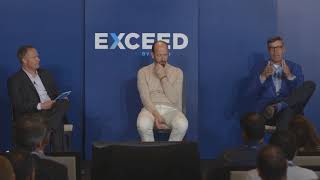
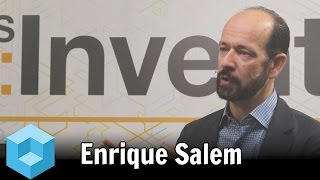
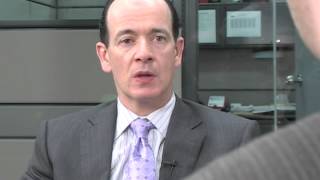
In this HYCU interview, Simon Taylor, CEO of Haiku (now HYCU), speaks with Enrique Salem, partner at Bain Capital and former Symantec CEO. Salem outlines his career—from early work at a financial institution, founding a startup, joining Peter Norton’s team, rising to CTO and later CEO of Symantec, where he oversaw a $7 billion business and the NetBackup/Backup Exec products, to his current focus on infrastructure investments at Bain Capital. He highlights the relentless 40% annual growth of data volumes, which strains traditional backup windows and forces a redesign of data protection architectures. Salem praises Haiku’s (HYCU’s) innovative approach, especially the R‑Cloud low‑code platform that enables application‑specific backups in a SaaS‑centric world, and the R‑Graph visual tool that maps complex data estates, citing a Boston Red Sox example with over 1,000 apps. Finally, he discusses AI’s accelerating data generation and the need for secure, efficient protection of both public and proprietary model training data, positioning HYCU as a key enabler for safe AI adoption.
Chapters
Hi, I'm Simon Taylor, the CEO and founder of Haiku, the world's fastest-growing data protection as a service business. I'm thrilled to have with me today Enrique Salem, partner at Bain Capital. Enrique, it's great to have you on the show.
Simon, thanks for having me. It's great to be here with you and get a chance to chat a little bit about Haiku.
Now, Enrique, anybody in the data protection space for any amount of time has heard the name Enrique Salem. But for anybody that's not familiar, would you mind just giving a little bit of background in terms of your illustrious career?
Well, you know, I, I started my career early on in a large financial institution, and I enjoyed that time, but I quickly realized that I wanted to be a founder and work with startups. So I did my first startup about a year after I graduated from college, and it was a really fun ride, and I really developed at that time a passion for startups. Then I went to work for a guy named Peter Norton. I was Peter's, uh, 8th software engineer, and I worked with him on products like Norton Antivirus, Norton Internet Security, and then a number of other products. And along the way, Symantec acquired Peter Norton Computing, and I rose through a number of different roles, including becoming the chief technology officer for the company. And doing that and doing a couple other things, I realized it was maybe time for me to do another startup. So I left and, uh, spent time with a startup called Brightmail that we sold, uh, back to Symantec. And I came back to the company, and, and ultimately, uh, I became CEO of Symantec, where we grew the business to over $7 billion and 21,000 employees. As you know, one of the major products at Symantec was the data protection business around NetBackup and Backup Exec. And today I now lead investments for Bain Capital Ventures focusing on infrastructure.
You know, it's incredible. And as someone leading a startup in data protection, it's incredible to sort of get your wisdom and your view of how this industry has kind of unfolded over the last few decades. How do you sort of see data protection and sort of the changing challenges it's had to embrace over the last few years?
Well, one of the things that's constant in data protection is the volume of data is always growing. I've said it many times. Everybody said it. Well, can it continue to grow at this rate? And it does. It grows at 40% per year. And so what you need to protect increases. Now, the thing that's happened that many folks and customers dealt with ultimately was that backup windows were not long enough. They couldn't back up all their data because the volumes of data had exploded. And what I always said to folks was there has to be a change. The architecture has to be renewed and modified to really handle this explosive growth in data. And that's where companies such as Haiku really have innovated. Where they've allowed you to redo the architecture and really be in a position to really protect all of your data.
Now, that makes a lot of sense, Enrique Salem, and thank you for sharing that. You know, we talk a lot at Haiku, as you know, about the proliferation of SaaS. And I'd love to hear from you. How do you sort of see that driving change and continue to drive change into data protection and into the sort of cyber landscape at large? And obviously, I'd love to hear a little bit about, you know, how you might think Haiku is playing in that and sort of solving some of those problems as well.
One of the things that we've seen with applications is there's been this Cambrian explosion. Every individual user today uses many, many applications to get their daily job done. The other thing that's happened is that the hackers, the thieves, and the spies, they want to steal the data. And so you've got this complicated problem of more applications creating data, and attackers who feel that they can target it. So what do you need? You need an effective solution that combines the idea of protecting you from a cyber threat perspective, but also being able to back up each individual application. And so what's been created that I think is the true innovation at Haiku is that we've got this R Cloud that really is about being able to, in a purposeful way, backup specific applications. That becomes increasingly important because the future is all about apps.
Yes.
And being able to protect that data very effectively.
Well, thank you for saying that, Enrique Salem. And, you know, it's interesting for us, I think, because with ArcCloud, we've also got our graph that will help you to visualize your entire data estate. And it's incredible. We were just talking to the Boston Red Sox in a previous discussion and they said they had over 1,000 apps in use. I was, my mind was blown. I mean, this is not the largest company in the world, but maybe one of the most complex teams, and they're managing 1,000 apps, and they said that using ArcCloud to visualize, protect, and manage that data was really game-changing for them. You know, my very last question, and I know you've got to get on with your day, Enrique, but obviously we're hearing a lot about artificial intelligence. How do you see the world of AI sort of converging with infra, you know, over the next few years?
Well, I think what's happening is AI is not a new concept. We've been working here and we're here in Boston and AI has been a central theme for a long time. Some of the genesis of neural networks was here in the Boston area. And what I would say is that AI has an opportunity to simplify many tasks. It also will create significant amounts of data. We'll be training what we call large language models. And so there'll be a whole series of things that happen in every organization. While they'll be able to use public large language models, they will also want to use their proprietary data with those models. And so there's going to be more things that need to effectively be protected and trained and fine-tuned. And so ultimately, what we see is a tremendous opportunity to improve efficiency and also make sure that customers can fully take advantage of it in a safe and secure way.
Well, I can guarantee you after hearing that, that Haiku will be on it and helping to drive that train. Thank you so much, Enrique Salem, for taking time with us today. And thank you to everybody out there. Go to www.hycu.com to learn more about Haiku. And explore R-Cloud, the world's first low-code development platform for data protection, and R-Graph to help you visualize all of your data and protect it on-prem, in public cloud, and SaaS. Thank you very much.