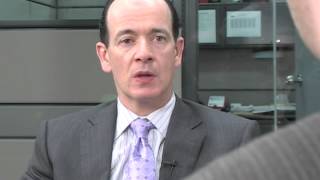
In this episode of The Forecast, host Molly interviews Enrique Salem, former Symantec president and Bain Capital partner, about the operational and revenue leadership shifts that occur when a company transitions from a late‑stage private startup to a public company. Salem emphasizes that predictability becomes the primary metric Wall Street uses to evaluate public firms, placing the CRO at the center of accurate forecasting. He outlines a "pipeline prosecution" framework that requires a system capable of delivering a committed revenue number by week 4‑5 of each quarter, warning against both under‑promising (sandbagging) and over‑delivering, as large variances erode investor confidence. Speaker C adds data‑driven tactics—using historical conversion rates and meeting/email activity—to pressure‑test pipeline health and improve early‑quarter forecast accuracy. Salem then discusses how scale changes post‑IPO, moving from $10 M ARR targets to $150‑$200 M ARR, and stresses the need for revenue leaders to think several quarters ahead, not just the current period. Finally, he identifies the core IPO‑readiness metrics: sizable ARR, >30 % year‑over‑year growth, efficient customer acquisition cost, and strong net revenue retention (≈120 %). These metrics, together with disciplined forecasting, form the foundation for successful public‑company performance.
Chapters
I think the bar really goes up when you become a public company. And the reason is predictability is the measuring stick of Wall Street.
So you've IPO'd. Now what? Well, today on The Forecast, we find out from Bain Capital's Enrique Salem, who was also the president of Symantec and appointed to President Barack Obama's Management Advisory Board. So yeah, he knows a thing or two. Let's dive in. It's almost every startup founder's dream to go public. And as we heard from Sumo Logic's CRO Steve Fitz in our recent discussion, it takes pipeline prosecution and impeccable forecasting to make it that far.
And we've doubled down, tripled down in terms of, you know, pipeline inspection in that regard. In our vernacular, we call it pipeline prosecution.
Prior to IPO, teams must look look at the metrics that will deliver maximum growth, including new logos, cross-sell, upsell, and 100 ARR. But after the bell has been rung and the confetti cleaned up, there's a whole new set of challenges that we'll speak about with today's guest. Welcome, Bain Capital's Enrique Salem. Enrique, thank you for joining us on The Forecast.
Great to be here with you, Molly. I'm excited for today's session.
Me too. So as companies are going from late-stage startup to a public company, what advice do you have for revenue leaders as they get ready for the big time?
I think, I think the bar really goes up when you become a public company, and the reason is predictability is the measuring stick of Wall Street, and that falls most often to the CRO. And so the question you have is, Have I built a system that by week 4 or 5 of the quarter, you understand what your likely committed number is going to be? And so what, what you have to think about is how well have you trained your team to manage the pipeline, get to deals that are in commit, that you can say on earnings day, and that usually happens between week 4 and week 6, that you have a high degree of confidence in what the final number for the quarter is going to be. And so this notion of predictability is the most important thing, and you really want to test yourself. So for example, at week 4 or 5, what's the number you're calling? What is the expected bookings, revenue, ARR, whatever the metric you use inside your company And how accurate are you on hitting that number by the end of the quarter? And what I would do is let's say we're going public in, call it, 6 quarters. I would start this process of how well we can predict and forecast what our expected or committed number will be and what's the variance of what we said at week 4 or 5 and what the final number is. Because you cannot have big degrees of variability. And by the way, sandbagging, which a lot of us sometimes— I used to be— people used to call me the consummate sandbagger because I always was of the school of under-promise, over-deliver.
Right.
But the challenge is that being either too low and missing your number or over-delivering by too much a number makes it so that Wall Street believes you don't have control and understanding of your business. And so what matters the most is to be within a relatively small range at that week 4 or 5 when you have to announce and guide for the quarter.
Yes, sandbagging could be construed as underpromising and overdelivering. But yes, it is very detrimental to the forecast. So let's take a look at the data.
Hi friends. So as Enrique shared, companies looking to IPO really need a command on their forecast as early as week 4 or week 5 in the quarter. Unfortunately, the data that we've seen shows that most organizations aren't forecasting within 10% of where they land until at least week 8, and oftentimes week 10 in the quarter. So what are some of the things you can do to forecast more accurately earlier in quarter? One, you really need a way to pressure test your historical ability to convert similar pipeline in those last 7, 8 weeks of the quarter compared to the inventory that you have today in the, in the business. Second, you need a way to consistently pressure test that inventory for risk. And one of the top ways we've seen companies do this, interesting enough, is actually with meeting and email data. So pressure testing whether or not these organizations are meeting with your sales team, sending files back and forth, this becomes a really powerful signal to know the health of your pipeline. And third, you need a way to understand how much revenue is gonna come in to the business that you're not yet aware of. So run rate business or pull forward business. Companies that have a command on these three things are predicting revenue very accurately, not only early in quarter, but even out quarter. Hope this helps. Back to you, Molly.
So Enrique, let's get back to that subject that's on everyone's mind right now. What changes in your focus as you go from private to public company?
Yeah, I think one of the most important things that happens is as a CRO and you've gone public, the scale of the company is much larger. So instead of thinking about a company that when we were starting was trying to do $10 million of ARR in a year, you're probably thinking about numbers that are $150 million in ARR, $200 million in ARR. I mean, these are big substantive numbers. And what I always try to help CROs think about is, and companies in general, is you don't underperform in a quarter, the quarter you're in. You underperform 4 or 5 quarters earlier. And so the CRO has to really raise their point of view. And while they need to deliver the quarter, as we discussed previously, they need to be thinking about how they make the next quarter, the following quarter, and be looking a little further out. And I think the— and by the way, that's not just the CRO. I think that is the CEO, the head of marketing, the executive team, needs to start looking a little further out in how they're going to be successful in delivering on the growth expectations that they have for themselves and that Wall Street is expecting. And so it's really raising up and looking a little further out is— becomes very, very important as you go public.
Enrique Salem, given the current circumstances, looking towards the future, what is your forecast for for the future of what it will take to IPO given this new environment?
Well, you know, the same things, the same things are still true pre-COVID, post-COVID, and any time where what you get rewarded for in most businesses is growing. The two things that will continue to matter is what's the total scale of your business? You know, are you in that $150, $200 million ARR range? And are you hopefully growing north of 30%? If you're growing at 30% plus, that puts you in a very special group of companies. And so to IPO, you want to have your metrics in the right place: revenue scale and growth. The other thing that Wall Street cares a lot about, and this is something that's become more interesting, is there's two other important metrics. What is that? Our cost of customer acquisi— position. That's an important metric to think about. The second— the other metric I think that a lot of folks are spending time on is this idea of net revenue retention. So are you keeping your existing customers and are they buying more from you? And the reason that becomes so important— and at this point, 119, 120% net revenue retention is a very good number— if you think about what's inside of that number, If you're doing 120% net revenue retention, that means you've got 20% growth built into next year's plan before you start the year. Because 120% means you're gonna do 120% on the next year over what you've previously done. And so those metrics become important: revenue, the growth rate, customer acquisition or sales efficiency, and net revenue retention.
Yes, if you are planning on going public this year, prepare yourself now. Good luck, folks. Many thanks for watching. And until next time, stay healthy, stay focused, and stay connected.