Buying a home in 2026 - everything you need to know about fractional ownership. #homebuyingtips
Frank Rohde, founder of Ownify, explains fractional home ownership: you put down 2% instead of 20%, pay monthly rent plus equity purchases, and rent decreases over time. The company holds the title through an LLC split into 10,000 shares, uses AI for pricing, and lets you buy the full home later at a set price.
Chapters
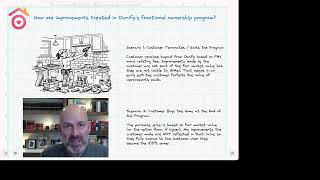
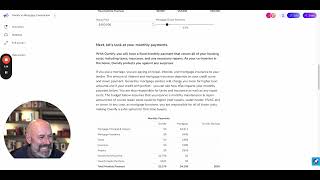
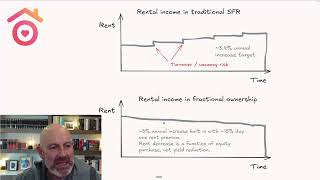
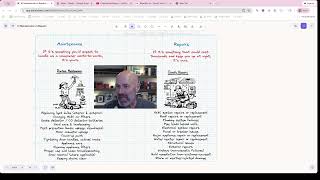
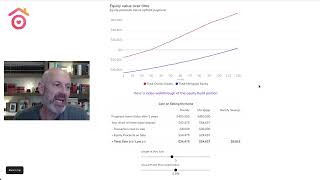
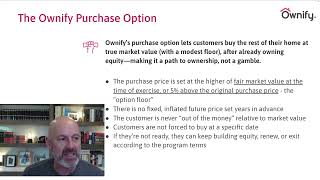
Hi, my name is Frank Rhode. I'm founder and CEO of Ownify, and I wanted to welcome you to this walkthrough, um, Ownify University, which is fairly lengthy, and so I hope you bear with us. Um, but before we get started, I just wanted to give you a bit of background on why this is important to me and why this model we're building equity-based, you know, ownership and share-based ownership, I think is a really important part of solving the homeownership affordability crisis that we're facing in the US. This is my third company, and I've been an entrepreneur in the software finance analytics space really since I first started working. Originally came here from Germany. Went to college on the East Coast, went to Wharton, did the undergrad— undergraduate finance and real estate program, and from there joined a consulting firm on the West Coast named Oliver Wyman, did a bunch of work for banks, finance companies, insurance companies, really around this intersection of, you know, financial analysis and consumer products, consumer behavior. From there, I started an insurance company with a couple of colleagues and learned a lot about what it means to sell financial services to consumers and to build, quite frankly, the web-based interaction around that financial services offering. From there, I was recruited into FICO. I spent 4 years building credit risk underwriting and decision models, optimization models for large banks and lenders, really trying to understand price sensitivity, credit risk, and the behavior that consumers exhibit when they're faced with different types of consumer financial offerings, credit offerings in particular. From FICO, I joined a couple of early founders and started Nomis Solutions, and spent the better part of my career the last 15 years prior to founding Ownify at Nomis Solutions, building that up into a $25 million business before ultimately selling it. And Nomis built the pricing infrastructure for a lot of the large mortgage lenders. In the US, in Canada, in Australia, in the UK. So I got deep into the bowels of mortgage math and really trying to understand how that product works, how we best position it to the consumer, what lenders can do to enable this journey into ownership, uh, how they compete with one another and how they best provide services to the consumer. And as part of that journey, I also started seeing how more and more first-time buyers, young people in particular, are getting squeezed out of the housing market. And today, 2026, this is a big issue. It was an issue, you know, when I bought my first home. I was here, you know, in San Francisco looking to buy a condo and quite frankly couldn't afford the down payment. So my parents helped me, you know, middle-class musicians living in Germany. They helped me out with the down payment. I eventually paid it back. And that is now, you know, over 20 years ago. And it stuck with me as, Why did I, with good income, good credit, but maybe lacking the down payment, why did I need help from my family? And, you know, 20 years later today, we're in the situation where most young people face exactly the same challenge. It's gotten a lot worse, quite frankly, right? Home prices have continued to go up, incomes haven't kept pace, mortgage rates are back to their long-run average in the, you know, mid-6s. Down payment assistance isn't really helping. The mortgage interest tax deduction is gone. So you look at young people and you look at them and they're really squeezed out of the housing market, right? And we see this in the statistics. The average age of the first-time buyer is now 40, right? And this is a mind-blowing fact. 50% of first-time home buyers need help from their families, whether that's down payment assistance, help with the down, you know, with the monthly payment. Or some other support. So what does that mean? It means that the system has left them behind, right? If you have wealthy family, wealthy parents, good for you, right? But if you don't, you're struggling, you're squeezed out, and you don't have access to that singular way of creating wealth for the average American family, which is owning their home. And that really led to starting Ownify a couple of years ago, um, with the challenge and the notion of how do we build a better path? How do we build a path that doesn't rely on mortgage debt, that isn't stuck in a system that quite frankly hasn't changed and hasn't innovated in a long time? And how do we make it easier for people to afford the down payment, the monthly payment? How do we give them more security and a better path, especially in the early years when it's the hardest to make that leap? And that's what Ownify is all about. It's really an on-ramp into ownership. It's a way for young people and any, you know, not just young people, but first-time homebuyers to overcome those hurdles into ownership that the market has created for them. So I hope you have the patience and the passion to join me on this journey, learn about how fractional ownership works, and learn about how you can be a part of it, whether as a customer, whether as an investor supporting our customers, whether as an agent working with us and making these transactions happen. I look forward to meeting you along the way, and enjoy this journey. Thank you. Hi everyone, Frank Rhode here with Ownify. I was just on a podcast earlier today, Housing Insiders, with Jonathan Lawless and Jeremy Potter, and one of the questions that came up is just how do you explain fractional ownership? So obviously a lot of education needed, and when most people think about ownership, right? They don't really have a good definition of what that means. So I wanted to take just 2 minutes to explain the difference between traditional ownership on one side, kind of on the left of this picture here, and then fractional ownership on the far right here, the way Ownify has built it and is bringing it to market. So traditionally, the way we think about ownership is, you know, a home buyer buys a home, and that means that their name goes on title. They file title with the county. Usually, especially first-time home buyers aren't all cash buyers, they use a mortgage, right? So they go to a lender, bank, non-bank lender, they get a mortgage, and the lender places a lien on the title. That basically means that if you default on the mortgage, you don't make your payments, the lender can exercise that lien and effectively take over the home and foreclose through a foreclosure process, sell it, and any equity that might be in the home gets settled through that way. So really, You're not a free and clear title holder. You have a title, but you're paying it off over usually 30 years, principal and interest. So that's kind of the traditional way, and that's what most counties in the US understand, and what most consumers and realtors and agents understand the traditional ownership model to be. Fractional ownership works different. So on the right here, all the way over, we've defined And then pledges title to the lender. It is an entity that holds title. Now that entity, in our case, it's a limited liability company, an LLC. It could be a trust, but it's effectively an entity, a corporate entity that exists solely for the purpose of holding title. So at Ownify, it's a single LLC for each individual home we finance for our customers, and that LLC holds title and issues shares. We issue 10,000 shares, or BRICKs as we call them, and then over time, customer— our customer who lives in the home is one, a tenant of that entity, but two, also a shareholder of that entity. So starting with 2% on day one, you're a shareholder of the LLC that holds title to the home. And then in our model, every month more shares are transferred from the owner, the customer who lives in the home, and that's the vehicle by which equity and ownership is built. So the difference being for a traditional mortgage journey on the left, you hold title, you pay it off over 30 years. On the other side, you're a shareholder of the entity that holds title and you build your equity, your ownership through share purchases in that entity. Eventually you on the right have the opportunity or the option to then buy the home outright from the LLC, and that kind of puts you back onto the journey on the left, which is, ownership the traditional way, holding title. So two different ways of being an owner in a home. Both are ownership, both have bona fide ownership interests. One expressed through title, the other one expressed through shareholdings in the entity that holds title. Any questions on this, please feel free to ping me, and always happy to help. Thanks. Hi there, it's Frank Rhode with Ownify, and today I wanted to talk a little bit about the math behind fractional ownership. We've talked about the legal concepts, we're going to talk about some of the underlying rules and how it works for the homeowner as well as the investor. But really the core focus for us is affordability and how we make it more affordable for first-time home buyers to get into their home and then stay in their home and eventually have full ownership while at the same time providing strong returns for our investors. So there are really two parts to the equation here. And let's start with the, at the top here, the consumer side, right? So as a consumer, you really have three choices. You can rent, you can own the traditional way with a mortgage, or you can have fractional ownership, which is that journey in the middle. And today owning the standard single-family home in the US is about 40% more expensive than renting that same home. That's been a big hurdle, right, of why so many people are stuck renting and not making that jump into ownership. And part of it is home prices, part of it is down payment, part of it is mortgage rates, part of it is student debt. All of those components are coming together. So fractional ownership is really that new journey in the middle, a third option that sits between renting and owning, right? You own a fraction, you rent a fraction, you increase the fraction you own, you decrease the fraction you rent. That's it in a nutshell. And so for the consumer, fractional ownership really splits this 40% jump in expense pretty much down the middle. So it is about 20% more expensive than renting, but 20% less expensive than owning with a mortgage. And so that's really the attractiveness. We can get you— that can get the consumer started with 2% down, a more attractive monthly payment, you know, all in a single housing payment, etc., and so forth. We'll explain in other videos. So splitting this cost hurdle, right, this big jump from 40% in half down to about 20%, still more expensive than renting, but obviously you're building equity, you get to pick a nicer home, and you eventually get to take it over. Now on the investor side, at the bottom here, the blue math is really the other side of the equation. So if you think about it as an investor, I can buy a home and rent it to a tenant, right? And generally I have a cap rate, which is the capitalization rate or the income I generate on my investment. And I have appreciation of the underlying home, so asset appreciation. And in the rental journey, 100% of the depreciation goes to me. Obviously, all cap rate goes to me. And so generally speaking, in the market today, 5.5% cap rate, maybe 3-4% appreciation, that's a 9.5%, give or take, unlevered, i.e., non-debt-levered return on investment. On the ownership side, let's switch over all the way to the right. As an investor, I'm really writing a mortgage note. I'm writing a debt instrument to a borrower, and all I'm getting is the interest and eventually my principal back. So if I'm investing in mortgages, mortgage REITs, right, generally my returns are 4 to 5%. It's highly liquid, it's an established market, so that's all good. But, you know, the returns are not that great because ultimately I'm only getting interest. I'm not participating in the asset appreciation. Fractional ownership again sits in the middle. So the return to the investor is actually more attractive than renting and significantly more attractive than owning. Now, why is it more attractive than renting as an investor to provide a fractional ownership solution to a consumer? Well, the underlying reason is really that the customer who's in the home generates a higher cap rate. Why do they generate a higher cap rate, higher income? Well, because they're in the home for 5 years. So there's no turnover, right? There's no vacancy. As an investor, as a landlord, I never want empty homes. And through this fractional ownership structure, because I have a committed customer, who's living in the home, building equity. So far we've not seen any vacancy. So lower vacancy, you have better maintenance expense because we have customers in fractional ownership. The customer acts as a co-owner, is a co-owner, right? Has a meaningful share of the home. And therefore the behavior shifts from that of a renter to that of a co-owner. You know, Warren Buffett famously said, no one ever washed a rental car. We're actually seeing that in the math. So you have better maintenance or lower maintenance cost. And we're also seeing slightly better appreciation because customers are taking better care of them, right? They're picking homes in better neighborhoods. Now, all of that, the cap rate and the appreciation, is shared with the co-owner, which is the tenant, which is the customer, right? So again, back to fractional ownership. So I'm not getting 100% of that better cap rate and better appreciation, but I'm getting a big chunk. As an investor, over the life of the Ownify program, you're getting about 95% of that. So all All else equal, that creates a higher unlevered return, ideally in the double digits, right? 10.45% in this example. And that's really what allows us to attract capital into this equation. And that's why fractional ownership from an investor perspective is a really attractive alternative to the traditional investing in single-family homes and just holding and renting them. All right, we'll explain the rest of the math when we get to rental yield in the next section. So one of the questions we often get is, how is Ownify and fractional ownership different from rent-to-own? So I can give you my explanation, but let's do something fun, and I have not done this before, so we're going to do it live and see what happens. And hopefully it'll work. We're going to ask ChatGPT to give us a comparison of Ownify versus rent-to-own. So write a one-page summary, side-by-side comparison of rent-to-own versus Ownify fractional ownership. Let's see what it comes up with. It's going to search the web. It's going to reticulate the spline and, well, let's see what it did. All right. So ChatGPT is telling us that the core concept of rent-to-own is that a tenant leases a home with the option to purchase it later. A portion of rent may be credited towards the purchase. That's correct. And with Ownify fractional ownership, the buyer gains equity ownership immediately via a co-ownership model. Ownify and buyer share ownership from day one. That is correct. So in our model, the customer buys 2% of the shares in the LLC and therefore is a 2% bonafide owner of the home from day one. The path to ownership. Rent-to-own generally has an option to buy at the end of the lease term. It's not guaranteed unless it's exercised. That's correct. And then Ownify really is equity accrues from day one. And as we've explained in other chapters, every month the customer buys incremental shares in the LLC going from 2% to 10%. So that true ownership stake kind of increases over time as a customer makes their payment. Down payment requirements, uh, is usually in rent-to-own, there's usually an option fee plus higher rent, and the credits may be applied later. Um, in Ownify's fractional ownership, there's a low upfront payment, 2%, and there is no mortgage involved in either of the two scenarios. All right, I see. Let me move myself out of the way a little bit. Just so you guys can see this a little better. Alright, um, monthly payments in the rent-to-own model, rent that may include a premium, and often the programs out there have rent credits that can be applied or should be applied towards down payment. They often don't work, and sometimes the customer forfeits these rent payments. 'in the Ownify model, the monthly payment replaces the mortgage, and often it's lower than the traditional mortgage payment.' That is correct. So ChatGPT got that right. And one of the important components here is that in the Ownify model, rent actually goes down over time, right? Every time the customer buys incremental bricks, incremental shares in the home, the rent goes down ever so slightly. So the basic principle here is that the customer only ever pays rent on the fraction of the home that they haven't bought already. Equity accumulation in rent-to-own, equity occurs if and when the purchase option is exercised. That's correct. As the name implies, rent-to-own means rent, rent, rent to own. And the big difference in fractional ownership is equity accrues every month as the customer buys shares in the home. So that is really probably the biggest difference between rent-to-own and fractional ownership. Is that the customer's Hi there. In this chapter, I'm going to explain the purchase option and the relisting fee. Those are two important contractual items in the Ownify agreement that make fractional ownership work. So the customer has chosen their home, they've paid their 2%, they're living in the home, they're paying rent, and they're building equity over time, right? Every month they're buying bricks, always at fair market value. At the same time, the customer has a purchase option that allows them to trigger the purchase of the home from the LLC, always at fair market value, the same fair market value that is underlying the monthly brick purchase. Now, that purchase option at fair market value has a floor, and that floor is an increase of 5% above the original entry price, the original property value, initial property value as we call it in the contract. And that 5% increase is really there to protect our investors from a short-term fluctuation in the value of the home and really discourage the short-term kind of use of this product as a bridge product, as short-term financing, right? The goal here really is to create this on-ramp for the consumer, for first-time home buyers, allow them to build equity and then exercise the purchase option when the home will have appreciated usually above 5%, um, on top of the initial purchase price. So what that means is that compared to other rent-to-own programs that you might've seen, um, Ownify does not set a purchase option price in advance. We let the market determine that purchase option, and that means that in option speak, the call option that the customer has is always at the money. It's never in, in the money, it's never out of the money, it's always at the fair market value of the home at that future point in time. So the process is obviously that the customer gives us notice, and we will arrange the paperwork and the customer technically then buys the home from the LLC. So that transaction, for the mortgage folks out there, is actually a purchase transaction. It's not a refi, right? It's a purchase transaction where the LLC is a seller, the customer is a buyer, and the value of the shares that the customer has built up are used to fund the down payment. So the benefit of that to the consumer is they're never out of the money. They always know exactly at what point in And every month they know that the value of the home is what they just paid for their shares. And that's the value at which they can also trigger that purchase option. Now, if they're not ready, they can keep building equity. So stay in the program for the first 5 years. They can renew at the end of 5 years for another 5 years, keep building equity, stay in the Ownify program. So if someone isn't ready, maybe they don't want to get a mortgage, they can't get a mortgage, they're not exactly sure, they can always renew, stay in the program, continue building equity. Or they can exit at any point according to the program terms. Right now, an exit means that a customer gives us 60 days notice. They can terminate their participation in the Ownify program, and at that point their lease terminates and their equity share terminates, which means we will buy back their accumulated equity also at future market value or at fair market value. It's always the same price no matter whether we're a buyer or a seller. So if someone exits according to the program terms, gives us notice, the value of their shares, uh, stays and we will buy back those shares at fair market value. However, we will charge a relisting fee and that's the next important concept to understand. Now, what is a relisting fee? If a customer terminates their Ownify contract without purchasing the home, so this is only really applicable in the scenario where the customer doesn't exercise their purchase option, if they terminate the program, we charge a relisting fee. And that relisting fee is 4% of the property value, again, of the fair market value of the property at that point in the first 30 months, so 2.5 years of the program. And then that 4% gradually melts away. It reduces to 2% by the end of 5 years if the customer is not in default. If the customer is in default, on any of their contractual obligations. It stays at 4%. And really, the way to think about the relisting fee is it's the equivalent of the transaction cost the customer would have incurred had they bought the home with a traditional mortgage. And if a customer had bought that same home with a mortgage, and let's say 3 years in, 4 years in, 5 years in, they decide to sell the home, they would incur probably around 7% of transaction costs, right? 3% for the listing agent, 3% for the buying agent, maybe another point in closing costs that are, that are seller paid, listing fees, staging fees, et cetera. So 7% compares to, you know, what is arguably a favorable relisting fee of 4%, going down to 2% by the end of 5 years. But that is an important component to understand. So there is a little bit of a penalty function to protect our investors and to really make sure that the consumer understands You know, this is a program that is designed to help you get into the home. So if you take over the home, you exercise your purchase option, you buy it with a mortgage, there is no relisting fee. But if you exercise your termination, you leave, obviously we need to sell the home at that point. And the relisting fee of, you know, 4%, 2% covers some of our costs in that eventuality. Hey everyone, just wanted to spend a minute explaining what BRICs are. So we've talked about this concept of fractional ownership. We're fractionalizing the title by placing it into an LLC. So BRICs are really shares, or more accurately, membership interests in that LLC. So in our model, the LLC holds title to the home, the LLC issues 10,000 shares or BRICs, and the customer then owns those bricks, starting with 200, working their way up. And every month we value the home. We establish the fair market value of the home. We'll talk in a second about how exactly that works. So a brick is always a representation, a legal ownership of 1/10,000th of the value of the home. So take an example. We have a $400,000 home that we purchase. We divide it by 10,000. A brick or a share is worth $40. The customer buys it for $40, we sell it for $40. If we wanted to buy it back, we would also pay $40. So really core to the concept of fractional ownership are this notion of bricks or shares in the LLC that holds title to the home, meaning the value of the home divided by 10,000, uh, represents the value of the bricks. So if you think about that concept, right, a brick can be owned by the customer, it can be owned by an investor. And if it's owned by the customer, meaning someone who lives in the home owns bricks, owns shares in their home, obviously they wouldn't pay rent on those bricks. However, if those bricks are held by an investor, we charge rent and the investor gets a fair market value rent on those bricks. So really, bricks are shares that generate income for investors, but once they're bought by the customer You know, it doesn't make sense for, for a renter to pay rent into their own pocket. So effectively, the rental payment just goes away. What's important in this whole construct is that, again, this is an equity-based path to ownership. It does not involve debt. There's no mortgage, there's no principal balance, there's no borrowing that happens, there's no interest rate. This is not a debt obligation. It is really a share of the home through this LLC structure that allows the customer to own equity without having debt. Alright, so just a little example here. Again, as I mentioned earlier, the value of the home is always 1/10,000th of the brick. So we buy a home for $350,000 and we pay, you know, let's say $345,000. We have closing costs, we have make-ready costs, and at the end of the day, our total entry price for the home is $350,000. At that point, the value of a brick is $35. Now, you may ask, what about a month later? What about 2 months later? If the customer is buying bricks every month and we're selling bricks from the fund or investors, so this trading mechanism of bricks or shares in the LLC going back and forth requires that every month we evaluate the, or we set the value of bricks, and we use 3 independent valuation providers to do that. So all 3 of these, Clear Capital, Cocoon, and House Canary, you can see at the bottom here, are 3 independent large companies that do this for a living. They've been in the business, they're used by thousands and thousands of institutional investors. And those companies create what's called an Automated Valuation Model, or an AVM, which is really establishing the fair market value of the specific home, not the market, but the specific home that we're talking about. So that home that we bought for $350,000 last month might be worth $348,000 or $352,000 a month later, and we use the 3 different valuation providers to pull those numbers. And then we triangulate, we basically average— there's a little bit more involved in that, but we basically average the 3, those 3 numbers to say, here's the current market value. And that's a really important point because we, Ownify, don't establish the value of the home. It is the market that establishes the value of the home through, you know, all the transactions that are happening for similar homes in that zip code or in that market. And those 3 valuation providers have built the models and the assessment and the, the process, right, to pull all that data and establish an accurate valuation. And for the types of homes we buy, generally those valuations are accurate to within 2% or so of the actual market value. So you're not going to get a better assessment from an appraiser or a broker price opinion or some other, you know, mechanism And that, that's really what allows us to sell homes through bricks, right, and allow the customer to buy the home through brick purchases because we have a very good methodology of establishing the actual value of that brick at any given point in time. So now what does that mean? Well, the customer makes a monthly payment every month. We are selling bricks from the fund, right, to the customer every month. At market value. So here I've put an example. Let me move myself out of the way a little bit here. I've put an example of the Baldwin, which is one of the first homes we bought and we financed for one of our customers. It's in Raleigh-Durham, and Zach and Skyler, who live in the Baldwin, um, are buying bricks every month and have been for 3 years now, um, always at market value. So when we bought the home, we paid $350,000 all in. Actually, we paid $350,000 purchase price. We paid $4,000 in closing costs. $1,000 was make-ready costs. It was a little bit of cosmetic repairs. It was a fairly new home. And so really what that meant is that the value of the home or the entry price was $355,000 when we bought it. So the customer, Zach and Skyler, contributed 2% to that $355,000. And then they bought and it started buying bricks every month, always at market value. So what happened is we started out at, you know, $35.50, which is that $355 divided by 10,000. And then a month later, the value of the home fell a little bit, so we sold bricks at $34.99, and the customers bought bricks at $34.99. And then it fell a little more to $33.82, kind of came back up at $34.20. and so on and so forth. And so really it just like a share price of any company that you might see on the New York Stock Exchange, the value of this home changes over time. We mark to market every month based on these 3 independent valuations, and that really allows us to then sell or buy, um, bricks, i.e., shares in that home every month. And so this is the monthly brick price as it has evolved over that first 2 years from December '22 to November of '24. Now, Zach and Skyler, who live in the home, have been buying bricks every month. And so what you would expect is they're accumulating equity, and we're going to show on the next page exactly what that looks like. So, you know, they make a fixed monthly payment and buy a certain dollar value of bricks every month, which really means that when home— when the value of the bricks is slightly lower, like right here, $3,382, they buy slightly more bricks. And when the value of the home goes up and they're buying bricks at $37 or maybe even $38 over here, right? At that point, the value of the home has increased and they're buying, you know, at a higher price, which means they're buying slightly fewer bricks, right? Because imagine you're making a $500 investment every month into these bricks, right? You're actually buying more at the, at the $33 price than you're buying at the $38 price. And that, by the way, is called dollar cost averaging, right? And if you're a financial advisor or an investor, you know that that's exactly what you do when you put money into your 401(k) or into a mutual fund or any other investment vehicle where you're making a recurring investment. And you always buy slightly more on the dips and slightly less on the peaks. And that's a great way of accumulating equity. And when you look at what happened to the Baldwins, right, Zak and Skylar, living in this home, they started with $7,100. That was their down payment, their 2% contribution into this home. And then every month as they made incremental equity purchases, as they bought incremental bricks, they increased their equity value. And it's a very nice diagonal line, which means in a very safe fashion, right? They're building equity, they're building value, they're building their nest egg in this home on their journey to eventually taking it over with a mortgage. So that's a core concept to the fractional ownership model and this ability for the customer to buy shares, right, buy fractions of the home as shares in this LLC over time. Thank you guys for listening. I hope that was useful. Please subscribe to our channel. There's content for you as a first-time homebuyer. There's content for our realtor agent partners, and there's content for investors, all neatly organized into different channels and different playlists. Thank you. All right, I wanted to explain evergreen equity and how Equity Build works with Ownify versus a mortgage. This is a really important point to understand, and I think one that takes a little while to wrap your head around. Ownify is an equity-based path, meaning there's no debt, there's no leverage. And leverage is something that, you know, as a mortgage borrower, I think we all understand. Leverage is great when home prices go up because the balance that you owe to the bank on your mortgage loan, the principal balance, doesn't change. In fact, you buy it down over time through principal repayment. However, leverage can also work in the opposite direction, especially for a low down payment mortgage when home values fall. And we've seen that in 2008, 2009. When a lot of the country had negative equity, meaning their homes were underwater. So with a mortgage, you have this effect of leverage on the one hand amplifying your gain, on the other hand also amplifying your loss. So there's this variance in a mortgage transaction through leverage in, in, you know, how you make or lose money. With Ownify, you don't have that variance because there's no leverage in this transaction for the consumer, which means that on the upside, as home values gain, the customer participates in that appreciation pro rata to their equity holdings. And if home values fall, the customer participates also pro rata, but the customer can never be underwater. They can't lose all of the value they've accumulated. And so in a way, what Ownify does is it puts guardrails on the equity accumulation of the customer. There's a cap on the upside, and there's also a floor on the downside. So we're protecting the downside in return for the customer sharing the upside. And we call that Evergreen Equity because it really means that the equity that the customer builds is evergreen. It cannot go to zero. It can, it cannot be negative unless a customer really terminates early and is subject to that release. Listing fee. So what that means in, in practicality, something that you can play through and run different scenarios on using the calculator on our website. So what you see on the screen here is the home buyers tool. It's on our website and you can plug in any number of different scenarios. What I've put in here kind of as a starter scenario is assuming we buy a $400,000 home and it's a side-by-side comparison comparison of Ownify compared to a mortgage transaction. The mortgage transaction here is using the current rates. It's assuming that you put 10% down. It's assuming that we have a 680 FICO with loan level price adjustments for 90% loan to value and the, the FICO score. And what we're assuming here is that the customer holds the home or stays in the home for 5 years. So the length of stay is 5 years, and both of these are things you can change. And, um, to start with, and I just wanna illustrate the concept here, we're plugging in zero home price appreciation. So we're assuming that home prices stay flat over 5 years. Highly unlikely that that happens. Realistically, they go up by some marginal amount. They might go down. So what I want you to pay attention to is how these two lines and these two numbers here change. The red line is the equity value that the customer builds after all the transactions with Ownify. The blue line is the equity value of the same transaction with the mortgage, again, after all the transaction costs. And so with 0% home price appreciation, you can quickly see that both start negative, and that's really because transaction costs do take a chunk out of the equity on day one. If you buy a home and you try to sell it the next day, you lose money. We all know that. But as you hold the home over time, right, right around month 30, you start breaking even with Ownify. And with the mortgage, if home prices don't appreciate, you start breaking even right around just shy of year 10, right? 110, 115 months. And that's, that makes sense because it does take about 5 years to buy down 7% of principal with a standard 30-year fixed-rate mortgage. And if home prices don't appreciate, it takes you a lot longer, including the, you know, transaction costs on sale. So what happens as home prices appreciate is that the blue line— let's see if that— if I can make this work. There you go. The blue line and the red line converge. And that makes sense because, again, the blue line is the mortgage-based equity path. The red line is the Ownify-based equity path, and they start crossing over right around 3%, which is the kind of the long-run average of home price appreciation in the United States. And once you go much past that, the blue line starts outperforming the red line pretty quickly. So what does that mean? Well, not a surprise, leverage, which is a mortgage-based transaction, leverage works really well on the way up. So if you know that home prices are going to appreciate 5%, you should really stretch into a mortgage and put down as little as possible and ride that wave. And that's been what every realtor has told every customer since time immemorial. Now, the reality is that sometimes home prices go down, and that's really wherever green equity comes into play and where the Ownify model has some real benefits. So let's see what happens as we move home prices into the negative range, right? So now at -1, and -2, you very quickly see how these lines diverge pretty rapidly. The Ownify line stays positive. The mortgage line never goes back to positive. In fact, it just keeps digging further and further. And the reason for that is, again, that, you know, you buy a home and you have a fixed mortgage balance, but the value of the home kind of decreases, decreases, decreases every year. Even if it's only -1% each year, obviously you now have an asset that has depreciated. You still owe the bank whatever mortgage balance you had in the beginning, right? And that gap, that negative equity, really starts eating into, you know, into your wallet. And that's been one of the challenges, quite frankly, for folks in 2008, 2009 as they got out of the housing crisis. If you look at, you know, at negative 1, negative 2, you're now at negative equity. The mortgage, $10,000 underwater, $10,000 underwater. Negative 3, $26,000 underwater, $41,000, and so on and so forth. And so interestingly, the Ownify equity value obviously goes down as you change from 0 to minus 1, minus 2, minus 3, but it goes down by a relatively small amount. And the reason for that is the magic of dollar cost averaging and not having leverage. So really what Ownify does with this structure, it gives the customer a way to build equity that is protected in both, uh, on both sides, right? On the one hand, it's capped on the upside and on the downside it is also capped. So really we have two guardrails here, as I mentioned earlier. Where the customer is effectively buying downside protection by giving up upside potential, right? You're sharing the upside of home price appreciation with a pool of investors in a pro rata fashion. And in return, those same investors are protecting your downside. So again, if you run the range here with Ownify, -5% home price appreciation, the total equity gain is still $30,000. All the way up to 5%, you're now at $39,000. So your range is $30,000 to $39,000, while with the mortgage, that range can be negative $56,000 all the way to $127,000. So obviously, that's the impact of leverage, and I encourage you to really play with this and understand it deeply because it is one of the core constructs of equity-based financing rather than debt-based financing, which is this notion of, you know, sharing the upside in return for protecting the downside. And again, that makes sense for consumers early on in their careers, for consumers without a whole lot of savings, for consumers with good income but not a lot of down payment, right? It's a risk mitigation mechanism, and it allows them to get into the market, allows them to pick a home, allows them to build equity without incurring the risk of a 98% LTV LTV mortgage or even 100% LTV mortgage. Again, this is one of the core constructs, super important to understand. Please ping me, watch the other explainer and educational videos, or ping any one of our concierges to discuss this in more detail. Thank you for watching. All right, I wanted to touch on repairs and maintenance in our program. One of the design principles for Ownify is really to create this 5-year program of ownership on training wheels, right? Homeownership without all of the worries. And so what we did is we basically created this package that covers a lot of the unforeseen circumstances and ensures the customer from, you know, the big expenses and the risks that come with homeownership. And you hear a lot about this where young people buy their starter home, they stretch into making the payment, they can barely afford the monthly payment, and then something happens. The roof starts leaking, the water heater goes, you know, the HVAC goes. You know, one of our customers had a tree fall on the fence of the neighbor and they had to pay, we paid for it. And so part of the design principle with Ownify is really insuring the customer against that. So we have in our contracts a split in terms of responsibilities between standard routine maintenance, which is the responsibility of the customer up here, and the unforeseen things that could keep you up at night, which is our responsibility up here. So maintenance, basic principle is if it's something that you'd expect to handle as a homeowner month to month, it's yours. Things like replacing the light bulbs, changing filters, smoke detector, you know, CO2 detector batteries, yard care, landscaping, snow shoveling, pest prevention, you know, cleaning the gutters, keeping the house functioning, you know, minor repairs, touch-up paint, all of those things that as a homeowner you would normally expect to take care of. On the other side, you have repairs. Those are the things where if it's something that could cost thousands and keep you up at night, it's ours and Ownify covers it. Through its program. So that could be failure of the HVAC system, the roof starts leaking, the major systems give out, right? The water heater, structural issues, external repair, anything to do with storm or weather-related damage. So you see as an example, all the things on the right, and that's really something that Ownify takes care of. So important to understand as you consider the program or as you talk to customers about the program, really this differentiation between maintenance and repairs And importantly, unlike a traditional mortgage-based ownership program, Ownify takes care of the repairs for the first 5 years. All right, in this chapter I'm going to talk about how improvements are treated by Ownify. Generally, our philosophy is that we encourage improvements. We want the customer to act like an owner, and if that means they're making a renovation or improvement to the kitchen, they're doing a renovation in their kitchen or their bathroom, That's great. We ask that the renovations are permitted, that they submit any sort of plans ahead of time, and obviously let us know. Once improvements are made, the question really is how is the value of those improvements treated over time? One of the things we don't want, and we are avoiding with our contract structure, is getting into an argument as to the value of an improvement who did what amount of work, who paid for what type of materials, how many hours were spent by whom. That is not a win-win situation for anyone involved. So our contract is very simple in that the value of improvements do not impact the valuation of the bricks or the valuation of the purchase option at the end of the term. So at any point, the customer buying bricks or the customer exercising their purchase option is doing so based on the AVM, the automated valuation process, that does not include the value of an improvement made, a kitchen renovation, a bathroom remodel, what have you. And generally, AVMs don't pick up those value, those, that incremental value. So from a, from a valuation perspective, that makes all the sense in the world. Now, there are two scenarios, right? Scenario one is the customer terminates early, exits the program, And let's say someone has made a $20,000 improvement, or they've spent $20,000 on a kitchen remodel. In that scenario, the customer forfeits the improvement because Ownify will buy back the accumulated equity at fair market value as established by the independent AVMs. Those independent AVMs do not know about the kitchen remodel. They didn't increase the value of the bricks or the value of the home over a you know, the life of the contract. So that $20,000, even though it was put into the house, really the customer leaves it on the table, which means someone making improvements to their home really has an added incentive to take over the home. 'Cause the second scenario, really the golden path, is that the customer buys the home at the end of the program or potentially at some point prior to the end of the program at fair market value, again, subject to that 5% minimum increase from the initial purchase price. And again, that fair market value also is established without the value of any sort of improvement that the customer may have made. So in the same exact scenario, customer made an improvement to her kitchen. She is now exercising the purchase option. She's buying the home. The purchase option price, the strike price of that option, does not take into account the increased value of the home. So again, that $20,000-$25,000 that the customer may have put into her kitchen is hers to keep. She gets 100% of that benefit. So really what that means is that a customer making improvements really should do so only if they know they're going to take over the home, buy it outright, you know, convert to the mortgage-based structure, and that way they get to keep 100% of that value. Hi there. This chapter is about how the rent works for a fractional ownership structure like the one we have defined at Ownify. So this is really a chapter for both investors, agents, and first-time home buyers to understand. And it's an important component because the structure we've built, fractional ownership structure, really is predicated on the fact that the customer only ever pays rent on the fraction of the home that they haven't bought. So the more bricks, the more membership shares, the more interest in the home the customer accumulates over time through the brick purchase, the lower their rent. So let's take a step back and look at how does rent work normally in a traditional single-family rental, SFR, arrangement. So at the top of the page here, you see how rent is calculated. And generally from an investor perspective and from a consumer perspective, right, investor being the landlord, consumer being the tenant, rent goes up over time. On average, rent increases about 3.4% per year. That's according to John Burns, National statistics, obviously that can be higher or lower depending on the specific market that you're in. But over time, as you see here, you know, every year you have this step up in rent. In year 1, it might be, you know, $3,000 a month. In year 2, it might be $3,150, $3,200, and so on and so forth. So every year, generally, you see this increase in rent, and every year you also have turnover, right? So as an investor, Generally landlords try to get rent increases over time. And as a consumer, obviously you don't like rent increases because you're living in the same home. The home hasn't improved. In fact, it probably got a little worse, but you're being asked to pay more. So generally there's a little bit of tension there in this, you know, can, as an investor, can I get a rent increase? As a tenant, can I not pay a rent increase? And what that leads to is this turnover or vacancy risk, right? Every time you have a rent renewal, the consumer, the tenant, has the ability to terminate. The landlord tries to get a little bit of a rent increase. And so what that means, you know, as an investor, you look at kind of what's the overall rental yield I can get over some period of time, and how do I maximize that rental yield? And that is really the goal of, you know, landlords, real estate investors, property management companies over time. Now, in a fractional ownership structure, the way we've defined it and built it at Ownify, rent works differently, which is rent actually goes down over time. And that's a really important component because it is driven by the fact that the customer only ever pays rent on the fraction of the home that they haven't bought. And again, in our model, you know, the customer starts with 2%, that's their contribution on day 1, and then they effectively build equity over the next 5 years that takes them from 2% to 10% ownership. So the ownership goes up while at the same time the amount that they have to pay in rent goes down. So in a sense, the customer is buying down their rent, which means that, you know, if you graph this out over time, the rent kind of looks like this for an investor. And what's important to understand then, as, you know, as an investor, is the total amount of rent that you're collecting, so the area under this chart, in a fractional ownership structure is roughly the same as the total amount of rent that you're collecting up here, only it is more front-loaded rather than, you know, here you're trying to get rent increases every year. Here, that 3% roughly annual increase is already built into the underlying formula, which means on day one you actually get a little bit of a rent premium above and beyond where market rates are. Now, I think that's defensible, and we found that to be defensible because the consumer gets a much broader choice of homes, right? They get the choice of homes that are on the MLS rather than the choice of a much, much smaller set of homes that are not on the MLS but listed for rent. And so for the consumer, that means they can pick nicer homes, they can pick homes in nicer school districts, they can pick homes that are not normally for rent, and that allows us to get a rental premium, right, a rent increase relative to what maybe that same home in a slightly less desirable neighborhood would command. So rent decrease then over time really is a function of the equity purchase by the customer, not a reduction in yield. And that's an important construct and component for an investor to be aware of. If you're investing in Ownify Bricks or fractional ownership of single-family homes, and those are being rented by Ownify customers, the yield that they're paying on the bricks does not go down. What happens is that the customer buys bricks, and obviously as soon as they buy a brick, they don't pay rent on that brick, which means that rental income or that brick purchase returns cash into the fund, and that cash gets redeployed immediately into new bricks on new homes. And so as an investor, you're seeing a constant yield on your capital while as a consumer, you're seeing a decrease in the rent for any specific, any individual home. And so that's really a win-win situation where as a consumer, I can buy down my rent. I can have the benefits of renting with the benefits of building equity. At the same time, my rent goes down over time. And as an investor, you know, I have an aligned customer, an aligned tenant who is paying me a rental yield that compares very favorably to the market and does not decrease over time. Hope that makes sense. There's a lot of math behind the scenes here on how this exactly works. And if you want to learn more, check out our other videos on this topic or ping us and we'd be happy to explain how fractional ownership for first-time homebuyers works in detail. Thank you. Artificial intelligence. I live in San Francisco. You can't order a bagel without someone asking you about AI. So I wanted to just spend a minute on how we're using AI. And obviously, um, AI has a bunch of benefits in terms of back office efficiency, standardizing and automating, um, you know, road workflows. And we're using it to the fullest extent possible. But we found a couple of really unique leverage points in real estate and in how we save our customers money. And the first one, and probably most powerful one, is how we price properties in the first place. So obviously Ownify has a unique advantage in that we create cash offers on behalf of our customers. And then we build, and we've built an AI agent to really research the transaction, research the value of the home, the price elasticity of that specific transaction, and determine the best possible offer, and really an offer price walk. And a very strategic price walk at that. And as we've used that, we've been very successful with that. Right now we're closing, and historically we've closed at about 5% below list, really by leaning in and making these aggressive cash offers and optimizing how we come in, what the initial and then subsequent price offers are. So pricing agent and determining that really as a dispassionate, you know, data-driven exercise rather than as someone who has a lot of emotion usually wrapped up in that, you know, what's the first offer. The second one is LLC management. So, you know, our structure of holding title in an LLC means that we have to set up an LLC, we have to manage it, we have to file annual reports, tax returns, all of that. And we've automated all of that back-office process using AI. And what that allows us to do is reduce the cost of running an LLC to less than $1,000 a year. Year. If you are a mortgage servicer, you know that a mortgage costs roughly $2,000 per year to service, and all of that cost gets wrapped into the original mortgage transaction, and it's usually paid for by the consumer. So relative to a mortgage-based financing journey, we've actually figured out how to build a structure here that saves money and consumes less in overall cost, and obviously that's beneficial to us and to the consumer. Leveraging Ownify. The automated valuation models are getting better and better. A lot of our partners are using AI. We're evaluating how we can use smarter tools and AI-driven data in addition to the AVMs that we're pulling. And then obviously property management is a huge frontier where we're working on building customer communications, automation, and kind of auto approvals of different repair and maintenance requests, of the scheduling, of the customer communication. So a lot of opportunity there really in providing a better customer service and a wraparound of the home buying and home ownership experience using AI tools. So we think there's a lot of opportunity here. The biggest one, quite frankly, is figuring out what's the best and most attractive offer for the consumer to start the journey with. How do we save money on the purchase of the home. Okay, the most important piece for our agents: what's the commission plan? We get a lot of questions around our commission plan. We think we've built something unique that really aligns incentives between us as the buyer, our customer, and you as an agent, realtor, working on behalf and in partnership with Ownify. So we pay a commission that is a buyer's commission, right? So we are the buyer, the LLC is the buyer, we fund the LLC, the customer comes in, and we ultimately pay a commission to a realtor or a real estate agent partner, which means you have a buyer's agency agreement with the LLC that is actually making the purchase offer. And that LLC pays a commission that has two components. The first one is what we call the base commission. So that's 2% of the purchase price, of the final purchase price, very similar to the calculation that you might've seen in other commission plans in the past. And then in addition to the 2%, we pay 10%. So 2% plus 10%. And the second piece, the 10%, is what we call the buyer benefit commission. So in addition to the 2% base commission, which is calculated on the purchase price, as a realtor working with Ownify, you also earn 10% of the buyer benefit that you negotiate on the behalf of the buyer, on behalf of the LLC that Ownify sets up for the buyer. Now, what's the buyer benefit? It is the difference between the list price and the initial executed purchase price. So if you negotiate a price reduction or a seller paid credit, right, if we bid, let's say, on a home that's listed at $400,000 and we go under contract at $360,000, you've negotiated $40,000 in savings relative to the list price for the LLC, for the buyer. And in return, or as part of that $40,000 in savings, we will pay you $4,000. So 10% of that $40,000 in savings. So again, take the example of a $400,000 home. You will earn $8,000 Sorry, you will earn $7,200 on the purchase of the home if we close at $360,000, right? So 2% of $360,000, that's the final purchase price. And you will earn 10% of the savings, the negotiation from $400,000 down to $360,000. So again, let me run that. So as an example, let's say we are buying a home, it's listed for $400,000. And you, in conjunction with Ownify, you help us negotiate that price down from $400,000 to $360,000. So we go under contract at $360,000, we ultimately close at $360,000. So we've generated $40,000 in savings. So what do you earn as a commission? You earn 2% on the $360,000 purchase price, so that's $7,200, plus 10% of the $40,000 in savings that you negotiated. So that's an extra $4,000 in addition to the $7,200. So that gets you to $11,200 in commission on that transaction of $360,000 purchase. Now compare that to normally you would have earned a commission of 3% on the total purchase price, which would have been, uh, $400,000 list price would have paid you $12,000 If we negotiated that down to $360,000, 3% on $360,000— should have punched that into the calculator, shouldn't you, Frank? All right, well, let me do it while you wait. Go check your social media while I'm doing this. $360,000 times 0.03, normally you would have earned $10,800. So again, with Ownify on this 2+10, you're a little bit better off. And more important, you are aligned with your buyer, right? You can really feel good about negotiating another discount from the seller because it benefits you in terms of an increased commission. So hope that makes sense. Please reach out and happy to discuss this in more detail. Hi there. Welcome to the Ownify versus mortgage walkthrough. My name is Frank Rhode. I'm founder and CEO of Ownify, and I spent 15 years running a software company that built pricing engines for mortgage lenders. So I was deep in the bowels of mortgage math, and I came back the other side— came out the other side and said, there has to be a better way for first-time homebuyers in particular to buy houses in the US. So we started Ownify, and what Ownify is, is really an equity-based way of building ownership, building equity, building value in the home that you live in versus a debt-based path. And so this walkthrough is a bit of a comparison to say, if you use Ownify, what are the benefits? What are the drawbacks? And how do we compare it in an honest fashion against the other options that you might have, a conventional mortgage, an FHA mortgage, and then obviously the option of just renting and not building equity. So join me on this walkthrough. It's fairly geeky. I hope you enjoy it. Takes about 15 minutes. I think you'll learn a lot. And if you decide that Ownify is the right way forward, come join us on our main site, see if you qualify, apply, and then join me in a concierge call. Look forward to meeting you. Thanks. Hi guys, it's Frank with Ownify. I wanted to run you through the Ownify versus mortgage options calculator. So you're on this page, you're watching me, you already found the right spot. What this calculator allows you to do is really compare Ownify versus different mortgage options. And let's walk through this in a couple of different sections. The first section is really kind of your basic inputs into what are you looking to do. And you can start out by putting in a home price here, right, between $200,000 to $750,000. That's where Ownify operates today. And really, that's the price that you expect to pay for a home that maybe you've seen on the MLS or Zillow, or, you know, that you're discussing with your your agent. Second question is, with Ownify, your down payment is usually 2%. With a mortgage, you can put down, you know, 5%, 10%, 20%. An FHA allows you to go as low as 3.5%, or for conventional, you may have sometimes a 3% option. So you can go down and flex this. And let's say we start out with a 3.5% mortgage down payment, again, to build the comparison. You have the choice between a 30-year conventional mortgage, that's the Fannie Freddie kind of traditional mortgage, or an FHA loan, first-time, or a Federal Housing Administration loan. Either one of the two applies here. The difference is really that the FHA loan has upfront mortgage insurance cost and mortgage insurance through the entire 30-year term. While the conventional mortgage requires mortgage insurance only up to, to the point where you hit 80% loan-to-value ratio. So mortgage insurance is not required for the entire length of the loan. However, conventional mortgages penalize some borrowers with higher rates for higher loan-to-value ratios and lower credit scores. So there's something called loan level price adjustments that are built into this calculator. Ultimately, you know, the comparison to a mortgage really depends on what specific mortgage you can get out there in the market. But that's your choice here on mortgage options. Obviously, one big question is how long do you expect to stay in the home before you either sell it or before you refinance it. In the case of Ownify, you know, you might refinance with a mortgage after 5 years after you've built up your down payment, or if you renew, you might do that after 10 years. And so, you know, You have the ability to put in different lengths of stay here. Let's start with 5 years just to keep it simple. Your credit score, you know, starts at 600. Some folks have credit scores below that. Work your way up to 600 at least. And then you can plug in kind of where you are. That has an impact on the underlying mortgage rates. It doesn't really have an impact on the underlying Ownify payment structure. And then importantly, you have an input here around annual home price appreciation. Now that is a forecast and an estimate that obviously can vary. We assume 3%. That's kind of our baseline assumption baked into the payment structure for Ownify. And that means that the home price, let's say you, you, you start with a home that's $400,000 today, your home price will actually go up to about $463,000 over 5 years. Now again, that's a forecast. It could go up, it can go down, it can go sideways. Um, that's anyone's guess. All right. So now once you've plugged in all these values here, you, you have effectively this one number, this big number here, which is how much is the home worth in 5 years, right? If you buy it, you live in it for 5 years, whether with Ownify or with a mortgage. And then the next question really is how much does that all cost me? So what's my total housing cost over the next 5 years, right? Or if I move this up or down. It could be longer. So the way we look at kind of the financial decision for you as a potential homebuyer is what are all the components of the housing costs over the next 5 years. And your total housing costs really break down into 3 pieces. The first one is your upfront cost, so that's your down payment, your closing costs if you use a mortgage, any commission you might pay to a realtor or broker, any other closing costs that you have up front, right? That's what you have to have ready to go to buy a home today. With Ownify, again, that's always 2%, or usually 2% of the home price. So for a $400,000 home, that would be $8,000. With a mortgage, that really depends on your down payment. So as you move that, you know, up and down, that number changes. But it also, for a mortgage, includes closing costs, maybe appraisal costs, etc. We'll go through those in detail in a second. The second category are your monthly payments. So with both a mortgage and Ownify, you make a monthly payment over time, and the total of all of those monthly payments over 60 months, you know, is a dollar figure. For Ownify, in this case, would be $202,000. For mortgage, it would be $252,000. And then the third piece is your gain or your loss on sale. That's really the equity value that you're building over that 5-year horizon, right? So the difference between your starting price, $400,000, and the projected home value at the end of 5 years, but minus all the transactional costs. So your brokerage fees, your staging costs, etc., and so forth. And so we'll walk through exactly how we calculate those in just a second. So let me pause here and I'll see you a little bit later, further down. All right, welcome back. Uh, so let's start with your upfront payments. Again, with Ownify, your upfront payment is 2% of the purchase price. That could include some upfront repair costs or make-ready costs as we call them, but generally it's 2% of the purchase price or pretty close to it. Now, if you use a mortgage, you might have to pay for additional components or you know, costs along the way. So the first piece is your down payment itself, and again, in this scenario, we're assuming 3.5% for a purchase price of $400,000. So for a mortgage, that would be $14,000. You also have closing costs. Now closing costs include things like loan origination fees. You might pay points upfront to buy down your mortgage rate. You usually have to pay for an inspection, If you have an FHA mortgage, you might have upfront mortgage insurance. You'll have cost for an appraisal, and you usually have as part of closing costs, you prepay taxes and insurance as well as title insurance. And then since the settlement between NAR and the Justice Department in the summer of 2024, you may also, you might be on the hook for buyer's agent commission depending on what you agreed to with your buyer. Now, usually those are still paid by the seller, but that could be something that comes back and that changes over time. So if you look at this, ultimately you're, you're responsible for the down payment, closing costs, potentially buyer's agent commission, which could significantly increase your upfront payments required. And again, this is something that you should walk through with your realtor as well to understand what exactly are you on the hook for. With Ownify, generally that is a 2% number. With a mortgage, it could be more, and again, it depends on, you know, where exactly that mortgage down payment dials in. So that's your upfront cash required that really you should have ready to go before you make the decision to purchase a home. Now, next we're going to look at your monthly payments, so scroll with me a little further down and I'll meet you there. Alright, Welcome to the monthly payment section. So, monthly payments with Ownify are very simple. You make a payment, it's a fixed monthly payment. It's the same payment for 5 years, so 60 individual payments. And in this scenario, again, we looked at a $400,000 home. With Ownify today, that would be $3,379. Now, that payment splits into 2 pieces. One is a rent payment, and we're using the average here over 5 years. So you have a rent payment of about $2,750, and then you have an equity purchase payment which buys BRICs. Now, what are BRICs? We're explaining that in a separate video, but BRICs are effectively ownership shares in the LLC, in the limited liability company that holds title to the home. So that's how you're building equity, and as you build equity over time, your rent payment goes down. We're showing you two numbers here. That's the average over those 5 years. So in year 1, your rent payment will be a little higher, your Equity Purchase Plan a little lower. In year 5, that rent payment has come down, your Equity Purchase has gone up a little bit. What's important to understand, the payment is always— your total payment is always the same over that 5-year horizon. Now, you don't have to worry about all the other things here. However, We did outline them so that as you compare, you know, Ownify versus a mortgage, you're really looking at an apples-to-apples comparison. So with a mortgage, you're taking on a loan and the lender lends you money and you use that money to purchase the home and then you pledge title to the mortgage company and you pay off that loan over usually 30 years. So the first thing you're paying is what's called principal and interest. So interest is driven by the cost of money and interest rates. Principal is effectively the value of the home that you're actually buying while paying down that loan. So the way an amortization works over a mortgage, and we'll talk about that a little later, is you pay a lot of interest up front in the early months and early years and relatively little principal, and over time you're buying more principal. And you're paying less interest. However, your principal and interest payment over the life of the mortgage is fixed, usually fixed unless you have a variable rate mortgage. So in this scenario, again, for a $400,000 loan— $400,000, sorry, purchase with 3.5% down, your mortgage balance on day 1 is $386,000. That's the mortgage, and you're paying $2,911 a $1,000 a month in principal and interest. Now, with a low down payment mortgage, you also have to pay mortgage insurance, which in this scenario is about a point, so that's $400, a little over a point, so that's about $400 a month. You're paying taxes, so property taxes of about $359. That depends on the community you live in, sometimes higher, sometimes lower. You obviously have to pay for insurance, that's your responsibility, homeowner's insurance. The lender will ensure that you do that. And you have to have a budget for repairs, right? As a homeowner, you're on the hook for that if you use a mortgage to finance your home. So all of those payments together is about $4,200, $4,209, compared to an Ownify payment of $3,379. So significant savings here. And one of the things that is important to understand is most of the time when you look at mortgage calculators, you'll see the principal and interest number. You might see the mortgage insurance number, maybe taxes and insurance. Often those calculators forget about the repairs that you are on the hook for. And this is an estimate. It could be higher, it could be lower. The important piece here is to understand that Ownify covers all of these, so you're never on the hook for insurance or taxes or repairs, we cover that. And that creates, quite frankly, certainty around your payment. So in this scenario now, and again, you can run these across different home prices and also across different credit scores to understand, you know, if your credit score is better, you might get a better mortgage rate, so the mortgage payment comes down. As your credit score goes down, right, your mortgage payment might go up with With the 30-year, with an FHA, your mortgage payment generally stays the same. However, you have upfront mortgage insurance, so that goes back up to the prior point. You might have more upfront that you need to put down, or if you wrap it into the monthly payment, your monthly payment goes up. So, in either scenario, you can compare here, you know, what those two options look like on a monthly basis relative to the Ownify payment. Okay. Welcome to the equity build section of this walkthrough. Now, how do you build equity? There's, uh, Ownify versus the mortgage path are very different paths. With Ownify, you're buying equity in the home through the process of buying bricks or shares in the LLC that holds title to the home. So we can't fractionalize a title, but we can fractionalize the entity that holds title to the home, and that's what we're doing, where each home is fractionalized into 10,000 bricks and an owner, you as a customer, buy those bricks over time as equity. So that means that in this scenario, on day 1, we purchase a home together for $400,000. You contribute a small portion, i.e., 2%. We contribute the remainder, and then over 5 years, you buy equity from us from Ownify at whatever current market value. So in month 1, that might be $400,000 for the total home, and you're buying bricks at $40 a brick, and every month you're buying, you know, roughly 13 bricks. Over time, the price of bricks goes up to $41, $42, $43, maybe $44, $45. In this case, $46 at the end of 5 years, right? $463,000 divided by 10 $10,000. So now bricks cost $46. As you're buying these bricks, home prices go up, you buy at a slightly higher cost. Home prices go down, you buy at a slightly lower cost. You're actually dollar-cost averaging the purchase of these bricks. And the benefit is that you can never be underwater because you don't owe a mortgage balance. Even if home prices fall and the value of your bricks goes down, right, they'll always be worth something. And this is the really interesting scenario you can play with this calculator is to say, well, let me look at Ownify, right? If home prices go down over time, well, I'm still building equity and it's still positive at the end of 5 years. Whereas with the mortgage, my equity is actually negative. But that's a concept known as being underwater, right? And home prices usually go up. They may not always go up. So this is really a way to protect first-time buyers with the Ownify structure is they build equity. You're sharing the equity gain with your investors, but you're also sharing the equity risk and the downside with your investors. So this calculator allows you to run these different scenarios and see what happens over time between the Ownify versus mortgage path. Now let's, let's look at this in detail. We start out with the same home value at the end of 5 years, so We bought the home at the beginning here for $400,000. Let's say it goes up by 3% a year. At the end of 5 years, it might be worth $463,000. Again, that price could vary, and you can play different scenarios. 3% is probably a good assumption. Now, how much of that value do you actually own? Now, with Ownify, at the end of 5 years, you should be at roughly 10%. So here we are at $46,500. That's your share of the total value of the home. With a mortgage, you actually have a higher equity share at the end of 5 years because your mortgage balance was fixed and you've paid it down a little bit. However, what happens when you exit, when you sell? Well, with Ownify, at the end of 5 years, you can either renew or, you know, sell your equity back to Ownify or buy the home with the mortgage. And in this scenario, what we said is, well, what if you sold your equity back to Ownify Onify. At that point, we would charge you a relisting fee, in this case 2%. So you're selling $46,000 worth of equity or shares back to Onify. We charge you a relisting fee, and your proceeds are $37,228. You actually get a little bit of a tax benefit, so your total gain is $38,000. Now, with the mortgage You can start with the $463,000. You, you own about $95,000 of that, but your transaction costs on sale are significantly higher because you have to get the home ready for sale. You probably have to move out. You have to hire a broker, an agent to list it for you, and generally sellers' transaction costs on sale are between 6% to 8%. So we assume 7.5% here. That's about $35,000. So that leaves you about $60,000 equity proceeds on the sale. Now that's still more than the Ownify scenario, but keep in mind your upfront cost, right? If we go back to the very beginning here, you put $34,000 down versus $8,000. So, you know, your net gain, if you take into account how much you put up front, is actually significantly less than that. And so meet me further down, we'll put it all back together. Okay guys, we're almost done. So we talked about the upfront payments, we talked about the monthly payments, your gain on the equity build, and really the right way to think about investment in housing, right, and how much you're paying and how much you're gaining is what's your total housing costs over, let's say, 5 years. And so again, we're still in the same example, $400,000 home, we bought it together, we own it together for 5 years, you then exit, sell your shares back to Ownify, Or you compare the same thing doing that with a mortgage. Your total housing costs are what you've put down upfront, so that's $8,000 with own-a-five versus $34,000 with the mortgage. Your monthly payments over the 60 months, $202 versus $252, and then whatever gain you have. Now the gain is a negative because you're getting money back, right? So it actually reduces your cost, your total housing cost, because you're getting that money back. And net-net, over 5 years, it's about $172,000 with Ownify or $225,000 with the mortgage. So Ownify pretty solidly ahead by $50,000, $53,000 in this scenario, right? And again, I encourage you to play different scenarios, length of time, home price appreciation, obviously entry price and all that. Now, one of the things that a lot of folks will tell you is, well, what about the mortgage interest tax deduction? And the reality is that unless you have a very, very large mortgage, you are taking the standard deduction and you're not itemizing your deductions. So the average first-time buyer with, you know, income of $120,000, $130,000, $140,000, $150,000 buying a $200,000, $300,000, $400,000, $500,000 home, you're not generally itemizing taxes. So really what we're looking at here are the true out-of-pocket out-of-pocket costs between Ownify versus the mortgage. All right, thank you for sticking with me for so long. You've made it all the way through this walkthrough. If you think Ownify could be the right choice for you, come meet us in our main page. You have a lot more materials where you can learn, you can apply. It takes 15 minutes, it's very easy to see if you qualify, and then schedule a call with a concierge that can— we who can walk you through these options in detail. Thank you for your time, and I look forward to meeting you.
More from Frank

How to Save 5-7% on Your Home Purchase. #firsttimehomebuyer #homebuying #buyersagent #mortgage
Ownify University: how does the purchase option in fractional ownership work?

Claude MLO Agent boosted homebuyer engagement by 8x! #mortgageloanofficer #mortgageloanoriginator
Wall Street vs First Time Homebuyers Understanding the Housing Market #housingmarket

Homeownership: Your Ultimate Wealth Builder Explained by Frank Rohde #housingmarket