Could We Solve the Housing Affordability Crisis By Putting Homebuyers & Investors on the Same...
Frank Rohde, CEO of Ownify, explains how fractional ownership could help first-time homebuyers priced out of the market. Buyers start with a 2% stake and a low down payment, then rent the rest while purchasing additional shares monthly. Investors get 6-8% cash flow plus appreciation, and the model targets people earning 80-140% of area median income, currently pushed to an average age of 40 to buy.
Chapters
Welcome to Tangent PropTech, where real estate meets innovation and goes a bit off script. I'm Edward Cohen, PropTech entrepreneur and your host. On this show, we bring on a guest who's shaping the future of real estate. We dive into housing innovation, climate tech, the future of work, and everything transforming our buildings and cities. And of course, we go on some tangents. If you work in real estate, PropTech development, or if you're just obsessed with making buildings and cities better, this show is for you. Because sometimes the best real estate ideas start with a tangent.
Today on Tangent, we have Frank Rohde, CEO and founder of Ownify, solving the housing affordability crisis one brick at a time. Hi, Frank. Where does this podcast find you?
Hey, Edward. Thanks for having me. First of all, I'm in San Francisco.
Woo, the cradle of innovation.
And the epicenter of housing unaffordability.
That is true. That is true. Every news out of San Francisco is just spectacular, either spectacularly good or spectacularly dystopian.
More good recently. So we're on the upswing.
Absolutely. I've heard great things about the new mayor, uh, new momentum. AI saved the city basically. And it's back again. How does it look like from your side?
I've been here for a long time, and so it feels a little bit like '98, '99, right? In the first internet boom, there's tons of companies being started, a general feeling of optimism. Obviously lots of money coming in on the AI side, but also real estate investors back, and that's really kudos to the new mayor, Daniel Lurie, and the change in the city. And so yeah, it feels good.
That's awesome. Hope the momentum keeps going. Today we're here to talk about home ownership. For a while now, owning a home is, has been more expensive than renting on average and across most major markets. By some estimates, owning a home is now 40% more expensive than renting. Sure, you're not building equity as a renter in most traditional ways, but you're at least paying 40% less. So why has the American dream of owning a home become unaffordable and what pushed you to build a new ownership model with Ownify?
Yeah, yeah. So if you look at the root causes of that gap between renting and owning, the 40% jump that, that you mentioned, Edward, there's really a couple of drivers, right? Obviously one core one is home prices. Home prices continue to go up. The system is engineered to support home prices. We're lacking supply, we're not building enough, and so demand outstrips supply for a number of reasons, and that keeps home prices up. So you have home prices, but you also have the cost of the financing mechanism, which is the mortgage effectively. Right? And there's really two components to affordability. One is the down payment, i.e., is it attainable? Can I make the jump into— can I afford the down payment? And then two, it's the monthly payment, and that's really driven by interest rates, right? And a lot of people say interest rates are high. They're actually not high. They're where they've always been, right? In the mid-6s, maybe low 6s. They might come down a little bit, but we're not going to see interest rates in the 2s and 3s like we saw maybe 3 years ago. So I think part of the Challenge is also that the consumer got used to very low interest rates, and we're now back to a more normalized interest rate environment. So between home prices and interest rates, the affordability, the monthly payment that you need to be able to afford that starter home has gone up relative to incomes, and incomes haven't kept up. So you look at any of the ratios of whether it's the average home price to the average income, median home price to the median income, payment to income required to afford that median home. All of those have gotten out of reach. And the net impact has been that a whole generation of young people are squeezed out, right? And we now see the statistics of average age of the first-time homebuyer last year is now 40, right? It was 32 not too long ago. And so that impact is real and it's generational. And it's quite frankly the reason why I leaned into starting Ownify. And so my journey into this was I, my, I built and ran a company called Nomis, which was a pricing engine, still is a pricing engine for mortgage lenders. So I was deep in the bowels of mortgage math for 15 years and started seeing this challenge that more and more young people in particular are squeezed out, can't afford their starter home. And the mortgage market isn't really leaning into this, right? There you have the standard 30-year conventional, you have the FHA loan, you have products that are basically designed by the government and insured by the government, and that's great, but you have very little innovation. So around affordability, and you saw the only idea that someone came up with was a 50-year mortgage, which is a silly thing. And so there's really—
besides many reasons, in a short way, why is it a silly idea, the 50-year mortgage?
Because it ultimately reduces the payment only marginally, but significantly reduces the ability to build equity. And it effectively just prolongs the need to pay interest. Significantly increases the interest payment. And especially for a first-time buyer who on average stays in their home somewhere between 6 to 7 years before they move on, right, a 50-year mortgage really doesn't make sense. It basically doesn't allow the customer to build enough equity in that short period of time. And so the cost savings don't outweigh the benefits, right, that you might get, or the cost that you're paying ultimately for that increased interest payment. So there's a real need for innovation, right, in home financing And that's what led me to build Ownify, rethinking the journey, right? And really challenging this notion of why is it a 40% gap between renting and owning? Could we create a path in the middle that splits that affordability that is more attractive than owning with a mortgage, maybe a little bit more expensive than renting. And so what we've built is fractional ownership. This notion of buying your home brick by brick. Partnering investors and landlords with their tenants and customers on a journey where the customer over time builds equity, rents a portion of the home, owns a portion of the home, and then when they're ready, they take it over completely. So really what we've built is an on-ramp into the mortgage, right, that is not down payment assistance, but really a fractional ownership structure.
So interesting.
Yeah.
And just to take a step back there, the subsidizing or helping with down payments, which has been a very usual mechanism for local governments to claim they're trying to help with housing affordability. They're just increasing the pool of buyers for the same amount of supply, and ultimately it just exacerbates affordability when you're just focusing on the demand side versus the supply side.
I mean, that, that is a problem, right? And, and obviously only demand-side solutions don't solve the problem. We, I think, The issue with down payment assistance is actually maybe even more pernicious in the sense that, one, they increase leverage even more to the consumer, and then two, they're really only available for people below 80% area median income. And so the issue is actually, if you make less than 80% area median income, the real issue is that there's no affordable supply. Right. There aren't any homes in most markets that you can afford regardless of whether you have down payment assistance or not. Where we see the affordability squeeze really happening is in the missing middle. It's in the 80% to 130%, 140% of area median income. So these are professionals with good jobs. They're public sector employees, they're healthcare workers, right? They're folks who you want in the neighborhood who historically have been able to afford. But now they're squeezed out and they make too much money to afford down payment assistance, right? Or qualify for down payment assistance programs. And so that's really been the target market for us. And that's a large and growing part of the population, right? Folks who make $120,000, $130,000, $140,000 a year, maybe have student debt, right? Have great credit, solid income, but they haven't saved the down payment. They can't make that leap. And maybe they can't afford the monthly payment, and that's the target audience we're helping. Mm-hmm.
Interesting. Yeah, certainly there's a lot of type of housing that, that is needed out there, and certainly different types of income would benefit from more supply. Let's talk about Ownify and your model of helping renters become homeowners brick by brick. It sounds like a different way of describing rent-to-own models, even though I don't think that's what it is. So tell us what, how Ownify is doing it and how is it different than rent-to-own?
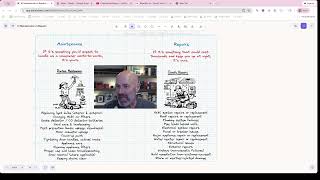
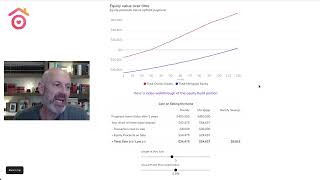
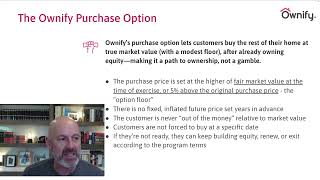
Yeah, the historical rent-to-own models are exactly as the term implies. They're rent to own eventually. And the big challenge with rent-to-own models is that the conversion into ownership has historically been really poor. And sometimes that's by design, right? The landlord, the investor, really doesn't want the customer to take over the home. And really, they're just slapping on incremental fees, whether that's option fees or incremental rent premium, et cetera. What we've built is very different than rent-to-own in that we structure an ownership model where the customer has bona fide ownership in the home, and that ownership increases over time. Let me explain what that means. If you think about traditionally the way we've bought homes in the US, when you buy a home, you hold title, your name goes on title, that title gets recorded with a local county courthouse, and then you pledge title to the lender. And in over 30 years, usually you pay your mortgage off. And once your mortgage is paid off, the lender releases that lien, right? And you hold the title free and clear. Mm-hmm. And that's why people think the bank really owns my home and I have to pay off the mortgage. And, and that's all correct. Your title is, is pledged to the lender while you're in that mortgage. Now, the structure though is one that county courthouses have gotten used to, and that's been the standard way in which consumers usually hold title. What we've done is we've said, what if we fractionalize the title and said Edward owns a piece of the title, and you own more every month, and I, as an investor, hold the balance of that title? The challenge is you can't fractionalize a title in the US, right, because you can't go to 3,000 different county courthouses and explain that model. But what we can do is we can place the title into a limited liability company, an LLC, right? You can use a trust to do this as well, but we use LLCs. And what we do on day one when we buy a home with a consumer, with one of our customers, we make an all-cash offer. And that's a big benefit, and we'll, I'm sure, talk about that. But we'll close, and we use an LLC to close. And that LLC does only one thing: it holds title, right? It's a single-purpose LLC. Each home has its own LLC, and the customer becomes a member of that LLC on day one. They buy 2% of the shares that the LLC issues. So each LLC issues 10,000 shares, or bricks as we call them. That's why we call it Buy a Home Brick by Brick. And a share in that LLC is worth exactly 1 basis point, or 1/10,000th of the value of the home. So let's say we buy a $400,000 home, we place it into the LLC, that LLC issues 10,000 shares. Each share is now on day 1 worth $40. So the customer comes in and the minimum down payment or requirement to participate is 2%, so that's 200 shares of the $10,000. And for that $400,000 home, the customer puts down $8,000. So now they're a member in the LLC, but they're also a tenant of that LLC, right? Because at the same time they're leasing the home from the LLC, they're signing a 5-year lease agreement that makes them a tenant of that LLC. So the customer structurally is a tenant and also a shareholder of their own landlord, right? And if you think about it, it's pretty unique and it's innovative, and, but it's also pretty simple. So if you're a shareholder of your landlord, you wouldn't pay rent to yourself. So really what we're doing is we're saying, okay, on day one, you're a 2% shareholder. You're a 98% renter, so your rent is 98% of market. And every month now, in addition to your rent payment, you're buying incremental shares, incremental bricks in that home. And on average, the customer buys roughly 13 bricks per month, which is roughly 160 bricks per year, which equates to about 800 bricks or shares over a 5-year horizon, which gets them in addition to their 200 that they buy on day 1 to 10%, or 1,000 of the 10,000 bricks. So the goal of the Ownify program from a consumer perspective is really creating this on-ramp where we allow the customer to build equity from 2% on day 1 to 10% of the home value by year 5. Now, as they're building their equity stack, as they're stacking their bricks, the number of bricks they have to pay rent on goes down. So really, for the consumer, the value proposition is renting with equity. You have the benefits of renting, and I'll— we'll talk about those in a second, but you're also building equity. And the more equity you build, the lower your rent payment. So you're buying down your rent, if you will, over time. Now, the reason that's meaningfully different than rent-to-own is in rent-to-own, generally you don't reduce the rent. None of the companies that have done rent-to-own reduce rent over time. You also don't have a real ownership interest. You might have a sidecar savings vehicle or some other mechanism where the landlord charges you more money for that option to buy, but you don't have a bona fide ownership interest the way you do with Ownify. And what that means is, for example, if one of our customers, God forbid, got hit by a bus, those shares in the LLC would go into their estate. It would pass on to their children or whoever, their spouse. It's bona fide ownership. It's a private share in an LLC that holds a real asset, the home that you live in. So that's the way in which we build equity. And then the third component— so you have the lease, you have the equity share agreement. The third component is a purchase option. Now, the purchase option is unique in that we don't set the purchase price upfront, i.e., the exercise price for the option. That exercise price, i.e., the right of the consumer to buy the home from the LLC, is always at fair market value. And we've built an engine that basically marks to market every home using a set of 3 different third-party AVMs to mark to market each home every month. And the bricks that the customer buys every month are at that fair market value. And the purchase option that the customer has to buy the home from the LLC is at that same fair market value. And so really, if you think that through, what that allows the consumer to do is they can dollar cost average into the home. Just like they buy shares in a mutual fund, right? Maybe in their 401(k). And dollar-cost averaging has a bunch of interesting benefits, right? It generally means you buy more on the dips, slightly less on the peaks, but you create this very nice accumulation of equity over time. And so from a consumer perspective, the benefits are you get a low down payment, right, of 2%. You get to pick a home off the MLS, whatever, Zillow. We partner you with an agent. We create a strong cash offer, which means on average we've closed about 5% below list price, which you can't do with an FHA loan or with a conventional. And then over that 5-year horizon, the customer has the benefits of renting, meaning we cover their insurance, we cover property taxes, we cover the major repairs, and they have the benefit of building equity towards that ultimate purchase. And then at the backend, at the end of 5 years, we're also the mortgage lender that then places them into their mortgage to take over the home. So that's the consumer side. Now on the other side, obviously we have investors.
Investors, yeah.
And so for the investors, the value proposition is you're investing in a co-ownership model where we're buying a home that is rented fractionally and co-owned by the tenant. So why is that attractive? Well, one, I have rental income from day one, right? We don't buy an empty home and then try to find a tenant. We have the tenant pick the home, we buy it below market, and the customer starts paying rent from day one. Two, we get top market rental yields because we have the choice benefit that we provide the consumer, right? The consumer can choose out of a— not every home within the buy box, homes that are on the market for sale, not just homes that are on the market for rent. So that incremental choice, better school district, nicer homes, etc. We get a premium from a rental yield perspective. 3, we have 100% occupancy, right? Because the customer signs a long-term lease. And so far we've not had any vacancy. And then because the customer's a co-owner, they take care of the home in a better way. And we've seen that in our maintenance costs, right? Operating costs are significantly lower than standard SFR because that co-owner leans in and effectively takes care of the home.
They have literal skin in the home. They have skin in the game. They're not just a renter, they're from day one. They are co-owners effectively.
That's exactly right. And so we gamify this, right? We tell the customer, you're a co-owner. If you take care of the home, if you do maintenance tasks, we reward you with extra bricks. We continually reinforce that analogy of buy your home brick by brick. You're a co-owner, you're a shareholder. We want you to act like a co-owner and a shareholder, not like a tenant. And Warren Buffett famously said, no one ever washed a rental car. And it's true. Something that you don't own, you don't take care of. But if you have a stake in it, you behave differently. So all that to say, for the investor, you have a very, a great tenancy relationship and a great rental income component, and you're participating in the home price appreciation. Because keep in mind, the investor pool on day one owns 98% of the home, 5 years from now still owns 90% of the home. So the bulk of the appreciation in the underlying asset goes back to the investors. Through a fund structure. And in the fund, we use a modest amount of leverage to then lever up that home price appreciation. So between cash flow of somewhere between 6% to 8% a year and home price appreciation, we're targeting a 16% return, and we're well on track to that. Again, as an investor, you look at this and go, it's a safe asset class, single-family homes. It's as close to owner-occupied as I can get through this fractional ownership structure. It's cash flowing and has home price appreciation built in. And, and a number of our investors care about this. I'm helping solve a real problem, right? I'm helping young people get into their starter home so I can feel good about what my money is being used to do as well.
Fascinating. It's fundamentally really shifting that relationship between the housing providers, AKA the investors, and the renters. You're aligning incentives here. Since the beginning of time when this industry was created in transactions were recorded even in biblical times. Both the person receiving the housing and the person providing the housing have been at odds. And regulation in certain locations have maybe exacerbated that relationship, but it's truly admirable to see companies like Ownify really trying to break that cycle and put everyone aligned.
Well, thank you for saying that. I appreciate that. And to be honest, that wasn't easy building that balance, right? Because you think about a value proposition like ours, it's a two-sided value proposition, right? There has to be benefit for the consumer to attract consumers. There has to be benefit to the investor to attract investors. And that balance has to be fair, right? It has to be neutral. It has to work in a way where both sides benefit. It has to be a win-win. Because if, if you overweight one side or the other, right, you can provide benefits to the consumer and not investors, and then you're stuck in either impact investing, or you're relying on tax benefits or some government subsidy to make it work. And that's a lot of the affordable housing strategy is relying on tax benefits. Or you create structures where the investors are getting enormous returns on the back of a poor deal for the consumer. And that's unfortunately where historically rent-to-own has lived, is some of these almost predatory models. That maybe have been great for landlords, but really not provided a fair value to the consumer. I think in order for us to build a meaningful, massive, big generational company here that really introduces equity-based ownership rather than debt-based ownership to the country as a whole, that balance needs to be fair. It needs to be sustainable. And it needs to weather the natural pushback that you'll get from a big industry that is wedded to a model that historically has been mortgage-based, if you will.
Yeah.
Yeah.
I'm assuming you, you haven't reached the 5-year mark yet with any of the homebuyers. Just thinking about human preferences and human needs, and you even quoted a little bit ago how long an average person stays in their home. How do you foresee the graduation rate or whatever metric you're using, the conversion rate to a homebuyer? In 5 years, just given the human needs and changes?
We have a goal of 50% or better conversion into kind of the— call it the traditional ownership model, right, where the customer goes on title and they use a mortgage to then pay off the debt effectively. So that's the goal, is 50% or better, which leaves another 50%. And the simple math on that remaining 50% is that we think 25% will just renew and stay with Ownify. And so after 5 years, renew for another 5 years, you know, you're now at 10% equity over the next 5 years, you go to 20% or maybe 25% equity and you just keep buying shares and equity in the home. And that's a great model, right? And eventually you can then allow the customer to stop or maybe even reverse and sell equity back into the fund. And so then we've created true liquidity around their number one asset. Through this BRIC structure, through this fractional ownership structure. So that's maybe another quarter of the portfolio. And then realistically, a quarter of the portfolio will probably exit without buying the home or without renewing. And things happen, your job moves and you, or you need a bigger house or smaller house, what have you. And that's all fine. Right. And so there's an exit mechanism that we've built that allows the consumer to keep the majority of their equity. We charge a relisting fee to terminate and then sell the home. But that equity value, the value of the bricks that the consumer has built, stays, and they can then sell the shares back to Ownify if and when they decide to move on.
This episode is brought to you in collaboration with CRE Tech, one of the most valuable events I attend each year. It's happening on October 20th and 21st at the Javits Center in New York City. Whether you're a real estate owner, developer, investor, occupier, or tech leader, this is where business gets done. I've had the chance to grow real partnerships and discover tech solutions here that I might not have come across otherwise. And this year, CRE Tech New York is back with CRE Tech Meetup, the one-on-one meetings program that will deliver 20,000 pre-scheduled meetings designed for qualified real estate professionals The program covers your full event pass plus up to $800 in travel and hotel costs. All you need to do is choose one-on-one meetings with tech companies that match your business needs. It's a smart, low-pressure way to explore what's out there without the typical event costs. If your company owns or manages 1,000+ residential units or 1 million square feet of commercial space, and you're involved in tech or operations decision-making, this is definitely worth checking out. Learn more in the show notes and see if you qualify by reaching out to us at community@tangentpropTech.com. I'd love to hang out at the event as well, so feel free to reach out on LinkedIn. Now back to the show.
Yeah, it's good to have that flexibility in mind because I— it could be very intimidating for someone that has never been a homeowner to all of a sudden say effectively I'm signing a 5-year lease, which I don't think any renter has ever done.
Correct. Yeah, we really try to qualify and underwrite the consumer to be the person who wants to buy, right, who ultimately has this goal of, I want to own this home, I want to live in this home for the long term, rather than I want to rent and maybe I'm not 100% sure. Now, you can never know that for certain, and part of the benefit that we provide is this flexibility of saying maybe 3 years from now your life does change and you do want the flexibility to exit and retain the equity value and the value of the bricks that you've built to the largest extent possible. And that's where we provide the ability to then sell the shares back to the fund, effectively sell the shares back to the investor pool.
Makes sense. So let's talk about how you actually close homes and the, the critical advantage for first-time home buyers in terms of the speed of closing, the certainty of closing with your all-cash offers. According to your website, Ownify customers save about $390 per month and $29,000 upfront compared to a mortgage. So why is this critical for first-time homebuyers or aspiring homebuyers? And also, how do you compete with Opendoor and Institutional SFR who presumably are also doing all cash offers?
Yeah, so I guess there's two pieces there. One is the consumer savings, and really the consumer savings, if you think about it, as a first-time buyer, If I go down the path of a mortgage, I end up putting down 10%. Sometimes I can get away with 5%. And so our savings really is a comparison to a 10% down payment mortgage. And that's where that $29,000 upfront gets calculated, right? So we've looked at every home we've closed on, we looked at the portfolio and said, if you would've bought those same homes with a 10% down payment mortgage, how much more would you have had to have saved?
As opposed to a 2% with—
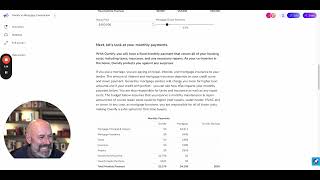
As opposed to a 2%. Exactly. So that's the, in a sense, the 8% of the average purchase price. That's the $29,000 upfront savings. And then the $390 a month in savings, that's really the difference between the Ownify payment and the fully loaded payment you would be on the hook for with the mortgage. Now, one of the interesting things is consumers generally underestimate the cost of a mortgage-based ownership because everyone you talk to wants you to close a deal. So the mortgage lender puts a calculator out there, whether Zillow or everywhere else, and it shows you your principal, your interest, your taxes, maybe your insurance, right? Most of those are estimates. So you really need to understand what are the actual taxes in the county that you live in, what are the actual insurance rates, and usually those are higher than consumers estimate. And it's not just PITI, so principal, interest, taxes, insurance, it's also mortgage insurance, right? If you're a low down payment first-time home buyer, You're putting 10% down. You're paying mortgage insurance. That's usually another 75 bps on average on top of the mortgage rate. So yes, mortgages, average rate today is 6.2%. You add mortgage insurance, you're at 6.95%. Then if you don't have a 740 or better FICO score, you get hit with what are called LLPAs, loan level price adjustments. So that may add another 50, 60 bps. So now you're at, call it 7.5%, and for a 90% or 95% LTV, you might get hit with another 25 bps. So your mortgage rate is actually significantly higher. Then you add taxes, insurance, and, and maintenance and repairs, right? Which again, none of the calculators that you see on most of the websites out there tell you that you do need a maintenance and repair budget. If you're buying anything but a brand new property, And even with a brand new property, you'll have issues. Last week, one of our customers in Wake Forest had a tree fall over in their backyard, right? They bought the house with Ownify, tree fell over, hit the fence of the neighbor. It hit the water pump of the neighbor's property, right? And it cost a bunch of money and we took care of it. That customer obviously was delighted. He was like, holy cow. I didn't, first of all, I hadn't budgeted for it. No one budgets for that. Right. And if you've. Stretched into the purchase and all of a sudden you have a $2,000, $3,000, $4,000, $5,000 bill because of a tree or an HVAC or a roof leak. You know, that's, that's not something that most people budget for anyway. So the savings per month is really this comparison to say with Ownify, you have one payment and that payment covers your rent. It covers your break purchase, i.e., your equity bill. It covers taxes, insurance, maintenance, or the repair items, right? The unforeseen things. And so you don't have to worry about unforeseen expenses. You do have to pay for upkeep and all that. But then the second question, and this is an interesting one, is how do we close and how do we create a deal for the consumer, especially that 5% savings? And so we've done two things there. One is obviously we lean in heavily on the cash offer and we use a bunch of analytics to figure out what is that cash offer. So At the individual transaction level, we run valuation algorithms, we run models around how competitive is this particular transaction, and therefore where does our offer need to be. Generally, the pitch to the seller is, look, this is a guaranteed cash offer. We can offer a 14-day close without contingencies. So it's similar to what you might get from an Open Door or another iBuyer. However, not only do you get an all-cash offer, you can feel good about selling your home to an aspiring first-time home buyer, right, rather than a large corporation. So that generally is attractive. The second thing we've done is we've created a very unique compensation model for our agents. So the agents that represent us, or that represent the customers and they bring customers to us, sign up for a commission plan that we call the 2+10. And the way that works is that normally an agent would earn 3— a buyer's agent would earn 3% of the transaction on close, right? That's the standard compensation model that, at least in the markets we're in, has become the standard. And everyone says it's negotiable, but the reality is everyone uses the same number. So what we've said to the agent is to say, you don't get 3%, you get 2% of the closed purchase price. Plus 10% of whatever price reduction you negotiate. So back to the example of that $400,000 home, let's say it's listed for $400,000 and we end up buying it for $360,000. That's a significant savings. And if you as the agent help us negotiate that $40,000 in savings, you're getting an extra $4,000 in commission, 10% of that $40,000 that you saved us. And what that does is it actually turns the incentive structure around— rather than paying the buyer's agent more when the buyer pays more, which makes no sense, we're saying to the buyer's agent, you get paid more if you help us create a better deal for your buyer. And once agents wrap their head around it, they're like, yeah, that makes sense, and I can feel good about it. Now, it does create a tougher negotiation, but that's the name of the game. This is capitalism. We're trying to get the best deal for us, for our buyers, for our investors. and we want our agents to be part of that. So if they help us drive a better deal, they can make more money as well. And between those two things, the cash offer as the core benefit and this alignment of the incentive structure, we've been able to drive that about 5% savings on average below, below list. Fascinating.
You're including everyone in the ecosystem in the value creation here, in the transaction, better said, and agents are a critical part of it. Something that I'm sure gives your investors your partners a lot of peace of mind is that you get creditworthy individuals in the home. So how do you underwrite the homeowners?
So this goes back to my personal journey and then Ben, my co-founder. So I spend obviously a number of years building Nomis as a CEO there. And before that, I spent a number of years at FICO. So I started my career really in the credit world.
FICO as in FICO scores.
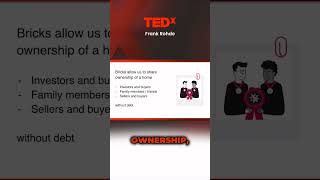
FICO as in FICO scores, Fair Isaac, and understand credit underwriting and worked in that market for a number of years for big lenders, mortgage lenders, and then obviously at FICO as well. Well, Ben ran mortgages at SoFi, so he ran a big portfolio and understood exactly how mortgage underwriting works. And so, we've built an underwriting model that really looks at credit, obviously, it looks at income, and it looks at capacity. And one of the things we want to make sure is, from an underwriting perspective, it's fully automated, it takes 15 minutes, it's all online, right? We qualify people based on their capacity to ultimately take over the home. And the number one thing that we've done with that is we've been able to attract a really pristine portfolio of customers. So if you look at our current portfolio, the average FICO score is 726. That's a prime, super prime score. Average income is about $135,000. So these are folks who have great characteristics. They just haven't saved for the down payment. And so if you then think about it, Ownify in a way is the down payment on-ramp. It's the ability to pick the home, get into the home, and then build equity. And then take it over with a mortgage. So we want to make sure that, one, the customer performs well while they're in that 5-year program, and that's our fiduciary responsibility to our investors and the fund that we've raised. And that's why credit risk underwriting is so important. But then, two, back to we want to convert 50% or more into owners at the end of this journey. Well, if you're an owner or an occupant with Ownify and you want to take on a mortgage and buy the home, there are 3 things you need. You need the income, right? We've already qualified you for that. You need the credit score. We've already qualified you for that. And you need the down payment. And that's what we're helping you build. There shouldn't be an issue converting people at the end of 5 years over into the mortgage-based path. And so really the credit risk piece and the underwriting of the consumer, both income credit and then income capacity, i.e., 5 years out, will this individual have the capacity to take over the home? That, that's core to making this work. Yeah. And that also means that right now our acceptance rate is somewhere around 8% of applications, right? We're getting a ton of applications. I did a TEDx talk on this last summer. It's gotten over 250,000 views. And so there's this perennial flow of applications coming in. And the good news of that is that when you have a lot of applications, you can have a very tight underwriting screen. To say we're only accepting 8% of the applicants. Another 30-ish percent we might be able to qualify into a mortgage, i.e., a low down payment FHA type structure. And then the rest really need to go, quite frankly, into credit repair, credit improvement, right? So we're capturing some revenue through that.
Okay. Okay. Very interesting. And for listeners interested in that TEDx by Frank Rohde, you can find it in the show notes below. So let's zoom in on the investor. So your investors, you're targeting 16% returns with 8% average annual distributions, and this is outperforming traditional SFR through, among other things, lower maintenance costs, lower vacancy. Fundamentally, just from the model, you have rental income and you have appreciation for the investors. So as the renters start building their bricks, the rental income will decline over time for buyers while the appreciation ultimately across 5 years will most likely in most markets go up, but it can also go down or it can go down and then up and down and up. How do you protect the yield for investors and then how do you make this model sustainable ultimately?
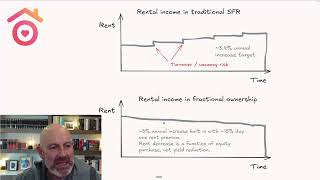
This is actually really neat and I think most listeners probably need to take a piece of paper and write it down and I'm happy to share a simple model. But the way the rental yield works is that— keep in mind, the customer only rents the bricks they haven't bought. So on day 1, they pay rent on 9,800 bricks, and a month later they pay rent on 9,786 bricks, 87 bricks. However, the yield that they're paying on those bricks is always the same. So the rental yield that you get when you invest in a single brick stays constant over the 5 years. And in fact, that rental yield, because of the premium, has already baked in a rent escalation. So as an investor, if I invest in a single brick, I get constant rental yield. Now, as an investor, let's say I invest in all of the bricks in the home, right? Or the fund invests in all of the bricks, and then the consumer buys bricks from me. What happens? Well, the customer buys bricks, they're buying a share from the fund, which means cash goes into the fund, and the fund transfers a share in the ledger that, that we run to the consumer. The cash that goes back into the fund immediately goes back out into new bricks in the next home. So it continues earning that same rental yield. And that's how we protect the overall yield to the investors is yes, mathematically, the dollar amount of rent that an individual consumer pays for an individual home that absolute dollar amount goes down over time, and consumers like that, but the rental yield that the investor gets on their $250,000, $500,000 investment, however much they put into the fund, that rental yield stays constant. That's an important part of the model, is recycling the cash, recycling the bricks. If you think about it from the individual brick perspective and collecting a rental yield on an individual share in that LLC. That's really how the rental yield gets protected.
Interesting and creative. So you, you're based in Raleigh-Durham, North Carolina, trying to—
That's where we launched, correct? Yeah.
How— okay, that's important for context when mentioning the $130,000 average income for the homebuyers, but also, you know, how are you thinking of expanding into more markets? You know, what's the market selection playbook?
So we've built a portfolio in Raleigh, right? And the average there is about a $390,000 average purchase price for, on average, a 3-bedroom, 2-bath, 1,700-square-foot home. So these are starter homes in Raleigh and Durham. We now have some in Charlotte. We have some in Dallas. We have some in Nashville. So we're expanding market by market, and really the rollout is driven by two things. One, obviously we look at the 330 or so real estate markets in the US and try to understand what are the underlying fundamentals that support this model. And the underlying fundamentals are home price appreciation. And home price appreciation does two things. One, it makes it harder for the consumer to get in. Therefore, there's more demand for a financing solution. And two, it increases the return to the investors. So as a fiduciary to the investors, right, I want to make sure that we're investing in markets that have strong underlying fundamentals. And then you look at what drives home price appreciation. It's usually some sort of combination of supply constraint and increase in demand. And increase in demand is driven by job creation and household formation and young people moving in and all of the kind of macroeconomic drivers. So we've built a pretty sophisticated model there to rank order all the markets, which is why me living in San Francisco, we said, let's launch in Raleigh. And we've done really well with Raleigh because the Triangle has 3 great universities, a lot of tech, right? A lot of healthcare, a lot of strong economic activity. And therefore continues to see home price appreciation even in a market where nationwide maybe you're seeing flat or 1, 2, 3% home price appreciation. Raleigh is outperforming that, as are some of the other markets. So really the playbook, Edward, to answer your question, is, you know, we're looking at individual markets and we're rolling out in those markets. And we also have had investors come in, bigger investors who say, I have a thesis on a particular market. Or I have a mandate, I wanna solve this problem in a particular market, and I like fractional ownership because it works better than maybe down payment assistance or other kind of funding models that I've looked at. So we're working with a couple of investors to launch programs specifically into individual markets, right? And so we're looking to announce more of those launch markets in 2026 and beyond.
Very cool. Love how you partner with all the stakeholders that you touch. We're coming up on time here. I do want to be respectful. Just a short parenthesis. Do you want me to ask you about the Ownify Home Fund? Or I thought if you want, I was going to ask you about Trump's order to quote unquote ban institutional SFR, if you want to weigh in on that, or we can just focus.
Happy to weigh in on this. I think two things, right? I think Trump generally has a negotiating style where he makes an outrageous statement and then backs off, right? And we've seen that time and time again. And so I don't think that the initial statement is what ultimately comes out of the legislative process and the sausage making. Two, if you look at the actual proposal of keeping corporate investors out of SFR, A, I don't think it's, that's a wise direction, right? Because reducing the amount of capital that goes into solving housing just makes housing more expensive. It doesn't solve the problem. It just paints a politically expedient enemy, which is Wall Street, and that you can appeal to some base. And that's fine if you're a politician, I guess. It's not a solution.
Um, it's the ultimate populist headline. As of 2 days ago, 3 days ago, President Trump signed an executive order to restrict large institutional investors from competing with individual homebuyers. In a quote-unquote effort to make housing more affordable. But continue, Frank.
Yeah, and so you look at what's actually been proposed, right? There's legislation in Congress. It's called the HOPE Bill. It was sponsored by Senator Merkley out of Oregon and co-sponsored by Bernie Sanders. And so generally, the bills that have been out there doing what Trump is now saying we should do have come from the progressive wing of the political spectrum. And those bills have one thing in common. Both the federal and the state variations, which is they exclude corporate ownership from any sort of restriction if the occupant of the home is a shareholder of that corporate entity. And that's exactly what we're doing. If you think back to that model, right, our LLCs hold title to the home, the customer is a shareholder, and they increase their shareholdings, and at the end of the day, they take over with the mortgage. There are specific exemptions written into the HOPE bill and the Keeping Private Equity Out of American Housing bill that have been sponsored and that are in Congress, right? So if the legislation that ultimately comes to pass maintains those exemptions, that's great for us because that's exactly the model we've built, right? And again, ultimately our goal here is to create a fair value proposition between first-time buyers and investors, not create more rental homes. That doesn't solve the problem. And I think that's ultimately what, what these bills and that kind of political pressure are designed to avoid.
Last but not least, uh, collaboration superpower. Frank Rohde, if you could choose one person, historic or living, to do a partnership with, who would it be?
You know, that's a great question. I don't agree with his politics, but I'd probably pick Elon Musk because he's brilliant. He's smart. He's got enough money to move the needle, right? And he knows how to break through barriers. So I think he would honestly be the superpower to make this work.
If housing is in Mars, you mean?
Well, and building housing on Earth. Yes, let's preface it, solving this problem on Earth, right?
Wrong planet. That's, that's the wrong planet. I'm sorry.
Uh, Steve Ballmer would be great, right? Someone who's cared deeply about housing and has done a lot of great work in housing. And yeah, I think ultimately someone who can help us challenge all of these assumptions that have been around for 70 years, right? Which is You go talk to any home buyer and they tell you, well, you need 10% down, 20% down. You go talk to a realtor, it means, well, ownership means being on title, right? And so help us break through those dated assumptions to say real problems need innovative solutions, not the same thing that you've always had. And we have a real problem in this country, which is homeownership affordability is no longer attainable, right, to the vast majority of young people. And that's a real, that's a real big issue. Yes, I would love the collaborative superpower of everyone who wants to lean into this, really starting with more investment into the fund. Maybe just one interesting pitch here. There's a really interesting investor value proposition here. One of the things we've done with the Ownify Home Fund is we've qualified it for DAF investment, for donor-advised fund investments, through a philanthropic investment grant structure. Raised capital into the fund from, you know, Schwab and Fidelity and, and Bank of America and others who have individuals who have donor advised funds at these institutions who can actually use that capital to invest in the fund housing for missing middle, right? First-time buyers generate the return and then return that capital back into their DAF at the end of 5 years. And so that's a model. There's $330 billion worth of DAF capital sitting out there. and a third of that is not deployed, meaning it's sitting in money market accounts, not doing any work for, on, on any sort of real problem. And that's a big opportunity that we're trying to figure out. How do we leverage more of that capital?
Very cool. Uh, and very creative, uh, in a noble mission ultimately.
Thank you.
Frank Rohde, where can housing investors and aspiring home buyers learn more about Ownify and connect with you?
Obviously visit ownify.com, visit ownifyfund.com if you're an investor. We have a YouTube channel with a ton of educational materials. We have an agent portal if you're a realtor listening to this and want to bring us to your market, we'd love to connect. Reach out to me directly at frank@ownify.com and I'd love to connect whether you're an aspiring buyer, whether you're a realtor working in the space, whether you're an investor. Looking to help solve this problem. There's a big mission here and a big need, but also quite frankly, a huge opportunity. And that's what I'm excited about.
Frank Rohde, thank you so much for coming to Tangent today and sharing your wonderful wisdom and your exciting company with us. Muchas gracias.
And thank you for listening to this episode of Tangent PropTech. If you learned something new or enjoyed the conversation, text a friend the link to this episode right now. You can find links, resources, and ways to connect with us in the show notes or reach out anytime at tangentcommunity@gmail.com or on LinkedIn. We love interview suggestions, topic ideas, or just a friendly hello. We'll catch you next time, and remember, the best proptech ideas usually start with a tangent. If you're building something impactful in real estate or tech and want to reach our audience of decision-makers, investors, and operators, email us tangentcommunity@gmail.com.
More from Frank

How to Save 5-7% on Your Home Purchase. #firsttimehomebuyer #homebuying #buyersagent #mortgage
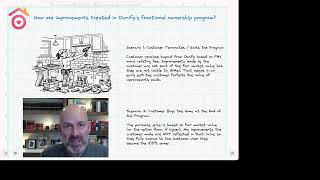
Ownify University: how does the purchase option in fractional ownership work?

Claude MLO Agent boosted homebuyer engagement by 8x! #mortgageloanofficer #mortgageloanoriginator
Wall Street vs First Time Homebuyers Understanding the Housing Market #housingmarket
Homeownership: Your Ultimate Wealth Builder Explained by Frank Rohde #housingmarket