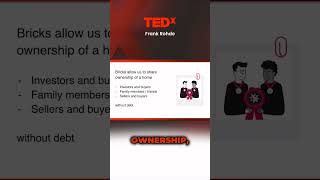
Fractionalization of Home Ownership, Frank Rohde @ Ownify
In this interview, Josh Carr talks with Frank Rohde, founder and CEO of Ownify, about the company’s novel on‑ramp for first‑time homebuyers that replaces a traditional mortgage with a fractional ownership model. The discussion covers the macro problem of rising down‑payment requirements and housing affordability, explains how Ownify splits each home into 10,000 “bricks” that represent membership interests in an LLC, and details the mechanics: a buyer starts with about 2 % equity (200 bricks), pays rent on the remaining bricks, and each month purchases additional bricks at a price set by three independent automated valuation models (AVMs). Over a five‑year program the buyer accumulates roughly 10 % equity, which can be used as a down‑payment for a conventional mortgage. The conversation also describes the parallel lease, equity‑share, and buy‑back agreements that handle defaults, the investor side (the Ownify Home Fund, a 5‑year closed‑end fund targeting ~15 % IRR from rental income and home‑price appreciation), the current portfolio (seven homes in Raleigh‑Durham with a pipeline of 15‑30 more), the team (seven distributed staff), fundraising strategy (accredited investors, $25k minimum, DAF‑eligible), and how the model differs from rent‑to‑own, timeshares, and blockchain‑based fractionalization. Frank emphasizes lower maintenance costs, higher tenant engagement, and the importance of lender acceptance of the equity provenance. The interview ends with reflections on scaling challenges and societal impact of improving home‑ownership access.
Chapters
Hello again, this is Josh Carr at The Real Angle, and today I'm speaking with Frank Rohde, CEO and founder of Ownify, and we're going to talk about an interesting business model today. Frank, how are you doing today?
I'm good, thanks for having me.
Good, thank you for joining me. Always, always, you know, the whole reason I started this podcast was I wanted to talk about things that were not just simply let's buy some garden apartments and rent them out, you know, so I've really sought out more interesting structures. So let's get into it. What is Ownify?
Ownify is a new on-ramp for first-time homebuyers. And the best way to think about Ownify is it's an alternative to the mortgage for first-time homebuyers looking to buy properties homes in the US.
Okay. Okay. So structurally, like what, what's the— I guess let's start with the basics of mechanically what it is, because I mean, I've, I've seen rent-to-own structures before, but I want to understand kind of what, what your secret sauce is, if you will.
Cool. So the, the big challenge for first-time buyers and buyers generally is really there are 3 things you need to be able to buy a home, right? One is income, second one is decent credit, and the third one is usually savings for a down payment.
Okay.
And where Ownify helps buyers today is with the down payment. So we, you know, we're targeting buyers who have decent income and decent credit, but haven't been able to save. And that portion of buyers is actually getting larger and larger because home prices keep going up, the down payment keeps going up. Right? Inflation, student debt is weighing on people's ability to save.
Housing affordability is a disaster right now nationally.
It's really, really hard, right? And I think it's not going to get any, any better anytime soon. Um, we have a structural issue in the U.S. with supply, and, you know, we have mortgage rates who've reverted to the long-run mean, I think, in the 5s and 6s, right? And they're not going to be the 2s and 3s. Um, and so I think that, that just general environment, right, creates a structural issue around housing affordability. And that's really what we've been looking to solve. And the reason I got to this in the first place was I ran a software company for 15 years focused on mortgage pricing. We sold software to a lot of the large lenders globally in the US and Canada, UK, Australia, New Zealand, that was doing basically figuring out the math on how to price a mortgage.
Okay.
For consumers.
Based on credit quality and all kinds of other things.
Credit quality, income, capital markets, you know, conditions and got it, got it, got it. And part of that started seeing in the data this problem that first-time buyers are getting squeezed out of the market. Um, and even, even those who can qualify for a mortgage a lot of times can't win deals because of financing contingencies or appraisal contingencies, right? And they're competing against corporate buyers who make all-cash offers. And so what we did with Ownify, um, is, you know, we sat down and said, how do we rethink this on-ramp and how do we rethink what it means to own in the US? And basically, when I say it's an alternative to the mortgage, what we figured out is how to allow people to buy a home, build equity in the home while living in the home without incurring the debt that's usually associated with buying a home.
Okay.
And the way we do that is that we fractionalize homes into 10,000 bricks, as we call them, and a brick is really a membership interest in an LLC that holds title to the home. Right. And you're—
got it. Okay.
Yeah.
So you put the asset into an LLC. I assume you start with it being 100% owned by the landlord and then over time the tenant sort of buys in, if you will.
Yes. We start with 2 and 98 or 200 bricks that the customer— okay. —on the owner contributes. Right. So that's the down payment, effectively 2%. And, and the, the fund or Ownify as the pool of investors contributes 9,800 of the bricks or membership interests, 10,000 bricks in every home.
Got it.
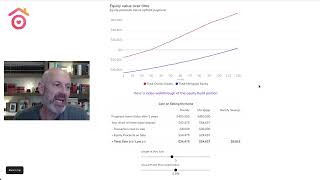
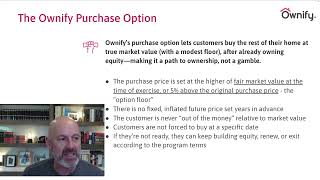
And over a 5-year program, 2 things happen. The customer pays rent on the bricks that they haven't bought, and every month they buy incremental bricks. And the way the math is dialed in is they work their way from 200 bricks on day 1 to 1,000 bricks at the end of 5 years. 1,000 of the 10,000 bricks is 10% of the value of the home, which is then enough to go out, use that as a down payment for a traditional mortgage. And they have the purchase option to then buy the home from the LLC at future market value.
So really what we're— got it.
Okay. Is buy the home fractionally as equity rather than through debt.
To get from that 2% down to 10% down, basically. Exactly. And then once they're at the 10% down, so now let's say, okay, so I got it. So we agree, you know, the house is worth, you know, $500 grand. I'm putting in 2%. You're putting in 98%. We have an LLC. It goes on. I understand that there's a rent and the rent is tied to how many bricks we have left. So now let's say we're 5 years down the road. And as you said, I've got 10% of the bricks, you've got 90% of the bricks. I now go to finance this thing. We've got the— we've got a— we've got a purchase contract. So we know what I'm buying it for. But I'm not really showing up. Sorry. Yeah, you don't.
I think one of the— so one of the interesting things you said, we have a purchase contract. So you know what I'm buying it for. The whole thing is equity. So the value of the home Okay. Is variable throughout the entire 5 years.
Okay. Right. So 5 years down the road, we agree I buy it for some future value and the future value is determined by appraisal.
Yeah. Okay. We don't do that. We do AVMs and the way you build from 2 to 10%. So the 800 bricks you're buying along the way, those are also transacted at whatever current market value in every given month. So every month we revalue every home in the portfolio and we sell to the customer the number of bricks at the then current market value, which has an interesting— you're a financial modeling guru, so you'll appreciate this. Yeah. Which has an interesting dynamic. It basically means that the customer buys slightly more bricks on the dip of real estate values and slightly fewer breaks.
Dollar cost averaging, just like with Automatic Stock Plan. Now, now, one thing that interests me about this, like, I understand what an appraisal is and I get that, but when you talk about that there's some sort of automatic value calculation type thing, how is that being calculated? Because imagine if I were a prospective buyer, my great question would be, well, That's fine. I'm buying bricks based on the value at that month. How is that value at the month determined?
Yeah. So, so the value on day one is the purchase price. Easy. Plus whatever, you know, if there's improvements, those go into the purchase. So let's, for argument's sake, it's $400,000 on day one.
Okay.
One month in, we pull three different AVMs or automated valuation models from three different independent providers.
So this is not okay, you know.
The whatever, the fox guarding the henhouse.
But is that you coming up with the price?
There's not us coming up with the price. It's 3 different providers. We take the average of the 3. We add in, you know, there's a declining calculation around the improvements we've made, but we strike the price in that month and say, okay, so in month 1, we bought it for $400. Let's say it's now worth $402 for argument's sake. Sure. Right. A month later it might be worth $4.01 or $3.99 or what have you. So the price fluctuates every month and we divide it by 10,000. That's the price of the brick. And so in that first month, let's say at $4.01, each brick is worth $40.10. That's your price at which you purchase some number of bricks. You make a fixed payment, which means the number of bricks is variable, hence the dollar cost averaging, just like you're buying shares in a mutual fund, right? Or your 401(k).
[Speaker:TOM_BOWLEY] Got that. So now let's say we're now 5 years down the road and now the time comes that I want to buy the house and just own it just like a normal person. I show up to the bank and I say, I have a purchase contract because now I am buying it. I'm buying it for X amount of dollars and I'm contributing my 10% ownership stake as my equity. Essentially, correct. Do you— I mean, how old of an entity are you? I guess have you got into that 5-year window of any of these people?
You've gotten to the exit. Okay. We're 2 years in, right? Or 2 years old. And we started buying homes last year, so we don't have exits yet.
So we haven't happened yet. Yeah. Because my real question would be, I imagine if a bank— you came to a bank with this at the 5-year, I mean, it's definitely not something they've seen. They've seen it, but they haven't seen it. It's not as straightforward as just a normal— you're buying a house and what have you. So that would be my only real question would be the market acceptance of this from a lender standpoint. Yeah.
So we've worked through this with a couple of lenders to make sure we have folks on deck, lenders on deck who can deal with this. And the way the lender views it is very similar to, let's say you put $500 a month into your E-Trade account and at the end of 5 years you have, you know, X number of dollars in that E-Trade account and you bought it over time. What the lender really wants to see is here's your dollar value that you're contributing, right? Here's the provenance of those dollars. And I need to show you that I have them in this account, whatever.
It was real money that I put in that I saved. But instead of it being a savings account, it's like you're maintaining a savings account. You put money into an LLC.
The LLC happened to have title to the home that you lived in, and you were also a tenant of that LLC, right? But for the lender, at the end of the day, it's really about what's the provenance of that down payment. It's not a gift, it's not borrowed. That's the main thing they care about, right? Sure, it is, it is bona fide savings that you've built up over time. And one of the interesting things you mentioned in rent-to-own, right, my co-founder was CEO of a big rent-to-own company and he's bought 5,000 homes in that structure. And one of the big things that customers are missing and, and aren't getting with rent-to-own is true ownership. So the piece that we've worked on for a long time is how do we create true ownership, right?
From day one, rather than, rather than I rent it and eventually have the ability to buy in. Yeah, yeah, yeah, yeah, yeah.
And so in the US today, at least you can't fractionalize a title, or at least it's very hard, right? You run into trouble with every county courthouse and their heads explode.
It's a mess. No, they're not equipped for it. They're not equipped for it. But you can fractionalize it.
You can, you can put it into an LLC and you can distribute the membership and the ownership of that LLC in a creative way. And that's what we've done, right, through this model.
It's interesting. It's interesting. So you guys have been around for, as you said, I mean, you've been operating for about a year and change. I imagine there was some startup period before this. Yep. How many houses do you have? Like roughly how many?
We have 7 houses in the portfolio, all in Raleigh-Durham. We've got 15 or so in the pipeline. We're looking to be at 30, 35 homes by the end of the year.
Right. And Raleigh-Durham, you started with because you had a passion for Raleigh-Durham? Like, why Raleigh-Durham? No, I have—
yeah. So I'm from Germany and, and I live in San Francisco. My co-founder lives in Maine. Right. Our team is all over the US. But we basically built a model for the 300 or so real estate markets in the US and looked at the core fundamentals. And Raleigh bubbled up to the top, right? Job creation, economic stability, house price appreciation, rental yields. It's just a really good market. And the market we're looking for, broadly speaking, are markets that we can still buy starter homes in the $300,000, $400,000, $500,000 range. Where you can generate enough of a rental yield on those homes to create an investor return and where you have future home price appreciation so that the investor return is partially rental yield and partially home price appreciation. Got it, got it. And that's kind of the screen that we apply to every other market as well.
Now, obviously in a landlord-tenant relationship, if I default, you know, you evict me, what have you. Here you have a contract with them over 5 years. Like how do you handle defaults? 'Cause that's always the question I have with a situation like this.
[Speaker] So a default, there are 3 agreements that run in parallel. One is a tenancy agreement, right? And the tenancy agreement governs your ability to live in the home, occupancy rights, all that.
[Speaker] It's a lease.
[Speaker] That's a landlord-tenant relationship. [Speaker] Sure. [Speaker] And under that agreement, if you default, you get evicted eventually, right? Obviously we try to work it out, et cetera.
No, but that's landlord-tenant.
Yeah, that's landlord-tenant. The second agreement is an equity share agreement that governs your ability to purchase shares in the LLC that is also your landlord. So in a way, you are— you're a shareholder of your landlord, which, by the way, if you are— if you buy a co-op in New York, something similar happens, right? Um, we only— we do it for each individual.
There's a proprietary lease, and you— yeah, with a co-op, you're an owner of a corporation, but then you have a proprietary lease says you get some tenancy rights. Yeah, yeah, yeah, yeah, yeah. So it's not that dissimilar mechanically. Okay. So, so you have an equity share agreement.
And to answer your question, Josh, when someone defaults, right, they can get evicted, et cetera, under the lease agreement. The equity share, basically what the equity share stipulates, that if you end your lease in whatever way, shape, or form because you default or because you ended by telling us, right, we will buy back your equity. And whatever number of bricks you've accumulated at that point in time will have a certain value. In fact, it's the value that we struck last month, right? We will buy back— we charge you a relisting fee that melts away through the 5-year agreement. Sure. And which makes sense, right? The equity stake of the customer is protected and the interests of the investor are protected through this melt-away provision, right?
You're get— you're getting some fee for the aggravation and the The hassle of having to deal with it, but mechanically, yeah, yeah, yeah. I get it. I get it. No, it's an interesting structure. I mean, the lack of down payment is obviously huge in the United States. I mean, you know, I'm teaching class this summer at Columbia, the real estate market analysis class, and you know, you pull the data on housing in the United States and you look at the Harvard, you know, Journal on Housing and everybody else and it's like big screaming blinking lights about housing affordability is bad, it's getting worse. And the issue is that as it gets worse, it starts to have larger societal impacts. I mean, if you can't buy a house, how do you start a family? And if you don't start a family, then it has impacts with dot, dot, dot all the way down the line for pension plans and Social Security. No, it's a real issue. It's a real issue. Um, and unfortunately, I think— well, yeah, go ahead. Sorry.
And so one of the interesting things about the down payment, right, the way we've tried to live through it, you know, with, with Nomis as a, as a participant, is we, you know, people have low down payment or zero down payment mortgages. The issue with those zero down payment mortgages is that they create this moral hazard, right, of someone puts nothing down and then their home price falls by 10%, now they have an active incentive to walk away, send the keys to the bank, right? And that's what happened in 2009, 2010. And with the structure we've built, we've said, okay, you can put down very little and you're building equity, but because there's no leverage, there's no debt here, that equity will always be worth something, right? If you own 10% of a $300,000 home and the value goes to $250,000, your stake is still worth $25,000.
You're still walking away from real money. Yeah, yeah, yeah, yeah.
If you were to walk away, you would still walk away from real money. And so it takes away that moral hazard, right, this problem of people sending in the keys with a low down payment. And the mortgage math kind of falls apart at the 0% down payment structure, right, because you can't charge enough interest to compensate for that risk.
No, in the moment, yeah, as you said, the moment, the moment values drop, there's no incentive to continue paying, right? It's just, it does, it doesn't make economic sense.
And now we've solved that problem through this equity structure.
Right? No, it's an interesting structure. So you're doing stuff in Raleigh, you're growing, you're adding more houses to the pipeline. Your investors are investing in these houses. And I guess down the line as they get some, you know, they, they have some assets come to term, if you will, hopefully they reinvest in the rest of it. So are you out there actively raising money for investors? Like, what, where are you? What is the, is the issue for you now that you need more investors or is the issue for you now you have more buyers for housing? Like what's the, what's the thing that's stopping you from becoming a zillion-dollar entity, if you will?
Well, we're going to become a zillion-dollar entity eventually.
Sure.
How fast can we get there?
But right now, if I said to you, do you want, do you want investors or do you want house buyers for houses?
What's the immediate issue? The immediate issue is more. We need more investors. Okay. Right. But we, we, we're— the way to grow this business is to balance the two.
Sure. No, you can't. I mean, you can't have more one and less of the other.
It doesn't work. Yeah. So we've launched Raleigh-Durham, we're adding Charlotte, we're adding Nashville. Right. Okay. We're adding the rest of Tennessee and then we're going to add Denver and other cities. And so the growth on the consumer side is metro by metro because we have a thesis on individual housing markets and we want to leverage the agent network. At the realtor networks in those markets for low-cost acquisition.
Right. Which makes sense because they're the ones at the point of sale with the buyer and the buyer saying, I need a way to buy this house. And then the agent assumingly says, well, have you considered this product?
Yeah, exactly. And they want a cash offer and all that. So, so we're doing that on the consumer side. And at the same time, we've raised a fund, Ownify Home Fund, that, you know, accredited investors can put money into and that promises or targets a 15% return. And so we're attracting capital there. And interestingly, where's the constraint? You know, today we're a little ahead on the fundraising side. Uh, next month we're going to close on 3 or 4 homes, right? And we're going to be—
so, so it's then, yeah, right?
And as we get larger on both sides, the balancing gets easier. It's the, you know, when you start out small that you're really looking to, um, balance those both sides of No, you have an illiquidity problem because you're not—
or not illiquid— the mismatching. It's a— there's a lot less mismatching problems when you're, you know, you got $500 million to play with. Um, interesting, interesting. No, it's, it's definitely a fascinating model. It's definitely something that responds to the fact that right now down payments are a crisis, and sadly, I don't see that going away anytime soon. Like this does not strike me as a problem that it will magically be solved in the next 18 months and the business thesis goes away, which is troubling. I mean, not for you, but for as a nation, as a society.
It is a troubling problem. And whenever you have a big societal problem, there are opportunities, right? And we're structuring an opportunity around this to say, let's rethink what it means to own. Let's create a different on-ramp, right? For first-time buyers that allows more of them to get into the real estate market, right? And build equity and build wealth, quite frankly, through property ownership. Sure. That's interesting.
So from a team standpoint, how big of a team are you these days?
We're 7. Okay. Distributed all over. And yeah, looking to, you know, again, balanced VC investment for the opco for Ownify Inc. And then we have the Ownify fund that is raising capital. Right. Yeah. And that's interesting.
So yeah. So there's the operating business, which as you alluded to is VC-backed, which is fine. And you grow and there's probably another round that you'll do because that's just the nature of VC world. And then you have sort of these, and these funds that people are investing in, are they the investor side? Are they doing it like an evergreen fund or is it like they're just doing like a tranche of money, it's closed end.
How are you bringing them in? It's a 5-year closed-end fund. Okay, fine. With— for credit investors, $25K minimum. And if I look at your investor profile, it's, you know, some folks come in with their cash, some folks come in with their retirement accounts, and some folks come in with their donor-advised funds. Given that there's a social impact component here, right, we've been qualified as a— as DAF eligible, so you can use donor-advised fund capital to put in. And I'd say more than half of the investors are driven by the impact and the story and the desire to have, you know, a positive impact on their community or on young people generally. Um, and the other half were driven by, okay, 15% return in a low-risk asset class, you know, I'm excited about that.
And off we go. Yeah. And off you go. Exactly. No, it's curious. It's curious. I mean, not to, you know, talk about competitors really, but I don't really know of many other players. I mean, the other players I know of are just rent-to-own guys. I don't know of anyone who's fractionalizing it the way you are, to be honest. And what I like about— sorry. I don't think so either.
I think you've seen fractional ownership in the past. Usually around timeshare and vacation properties, right? Yeah. You buy an eighth or a quarter or some number of weeks or, you know, and, and so the model has existed in that structure. It, it hasn't really existed in the— for the benefit of first-time buyers. Right. And then when you look at the rent-to-own models, as I mentioned, my co-founder worked for one of them. The big piece that was missing was that true ownership piece. And so we tried to figure out how do we build that? And that's kind of how the two merged, right? And when we talk to first-time buyers, a lot of them, we say, "Hey, it's fractional ownership." They think, "Well, I don't need a rental. I don't need a vacation property." It's like, "No, it's fractional ownership for the home that you live in." For the home, right?
Or single family. Yeah, so it's more of an education issue at this point. I love the fact that we've managed to go through this whole conversation and at no point did you use the word blockchain. That makes me very happy 'cause it seems that whenever anyone says, "Let's fractionalize it," the next sentence out of their mouth is something about blockchain. Which I find concerning, 'cause like you don't need that here. It's just simply—
You don't really need it, right? Right. I mean, it's a spreadsheet.
You just say you used to own this much, now you own that much. I mean, it's not, we don't need to get fancy and techy for things like that. It's just, you could do it with pen and paper, frankly. It's just not that hard.
Yeah, I mean, and we've, you know, honestly, we've built a portal where the customer sees their equity and they see the value of the bricks and all that. And, and the investment in making that look attractive and appealing to the owner is much more important than the ability to then put that on the blockchain, right? So that they can use some third-party wallet to look up the same thing. Um, so we've not invested on the blockchain side.
So I guess here's my last question on this, and then I'll— I don't want to dig too deep, but here's my last question. So I understand the way the person buys in and it works for them. I guess the way the investors make money is through the setting of the rental price. Like that's how, 'cause you said they're making a certain rate of return on their money. That's what's driving that, right? Is whatever the rent is set to essentially. [Speaker:FRANK_ROHDE] Yeah, so there's a couple of pieces there.
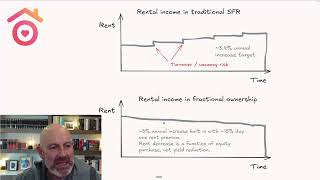
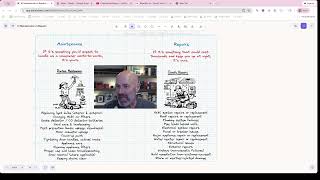
The return is roughly evenly split between the rental income, right? And home price appreciation with a little bit of leverage at the fund level, we can increase the, equity appreciation. So the source of return is rental income and home price appreciation. Where that is better, or where we've innovated here, is really around structurally what we've seen is that the co-ownership relationship gets more of the ownies engaged in maintenance. So we've seen 60% lower maintenance cost compared to standard single-family rental, right?
Because now that I own it, I care about fixing the hot water heater, fixing a leak, the roof.
We're not going to let it go into disrepair. Um, we have see— we have zero vacancy because we don't buy a home until we have a customer signed up in the agreement. So they pay rent from day one. We haven't seen any turnover right now. Eventually we'll see turnover at scale, but you know, there's significantly lower turnover because you have these 5-year agreements, right? And you have the, uh, the customer coming in with the, with the purpose of buying the home, so they're not going to default. And because so far the average FICO has been 740, so really, really high credit quality in the portfolio. We've not had any late payments.
So it's great credit, it's just they don't have the down payment.
Uh, from the investor perspective, all of those things kind of bump up the return, right, uh, to that 15% IRR.
So here's one more question I have, because now I just thought of it as we're talking. From a maintenance standpoint, so let's say now I do need to spend, you know, $20 grand to fix to fix the roof and I own 5% of the house and you own 95% of the house, are we splitting the cost to fixing the roof 95/5? Like who pays to fix the roof?
The LLC pays to fix the roof.
Got it. Which means essentially we are paying 95/5. Correct. Okay.
So largely the cost for repairs, especially major repairs, comes out of the investor's pocket, right? And less so out of the customer's or the owner's pocket. The interesting thing is on the other flip, on the flip side, if the owner says, I want to make an improvement to the home, right, I'm going to renovate the kitchen and put new kitchen counters, new cabinets, whatever, new cabinets, they can do that. And because the way the AVMs work and the way the valuation models work is we don't, we ignore that improvement. So they continue buying bricks at the value pre-improvement, and they continue to have the right to buy the home at the value pre-improvement, which means as they make improvements, they actually create an incentive for them to buy the home from the LLC.
Right. Because the price is kept down. And it also avoids the fact that just because you spend $20,000 to fix the house doesn't mean you necessarily have $20,000 of— I mean, you know, it's it's unfortunately most renovations and improvements to houses do not return the value that is put in. Right. Which I speak personally as a person who owns my own house. If you know the industry, it's an occupational hazard 'cause you just realize that any money you spend on your house, you're never gonna get it back anyway. So, you know, it becomes a run to failure conversation. It's like, well, why would we fix it if we're not gonna get it back? Right. No, I get it. I get it.
Avoiding that whole conversation in the first place.
Interesting, interesting. You know, it's cool 'cause you've actually thought through the structure and this is why I wanted to get you on 'cause it is an interesting structure. And frankly, it's not something I've seen before. I mean, I've dealt with timeshare stuff, I've dealt with fractional ownership stuff, I've seen tenant in commons or Delaware statutory trusts for like commercial real estate. But this is like another flavor of fractionalization. Interesting, interesting. I wish I could poke holes in it. Honestly, I'm having trouble coming up with negatives. I get the structure. It actually, it's a cool idea. What do you think?
You know, on the surface, the idea is very simple. Once you get into the nitty-gritty of executing it, you realize how hard it is and how much you have to build in terms of infrastructure. And we spent 2 years building the legal structure and the math and poking all the holes, right? And, and then going back to the drawing board and saying, okay, here are all the holes. So if we would have talked 2 years ago, you would have been able to poke a whole lot more holes, right? But you know, that, that was part of the startup cost, and I think that's, that's where we feel good about where we are, right? And the customers feel great about where we are. And so now it's, now it's a question of, you know, can we scale both sides of the business while keeping them in balance.
You know, hey, you know, it's stuff starts out. I mean, all these ideas start out as just a concept and, you know, a small accredited investor group and then it blows open to, you know, before you know it, it's a publicly traded entity. Yeah, it's fascinating. It's fascinating. Cool. Well, look, this has been very constructive. If people want to check out your website, the address is just ownify.com, right? Ownify.com. Correct. Um, always good. Uh, I have covered what I wanted to cover, honestly, and I knew it would take about this long. So I'm gonna simply say, Frank, this has been very positive. I'm glad we got to go through this. And, uh, for anyone who wants to check out their website, you can go to onify.com. Thanks again, Frank.
I appreciate it. Thanks, Josh.
Really appreciate you having me. Great.
More from Frank

How to Save 5-7% on Your Home Purchase. #firsttimehomebuyer #homebuying #buyersagent #mortgage
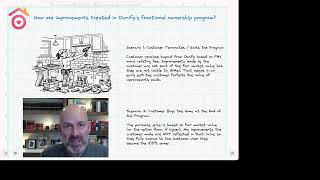
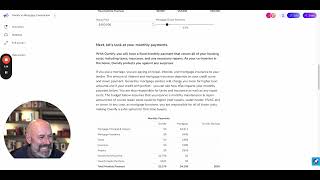
Ownify University: how does the purchase option in fractional ownership work?

Claude MLO Agent boosted homebuyer engagement by 8x! #mortgageloanofficer #mortgageloanoriginator
Wall Street vs First Time Homebuyers Understanding the Housing Market #housingmarket
Homeownership: Your Ultimate Wealth Builder Explained by Frank Rohde #housingmarket