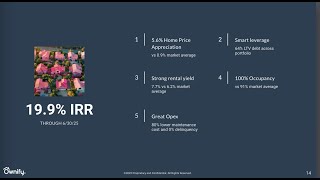
Frank Rhode reports Ownify Homes hit 19.9% annualized returns in the first half of 2025, driven by 5.6% home-price appreciation and 7.7% rental yields. The company buys homes 4% below list price, fractionalizes them into shares, and keeps maintenance costs at 14 basis points versus 80 basis points market average by making tenants feel like owners.
Chapters
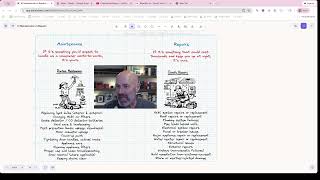
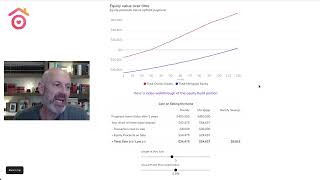
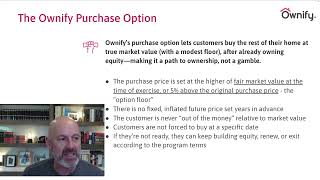
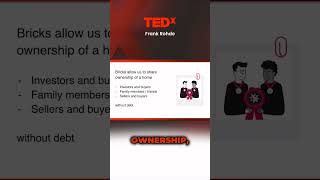
Hi there, it's Frank Rhode. It's July 1st, 2025, and I'm recording this from Yosemite. The Tuolumne is behind me and just wanted to give a quick update on H1 portfolio performance for Ownify Homes. So the summary here is 19.9% IRR annualized through the end of June, really driven by a couple of things. First one is home price appreciation, 5.6% annualized home price appreciation. That continues to be strong versus a market average of about 0.91% in Raleigh-Durham. We are using leverage across the portfolio of about 64% to lever up that home price appreciation, and I'll share with you what exactly that looks like. We continue to see strong rental yield, so about 150 basis points above market, and obviously structurally 100% occupancy, great opex, significantly lower maintenance and repair costs compared to single-family rental average. So let's dive into this. Um, first big driver obviously is home price appreciation, and while home price appreciation nationwide has slowed down, we continue to see good selection, so picking individual homes, investing in those homes, entering them below market and below list. We're getting, because of the cash offer and aggressive negotiation, about 4% below list price entry. And then obviously we have some protection for our investors in that the purchase option for the owner is set at 5% above purchase price per cost. So, um, year-to-date or trailing 12 months, 5.6% unlevered asset appreciation. And again, we're levering that up a little bit with loan-to-value ratio. Um, rental yield— we continue to see strong rental yields, so 7.7% gross rental yield minus property taxes compared to a market average of about 6.2%, uh, for the Raleigh-Durham market based on John Burns status. The, the fact that the customers get the choice of homes allows us to charge our top quartile rental yields, and the contract structure, the 5-year lease agreement that we put in place, has built-in rent escalation, again protecting the investors and, and generating incremental final yield. Structurally, because we're signing long-term leases and the customers, the owners, have equity participation, we've seen zero vacancy, not a single day of vacancy, no upfront lease-up period, and obviously no turnover in the portfolio. Investors are benefiting from 100% occupancy compared to a market average of about 91% for the Raleigh-Durham market. And then similarly, based on the credit and income underwriting that we do upfront, zero late pay, zero delinquency compared to a market average of about 70 basis points or so. Again, protecting our investors through credit and income underwriting. Probably the biggest benefit here we're seeing through the fractional ownership structure is that we're really changing the behavior of the tenant away from that of a tenant towards that of an owner or co-owner, right? And that famous quote attributed to Warren Buffett, "No one ever washed a rental car." We're really seeing that behavior shift in that our ownies are taking care of the properties, they're making repairs, They're, they're doing their maintenance and that ultimately results in significantly lower maintenance and repair costs. So compared to a market average of about 80 basis points of property value annualized, we're seeing 14 basis points with Ownify. And again, that's a direct bottom line impact to higher NOI on the portfolio. Where we are today is tracking towards just shy of 20% IRR, 19.9%, well ahead of our target of 16%. Through June 30th. The reason we're getting that is one, the ability to underwrite customers and select customers, select the homes, placing them into this unique co-ownership structure where we fractionalize each home into 10,000 ownable shares or bricks, and the customer becomes a true equity holder and partial owner of the property through that structure. Then holding onto the properties, operating them until at the end of 5 years, owners take them over. With the traditional mortgage purchase. And so the first property, about halfway through that 5-year cycle, 2.5 years in, and again, as I mentioned, we're seeing great operating performance. Um, if you're interested in learning more, come to our website ownifyfund.com, or if you click on any of these two links, you can schedule time with us or review the PPM in more detail. And look forward to talking with you. Thanks.