Ownify & Realize Impact Webinar: Tax-Smart Investing in Housing Equity & Social Impact
In this webinar, Allie O'Shea (product & marketing lead at Ownify) and Matt (Realize Impact) present a joint solution for impact‑oriented investors to fund affordable homeownership through Ownify’s fractional home‑ownership program and Realize Impact’s Philanthropic Investment Grant (FIG) platform. Allie outlines the worsening U.S. home‑affordability landscape, explains Ownify’s 5‑year model where a homeowner contributes a 2 % down‑payment to own a proportional share of a home while investors fund the remaining 98 % and receive quarterly dividends plus appreciation‑based upside. She details the underwriting workflow for both borrowers and properties, emphasizing cash‑flow‑based, AVM‑driven, fraud‑checked assessments that broaden access beyond traditional mortgage criteria. The benefits for homeowners include low upfront cost, predictable payments, covered taxes/insurance/repairs, and protection from negative equity. Investors gain a target 15 %+ return, a 4 % cash dividend, depreciation pass‑through via K‑1, and an inflation‑hedging, low‑correlation real‑estate exposure. Allie shares performance metrics: ~15 % annualized return, 11 % price appreciation, 100 % on‑time payments, and 80 % lower maintenance costs. Matt then describes Realize Impact’s FIG program, which enables donors—via DAFs, foundations, or direct cash/crypto—to grant funds that Realize Impact diligences and invests on its own account, returning 99 % of any gains to the donor’s DAF. He outlines the three‑step investment flow, the modest $500 due‑diligence fee, and the organization’s impact criteria (prudence and alignment with UN Sustainable Development Goals). The session concludes with a Q&A invitation.
Chapters
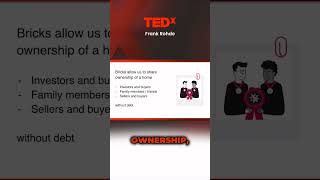
Well, thanks everyone for joining. Um, as you know, you have myself from Ownify here, as well as Matt from Realize Impact. We're excited to be chatting with you about how you can make impact investments into the Ownify Home Fund using Realize Impact's philanthropic investing program. So during today's call, we'll kick off with just a little bit of an overview of Ownify so that folks can get an understanding of our model. I'll walk through how the program works and then turn it over to Matt to talk about the philanthropic investing program at Realize Impact. And we will try to keep our overviews brief, so we leave lots of time for Q&A at the end. And we might be able to get you out a little bit early as well. So to kick off, I'll start off with an overview of Ownify. Before jumping in, just wanted to provide a brief overview of our team. So As I mentioned, my name's Allie O'Shea. I lead product and marketing here at Ownify. My background is primarily in strategy and impact consulting. I went to Harvard for business school where I launched an impact investing fund and joined Ownify about a year and a half ago now. Our co-founders Frank and Ben started the company about 2 and a half years ago, and their backgrounds are in more traditional mortgage pricing and analytics and real estate. And we also have Sam on our team who comes from the PropTech space as well. So we're here to— today to talk about homeownership, which I think, as many of you know, has really been long considered the cornerstone of the American dream. But that's not the only reason why we are excited about homeownership and the possibility of expanding homeownership access to more people. We get really excited about this particular impact area because there's a lot of benefits to homeownership. So obviously homeownership has long been considered one of the greatest wealth-building vehicles in the United States. It also provides financial security to homebuyers, having a sense of peace and calm. And we've heard that from our customers as well. And there's been numerous studies that have tied homeownership to stronger health and education outcomes, and also studies that report greater civic engagement for homeowners versus renters who have a greater tie to the community. Despite all these benefits, homeownership is less accessible today than ever before. Uh, currently home affordability is the lowest it's been in 50 years. And when we talk about affordability, we're really talking about median wages versus median home prices. So over the past 20 years, median income has increased about 77% in the US and medium home prices have more than tripled. So what that means is you're seeing an increasing share of the population who are not able to scrape together the down payment required to buy a home, given how home prices have skyrocketed. So you take this affordability challenge with prices and wages, and then you, uh, compound that with other factors like the fact that mortgage rates are extremely high right now, and there are record levels of student debt, which is burdening a lot of first-time homebuyers as well. And so what this all results in is that we're seeing the first-time homebuyer offer acceptance rate today is the lowest it's ever been in history. And the challenge is disproportionately impacting minorities and recent immigrants. So we really came together to ask the question, what can we do to change this? How can we turn more renters into homeowners so they can benefit from homeownership? And that's exactly what we're doing. We're reimagining the path to homeownership from the ground up. So we are sort of displacing this idea that the only way to buy a home and build wealth and equity is through traditional 30-year mortgage. And you can see here a picture of our founder Frank at a TEDx Palo Alto talk recently talking about the potential of this model. So the model itself is essentially an in-between of renting and home buying that gives home buyers a lot of the benefits of renting as well as the benefits of homeownership, and we've really structured a model that works for both home buyers and investors. So how does it work? We start off by finding well-qualified customers who need our help. We are identifying these customers through a combination of direct-to-consumer marketing as well as partnering with real estate agents locally. Once we underwrite the customer, they're able to go out and shop for a home on their own. They pick a home that they want to make an offer on, and we make sure that it meets our underwriting criteria. It's a high-quality property that we expect to appreciate on behalf of both the investors and the homeowners. Once we are aligned that the property is a good investment, Ownify makes an all-cash offer on the home on behalf of the homeowner, and we fractionalize the shares of that home into 10,000 bricks. So on day one, the customer or home buyer contributes 2% and effectively own 2% of that home, and then investors contribute the other 98% and own the other 98% of that home. The program itself is 5 years, and each month during that 5-year program, the homeowner makes a monthly payment with 2 components. One component is effectively rent on the part of the home they don't own, and the other component is an equity buy. So the homeowner is seeing their ownership stake in the home increase over the course of the program. On the flip side, investors are benefiting from that rental income. We pay a quarterly dividend to investors, and then investors are also sharing in the upside from the home price appreciation, which is realized in year 5 or whenever the home may be sold. We do offer our customers, who we call ownies, the option to purchase the home at any point during the 5-year period. So if they decide, um, that they after 2 years have received a raise or a bonus or have otherwise come into money and they want to purchase the home outright through a traditional mortgage, that's also an option for the customers. So we've built a user-friendly application and underwriting platform that is sort of enabling this entire model to work. And that underwriting platform has two key components: one, underwriting the owner or customer, as I mentioned, and then the second one, underwriting the home. So we are connected to a variety of third-party fraud, identity, credit, and income verification platforms where we're able to provide a cash flow-based home budget to the customers on the homeowner side. And for the home, we do real-time property valuations leveraging 3 independent AVMs as well as assessments of the home using local real estate agent input and market intelligence that we have. So this process, again, just make sure that we're selecting high-quality customers who need help, but also high-quality properties that we expect to appreciate for the homeowner and investor. Um, on the impact side, one really interesting thing about our model is that we have a cash flow-based underwriting approach, which is actually more equitable and inclusive than a lot of traditional bank underwriting processes. So we've been able to underwrite folks who are being denied traditional mortgages because they may be economy workers or maybe have recently shipped uh, change jobs so they don't have 2 years in their most recent job, or also folks who have more commission-based income. So we found that this process has been able to help us help more people and again get them started on that homeownership journey a little sooner. As I mentioned previously, the model is unique because we've created an approach where homebuyers and investors are really on the same team and both benefiting from this model. So on the homebuyer side, the homebuyers really like and appreciate this model because compared to, you know, many traditional rent-to-own programs that don't provide true equity ownership, our customers have a legal ownership right and equity in the home starting on day one, which is huge. The program itself is also very affordable. So we only require a 2% down payment for our customers, which is much easier for them to come up with than a traditional 10% or 20% down payment required for a mortgage. And then their monthly payments are also also lower throughout the course of the program, um, compared to renting. A lot of our customers appreciate the model because there's payment certainty over the 5 years. We don't institute any sort of rent increases over the course of the program, which allows more predictability for our customers. And then major repairs are covered by our program, as well as insurance and property taxes. So a lot of what ends up, you know, really creating challenges for first-time homebuyers is large unexpected expenses. and we're able to kind of take that particular risk out of the home buying process with our program, um, as well as the risk of ever being underwater in the home. Because this isn't a debt-based instrument, there's never going to be a situation where customer owes more on the home than it's worth, like what happened in the last financial crisis. Um, so that's sort of the home buyer benefits. On the flip side, the investor benefits are also very notable, I think, compared to traditional single-family rental properties or portfolios. Some of the key benefits of this particular program are the fact that the tenants that are in the home are partial owners, so they treat the property better and that results in lower repair and maintenance costs. It's also a 5-year program. So again, compared to traditional single-family rental where you're seeing turnover and vacancies in the homes, we're not getting that with our portfolio because customers are bought in and they're there for the long term. Um, we also have well-qualified customers and there's an efficient exit process sort of naturally built in here with the sale of the home to the customer. So the fund itself that we're raising capital for is targeting 15% plus investment return. Um, and as I mentioned, that sort of combines two key components. One is the cash yield, which is coming from that rental income. And the other piece is home price appreciation, with the benefit of leverage because they're taking out debt on the back end of the properties to help boost the return for investors. Um, as I think probably everyone here knows, the cash flows on investment are tax advantaged because we're able to pass through depreciation to the investors in the fund through a K-1. And, uh, real estate is typically a good investment in these types of markets where there's a lot of uncertainty, high volatility in the public markets. We've seen real estate historically perform as an inflation hedge with low correlation to public equity markets. So just quickly before I hand it over to Matt, wanted to highlight some of our results. So right now we are performing really well for both investors and homebuyers. On the fund side, we have about 15% annualized return to investors. So that's again, including the 4% cash dividend. About 11% home price appreciation with the leverage. We've seen 100% on-time payments from our customers and 80% lower repair and maintenance costs compared to traditional SFR portfolios. Um, homebuyers are also benefiting. They obviously are building equity in the home each and every month. They're saving on average $29,000 per month on their down payment and an average of $392, uh, per month on the monthly payment. So with that, I'll turn it over to Matt to talk through Realize Impact's philanthropic investing program, which has made investments in Ownify, and he can answer any questions on that.
Thanks so much, Ali, and nice to see everyone here this morning Pacific time and also this afternoon on the East Coast. Nice to see both a number of friendly faces, familiar faces, as well as some new folks. And thanks to Ali for kindly advancing slides for me. Ali, onto the next slide, please. So Realize Impact, we're a 501(c)(3) nonprofit, and we started in 2013 with a mission to provide financing to impactful companies that otherwise lack access to conventional funding. 6 years in, in December 2019, a group of impact investors got together at the Seattle Foundation One of them said, I wish I could make an impact investment easily from my donor advised fund or DAF. And that's when the idea for our Philanthropic Investment Grant or FIG program was born. 2 months later, we launched it. And since then, the momentum has been nothing short of exhilarating. And by the way, if you aren't familiar with DAFs, we'll talk more about that in a moment. And you don't even need one to make a philanthropic investment. Next slide, please. So donors said to make it easy, and really our purpose is to make impact investing easy, rewarding, and possible. We do that through 3 programs, and our FIG, or Philanthropic Investment Grant program, is just one of those, and that's what I'll focus on today. You can make a philanthropic investment in 3 easy steps. First, You make a grant to realize impact and recommend an investment. Your grant can come from any DAF, family foundation, or even directly as cash, securities, or even cryptocurrency. We then secondly conduct due diligence on the investee. And when our investment committee approves, we make the investment and become the investor of record. And this can be anything impactful. It could be a fund or a single company anywhere in the world. It can be any structure, debt, equity, recoverable grant, even revenue-based financing. And 3rd, when an investment generates returns, we then grant 99% either back to the DAF or foundation or other 501(c)(3) that a donor recommends, or we can recycle them into another investment. What are the economics? They're straightforward. There's a one-time $500 fee per grant that helps cover the cost of our diligence. There's no annual or other ongoing fee to administer the investment. And by keeping 1% of returns, our interests are aligned with those of donors. In just 5 years, we've now moved more than $65 million, mostly from DAFs, into more than 350 investments. $22 million of that was last year alone, including impactful ventures like Ownify. And with your support, in the next 2 years, we'll have moved more than $100 million. And for affordable housing, for the climate, for the planet, the need has never been greater, and we're here to help. You may be wondering, what's a DAF? A donor advised fund is like a light version of a family foundation. It's an account that's held at a so-called DAF sponsor, such as a community foundation. Or a national provider like Fidelity Charitable. It works, uh, typically you put money in or donate assets and get a tax deduction, and then you can recommend grants to be made to 501(c)(3) nonprofits. That's the advised part of donor advised fund. Uh, usually, uh, there's no expectation of grants coming back, uh, into your DAF, but with our program, they can as grants from Realize Impact. Back to your DAF sponsor and to your DAF account. That's it. Um, happy to answer any questions. I guess we'll, we'll move on to the next slide. I'll turn it back to you, Allie.
Thanks, Matt. We do want to leave some time for Q&A. Maybe, Matt, before we jump into Q&A, do you want to talk a little bit about the diligence process on Ownify and how you came to invest Yeah, thanks, Ali.
So as with most philanthropic investments we make, typically they work that we are approached by a donor investor, they make a recommendation on what investment to make. In this case with Ownify, we had met Frank and the team a few years ago, and they found a donor investor who was interested in using their DAF to fuel investment through us into Ownify. That kicked off our diligence. We then requested investment materials from, from Frank and the team and looked into Ownify. And our investment committee generally has two criteria that they use. One is prudence and the other is impact. And from a prudence standpoint, we're looking to see if a recommended investment is one that a reasonable person would make especially in light of the charitable impact it would have. And then from an impact standpoint, we're answering the question, how does this tie into one of the UN Sustainable Development Goals? And specifically, how does it align with our mission, which is to move capital into socially and environmentally impactful opportunities that otherwise lack access to conventional financing? And on all of those grounds, we found that Ownify was a, was a good fit for us. I should clarify that when we're diligencing an opportunity, we are doing so technically and legally on our own account. So we're not managing someone's money for them. We are receiving grants with a recommendation on where to invest. And in turn, that gives us a great deal of flexibility. Since we're investing on our own account, we can conduct diligence with that in mind. And so unlike, say, um, an investment company or a financial advisor, we're not doing, um, as deep of diligence as they would, but we're also relying on donor investors to have become familiar with and be comfortable with the investments they're recommending. So, um, we do a level of diligence, and what we saw, we liked. We especially liked that unlike some other efforts in the past by other companies to try to provide fractional ownership to first-time homebuyers or others who lack access to homeownership, that there were a number of predatory practices in the past. We, we certainly did not see those with Ownify, and that was very important, an important consideration for us. So I hope that gives you a little bit of a flavor for why we liked Ownify and why that was a good fit for— from the point of view of our investment committee.
Thanks, Matt. All right. I think we'll open it up to Q&A. If folks have questions, feel free to come off mute, introduce yourself, ask questions, or if you prefer, you can also drop them in the chat and Matt and I can tag team.
More from Frank
How to Save 5-7% on Your Home Purchase. #firsttimehomebuyer #homebuying #buyersagent #mortgage
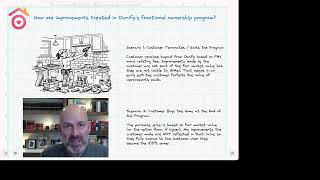
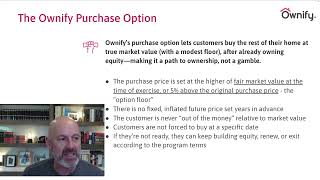
Ownify University: how does the purchase option in fractional ownership work?
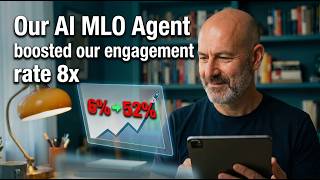
Claude MLO Agent boosted homebuyer engagement by 8x! #mortgageloanofficer #mortgageloanoriginator
Wall Street vs First Time Homebuyers Understanding the Housing Market #housingmarket
Homeownership: Your Ultimate Wealth Builder Explained by Frank Rohde #housingmarket