Ownify Webinar: Investing in the First time Homebuyer Challenge #RealEstateInvesting #PassiveIncome
In this webinar, Ownify’s founder & CEO Frank Rhode, COO Ben Harold, and head of product & marketing Ali present the company’s solution to the growing affordability crisis faced by first‑time homebuyers, especially the “missing‑middle” segment with solid incomes but insufficient down‑payment savings. They describe how Ownify fractionalizes single‑family homes into 10,000 “bricks” (LLC membership interests), allowing buyers to start with as little as 2% equity and purchase additional bricks over a five‑year term while paying rent on the unowned portion. The platform underwrites both applicants and properties using automated fraud detection, credit analysis, multiple AVMs, in‑house appraisals, and detailed physical inspections, ensuring purchases are made at roughly 5% below list price. Investors buy the remaining 98% of each home, earn rental income (average cap rate 6.1%) and home‑price appreciation, targeting a 15% annualized IRR with a 4% dividend component. The webinar shares early results from a 15‑home portfolio across Raleigh‑Durham, Nashville, and North Dallas, showing 100% on‑time payments, average borrower FICO 720, and higher-than‑market yields. Case studies (George & Lydia; Carmen) illustrate customer savings of $29k down‑payment and $392 monthly payment versus a conventional mortgage, as well as the impact of an agent incentive program that aligns realtor commissions with buyer savings. Finally, the team outlines the investment thesis, market expansion plans, pipeline of $25 million in qualified applicants, and details of the Ownify Home Fund (minimum $25k, accredited investors, next close Feb 28).
Chapters
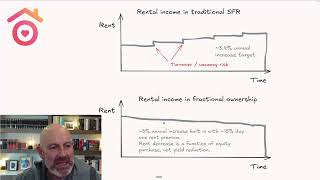
So good morning for those of you on the West Coast, and good day for those of you on the East Coast and everyone in between. This is one of Ownify's ongoing series of webinars, and what we're going to talk about today is homeownership reimagined and how you invest in this growing problem. My name is Frank Rhode, founder and CEO of Ownify. Joining me today is Ben Harold, our COO and co-founder. Out of the woods in Maine, and Ali in New York City, our head of product and marketing, playing the role of investor relations for this call. So thank you, Ben and Ali, for joining us. We're going to go through at a high level kind of 6 agenda items. The first one is really digging into this challenge of first-time homebuyers. It's a challenge, everyone knows it. It's also an opportunity, and we're going to dig in how we can turn it into an opportunity. The solution that Ownify has built, fractional ownership, and how it works in the market. We'll dig a little bit into our process, underwriting, home evaluations. Hopefully that'd be useful for you as a potential investor, but also if you're just here to learn. The results we've seen to date, a couple of case studies, and then we'll summarize. If you have questions, please put them in the chat. We'll open up at the end for questions that you put in and, and hope to address them at that point. So what's the challenge that we're tackling? It's home affordability, in particular home affordability for first-time homebuyers. So think of the person, and you probably know a number of them, who is, you know, in their late 20s, early 30s. They're looking to buy their first home and they're out in the market looking for that starter home, the $300,000 to $600,000 single-family home purchase. Maybe it's a condo, maybe it's a a townhome. And when you look at, uh, the affordability on that transaction, it has gone from bad to worse over the last really 5 years, and in particular since mortgage rates ran up. One of the underlying causes is really the, the basic, uh, home price, right? The average home price or median home price for the starter home in the U.S. is about $440,000, $450,000 today. And if you look at the ratio of the median home price to the median income, in 2000, that ratio was about 3 to 1, right? So 3x the median income bought you the median home. Today in 2024, uh, that ratio is 6 to 1. So affordability has gone down significantly just looking at the relative home price to the relative, uh, median income in the US. Now, so you have that, which is really driven by home price appreciation and the cost of homes in the first place. But you have another set of compounding factors that are really coming together for the first time in creating this perfect storm that prevents first-time homebuyers from affording their home. So in addition to home prices, which you looked at on the prior page, it's rising mortgage rates, right? Mortgage rates are now in the high 6s, maybe low 7s. They're forecast to come down a little bit, but they're not going to come down much below the long-run average, which is in the 5-ish percent range. And so this, this notion that mortgages are available in the, you know, 2%, 3% range that we saw pre-pandemic and throughout the pandemic, that is really no longer the case and is highly unlikely to return. So that obviously puts pressure on monthly mortgage payments and affordability. You also have record-high student debt. The average college graduate graduates with $44,000 in student debt. We see it in our portfolio. Lots of young people come in, they have great jobs, they have great income, they have strong credit, but they're sitting on student debt. And it's really hard to, A, save for a down payment, and B, stack a mortgage on top of that down payment. And then we have, uh, competition, right? First-time buyers are, uh, struggling to get their offers accepted. Um, in our launch market in Raleigh-Durham, we did an analysis and we looked at FHA mortgage as kind of the traditional starter financing product, and less than 2% of transactions are financed with an FHA mortgage. And the reason for that is that sellers look at their options, right, and they look at offers coming in, and they're generally preferring cash offers, well-financed offers, offers without a financing or appraisal contingency. So all those things are coming together to make it really hard for the first-time buyer, um, and this is impacting in particular one group of people or persona, right, that, that is growing rapidly, which we call the missing middle first-time homebuyers. So these are folks who have solid incomes, generally above 80% area median income, maybe above 100% area median income. So they have, you know, they make $100,000, $120,000, $140,000 a year depending on the market. They haven't necessarily saved um, but because they make too much money to qualify for down payment assistance programs, they really don't have a lot of good choices out there. And the answer to them from the financing community, and, you know, a lot of times from the, the realtor community, is, well, you have to have 10% down payment. Maybe you can get away with 5%, right? But these offers, uh, and the options, low down payment options, are limited. And that's the core focus. And where we think there's an opportunity for alternative solutions, not just Ownify, but, you know, uh, smart and creative ways of rethinking the problem. This is a massive market. There's about a million people a year who are in that, uh, missing middle buyer persona who are today, quite frankly, on the sidelines. And the opportunity we see, right, again, this is the challenge, there's an opportunity here, is can we create a product that helps those people into the market in a way where it generates investor return and a net positive, you know, value proposition to not just the customer but the investors supporting them as well. So we saw this problem, we started working on a solution about 2 years ago and launched it into the market initially in Raleigh-Durham, and we're now expanding into other markets. We'll talk about that in a second, but that solution is fractional ownership. So what we did with Ownify is we challenged the notion that historically you have to buy 100% of the home, use a mortgage, pledge title to the lender, and then pay off that mortgage over, you know, generally 30 years. And the question we asked is, why can't you buy your home brick by brick or fraction by fraction, right, over time without debt, just as equity? And that is effectively what Ownify has built. So what we do in conjunction with our customers is we qualify customers, we give them a home budget, and in conjunction with a realtor or their agent partner, they go out, shop for homes. And when that— once they've identified a suitable home, we underwrite the home and we purchase that home for them as an all-cash purchase. So the first step is really that purchase of the home, and at that point we fractionalize it into 10,000 bricks. Now, what does that mean structurally? What we're doing is we're placing the home into an LLC, each home into its own individual limited liability company, and that LLC issues 10,000 shares or membership interests, which we call bricks. And the customer on day one buys 2% or 200 of those bricks and then enters a program, a contractual agreement, to buy more bricks over 5 years while paying rent on the bricks they haven't bought. So it's really a fractional ownership structure that starts the customer at 2% and gives them the ability to work their way up to 10% ownership of the total home as equity rather than through debt. And so second step is customer moves in, they make their payments. It's a fixed monthly payment over 5 years, and again, that payment splits into buying equity or bricks every month and paying rent on the bricks that they haven't bought. All in, that today is more affordable than the equivalent mortgage payment, including the property taxes, insurance, repairs, maintenance, etc., that you, um, should budget for. On the other side of that trade, we have investors coming in, and that is the opportunity we're going to discuss today, who hold those bricks and effectively finance those bricks from day one through the point where the customer buys them. So on average, 5 years. And in this particular structure, for each home, the investor pool, uh, on day one buys 98% of the home, and at the end of 5 years still owns 90% of the home. So as an investor in these bricks, you are earning rental income because the customer pays rent on those bricks, and you're earning home price appreciation with a combined target annual return of about 15%. Now at the end of the term, at the end of 5 years, the customer has the ability to buy the home from the LLC at that future market value. And underlying all of this is a tech platform we've built that allows us to underwrite customers, underwrite homes, value the homes, and strike a real-time valuation on those bricks every month, uh, so that when the bricks change hands through this trade, they're doing that at market value. So that's the core product structure around, um, fractional ownership as Ownify has defined it. Now, for the customer, um, that has a number of benefits. The first one is equity ownership on day one. So the customer has a bona fide ownership interest, a stake through bricks, through shares in the home, which is very different than traditional rent-to-own programs, right, where the customer doesn't have ownership. And it changes the behavior, and that's important As an investor, I want customers in the portfolio who behave, uh, like owners, like co-owners, right? They make repairs, they take care of maintenance, they treat the homes well, and that equity ownership is a crucial component. We get them there with 2% down payment, and because it's an equity-based down payment, a low down payment doesn't create the same moral hazard or the same risk that a low down payment mortgage creates because the customer can't be underwater. Right? And that equity— 2, 3, 5, 10%— is always 2, 3, or 5 or 10% of the value of the home. It can't be negative, it can't be underwater. And that removes that moral hazard that exists with low-down-payment mortgages. Relative to a mortgage payment today, we're, we're affording the customer lower monthly payment— our monthly payments— and we're giving them payment certainty over 5 years, which is a real benefit, right? And one of the things that renters in particular hate is the, the increase in payments. So having payment certainty is an important component. We cover repairs, insurance, and taxes, so there's no other surprise, right, to the customer, uh, in terms of cost of homeownership. And as I mentioned, this is an evergreen equity transaction. The customer's equity stake is always worth something. It can't be underwater, it can't be negative. So that's the bundle of customer benefits And probably most importantly, on day one, we, we put the customer to the front of the line with an all-cash offer, right? And that allows them to compete in the market. Now, on the other side, for investors, this structure generates alpha, or disproportionate above-market returns. Um, one, because we can command a higher rental yield compared to the average in the market. So generally, our rental yields are in the top quartile. And that translates into better cap rates and return or income to the investor. We have long-term leases. We don't buy a home until a customer is signed up, so there is no vacancy, there's no lease-up period. And so far we've had 100% occupancy in our portfolio. We have well-qualified customers— back to that persona— of high FICO, uh, solid income, uh, customers. The average FICO in the portfolio is about 720. And, uh, those customers behave like co-owners as, as we described. So that results in lower maintenance and repair costs. Um, and for the investor, obviously that lower entry price, um, has a real benefit, meaning we buy homes generally below list, uh, historically about 5% below list because of that attractiveness of an all-cash offer to the seller. And then at the end of the 5-year hold period when the customer buys the home, that exit from an investor perspective, the sale of the home, is done without brokerage fees. So again, that's more efficient than if you were to just buy a home, rent that home, and then eventually sell it, you know, in 5 or 7 years. So all of those things combined create investor alpha. Now, how do we do this? I'm going to turn it over to Ben, who is really the expert on, uh, underwriting. Um, and then take us through kind of some of the magic sauce behind the scenes.
Yeah, thanks, Frank. You're still driving. You want to go to the next slide? So the way we think about our underwriting, both from an applicant perspective and a property perspective, is these 4 pillars. On the applicant side, we're looking to identify that this person is real and detect any fraud. And so this fraud could be synthetic fraud. It could be credit fraud. We've seen some deceased Social Security numbers that get caught by our system. And so we're looking to make sure that that person is who they say they are. On the other side, we are evaluating their creditworthiness. We're looking at their income or verifying that income electronically and developing a kind of a capacity or ability to pay to determine a budget so they can then go shop for a home. So that's kind of the two components. The other two components specifically are around the property, and we need to get two things right for, for us to be successful. One is the valuation. So Frank already mentioned we're paying about 5% below list price. We need to make sure that we're not overpaying in any given market. And additionally, it's not just about the value of the property itself, it's about the physical plant of the property. So we do an extremely in-depth physical inspection and defect identification process. We could talk through that in a minute. So if you're going to go to the next slide, Frank. So going back to kind of the ID and fraud detection, we utilize some leading fintech players. This is all automated on our platform. You might recognize some of these names. So CureVouch, for example, and these are picking up flags from OFAC lists. They're noticing manually altered documents, date of birth changes, etc., and hitting a bunch of different public databases such as Medicare Fraud. That allows us to basically screen this person very early on for very, very cheaply before we proceed them down the path to credit, which is the next, the next slide. And so on credit, and you can see the screenshots here, this is one of the tools we use. This is our main application that's extremely configurable. We use a number of traditional data metrics from the credit bureaus, as well as some enhanced data metrics that we've defined ourselves that we believe give a fuller picture of an individual's ability to pay and their creditworthiness here. So we look at credit debt history, we look at their income, and we generate this budget based on all of these factors. So it's not just, here's a document, this is how much I make. It's a cash flow-based underwriting where we feel confident that this person is able to meet the payment schedule that we are going to lay out for them. Can you go to the next slide? And so I just talked about the kind of two pillars on the applicant side. So the other two pillars are on the property side. The first one is this valuation process. So we have a very robust process to determine value. So first off, we order three independent AVMs. It's automated valuation model, third party. We don't, you know, we don't have anything to do with the values that are coming out. They're completely independent. We also run an in-house desk appraisal to refine these automated estimates and pick up some, some changes. And then our agent, whoever the agent is in the transaction, is required to complete a comparative market analysis or CMA. And through those three disparate sources of information, we establish an in-house property value. Right. And that value really has nothing to do with list price. It's the value we believe that that home represents. And from that point, we develop an offer strategy. Um, we develop an offer, uh, range and then an offer price for initial offer with a very detailed justification of how we came to this number and present that to, uh, the seller or seller's agent. And then the last pillar is this physical inspection of the property. So, uh, property inspection is, is pretty standard. Um, what's not standard, uh, in the market today is it's usually a paper-based form. Depending on who you get depends on kind of the output you get. We use the same software with every single home we inspect, and that software creates some really great data consistency. So one, it allows us to see across the portfolio, um, how our properties are performing from a physical perspective and repair perspective. But it also makes it really easy to determine what needs to be fixed or if this is a property we're even interested in. So this occurs during due diligence. We get 10,000 different data points. You can see some of these here: remaining useful life, serial numbers. We know exactly the models of everything. In every plant. And that allows us to also develop these repair estimates and justifications. So we've made an offer, our offer's been accepted, and now we're in the stage where we negotiate based on this. And we, we can provide this to the seller's agent and say, look, we have clear evidence that there is this defect, this defect, and this defect. And by the way, in this market, this is what it costs to repair that defect. And that helps us either walk away from a transaction entirely or negotiate the price down even further.
All right. Thank you, Ben. So that's kind of the structure. And then Ben walked us through how it works behind the scenes. Let's talk about the results to date. So we have, as of today, about 15 homes in the portfolio. Here's an example or a sample of some of them. And generally these are very nice looking starter homes. About a third are new builds. 2/3 are resales. Um, they're in Raleigh, they're in Durham, Chapel Hill, Nashville, uh, just north of Dallas. We'll talk about some of the markets a little later. And the benefits that we're generating are, as I mentioned before, a 15% annualized return to the investors. So as an investor investing in this portfolio, you're investing across all of the homes in a diversified fashion. You don't pick individual homes. You're effectively investing in a fund. The fund in turn buys bricks across all of the homes, so there's built-in diversification, which means if one particular property, you know, doesn't perform as well, you're not seeing the penalty of that, and the results average out. So the first return component making up that 15% is the cap rate, or the income that the rental contract generates. And that rental contract again, on a monthly basis, the customer pays rent on the bricks they haven't bought. That rental income creates a dividend that we pay out on a quarterly basis to our investors. And the way to think about that dividend, it's really the cap rate minus some of the financing costs, and that has been in the range of about 4% as fixed income coming back to the investors. Second component then obviously is home price appreciation, which today unrealized, and we'll talk about how that's performed but that's the balance of the 15%. Now, um, the underlying fundamentals in the portfolio are important, right? One is the cap rate of 6.1%, which is above average for single-family rental. The second one is the average FICO, so the credit quality, which is really an indication of how likely the customer is to live up to their 5-year commitment. We have a 720 average FICO, so a prime portfolio. And what we've seen so far is 100% on-time payments. Right, and about 60% below average maintenance costs, again because the customer through this co-ownership mentality takes care of the property in a better way. Now for the customer, the benefits we've seen to date is an average of 5% below list entry price. So this is the benefit of negotiating, as Ben mentioned, you know, having a strong valuation process and then coming in with an all-cash offer, a quick close, lower list of contingencies, and creating an attractive offer to the seller. Where the trade-off then is, well, it's a little below list, but you're getting an all-cash, you know, 10-15 day close. That's attractive, and sellers generally accept that. So for the customer, that's a benefit. Obviously, for the investor, that's a benefit as well. Now, the other big benefit, and that's probably the single biggest reason customers engage with us, is the down payment savings. Relative to a 10% down payment mortgage, the average customer in the portfolio has saved about $29,000 in down payment. And that is a non-trivial number that, you know, they can— if they have it, great, they put it to the side and it becomes a buffer. They don't have it, right, it's the Ownify way of getting into a home. And then relative to mortgage rates today, the average customer saves about $392 per month in their all-in housing payment. So the Ownify payment, right, on one side, and then potentially comparing that to a mortgage payment plus property taxes, insurance, repairs, maintenance that the customer would be on the hook for if they went the traditional mortgage route. So between those two— down payment savings and monthly payment savings— it's a real strong value proposition to the customer, which then means we have a lot of customers coming in, and that allows us to cherry-pick, right? So if you look at where we launched in Raleigh-Durham, uh, what you see on this page is really the, the pipeline or the funnel or the waitlist of customers coming in. And you see this growing quite significantly over the second half of last year when we started marketing into the Raleigh-Durham market, where today we have just shy of $25 million in pipeline, which is comprised of people who are credit approved. So these are all folks with good credit scores. They're fully qualified, meaning we've gone through the full income validation. They've uploaded all of their documents, as Ben walked us through earlier. Some of them have paid the application fee and/or the down payment and are now either shopping or in escrow or already closed. Right. And so that's making up the portfolio. That's just one market. And as I mentioned earlier, you know, Charlotte, Nashville, a number of other markets are on the docket. And so all of that ultimately results in investor returns that are above market. And when we look at these investor returns, we've had a couple of homes that we bought with our own capital as far back as 2022. Then we bought some more in 2023 and some more in 2024. And when we look at how those homes have performed through the end of 2024, here's what we're seeing. The average single-family rental, if you look at the comps in the market, generates an unlevered— so before any sort of mortgage leverage— unlevered yield of about 9.3%. What we've seen in our portfolio is about 11%. And so there's a premium here that we're getting, one, through the higher cap rate or the higher rental income, and two, through an HPA premium, home price appreciation premium, meaning these homes are appreciating a little bit better than the market average. So that's really the, the benefit, if you will, on an unlevered basis. And then we use in the fund about 60-65% leverage, so relatively conservative um, uh, leverage ratio that leveraged that return up to 15%. As interest rates come down over the next couple of years— and we expect them to come down— we might increase that leverage to increase that target IRR. But that's really how we manage returns to our investors, um, and we've been, you know, well on track for that 15% return. So that's kind of the, the high-level investor value proposition from a financial perspective. Let's talk about the human side and some of the people we've helped get into homes. And for that, Allie, I'm going to turn it over to you.
Thanks, Frank. So I'm going to walk through two separate case studies here. The first case study that we want to go through is George and Lydia. So George and Lydia were one of our first sets of customers. They are a young couple and they were having a pretty bad experience renting prior to finding Ownify. They were in situations where they found their rent often increasing and they had unresponsive landlords. And of course, they weren't saving for their future and investing in a real asset. So they decided that they wanted to purchase a home and started looking in the marketplace and were considering a mortgage product. But as they got more into it, realized that a mortgage was likely going to be too expensive for them. And on top of that, they have commission-based incomes, which would make, uh, applying and getting qualified for a mortgage especially difficult. And so their agent recommended Ownify to the two of them, and we were able to get them into their dream home, um, with just 2% down on day one. And since moving in, they're both loving the new property. You can see a quote here from George where he is super excited about the home that we helped them move into. And they also reported that this new home compared to their last home has more space, is in a better location, and also a safer neighborhood than where they were renting. And so from a quality of life perspective and also from a financial investment and security perspective, we were really able to help George and Lydia get on a path to success. So the next case study here is Carmen, and Carmen's Carmen's situation, I think, really highlights two unique elements of our program that are really beneficial to first-time home buyers. And those two elements are, one, the value of a cash offer, and two, the agent incentive program that we have, which is really focused on incentivizing and compensating agents to negotiate a better purchase price for both the home buyer and then of course the fund investors as well. And so in the case of Carmen, she was looking for a home in Durham, which is a very competitive marketplace. And was interested in a home that was listed for $292,000. And we came in with our partner Ownify agent and put in a cash offer for $274,000. And because of the cash offer, um, that offer was accepted. And so we were able to save Carmen and the fund, you know, $18,000 on that entry price. And that was, you know, a big win for both Carmen. And then as I mentioned, this also gets passed through through to the fund investors. And so where we really came in for Carmen is this advocate for her. You'll often see that first-time homebuyers are not negotiating these types of savings on their own, and they're often less familiar with the real estate marketplace in general. So that's just another quick benefit of our program that we wanted to highlight and something that I think our customers are really appreciative of in the process.
Thanks, Ali. Um, just, just, uh, double-click on, on this particular point, um, that Ali just made. The, the agent incentive alignment is a real core component to the Ownify value prop. And so what we, um, put in place for our buyer's agents— in this case, you know, the Carmen example, this worked really well— is we, we say to our— we tell our buyer's agents that we're going to pay you a 2% base commission on the purchase price and then we're going to pay you a 10% bonus, 10% of the savings that you negotiate on behalf of the buyer. So it incentivizes the agent to actually lower the price, which doesn't exist in the market today. And if you think about this as a first-time buyer, you know, if you're out there on your own, every person you talk to, whether it's your agent, the seller's agent, the mortgage broker, the closing attorney, the title person, No one— everyone is incented to have you close the deal at the highest price possible. And what this does, it really turns those incentives around to align the agent's incentives with that of the buyer. And the buyer is really Carmen and us, meaning us as Ownify and the investor pool, to negotiate a better deal. And so in this particular case, the $18,000 discount, 10% of that went back to the agent as an incremental $1,800 bonus on their commission, right? So the agent actually made more on that transaction than if they would have closed it at $292,000. And that's really what we're trying to incent in the market, right, is that alignment of incentives, um, with our agents and, and the realtor community we work with. So how does all of this come together as an investment opportunity? The, the overarching thesis here is that there is a housing affordability problem, right, that exists in particular in this market of qualified first-time buyers, uh, in the missing middle, young professionals with good jobs, good incomes, good credit, but they haven't saved, right? And, and, um, largely because of student debt. So that demand is out there. We see it, you know, we get 100+ applications a day and we can qualify between 2 to 4% of those applicants into this group of people that are really, really well qualified. So significant demand allows us to quite frankly cherry-pick, right, the best customers and the best risks out there. The second component of the investment thesis is the co-ownership structure creates real alignment between the customer and the investor, the owner and us as investors in the fund, um, because that co-ownership behavior aligns the incentives, right, around taking care of the property Managing maintenance, managing repairs, right? Not acting like a tenant, but acting like a co-owner. The third component of the investment thesis is that we can use, and we are using, very sophisticated tools to, A, take someone from an applicant to a fully approved qualified buyer within 15 minutes. As Ben mentioned, there's a lot of technology behind the scenes that we use to underwrite customers and homes and get them from, you know, an applicant to a fully qualified buyer. Um, so that's a third component of the thesis. And, you know, as part of that, picking the right customers and the right homes. And then the, the fourth component is really doing this in markets where we see above-average home price appreciation. So, uh, HPA— home price appreciation. And if you look at what's driving home price appreciation, well, it's, it's the core economic fundamentals of individual regional markets. Meaning job creation, right? And job creation in professional and tech and healthcare, entrepreneurial growth, right? And therefore young people moving into these markets, that creates demand and that creates ultimately home price appreciation, which translates into investor benefit because your capital appreciates. But it also quite frankly makes the problem worse, which then adds to the demand at the, at the top end of the funnel. So that's the core investment thesis for Ownify. And the results we've seen early on are in line with that 15% target investment return over a 5-year hold period. And so here's an example of what that might look like for an equity investment of $250,000. You effectively can assume an equity multiple or, you know, multiplier on that investment of just shy of 2x, 1.9x, uh, with that 15% IRR. Really comprised of, you know, again, the, the investment income, i.e., the cash dividends, which is the rental income, and then the underlying home price appreciation, which is realized at the end of 4 or 5 years as the customer buys the home, or the home gets renewed into a new portfolio if the customer decides to renew their contract. So why do that now? Well, one of the really interesting things is underlying home price appreciation in the forecast. Now, this is from realtor.com, the house price forecast for the markets we're in, and the average expected appreciation here is 9%. Now, obviously that's not a guarantee, and, you know, Realtor is, uh, um, closely aligned with professionals in the real estate market. But when you dig in and what are the underlying assumptions and fundamentals here, it goes back to, you know, young people moving there because of job creation right, uh, attractive quality of life. And therefore, with constrained supply of single-family homes, an expectation that we're going to see significant home price appreciation just in 2025, and obviously '26, '27, '28. And as mortgage rates come down, um, that could potentially, you know, contribute to that expected home price appreciation in these markets as well. So, um, to wrap up, how, how do you evaluate this and how do you invest We have a fund called the Ownify Home Fund that has accredited investors in it today, high net worth individuals, family offices that have invested, that have funded the first 15 homes. We're looking to fund about 150 homes through 2024, 2025, excuse me. And the minimum investment into the fund is $25,000. The next close is at the end of February, so February 28th. And this is open to accredited investors, uh, per the SEC definition. We have a screen on the website there. You can use cash, you can use your individual retirement account, you can use your donor-advised funds account if you have one of those. All of those are eligible for investment. So if you wanted to understand this opportunity in more detail, um, you can schedule a call with any of the three of us or other members on the team, and you can take a picture and scan that QR code on the left, or if you scan the QR code on the right, um, you can go straight to Verivest, which is our fund admin platform and the company that manages about $3 billion in real estate funds and has done all the due diligence on the underlying opportunities. And you can open an account and review the investment, um, private placement memorandum there.
More from Frank

How to Save 5-7% on Your Home Purchase. #firsttimehomebuyer #homebuying #buyersagent #mortgage
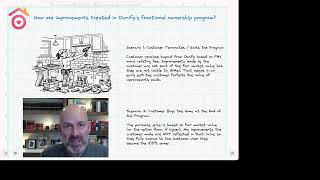
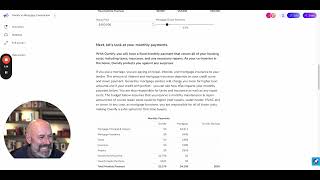
Ownify University: how does the purchase option in fractional ownership work?

Claude MLO Agent boosted homebuyer engagement by 8x! #mortgageloanofficer #mortgageloanoriginator
Wall Street vs First Time Homebuyers Understanding the Housing Market #housingmarket

Homeownership: Your Ultimate Wealth Builder Explained by Frank Rohde #housingmarket