Shared Equity Series Pt 1: Ownify’s Frank Rohde & Cedar’s Stuart Allan, New Models to Share Equity
Stuart Allen of Cedar explains how the company uses 99-year ground leases to make homes more affordable by separating land ownership from the house itself. Buyers finance only the structure while Cedar finances the land, and can typically buy the land within 5-7 years through fixed-percentage or appraisal-based buyout options. Cedar recently secured $1.2 billion in commitments and is working with major builders to scale the model.
Chapters
Maintenance is on you, repairs are on us.
Hello and welcome back to Housing Insiders, the podcast for founders, builders, lenders, and regulators, and anyone who believes that everyone should be well housed. I'm Jonathan Wallace.
And I'm Jeremy Potter. On Housing Insiders, we are bringing you the smart conversations with people in the know for actionable ideas that you won't hear anywhere else.
And we're going to do something really special this month. Again, we're proud to partner with Built Rewards to sponsor these episodes for the month, uh, but this month we're going to do, uh, the first of its kind of two-part series, uh, on a topic that Jeremy and I are super passionate about. It's these different models that we hear about that allow consumers to do something besides just renting or owning home, but something in between, some form of sharing. And February, I think, is a great month to have this conversation. Valentine's Day is this month. It's a romantic opportunity for us to share some time with another person, for that special someone. But, uh, but more seriously, February is also Black History Month. And, um, you know, these types of models, which have a bunch of names— shared equity, so on and so forth— they've actually had kind of a, a bad history, particularly when it relates to the Black community. A lot of these models were nefarious ways that the Black community was robbed of ownership opportunities or robbed of potential equity opportunities.
Yeah, John, that's right. Anytime you think of innovation, you think of new ways of introducing ideas. There have been versions that took advantage of people. So obviously, like contract for deed, land contracts come to mind. Those schemes existed, especially in cities, and found ways to gain homeowners' trust. And then eventually, you know, with legal documents, take away that hard-earned equity or take away some legal rights to that equity in one way or another. So, you know, a lot of communities, a lot of Black communities, a lot of minority racial communities found themselves paying higher costs, fees they didn't expect, other surprises that those opportunities were either stripped or they lost equity that they had rightfully earned. So this is a really important reminder that we're going to talk about these ideas and these products, but We also want to be really vigilant and prudent that these are designed terms and conditions in a consumer-friendly way, in a transparent way. So the good news is the models we're going to talk about, we're seeing them do that, make that a statement upfront so that we can really kind of talk about it openly. Yeah.
And again, it's great that it's February, Black History Month, and now hopefully the Black future will be a lot better because I think these products, a lot of them have been designed specifically to help people that are struggling to get their foot on that first rung of homeownership. And, you know, Jeremy, you and I have spent so much time looking at a lot of these different models. We've advised companies. I think really now that they've sort of really taken a new pass at doing this in a way that's way more fair for consumers, I think you and I are both equally optimistic about what the opportunities are. And frankly, like, it's probably the most active space in housing finance if you, if you want to talk about innovative ways to getting people, uh, into homes. So now before we start with the, the few companies, I want to level set on a few kind of key concepts because there's a lot of terminology and a lot of things that get used, and it's going to take 2 episodes, 4 conversations to cover all of it because there's just a lot of it. But a lot of it where we'll refer back to this concept of the continuum. And what I mean by the continuum is that no longer should we think of rent and owning as a pure dichotomy. You only have one or the other. But instead, let's think of renting and owning as the endpoints of a continuum where somebody can journey from being a pure renter all the way to journeying to point of being a pure owner, and in some cases journey back down the continuum, being a full owner and back to, uh, to a renter. So, so all of the things that we're going to talk about are going to have varieties of flavors that fall on this continuum, meaning ways to be in a home that aren't exclusively owning, aren't exclusively renting. And so, um, Jeremy, let's start with you because I know you think a lot about customer experience and what's good for consumers. Uh, let's just start about thinking about who are the products we're talking about? Who are they really designed for?
Yeah, I think you said it best when you said, because now we are looking at this as a continuum, we can start talking about things that I think have made a lot of sense for people intuitively and just never existed as a product. Right. So a lot of the communities we're talking about, a lot of first-time homebuyers who are not yet in the market can look at these. And I think you'll hear from us that a lot of these groups that can now access some of these products, there's an element of common sense. There's an element of like, oh, I did want flexibility. I did want a little bit of movement. So an example, John, would be, you know, I want to own. I know I want to be a homeowner. And yet in my community, a mortgage means 5% down, 10% down, or 20% down of a really big number. And I can actually afford to have a mortgage on a smaller number, but there's no houses at that number. So what do I do? And so I want to own and I can't get a mortgage large enough for homes in my area. There's another group that want to own and can't qualify for a mortgage in the same way, in a conventional way. So what do I do? Do I have any other options to access ownership of some kind? Then there's— you mentioned flexibility. I'm already renting. I like flex, you know, the flexibility that comes with that. But I'd like to own residential real estate. I'd like to own part of an asset or an asset. It doesn't have to be the one I live in, but I want to own something.
What do I do?
What's— what are my options? And then lastly, there are people who own free and clear. They have a lot of equity or they have a smaller mortgage. And what are the expectations? What are the access to flexibility that they have? We're not so much going to talk about that last group. I think you'll hear us talk in other episodes about that last group. But the flexibility of trying to get in the market and trying to get in the market for less than a giant mortgage on a big list price in my neighborhood, that's who we're talking about today.
Yeah, and that's perfect. And so, um, and we sort of think about these models in kind of 3 categories, and we'll have conversations with people that fit in each, but I, I just want to go over some of the terminology and some of the broad categories that we're going to talk about. And the first category is something that's actually a very, very old concept. It's been around for a really long time, but it's this idea of rent-to-own or lease-to-own. And there have been some very, uh, big companies companies that have had a lot of success in this. Home Partners of America, a very successful company that did lease-to-own. There's another company called Divvy. Now both of those companies have been sold at some point, but the structure is pretty simple. You are a renter, you are signing a lease, so you are mostly a renter. However, the person is giving you the option to buy at a strike price over the next 5 years. And so insofar as that strike price gets in the money, meaning the home price appreciates beyond what the offer is to buy in 5 years, you're sort of building— that owner is sharing with you that upside of equity, and that allows you the opportunity to then move into the home that you're renting. So all of those models, and there's been a lot of new versions of that where you basically are a renter, you're signing a lease, but some structure will give you the opportunity to take some opportunity to gain equity and get your foot on the first step of the ladder. So I'd say that's the first category. Jeremy, you want to talk about the second?
Yeah, that's a good step towards more of like a midway, halfway point. Where, you know, we like to ask the question, John, how much home do you want to buy? So instead of that step in the right direction, now it's like, do you want 25%? You want 50%? Do you want to try for 75%? What is that piece? And those, you know, there is a co-ownership model where you'll see 3 and 4 roommates or 3 and 4 friends and family getting together to buy a home. Models, you know, like Nestmint, we had another episode you can listen to, which was a special episode with Nestmint talking about multiple people buying a house together, and then they have a piece or a right to a piece of the equity of that, of that home, and they live in it, but it's also an investment with the folks that they live with. There's second home models, like you'll hear Picasso mentioned on this episode by some of our guests. Picasso dividing up a luxury home and everybody gets a piece, 1/8 or whatever, 1/4 of that luxury home. So now you're moving down towards Hey, I, I know I want to own and I know I want to own a piece of something. I just have to figure out who's the right partner. Is it an explicit outside investor? Is it another person or investor with me? Because I really prefer to own a portion on my way to 100%.
Exactly. So we went from a little bit of opportunity to own to sort of be in the midpoint where you're sort of really splitting up ownership and owning a meaningful percentage of the home. And then the third category. Maybe the one that has the most active number of, of companies involved in has a lot of different names. And so, uh, we're going to use them synonymously because shared equity, shared appreciation, home equity investments— these are all names that you hear in the industry. And this really is closest to ownership, but unlike a traditional owner where all of the equity comes from you as the homeowner and you have all of the debt, This is another person participates in the equity position. So you may put 10% in, but they might put 10% into your home. Now, they are typically not on title, not on deed. They don't actually own the home. But what they do get is when that home is ultimately sold, they get a percentage of the appreciation or final sales value depending on how the deal is structured. So sometimes those are structured like second loans. Sometimes they're structured simply as option contracts. But in all of these cases, The person in the home is really the owner. They have a mortgage, they just don't have 100% of the equity stake in the home. So I think that's the— those are kind of the 3 broad models that we see on the continuum. And that last one, by the way, again, we won't talk a lot about this, but the home equity investment model is often used on the way down. In other words, I'm an owner, I have equity, I don't have access to the equity. I don't want to get a second loan because I don't want to have to make a monthly payment. Well, maybe I get another equity investor to take out some of the equity and I get the cash. And so a lot of the companies that actually pivoted to that. But we want to talk about it more explicitly as a tool to move up the ladder where I can become an owner. As Jeremy says, where I live, I might not be able to afford the full down payment on the price of a home, but somebody else coming in with additional equity kind of gets me over that hump. So that's the third category.
Yeah, and you're exactly right that the key here is looking at the model and looking at what that structure is, because we know there's been a trend to bring really sophisticated financial products down to the street level for users to see in the palm of their hand in other areas of financial services. Now that trend is coming to this. Now that trend is coming to home equity and, and homeownership. And so we're going to see, and you'll hear, how those models break down and what the benefits are to an equity partner with a homeowner, as John just said.
Let me talk very briefly about the way to think about this economically, because I know a lot of our, our listeners are financially minded and they sort of want to have a— like, I think it's helpful to have a model to think do these products, which are really honestly really exciting because I, I love this idea of just breaking the mentality of renting versus owning. But the question is, as you start mixing these things up, how do you think about whether or not it does become more affordable? And, you know, a simple way that I've started thinking about this, kind of starting with the initial models of lease-to-own, is like, just think about a typical single-family rental. This is where an investor owns the entire asset and they're funding it, usually a pool of many of these assets, and then they're renting it out. And so it's pretty simple there, like their funding costs plus their operation costs As long as they can make rent that pays for those and earns enough return on their equity part, that model works. And obviously SFR has been very successful. But as we start ceding ownership to a consumer, take it with a lease-to-own model, now you're starting to make a trade-off. So in the lease-to-own model where you have an option to buy in the future, well, obviously the investor is potentially giving up some future capital gains in the event that the strike price is in the money, consumer takes advantage of that upside. But on the flip side for the investor, because the person who's quote unquote renting the home today has an expectation of owning it, they're going to treat it like their own home, which has been proven to vastly reduce the operational costs. So the investor might be giving up the upsides they typically get in SFR with cap gains, but they're saving money on their operational costs. So that's kind of the way I start thinking about these models. But now as we move through the continuum, like now the investor is seeding more and more of the home or the assets to the owner or the sort of part owner. And so now a consumer might be using some mix of their own equity and debt to finance it. And then the investor is using some mix of equity and debt to finance it on their side. And so all of this creates a much more complicated set of numbers, right? What's the cost of debt for the investor? What's the mortgage cost to the consumer? What's the equity requirement on both sides? What's the requirement on returns on both sides? And so how those things combine become really important. And then of course, in the sort of last stage, when you have a person who owns the whole thing but is ceding just equity interest. Well, there's an equity investor that's, you know, investing additional money into their home, and what they're looking at is how much money am I going to earn on my equity investment? Because, and potentially, you know, even these home equity investments could be leveraged on their side, but the investor now has a very different position in the sort of real estate asset of more of an equity investment than typically you'd see. But again, all of these things just keep combining and to show like different pictures of rental cap rates, uh, debt costs, so on and so forth. And of course, when you get to the total end of the picture, when the owner has— when you're a full traditional owner, of course, that's entirely the borrower's debt and equity. And that again becomes a much simpler picture. So if you just think about debt and equity and who's providing it and what the cost of that debt, what the requirements of return on the equity, that's the really complicated math that gets involved here. But I think when, and you'll hear through a lot of these models, finding the right investors and the right buyers slash renters is really critical to making these models work. And I think a lot of these companies have done that extremely successfully.
Yeah, I'm really glad you broke it down that way, John, because the complexity is something we have to tackle head on. A lot of times when you're trying to do something like this, the answer will be like, well, it's harder than the existing system. Well, yeah, a little bit, but so is every new idea. So the question I always ask is like, should these be a tool in the tool toolkit or not? And if you say no, you have to really answer why we don't need additional tools in the toolkit when we're having other conversations about a national crisis of homeownership. So if we are going to call this a national economic crisis for the next generation and then also say we don't need more tools in the toolkit, that seems like an odd thing. So we think— hear us out on this.
That would be one thing.
Two, I hear a lot of investors, I hear a lot of mortgage lenders, say things like, we make big bets on our clients. We make 30-year bets on our clients. And my response is always like, no, you don't. You, you give debt and you service debt on behalf of an investor. You want to make a real bet in the market. If you're an investor who's serious about making an investment in a market, in a geography with a group of people, think about this. Think about what this investment does and what John just laid out and why it can be beneficial. And so for those two reasons, we really want you engaged in, in this series because these are really, really fascinating conversations that take totally different approaches to tackling this problem. And we believe these solutions are focused on the continuum and they are tools that should exist. So with that, Jon, you know, this is kicking off episode 1 of 2. It is the midpoint between renting and owning. We're on that continuum now on Housing Insiders. And first up, we have Frank Rohde. From Ownify. So please enjoy our conversation with Frank.
Hi guys, we are going to start our exploration of this concept of the continuum on the side that's closest to renting. And so, uh, we are going to talk about a model that is probably more like renting than other models that we have, although there's an ownership aspect to it that we'll, we'll get into it. And so in this market, and this market has a long history, it's, uh, frankly nothing new, like lease-to-own. Types of structures have been around for many, many years. Um, there have been some major companies that have done this, like Home Partners of America or Divvy, that have been more of like an option-style contract. You're a renter, you have the option to own, and that's the way that they've kind of structured this sort of aspect of ownership, uh, into the overall rental sort of lifestyle. There have been some bad models in this space, uh, like contract for deed is an example where you're effectively a renter, you think you're going to become an owner. Those models historically have have been very bad for consumers. A lot of those companies went out of business. There's been a lot of scrutiny in that market. And the good news is, as a result of that, people have gotten a lot smarter about how to build these programs, have gotten more creative, and have gotten way more consumer-friendly in terms of what you really get as a consumer in terms of your rights as a potential owner of the property. So with no further ado, I'm going to turn it to— I'm going to turn it over to Frank Rohde to introduce himself, give us a little bit of his background before we dive into his company Ownify and what they do.
Thanks, John and Jeremy. Thanks for having me. Appreciate it. Great to see you guys again. Um, yeah, so my background is really through the mortgage world, and, um, way back, you know, all the way at the beginning. I'm originally from Germany, came here for college, worked for a couple of years in consulting and financial services. I started an insurance company, spent a number of years at FICO in credit risk and building, you know, underwriting models for, for big lenders. And from there, then started a company called Nomis Solutions, which is a software company that built the pricing engine for a lot of the large mortgage lenders. So got deep into mortgage math, mortgage pricing, you know, how does that product work? And as part of that journey, also started seeing the struggle, right, that more and more first-time buyers were struggling to get into the market, whether it's the down payment, and then more recently the monthly payment because of mortgage rates as well. And so a couple of years ago, sold Nomis and then started Ownify, really to focus on this problem of, you know, how do we help first-time homebuyers get into the market? And a very specific persona, right? The persona, someone who has, you know, good income, decent income, middle income, but hasn't saved the down payment for a variety of reasons. And we have, you know, as you mentioned, John, kind of the traditional debt rent-based path to ownership, and then we have variations kind of along a spectrum. And what we build with Ownify is really fractional ownership, right? Um, so differentiated from rent-to-own or lease-to-own, really with this notion of how do we give customers a better journey and a more consumer-friendly journey. And I'm happy to compare and contrast, right, as we get in. But that's been my journey over the last, uh, 25 years. Live in San Francisco and now you know, cranking away at Ownify.
Excellent. Thank you. I'm, I'm excited to dive in. I think we have so much, uh, to try to unpack. And anytime you're introducing something, especially that has new concepts or aspects to it, like nomenclature and taxonomy is sometimes like a good place to start. So just the words we use. And I'm curious, how did you engage with the phrase fractional ownership? You just mentioned it in the discussion of the company. And what have you seen the reaction be to just how you decided to frame up what you're trying to accomplish for both partners and consumers?
Yeah, it's a great question. It's probably the crux, really, of the complexity of bringing something to market that doesn't neatly fit into an existing category, right? We're really trying to build something here that doesn't exist, right? So you go talk to anyone in the real estate space, there's basically two journeys today, right? There's the rental journey and there's the ownership journey. And the rental journey is defined as you're a tenant, you don't own anything, you have a landlord, right? And there's benefits and pros and cons to that. And then there's the ownership journey, which means you're on title, you pledge title to the mortgage lender, they have a lien on it, you pay it back over 30 years, right? That's been the journey. And there's really nothing in the middle other than maybe some of these attempts at rent-to-own, lease-to-own, etc. So what we challenged was this notion of Why do you have to buy 100% of a home, right? Why can't you buy a small portion, own a portion, and rent the rest, right? And that's really what got us to this, this terminology of fractional ownership. And you can argue fractional ownership has a meaning, right? When you take a realtor or a consumer off the street and you say fractional ownership, they think timeshare, they think Picasso. They think, okay, I get an eighth of the house in Tahoe for skiing, right? What we're saying is no, fractional ownership is you own a portion of the home that you live in and you rent a portion, right? And that is a new model that really doesn't exist historically. Rent-to-own has exactly been what the word implies, which is rent, rent, rent to eventually own. And what we've built is this notion of can we fractionalize the title? Can we fractionalize the ownership and give the consumer true ownership, you know, for a fraction of the home and have them rent the rest of the home? And if we increase those fractions over time and decrease the rent component, we've created an on-ramp into ownership. And I'm happy to double-click on this, but I think the point you're— the point you're making, right, which is the educational component is huge. It's massive, right? Because we've been kind of in this world of renting and owning for forever. Right? And that's, that's the paradigm that everyone has, these two drawers. So you're sitting in between two drawers, you know, how do you make that work?
Yeah, absolutely. And you mentioned your background in Germany, and I'll say we had, um, Casey Cleary from Pathway Homes on a while ago, um, and in that episode we talked a lot about a program that's popular in the UK, which is kind of a shared ownership concept where you're sort of buying and owning half with sort of renting or providing a ground lease on the other half, and then kind of staircasing— I think that's the term they use in, in the UK— is you kind of staircase your way up to full ownership by buying additional shares, or maybe eventually you buy out the partner. So that, I mean, it definitely is a really compelling thing. It's just, there's no precedent for it in America, to your point, and education is hard. And I think a lot of these sort of particularly UK-based companies, I think they could just recreate it. It's like, well, actually the way our property laws work is very, very different. So I guess as a way to sort of get you to double-click a little bit more into the structure, like what is the legal structure? Who actually owns what? And you mentioned the lease to own, which is very clear. You got somebody who owns the property, you are renting from them, you've got, you've got a lease, um, except your lease also has an option contract that allows you an offer to buy in the future at a fixed price. And so your ownership is sort of really an option contract, if you will. Our listeners will understand. So you've got a call option on your home, basically, but your form of ownership is structured differently. So can you walk us through exactly how it is sort of structured?
Yeah. And, and so just a background, maybe You know, my co-founder Ben Harrell was CEO at Divi Homes, so we dug deeply into that model. We looked deeply into HPA and the other models that are out there, right, to see what are the, you know, issues that you have with some of these models and how do we fix them. And so the core, the core challenge here is really how do you define ownership, right? And ownership, it turns out, is not defined at the federal level. It's really not defined at the state level. In the US, we own at the county level, right? That's where the registry of deeds has title filed. That's where your claim to the land, right, and the home, right, is really filed. Now, there are 3,000 counties in the U.S., so John, if you and I decided to buy a house together, right, we could go on title jointly. We could be a TIC, we could be a married couple. I don't know if you're up for that.
Keep talking, we'll see.
We could— we can have different versions, right? But one thing we can't do today is we can't go to the county and say, we bought this house together, I live in it, Don owns half, I'm going to pay him rent for half of it. And by the way, next month I'm going to buy a couple of shares from him, right? And so I'll own a little more, you own a little less, I'm going to reduce my rent. If we were to do that in any county in the US, any of the 3,000 counties, they would say no, go away, this is crazy, right? You can't change ownership of a title every month with all the filing fees and all the you know. And so one of the reasons they do it in the UK the way they do it, you know, I've looked at that model and I lived there for a couple of years, is they do these step stairs because you do, you know, do 5 or 6 or 10 steps over the journey, but you refile with the county every time. So what we did is we said, okay, what is the model that can be, uh, that can work in the US with 3,000 different counties? And the model that's well accepted is that you have an entity hold title. So the Ownify model places each home into an LLC, into a limited liability company, and that's the entity that holds title. And on day one, when that entity is created and buys the home, the legal owner is an entity. We name them after authors. So the last one, you know, and they're alphabetical, so, you know, we skipped over P. So I think it was Poe, actually, not Proust. To just to riff on your reading challenge for this year, John. So we had Poe, right? Poe is an entity that bought a house, and that entity, that LLC, now issues 10,000 shares when we close on the home. And the consumer, the occupant, the customer buys 200 of those shares on day one, so 2% ownership in the LLC. So legally, what we've created is a customer who is a tenant of an LLC, right? Customer's a tenant, LLC is a landlord, and at the same time, that customer is a fractional owner of that same landlord entity, right, of that same LLC. And so if you think about it, if you're a 2% owner of your own landlord, it wouldn't make sense to pay yourself rent. That's just a silly round-trip transaction. So if you're a 2% owner of the landlord, we're just going to reduce your rent by 2%. And every month in our program, the customer buys more shares in that LLC. So out of the 10,000 shares, roughly 13 shares get transferred from a fund to the occupant every month. And you start with 200, you buy 13 every month. Basically, over 5 years, you buy about 1,000 shares, right, which is 10% of the total value of the home. Right? And that's the journey to ownership. So you're not on title directly, you're a shareholder of the entity that holds title. And as your shareholdings, as your stake increases, we're decreasing the rent proportionately. So in a sense, that model works, you know, similar to an amortization in a mortgage. However, there is no obligation to ever buy 100%, there is no debt balance, right? And the shares are valued always at market value, fair market value of the home. So it really functions as equity rather than debt, right? And it gives the consumer the ability to dollar-cost average into the home with a relatively low down payment, with, you know, more affordable monthly payments. And, and once they've reached enough equity, and generally we say that's 10%, we then move you over into a mortgage. Right. So with 10% ownership of that LLC, 10% of the value of the home, you now have 10% that you can use as a down payment for traditional, you know, 30-year conventional or FHA loan or what have you. And that then starts your traditional journey, if you will. So if you think through these structures, right, one is a tenancy or lease agreement between the customer and the LLC. The second one is a share purchase agreement where the customer becomes a shareholder of that same LLC. And then the third agreement is a purchase option that allows the customer to buy the home from the LLC at any point during those 5 years. Between those 3 things, we've created an on-ramp into ownership, right? And that's really what Ownify is, right? It's not a down payment assistance program or a way to close the down payment gap with a traditional mortgage at the back end. It's financing the full stack, allowing this equity share to happen, and then converting the customer into a mortgage when they're ready.
Yeah, I want to spend a lot— I know we're going to spend a lot of time on the home buyer experience and the homeowner experience. Just for one more question on, on structure, what have you run into? What lessons have you learned? What red tape or bureaucracy was there that you wish you could change that is holding you back? Or is it just a matter of once you get to those, uh, 3 structures that you mentioned we just have to explain them properly, educate properly to the customer? Or are there things that you've had to work around that really you would say shouldn't exist but do? What are the lessons learned so far?
The biggest hurdle is the one you mentioned just now and before as well, right? Which is the educational aspect, right, of ownership has been defined in a certain way. Consumers perceive it to be a certain way, right? Ownership through an LLC is new. It's differentiated. So a lot of it is education. A lot of times what happens once you explain it to people, you know, using analogies like bricks instead of shares, etc., and once they get it, they get it. It's like, yeah, this makes sense. It's pretty elegant, right? And it's inherently fair. I think where maybe something that we've run into that I wish I could change from a regulatory and public policy perspective is there is something called the homestead tax exemption or homestead exemption, right, in every state. It works in different— differently in different states, but by and large it's a notion of You can pay lower property taxes if you're on title, right? And our model in some states doesn't neatly fit, right? And it's the same kind of blanket statement that a lot of times people make, like, well, we shouldn't have corporate ownership of homes. Well, what does that mean? Well, an LLC that owns a home, that is you, you know, as the occupant with someone as an investor, should still qualify for a homestead tax exemption because the occupant lives in the home. It's just a different financing model. Than the, than the historical 30-year fixed-rate mortgage, right? But that's not how counties perceive it. And so, so that, that's an educational and regulatory, you know, component that, that is hard to get through.
That's right. I, I think that's a really good clarification because the devil is in the details in, in a way here. When I saw President Trump's tweet about institutional owners, it was pretty clear right out of the gate large institutional owners defined as, which I believe was 100, uh, properties or more. But that kind of clarification ends up being really important for the reasons you mentioned. The LLC— I also think about the trust model, which can be you as well. It's a corporate— it's a legal structure. It's a, in some cases, a corporate entity, but it's really just you and your family. And so we have to be pretty clear on what these things are, because if we just said no corporate ownership, it actually wouldn't work for a lot of people in the LLC or individual trust, right?
That puts their home into an LLC is a corporate owner, technically, legally speaking. However, if you look at the, the, the detail— and again, the devil is in the detail— you look at the bill that Merkley proposed, right? It's called a HOPE bill, Humans Over Private Equity, I think, which is the bill that basically tries to squeeze corporate owners out of owning single-family rental. The exception, or one of the exceptions in that bill, is that if the tenant, if the occupant of the home is also a shareholder of the corporate entity that owns title, then that entity is exempted from whatever, you know, punitive taxation that bill is intending to put into place. So really, we look at LLCs not as corporate ownership, but as a vehicle to partner capital, right, investor capital with the customer so that we can create this journey to ownership, right? Which is very different than saying it's corporate ownership. It's just back to the point, right? It's very hard to go to a county and say, well, we're going to be on title, which, you know, changing ownerships every month in this model, right?
Well, I just want to make a comment that if I do this, I want my LLC to be Proust and not Edgar Allan Poe. Like, I think I would avoid some of like the Kafka kind of— anyway, that aside, the question I have about the LLC structure, so their shares, 2% of the shares are owned by the consumer. I assume Ownify or somebody in the LLC is owning the remainder 98%. And at some point there's financing. The reason I ask that is you mentioned the model, Pacaso's model. And for listeners that don't know Pacaso, I mean, they basically are fractional ownership of a very expensive vacation home. So you, you split into an eighth, like a $5 million home in Tahoe. And, uh, and you, you buy that share. And the challenge that they had was like, how do you get debt on the $700,000 portion you're buying? Uh, and you can't just get a mortgage on that because it shares in an LLC. So how do you, how do you, how do you as a consumer afford, you know, how do you finance that if you want to? In your case, they don't have to finance it, but somebody else is financing the remainder. So can you, who's the other owner and how are they financing their portion of it, which I think feeds into the economics for Ownify?
Yeah, yeah, no, great question, John. Just, just on the K, right, we didn't use Kafka, we used Kerouac as, uh, okay, one of the iconic American authors, right?
Good.
But, uh, and then we can talk about Kafka in Prague a little later, maybe offline. But anyway, um, so to answer your question, the, the, the LLC, the consumer doesn't need debt, right? That's all financed through the LLC, and the 98% on day 1 is financed by a fund. Right? So we run a fund, it's called the Ownify Home Fund, to accredited investors, high net worth, some, you know, institutional investors who come in who effectively finance the purchase of those homes. And there, if you think about back to the structure, they're earning rental income on the fraction of the home, right? On day one, it's 98%. In 5 years, it's 90%. But it's always a majority of the home is financed through that fund, and that fund earns rental income and home price appreciation, right? So That is a value proposition to investors. It says, look, you can be a fractional landlord in a structure where you have a guaranteed 5-year occupancy, you have a very nice cap rate, you have co-ownership behavior, right, where the customer takes care of the property, and you have a not guaranteed but very likely buyout at the end of 5 years where the customer takes over the home at future market value. Right? And so all of that kind of creates a really interesting investor value proposition that is quite frankly better than the, you know, just buy a home and try to rent it to, to a tenant, right? Is because you have this tenant who actually has the intention of, of buying them, taking it over, so they're treating it better. That's been one of the kind of, you know, thesis early on is, as an investment thesis, does this make sense? And we've been able to activate capital, you know, real estate investors, high net worth of, um, some impact investors who like the, the component around, you know, helping solve this problem. And so really Ownify is kind of this two-sided marketplace where on one side we have consumers, right, first-time homebuyers coming in, and on the other side we have investors coming in who, who want to see that return.
And so just to put it in terms of like the SFR market, you have an opco, which is Ownify, you have a propco, which is this investment fund that's buying the homes, putting them into LLCs, retaining a share of ownership, and then effectively that propco or less has an SFR-like return sort of expectation where the sort of their percentage of the rental is going down, but they're earning rental income like any other SFR-style prop co.
Okay.
Yeah, yeah. And the yield, interestingly, the yield actually is, is constant, right? So yes, your rent as a dollar figure goes down over time, but the capital that the fund has in any given home goes down over time because the customer is buying back shares, right? So at the portfolio level your yield actually stays constant. In fact, there's yield escalation built in, so you can get into the fund math there. But at the end of the day, it is trying to do yield enhancement for an SFR investor on one side of the equation and then lowering the upfront hurdle for the first-time buyer on the other, other side of the equation.
Yeah, I mean, we'll trust you. I'll trust you on the math for the fund side, but it's so critically important as a component here to show that this— what you said, market segment, asset class being created— serves both sides and serves both sides in a meaningful way that makes it attractive and sustainable. And I think it gets that exposure to a relatively attractive asset class, as we hear, one of the largest and most reliable that there is, residential real estate. It gets you a lower risk in a way with the resident owner, the resident that acts like an owner, the tenant that acts like an owner. And so to make those economics work, we're really talking about making something that was all or nothing bite-sized pieces for the consumer market. So I like the way we framed up why an investor would want to look at this. And if you think we're missing anything, we'll stay on it. But I also want to make sure we talk about about this trend of breaking down complex structures or taking structures that were previously only available to sophisticated investors and making them available to primary market homeowners, renters, tenants, and eventually first-time homebuyers. And so, um, we've seen that trend in other things. I usually use when I'm talking about this, like the Schwabs of the world, the Robinhoods for stocks of the world, making easy to go from having to have a minimum order number or a minimum wealth to get involved in the stock market to now being able to buy. You know, when I first tried out Robinhood, when it first launched, I think I bought one share of Ford Motor Company just to see what I was doing out here on this, on this app. Can you talk a little bit about your participation in that thought process to how you expected consumers to react versus how they have reacted?
Yeah, so just before we get off the investor side, right, I think—
Yes, please.
The key piece here, and you're absolutely right, Jeremy, is this value proposition needs to work for both sides, right? There needs to be a fair deal for the consumer that has real benefits, and there needs to be a strong return for the investor, right? Because if you don't, then you have an imbalance, right? If you're relying on, you know, too often you hear people talk about affordable housing or housing affordability, and really what they're talking about are tax incentives. Incentives, right? And if you— if your entire business and investment model is only relying and only works because you're getting tax incentives or property tax abatement, etc., right, then I think that's highly risky and not sustainable. So what we've decided to do is build something that has to work for both sides, right? And we started out with our own capital, bought a couple of homes, uh, we looked at very closely how does that perform, right? How does rental yield perform? How does maintenance expenses, etc. How does that all work out? We tweaked the model over, over 2 years now, and now we're leaning in with, you know, bigger checks and more institutional capital coming in. And that's been really rewarding to see, but it has to work for both sides, right? And then I think the, the, the educational aspect, right, and, and how to market this and how to sell this to the consumer is absolutely critical. And the same has to be true in that is the value proposition has to be eminently fair right? Because too many prop tech startups build innovative models that ultimately were— I don't want to say predatory, but close to predatory, right? In terms of taking advantage of people who either had poor credit or not enough income or, you know, were stuck in some situation. And so we obviously want to make sure that this is kind of— for, for all of us, our second and third company. So we want to make sure that this is a long-term sustainable, you know, generational business where we can introduce equity-based ownership rather than debt-based ownership. As a viable way for Americans to own homes, right? And so that means you can't take any shortcuts and you got to be smart about, you know, the consumer fairness, really not just early on, but, but throughout the whole journey. So a big part of that is, is the education, right? And is the notion of how do we make sure that consumers understand this? You know, I did a TEDx talk on this and I think it has 200,000 views now. And so just by virtue of putting this out there, what we're finding and what we've learned early on is once people wrap their head around it, right, this has a strong appeal, right? This notion of, okay, I can be a partial owner, but I also have the benefits of renting. I lower my rent every time I buy more shares. That makes sense. And I can take it over, but, you know, if I don't want to, I don't have to. All of those pieces right? Makes sense. But it's getting them to, to spend the time and the effort to actually understand it.
Let me ask you a question on the consumer experience, and I know Jeremy was excited and eager to get to this part. One of the things that gets a little tricky, you said I potentially could buy more shares. The value of the property is changing over time. Help me understand how a consumer interacts with you. Like, is there an app where they're tracking the value of the property and seeing their shares as it changes over time, and then go execute orders? And Is that how you kind of address the fact that the shares— ideally, if there's home price appreciation, the shares should be going up in value over time?
Correct, correct. Yeah, I mean, right now we run this ledger, right, and we communicate with our customers every month. Here's your equity statement, here's the number of shares you have, here's how much they're worth, right? If home prices go up, all of your shares increase in value. Home prices go down, all of your shares might decrease in value. And really, the goal here is to have consumers understand that they are a bona fide partial owner of the home, right? And they have a close or at least reasonable understanding of on a month-to-month basis, here's how much that nest egg is worth, right? And then long term, again, the vision is, right, get people to ownership with a mortgage at 10%. But you could also see a scenario where someone keeps going and just keeps building equity, keeps stacking shares, right, bricks in their account. And then eventually they have a nest egg that they could turn around and sell, right? And say, "Oh, I want to sell 200, 500, 1,000 shares back to Ownify at market value." And once we make that work, now we've basically replaced the equity extraction/HELOC product to say very simply, if you own 2,000 shares and they're worth $50 each, why not sell some of them if you need to get access to some of the equity value in your home? So, but a big part of that, and a big part of managing the purchase option, is this notion of every month we tell our customers, here's how much your homes are worth, right? Here's how much the bricks are worth. And underlying that, and you guys, you know, get this, is an AVM process that basically marks to market every home every month, right? And therefore establishes the fair market value.
Yeah, we think that the visibility into the real-time value is a critical unlock long-term. I know you gotta start and get that thing going, especially as an early adopter, early mover in this space. But that's one of the things I think's tied really closely to the education, to feel that trust that this is an asset and I can check in on it whenever I want, uh, is a, is a pretty valuable hook, I think, to a lot of consumers trusting I don't have to wait to know that I'm on the right track. I'm told I'm on the right track monthly and I can check in on it when I need to. And I think in that way it mimics and models a mortgage really well as well in terms of how you want the homeowner to be thinking, be looking, but just to inspire confidence and make sure that the industry's serving this need because we still have homeowners today, full homeowners in the debt side who are pretty insecure about their data sources on like, what's going on with my house, right? Like, that's a pretty major insecurity. And so getting started with some of these marketplace-type valuation products, I think is really important because it really backstops the education that you're talking about and gives people a sense of, all right, I see it. I see what we're doing here. We're on the right track.
Yeah. So just on that point, right, one of the— and Don, you mentioned earlier, kind of the, you know, the analogies of rent-to-own companies out there. One of the design decisions we made on the purchase option is to give the customer a call option, right? And you call it a call option. It is a call option, right? But what we're doing with Ownify is we're telling the customer your call option is always at fair market value, right? So it's not at a preset price, right? And most of the rent-to-own models basically said you're going to rent this home and you have a purchase option 3 years out at X, right? And it was a predetermined price. And the issue with that is that, you know, the home is never worth exactly that price. It's worth more or less, right? And then you have this adverse selection component, and some people walk away, and, and it gets really difficult. And then you end up arguing that price. And so what we're doing at Ownify is we're saying every month we're valuing the home, but it's not us, it's 3 independent third-party valuation engines, right? And we're using, we're using HouseCanary and Cocoon and ClearCapital. Right? So 3 reputable independent sources, we triangulate between those 3, that strikes the value of the home. So a consumer could say, well, you know, Zillow is telling me this, the Zestimate is blah, whatever. And folks love doing that, right? And we say, well, the Zestimate is great, but here are the 3 sources we use. Those are institutional-grade AVMs. Here's how we calculate it. Every month we show you what that is. You're buying your shares at that valuation and your purchase option is always at that value. So in a sense, what we're saying is last month you bought 13 shares of the LLC with an implicit home value of, let's say, $400,000 for argument's sake. You can buy the remaining shares at exactly the same valuation, right? So we are a buyer and a seller at the same price, and because we have this record of marking to market every month, it should reduce the argument or the disconnect or the surprise factor you know, at the end of the period to say, well, I didn't know what my home was worth. It's like, no, we told you every month exactly how much it's worth.
Yeah, I think that's a great, a great idea, and I think super consumer-friendly. You know, one thing's— one of the things we talk about with this idea of a continuum from renting to owning, uh, is two things that I think are reflected in your product. One is renting and owning both have unique benefits, and the other is people aren't always going from renting and owning. Sometimes they're going from owning to renting. and it also seems like your product has interesting benefits as well. So I wanted to ask you about the benefits for a renter. Um, I usually think of as I don't have to fix shit. I can call somebody and they take care of it. If I decide that I want to move to California, I don't have to worry about selling my property. I just wrap up my lease and move. Uh, and so I've got a lot more flexibility, and it seems that you've managed to keep both of those things. At least it sounds like both of those things are still advantages to anybody who's in your program. So they have, the rental benefits with this idea of they get to capture some of the upside as an owner. They can increase that if they want to put their bonus money every year and buy more shares. They can go upward and then they can sell those shares and kind of move back towards renter and move out. So like, I really like that. Am I sort of understanding the model and sort of elegance and the sort of rental benefits?
Yeah, yeah, exactly. So we said one, one important thing we tell, tell the consumer is, look, you have a single monthly payment, right? That's, that's all you're ever going to pay. And within that, we take care of any surprises. So like a renter, you don't have to worry about repairs, right? You don't have to worry about major issues. You don't have to worry about property taxes and insurance. And that's a real benefit, especially to folks early on in their journey, right, where they may not have the excess savings to take care of a water heater or an HVAC or whatever. You know, last week we had one of our customers in Wake Forest A tree fell onto the fence of the neighbor out of his yard. Tree fell down, right? He called the service, they fixed the fence. It was $905. We sent him a check for $905, and the guy was like, holy shit, this is great. Like, you know, if I own this home, I would now have a $905 credit card balance, right? But you guys took care of it. So there's this protection mechanism that we put in place to say to the consumer, you know, this is all in your monthly payment and you don't have to worry about anything else, right? And so there is that benefit of renting. And then John, to your point, if the customer wants to move out, we will buy back their shares. Now there is a relisting fee that we put in place, which is a little bit of a penalty, right? Basically say, look, if you had bought this home with a mortgage and 3 years in you decided to move to California and sell the home, you'd end up spending 6% on 2 realtors and probably another point or 2 on closing costs and whatnot. So instead of 7 or 8%, we're going to charge you 4% of a— as a relisting fee, and that 4% melts away to 2% by the end of 5 years. So there's a little bit of a penalty function, but you do have the ability to say, well, if I do want to move, I can sell my equity back to Ownify. They're going to charge me that relisting fee, but there's something left there, right? And that's, that's again back to the benefit of having shares in an LLC that is bona fide ownership, right? If you get hit by a bus, those shares are still there. They're going to pass on to your, to your estate. Um, and so that, that notion of, you know, making sure that consumers can, uh, continue having that value that they've accumulated was a, was a key design component.
Yeah, that real asset nature of that— this is an asset that's going to pass, or that's part of your portfolio, that's part of your financial life. I think makes a ton of sense. It's, it's critical that it's structured that way. I am curious, cause that your, uh, great example of the tree falling brings up the inevitable question of what I call cosmetic or just desired upgrades and things I want to do at the house. How are you managing the relationship with folks who ask to, I don't know, install a basketball hoop in the driveway or do something in the basement with drywall? Or this and that along the way before they've reached homeownership?
Maintenance is on you. Repairs are on us. If you want to make improvements, right, you can make those improvements. If they're major, we want to review permits and we want to make sure that you do it properly. However, whatever value you put into the home, let's say you add that addition, right, or you fix up the basement and it, you know, adds value to the home. Our AVM model does not take that into account. And you know how AVMs work, right? You remodel your basement, that's invisible to the AVM. And so the share value, the ongoing monthly purchase, the purchase option, none of that takes into account the value of the basement, right? Let's say that improvement, right? Or the kitchen remodel. And so what happens is someone who puts money into the home, and we have a customer in Charlotte who just did, you know, some renovation work, which is great, because when they take it over with the mortgage, their purchase price does not take that incremental value into account. So they're getting to keep 100% of that value. Now, the flip side is if they walk away and we buy back their shares, we're also buying back their shares without the incremental value of that, of that addition or renovation.
Right.
So it really is, at the end of the day, designed to encourage ownership and to say, if you want to make improvements to the home, That's great. It really should be yours, right? You're a fractional owner today. Guess what? If you own this with the mortgage, you're technically a fractional owner until you pay it off too. Only the mortgage lender doesn't care what you do with the basketball hoop, right? Until they, until they take it over. But so, so really the design there is, you know, you can make improvements. Obviously they need to be permanent if it's major.
I think that's fantastic. And it does— again, you're never going to be a perfect renter or perfect owner in these models. You're blending the model, but like like, it sounds like this very particular mixture is, I think, would be very compelling to a lot of people. So I want to ask two questions. I'm going to just bundle them together because I think they're, they're highly related. Uh, one is, are there specific markets that you focus on? And I ask that because Home Partners of America initially was only focused on good school districts, and they ran into some problems for, for doing that. Like, and so they were only buying in markets where they thought the homes were worth it, and that was really the SFR dollars that were focused on. The PropCo dollar is focused on good assets. And then a related question, depending on what markets you're in, and a very important question I always ask for people that have great product ideas is like, how do consumers get them? So in other words, do you work through realtors who find you consumers who help find product that you then put in the portfolio? Are those realtors only in specific markets, shopping in specific areas? So anyway, so distribution plus, is there a limit to what markets you'll participate in?
Yeah, there's, there's really two answers to that. One is we have a thesis on specific markets. So we launched in Raleigh, we're in Nashville, we're in Charlotte, we're in Dallas, right? And we're expanding those markets. And those are driven by our analysis of those markets, right? And those are markets that strong fundamentals, home prices continue to go up, but you can still have a $400,000 starter home, right? And get, get someone into it, right? So it's feasible. So we have a list of markets that we're going to invest in. The second answer to this is actually a bit more nuanced. We've been approached by investors who say, I have a thesis I have a thesis on Philadelphia. I want to solve this problem in Denver. I want to put X dollars to work in this market. Can your model work in those markets? And the answer is generally yes, right? There's some markets where the math really doesn't work, like San Francisco or New York, right? But, um, but the majority of markets, um, it does work. And so the, the second answer, John, to your question is sometimes investors pull us into those markets right? And there's no reason why we wouldn't start a separate prop co or a, or, you know, a specific purpose vehicle for that market. So we're working on a couple of those. And then the, the second question, right, how does a consumer know about this? Um, there are really two models. One is the direct-to-consumer model. So we do, you know, we have content out there and search and the LLMs now. And so we have people coming to ownify.com and they apply there and, you know, We partner them with realtors once they're qualified, or realtors bring in the customer, right? And so for an agent, we're really a vehicle to get a customer off the sidelines, turn a renter into a buyer, and give them an all-cash offer, right? And that's a big part— actually, it's a part of the value prop we haven't talked about relative to any sort of mortgage-financed offering. A big part of what we lean into for the consumer is to say, look, we are like your rich uncle, right? We're going to come in with an all-cash offer with an aggressive 2-week close. And we're going to beat up the seller to give us the best price, right? So generally, we've closed 5% below list, we, you know, we make offers that are structurally similar to what Opendoor and other power buyers do, right? We come in with an aggressive offer. That doesn't always work, but it works more often than not. And so for the consumer, it gets them a much lower entry price than what they could get with an FHA loan, right? Or if they tried to do this themselves. And then we've, we've designed our agent compensation program around that, right? To really align our agents or the agents that bring customers to us with this notion of you're going to negotiate the best price and we'll actually pay you more the lower the price rather than the other way around.
Yeah, I think this is one of those— how do we get the tool in the toolkit so that agents are well versed at talking through, here's what I, here's what I can do for you. Because right now, I think a lot of people get, uh, immediate rejection if they're in the category you described. Hey, I'm sorry, I couldn't help you until you look like this. And now you're extending that conversation to say, I can't help you on this, but I have these options for you. And to back to our initial comment on the binary nature of that original conversation as it existed yesterday. Tomorrow it's no longer binary. I can help you or I can't based on your prequalification. Now it is, I can help you because I have this other tool in the toolkit. I love that. However, I also know that anytime you offer something like that, there's a risk of only being the default option rather than the initial option. So when I think back back, you know, to, uh, oh, we only use this as our fallback, rather than this is a bona fide A, B, or C that should be presented straight through? What are you seeing in the agent behavior?
Yeah, it's a great question, and you've clearly been around this space to ask that question, right? I think the answer is nuanced. We have a number of agents who wrap their head around this and said, this is great, this allows me to get people into the market that may not be in the market today, this allows me to put people into homes, maybe not, you know, because they really believe and appreciate the benefits of what we've built, right? This notion of ownership, but you also have property management and the safety mechanism, etc. And so we have a couple of agents, and we're working on growing that number, who truly send us customers because of the benefits of the product. We have a large number of agents who do kind of the traditional thing, which is the first question they ask someone is, have you been mortgage qualified? And if the answer is no, great, I'll send you to my mortgage guy, right? 18 of the top 20 brokerages have in-house mortgage companies. So if that's the journey, then a lot of times we get the folks who couldn't make it through that journey, right? And we get the people who couldn't qualify for a mortgage for whatever reason, which is not, you know, that's not the customer we're targeting. We've helped people in that bucket, but it's not the customer we're targeting. So really what we're working on is through agent accreditation, agent training, right, agent materials to say you can actually create more options for people up front, right? And by creating this third journey, right, get more people off the sidelines, which is really ultimately good for you as an agent, right? You have a higher ability to close deals, right, and win more deals. And then what we've also done on the other side is we've given agents the opportunity to list homes with Ownify as an option, right? So rather than listing a home, putting it on the MLS as just for sale, you can put it on the MLS with for sale or fractional ownership with Ownify. Here's your down payment, here's your monthly payment. And then we underwrite the home up front. And if someone comes in and applies for that, we will finance that home.
Makes a lot of sense. Yeah, I mean, certainly even at my time at Pathway, if you're doing direct-to-consumer or hoping for the sort of fallback option, you're going to end up with a credit profile of like 600 FICO, which is obviously not what you're looking for. And honestly, it's not the kind of person that's ultimately going to be able to become the owner that they want to be, which has been a problem for a lot of the lease-to-own companies. I'm sure your co-founder saw this at Divvy as well. Um, let me ask a kind of a tactical question, but I imagine a lot of our listeners are going to be in this space, so they'll kind of appreciate your perspective. So Invitation Homes, Predium, both of them have number one, extremely efficient acquisition fix-up strategies in terms of the homes that they buy for their portfolios. And number two, they also have just incredible, incredibly sophisticated networks to do maintenance and support for like when the tree falls or when somebody needs to get something fixed. Can you talk a little bit about, do you do any work on going in? Do you do any upgrades or anything when you purchase and acquire the home? And then do you use SMS or some other partnership to manage the ongoing maintenance requirements that exist?
Yeah, great question. So on the property managed efficiency, right, a big part of it is building portfolios that are not completely scattered all over the place, right? And having enough volume in a specific market to then be able to have these preferred vendor relationships, right? And dedicated resources so that your repair cost, maintenance cost goes down. And that's one of the reasons why we pick markets and then lean into those markets, right? In addition to the realtor kind of flywheel effect. On the acquisition itself, so generally our model is we tell the customer, pick the home you love and pick 2 or 3 others, and we're going to lean in and try to get the best price on one of them, right? It may not always be the one that you picked. It might be the second or third one because a big part of the getting this right is one, consumer choice, but also getting the best price. Now, Predium and Invitation and all these others, they buy empty homes so they can get the best price and then they find the customer, right? The drawback of that model is the customer doesn't necessarily love it. They may not stay right now. You're managing turnovers, etc. We're saying, no, you pick the home, but pick 2 or 3 so that we can optimize the entry price. Once we are in contract, generally we spend about 3% on what we call make-ready cost. So that's renovations, lightweight painting floors, usually appliances, HVAC, right? Once the— if we through the inspection find, you know, make ready is 5% or 6% or 7% or more, we generally don't lean into that home, right? Unless we can get a significant discount up front. So it's not a fix and flip type situation, right? Or heavy renovations. It is make ready. But the whole idea behind that obviously is let's incur the cost once up front One, it's a better consumer experience. They're moving into a nice looking home with all the things taken care of. And two, it reduces our, you know, maintenance and repair costs for the first couple of years. Yep. Perfect.
And then maintenance and repairs. You have some networks in the cities where you're getting more concentrated to, to be able to call for repairs. That's great.
Frank, thank you so much for this perspective. I think, you know, walking through all the different pieces from a structural perspective, market participants and of course, what this means to future homeowners and equity as an asset for the next generation to think about. We like to ask kind of a final question, put you on the hot seat a little bit, and it's your classic magic wand question. If there was one thing standing in your way that you could wave the magic wand and change, or if there was one need that's external to Ownify that really would unlock the next phase of this asset class or of Onify's success. What is that? Have you identified it?
I think it's easier access to capital, right? This is a capital-intensive business, so I'd love to be able to scale that faster, both on the equity and debt side. I think if there's, you know, and Jeremy, this is not going to come as a surprise to you, more flexibility on the lending side, right? Whether that's Fannie, Freddie, the GSEs generally, I think the notion of fractional ownership is new. It's not well understood. Right? Um, a lot of folks don't understand it and can't wrap their head around it. And so the quick answer is no. Um, and it takes a longer time than I would like to to get to yes, especially on the capital market side, right? And so that's, that's quite frankly the, the challenge I'm focused on, is continuing to raise capital into this model, both equity and debt. And to the extent that we can scale that, right, when we've got thousands of people applying and I'm parking them on waitlists right? And, and, uh, running, you know, uh, as hard as I can to raise the capital so that we can, you know, put them into, into the structure.
It's a great answer, not an unexpected one. Uh, and I think that, and I, and honestly, just thank you for, you know, starting Ownify, getting creative in this space, helping us break down this false dichotomy of you're either a renter or an owner. There's, there's, there are more options. And so as we continue this conversation, we're going like your customers, move down that continuum towards ownership and look at some models where people start with even a greater ownership share to kind of start off with and move along. But, uh, in the meantime, I think, I think what you've described, just a great entry point, I think, for renters who are not quite ready to go all the way in, kind of want to get their foot on the first rung of the ladder and then be able to have their, their opportunity to move on. So thank you very much for, for joining us today, Frank.
Thank you. Thanks for having me. Really appreciate it.
Thank you, Frank. Continued success.
If you've been following the news, you'll see that Bilt just made a major announcement. Bilt has just launched a new version of its award-winning credit card, the Bilt Card 2.0. Not only does the new card let people earn points on rent without a transaction fee, but it now allows borrowers to earn points on their mortgage. 2 things that are important to know. First, you'll never pay a transaction fee when you pay your rent or mortgage on the card, but you're only going to earn points if you use the card on other things. In fact, if you spend as much on other things as you do on your mortgage or rent, you'll actually get 1.25 points for every dollar on your mortgage and rent. Second, and important for us in the mortgage industry, is that the card technically functions like a debit card when it's used to make mortgage or rent payments. So it never uses a credit line. It's like paying with ACH but earning points. The demand for the new card is off the charts, and that's because for most people it offers the most amount of value of any card in the industry. And also, don't forget, the card is only a small part of what Bilt offers. Bilt manages payments for 1 in 4 apartment buildings and is now connecting with mortgage servicers like UWM to take mortgage payments. For all of these renters and owners, they'll earn points on every payment. And for all of our members, whether or not they have the card, they'll have access to benefits and rewards at tens of thousands of merchants in their neighborhood, like restaurants, fitness centers, pharmacies, and more.
Stuart Allen is the CEO and co-founder of Cedar. Cedar's approach to home equity is to split the ownership of the house and the land. So essentially, we want to talk to Stuart today about a couple of key questions. Who benefits? What do we get when we take a long-term ground lease and pair it with ownership equity interest? And of course, the key question for everybody is, let's dive into affordability and find out how much more affordable this makes a home. Does it allow people to buy earlier? What do they get in return? Stuart, thank you so much for joining us on Housing Insiders. We're really excited to dive into these questions with you and learn more about your model.
Thanks. Very excited to be here. Thank you for having me on.
Well, perhaps the best place to start, let's talk about the model. So Stuart, as the CEO and co-founder, tell us a little bit about how does Cedar work?
I started this company because ever since I started reading the paper, call it 15 years ago, home affordability has been a front page issue what seems like every other day. And it hasn't changed. And when it came time for me to go buy my own house, despite me doing well in my career, or so I thought, and despite my wife doing well in her career, or so she thought, man, were homes expensive, especially if we wanted to be anywhere near the office. And, you know, we just thought there had to be a better way. I had spent a little bit of my career in Singapore and in London where leaseholds are a common stepping stone for homeowners as they move towards buying a freehold property. Both Singapore and London are some of the most expensive markets in the world. I thought, well, why aren't we doing something similar here? And it turns out we are. Leaseholds have existed in the US since the founding of the country, uh, and you find them, uh, in pockets all around the country at very high rates, including places like Hawaii where almost a third of all residential properties are leaseholds. The largest owner of leaseholds in the United States is actually the federal government. Who isn't allowed to sell Forest Service land or Bureau of Land Management land and instead grants 99-year leaseholds. And so our big innovation was not on the legal or the regulatory side, but it was on the business model. For the first time, we brought technology that allowed people to very easily interface with the deeds and the title companies to create a leasehold for any property they want, as well as connecting folks to the capital who wants to buy the land and put in an offer for the land. In terms of how it helps people, it tremendously accelerates affordability. You know, you hear quite often— I know there's some pushback on it, but the idea that, you know, the first-time homebuyer is now in their 40s, according to NAR. Well, you run that same analysis using our model and we bring it back to the late 20s, early 30s. And so it makes a big difference. Our biggest competitor is not the traditional mortgage, it's renting, uh, and, and, you know, not being an owner at all.
First of all, it's a really interesting model, and I'm glad you pointed to sort of models across the, across the pond, or I guess in both directions across the oceans, uh, of where we kind of see this more, more typically. And as we sort of thought about the continuum of renting to owning, you have models that tend to be closer to renting. In other words, you have no maybe no true ownership interest in the deed or in the title. You have some option to own and then some ownership ones, which we're going to talk about later, where you're the owner, but you're kind of sharing some of the equity with other things. I sort of think of your model kind of really as the midpoint to that point. Like, could you talk a little bit about what the ownership structure really looks like? Because I think, I mean, for me, 5 years ago, I probably would've never even thought of like what a leasehold or a freehold even meant because it's so atypical. At least in the world that I've, I've lived in. So can you talk a little bit about what it means to create a leasehold? Who owns what? And then from the consumer's perspective, when they enter into a CDER structure, what are they owning? What are their rights and responsibilities? And then what are you owning? And what are your rights and responsibilities as part of that?
Yeah, ownership is absolutely critical, and I'm very happy you hit on that. We got to take a step back back first and think about, you know, Seedr in the context of other shared equity models. When you share equity, what you're doing is you're sharing ownership. And the problem with that then becomes governance, right? There's a lot of legal stuff that happens and a lot of case law that goes back to medieval times in the Middle Ages on, you know, why people do things certain ways. And the biggest one there is you can't split the baby, right? So if you have a house and you have two different owners, right? Let's say two different kids inherit from, inherit from their parents. Well, you can't put a wall up in the middle of the living room and say, this is my half and this is your half. It's a unified whole. And so shared ownership is around the idea of protecting that minority shareholder or that minority interest in a property. And what are the laws and standards and commonplace common law around that? Well, with Seedr, we don't get into any of the complexity that occurs in other models by taking either a securitization approach or condominiumization approach to how they split the baby into different parts. Instead, with SEDAR, there's two babies. There's the land, which is fully owned by SEDAR, and the house and the right to use that property for the next 100 years, which is fully owned by the homeowner. And instead of having some complex security agreement or LLC or all these legal complexities that create risk and cost, Instead, we have a simple lease agreement that goes back to, you know, some of the founding of common law. It's one of the easiest forms of managing a property. We own the land and you're leasing it for 99 years. And as long as you pay that ground rent and don't try to change its purpose away from being a residential property into like a gas station or an office tower, that property is yours to do what you want with. And that's the big difference is we, by using a title-based solution instead of a securities-based solution, solve the governance problem with shared ownership.
Yeah.
So that's the sharing we, we really were trying to refer to there, right? These things are kind of one thing and kind of another. They live in the physical space and yet at the same time they're divided. So now we have two physical spaces adjacent to each other. We're going to legally hold them together. But have complete ownership of each separately.
Exactly. It's very similar to the concept of a condominium, except it's much, much simpler and doesn't have the state-by-state complexities to do with different condominium laws in different places, as well as the complex governance that occurs in a condominium. Instead, it's much simpler. It's a lease agreement with clear standards on each side. You keep it as residential property and don't pollute the land. And you can do pretty much whatever you want with it. And we just collect the ground rent and give you peace and quiet on your property.
So first of all, I have to say, I appreciate that your name is Stewart. It feels like a knight name, like Sir Stewart. And, you know, we're taking back to medieval times this idea of a ground lease separated from the freehold. It feels like a very ancient form of, of, of ownership, which is actually really fascinating that you're bringing it forward to today. One of the questions I have about this model, which is just kind of random, is like 99 years from now, what happens? So, okay, so now you've split up the ownership. Somebody's going to own the structure. I've got other questions around the sort of how you value each piece, but for now, like what happens in 99 years?
So in 99 years, you have the option if you want, and if we agree to extend the agreement, but if there's no meeting of the minds there, the property would revert back to ownership by Cedar as well as any tenant improvements.
So meaning that you just get the house or is there—
That's correct.
Yeah.
You have to buy the house or—
No, it just reverts back to our ownership.
Yeah. Okay.
Interesting.
If we have clients that go to 99 years, that sucks for us. Our whole business model is based on people using it as a stepping stone and executing a buyout arrangement we have where that customer can buy us out for, you know, a preset fixed formulaic rate whenever they want. And the sooner the customer buys us out, the higher our returns are and the happier our investors are. And so the last thing we want is for anyone to hold this for 99 years.
I would just to clarify, Sir Stuart, it sucks for your children. I mean, you look healthy, but it probably, it probably is not going to fall on you to figure out in 99 years.
Exactly. But when you look overseas at other, uh, places like the UK that have long-term leases, you start to see different investors and different buyers interested in leases as they come up. So one, unlike the UK and unlike Singapore, we have that buyout option. Most places in these other countries and most leaseholds around the US currently do not have a buyout. That's a really big difference and that's a very big consumer enhancement that Cedar has from the traditional leasehold that you find in, you know, Fannie Mae or Freddie Mac mortgage or just around the country.
Mm-hmm.
Yeah, agreed. I think the crossover here where the legal structure meets like consumer expectations and consumer outcome is a really interesting space for this. So I want kind of one more quick question on the history from most American markets to help us understand the consumer benefit as we pivot into that. And that is land contracts have a somewhat murky history, especially in a lot of cities. As you know, being from Detroit, I think about this in particular. And the land contracts were kind of used in a way that consumers weren't necessarily clear on who was earning what, on what valuation. And then went to try to do a transaction of some kind, went to try to move up to the next stage of ownership or the next stage of homeownership, whether that be moved to another spot or that kind of buyout moment you mentioned, only to find out they didn't have the legal rights they thought they did. And so can you talk a little bit about, are land contracts and leaseholds the same and it's a matter of execution and the terms and conditions? Or is this product fundamentally different than what some has been experienced in those types of things?
Absolutely. So, CEDAR is, and leaseholds are fundamentally different from land contracts because you have clear title to the leasehold. It's a titled and recorded interest versus some type of contract. And that's a big difference. So you can get, use your leasehold as security including getting a primary or even a secondary mortgage or even a reverse mortgage on a leasehold because it is a titled piece of ownership. It isn't chattel, it isn't a contract, it is titled ownership of a real piece of property, the leasehold. And under law, what a leasehold is varies state by state, but generally once you have the right to use a piece of land for over 20 years, you must record that as a leasehold. And the whole idea there is 20 years is a long time. The use of property is an important thing, and you want those interests recorded so that there's some record of it in case, you know, people die or, you know, things go on and things change. That interest in that property is valuable enough that it's worth the state recording. And the idea, hey, is most people don't live in their home anywhere near 99 years. You know, most homes aren't even designed to last 99 years. And so when this becomes a recorded and titled interest, that then allows it to carry on as a real piece of property.
I think that's a key point. You know, John and I talk a lot on the show about trying to build houses that last 99 years and how we're not doing that as well as we should in this. And I think your point is also very well made on the mortgage product. You know, we know very few mortgages, meaning the same mortgage at the outset of the property last 30 years for all the reasons we're thinking of— life events, refinance, the market, something changes. So even— I think even most homeowners today don't really think of a 30-year mortgage as ultimately going to last them 30 years, despite that's the term they need. So we are already in a market, I believe, where, you know, the average mortgage is between 4 and 7 years depending on the type and the geography. So most mortgages don't even last 30 years, nevertheless 99.
Exactly. And those drivers you just mentioned— refinancing, changes in interest rates, desire to move or upgrade— also apply to us. So we expect our average 99-year land lease will actually only last about 7 years. And that's because in 7 years, most of our customers, even if they haven't sold by that point, they can actually buy us out with no money down by simply refinancing on the entire property instead of just the leasehold. And so functionally, what that allows us to create, which previously hasn't existed before, is a stepping stone to full homeownership where you have title ownership of the house but not the entire property, and then you can almost finish your transaction later. And so when you think about what that means practically, For a lot of my friends who are 32, 33, 34, looking at starting a family, but they can't afford a house they want or a house their wife likes. Now they can, and they can buy that house, get a couple more promotions at work, or just even keep getting a couple annual raises and pay down their mortgage. And 4 or 5 years later, they can now buy the land with no more money down by simply refinancing on the entire property. Property instead of just the leasehold. And so they can get into the school district, the neighborhood, the house, the community, the distance to their office they want now instead of having to wait until their late 30s like most Americans are currently doing. And that's huge, right? You know, there's a lot of life that happens between your late 20s and your late 30s, and a lot of people are deciding to put that on hold because they can't afford a home.
Yeah, absolutely. So let's walk through, so obviously you guys sit between investors who are going to invest in a portfolio of land, the ground leases, and the consumer is going to invest in their home, group of diff— different consumers investing in different homes. So just maybe a couple of just like really quick questions on how the product works. So are you guys customer-led or do you buy properties? In other words, do you start with a consumer who wants to buy or do you start with a property and then find a consumer?
Yeah, we're 100% customer-led. We don't, you know, try to speculate on properties. We're a tool for customers to afford a home they want.
Got it. And then let's assume you have somebody who's shopping in, I don't know, a pretty suburb in Ohio and they find a home that's worth $600,000 that they really like with you. What do you guys do next? Like, how do you determine like how much of that $600,000 property is the land versus the home? Uh, how do you set the rent?
How does—
I mean, what's the consumer going to see? Like, they're going to have to purchase some percentage of that $600,000 and get a mortgage on it.
Yeah.
And then sign a ground lease with you. So give me a roughly, like, what would that breakdown look like? And how does that payment look like relative to, to your point? Like, probably they're comparing it to renting somewhere. How do you see those things stacking up?
So the first question is, how does the consumer hear about us? We have a small and growing direct-to-consumer channel. But most consumers hear about us through either their realtor, their mortgage broker, or online through kind of various different partners we have about tools people can use for home affordability. And so they're experiencing a problem. That's that one of affordability. They either don't want to be house poor and spend way too much on a house, or they're stuck renting and would like to own a home. Well, they come to us through one of these partners who are making the introduction. As I said, usually a realtor or mortgage originator, but also builder. We're doing a lot with builders as well. And we say, hey, here's what we think that land is worth. And for us, remember, we're not just investing in a piece of dirt. We're also getting a tenant in place. So if you were to look at the tax value for the land, or if you were to look at the replacement value for the land, we'd be well above what an appraiser says the dirt is worth. And that's because we're not just buying dirt. Cedar has fee simple ownership of the property, but is leasing use of it and transferring the ownership of the bricks and sticks to that customer. So we would give the customer a, on top of their pre-approval letter, a shopping letter addendum that says, hey, if you're pre-approved for $400,000 with Cedar, you can go up to $550,000, or, you know, depends on their personal circumstances, but usually around 40 to 60% improvement in their ability to buy. And that means they're able with the same LTV and the same DTI can just buy a bigger home. And that's because they're not buying the whole kit and caboodle, they're just buying the house while we buy the land. We then join the transaction once they've identified a home and put an offer in with the buyer via contract rider. And so with that, the seller is now instead of selling one thing, the seller is now selling two things. The seller is selling a leasehold to the home buyer, and the seller is selling the fee simple and assignment of that leasehold to Cedar. The home buyer and the seller go through their leasehold transaction. They get a mortgage, they sell, and then a few days later, or on the same day, it depends where we are in the country, the seller will then sell the fee simple and sell the lease to Cedar. And so we kind of have two transactions now because two different pieces of title are being sold.
And then can you talk about the ongoing relationship from there? So what does the homeowner feel, or what is the relationship to Cedar? Now I'm in the home, now my kids are playing in the backyard, I'm doing different things, maybe I'm putting up a basketball hoop or something like that. Uh, is there constant communication, no communication? What's the relationship?
Almost no communication. We're like an HOA. Even better than HOA. I'd say we're more like a very hands-off HOA or very hands-off condo association. You just log on to our portal and pay the ground rent on a monthly basis. A few points of communication around insurability. We want to ensure, just like your mortgage, that your property remains insured. So we're named as an additional insured on the, your insurance so that if you aren't having insurance for any reason, will follow up with you and say, hey, you got to have insurance on the property. Ideas of insurable events is, you know, your property falls off a cliff into the ocean. You know, we want to make sure we're compensated. In Hawaii, you have special risks, for example, like lava flows. And so that's the purpose of that, is to ensure that in the event of a catastrophe, you can rebuild the property so that our reversionary interest in the bricks and sticks, if you do take it to the 99 years, isn't damaged. And that also applies to ensuring the property is insurable. But functionally, that means, you know, all these additional touchpoints— insurance and insurability and good repair— it's just the exact same thing your mortgage lender does. You know, they want to make sure when they're lending against your house that it's in good repair, that it's insurable, that you do have insurance. So when there's a mortgage on the property, we're, you know, we don't do anything because the lender really does that that for us. And if there is no mortgage on the leasehold, well then we just have essentially the same except a little bit, a little bit less invasive level of requirements that a lender would have had anyways.
So, uh, let's go to the end of the life alone. Okay, so they lived in the home, basically they're just paying a condo fee basically without any real anything attached to it. Now they decide to sell, and just to make the numbers round, like I bought a $400,000 structure on a $600,000— that the whole price was $600,000 and now it's time to sell and it appraises for $1 million. Like, who's selling? How's it being sold? Is it recombined? What does the sale look like? And then who gets what as a result of the final sale?
Yeah, exactly. So we have two different methodologies that really appeal to two different sets of homebuyers. One is a fixed buyout where we just agree on a percentage and every year the buyout escalates at that. So we might agree on 2, 3, 4%, and that's a fixed buyout. So that's the real HPA we've essentially agreed on in advance. That's very useful for homebuyers that are intending to do a lot of improvements to their property. You know, if they're about to knock down a house and put up, you know, a big multimillion-dollar mansion, we don't get any of those improvements because we've already agreed on what the buyout schedule is going to be. And that's nice because the consumer now receives when they go into our deal or before they even decide to do it, what their ground rent is going to be for the next 100 years and what their buyout is going to be for the next 100 years. There's no ambiguity, there's no uncertainty. Now, those are real numbers, so they do change with inflation. But we show different scenarios of what if inflation is 2%, 5%, etc.
So in my analogy, Stuart, just so I'm clear, that $200,000 is your piece.
Yep. And that would be the fixed model at 4% each year.
Yep. Got it. Okay, that's helpful.
The other model is our appraisal-based methodology, and this ensures kind of more of a proportional alignment of interests where we say, hey, breaking down the land and the house, that's too complicated. So we're just going to agree to a percent of whatever the appraised value is. So initially, if we were $200,000 and the whole property was $600,000, We'll say, hey, the land is 33% of that. And so when you appraise the whole thing a few years from now and it's $1 million, will also be 33% of that. And that's what the buyout is. And that's subject to a minimum or a floor of, you know, 1 or 2%.
I'm curious, you mentioned your, your distribution through real estate agents, through loan originators and builders. I'd love to hear some of the feedback you've gotten from your early customers, the early adopters with Seedr. The thought that popped into my mind to kind of spark the, the question was, isn't the land the valuable thing? Am I getting the less valuable thing in this arrangement by agreeing to the house versus the land? That's sort of just my question, but I'm curious if you've received other objections or questions, and then how as you've, you know, gone to market, how you've overcome those.
Yeah, and that's a great objection, and that's where the buyout comes into play. So because you can buy the land out at either a price that's based on the appraisal of the entire property or a fixed amount we've agreed on, it's no longer, you know, we have the most valuable thing because we've given you an option at a known price to buy it out. And so there we're now really thinking about the total property of the two units recombined and what that is. And so that's the biggest thing there. Otherwise, yeah, that's true. And that's why, you know, incumbent leaseholds can be difficult because you've got an asset that, you know, is depreciating the house and the investor has the land because our buyout is based on the total property value or a preset fixed rate. That's no longer the case. But in a downside scenario, because our investors do have the land and they're safe by having that land investment, that means we get a very attractive cost of capital. So at scale, we're going to price less than a mortgage, and that's huge. Now obviously there's getting to scale. Right now I need to give my investors around a 10 or 11% return, and the reason for that is I have that new product smell. I'm new in the capital I'm small, right? I'm not doing billions of dollars yet, but we're on our way there. And so for investors to take a risk on us, you know, we have to give them a higher return. Similarly, that means there's going to be a lot of homeowners we'd love to help, but we won't make sense for. But as we scale, our cost of capital is set to come down drastically. And we've got some great capital market— markets folks working at the company that have done a lot of work with the rating agencies. With, you know, large investors to set up structures like securitizations, which will bring down our cost of capital to the point where, as I said, I think we're going to price less than a traditional 30-year mortgage.
So I want to pivot a little bit to the investor's point of view and then, and do that by comparing and contrasting your equity share with what we'll talk about in sort of the next episodes, is sort of more of like the shared appreciation, shared equity investors.
And just to be clear, we are not an equity share, right?
Right.
It's proportional. It looks similar, but we're not sharing anything. I own the land. You own the house. There's no sharing whatsoever. And that is a fundamental difference. Equity shares, look, are really interesting products, but they're expensive for consumers and the governance is very complicated. You know, we avoid that. And so we have outcomes that are substantially better and that our interests are aligned. And so it might feel like an equity share because we're winning or losing together, but we're not.
Yeah, and I appreciate that, that distinction. I guess the way we're sort of thinking about this whole continuum is like, we have a $600,000 asset and I can't afford to go out and buy it today. I can afford to rent it today potentially and have an option to buy it. I can afford to work with Cedar, split it into two different things, own a portion of that asset own the other portion of it. And it sounds to me like because of the favorable terms that you can do on the ground lease, you can create a sort of cheaper, maybe cheaper than renting, definitely better than owning kind of mid stepping stone. And then the last state of the journey, which to your point is like more of a, more or less a true shared equity, which is these kinds of shared appreciation models, which is instead I will buy that $600,000 asset, but somebody's going to give me $100,000 investment. But I'm going to be the full owner of it. I've got this option contract, which is kind of like the next and closest to like full ownership model, I would say, because you're typically owning a higher percentage of, say, the overall property. For the investors in that last category of shared appreciation who's looking at, okay, I'm going to put an option contract on a home and I'm going to get some share of appreciation. I'm not going to get any intermediate cash flows because they typically aren't charging rent, right? They're just sort of saying, My payday is when the property sells and I can go claim my share of the appreciation. But because that's the only money they're going to make, just home price appreciation is not enough for them. So they're going to get multiples of the appreciation.
Exactly.
Your model, on the other hand, seems to me to potentially be a lot more compelling to an investor. Now, you're not going to get multiples of the appreciation. You're going to get standard appreciation. You're going to earn rent. But unlike other models that earn rent, you're not going to have to maintain the property, take on all the sort of operations worry, maybe not even take on a big amount of the utilities or insurance. So it's a really interesting hybrid model for your investors. And it sounds like you're hearing that in response, but like, to me, this is the most compelling story for consumers, but also for the investment side of the market.
You should— you summed it up perfectly. You should come work with us. Because you said it better than I could. But yeah, you know, I think the big innovation is for years people have been trying to solve that problem of the $600,000 stack is too expensive, so let's try to cut that stack up into different pieces. Our big innovation is no, no, there's two stacks, right? Yeah, I wish I could say that in like a Morpheus voice, but, but that's the whole idea is no, no, it's not one stack, there's two. And that's the big innovation, that separation of ownership via title into two different components. And the clarity of governance is what makes it so much safer for the investors, which brings it down from a speculative asset firmly into the core, core plus. And so for investors, our competition isn't real estate investments, it's investment-grade bonds. Bonds, it's CLOs, it's asset-backed securities, it's other structured finance instruments, or even core things like TIPS that give you a safe, real, stable return.
Well, can I ask one last question on that, Stuart? And then I'll let Jeremy have the last word, but shared equity investors tend to be in first loss position or in a sort of shared first loss position. Can you talk about the downside risk real quick? So we have a $600,000 asset. Originally it's been split, home prices go down $100,000. Who walks away with what in that sort of downturn scenario?
Yeah, and that's very important. So unlike a traditional mortgage where you have debt, you know, you owe that money personally and it's secured by your home. And outside of, you know, other big remaining states like California that are non-recourse, most states have now moved to recourse. So you owe that personally. Right? And so if you're underwater, you're kind of screwed, right? With Cedar, the customer doesn't owe us back that money. They can choose to sell that property as a leasehold. So think of it almost like as a condominium where you're just selling, you know, the four walls, the roof and the floor and the right to use the common elements. Same thing. And so a Cedar property would look very similar to like a townhome condominium. Where you own the right to live there in the structure, but you don't own the land. And so on a downside, a customer is still able to sell the property and they don't have to execute that buyout option if it's no longer in the money. And they don't owe the money to Cedar because they didn't buy the land. And from the lender's perspective, the lender, when they valued the property, just valued the leasehold. And, you know, there's lots of work that the Appraisal Institute has done, a lot of great textbooks on how do you value leasehold interests, but they tend to value pretty competitively. You aren't losing any money in the transaction from the perspective. If anything, you often see a little bit of accretion where the sum of the parts is greater than the whole. We just keep it simple and say the sum of the parts are the sum of the parts. But that ensures that from the lender's perspective, you know, if they're an 80% LTV, on a $200,000 leasehold, or sorry, in your example, a $400,000 leasehold. In a downside, that's the asset that's being sold, a $400,000 leasehold. They don't have to buy the land out to sell. And, you know, importantly, in downsides, you know, the value of the home remains the same. So you say, okay, well, what if people don't like leaseholds? What causes the market to clear? And the answer is investors, because if I can rent that home out for, you know, call it a— for simple math here, a 10% cap rate. So I can get $60,000 on a $600,000 home. It doesn't matter if it's on a leasehold or not, right? I'm still getting that same rental income, right? The renters don't care if it's on a leasehold. And so investors are the ones that kind of force the market into rationality.
Makes sense.
And that's what we see overseas as well. You know, folks come in and say, wow, this is such a deal. And force the market to clear at a rational level.
Yeah, I think one of the things that strikes me, especially from the consumer perspective, you know, working with Cedar, you've described how you kind of connect those two markets, connect the homebuyers with the investors to make sure that it's seamless, clear, and obviously transparent. And it's sounding to me like the affordability is there. You know, you just ran the numbers, I can get into ownership earlier and at a lower barrier to entry than a typical homeowner would be looking at today if they were going the traditional route. So the percentages seem to fall in largely the percentages that we're missing out on. You know, I'm 30% away, I'm 20% away, I'm close, but I just can't get in into the traditional market. And so one of the things we talk about on The Continuum a lot is how do you get in early and own something? I need equity because that is the currency that's going to get me forward in my journey and ultimately to wherever I'm trying to go. So we like— in that context, it's compelling. Uh, we like to end on a question, which is what is still standing in your way? So, uh, what is it about building Cedar, talking to these homeowners, connecting to the capital markets. If you had, I guess, the magic wand question, what is the one thing that you wish you could address immediately that would have the most impact for first-time homebuyers in 2026?
Yeah, well, I think luckily 2026 is going to be a great year for us. You know, up until this point, it was really the capital. And at this point, we've closed about $1.2 billion in capital commitments. For Cedar to buy the land portion as well as raise some capital on the operating business side. And that really allows us to start to expand with those partners. We have pilots with, you know, 4 of the 5 largest home builders in America, for instance. And that's really exciting. But when we didn't have the capital to back it up, it was just kind of interesting. Now that we have very large investors who, you know, are so interested in this vision, and interested in solving this home affordability challenge, we can really start to ramp. And so the biggest thing going forward is just making sure we work very closely with the GSEs because this is a part of the guide, you know, leaseholds that's been sleepy. You know, it's been around since the GSEs were founded. You know, leaseholds are, again, some of the oldest forms of property ownership in the country. But, you know, it's a part of the guide that's been sleepy and where, you know, spending a lot of time and effort on it. And so our goal is just making sure that as we start to scale, there's no disparate impacts. And so, you know, worst thing in my mind is if our Cedar Leasehold folks have, you know, a higher mortgage default rate, for instance, than a regular mortgage or worse recoveries. And so that's something that I'm watching like a hawk as we start to scale. And that's something that we need to make sure we continue to have very open dialog with folks on because again, we have a section of the guide that's been around for a very long time and there's going to be a lot of new eyeballs on it. And so we want to make sure that, you know, we're continuing to tell the story that we think is true and critical here, that we're the biggest way that the current administration can solve home affordability that doesn't rely on changing any rules. You know, the rules as they exist are perfectly great. And doesn't rely on any, you know, government appropriations, right? We don't need any subsidies here. Just by simply using the rules that as they are written in a new way, in an interesting way, through a new business model, we can make a big impact and a scalable impact.
Well, congrats, Sir Stuart, on, uh, making what was old new again, uh, and bringing, bringing this, you know, honestly, even though it's an old idea, it's truly innovative to bring it back into this market in a way that, again, I really do think bridges what consumers are looking for and what investors are looking for in a really creative way. So best of luck to you as you go out there and scale what I think is pretty unique.
Well, thank you for having me on. We're very excited and we'll come back hopefully later this year and let you know how it goes.
Amazing.
Continued success. Thank you.
Cheers.
That does it for part 1 of 2 for our Shared Equity series in this lovely month of February. As always, we'd love to hear hear from you, our listeners. I know all of you are very interested in this topic. Please send us emails at podcast@thehousinginsiders.com. And as always, if you like what you hear, please leave us a review.
That's right. Hit subscribe so more episodes come into your feed. Please share this episode with anyone you think would like to hear this, would like sponsoring or giving, uh, us feedback. That's what we want. That's what we ask for. And as always, Keenan Chen, thank you for the music.
More from Frank

How to Save 5-7% on Your Home Purchase. #firsttimehomebuyer #homebuying #buyersagent #mortgage
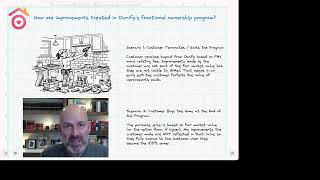
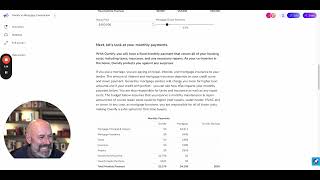
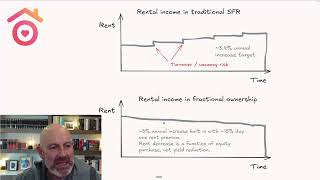
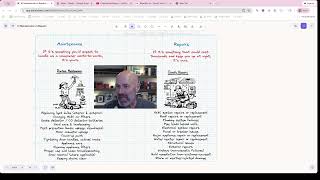
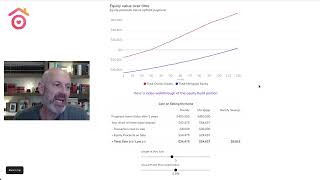
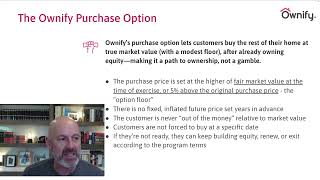
Ownify University: how does the purchase option in fractional ownership work?

Claude MLO Agent boosted homebuyer engagement by 8x! #mortgageloanofficer #mortgageloanoriginator
Wall Street vs First Time Homebuyers Understanding the Housing Market #housingmarket
Homeownership: Your Ultimate Wealth Builder Explained by Frank Rohde #housingmarket