Frank Rhode of Ownify explains how fractional homeownership cuts the cost premium of owning versus renting from 40% to 20%, letting first-time buyers start with 2% down. For investors, it delivers 10.45% unlevered returns by eliminating vacancy and lowering maintenance when resident co-owners stay five years.
Chapters
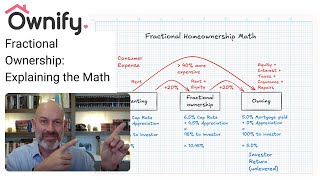
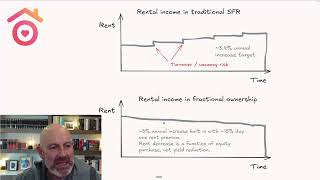
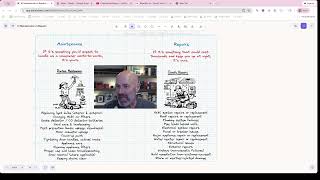
Hi there, it's Frank Rhode with Ownify, and today I wanted to talk a little bit about the math behind fractional ownership. We've talked about the legal concepts, we're going to talk about some of the underlying rules and how it works for the homeowner as well as the investor. But really the core focus for us is affordability and how we make it more affordable for first-time home buyers to get into their home and then stay in their home and eventually have full ownership while at the same time providing strong returns for our investors. So there are really two parts to the equation here. And let's start with the, at the top here, the consumer side, right? So as a consumer, you really have three choices. You can rent, you can own the traditional way with a mortgage, or you can have fractional ownership, which is that journey in the middle. And today owning the standard single-family home in the US is about 40% more expensive than renting that same home. That's been a big hurdle, right, of why so many people are stuck renting and not making that jump into ownership. And part of it is home prices, part of it is down payment, part of it is mortgage rates, part of it is student debt. All of those components are coming together. So fractional ownership is really that new journey in the middle, a third option that sits between renting and owning, right? You own a fraction, you rent a fraction, you increase the fraction you own, you decrease the fraction you rent. That's it in a nutshell. And so for the consumer, fractional ownership really splits this 40% jump in expense pretty much down the middle. So it is about 20% more expensive than renting, but 20% less expensive than owning with a mortgage. And so that's really the attractiveness. We can get you, that can get the consumer started with 2% down, a more attractive monthly payment, you know, all in a single housing payment, et cetera and so forth. We'll explain in other videos. So splitting this cost hurdle, right? This big jump from 40% in half down to about 20%, still more expensive than renting, But obviously you're building equity, you get to pick a nicer home, and you eventually get to take it over. Now, on the investor side, at the bottom here, the blue math is really the other side of the equation. So if you think about it as an investor, I can buy a home and rent it to a tenant, right? And generally I have a cap rate, which is the capitalization rate or the income I generate on my investment. And I have appreciation of the underlying home, so asset appreciation. And in the rental journey, 100% of that appreciation goes to me. Obviously all the cap rate goes to me. And so generally speaking, in the market today, 5.5% cap rate, maybe 3, 4% appreciation, that's a 9.5%, give or take, unlevered, i.e., non-debt-levered return on investment. On the ownership side, let's switch over all the way to the right. As an investor, I'm really writing a mortgage note. I'm writing a debt instrument to a borrower, and all I'm getting is the interest and eventually my principal back. So if I'm investing in mortgages, mortgage REITs, right? Generally my returns are 4 to 5%. It's highly liquid. It's an established market. So that's all good. But you know, the returns are not that great because ultimately I'm only getting interest. I'm not participating in the asset appreciation. Fractional ownership again sits in the middle. So the return to the investor is actually more attractive than renting and significantly more attractive than owning. Now, why is it more attractive than renting as an investor to provide a fractional ownership solution to a consumer? Well, the underlying reason is really that the customer who's in the home generates a higher cap rate. Why do they generate a higher cap rate, higher income? Well, because they're in the home for 5 years, so there's no turnover, right? There's no vacancy. As an investor, as a landlord, I never want empty homes. And through this fractional ownership structure, because I have a committed customer who's living in the home, building equity, so far we've not seen any vacancies. So lower vacancy, you have better maintenance expense because we have customers In fractional ownership, the customer acts as a co-owner, is a co-owner, right? Has a meaningful share of the home. And therefore the behavior shifts from that of a renter to that of a co-owner. You know, Warren Buffett famously said, "No one ever washed a rental car." We're actually seeing that in the math. So you have better maintenance or lower maintenance cost. And we're also seeing slightly better appreciation because customers are taking better care of the home. Right? They're picking homes in better neighborhoods. Now, all of that, the cap rate and the appreciation, is shared with the co-owner, which is the tenant, which is the customer, right? So again, back to fractional ownership. I'm not getting 100% of that better cap rate and better appreciation, but I'm getting a big chunk. As an investor, over the life of the Ownify program, you're getting about 95% of that. So all else equal, that creates a higher unlevered return, ideally in the double digits, right? Uh, 10.45% in this example. Um, and that's really what allows us to back capital into this equation. And that's why fractional ownership from an investor perspective is a really attractive alternative to the, the traditional investing in single-family homes and just holding and renting them. All right, we'll explain the rest of the math when we get to rental yield in the next section.