10 Steps to Self Love
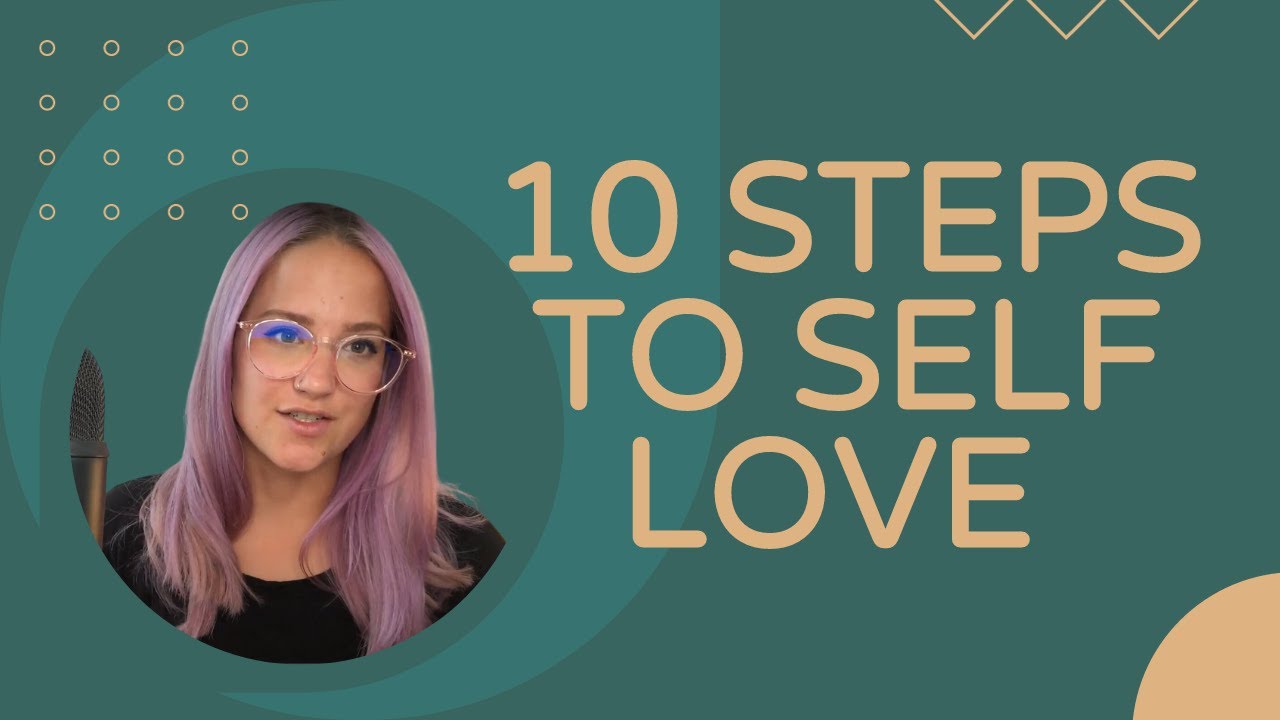
This content was created by Hannah Rose. This content was uploaded by Hannah Rose. This is a YouTube video titled "10 Steps to Self Love" (created 2020-07-21). It is a solo, first-person self-help/personal-development talk (casual vlog style) in which the host reviews ten practical steps to cultivate self-love and self-worth. The speaker references a Psychology Today article (July 17, 2019), personal experience (including deactivating social media), recovery/AA and 12-step language, and recommends therapy and resources like Brené Brown. The ten steps covered include: doing esteemable actions, acknowledging all parts of yourself, affirmations, speaking your truth, daily inventories, connecting with nourishing people, cultivating gratitude, practicing compassion/forgiveness, learning to laugh at yourself, and being of service. Tone is conversational and instructional, aimed at viewers seeking personal growth.
Chapters
I hope this works. Hello friends and welcome to another episode of Hannah Talks About Things. And so today we do have the bells and whistles. The microphone's back. The ring light is back. And today I wanted to talk about self-love. So self-love is this really kitschy phrase that a lot of people use. It's actually an article that I was recently interviewed for that is currently in this month's issue of Good Housekeeping. When I get a copy, I'm gonna go ahead and read it. But for now, I want to talk about an article I wrote about self-love posted to psychologytoday.com on July 17th, 2019. And it's, you know, it's kind of a clickbait title, right? 10 Steps to Self-Love. Now obviously this is something that you can't do overnight, but through repetition we can actually create new neural pathways and change our automatic process. So if you're someone who really struggles with I should look at the camera. I don't know where to look. Uh, if you're someone who really struggles with self-deprecating narratives, you know, self-shame, being down on yourself, really just if I ask you the question, you know, how is your relationship with yourself? And your answer is not, yeah, it's really good, then this article is for you. And if you're someone that does have some healthy self-worth, you know, a strong foundation of self, this article can also help in terms of the maintenance and growth of that foundation of self. Now I'm a firm believer that I can love other people if I don't love myself, but I cannot accept love love from others if I don't love myself. Um, that being said, I mean, I think another, another key point is that I'm going to accept the love I think I deserve, right? My favorite quote from The Perks of Being a Wallflower, which means I'm also going to accept the treatment from others that I think I deserve, the salary that I think I deserve, right? Everything in my life that I am signing up for on a certain level is because I believe that that's my worth. And so if I believe I'm a piece of garbage, then you treat me like a piece of garbage. I'm going to accept that treatment. Right, the cycle of abuse really manifests because of a lot of different reasons, but one of those variables is that at our core we don't believe we're worthy of more than that treatment. And so I'm going to talk about 10 things to do, actively start doing today, not just watching this video. And it is 12:47. I have a client at 1:00. Okay, I'm gonna try to read as quickly as I can. So, 10 steps to self-love. I will put the link in this YouTube bio to this article. And if you are not already subscribed, subscribe now. I think it should be over here if you're watching this on YouTube. Okay. I used to think self-love meant the prettiest I can be, displaying a facade of perfection to the world on social media and denying any of my hidden fears and doubts. Side note, I deactivated all social media about 4 months ago. I had a brief stint coming back on Instagram and then I deactivated it because it's toxic. And I want to make a whole video about that, um, because deactivating social media except for LinkedIn and like YouTube was one of the best things I've ever done in my entire life. So how wrong I was. Self-love begins and ends internally. It cannot be contingent on how others feel about us, what they think about us, or what they say about us. I'm gonna repeat that because I think that piece goes missed often. Self-love begins and ends internally. So once you get that job, that boyfriend, that career, whatever it is, that's not actually going to create a sense of purpose, wholeness, and foundation in you. I know this from experience. It is very, very true. It doesn't matter what you look like on the outside, and even what goals that you've achieved, self-love may still not be there. I mean, how many of you watching this video have achieved a lot of those goals and yet still are pained with imposter syndrome? Where you feel like, yeah, but if they really knew me— success, money, relationships, none of that stuff is gonna fill this gaping hole internally unless we do this work. It cannot be contingent on how others feel about us, what they think about us, or what they say about us. Validation from others is addictive. We can become unhealthily reliant on it. But remember that self-love can only be cultivated internally. Here's how. And again, this kind of 10 steps thing, I knew it would be a clickbaity. I think this is one of my most popular psychology today blogs because people want a quick and easy, how do I get this? This is not quick and easy, but this is a starting point and this is what's worked for me both personally and professionally with my clients. Number 1, this is not an original quote of mine: to have self-esteem, start by doing esteemable things, right? This sounds really simple, but if I want to feel good about myself but I'm sleeping around or I'm lying or I'm just living kind of dirty in some capacity, right? In AA and in recovery, we say, "I can't stay clean and live dirty." This is kind of like that. Um, oh no, I can see my emails popping up. I need to create a semblance of homeostasis where my values and how I feel internally is actually reflected in how I act. So to have self-esteem, start by doing esteemable things. If I want to feel good about myself, I need to start acting as if I already feel good about myself. So the more self-deprecating, self-sabotaging, self-defeating behavior I'm engaged in, I'm not gonna get self-love through osmosis. I'm not just gonna get it. So this may sound simple, but it is only when we bring a level of awareness to the discrepancies in our values and actions that we truly become mindful of how unbalanced these two can be. I can mean well but actively gossip. I can believe in honesty but lie to my peers. If my insides and my outsides are not aligned, I cannot and will not feel good about myself. In the psychological world, we call this cognitive dissonance, right? I am not aligned. I am not on a plane of homeostasis. And so start by looking at your actions. If you want to feel good about yourself, what things in your life are you doing that actively make you feel worse about yourself? And start by looking at unblocking those things. What is it going to take for me to let go of some of those behaviors? Now, a lot of these may be deeply rooted in other patterns, you know, self-sabotage, trauma. There can be a lot of more deep variables at play here, I highly recommend therapy. Um, because if it was as easy as just not doing destructive things, a lot of us would have stopped doing them long ago. For me, I needed to look at where my core beliefs and patterns came from and really have them gently but directly untangled with the help of a professional. So that's number 1: to have self-esteem, start by doing esteemable things. Number 2: acknowledge all parts of yourself. Even and especially the parts of you that you want to hide. Shed light on them— your emotions, fears, body, voice, everything that makes you you. A book that may really help you with this is called Braving the Wilderness by Brené Brown. It's such a good book. And again, if you want to just watch this video and get self-love without taking any action, you're not going to. So if you are not a reader, I recommend getting it on Audible and listening to it. Okay, I'm just— my texts are all coming up like on my computer and I'm so distracted. So yeah, so number 2: acknowledge all parts of yourself. We can't just eliminate the good and ignore the bad. We need to acknowledge what's coming up in us. We need to acknowledge the scary parts of us, the parts that we want to keep hidden. We need to start by identifying what different parts of us exist. There's a whole field of therapy called parts work. I recommend looking it up. Ah, number 3: Affirmations. I used to think this was corny and weird, but in the last year or so, now I think 2 years, I've been writing down I am statements. I am beautiful, I am competent, I am passionate, I am enough, I am worthy, I am smart, I am strong, et cetera. When I change my internal narrative, I change the way I view myself. I'll find what I'm looking for. This means that if I'm seeking evidence that I am not good enough, I will find it. On the other hand, if I'm looking for evidence that I'm worthy of love and belonging, I will find that too. That is such an important concept in the psychological world, right? The narrative that we've constructed for ourselves. Try to get super mindful about the story that you tell yourself about yourself. Um, and again, remember, remember that you will find what you're looking for. I used to think that I wasn't worthy of anything at all, and I found evidence to support that. I was attracted to people, scenarios, experiences that validated that core belief that I wasn't good enough. But on the flip side, we can also find the evidence that we are worthy just for being here. Number 3, affirmations. Okay, number 4, speak your truth. This sounds simple. It's not. We can slide into the habit of deflecting from our truth on a regular basis. Did you actually like that movie? Have you really heard of that band? If you're upset or angry, are you able to articulate how you feel and tell another person? Try to deconstruct whatever is blocking you from speaking your truth, also known as fear, people-pleasing, etc. I have a whole different video about— I think it's How to Stop Spiraling. That's like— that one's good. There, it's a whiteboard, I think. And there's another one about We Accept the Love We Think We Deserve, etc. Anyway, look through those videos because there are videos I've made about how to start to unblock ourselves. So speaking our truth is less about finding out what our truth is and looking more into what is blocking me from speaking my truth. Is it a deep-seated fear that I won't be loved, etc.? There's a lot there. And you'll be amazed if you really deepen your awareness as how often, how many times a day we lie. Even if it's a white lie that doesn't cause harm, we're causing that cognitive dissonance, right? That internal discrepancy. So the next time someone says like, oh yeah, have you seen this movie? And you're like, yeah, no, I haven't, like, speak your truth no matter how significant or trivial that truth may be. 5. Oh my god, I only have 6 minutes. Ah! Daily inventories. While this is one of the 12 steps, I have noticed that those of us in recovery seldom do it correctly. We are not solely meant to acknowledge or write down where we were resentful, selfish, dishonest, or afraid on any given day, but also identify what we did well and what we packed into the stream of life that day. The 10th step in AA instructs us not to be martyrs, but we often focus on where we fall short instead. Instead of including our victories. So before you go to sleep at night, make a mental or physical inventory of your strengths and wins for that day, as well as the things you'd like to improve. You know, in the 12-step programs, we say progress, not perfection. And that's true for all of us, right? I'm not going to be perfect any day, but can I acknowledge my shortcomings while practicing self-forgiveness and self-compassion? Again, there's a video on self-forgiveness that can be really helpful. 6, connect with those who feed your soul. Do your friends accept you for who you are but also challenge you to continue growing? Are you able to satiate your innate human need for connection with the people in your life? Or are you like the actor on stage, wearing different masks and costumes throughout the day? That's all I wrote about that. Really take a look at the people you surround yourself with, not in a judgmental way, but just inventory-taking way, right? Who are my friends? Are my friends the kinds of people that I need to have common enemy intimacy with, as in all I do is talk shit about people? With them, because that's not real intimacy or connection. Okay, 7: Cultivate gratitude. Sounds kitschy, but a yoga teacher once told me, happiness does not lead to gratitude, gratitude leads to happiness. This is also true of internal happiness and self-love. What are you grateful for about yourself? Force yourself to ask yourself these questions. 8: Practice compassion and forgiveness. Again, there's a video on this that goes in depth about what blocks us from forgiving ourselves. Yes, it's important to practice this with others, but can you also practice it internally? You are human. You will fall short. You will make mistakes. But more importantly, what is the story that you tell yourself about your mistakes? Can you cultivate non-judgmental awareness inwardly and forgive yourself while also staying accountable on a daily, even moment-to-moment basis? This is super important. It's not about saying, "Oh, I'm only human, so I'm off the hook. Self-compassion, haha." It's about saying, "Wow." You know, I'm really aware of and taking accountability for what I did or didn't do. I'm also gonna forgive myself and work towards growth and change. There's an article, and I wrote— I'm just self-promoting here because whatever— it's called We Cannot Shame Ourselves Into Growth. It's in the Baltimore Sun, and I also believe it's in the Denver Post, which is cool. But still, we cannot shame ourselves into growth. We cannot shame ourselves into growth. Ah, 9. I have 3 more. 3 minutes. Learn to laugh at yourself. Going along the lines of self-compassion, try to incorporate humor into your internal narrative instead of, why can't I do anything right? Or, I hate my body. I invite you to laugh at your humanness. Almost all of us are striving for this unrealistic goal of perfection, and the fact of the matter is that we connect through our imperfections and our humanity, not through our perfection. Social media is a lie. And 10, be of service. Again, this is the 12th step in the 12 steps, but super important. Every time we step outside of ourselves and into the arena of helping another in any capacity, we tell ourselves that we have something to offer, that we are enough and we can make a difference. Be mindful not to slip into caretaking or trying to save other people, because we can only control our own actions and reactions. But we can show up, be a light, instill hope, and be helpful. And in doing that, we set ourselves free. Um, in AA, we also say, you know, we can't transmit what we don't have. So don't try to avoid your problems or lack of self-love by feeding off others and trying to help them and find purpose there. But the more we are able to help others, even just in being honest— speaking our truth helps others and helps others to do the same, because vulnerability has a domino effect— the more we can inadvertently tell ourselves, wait a minute, you know, I do have worth, I do have something to offer others. These are 10 simple steps, but as human beings, we have a tendency to complicate the hell out of them. I encourage you to talk about these steps in therapy. Go to therapy. Allow others to deconstruct whatever is blocking you from self-love, and try to connect with people who bring you closer to your ideal rather than those who keep you living in cognitive dissonance. And as always, remember: you are worthy, you are enough, and you are whole just for existing. I have 2 minutes left. I'm gonna go to the bathroom. You didn't need to know that. Okay, bye.








