Reframing Negative Self-Talk
Hannah Rose, a clinical counselor, explains how the stories we tell ourselves shape our brains. She breaks down guilt versus shame, shows how repetition builds neural pathways, and offers concrete reframes: swap "I am a failure" for "I'm working on this" or "I struggle with this."
Chapters
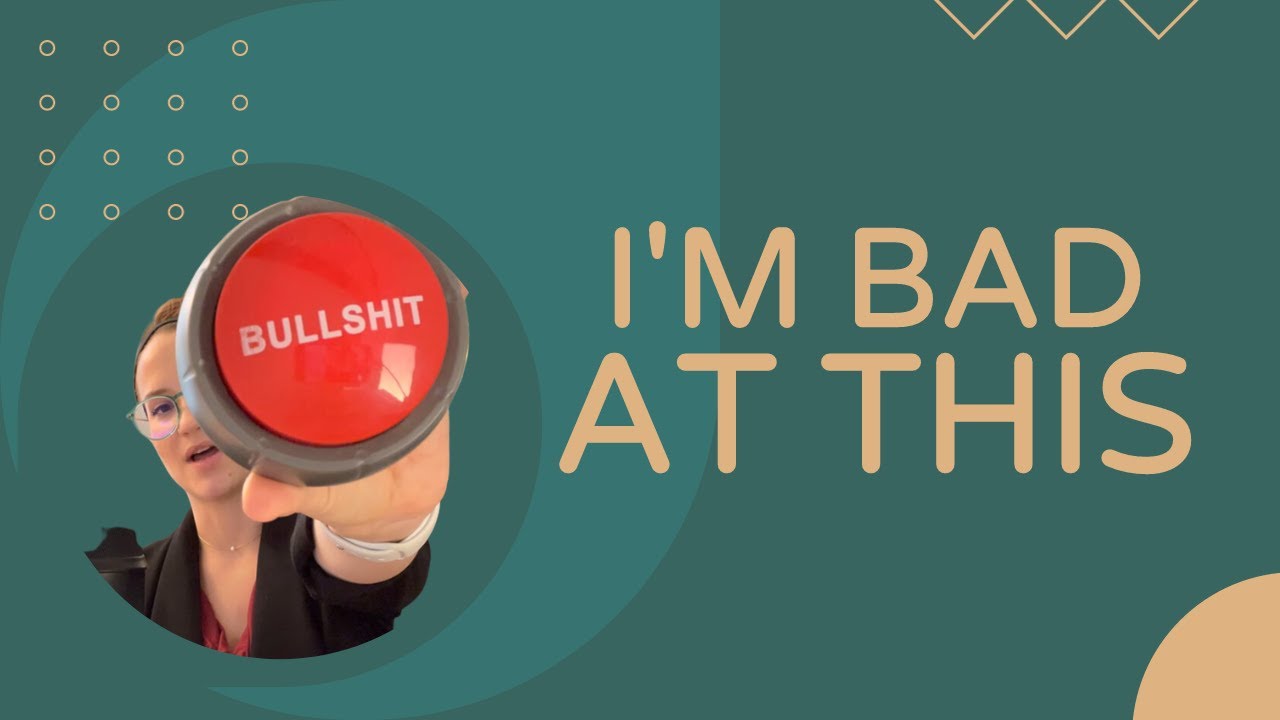
Hello everyone, and welcome to another episode of Wellness Wednesday. I am your host, Hannah Rose. I am a licensed clinical professional counselor, nationally certified counselor, advanced clinical relapse prevention specialist, uh, what else? Trauma-informed. I mean, I think it's important if you are new to this channel for me to also just identify my credentials so that you know that as As much as all of our opinions are valid, I'm also coming from a place of professionalism. And so utilizing a mix of my experience, both personally and professionally, I provide these short videos every Wednesday, um, to talk about things that I think are really important. And so today let's jump right into it. I wanted to talk about self-talk, the story that we tell ourselves about ourselves. Now there's a phenomenal book that I've mentioned before in a lot of other videos on this channel called The Four Agreements by Don Miguel Ruiz. It's phenomenal. Existential, spiritual. It's like pretty heady, so just prepare yourself for that if you do read it. Again, it's called The Four Agreements. It's actually tattooed on my arm. I went through a big phase of getting things tattooed on me that I thought would be nice reminders. Like this one over here says "be here now." But anyway, I was in Paris— cool— and I got a tattoo there that just says "remember the four" in French, and it's a reminder to just remember The Four Agreements. Now in short, Those Four Agreements are: be impeccable with your word, don't take anything personally, don't make assumptions, and always do your best. Now, Don Miguel Ruiz expands on all of those, but the one I wanted to talk about today is that first agreement, be impeccable with your word. Impeccable, when we deconstruct that word, means without sin. And he talks about how the story that we create becomes our reality. So we construct our own hell, or we construct our own heaven. And basically, you know, we know that our perspective and our perception plays such a role in our experiences. Like that cliché quote, you know, "Life is 1% what happens to you and 99% how you react to it." But that is so true. You know, it's like, how do two people experience the exact same thing and have two completely different reactions to it? Well, a lot of it comes down to our perspective. But one thing I think is often, you know, not talked about quite as much as it should, and this comes up with my clients in their therapy processes all of the time is self-talk. If you're new to, you know, the therapy world and psychology, self-talk is exactly what it sounds like. It's how we talk about ourselves. And that can be in, uh, like external situations, like what I talk about. When you hear someone who's super self-deprecating, right, that's self-talk. But also the story that we create in our own heads. So if I make a mistake or have some shortcoming, what's the story that I create? What's the story that I tell myself? Um, am I beating myself up? You know, often we are our own harshest critics. And so before we can make behavioral changes, often we can start by bringing attention to the narrative. And if I can start to, um, reframe and create a different narrative, my behaviors actually can just change more organically. It's a really cool process. And so I'll give you some examples. Um, I used to say things like, I'm really people pleasing, or, oh, I suck at boundaries, or I don't do commitment, etc. Um, you know, fill in the blank with whatever you come up with for yourself. But these narratives that are really finite and concrete, it's like saying, yeah, this is just how I am. And I hear that narrative almost every day. And I often press, depending on the client and our rapport, the bullshit button, which is a great button that I will not press right now because it's very loud. But we create these really finite, concrete narratives. So let's start with I'm a people pleaser. When we say I am, It's— this is the fine line, the difference between guilt and shame. Guilt would be, I feel really badly that I didn't set boundaries, or, you know, I feel really awful that I was gossiping earlier. That's guilt. Guilt is healthy. It can motivate and create change. Shame is, I'm a bad person. I am shitty. It's like, it's like taking guilt and swallowing it whole and saying, this is who I am. And so being mindful of that guilt-shame narrative. But so I am a people pleaser. I'm not only telling others, I'm telling myself that this is it. I mean, this is how I am. This is who I am. And the reality is that's bullshit. Human beings have the capacity for growth and change if we challenge ourselves to do so. And for me, what I've learned is that it starts with the narrative, which means rather than saying, I am this, I can just shift that narrative slightly by saying something like, I struggle with people pleasing, or I'm working on people pleasing, or I used to struggle with people pleasing and I'm working on setting better boundaries. And that sounds really simple, but honestly, creating that space, uh, between I am and no, like, this is something I've done, that space gives us enough room to create change and grow. So the more that I tell myself I am something, the more I believe it to be true, and then it continues to be true. That's how self-fulfilling prophecies work internally with our narrative. And so it's incredibly important to A, be mindful of what's the story that I'm telling myself. About myself? And B, can I find little moments to reframe my narrative? Um, what else have I— so I'm bad at commitment. That's not just like how you are. A, I need to stop saying ABC and 123. I, I, it's so difficult for me. Um, maybe you have some unresolved wounds, right? Maybe you've been hurt before. And so commitment scares you. It's not that you are inherently made to be bad at something. Except math. I'm bad at math. That's like the one thing that you will hear me say I am, and it's because I know that I can probably change that and really challenge myself to grow in that area, but I have no desire to, so I'm not going to. But besides that, most I am statements are flawed because it's saying I'm— this is just how I am and I can't change. And in my opinion, that's a cop-out and that's bullshit. So With people pleasing, what really helped me was, you know, in a therapeutic process with a therapist, not someone who thinks they're a therapist, right? And not a friend, is explore the roots of that people pleasing. Where did that approval seeking come from and why? And then actively working to change those patterns. What happens in our brain is that we form neural pathways when we engage in a repeated behavior. I mean, this is what a habit is. So every single time I do something people pleasing, I'm deepening that neural pathway. And you can picture a mountain, and every time it rains, there's grooves that form, and those grooves are already there from the first time it rained so that every time after that, when it rains, that those same grooves are getting deeper and deeper and deeper. Now, to change our habits and to change our automatic thought processes and reaction to life, we have to actively essentially like pour water down different parts of the mountain to create new neural pathways. And so the only way to truly affect change with our automatic processes change is repetition. And so it's frustrating at first to reframe the narrative. And if you watch my videos, you will watch me reframe narratives. A couple of weeks ago, I said something like, "Oh, I always say I'm going to do something and I never do it." And in that video, I stopped and said, "I'm going to reframe that. That's just a really finite, concrete statement, and that's not true." Right? Yeah, there's times I don't follow through, but that's not just who I am. And how I am, and that's something I'm gonna actively change. And since then, I've been doing weekly videos. Look at that, follow-through. But so for me, reframing my narrative, or just having a much more lenient, self-compassionate narrative in general, is automatic for me now. It didn't used to be automatic, but it's only through repetition that it became this more organic, authentic experience. And so what I invite you to do is to notice and keep track of some of your self-talk. Are you really nice to yourself? Are you like, wow, it's okay, Hannah Rose, you're only human, you know, this is fine. Next time try to do it differently. Or are you shaming yourself? Are you beating yourself up? Do you have these finite statements that you think define you? Even something like, ugh, I know I'm crazy. The more you call yourself crazy, the more you're going to believe it's true and the more you're inadvertently going to act on that. And so self-talk predictors, research shows how, and this is like narrative therapy, how effective it can be to change our narrative. And so if you're overwhelmed with these changes you wanna make in your life and you want healthier relationships and you wanna grow in self-love and self-worth, start by noticing the narrative. What is the story that you're telling yourself? And I can do a part 2 to this eventually where I talk about the story we tell ourselves about others. And that's getting into the other 4 agreements, like 2 and 3, which is don't take anything personally, which is so difficult, and don't make assumptions. I mean, how often do we not only take something personally, but then we create a story about it and How often is our story exactly that? It's something we've created and it's not actually based in reality. It's based in our own self-talk and our own perception. So common reframes can be when you say something that's like, oh, I suck at this, or I'm bad at this, or I don't do that well, I can't do that, I never do that. Try to pause and create room for growth. I've struggled with this. It's a much more compassionate narrative. I'm working on this. Much more compassionate narrative. I've had a pattern of— even putting it in the past tense is empowering. I often hear people say, this is my pattern. This is what I do. It's not what you do. It's what you've done. And if you want, you can actually change that. It's just, we have to challenge ourselves and keep ourselves accountable, but we do have a capacity for growth and change. It starts with the narrative. Exactly 10 minutes. Okay. See you next Wednesday.








