Self-Forgiveness 101
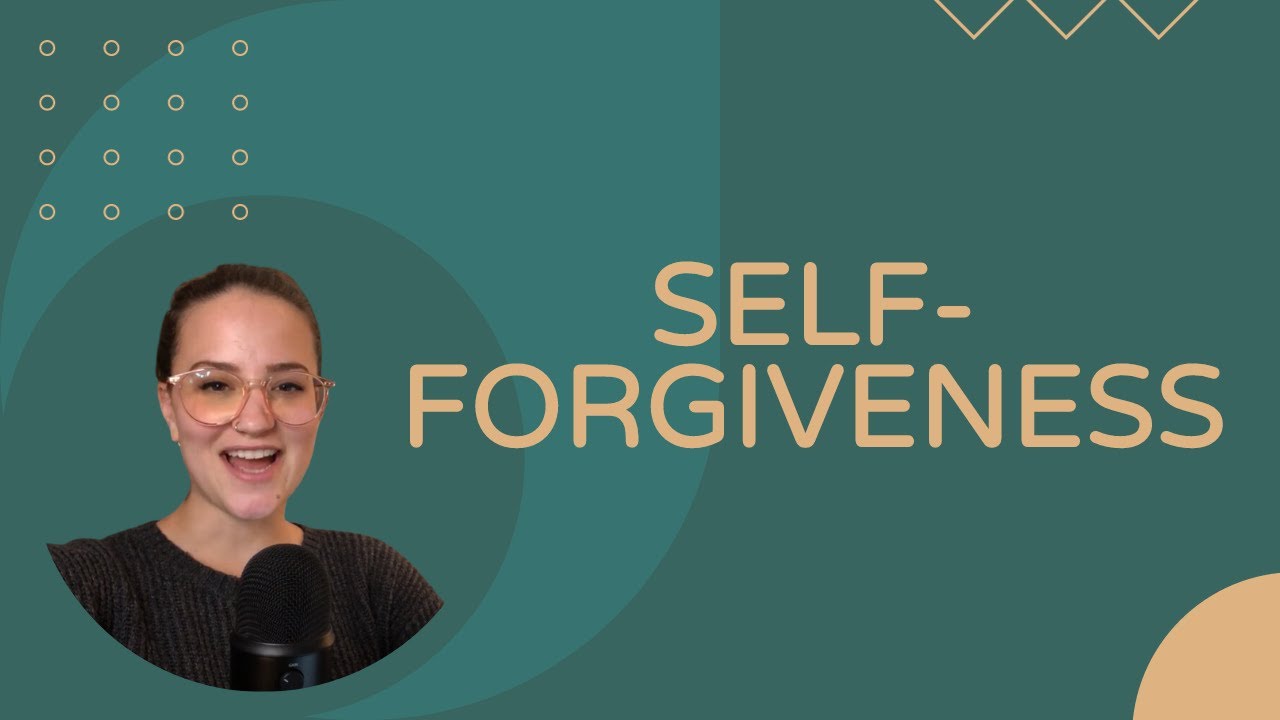
Hannah Rose reads from her article on self-forgiveness, walking through how to distinguish guilt from shame, fact-check negative beliefs about yourself, and take concrete steps like changing actions and setting intentions. She shares personal stories and explains when therapy might help.
Chapters
Hi everyone and welcome to another episode of Hannah Talks About Things. I mean, I can't hear this, so I don't know why I'm trying. Anyway, today I'm gonna read a short article called "How to Forgive Yourself" that I posted on August 15th, 2019. So, "How to Forgive Yourself: Self-forgiveness begins and ends internally." Now, the reason I wanted to actually make this video— this is one of my favorite articles that I've written solely because both professionally and personally when I meet people, one of the biggest things that's blocking them from continuing to grow or to find self-compassion or self-worth and essentially not settle for less than they deserve, etc., is this kind of dynamic of holding themselves hostage, uh, resenting themselves, beating themselves up, continuously shaming themselves for something they've done in the past, said in the past, a way that they've been, a mistake that they made, something they regret. And so that thing that blocks us from self-forgiveness is really what's blocking us from moving forward. I don't want to say living our best lives, but I just said it. Okay, so I'm gonna read this now. Self-forgiveness. It is not a term that we hear often. It is commonly eclipsed by literature, articles, and speakers touching on the topic of how to forgive others. In Alcoholics Anonymous, we are taught to forgive those who we are resentful at and to pray for those who have hurt us so that we can release ourselves from the bondage of our own resentment and self-will. But what about the difficult task of forgiving ourselves? As humans, we have the tendency to focus on getting others to forgive us. If only they would forgive me for my mistake, I would feel better. If they can forgive me, I'll obviously be able to forgive myself. These are common fallacies that we tell ourselves. So if I ask you, you know, what's stopping you from forgiving yourself? If your answer is, I just really need so-and-so to forgive me, I will say that's bullshit. Warning! Warning! Bullshit alert! That was way louder than I thought it would be. Eh, I would say that's bullshit. The reality is that if I place my state of internal healing contingent on anything outside of myself, it seldom becomes this whole process. And what I mean by that is that how many of you, rhetorically, have been forgiven by someone but you still haven't forgiven yourself. So someone says, "It's okay, I forgive you," and you say, "No, it's really not okay." Or whoever it is has forgiven you, but you still feel like a piece of garbage for doing whatever it is you did long after they forgave you. And so other people forgiving us is not the problem. Other people forgiving us is not the goal. Us learning how to forgive ourselves, depending on how— not even depending on how big or small whatever the thing was— is the core part of this. And learning how to create self-forgiveness as a habit instead of this last resort. And you may be wondering, um, you know, if I forgive myself for everything, then I'm just gonna let myself off the hook, and that there's no excuse, and I need to feel pain. And it's like, okay, so that's martyr syndrome, right? Where I need to be this martyr because of a mistake or pain that I've caused others, etc. But the reality is that, um, it's not letting yourself off the hook if you're constantly striving with self-compassion to do better and be better, right? If I say, oh, I forgive myself because I'm only human, and then I keep doing that same thing over and over and over, then yes, that self-forgiveness is a cop-out. And I'm, I'm just gonna read. Okay. So as humans, we have the tendency to focus on getting others to forgive us. If only they would forgive me for my mistake, I would feel better. If they can forgive me, I'll obviously be able to forgive myself. But that is far from the truth. Have you ever been forgiven by another only to ruminate later about whatever it is you did wrong and how you should have done differently? Self-forgiveness begins and ends internally. The reality is that we may never be fully forgiven by others, but that absolutely does does not mean that we cannot find inner peace by forgiving ourselves. Additionally, even if everyone else that we have wronged does forgive us, we will not feel at peace and truly content unless we forgive ourselves. I'm a firm believer that we cannot shame our way into growth. And what that means is, if I make a mistake or fall short or cause harm and I say, "Damn it, Hannah, what's wrong with you? You shouldn't have done that. You should have done better," I don't actually grow. Um, all I do is create this internal narrative of shame and inadequacy, and that can spur into all these other things like imposter imposter syndrome, like, oh, if they only really knew, or cognitive dissonance, right? Like, my integrity and values don't align with my actions. If I truly believe that I'm a piece of garbage or I'm not a good person, I will continuously live up to that belief. That's how the brain works. Let's see. I am a firm believer that we cannot shame our way into growth. Quite the contrast. It is by way of self-forgiveness and self-compassion that we can acknowledge our shortcomings and move forward with strength, empowerment, and self-love. So how do we get there? Like any problem-solving process, the first step is to first acknowledge— the first step is to acknowledge what it is you need to forgive yourself for. If you are burdened by the weight of your past actions, of ways that you are currently falling short, or of your chosen ideals, start by honing in on one specific thing. That was a long sentence. So basically, a lot of times when I'm working with clients, the narrative will be, "Oh, I have so much guilt and shame," or, "God, I have to forgive myself for so much. I don't even know where to start." And I often say the same thing, which is like, let's just hone in on one thing. Let's start with one thing. I had a coworker who used to say to me when I was really overwhelmed, "How do you eat an elephant, Hannah?" And I was like, "I don't." And he said, "You start by taking one bite." And it's like corny, but it's really true, right? Like this, this, "Oh my God, I have a mountain of things to forgive myself for." Well, let's just hone in on one. Let's start there. Will start to become a lot easier. So hone in on one thing. Now we add some reality and fact-checking to it. Am I really a bad person to the core? I'm gonna answer this for myself. No. Was my intention to cause harm? No. Is it possible that I'm only human and in that moment I was feeling overwhelmed by a plethora of different life circumstances which caused me to lash out? Yes. Is this a reflection of who I am as a person? No. Already sanity and self-compassion are returning. So I'm pretty sure the example I used was like being reactive when I was hungry, right, or something like that. I'm using kind of a smaller example, but really it's in our micro-interactions that snowball that make us feel like who we are as a person. So if I'm always lashing out when I'm hungry, I'm just gonna feel like a jerk. And so instead of saying, "God damn it, Hannah Rose, like, I can't believe you did that," or "I can't believe you were short with them," and It's like, okay, I want to change my behavior and my actions, but it also doesn't serve me or anyone else for that matter to shame myself. And the difference between guilt and shame is guilt is, you know, I feel really guilty for what I did. Remorse, that's actually healthy. Shame is I am a bad person. I am not good enough. It's those I am narratives. It's like taking guilt and swallowing it whole and having this internalization of this is who I am to the core. So with the thing you need to forgive yourself for, do some fact-checking, ask yourself some questions. Does this mean I'm really a bad person? And if your answer is yes, kind of challenge that a little bit more. Like, if my best friend did the same thing, would I think they were a bad person? And if you're still saying yes, then maybe there's some bigger barriers to work through that's blocking you from self-forgiveness. Go to therapy if you can, because it's really hard to think our way out of our own thinking distortions. But fact check, right? Did I mean to? No. Well, you could say mean not to, but at the same time, like, sometimes we make mistakes and we are human beings. And this belief that we need to be perfect all the time is so corrosive to any shred of self-worth. Ah, the next step is looking at how we can change our actions. So I always say it's kind of an empty promise if you say I'm sorry to someone with no intention or plan on how to change your actions. So if I say I'm sorry and keep doing the same thing, Not only are they not gonna trust me, I'm not gonna trust me. So same thing with self-forgiveness. If I forgive myself for something and then I keep doing it over and over and over, I'm gonna teach myself that I'm untrustworthy and that even with the best intentions, I can't follow through. And so if something is blocking me from changing my actions, I need to look at that. For example, if I'm in a relationship and I cheat, and then I'm in another relationship and I cheat, and this keeps happening, It's less about just wanting to stop cheating. It's more about, okay, well, what's this thing that's connecting me to this self-sabotaging, adrenaline-seeking behavior? It runs deeper than just the surface level behavior. And so sometimes we have to deconstruct those barriers as well. Talk is cheap. We all know this. I can apologize for something until I'm blue in the face, but unless I change my behavior, that self-forgiveness is never going to manifest internally because my intentions and actions are not aligned. Like I said earlier, we call this being in a state of cognitive dissonance. So my intentions, values, integrity is not aligning with my actions, and so I'm not on this plane of homeostasis. I'm like split. Simple, yet sometimes difficult solution: change our actions. There doesn't need to be much explanation there. If I'm upset with myself for lashing out, I change my behavior by acknowledging that I was in a bad mood, apologizing for my behavior, and making an internal note to be more appreciative and patient with my significant other, even when I'm hangry. Hanger is real. For me, I get really angry when I'm hungry. Do you? If I am beating myself up for speaking badly about a friend behind their back when that is something I judge harshly in others, I need not shame myself repeatedly. All I can do is acknowledge where I fell short, which I will continue to do because I'm human and innately imperfect, forgive myself, and set the intention to change even just one day at a time. I set intentions every morning. Wow, I don't set intentions every morning anymore, but I used to when I wrote this. I should get back to that. I set intentions every morning. Today, when I wrote this, my intentions are to practice courage over comfort. Oh my God, I just hung up a framed picture that says courage over comfort. It's a Brené Brown quote. Try to be cognizant of the tendency to become judgmental and to practice love and tolerance. Damn, those are some lofty intentions, but I like them. I hope this article was helpful in figuring out how to forgive yourself. Try to remind yourself on a daily basis, you are human, you are not perfect. Also, perfection is an illusion, and we do not connect via our perfection. Like, if you were to just look at a social media highlight reel of my life, you'd be like, okay, I don't connect with her. But if you were to look at, watch these videos, read the articles where I do throw in little spurts of authenticity, like, oh, I don't do this perfectly, or like, here's an example from my life, that's when you start to connect with me. Not when I'm like, look how put together I am. No one is that put together. You cannot shame yourself into growth. There is no benefit of ruminating and continuing to shame yourself. We cannot receive forgiveness from others until we truly forgive ourselves. And actions speak louder than words, so change your action. And again, if you're struggling with repeated actions and you don't know how to stop, there's something deeper there that is keeping you in this cycle. Ah, you are worthy of self-forgiveness. We all are. Anyway, I hope you enjoyed this 11-minute and 40-second thing on self-compassion, and now what I'm gonna do is— oh god, hello, hi, I'm a thumb— this. I have to unplug the speaker. Courage over comfort. Alright, bye!








